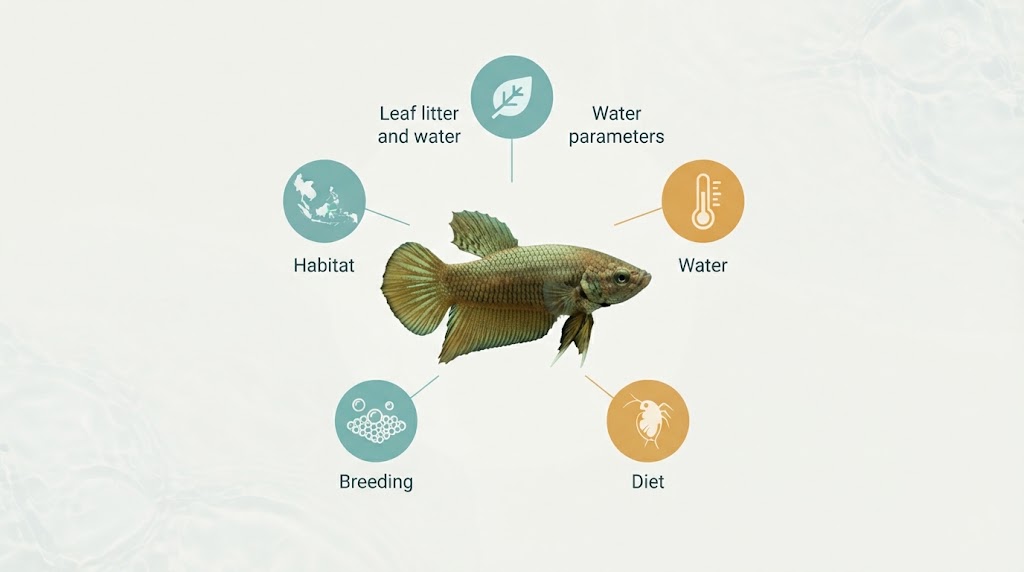
Most people picture a flowing-finned, brightly colored fish in a cup. That is the domesticated Siamese fighting fish. Wild betta fish look and behave quite differently. Many are slim, subtly colored, and shy, and they come from forests, swamps, and streams across Southeast Asia.
This guide explains what wild bettas are, where they live, and how their needs differ by species. It also covers diet, tank setup, and whether they suit beginners. The goal is to help you decide if a wild betta is right for you before you buy one.
What Are Wild Betta Fish?
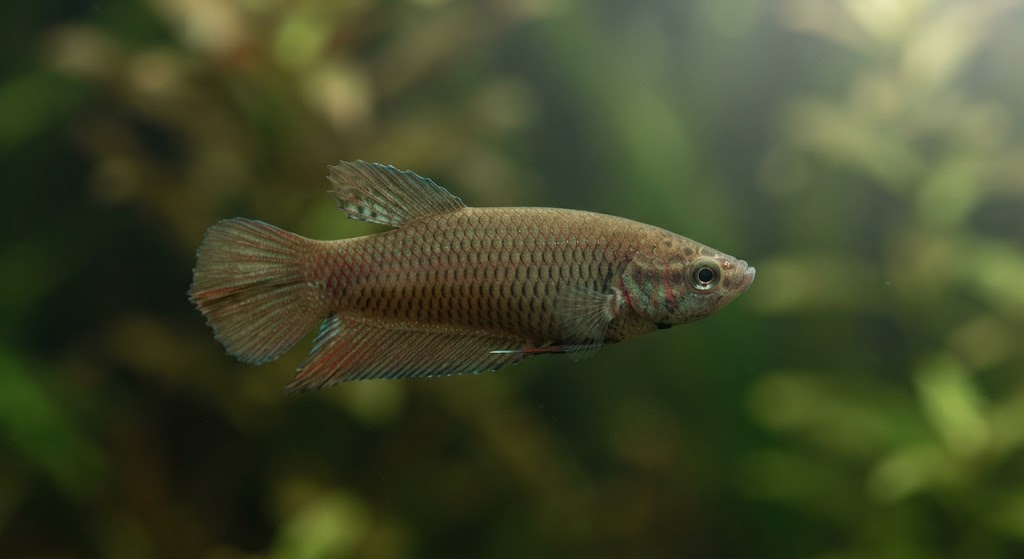
“Wild betta” is an informal term. It covers the many species in the genus Betta that are not the selectively bred pet-store fish. It can also mean wild-type Betta splendens, the natural form of the species sold as the common betta.
Scientists have described dozens of Betta species. Each has its own size, color, range, and water preferences. A wild betta is not one fish with one care sheet.
The betta in most US pet stores is Betta splendens, bred for generations. University of Florida IFAS Extension notes that today’s commercial bettas are selected for bright colors and elaborate fins, because the ornamental hobby is the main market. Wild fish have not gone through that process.
All bettas are labyrinth fish. They have a special organ that lets them gulp air from the surface. This explains why they can survive in shallow, low-oxygen water.
Where Do Wild Betta Fish Live?

Wild bettas live in freshwater across Southeast Asia. Different species cover different areas:
- Wild Betta splendens lives in the Mekong basin region, including Thailand and Cambodia, according to FishBase.
- Other species live in Malaysia, Indonesia (including Sumatra and Borneo), Brunei, and nearby areas.
Habitats vary a lot. Some bettas live in slow, shallow water such as rice paddies, canals, and marshes. Others live in forest streams or acidic peat swamps with dark, tea-colored water. The UF/IFAS fact sheet says the wild B. splendens is typically found in standing or slow-moving water.
This matters for aquarium care. A species from a cool, flowing forest stream will not want the same tank as one from a warm, still paddy.
Wild Betta Species
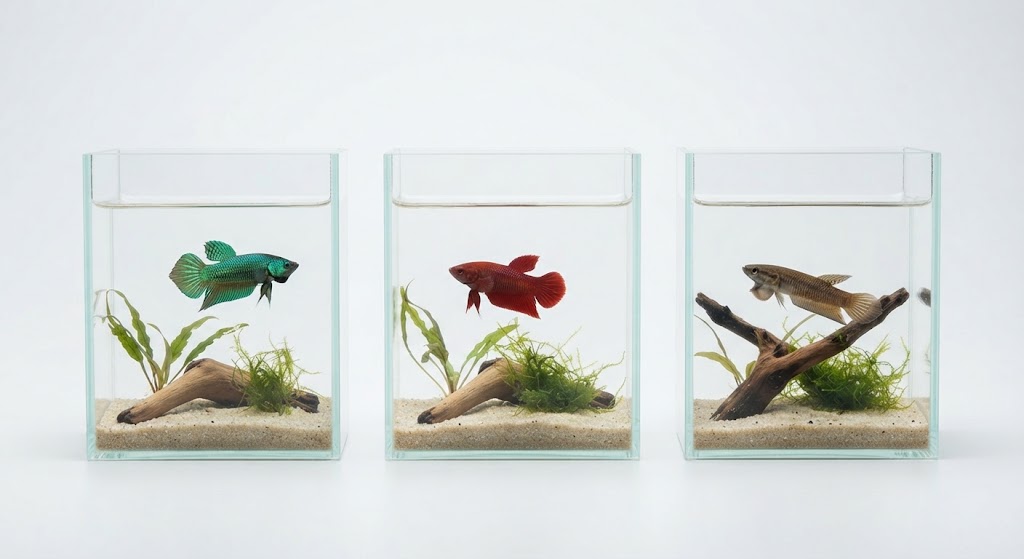
Wild betta species fall into two broad groups, based on how they raise young.
Bubble nesters. The male builds a floating nest of bubbles and guards the eggs. Examples include:
- Betta splendens (wild form)
- Betta imbellis
- Betta smaragdina
- Betta mahachaiensis
- Betta coccina
Mouthbrooders. The male (in most species) carries the eggs in his mouth until they hatch. Examples include:
- Betta channoides
- Betta albimarginata
- Betta simplex
- Betta macrostoma
- Betta pugnax
Some species stay under 2 inches. Others, like Betta macrostoma, grow noticeably larger. Always research the exact species before buying. Care guides for “wild bettas” in general can mislead you.
Several species are also under pressure in nature. FishBase lists wild B. splendens as Vulnerable on the IUCN Red List, as assessed in 2011. Habitat loss and pollution are major concerns for many bettas.
Wild Betta Fish vs Domestic Betta Fish
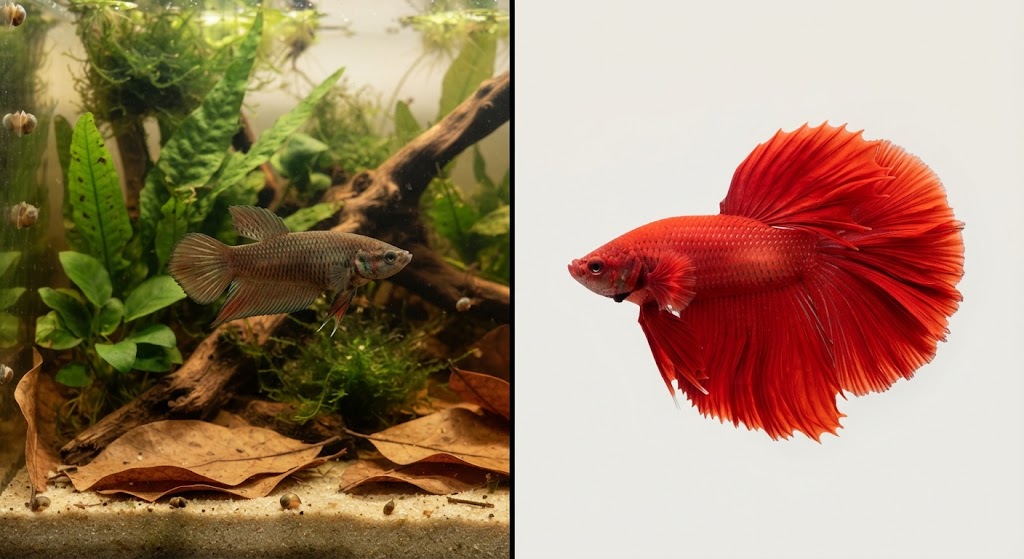
The two types share a family tree, but they are not the same pet. Here is a general comparison. Individual wild species vary.
| Feature | Wild Bettas | Domestic Betta splendens |
|---|---|---|
| Appearance | Natural, often muted look | Bred for showy looks |
| Body shape | Slimmer, streamlined | Varies by strain; often stockier |
| Colors | Browns, greens, reds, subtle iridescence | Nearly every color and pattern |
| Fins | Short and simple | Long, ruffled, or oversized in many strains |
| Behavior | Often shy; territorial in many species | Males often aggressive toward each other |
| Habitat | Varies: paddies, swamps, forest streams | Aquarium-adapted over generations |
| Care needs | Species-specific; often more demanding | Well documented and widely available supplies |
| Breeding | Bubble nesters and mouthbrooders | Bubble nesters only |
Wild bettas are not automatically “tougher” or “friendlier.” Some are peaceful with their own kind. Others are very territorial. Domestic bettas are easier to find supplies and advice for, which helps beginners.
If you keep a domestic betta, our guides on female betta fish care and which betta is better, male or female will help.
Wild Betta Fish Habitat
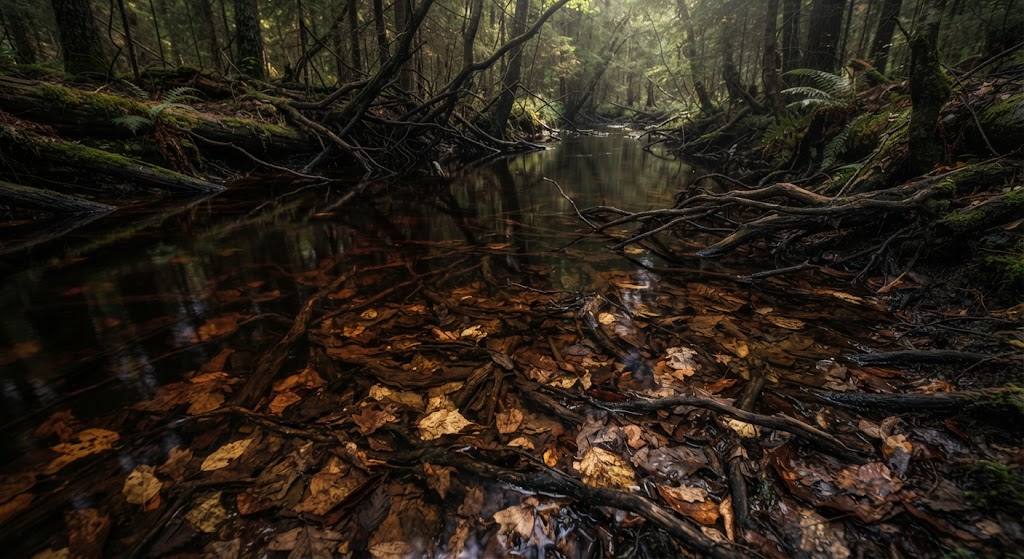
Understanding the natural habitat helps you build a better tank. Most wild bettas share a few traits:
- Shallow water. Many species live in water only a few inches to a couple of feet deep.
- Dense vegetation. Plants, grasses, and roots give cover and nesting spots.
- Leaf litter. Fallen leaves cover the bottom in forest streams and swamps. They shelter fish and release tannins that tint the water.
- Slow or still water. Most species avoid strong currents, though some live in gently flowing streams.
- Many hiding places. Roots, branches, and plant tangles help bettas feel secure.
- Softer, often acidic water. Peat swamp species in particular can live in very acidic water.
Wild habitats are also warm, since Southeast Asia is tropical. Water conditions shift with the seasons, especially in rice paddies and floodplains.
Wild Betta Fish Tank Setup
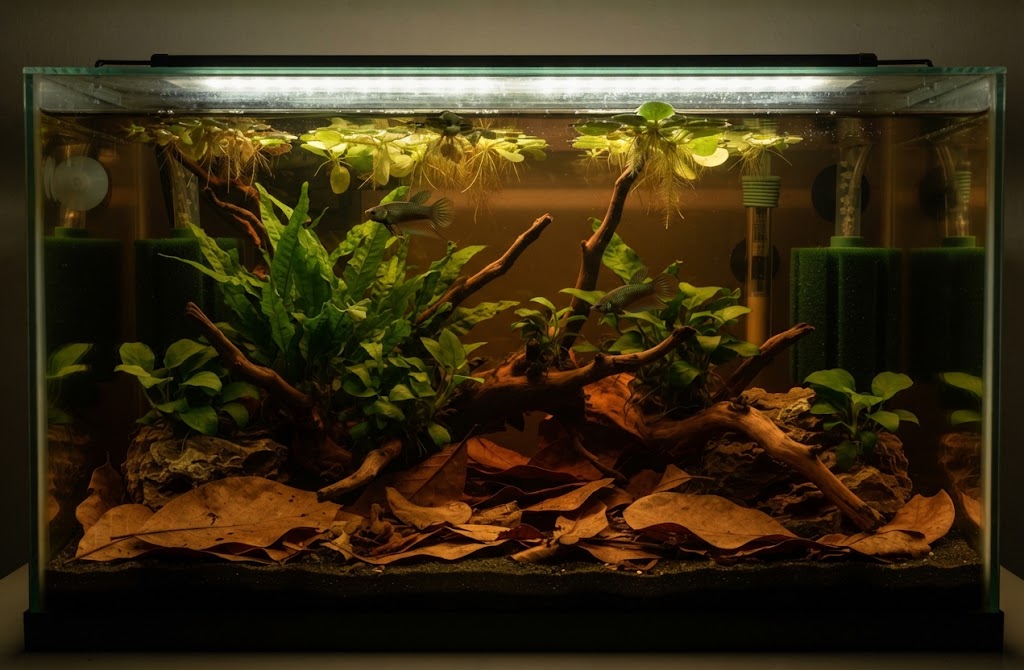
A good wild betta tank copies the natural setting as closely as practical.
Tank size. Bigger tanks stay more stable and give shy fish room to retreat. For small species, a 5-gallon tank is a reasonable starting point. For pairs, groups, or larger species, 10 gallons or more is safer. Check the adult size of your species first. Our guides on the best tank size for betta fish and 5-gallon vs 10-gallon tanks explain the trade-offs. They focus on domestic bettas, but the stability principles apply here too. Very small tanks are a poor choice. See why in our posts on 1-gallon tanks and 2.5-gallon tanks. Outside the US, this litre-based guide may help.
Plants. Use live plants like java fern, anubias, and floating plants. Floating plants dim the light and give surface cover.
Substrate. Fine sand or smooth gravel works. Cover part of it with dried leaves, such as Indian almond leaves or oak leaves, to mimic leaf litter.
Filtration. Choose a gentle filter. A sponge filter is a common pick because it creates little current. Strong flow can stress these fish.
Heating. Most tropical species need a heater and a thermometer. Keep the temperature steady.
Hiding places. Add driftwood, caves, and dense planting. Shy fish with nowhere to hide may stop eating.
Lighting. Use dim to moderate light. Bright light can make wild bettas nervous. Floating plants help.
A secure lid. Bettas can jump, and they need access to surface air. Leave an air gap under the lid.
Wild Betta Fish Water Parameters

No single set of numbers fits every wild betta species. Parameters depend on where each species lives.
For reference, FishBase lists wild Betta splendens in a temperature range of about 75–86°F and a pH range of about 6.0–8.0. That is only one species. Peat swamp bettas such as Betta coccina usually prefer softer, more acidic water. Stream-dwelling species may prefer slightly cooler or cleaner flowing water.
What does apply to all of them:
- Ammonia: 0 ppm. Any detectable ammonia is harmful.
- Nitrite: 0 ppm. Nitrite is also toxic.
- Nitrate: keep it low. Regular partial water changes help.
- Stability. Sudden swings in temperature or pH cause stress, which weakens fish.
Cycle your tank before adding fish. Test your water regularly with a liquid test kit. Always treat tap water with a dechlorinator. The Merck Veterinary Manual’s guidance on routine fish health care lists water quality, nutrition, sanitation, and quarantine as the core of fish health. That advice fits wild bettas well.
Before buying, ask the seller or breeder what water the fish have been living in. Then match it as closely as you can.
What Do Wild Betta Fish Eat?
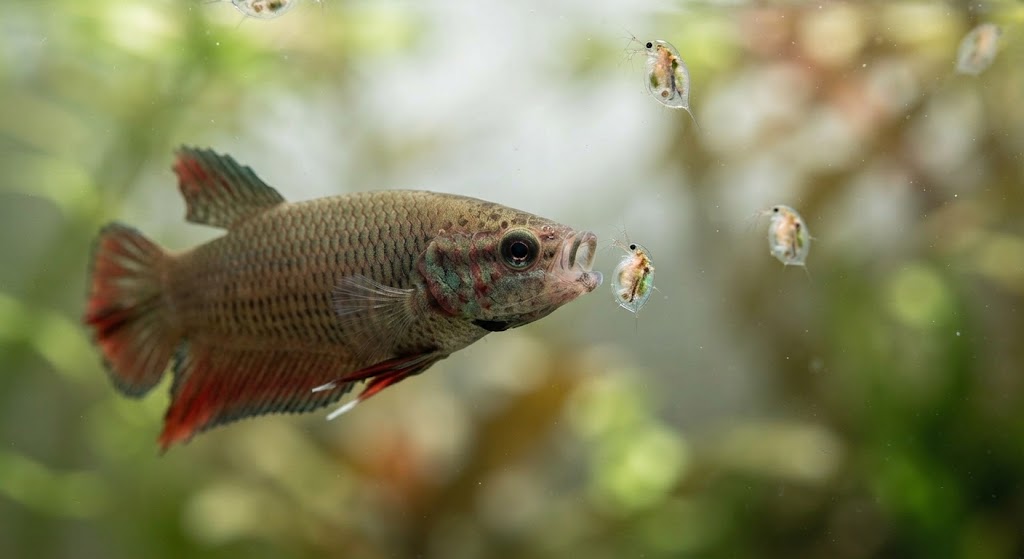
Wild bettas are carnivores. In nature, they eat small insects, insect larvae (including mosquito larvae), worms, and tiny crustaceans.
In an aquarium, good options include:
- Live or frozen daphnia
- Live or frozen brine shrimp
- Bloodworms, in moderation
- Microworms and fruit flies (for small species)
- High-quality carnivore pellets, if the fish accept them
Some wild-caught fish refuse pellets at first. Tank-bred fish usually adapt more easily. Offer a variety of foods to cover their nutritional needs.
Feed small portions once or twice a day. Remove uneaten food. Overfeeding fouls the water and harms fish, as explained in our guide on betta fish overfeeding and bloating.
Wild Betta Fish Behavior
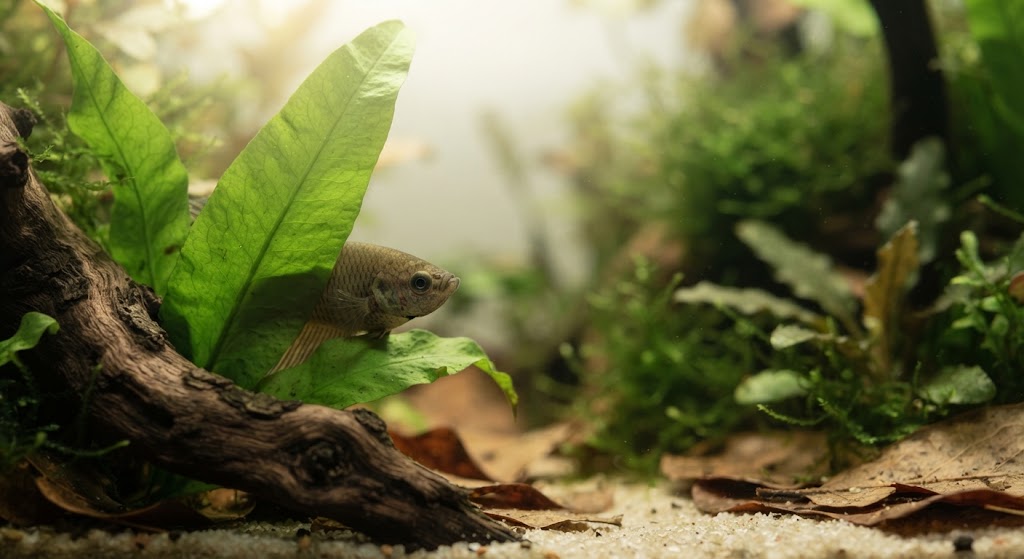
Behavior varies by species, but a few patterns show up often.
Territorial behavior. Many wild males defend territory, especially when breeding. The UF/IFAS fact sheet describes male B. splendens as among the most aggressive fishes, and that trait comes from their wild origins. Not every species is this aggressive. Some are quite peaceful. For more on aggression in domestic fish, see our article on aggressive betta fish.
Hiding. Wild bettas often hide, particularly when new. A shy fish is not always a sick fish. Give it cover and time to settle.
Exploring. Once comfortable, many bettas explore plants and driftwood, hunting for small food.
Feeding behavior. Bettas are patient hunters. They often prefer food that moves.
Species differences. Some species form loose groups. Others stay solitary or pair up. Look up your exact species.
Can Wild Betta Fish Live With Other Fish?
Sometimes, but no pairing is guaranteed.
Compatibility depends on:
- The species of betta
- The sex and temperament of the individual
- Tank size and layout
- The tank mates you pick
Peaceful bettas in a large, heavily planted tank have the best chance of living with calm fish. Even then, results vary. Avoid fin-nippers, other bettas (unless you know the species is compatible), and fast, boisterous fish that compete for food.
Many keepers prefer a species-only tank for wild bettas. This lets the fish show natural behavior and keeps stress low. If you try tank mates, add a backup tank and watch closely.
For general guidance on domestic bettas, see our article on betta fish tank mates. Female domestic bettas are a different case, as covered in will female betta fish kill each other.
Wild Betta Fish Breeding
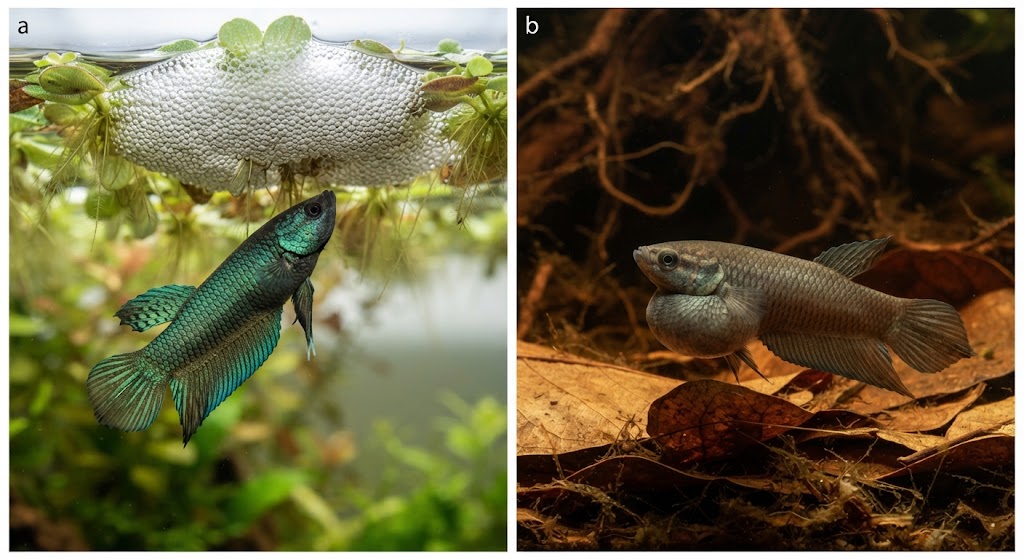
Breeding wild bettas varies by species.
Bubble nesters. The male builds a nest at the surface. After courtship, the pair spawns beneath the nest. The male collects the eggs, places them in the nest, and guards them.
Mouthbrooders. After spawning, the male typically carries the eggs in his mouth. He may not eat while brooding. The young hatch and are released after a couple of weeks, depending on the species.
Breeding takes planning. You need healthy adults, stable water, suitable food, and space to raise fry. Fry often need tiny live foods. Always check the specific species’ needs. For domestic breeding, our article on how many times you can breed a betta is a useful starting point.
Keep one more thing in mind. Captive breeding can reduce pressure on wild populations, since tank-bred fish are often easier to keep than wild-caught ones. Whenever possible, buy tank-bred fish from reputable breeders.
Are Wild Betta Fish Good for Beginners?
The honest answer: it depends on the species and on you.
Reasons they can work:
- Some species stay small and fit modest tanks.
- A well-planted, stable tank suits many species.
- Learning about natural habitats can be rewarding.
Reasons they can be tricky:
- Care information is thinner than for domestic bettas.
- Some species need soft, acidic, or very stable water.
- Wild-caught fish may be stressed, may refuse food, and can carry diseases.
- Availability and prices vary.
- Shy fish are harder to enjoy if you want a lively centerpiece.
If you are new to fishkeeping, start with the basics. A domestic betta is a simpler first step. Our fish care guide covers the fundamentals. You can also see how bettas compare in our list of best fish pets and read whether a betta fish is good for home. Some people keep bettas for symbolism, too, as in our post on lucky fish for home.
Once you have a stable tank and some experience, a hardy, tank-bred wild species such as Betta imbellis may be a good next step. Check lifespan for your species, because data is limited for many. For domestic fish, see how long betta fish live.
Frequently Asked Questions
What is a wild betta fish?
A wild betta is a Betta species living in nature, or a fish closely descended from wild stock. It is not the long-finned domestic Betta splendens from most pet stores. The term covers many species.
Where do wild betta fish live?
They live in freshwater across Southeast Asia. Habitats include rice paddies, marshes, slow streams, and peat swamps in countries like Thailand, Cambodia, Malaysia, and Indonesia. Each species has its own range.
Are wild bettas aggressive?
Some are, especially males defending territory. Others are fairly peaceful. Temperament varies by species and by individual fish, so research your exact species.
What do wild betta fish eat?
They are carnivores. In nature they eat insects, larvae, worms, and tiny crustaceans. In aquariums, they do well on live or frozen foods like daphnia and brine shrimp, plus quality carnivore pellets when accepted.
Can wild betta fish live in a tank?
Yes, many species do well in aquariums when their needs are met. They need a cycled tank, stable water, hiding places, and the right food. Wild-caught fish may take longer to adapt than tank-bred fish.
How big do wild betta fish get?
It depends on the species. Many stay around 1.5 to 3 inches. Larger species, such as Betta macrostoma, grow bigger. Always check the adult size of the species you want before choosing a tank.
What is the difference between wild and domestic bettas?
Domestic bettas have been selectively bred for color and fin shape. Wild bettas keep natural coloring, shorter fins, and more varied behavior. Wild species also differ widely from one another in care needs.
Are wild betta fish rare?
Availability varies. Some species, like Betta imbellis, appear in the trade fairly regularly. Others are hard to find. Several wild species are under pressure in nature, so buying tank-bred fish is the better choice.
Conclusion
Wild betta fish are far more varied than the cup-sized pets many people know. They include bubble nesters and mouthbrooders, peaceful species and fierce ones, and fish from paddies, swamps, and forest streams. Their care depends on the species, so research comes first.
Build a stable, planted, gently filtered tank. Match the water to your chosen species. Offer varied carnivore foods, and buy tank-bred fish when you can. If you are new to the hobby, start with simpler fish and move on when you feel ready.