
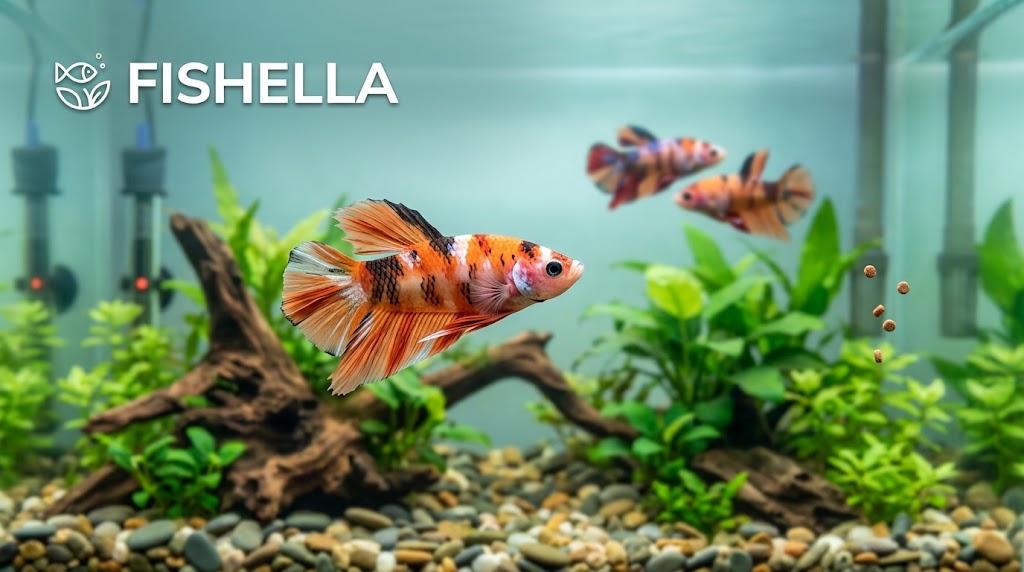
Female betta fish care involves providing a spacious, heated aquarium, clean water, a protein-rich diet, and suitable hiding places. An individual female needs enough room to swim and explore, while a female betta sorority requires a much larger, carefully managed tank. However, female bettas can still show aggression, so keeping several together is not always successful.
A well-maintained tank helps female bettas stay active and supports their overall health. Proper filtration, stable water parameters, and a fully cycled aquarium are essential for a healthy environment.
Feeding your female betta a balanced diet with high-quality pellets and occasional frozen or live foods helps meet her nutritional needs. Consistent feeding habits also help you monitor her appetite and spot potential health problems.
In this guide, you’ll learn how to set up a female betta tank, choose the right food, and understand the risks of keeping multiple females together.
Why Female Betta Fish Care Deserves Its Own Guide
Female bettas aren’t just smaller versions of males. They grow to about 2.5–3 inches, carry shorter fins, and show noticeably calmer temperaments in most cases. You’ll also spot a small white marking near their belly called an egg spot, which males don’t have. None of this means females need less care — it just means their care looks a little different. Get familiar with these traits early, and you’ll make smarter choices at the pet store. If you want a full breakdown, check our guide to male vs. female betta fish differences.
Female Betta Fish Tank Setup: Getting the Basics Right

Tank setup makes or breaks your success with female betta fish care. Skip this step or rush it, and you’ll spend months fighting water quality problems instead of enjoying your fish.
Pick the Right Tank Size First
Give a single female at least 5 gallons, though 10 gallons works even better. Larger tanks dilute waste faster and hold their temperature more steadily, which takes a lot of guesswork out of daily maintenance. Planning a sorority instead? Budget 20–30 gallons minimum, since more space means fewer territorial disputes down the line. Our betta fish tank setup guide walks through the full process, including how to cycle a brand-new tank before adding any fish.
Don’t Skip the Nitrogen Cycle
Cycling builds up the bacteria that convert toxic ammonia into safer compounds. Add your betta before this process finishes, and you’re setting her up for stress and illness right out of the gate. Give the tank two to four weeks to cycle properly, then test your water before adding her.
Equip the Tank Correctly
Female betta fish care runs a lot smoother with the right gear:
- Filter: Choose something gentle. Strong currents exhaust bettas and can shred their fins.
- Heater: Keep the water steady between 76–80°F. A cheap heater without a thermostat causes more harm than good.
- Lid: Bettas jump. Cover the tank, or you’ll eventually find her on the floor.
- Substrate and décor: Smooth gravel and silk or live plants protect delicate fins from tears.
- Lighting: A simple light on a timer supports live plants and gives her a natural day-night rhythm.
Water Parameters That Keep Female Bettas Healthy

Water quality drives everything in female betta fish care. Get this wrong, and even a perfect tank setup won’t save your fish.
Target these numbers:
- pH: 6.5–7.5
- Temperature: 76–80°F
- Ammonia: 0 ppm
- Nitrite: 0 ppm
- Nitrate: Under 20 ppm
Test weekly with a liquid kit — paper strips miss too much and give false confidence. Change 10–25% of the water every week to keep waste from building up. The University of Illinois Veterinary Teaching Hospital notes that bettas kept in properly sized, well-maintained tanks stay noticeably healthier than those crammed into small bowls without real filtration.
Female Betta Fish Diet: What to Feed and How Often

Bettas eat meat in the wild — insects, larvae, small invertebrates — so their diet in your tank should reflect that. Build your female betta fish care routine around these staples:
- High-quality betta pellets as her everyday food
- Occasional treats like brine shrimp, daphnia, or bloodworms for variety
- One to two feedings a day, giving only what she eats within 2–3 minutes
- Prompt removal of anything left over
Overfeeding causes more health problems than underfeeding ever will. If food sits uneaten after every meal, cut the portion back immediately.
Female Betta Fish Colors and How to Choose a Healthy One
Breeders have expanded female coloration far beyond the muted tones people expect. You’ll now find koi, marble, butterfly, and galaxy patterns in females, along with veiltail, halfmoon, crowntail, and plakat fin types. When you’re picking one out, skip past color for a second and look at her condition instead. Choose a fish with bright eyes, fully extended fins, and confident, steady swimming. Avoid anything hovering listlessly or holding its fins clamped tight against its body.
Sorority Tanks: The Female Betta Fish-Only Option
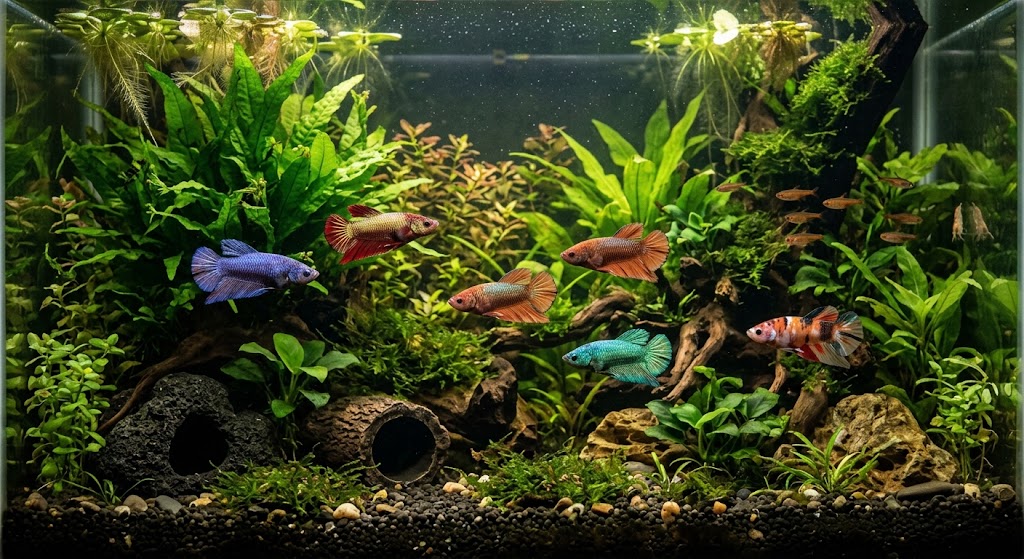
Here’s where female betta fish care really splits from the male playbook. Males fight to the death if housed together. Females, on the other hand, can sometimes live in groups called sororities — something you simply can’t attempt with males.
How to Set Up a Sorority the Right Way
- Start with five or six females, not two or three. A bigger group spreads out aggression instead of focusing it on one unlucky fish.
- Use a tank of 20 gallons or larger, packed with plants and hiding spots that break up sightlines.
- Add every fish at the same time so no single betta claims territory before the others settle in.
- Watch closely for the first two weeks. Torn fins, clamped fins, or one fish getting chased nonstop are red flags.
- Keep a backup plan ready — a divider or a spare tank — in case one female needs to come out.
Sororities don’t work every time, and some females never adjust to group life no matter how carefully you set things up. That’s not a failure on your part; it’s just part of keeping fish with individual personalities.
Female Betta Fish Tank Mates That Actually Work

Females tolerate company better than males, but that doesn’t mean anything goes. Stick with:
- Corydoras catfish, which stay near the bottom and rarely interact with her
- Nerite snails, which handle algae without posing any threat
- Ember tetras or harlequin rasboras, as long as the tank gives everyone room
- Amano shrimp, though watch closely since some bettas treat smaller shrimp as snacks
Steer clear of fin-nippers like tiger barbs, and never pair her with another labyrinth fish competing for the same surface oxygen. Our betta fish tank mates guide breaks down safe stocking ratios in more detail.
Female Betta Fish Behavior Worth Knowing
Don’t assume females sit quietly in the corner. Many recognize their owners and swim to the glass at feeding time. They’re active during the day, so you’ll see plenty of her personality if you’re paying attention. Occasional flaring at her reflection or at other females through the glass is normal. Constant, prolonged stress displays, though, usually mean something in the tank needs fixing.
Female bettas can also show curiosity and respond to familiar routines. Read more about whether betta fish recognize their owners and what their reactions may tell you.
Spotting Health Problems Early
Healthy vs. Sick: Know the Difference
A healthy female swims confidently, holds her fins fully extended, and eats with enthusiasm. Watch for these warning signs instead:
- Fin rot: Ragged or shrinking fins, usually tied to poor water quality
- Ich: Small white spots scattered across her body
- Velvet disease: A fine gold or rust-colored dusting visible under direct light
- Lethargy or clamped fins: Often the first sign something’s off with her water
Water quality causes most illness in female betta fish care, so consistent maintenance beats reactive treatment every time. Catch symptoms early, isolate her if you can, and check our guide to betta fish diseases and treatment for next steps.
A Simple Maintenance Routine
Keep this schedule and you’ll rarely run into trouble:
- Daily: Feed once or twice, glance at the temperature, watch her behavior
- Weekly: Test the water, change 10–25%, clear out debris
- Monthly: Rinse filter media in old tank water (never tap water, which kills beneficial bacteria) and check décor for buildup
Female Betta Fish Care FAQs
How long do female bettas live?
Expect 2–4 years with solid care, sometimes longer.
Can I keep female bettas together?
Yes — in groups of five or more, in a tank large enough to spread out territory.
Do females need a heater like males do?
Absolutely. Females need the same steady 76–80°F range regardless of your home’s temperature.
Are females less colorful than males?
Not always. Selectively bred varieties like koi and marble females rival males for color.
Final Thoughts
Solid female betta fish care isn’t complicated once you understand the fundamentals: a properly cycled tank, stable warm water, a protein-rich diet, and real attention to her behavior. Whether you’re keeping one female or building out a full sorority, these basics will keep her thriving for years.
Ready to build her tank the right way? Start with our complete 5 Gallon vs 10 Gallon Tank for Betta Fis.
Pingback: Will Female Betta Fish Kill Each Other? (Sorority Guide)
Pingback: Betta Fish Overfeeding and Bloating: Signs and Fixes
Pingback: Pearl Betta Blue Spots: Causes, Signs and What to Do