
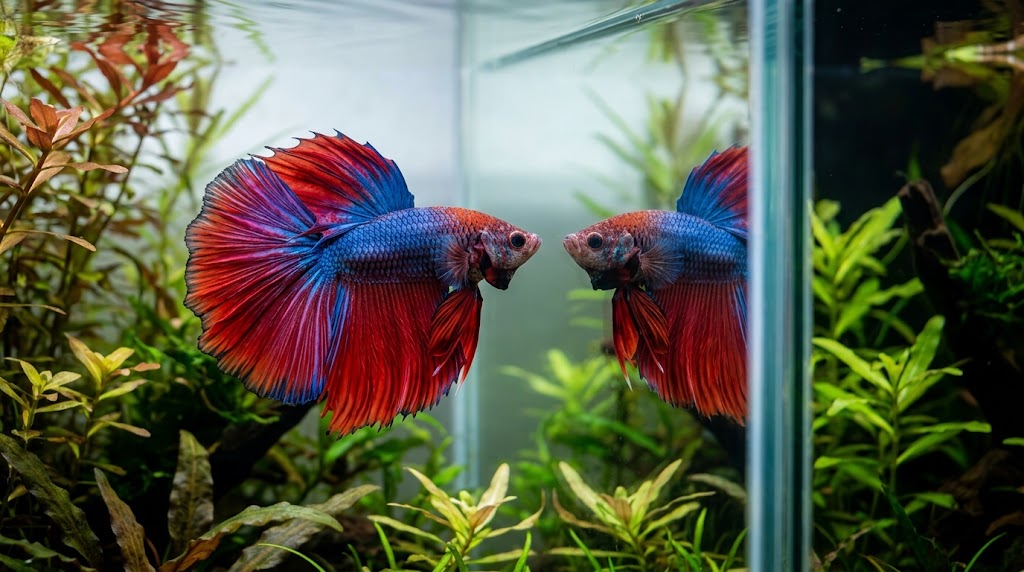
Aggressive betta fish keep flaring, charging, chasing, or biting other fish, snails, shrimp, or even their own reflection. One quick flare isn’t a problem. A repeated pattern that leaves other animals hiding or injured is.
Male bettas are especially territorial. Some still get along with calm neighbors, while others defend their space fiercely. Learning to read the signals helps you decide whether your betta should live alone or can safely share a tank.
Not every reaction means your betta is aggressive. Understanding whether betta fish recognize their owners can help you distinguish familiar responses from territorial behavior.
The 7 Signs of an Aggressive Betta Fish
Watch your fish for a few days before deciding you have an aggressive betta fish.
1. Gill Flaring

Your betta spreads its gill covers and fins to look bigger. It’s a classic territorial display and often shows up when your betta spots another fish or its reflection.
A brief flare is normal. An aggressive betta fish flares again and again, then follows up with charging or biting. The University of Florida IFAS guide to Betta splendens notes that male bettas show their gill covers and fins during aggressive encounters.
2. Charging

Your betta suddenly darts at a fish, snail, shrimp, or reflection. Sometimes it stops short. Sometimes it follows through with a bump or bite.
One dash means little. If it keeps charging the same tank mate, the tension is real, and that fish will eventually get stressed or hurt.
3. Chasing
A curious betta swims over, looks around, and leaves. An aggressive one follows its target around the tank and won’t let up.
4. Fin Nipping
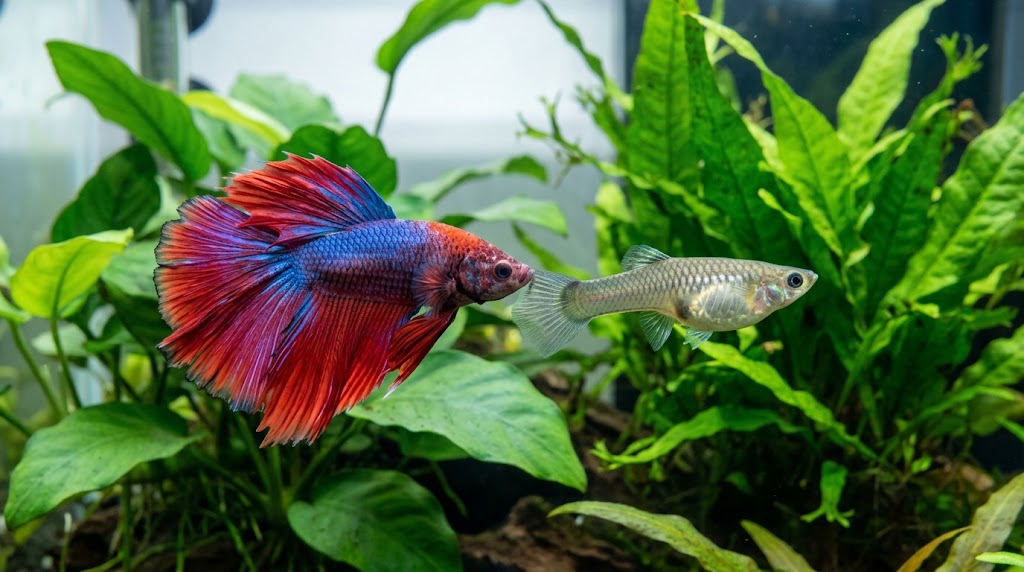
Look for small tears or missing pieces in a tank mate’s fins or tail, especially if they appeared after the introduction.
Keep in mind that poor water quality and sharp decorations can also damage fins. Check the whole setup before blaming your betta alone. If the biting is clearly coming from your betta, separate the fish.
5. Ramming and Biting
Ramming is a hard body bump, often followed by a bite. It’s a step beyond charging and a strong sign that the other animal is in danger.
6. Pacing and Stalking
Your betta swims back and forth along the glass or shadows another fish for long stretches.
Treat this one as a clue, not proof. Reflections, stress, poor water, or a bare, cramped tank can cause pacing too. Look for it alongside other signs on this list.
7. Repeated Attacks on a Reflection
Bettas often mistake their reflection for a rival. A few seconds of flaring at the glass is normal. Constant attacks on it suggest a very territorial fish, and that’s worth remembering before you add a tank mate.
Curiosity or Aggression? How to Tell
The two can look alike for the first few seconds, so watch for several minutes.
- Curious: approaches, inspects, then swims away.
- Aggressive: repeats the behavior, chases, rams, bites, or corners the other animal.
Then check the other animal. Constant hiding, refusing food, torn fins, or staying away from open water all point to stress. If you see these, the interaction isn’t safe, even if your betta seems “fine.”
What Makes a Betta Aggressive?
Several things can turn a calm fish into an aggressive betta fish, and territory is the biggest one. A betta may react when another fish enters its favorite spot, and bright colors, long fins, or a similar body shape can make things worse.
A few other factors matter too:
- Space: crowded tanks leave no room for separate zones.
- Stress: poor water quality, sudden changes, and unsuitable conditions can make a betta more reactive.
- Personality: every betta is different. Some ignore neighbors, while others attack on sight.
For a full overview of proper care, read our Betta Fish Care: Complete Beginner’s Guide.
Two Simple Tests (Use Them Sparingly)
These tests help you see how an aggressive betta fish reacts to a rival. They shouldn’t be used to provoke it again and again.
The Mirror Test
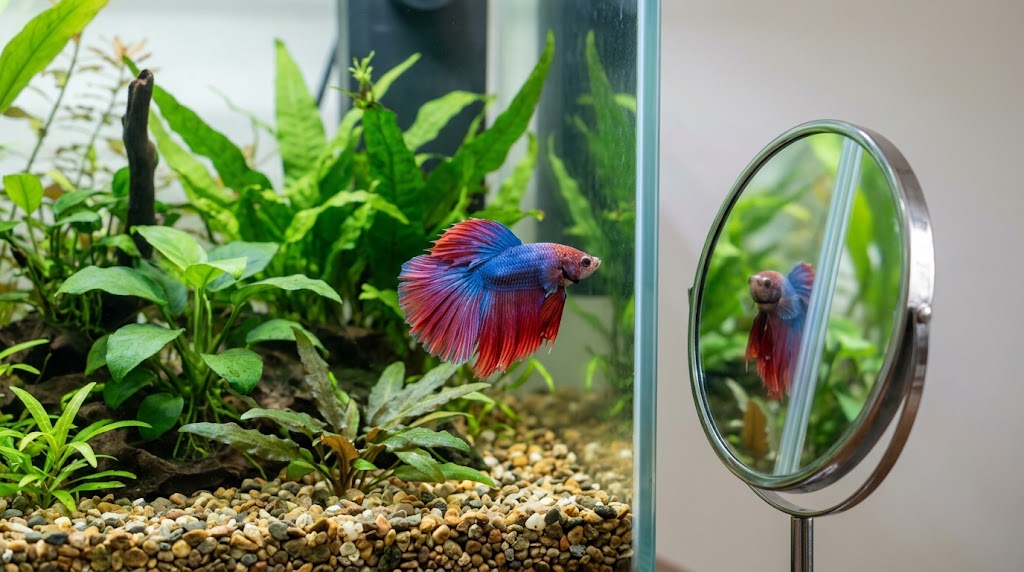
Hold a small mirror against the outside of the glass for about 30 to 60 seconds, then remove it. Flaring, fanned fins, and repeated charging at the glass show a strong territorial response.
Don’t leave the mirror in place or repeat it daily, since that causes unnecessary stress. The result also can’t predict exactly how your betta will treat a real tank mate.
The Bag Test
Float a clear bag holding the potential tank mate in your betta’s tank. If your betta flares and attacks the bag, expect trouble.
A calm reaction doesn’t guarantee peace, though. Behavior often changes once the barrier is gone, so keep watching after the introduction.
Signs Your Betta Is Bullying a Tank Mate
After adding a new fish, keep an eye on both animals for the first few hours and again over the next few days. Repeated chasing, torn fins, hiding, and lost appetite in the other fish are your red flags.
If the problem continues, separate them. Waiting for things to “settle down” usually hurts the weaker fish. For another look at betta aggression, read our guide on Will Female Betta Fish Kill Each Other?
Can an Aggressive Betta Live With Other Fish?
Sometimes, but there are no guarantees. Never keep two male bettas together. Beyond that, temperament varies a lot from fish to fish.
Before adding a tank mate, think about:
- Tank size and swimming room (many keepers suggest at least 5 gallons for a betta alone, and more with company)
- Hiding spots and plants that break up lines of sight
- Water and temperature needs of the new fish
- The tank mate’s temperament and appearance
If your betta keeps attacking other fish, a species-only tank is the safest choice. You can also learn about their normal lifespan and needs in our guide about how long betta fish live.
What to Do If Your Betta Is Aggressive
If you have an aggressive betta fish, these steps will help:
- Separate the fish right away if there are injuries or constant attacks. A tank divider works as a temporary fix.
- Rearrange the decor when introducing fish. A new layout breaks up an established territory.
- Add hiding places so the weaker fish can get out of sight.
- Test your water regularly and keep conditions stable.
- Consider a solo setup if the aggression doesn’t improve.
The Merck Veterinary Manual guide to providing a home for fish covers tank space, environmental conditions, and managing aggression between fish. For upkeep tips, read our guide on How to Clean a Fish Tank.
Betta Aggression: Quick Answers
Does gill flaring always mean aggression?
No. Short flaring at a reflection is a normal territorial reaction. It becomes a concern when it comes with chasing, biting, or injuries.
Is it normal for a betta to attack its reflection?
Yes, it thinks it’s seeing a rival. Brief moments are fine, but don’t leave a mirror in place for long.
Can a calm betta suddenly turn aggressive?
Yes. Changes in the tank, territory, tank mates, or water conditions can shift behavior. If aggression appears suddenly, check the environment first. If your betta chases or attacks other fish, read our guide to keeping betta fish with guppies to understand why this pairing can be risky.
Should I separate an aggressive betta?
Yes, if it keeps attacking or injures another fish. A divider is a good short-term solution.
Can male bettas live with other fish?
Some can, with carefully chosen companions, but temperament varies. Monitor closely after every introduction.
Conclusion
Some territorial behavior is normal for bettas. What matters is a repeated pattern of flaring, chasing, nipping, and attacking that leaves other animals stressed or hurt. If your aggressive betta fish shows that pattern, don’t force it to share a tank. A peaceful aquarium is one where every fish feels safe.
For more betta care guides and aquarium information, visit Fishella.

Pingback: Betta Fish Tank Mates: 11 Fish That Can Live with a Betta
Pingback: Can Betta Fish Live With Guppies? What to Know