
Learn how to clean a fish tank safely in 2026. Follow simple steps for aquarium cleaning, water changes, gravel vacuuming, filter care, and fish tank maintenance. Keeping an aquarium clean is one of the most important parts of fish care. A clean tank looks better, but more importantly, regular maintenance helps control waste, algae, and poor water quality.
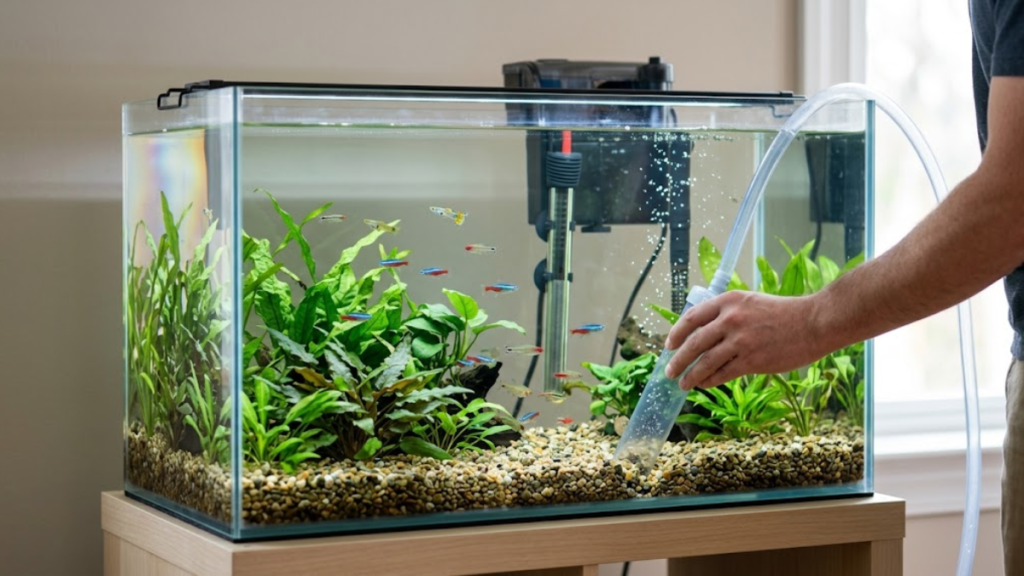
If you are wondering how to clean a fish tank, you do not need to empty the whole aquarium or scrub everything every week. A simple routine of partial water changes, gravel vacuuming, glass cleaning, and filter care is usually enough.
In this guide, you will learn how to clean a fish tank safely, how often to clean it, whether you should remove your fish, and what mistakes to avoid. For a safe and stress-free aquarium cleaning routine, learn how to do a water change without removing fish while keeping your fish in the tank.
How To Clean a Fish Tank
The easiest way to clean a fish tank is to remove waste without destroying the healthy biological system inside the aquarium. Start by turning off equipment that should not run during the cleaning process, such as the heater and filter. Clean the glass, remove visible waste, vacuum part of the gravel, and then perform a partial water change.
You should not normally empty the entire aquarium. Your filter and substrate contain beneficial bacteria that help process fish waste. Removing everything at once can disturb the aquarium’s biological balance. For most freshwater aquariums, a regular partial water change is a much better approach than a complete tank teardown.
How Often Should You Clean a Fish Tank?
There is no single cleaning schedule that works for every aquarium. A lightly stocked tank with good filtration may need less cleaning than a small tank with several fish. As a general routine, many aquarists perform a partial water change about once a week. Fluval recommends weekly partial water changes, while other aquarium care guides describe smaller changes every one to two weeks depending on the setup.
A simple maintenance schedule can look like this:
- Every few days: Check the fish and look for uneaten food or unusual waste.
- Weekly: Check water condition, clean visible algae, and perform a partial water change when needed.
- Weekly or as needed: Lightly vacuum the gravel.
- Regularly: Check the filter and clean mechanical media according to the filter manufacturer’s instructions.
- Every few weeks: Test important water parameters and review your maintenance routine.
Your fish load, tank size, feeding habits, plants, and filter all affect how often your aquarium needs maintenance.
Do You Take Fish Out of Tanks When Cleaning?
For normal aquarium cleaning, you usually do not need to remove your fish. Catching fish with a net can cause unnecessary stress, especially when you are only doing a partial water change. A gravel vacuum can be used carefully while the fish remain inside the aquarium.
Instead of removing your fish, work slowly and avoid sudden movements. Keep the gravel vacuum away from fish that are resting near the bottom. There are situations where fish may need to be moved, such as when completely moving an aquarium, repairing the tank, or performing a major teardown. Normal fish tank maintenance is different from those situations.
How To Safely Clean Your Fish Tank
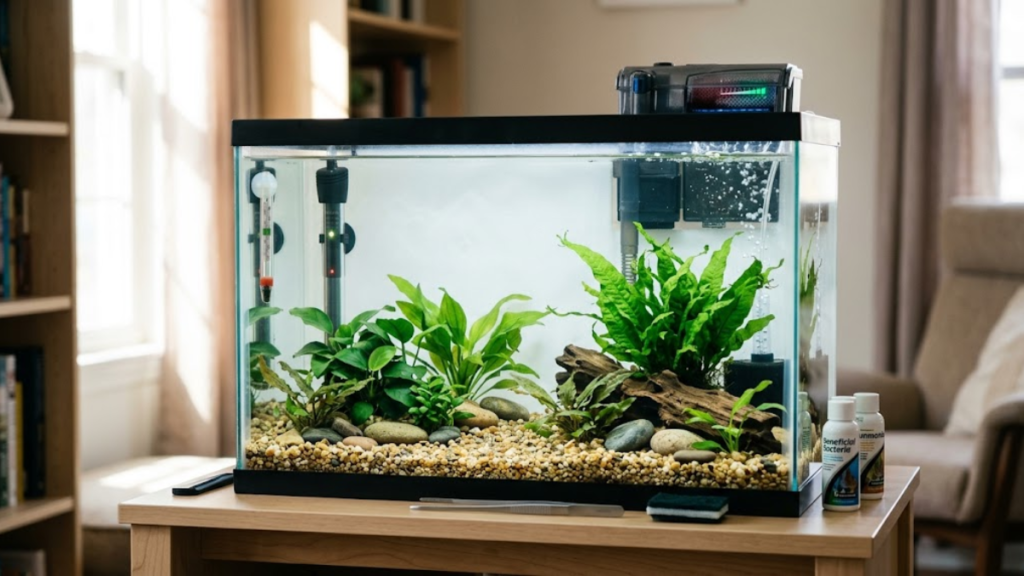
Before you start cleaning, prepare everything you need. Having your equipment ready makes the process faster and reduces the chance of forgetting an important step.
Always use aquarium-safe equipment and never clean aquarium items with household soaps, detergents, or chemical cleaners. When preparing new water, treat tap water with an appropriate aquarium water conditioner. Tap water may contain chlorine or chloramine that can harm fish and beneficial bacteria. The new water should also be close to the temperature of the aquarium water. Adding water that is much colder or warmer can stress your fish.
A safe cleaning routine should include:
- Turning off equipment when necessary
- Removing visible waste
- Cleaning algae from the glass
- Vacuuming part of the substrate
- Removing a portion of old water
- Treating replacement water
- Matching the new water temperature
- Refilling the tank slowly
- Restarting the equipment
Freshwater Fish Tank vs Marine Fish Tank Cleaning
The basic idea behind cleaning both freshwater and marine aquariums is similar: remove waste while protecting the aquarium’s biological system.
However, marine aquariums require additional attention to salinity and other water parameters. A freshwater tank normally does not require the same saltwater testing and preparation routine. For a beginner freshwater aquarium, focus on consistent water changes, filtration, gravel cleaning, algae control, and water testing.
If you are setting up a freshwater aquarium for the first time, see our guide on Setting Up a Freshwater Aquarium for the basic equipment and setup process.
For a saltwater aquarium, follow maintenance instructions specific to your livestock, filtration system, and saltwater setup.
What You Need To Clean a Fish Tank
You do not need a huge collection of equipment to keep a home aquarium clean.
The basic tools include:
- Aquarium gravel vacuum or siphon
- Clean bucket used only for aquarium maintenance
- Algae scraper or aquarium-safe cleaning pad
- Water conditioner
- Aquarium water test kit
- Clean towels
- Replacement filter media when required
- Thermometer for checking water temperature
A gravel vacuum is especially useful because it removes dirty water while allowing you to pull waste from the substrate. Aquarium maintenance companies such as Aqueon and Fluval recommend gravel-cleaning tools as part of routine aquarium maintenance.
Do not use a bucket that has previously contained bleach, detergent, or other household chemicals.
Simple Steps: How to Clean a Fish Tank
Now let’s go through the actual process step by step.
Step 1: Wash Your Hands
Wash your hands before starting aquarium maintenance. Remove any soap or lotion from your hands before putting them near the aquarium. Avoid using hand sanitizer, perfume, lotion, or cleaning chemicals immediately before working inside the tank.
Step 2: Turn Off the Aquarium Equipment
Turn off the filter and heater before starting the cleaning process when appropriate. This helps protect equipment while the water level is changing and makes it easier to clean the aquarium safely. If your heater is exposed because the water level is dropping, make sure it is switched off and allowed to cool before removing it.
Step 3: Clean the Aquarium Glass
Use an aquarium-safe algae scraper or cleaning pad to remove algae from the inside glass. Move slowly and check your substrate before using a scraper. If your aquarium is acrylic, use a tool designed specifically for acrylic because some cleaning pads can scratch the surface. You can clean the outside glass separately with a suitable aquarium-safe glass cleaner, keeping household chemicals away from the aquarium water.
Step 4: Remove Uneaten Food and Visible Waste
Look around the bottom of the aquarium for uneaten food, dead leaves, and other visible debris. Removing waste regularly helps prevent unnecessary organic material from breaking down in the aquarium. If you notice a lot of uneaten food, review how much you are feeding your fish. Overfeeding can contribute to dirty water and algae problems.
Step 5: Use a Gravel Vacuum
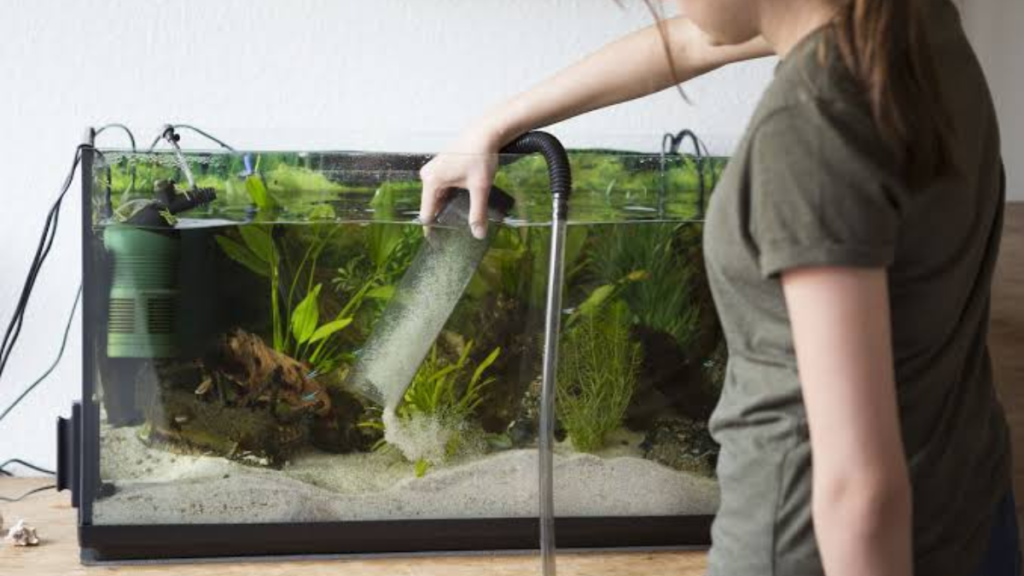
Place the gravel vacuum into the substrate and start the siphon according to the tool’s instructions. Move the vacuum slowly through different sections of the gravel. The goal is to remove trapped fish waste and debris without removing large amounts of substrate.
Do not try to clean every piece of gravel during every water change. Cleaning sections of the substrate at different times can help you maintain the tank without over-disturbing it.
Step 6: Remove a Portion of the Water

Use the gravel vacuum to remove a portion of the old aquarium water. The exact amount depends on your aquarium’s condition and maintenance schedule. Many aquarium guides use partial changes rather than completely emptying the tank. For routine maintenance, avoid treating a normal water change like a complete tank reset.
Step 7: Clean the Filter Carefully

Your filter is one of the most important parts of your aquarium because it supports mechanical and biological filtration. Remove accumulated dirt from mechanical filter media as needed. If you need to rinse biological media, use some removed aquarium water rather than untreated tap water to avoid damaging beneficial bacteria. Do not replace all biological filter media at the same time unless the manufacturer’s instructions or a specific situation requires it.
Step 8: Prepare the New Water
Add fresh water to your clean aquarium bucket. Treat the water with an aquarium-safe water conditioner according to the product’s instructions. Make sure the replacement water is close to the aquarium’s temperature before adding it. This step is important because untreated tap water can contain chemicals that are harmful to fish and aquarium bacteria.
Step 9: Slowly Refill the Aquarium
Pour the prepared water back into the tank slowly. You can pour the water onto a clean plate, bowl, or similar surface to reduce the force hitting the gravel. This helps prevent the substrate from becoming a mess. Watch the fish while refilling and make sure the water level returns to the normal operating level.
Step 10: Turn the Equipment Back On
Once the tank is refilled, turn the filter and heater back on. Check that water is flowing through the filter correctly and that the heater is operating normally. Look at your fish for a few minutes after the cleaning. They may behave differently for a short time because the tank environment has just changed.
How To Clean a Fish Tank Without Removing the Fish
Many beginners think the fish need to be moved into another container every time they clean the aquarium. Usually, this is not necessary.
For routine aquarium cleaning, leave the fish in the tank and use a gravel vacuum carefully. This avoids the stress of catching and moving the fish. Aqueon’s aquarium care guidance also describes cleaning routines where fish remain in the aquarium. Work slowly, keep the vacuum under control, and avoid chasing fish around the tank.
If you keep a betta, you can also read our detailed Betta Fish Care Guide to learn more about maintaining a healthy environment for your fish.
Common Fish Tank Cleaning Mistakes
Cleaning too much can sometimes be just as problematic as not cleaning enough. The goal of aquarium maintenance is not to make the tank look perfectly sterile. Your aquarium is a living system that depends on beneficial bacteria and stable water conditions.
Avoid these common mistakes:
- Emptying the entire tank during normal cleaning
- Using soap or household detergent
- Adding untreated tap water
- Adding water with a very different temperature
- Replacing all filter media at once
- Deep-cleaning the entire substrate every time
- Overfeeding fish
- Ignoring water test results
- Cleaning without checking the filter
- Scrubbing useful biological media too aggressively
A healthy aquarium should be clean but still biologically established.
Troubleshooting: How to Clean a Fish Tank
Why Does My Fish Tank Get Dirty So Fast?
A tank can become dirty quickly because of overfeeding, too many fish, poor filtration, or insufficient maintenance. Start by checking how much food reaches the bottom. Then inspect your filter and test the water. If waste levels are high, increase your maintenance routine gradually instead of repeatedly performing complete tank cleanouts.
Why Is My Fish Tank Cloudy After Cleaning?
Cloudy water can happen for several reasons, including disturbed debris or bacterial changes. If the water becomes cloudy, check your ammonia and nitrite levels rather than judging water quality only by appearance. Clear water does not always mean the water is safe.
If ammonia or nitrite is present, take action based on your test results and the needs of your fish.
Why Is There So Much Algae?
Algae can increase when an aquarium receives too much light or has excess nutrients. Review your lighting schedule, feeding habits, water changes, and nitrate levels. Removing algae from the glass can improve the appearance of the tank, but finding the reason for the algae growth is the better long-term solution.
Should I Clean the Gravel Every Time?
You can use a gravel vacuum during routine maintenance, but you do not need to aggressively deep-clean every inch of substrate every time. Focus on areas where waste collects. If you have a planted aquarium or a newly established tank, use extra care because disturbing the substrate may affect the setup.
How Often Should You Change Fish Tank Water?
Water changes should be based on the aquarium’s actual needs rather than a single rule that applies to every tank. Weekly partial water changes are a common maintenance routine, especially for established freshwater aquariums. Fluval recommends weekly partial changes, while Aqueon provides several maintenance schedules depending on aquarium conditions.
Your water test results can help you decide whether your current routine is working. If nitrate or other water-quality problems keep rising, look at stocking levels, feeding, filtration, and maintenance instead of simply changing more water without finding the cause.
How Fish Tank Cycling Helps Keep Water Clean
Cleaning your aquarium is only one part of good fish tank maintenance. A properly cycled aquarium has beneficial bacteria that help process toxic fish waste. These bacteria convert ammonia into nitrite and then nitrate, making the nitrogen cycle an important part of aquarium health. If you have a new aquarium, do not confuse cleaning with cycling.
Before adding fish to a new tank, learn how the nitrogen cycle works and how to monitor ammonia and nitrite. Our guide How to Cycle a Fish Tank Fast explains the cycling process in more detail.
Final Thoughts
Learning how to clean a fish tank does not have to be complicated. You do not need to empty the aquarium, remove your fish, or scrub every surface until it looks brand new.
A simple routine is usually enough: remove visible waste, clean the glass, vacuum the gravel, perform a partial water change, treat new water, and keep your filter working properly. Most importantly, pay attention to your fish and water test results. A clean-looking aquarium is nice, but stable and healthy water conditions are what really matter.
Quick Fish Tank Cleaning Checklist
Before you finish your next cleaning, check that you have:
- Cleaned visible algae
- Removed uneaten food and waste
- Vacuumed the appropriate areas of the substrate
- Completed a partial water change
- Treated the replacement water
- Matched the new water temperature
- Checked the filter
- Turned the aquarium equipment back on
- Observed your fish after cleaning
Regular aquarium cleaning and fish tank maintenance become much easier once you make them part of your normal routine.
FAQ
How do I deep clean my fish tank?
For a deep clean, remove algae and waste, vacuum the gravel, clean the equipment, and perform a partial water change. Avoid using soap or completely sterilizing the tank because beneficial bacteria are important for water quality.
What kills fish in a fish tank?
Poor water quality, ammonia or nitrite buildup, untreated tap water, sudden temperature changes, overfeeding, and overcrowding can harm or kill fish. Regular water testing and proper maintenance help prevent these problems.
How often should a fish tank be cleaned?
Most freshwater tanks benefit from regular weekly maintenance, including checking water quality and removing waste. The exact schedule depends on the tank size, number of fish, filtration, and water test results.
What are signs of a dirty fish tank?
Common signs include cloudy or foul-smelling water, excessive algae, visible waste, uneaten food, and rising ammonia or nitrate levels. Fish may also become less active or show unusual behavior when water quality is poor.
For external authority references, Aqueon has a useful Aquarium Cleaning Checklist, while Fluval provides guidance on weekly partial water changes and the RSPCA explains filtration, water changes, and water testing in its fish aquarium care guidance.
Pingback: How to Feed Betta Fish When on Vacation: Safe Plan
Pingback: Clean Aquarium Filter Sponge Safely: Step-by-Step Guid
Pingback: Clean Aquarium Filter Sponge without killing bacteria: Step-by-Step Guid