
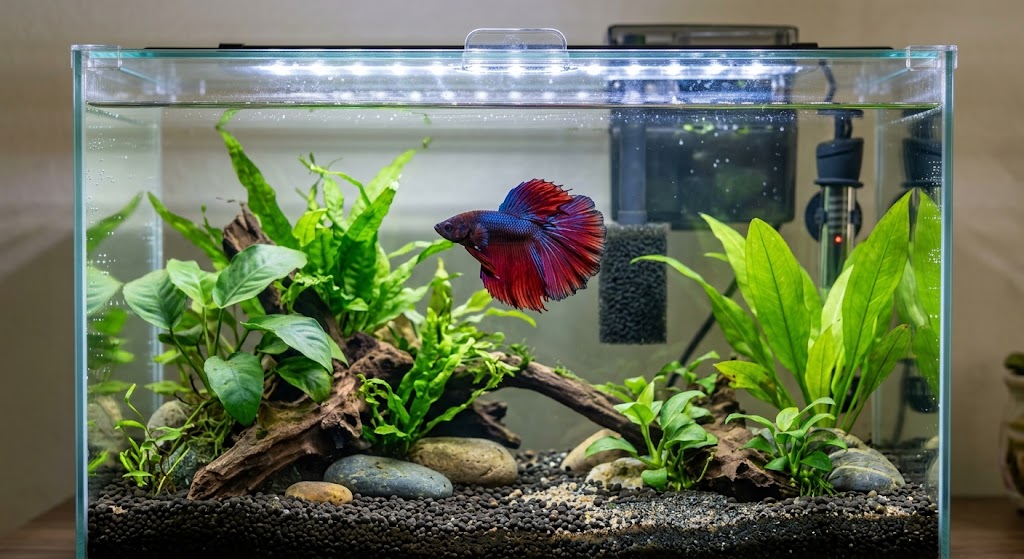
Knowing how to feed betta fish when on vacation helps keep your fish healthy while you are away. Healthy adult betta fish can usually go 3 to 7 days without food, so short vacations rarely require special feeding arrangements. For trips lasting longer than a week, use a reliable automatic fish feeder or ask a trusted pet sitter to provide measured portions. The best approach depends on how long you will be away and your betta’s health.
Before leaving, feed your betta its normal meal rather than giving extra food. Overfeeding can leave uneaten food in the tank and damage water quality. Vacation feeding blocks are also risky because they can foul the water in small aquariums.
For trips lasting 1 to 3 days, most healthy adult bettas can manage without feeding during your absence. For 4 to 7 days, many healthy adults can tolerate a short fast, although individual health and tank conditions matter. For longer vacations, arrange regular care instead of relying on fasting.
A little preparation helps keep your betta safe while you are away. Check the heater and filter, maintain suitable water quality, and set an aquarium light timer if needed. If you choose an automatic feeder, test it several days before departure to confirm that it dispenses the correct amount.
How to Feed Betta Fish When on Vacation by Trip Length
| Trip Length | Suggested Betta Fish Feeding Plan |
|---|---|
| 1 to 3 days | Feed your betta its normal portion before leaving. Most healthy adult bettas can manage a short absence without extra feeding arrangements. Read our guide to how long a betta fish can go without food for more information. |
| 4 to 7 days | Ask a trusted helper to feed your betta once a day using pre-measured portions. A properly tested automatic feeder may serve as a backup. |
| 8 to 14 days | Arrange regular visits from a trusted helper to feed your betta and check the fish, heater, thermometer, and tank conditions. |
| More than 14 days | Arrange ongoing care from a reliable pet sitter or friend. They should provide food, monitor the equipment, observe your betta, and check water quality as needed. |
Note: These are practical planning guidelines, not guaranteed safe fasting limits. Young, thin, sick, or recovering bettas may need more attention. Never overfeed your betta before leaving.
These are practical guidelines, not proven limits. A young, thin, or sick betta needs more care.
Your Vacation Feeding Options

| Feeding Option | Benefits | Risks |
|---|---|---|
| Helper with pre-measured portions | Can feed the correct amount and notice problems. | Needs clear instructions and reliable visits. |
| Automatic feeder | Provides scheduled feeding with controlled portions when tested properly. | May jam, malfunction, or dispense too much food. |
| Vacation feeder block | Does not require an electronic feeder. | May affect water quality and offers limited control over feeding. |
| No feeding for a short trip | Simple option for a brief absence for many healthy adult bettas. | Not a suitable plan for extended absences. |
No option is safe for every setup. The University of Florida extension fact sheet on bettas warns that overfeeding and water fouling are real concerns, so avoid “extra” food. Read the UF/IFAS betta care fact sheet.
How to Prepare Your Betta Fish Tank Before You Leave

- One week before: Test any feeder or block while you are home. Watch how much food it drops.
- 1 to 2 days before: Do a normal partial water change. Avoid big, sudden changes. See our how to clean a fish tank guide.
- Check the heater and thermometer. Keep the temperature steady. Our betta fish water temperature guide explains what to aim for.
- Keep the lid on. Bettas can jump.
- Use a light timer if your light is not on a schedule. See our aquarium light schedule guide.
- Do not try a new food right before you leave. Use food your betta already eats. See best betta fish food.
How to Set Up a Betta Fish Sitter
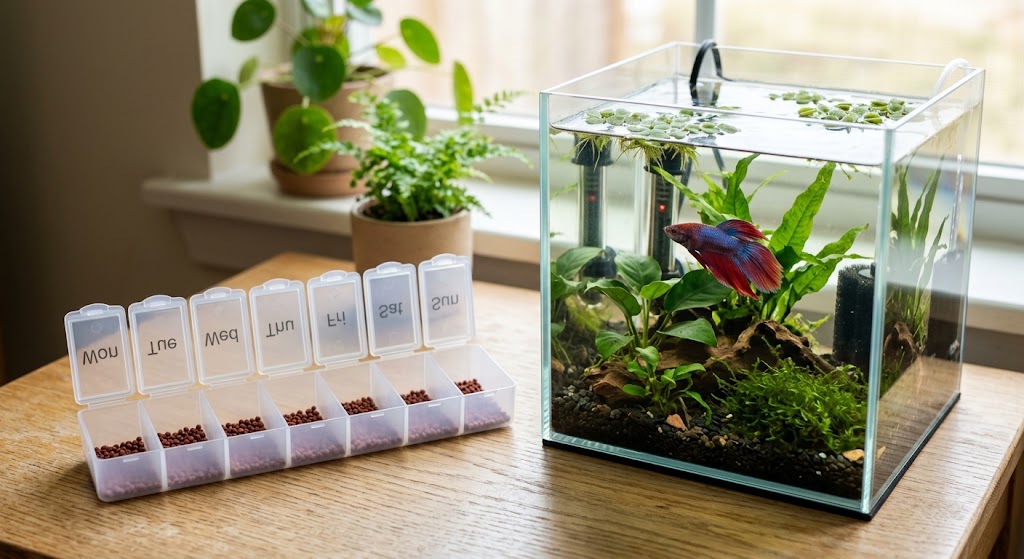
Give your helper simple, written instructions. Keep them short.
- Put each day’s food in a labeled container or pill box.
- Say how many pellets to feed and that nothing extra is needed.
- Tell them to scoop out any uneaten food after a few minutes.
- Show them the heater and thermometer.
- Give them your phone number and a vet contact.
Not sure how many pellets? Before leaving, measure your betta’s normal food portions so your helper knows exactly how much to offer. Our guide on how many pellets to feed a betta fish can help you prepare clear feeding instructions.
What to Do When You Get Home

- Look at your betta. Check for a thin belly, hiding, or dull color.
- Test the water and do a partial water change if needed. See fish tank water quality.
- Offer a normal portion. Do not “make up” missed meals.
- If your betta will not eat, read why your betta fish is not eating.
If your betta looks ill, contact an aquatic veterinarian. You can search the American Association of Fish Veterinarians locator.
Bettas can learn to associate regular caregivers with feeding routines. Discover whether betta fish recognize their owners and how familiar interactions may shape their behavior.
Frequently Asked Questions
Can I leave my betta for a week?
It is possible with planning, but the safest choice is a helper. Test any feeder first, keep the tank clean, and avoid extra food.
Do vacation feeder blocks work for bettas?
They can, but they are not reliable for every tank. They may foul the water and you cannot control the amount. Test one at home first.
Should I feed my betta extra before I leave?
No. Extra food that goes uneaten can foul the water. Feed the normal portion.
Is an automatic feeder safe for a betta?
It can work if it drops small, steady amounts. Test it for several days before you travel. Check that it does not jam or overfeed.
Who should I ask to feed my betta?
Pick a calm, responsible person. Give written instructions, pre-measured food, and your contact details.
Conclusion
Conclusion
Knowing how to feed betta fish when on vacation starts with planning for your trip length. For a short absence, a healthy adult betta may manage without a meal. For longer trips, arrange a trusted sitter, prepare measured food portions, and make sure the tank stays safe. Test any automatic feeder before you leave, and never overfeed your betta to compensate for missed meals. For everyday feeding and tank care, visit our Betta Fish Care Guide.
Pingback: How Long Can a Betta Fish Go Without Food? Safe Guide