
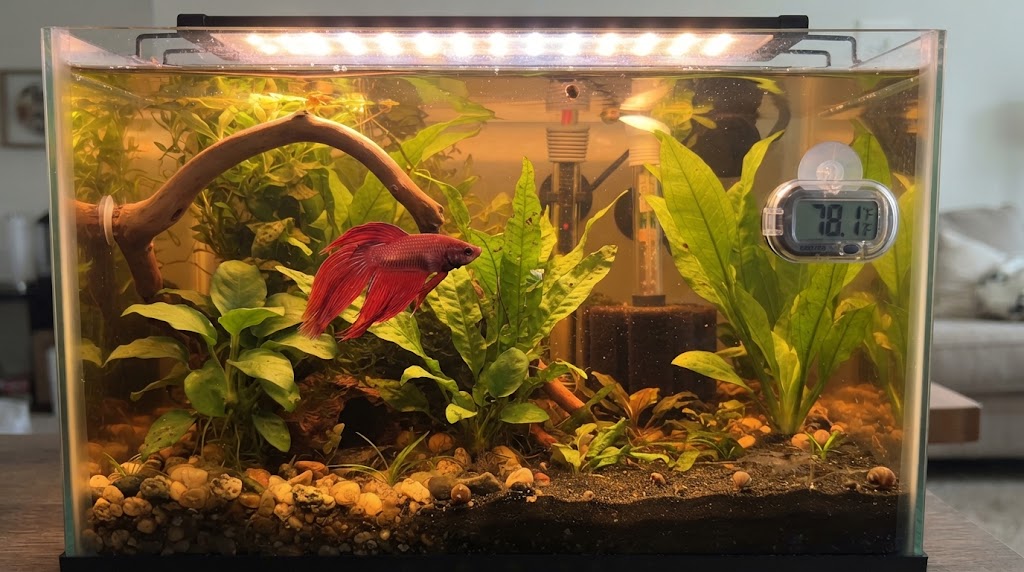
Betta fish water temperature affects activity, appetite, digestion, and how well your fish handles stress and disease. These fish come from warm tropical waters in Southeast Asia, so a cool, room-temperature tank is rarely a good fit. This guide explains the ideal range, the warning signs of bad temperatures, and how to keep the water steady all year.
If you notice torn fins or missing pieces of your betta’s tail, read our guide on Betta Fish Tail Biting to learn the common causes, warning signs, and steps you can take to help your fish recover.
What Is the Ideal Betta Fish Water Temperature?
Most keepers aim for 76 to 82°F (24 to 28°C), and many hold the tank near 78 to 80°F. Bettas are ectotherms, which means their body temperature follows the water around them. When the water cools, their metabolism and immune response slow down. When it gets too hot, they stress, and the water holds less oxygen.
- Ideal range: 76–82°F is a practical range, with about 78–80°F as a good target. (24–28°C)
- Low temperature concern: prolonged exposure below roughly 74°F (23°C) can cause stress and reduced activity
- High temperature concern: temperatures above roughly 86°F (30°C) can become dangerous, especially when sustained
- Stability: avoid sudden temperature changes and keep the tank as stable as possible.

Signs the Water Is Too Cold
A betta in cold water often looks sleepy and unwell. Cold water can slow metabolism and digestion and may contribute to constipation and buoyancy problems. Some bettas may also become unusually inactive. Our guide on a betta fish laying on its side explains how to respond.
- Lethargy and long rests at the bottom of the tank
- Clamped fins held tightly against the body
- Poor appetite or refusing food
- Faded color
Cold water can make a betta sit still near the top, so check our guide on why a betta stays at the surface.
Signs the Water Is Too Hot
Overheating happens in summer, near sunny windows, or when a heater malfunctions, and it pushes betta fish water temperature too high. Hot water holds less dissolved oxygen, which can increase respiratory stress and cause faster breathing or surface gasping.
- Gasping at the surface
- Fast gill movement
- Frantic swimming or sudden stillness
- Faded color and signs of stress
How to Heat a Betta Tank
A reliable, adjustable heater and a separate thermometer are your best tools for controlling betta fish water temperature. Choose a heater based on the manufacturer’s recommended tank size. The wattage you need also depends on room temperature, tank size, and how much heating is required.
- Choose an adjustable heater with a thermostat, because fixed models may not fit your room.
- Place the heater where normal water circulation can distribute heat evenly throughout the tank.
- Add a heater guard if your betta likes to rest near the heater.
- Check the thermometer on the opposite side of the tank from the heater.
- Choose a tank with room for equipment. Our best betta fish tank guide compares options.
Did you know your betta fish can learn simple tricks with a little patience? Discover how to train your betta fish to follow your finger, swim through hoops, and respond to food rewards with easy steps that beginners can try at home.

How to Cool an Overheated Tank
If the water climbs too high, act gradually. A sudden drop causes stress as well, so aim to lower the temperature over several hours.
- Move the tank away from direct sunlight and warm appliances.
- Turn off heat-producing aquarium lights if they are contributing to the temperature increase.
- Open the lid slightly and aim a small fan across the water surface to cool it through evaporation. Keep the gap small because bettas jump.
- Perform a small water change using conditioned water that is only slightly cooler than the tank water.
- If the heater appears stuck on, unplug it and replace the faulty heater before using it again.
How to Change Betta Fish Water Temperature Safely
Bettas tolerate small changes well, but they dislike sudden swings. Take extra care during water changes and when you move a fish into a new tank.
- Match new water to the tank temperature as closely as practical to avoid sudden temperature changes.
- If the tank is too cold, raise the temperature gradually rather than making a large sudden change.
- When introducing a new betta, gradually acclimate the fish to the tank’s temperature and water conditions instead of relying only on floating the bag.
- Treat new water first. Read our guide on whether a betta can live in tap water for safe preparation.
Common Temperature Mistakes
Most problems with betta fish water temperature come from small oversights. Fix these habits and your betta will stay more comfortable.
- Relying on room temperature, which often drops at night and in winter
- Trusting the heater dial instead of a thermometer
- Using a stick-on thermometer that may read inaccurately
- Placing the tank near a window, a vent, or a drafty door
- Forgetting to check the heater after a power outage

How Temperature Affects Digestion and Health
Temperature affects a betta’s metabolism, digestion, activity, and ability to handle stress. Within the appropriate range, stable warm water supports normal appetite and digestion, while cooler water can slow these processes. In cool water, food sits in the gut longer, which raises the risk of bloating and constipation.
- Warm, steady water supports a healthy appetite and digestion.
- Prolonged cold exposure can slow digestion, activity, and normal immune function.
- Sudden temperature swings can stress fish and make them more vulnerable to health problems.
- Our overfeeding and bloating guide explains how diet and temperature work together.
Temperature also affects parasite life cycles, so it matters during an outbreak. See how to treat ich in betta fish safely before changing the heater. To keep your betta active and mentally stimulated, explore these Betta Fish Toys and Enrichment Ideas for safe ways to encourage natural behavior and reduce boredom.
Seasonal Temperature Tips
Room temperature changes through the year, so adjust your routine as the seasons shift. Check the thermometer more often when the weather changes.
- Winter: check the heater daily, and keep the tank away from cold windows and drafts
- Summer: watch for overheating, move the tank out of direct sun, and keep the room ventilated.
- Power cuts: wrap the sides of the tank with a towel or blanket to slow heat loss, while keeping the top and ventilation areas clear.
- Travel: test the heater for several days before you leave.
Quick Daily Temperature Check
A fast daily routine catches problems early. It takes less than a minute and gives you a clear picture of how your heater performs.
- Read the thermometer at the same time each day.
- Confirm that the heater light cycles on and off.
- Look at your betta’s activity and breathing.
- Write down any reading outside the safe range.
Frequently Asked Questions
Can a betta live without a heater?
If your home stays consistently within the recommended temperature range day and night, a heater may not always be necessary.
What betta fish water temperature is too cold?
Long exposure below roughly 74°F (23°C) stresses most bettas, and water in the low 70s or below can harm them quickly.
Is 82°F too hot for a betta?
It sits at the upper end of the safe range. Keep the temperature stable, and lower the heater slightly if your fish shows signs of distress.
Final Thoughts
Keeping your betta fish water temperature within a suitable, stable range supports normal activity, appetite, digestion, and overall health. Use an adjustable heater, check a reliable thermometer every day, and respond quickly to swings. Read our betta fish care guide for the rest of your routine, and see the FishBase Betta splendens profile for the species’ natural range.
Pingback: Betta Fish Clamped Fins: Causes, Symptoms & Fixes
Pingback: Can Betta fish Live in Tap Water? Safe Steps to Follow
Pingback: Betta Breathing Heavily? 7 Causes and Fast Fixes
Pingback: Betta Fish Stress Stripes: 7 Causes and Signs
Pingback: How Long Can a Betta Fish Go Without Food? Safe Guide
Pingback: How to Place Aquarium Heater Correctly (Best Position)