
Betta fin rot is a condition that causes a betta fish’s fins to deteriorate over time. You may notice ragged edges, missing fin tissue, discoloration, or fins that become shorter. Poor water quality, stress, and damaged fins can increase the risk of infection.
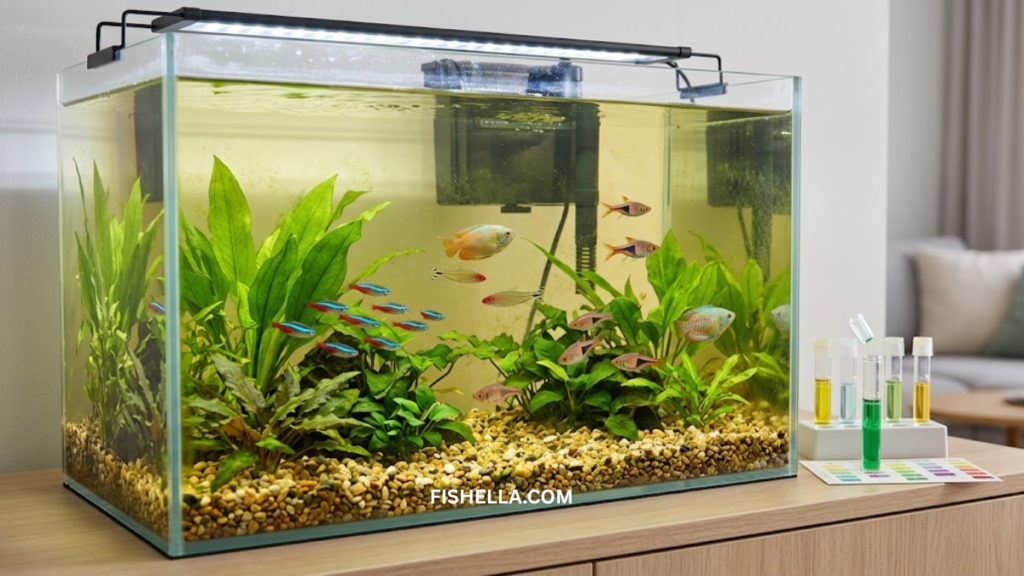
The best first step is to test your aquarium water. Check ammonia, nitrite, and nitrate levels. Keep ammonia and nitrite at 0 ppm, maintain stable water temperature, and correct any water quality problems. Mild cases may improve with better tank conditions, while severe or worsening cases need veterinary attention.
However, not every torn or frayed fin is fin rot. Fin biting, sharp decorations, and physical injuries can cause similar damage. Watch whether the damage continues to spread or begins to heal. Early identification can help you choose the right next steps.
In this guide, you’ll learn how to recognize betta fin rot, understand its causes, improve aquarium conditions, choose appropriate treatment, and monitor your fish’s recovery. Read our guide to betta fish clamped fins to find the cause.
What Is Betta Fin Rot?
Betta fin rot is a condition in which a betta fish’s fin tissue gradually breaks down. It usually starts along the edges of the fins and can spread toward the body if the underlying problem is not corrected.
The condition is commonly associated with bacterial infection. Bacteria are naturally present in aquarium environments, but poor water quality, stress, and physical injuries can make fish more vulnerable to infection.
How Does Betta Fin Rot Develop?
Fin damage and infection can develop through several connected problems:
- Poor water quality: Ammonia, nitrite, and excess waste can stress your betta.
- Physical injuries: Sharp decorations, rough plants, or fin biting can damage delicate fin tissue.
- Stress: Unstable temperatures and unsuitable tank conditions can weaken your fish’s ability to cope with illness.
- Bacterial infection: Bacteria can invade weakened or damaged tissue and contribute to further fin deterioration.
Is Betta Fin Rot Always a Bacterial Infection?
Not every damaged fin is caused by a bacterial infection. Fin biting, accidental tears, sharp decorations, and natural fin deterioration can produce similar symptoms.
Appearance alone cannot confirm fin rot. Watch whether the damaged edges continue to spread, become discolored, or develop inflamed areas.
If the damage keeps getting worse, test your aquarium water and consider getting advice from a fish veterinarian.
Betta fin rot is often a warning that something in the aquarium needs attention. Improving water quality and reducing stress are important first steps.
For a complete overview of proper tank conditions, feeding, filtration, and daily care, read our Betta Fish Care: Complete Beginner’s Guide.
What Does Betta Fin Rot Look Like?
Betta fin rot often starts with small changes along the edges of the fins. You may notice ragged edges, discoloration, holes, or fins that gradually become shorter.

The damage can affect the tail fin, dorsal fin, anal fin, and smaller fins. In early cases, your betta may still eat and swim normally. As the condition progresses, the damaged areas may become more noticeable.
Here are the common signs to watch for.
1. Frayed or Ragged Fin Edges
Frayed edges are among the earliest visible signs of possible fin rot. The fins may look uneven, torn, or gradually worn away.
Check whether the edges become shorter or more damaged over several days. A single tear does not automatically mean fin rot.
2. White or Gray Edges on Betta Fins
Some bettas develop pale white or gray areas along damaged fin edges.
These changes may indicate damaged tissue or new fin growth. A thin, clear edge can also appear during recovery.
Do not diagnose fin rot based on white edges alone. Watch for other symptoms and changes over time.
3. Black or Dark Edges on Betta Fins
Dark brown or black edges can sometimes appear around damaged fins.
However, black coloration is not always a sign of infection. Some bettas naturally have dark fin colors, and pigmentation may change as fins heal.
Pay attention to whether the dark area spreads along with further fin deterioration.
4. Red Streaks or Inflamed Fin Tissue
Red streaks, irritated areas, or redness near the base of a damaged fin can be warning signs.
These changes may indicate inflammation or more serious tissue damage. If redness increases or your betta becomes less active, seek advice from a fish veterinarian.
5. Holes and Missing Pieces of Fin Tissue
As fin damage progresses, you may notice small holes, missing sections, or fins that appear shorter than before.
The tail may look uneven or have large sections missing. Damage that continues moving toward the body needs prompt attention.
6. Clamped Fins and Changes in Behavior
A betta with health problems may hold its fins tightly against its body instead of spreading them normally.
You may also notice:
- Reduced swimming activity
- Hiding more often
- Loss of appetite
- Less interest in food
- Unusual resting behavior
Clamped fins are not specific to fin rot. They can occur with stress, poor water quality, temperature problems, and other illnesses.
How to Tell If Betta Fin Damage Is Getting Worse
Look at your betta’s fins regularly and compare their appearance over time.
Watch for these changes:
- Fin edges become increasingly ragged.
- The damaged areas move farther toward the body.
- New holes or missing sections appear.
- Discoloration becomes more noticeable.
- Your betta becomes less active or stops eating.
Taking photographs every few days can help you track changes. If the damage keeps spreading, test your aquarium water and seek veterinary advice when necessary.
Remember, torn fins and fin rot can look similar. The progression of the damage, your betta’s behavior, and aquarium water conditions all help you understand what may be happening.
Betta Fin Rot Stages
Betta fin rot can cause different levels of fin damage. Early signs may look minor, but the condition can become more serious if the underlying problem continues.
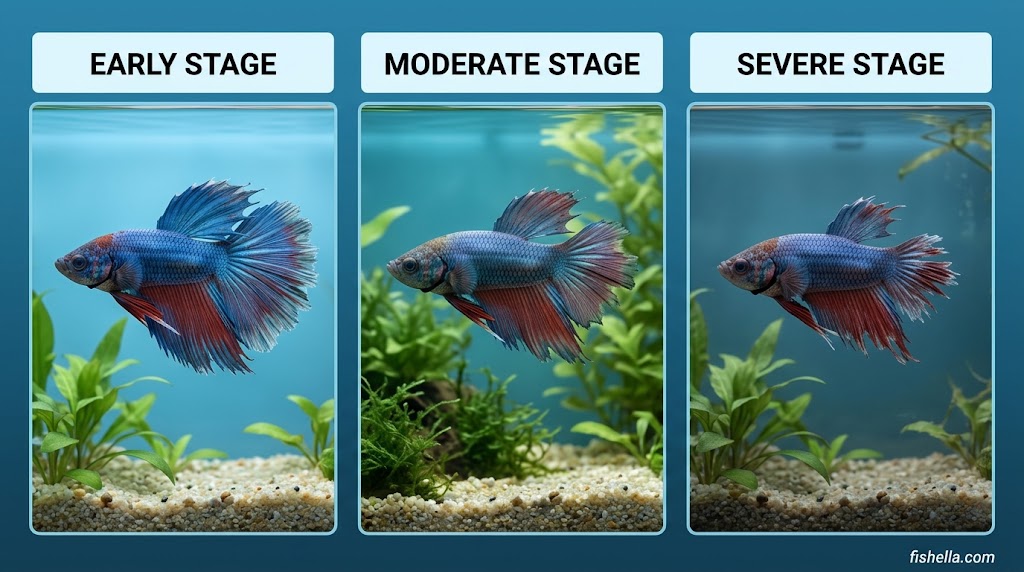
The following stages are a practical way to understand how fin damage may progress. They are not an official veterinary grading system. Not every betta develops symptoms in the same order or at the same speed.
Early Stage Betta Fin Rot
Early betta fin rot may cause small changes along the edges of the fins.
Common signs include:
- Slightly ragged or uneven fin edges.
- Small areas of pale or dark discoloration.
- Minor fin deterioration.
- Normal swimming and appetite in many cases.
What should you do?
Test your aquarium water immediately. Keep ammonia and nitrite at 0 ppm, maintain stable temperature, and remove sharp decorations. Monitor the fins regularly to see whether the damage spreads.
Early attention to water quality may prevent further deterioration.
Moderate Stage Betta Fin Rot
Moderate fin damage becomes easier to notice. Larger sections of the fins may appear worn away or uneven.
Common signs include:
- Noticeably shorter fins.
- Larger ragged or missing sections.
- Increasing discoloration along the edges.
- Possible redness near damaged tissue.
- Reduced activity or changes in appetite.
What should you do?
Continue correcting water quality problems and reduce stress. Check your filter, heater, and decorations. If the damage continues to spread despite improved conditions, contact a fish veterinarian for advice about appropriate treatment.
Severe Stage Betta Fin Rot
Severe fin damage can involve extensive tissue loss. The damage may extend close to the body, and the affected areas may look inflamed or raw.
Possible warning signs include:
- Major fin deterioration.
- Extensive missing fin tissue.
- Severe redness or inflamed areas.
- Reduced swimming activity.
- Loss of appetite.
- Weakness or difficulty swimming.
What should you do?
Seek help from a fish veterinarian promptly. Check your water parameters and correct unsafe conditions without delay. Keep the aquarium temperature stable and avoid unnecessary handling.
Do not rely on aquarium salt or random antibiotics as a substitute for proper diagnosis and treatment.
Betta Fin Rot Stages Comparison
| Stage | Common signs | Recommended action |
|---|---|---|
| Early | Slightly ragged edges and minor discoloration | Test water and correct tank conditions |
| Moderate | Shorter fins and increasing tissue damage | Improve water quality and seek veterinary advice if worsening |
| Severe | Extensive fin loss and inflamed tissue | Contact a fish veterinarian promptly |
Important: Fin damage does not always mean fin rot. Physical injuries, fin biting, and natural color changes can look similar. Monitor the progression rather than relying on appearance alone.
What Causes Betta Fin Rot?
Betta fin rot is commonly associated with bacterial infection and unhealthy aquarium conditions. Poor water quality, stress, and physical injuries can make your betta more vulnerable to fin damage and infection.
Several factors can contribute to the problem. Understanding these causes helps you prevent further damage and protect your fish.

1. Poor Aquarium Water Quality
Poor water quality is one of the most important risk factors for betta fin rot. Fish waste, leftover food, and decaying organic matter can affect aquarium conditions.
When waste builds up, harmful substances can stress your betta and increase its vulnerability to illness.
To maintain healthy water:
- Remove uneaten food.
- Clean excess waste regularly.
- Perform appropriate partial water changes.
- Test your aquarium water consistently.
- Maintain a clean, properly functioning filter.
2. Ammonia and Nitrite Buildup
Ammonia and nitrite are toxic to fish. Even low levels can cause serious stress and damage fish health.
Ammonia commonly enters aquariums through fish waste, leftover food, and decaying organic matter. Nitrite can build up when the aquarium’s biological filtration is not working properly.
Keep both parameters at 0 ppm.
If you detect either substance, take steps to correct the problem with appropriate partial water changes and investigate the cause.
Read our guide on what causes sudden ammonia spikes in an established freshwater tank.
3. An Uncycled Aquarium
A new aquarium may not have enough beneficial bacteria to process fish waste safely.
Without an established biological filter, ammonia and nitrite can accumulate quickly. These conditions put extra stress on your betta and can increase the risk of health problems.
Before adding fish, establish the aquarium’s nitrogen cycle. Monitor ammonia, nitrite, and nitrate to confirm that the biological filter is working.
Learn how to establish a healthy aquarium in our fishless cycling guide.
4. High Nitrate Levels
Nitrate is produced during the aquarium nitrogen cycle. It is less toxic than ammonia and nitrite, but excessive levels can still contribute to poor water conditions.
High nitrate levels often indicate that waste is accumulating or water changes are not frequent enough.
For routine betta care, aim to keep nitrate below 20 ppm when practical. Regular testing and partial water changes help control nitrate buildup.
5. Infrequent Water Changes and Poor Tank Maintenance
Skipping water changes allows fish waste, uneaten food, and other organic matter to accumulate.
A dirty aquarium can create stressful conditions and increase the risk of health problems.
Follow a consistent maintenance routine based on your tank size, stocking level, and water test results. Avoid replacing all the aquarium water during routine cleaning.
6. Stress and Unstable Water Temperature
Stress can make fish more vulnerable to illness. Sudden temperature changes, unsuitable surroundings, and frequent disturbances can affect your betta’s health.
Bettas generally do well in stable water around 78–80°F.
Use a reliable aquarium heater and thermometer. Keep the tank away from cold drafts and direct sunlight.
7. Sharp Decorations and Rough Plants
Sharp ornaments, rough plastic plants, and damaged aquarium equipment can tear delicate betta fins.
These injuries may look similar to early fin rot. Damaged tissue can also become vulnerable to secondary infection.
Inspect decorations carefully. Run a clean, soft cloth or pantyhose over rough surfaces. If the material snags, it may also catch your betta’s fins.
Choose smooth decorations and soft silk or live plants instead.
8. Fin Biting and Aggressive Tank Mates
Some bettas bite their own fins, especially when stressed or uncomfortable. Other fish may also nip at their flowing fins.
Fin biting can leave uneven edges, holes, and missing sections. These injuries can be mistaken for fin rot.
Observe your betta’s behavior and check for possible sources of aggression or stress.
If you notice unexplained fin damage, read our guide on Betta Fish Tail Biting to understand its causes and warning signs.
9. Poor Diet and General Health Problems
An unbalanced diet and ongoing health problems can affect your betta’s overall condition.
Feed a suitable, high-quality betta diet in appropriate portions. Avoid excessive feeding because leftover food can increase aquarium waste.
Good nutrition supports general health, but it cannot replace proper water quality or medical treatment when an infection is present.
Why Do These Factors Increase the Risk of Fin Rot?
Many of these problems are connected. Poor water conditions can stress your betta, while sharp decorations and fin biting can create physical injuries.
Bacteria naturally present in aquarium environments may then contribute to infection in weakened or damaged tissue.
This is why treating damaged fins alone is not enough. You must also identify and correct the underlying aquarium problem.
How to Tell Betta Fin Rot from Other Fin Problems
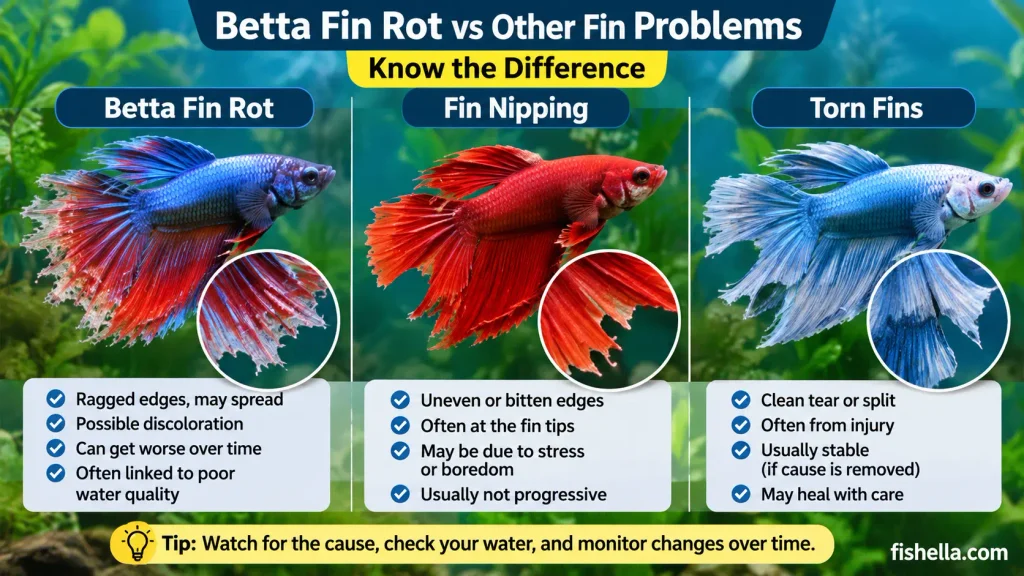
Not every damaged betta fin is a sign of fin rot. Torn fins, fin biting, and physical injuries can look similar. However, their causes and treatment may be different.
Look at how the damage started and whether it gets worse over time. Also, check your aquarium water and your betta’s behavior.
Betta Fin Rot vs. Fin Nipping
Fin nipping happens when a betta bites its own fins. Some bettas do this because of stress, boredom, or other environmental problems.
| Sign | Fin Rot | Fin Nipping |
|---|---|---|
| Fin edges | Often ragged or deteriorating | May look uneven or bitten |
| Damage pattern | Can spread over time | May appear suddenly |
| Missing tissue | Can increase as damage progresses | Often shows bite-like gaps |
| Main concern | Possible infection and poor water conditions | Stress or self-biting behavior |
Important: Fin nipping can create wounds that may later become infected. Fix the cause of biting and keep the water clean.
Learn more in our guide to Betta Fish Tail Biting.
Betta Fin Rot vs. Torn Fins
A torn fin usually results from a physical injury. Sharp decorations, rough equipment, or accidental damage can cause tears.
| Sign | Fin Rot | Torn Fin |
|---|---|---|
| Starting point | May develop gradually | Often follows an injury |
| Fin edges | May continue to deteriorate | Usually show a tear or split |
| Progress | Damage may spread | Often stays stable if the cause is removed |
| Recovery | Depends on water quality and disease severity | May heal with clean water and time |
A simple tear does not always mean fin rot. However, an injured fin can develop a secondary infection.
Remove sharp objects and check filter openings. Keep the aquarium water clean while the fin heals.
Betta Fin Rot vs. Natural Fin Color Changes
Some bettas naturally develop new colors as they grow. Their fin colors may also change with age or normal pigmentation.
Natural color changes usually do not cause the fins to become shorter, ragged, or damaged.
Watch for changes in fin shape and behavior. If the fins keep deteriorating, investigate possible fin rot or another injury.
Signs That Need Closer Attention
Check your betta carefully if you notice:
- Fin edges becoming shorter or more ragged.
- New holes or missing sections of fin tissue.
- Redness or inflammation around damaged areas.
- Damage spreading over several days.
- Reduced activity or loss of appetite.
These signs can have different causes. Fin appearance alone cannot confirm a bacterial infection.
What Should You Do Before Treating?
Before using medication, take these steps:
- Test the aquarium water for ammonia, nitrite, and nitrate.
- Check the water temperature and keep it stable.
- Inspect decorations and filter openings for sharp edges.
- Watch for fin biting or aggression from tank mates.
- Take a clear photo to track changes over time.
Ammonia and nitrite should both be 0 ppm. If either is detectable, address the water quality problem promptly.
If the damage continues to spread, your betta becomes weak, or the fins show severe tissue loss, seek advice from an aquatic veterinarian.
Correctly identifying the problem helps you choose the right treatment and avoid unnecessary medication.
How to Treat Betta Fin Rot
The best way to treat betta fin rot is to improve water quality and remove the conditions causing fin damage. Mild cases may improve with clean, stable water. More serious or worsening cases may need veterinary treatment.
Follow these steps to help your betta recover.
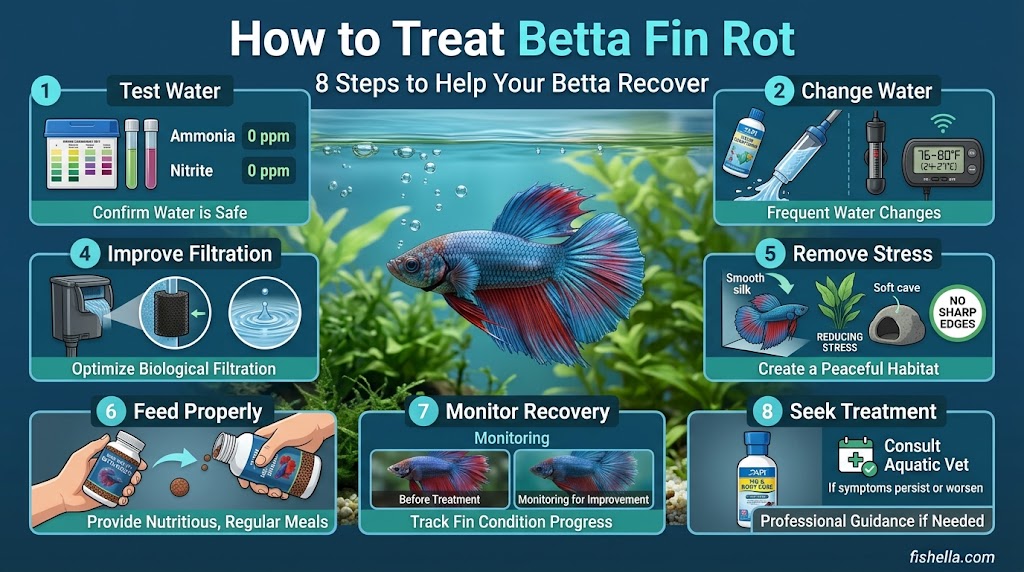
Step 1: Test Your Aquarium Water
Start by testing your aquarium water. Poor water quality can stress your betta and make fin problems worse.
Check these important parameters:
| Water Parameter | Target |
|---|---|
| Ammonia | 0 ppm |
| Nitrite | 0 ppm |
| Nitrate | Below 20 ppm |
| Temperature | 76–80°F |
| pH | Around 6.5–7.5 |
Ammonia and nitrite should always be zero in an established aquarium. If either is detectable, take action to correct the problem.
Read our guide on how to lower ammonia in a fish tank.
Step 2: Perform a Partial Water Change
If the water is dirty or ammonia and nitrite are detectable, perform an appropriate partial water change.
Follow these precautions:
- Use a water conditioner to remove chlorine and chloramine.
- Match the new water temperature to the aquarium.
- Remove uneaten food and visible waste.
- Vacuum debris from the substrate carefully.
- Retest the water after the change.
Avoid sudden, extreme changes in water chemistry. Do not replace all the aquarium water as a routine treatment.
You can also read our guide on how to clean a fish tank.
Step 3: Maintain a Stable Temperature
Bettas are tropical fish. Sudden temperature changes can increase stress and affect recovery.
Keep the aquarium temperature stable at 76–80°F. Use a reliable aquarium heater and thermometer.
Avoid placing the tank near air conditioners, cold windows, or direct sunlight.
Step 4: Improve Filtration and Water Flow
A clean, properly filtered aquarium helps control fish waste and supports beneficial bacteria.
Check your filter for blockages and make sure it is working correctly. Bettas prefer gentle water movement, so reduce excessive flow if it pushes your fish around.
Do not wash biological filter media under untreated tap water. Chlorine can damage the beneficial bacteria that help process fish waste.
If you need help choosing a suitable filter, see our guide to aquarium filtration.
Step 5: Remove Sources of Stress and Injury
Check the aquarium for anything that could damage your betta’s fins.
- Remove sharp decorations and rough plastic plants.
- Check filter openings and intake tubes.
- Separate aggressive tank mates if they are attacking your betta.
- Reduce strong water currents.
- Keep the aquarium in a quiet location.
Provide a calm environment with suitable hiding places and resting areas.
Step 6: Feed a Balanced Diet
Good nutrition supports normal growth and tissue repair.
Feed a quality betta-specific pellet as the main diet. You can also offer suitable frozen or freeze-dried foods as occasional variety.
Avoid overfeeding. Remove uneaten food before it breaks down and affects water quality.
Step 7: Monitor Fin Damage and Recovery
Take a clear photo of your betta’s fins when treatment begins. Compare it with new photos every few days.
Look for these signs of improvement:
- Fin edges stop deteriorating.
- No new holes or missing tissue appear.
- The fish becomes more active.
- Appetite returns to normal.
- New fin tissue may gradually appear.
Keep testing the water during recovery. Clean water and stable conditions remain important even after the fins start improving.
Step 8: Consider Medication for Worsening Cases
Medication may be necessary if fin damage continues to spread despite improved water quality. Severe redness, open sores, bleeding, or damage reaching the body are reasons to seek prompt veterinary advice.
A veterinarian experienced with fish can help identify the infection and choose an appropriate treatment.
If medication is recommended:
- Choose a product labeled for the diagnosed condition and fish species.
- Follow its instructions carefully.
- Check whether the treatment affects biological filtration.
- Provide adequate aeration when required.
- Avoid combining different medications unless a qualified professional advises it.
Do not use antibiotics just because a betta has ragged fins. Incorrect antibiotic use can harm aquarium bacteria and contribute to antimicrobial resistance.
For more information, read the UF/IFAS guide to antibiotics in ornamental fish.
When Should You Seek Veterinary Help?
Contact an aquatic veterinarian if your betta has rapidly worsening fin damage, deep sores, bleeding, severe lethargy, difficulty swimming, or stops eating.
Do not wait for home treatment to work if your fish is becoming weaker. Early professional advice can help prevent a serious infection from progressing.
Aquarium Salt for Betta Fin Rot: Is It Safe?
Aquarium salt is sometimes used in fish care, but it is not a guaranteed treatment for betta fin rot. It does not replace clean water, stable temperature, or proper diagnosis.
For mild fin damage, improving aquarium conditions should come first. Adding salt without understanding the problem may cause unnecessary stress.

When Should You Consider Aquarium Salt?
Aquarium salt may have a role in certain fish treatments. However, its suitability depends on the fish, aquarium setup, and the condition being treated.
Before using it:
- Confirm that the product is aquarium salt, not table salt.
- Read the product instructions carefully.
- Check whether your aquarium contains live plants or sensitive tank mates.
- Avoid combining salt with other medications unless advised.
- Ask an aquatic veterinarian if you are unsure.
Can Aquarium Salt Harm Betta Fish?
Incorrect salt use can cause problems. High concentrations or prolonged exposure may stress fish.
Salt can also affect live plants and some invertebrates. It does not evaporate when water evaporates, so adding more without checking the existing concentration can increase the salt level.
My recommendation: Do not add aquarium salt as a routine fin rot treatment. Focus on water quality first. Use salt only when a suitable treatment plan recommends it.
How Long Does Betta Fin Rot Take to Heal?
Betta fin rot recovery time depends on the severity of the damage, water quality, and the fish’s overall health.
Mild cases may show improvement within days after the underlying problem is corrected. More serious fin damage can take several weeks or longer to recover.
Here is a general recovery guide:
| Condition | Possible Recovery Pattern |
|---|---|
| Mild fin damage | Damage may stop progressing after conditions improve |
| Moderate damage | Visible improvement may take several weeks |
| Severe damage | Recovery can take longer and may require veterinary treatment |
These are general expectations, not guaranteed timelines.
Watch for stable fin edges, normal swimming, and a healthy appetite. If the damage continues to spread, seek professional advice.
Do Betta Fish Fins Grow Back After Fin Rot?
Yes, betta fins can often regrow after damage if the fish remains healthy and the underlying problem is corrected.
New fin tissue may appear clear, pale, or slightly different in color. Its final appearance can change as it develops.
However, severe damage may cause permanent changes. Some fins may not return to their original shape.
Signs of Fin Regrowth
Look for these signs during recovery:
- New tissue appears along damaged fin edges.
- Fin edges become smoother.
- The fins stop getting shorter.
- Your betta swims normally.
- Appetite and activity improve.
Take photos every few days to track progress. Avoid handling your betta or disturbing the fins while they heal.
Remember that new growth does not always mean the problem is fully resolved. Continue maintaining clean water and stable aquarium conditions.
How to Prevent Betta Fin Rot
Prevention starts with a clean, stable aquarium. Good daily care reduces common conditions that can contribute to fin damage.
Follow these habits to protect your betta’s fins.
1. Maintain Good Water Quality
Test your aquarium water regularly. Keep ammonia and nitrite at 0 ppm and nitrate below 20 ppm.
Perform partial water changes based on your tank’s stocking, filtration, and test results.
2. Keep the Temperature Stable
Maintain a stable temperature of 76–80°F. Use an appropriate heater and thermometer.
Avoid sudden temperature changes.
3. Use a Suitable Filter
Choose a filter that provides gentle water movement. Clean the filter when needed, but protect its beneficial bacteria.
4. Avoid Sharp Decorations
Choose smooth decorations and soft aquarium plants. Check plastic plants, ornaments, and filter openings for rough edges.
5. Avoid Overcrowding
Give your betta enough swimming space. Avoid aggressive tank mates and unsuitable companions.
6. Feed a Balanced Diet
Offer quality betta food in appropriate portions. Remove uneaten food to prevent water quality problems.
7. Keep Up With Tank Maintenance
Remove waste, clean the substrate carefully, and replace water as needed. Avoid sudden changes to the aquarium environment.
For more beginner-friendly advice, read our complete Betta Fish Care Guide.
When Should You See an Aquatic Veterinarian?
Not every case of fin damage needs medication. However, some symptoms require professional attention.
Contact an aquatic veterinarian if your betta shows:
- Rapidly worsening fin damage.
- Deep sores or open wounds.
- Bleeding or severe redness.
- Damage spreading toward the body.
- Loss of appetite or severe weakness.
- Difficulty swimming or staying upright.
- No improvement despite correcting water quality.
A veterinarian can help identify the cause and recommend suitable treatment.
Do not wait if your betta becomes weak or the damage progresses quickly. Early advice may prevent further complications.
Frequently Asked Questions About Betta Fin Rot
Can betta fin rot heal on its own?
Mild fin damage may improve when poor water conditions are corrected. However, ongoing deterioration needs attention. Test the water and address the underlying cause instead of waiting without treatment.
Is betta fin rot contagious?
Fin rot itself is not always directly contagious. However, poor water conditions and infectious organisms can affect other fish in the same aquarium. Keep the water clean and monitor all tank inhabitants.
Should I change the water every day for fin rot?
Daily water changes are not automatically necessary. The right schedule depends on water test results, tank conditions, and the severity of the problem. Avoid unnecessary large changes that cause sudden water chemistry shifts.
Can I use aquarium salt for betta fin rot?
Aquarium salt is not a guaranteed cure. It may be unsuitable for some aquarium setups and can harm sensitive plants or invertebrates. Correct water quality first and seek professional advice before using salt.
How do I know if my betta’s fins are growing back?
Look for new tissue along damaged edges. The fins may gradually become longer and smoother. Clear or pale new growth can be normal during healing.
Can poor water quality cause betta fin rot?
Poor water quality can stress bettas and contribute to fin damage and infection risk. Keep ammonia and nitrite at 0 ppm and nitrate below 20 ppm.
Should I isolate a betta with fin rot?
Isolation is not always necessary. A separate hospital tank may help when the fish is being bullied, needs specific treatment, or shares an unsuitable environment. Make sure any hospital tank has safe, stable water conditions.
Can a betta die from fin rot?
Severe or untreated fin damage can lead to serious infection and complications. Early action, clean water, and appropriate treatment improve the chance of recovery. Seek veterinary help if the damage spreads or your fish becomes weak.
Conclusion: Help Your Betta Recover From Fin Rot
Betta fin rot can be worrying, but early action can make a difference. Start by testing the aquarium water and correcting any problems with ammonia, nitrite, temperature, or maintenance.
Keep the aquarium clean and stable. Remove sharp decorations and reduce stress. Monitor your betta’s fins regularly to check for improvement.
Avoid unnecessary medication or routine salt treatments. If the damage keeps spreading or your betta becomes weak, contact an aquatic veterinarian.
With proper care and consistent monitoring, many bettas can recover from fin damage and return to healthy swimming.
Pingback: Safe Decorations for a Betta Fish Tank: A Checklist