
Fishless cycling is a way to grow beneficial bacteria in a new aquarium before any fish live in it. You add a controlled source of ammonia to the tank, and bacteria in the filter slowly learn to process it. Those bacteria turn toxic ammonia into nitrite, and then into much less harmful nitrate.
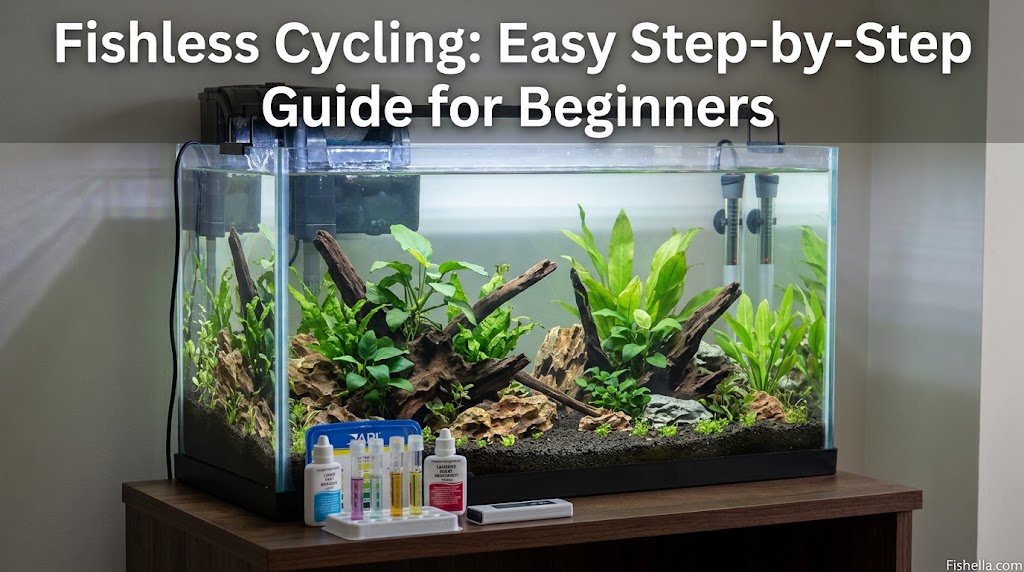
This matters because ammonia and nitrite can burn gills and stress or kill fish. A new tank has almost no bacteria to remove them. Fishless aquarium cycling lets the bacteria grow first, so your fish never face a toxic spike.
The process takes patience and a good test kit. You are done only when your tank can process a measured ammonia dose to about 0 ppm ammonia and 0 ppm nitrite within 24 hours. This guide shows you how to get there, one step at a time. Learn how to lower ammonia in a fish tank safely and effectively.
What Is Fishless Cycling?
Fishless cycling means building your aquarium’s biological filter without fish as the ammonia source. Instead of fish waste, you add pure ammonia, ammonium chloride, or decaying fish food. The bacteria feed on that ammonia and multiply.
These bacteria live on surfaces, not floating in the water. Most settle in your filter media, such as sponge, ceramic rings, or bio-balls. Some also grow on gravel, decor, and the tank walls.
Fishless cycling vs. cycling with fish. When you cycle with fish, the fish make the ammonia. They live in rising ammonia and nitrite while the bacteria catch up. You then need frequent water changes to keep them alive.
With fishless cycling, no animal is exposed to those spikes. You also control how much ammonia goes in. That is why it is generally the preferred method for beginners.
How Does Fishless Aquarium Cycling Work?
Fishless cycling copies the aquarium nitrogen cycle. Here is the sequence:
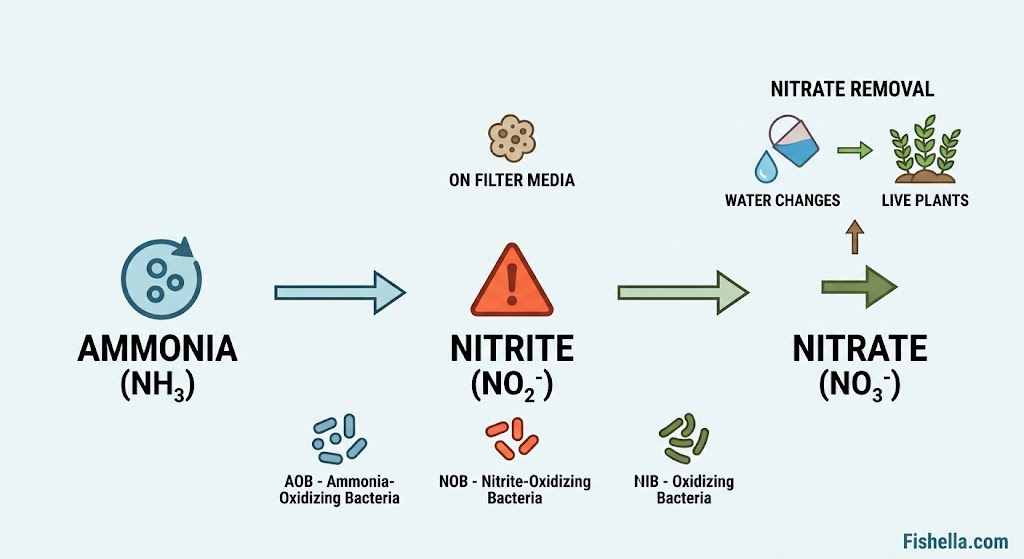
- Ammonia enters the tank. In a fishless cycle, you add it yourself. In a stocked tank, fish waste and rotting food make it.
- Ammonia-oxidizing microorganisms convert ammonia into nitrite. Nitrite is still harmful to fish.
- Nitrite-oxidizing microorganisms convert nitrite into nitrate. Nitrate is far less toxic at low levels.
- Water changes and live plants help manage nitrate. Without them, nitrate slowly builds up.
Ammonia is dangerous because it damages gills and other tissues, even in small amounts. Fish exposed to low levels over time also become more prone to infections. The UF/IFAS Extension fact sheet on ammonia in aquatic systems explains this in detail. It also notes that these bacteria need oxygen and enough alkalinity to work well.
That is why your filter must run nonstop. It moves oxygen-rich water past the bacteria. Turn it off, and the bacteria can suffocate.
What Do You Need Before Starting Fishless Cycling?
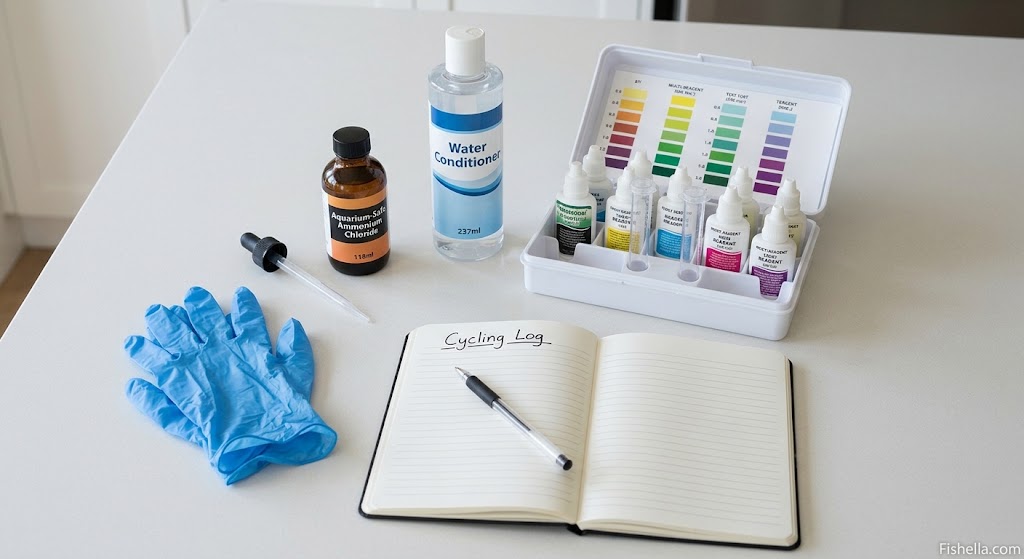
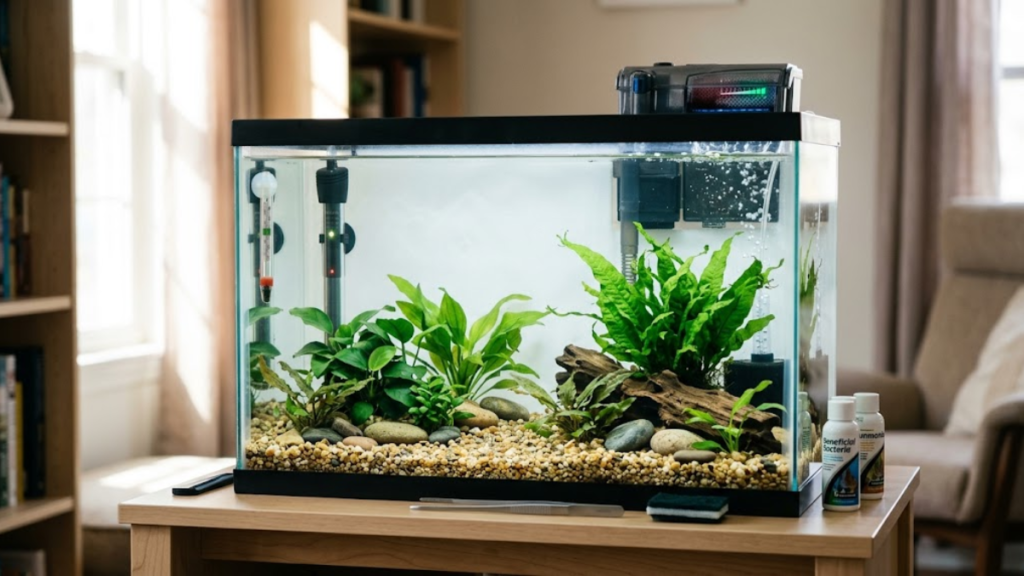
- Aquarium and dechlorinated tap water. Chlorine and chloramine can harm bacteria. Treat all tap water with a water conditioner. If you’re preparing a betta tank, check our guide to the best betta water conditioners for safe tap water treatment.
- A running filter. It holds the bacteria and keeps oxygen moving. Choose the right hang-on-back aquarium filter to provide effective biological filtration during fishless cycling.
- Biological filter media. Sponge, ceramic media, or bio-media give bacteria lots of surface area.
- A heater, when appropriate. Choose a temperature that suits your future fish. Warmer water often supports faster bacterial growth.
- An aquarium-safe ammonia source. See the next section. Learn what causes dangerous ammonia increases in established aquariums in our guide to sudden ammonia spikes in freshwater tanks.
- A liquid test kit for ammonia, nitrite, and nitrate. Test strips are less precise. A liquid kit is worth the cost here.
- Water conditioner. Use it with every refill or water change. Use a reliable aquarium water conditioner to make tap water safe before starting fishless cycling.
- Optional bottled beneficial bacteria. These can help seed the filter, but they are not required.
Learn how to introduce helpful bacteria with our guide to the best beneficial bacteria for aquariums.
Keep a notebook or phone note for test results. A simple log helps you see trends and spot stalls.
Best Ammonia Sources for Fishless Cycling
Your bacteria need ammonia to grow. Here are the two most common options.
Pure Ammonia or Ammonium Chloride
This is the most controlled choice. Ammonium chloride sold for aquarium cycling is made for this job. It usually comes with dosing directions based on tank volume.
If you use household ammonia, read the label first. The ingredients should list only ammonia (ammonium hydroxide) and water. Avoid anything with:
- Fragrance or scent
- Dyes
- Detergents or surfactants
- Cleaning additives
Many hobbyists shake the bottle and check for foam. Suds suggest surfactants, so skip that bottle. If you are unsure, buy a product labeled for aquarium cycling.
Safety: Wear gloves, ventilate the room, and keep ammonia away from children and pets. Never mix it with bleach or other cleaners.
Fish Food Method
Here you drop in fish food and let it decay. As it rots, it releases ammonia. It needs no special product, which makes it cheap and easy to start.
The downside is unpredictability. Ammonia output depends on how the food breaks down, and it changes day to day. Rotting food can also foul the water and cause cloudiness.
Which Ammonia Source Is Better?
| Feature | Pure ammonia / ammonium chloride | Fish food |
|---|---|---|
| Dose control | High, if you test | Low, varies daily |
| Cost | Low to moderate | Very low |
| Water quality side effects | Minimal | Cloudiness, mess possible |
| Ease for beginners | Easy with a test kit | Easy to start, harder to manage |
| Main risk | Overdosing | Unpredictable ammonia |
Neither is universally best. Pure ammonia suits people who want precision. Fish food suits people who have no other option and are willing to test often.
How to Fishless Cycle an Aquarium Step by Step
Use this section as your checklist.
Step 1 – Set Up Your Aquarium
- Rinse the substrate and decor with plain water. Skip soap.
- Fill the tank and add water conditioner at the label dose.
- Install and start the filter. Make sure it is running smoothly. Not sure which filter suits your tank? Read our guide on how to choose an aquarium filter.
- Start the heater if needed and let the temperature settle.
- Turn off any UV sterilizer for now, since it can reduce bacteria.
Step 2 – Add an Ammonia Source
The right dose depends on your product, your tank volume, and your method. There is no single universal amount. Follow the manufacturer’s instructions, then confirm the result with a test kit.
For context, instructions from one aquarium bacteria maker target about 2 ppm of ammonia and warn against going above 5 ppm. Check your own product label.
Wait for the water to circulate. Then test and record the ammonia level. Too much ammonia can slow or stall bacteria growth, so do not guess.
Step 3 – Test Ammonia and Nitrite
Test ammonia, nitrite, and nitrate every day or every other day. Here is what the readings mean:

- Ammonia present, nitrite 0: Ammonia-processing bacteria are still small in number. Keep waiting.
- Ammonia dropping, nitrite rising: The first group of bacteria is working. This is progress.
- Nitrite high, ammonia near 0: The second group is catching up. Keep dosing ammonia only as your method advises.
- Both near 0 after a dose: You may be close to done.
If ammonia drops to 0, add another measured dose to keep the bacteria fed. Starved bacteria stop growing.
Step 4 – Allow Beneficial Bacteria to Develop
Bacteria colonize your filter media slowly. They need steady food, oxygen, and suitable water. Keep the filter running, keep the temperature stable, and do not wash the media in tap water.
If progress stalls, check pH and alkalinity. Nitrification can slow when pH falls or alkalinity gets low. A tank can also stall if ammonia is too high.
Step 5 – Monitor Nitrate
Nitrate rises as nitrite is converted. Seeing nitrate means nitrogen is being processed. That is a good sign.
But nitrate alone does not prove the cycle is complete. Nitrite may still be present. Some tap water also contains nitrate. Always test the other two readings too.
Step 6 – Confirm the Cycle Is Complete
Use an ammonia challenge test. This shows whether your bacteria can handle a real load.
- Test to confirm ammonia and nitrite are near 0 ppm.
- Add a measured ammonia dose.
- Test again after about 24 hours.
A properly established cycle should bring ammonia to about 0 ppm and nitrite to about 0 ppm within 24 hours. The right challenge dose depends on your method and your future stocking plan. A tank meant for a few small fish needs a smaller challenge than a heavily stocked tank.
One good result is not proof. Repeat the challenge test at least once, and see consistent results before adding fish.
How Long Does Fishless Cycling Take?
No one can promise a fixed number of days. Some tanks finish faster, and many take several weeks or longer. The UF/IFAS fact sheet linked above notes that a new biofilter can need roughly six to eight weeks to build enough bacteria.
These factors change the timeline:
- Filter media. More surface area and seeded media can help.
- Temperature. Very cold water slows bacterial growth.
- pH and alkalinity. Low values can slow or stall the process.
- Ammonia source and dose. Too little starves bacteria. Too much can inhibit them.
- Starting bacteria. Used media from a healthy tank or bottled bacteria can give a head start.
If you want to understand other methods that may help establish beneficial bacteria more quickly, read our guide on how to cycle a fish tank fast.
Whatever your timeline, do not rush the fish. Adding them before the cycle is confirmed exposes them to ammonia and nitrite. That is the exact risk fishless cycling is meant to avoid.
Important Water Parameters During Fishless Cycling
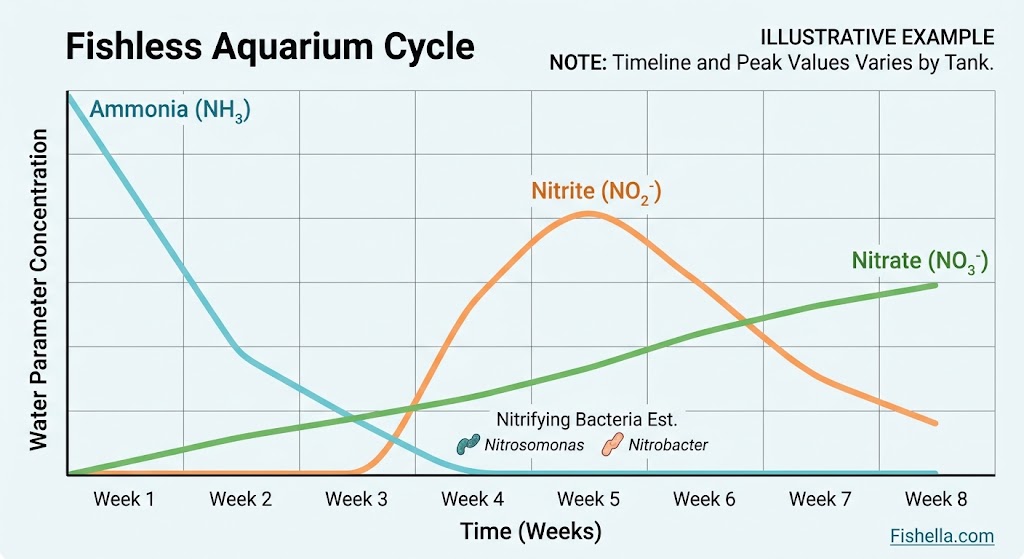
Cycling targets are not the same as long-term fishkeeping targets. During cycling, you are looking for specific patterns in the numbers. Later, you manage water for your chosen species.
| Parameter | During cycling | Finished cycle | Notes |
|---|---|---|---|
| Ammonia | Rises after each dose, then falls | About 0 ppm after 24 hours | Follow your product label for dosing |
| Nitrite | Rises, peaks, then falls | About 0 ppm after 24 hours | A long nitrite stall is common |
| Nitrate | Slowly climbs | Present, then reduced by water change | Not proof of completion by itself |
| pH | Watch for drops | Stable, suited to your fish | Low pH can slow bacteria |
| Temperature | Steady and in the range your product recommends | Set for your fish species | Warmer water often speeds growth, within safe limits |
Bacteria numbers and types vary with pH and temperature. A veterinary water quality reference from VIN also states that a well-balanced aquarium should show zero ammonia and nitrite. Some bottled bacteria list their own recommended pH and temperature ranges, so check the label. Your future fish species also matter. Plan for them before you finalize settings.
Common Fishless Cycling Mistakes to Avoid
- Adding too much ammonia. High levels can stall bacteria. Measure, do not guess.
- Using unsafe household ammonia. Scented or soapy products can harm your tank. Read the ingredients.
- Forgetting to dechlorinate tap water. Chlorine and chloramine can hurt bacteria.
- Turning off the filter. Bacteria need constant oxygen and water flow.
- Ignoring pH changes. Falling pH can slow or stall the cycle.
- Assuming nitrate alone confirms completion. Check ammonia and nitrite too.
- Adding fish too early. Wait for repeated, successful challenge tests.
- Stopping testing before confirming the cycle. A skipped test can hide a problem.
What to Do After Fishless Cycling
- Reduce nitrate if needed. After cycling, you may need to reduce accumulated nitrate with a partial water change. Learn how to do a water change without removing fish while maintaining safe aquarium conditions. Always treat new water with conditioner.
- Test again. Confirm ammonia and nitrite are still near 0 ppm after the change.
- Protect your filter media. If you must clean it, swish it gently in removed tank water. Avoid tap water and avoid replacing all media at once.
- Add fish gradually. Start with a small group, then wait and test before adding more. A big jump in fish can overwhelm a new biofilter.
- Match stocking to your tank. Consider adult size, temperament, and water needs for each species, along with your aquarium’s volume.
Frequently Asked Questions About Fishless Cycling
What is the fastest way to start fishless cycling?
Begin with a running filter, dechlorinated water, and a safe ammonia source. Seeded filter media from a healthy, disease-free tank or bottled bacteria can give a head start.
Can I use fish food instead of ammonia?
Yes, decaying fish food releases ammonia. It is less predictable and can make the water messy, so test often.
How much ammonia should I add during fishless cycling?
Follow your product’s instructions. Confirm with a liquid test kit, and do not exceed the maximum the manufacturer lists.
How often should I test water during fishless cycling?
Test ammonia, nitrite, and nitrate every day or every other day. Test less often only if your readings are stable.
Can bottled bacteria speed up fishless cycling?
It may help, depending on the product and conditions. Follow the label, and still confirm completion with testing.
How do I know when fishless cycling is complete?
Run an ammonia challenge test. Ammonia and nitrite should both read about 0 ppm after 24 hours. Repeat to be sure.
Should I change water after fishless cycling?
Often yes, because nitrate may be high. Do a partial change with conditioned water before adding fish.
Can I add fish immediately after the cycle is complete?
Plan a small first group rather than a full stock. Add more fish slowly and keep testing.
Pingback: How to Do a Water Change Without Removing Fish Safely
Pingback: How to Cycle a Fish Tank Fast: Beginner’s Guide