Affiliate disclosure: We may earn a commission if you buy through links on this page, at no extra cost to you. Specifications below come from manufacturer and retailer listings and can change between model versions, so confirm details on the product page before buying.
The best aquarium algae scraper makes cleaning fish tank glass easier while helping prevent scratches. For most medium-sized glass aquariums, the Flipper Standard Float is a strong all-around option. It combines a magnetic scrubber with a replaceable scraper blade. For acrylic tanks, choose an acrylic-safe cleaner with a soft pad or plastic blade.
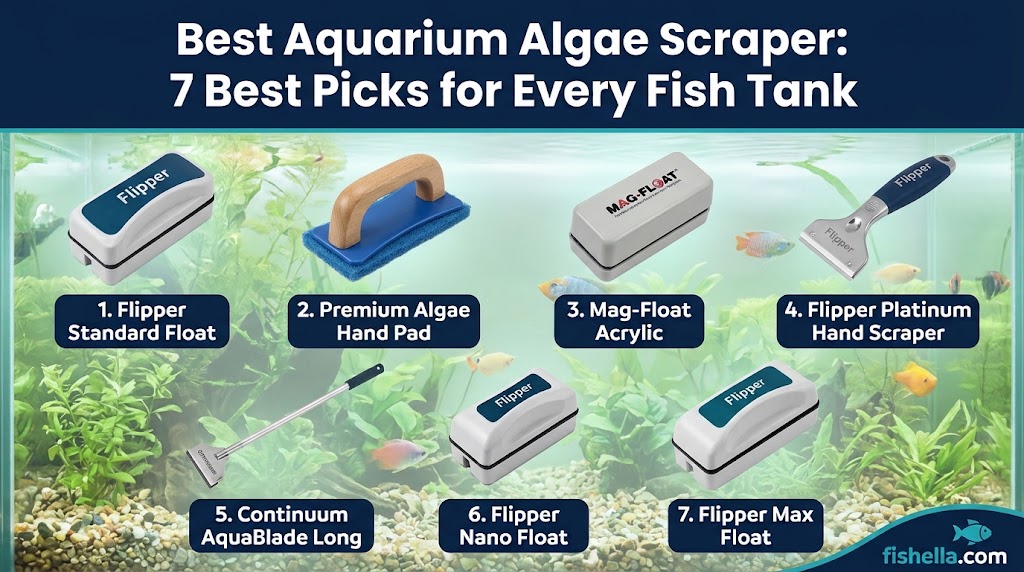
The right aquarium algae scraper depends on your tank material, glass thickness, tank depth, and the type of algae you need to remove. A magnetic cleaner works well for regular maintenance. A handheld scraper gives you more control over stubborn algae, while a long-handle scraper helps you reach the bottom of deep tanks.
In this guide, we compare seven aquarium algae scrapers for different budgets and tank sizes. You will learn what each tool does best, which tank materials it supports, and how to clean aquarium glass without damaging it.
If you are unsure which algae is growing in your aquarium, read our guide to common types of aquarium algae first.
Quick Comparison – Best Aquarium Algae Scrapers
| Product | Best for | Type | Important consideration |
|---|---|---|---|
| Flipper Standard Float | Overall | Magnetic 2-in-1 | Glass/acrylic blades included |
| Aqueon Algae Cleaning Magnet | Budget | Magnetic | Glass and acrylic pads included |
| Mag-Float Acrylic Series | Acrylic tanks | Magnetic | Choose model by panel thickness |
| Flipper Platinum Hand Scraper | Stubborn algae | Handheld | Plastic card blade; optional steel blade for glass |
| Continuum AquaBlade Long | Deep tanks | Long handle | Choose plastic or stainless blade |
| Flipper Nano Float | Small aquariums | Magnetic 2-in-1 | Up to 1/4-inch panels |
| Flipper Max Float | Large tanks | Magnetic 2-in-1 | Check exact model thickness rating |
Product recommendations are based on intended use, manufacturer specifications, tank compatibility, and practical buying considerations. Product availability and specifications may change.
7 Best Aquarium Algae Scrapers Reviewed
Every pick below follows the same format so you can compare them quickly.
Flipper Standard Float: Best Overall Aquarium Algae Scraper
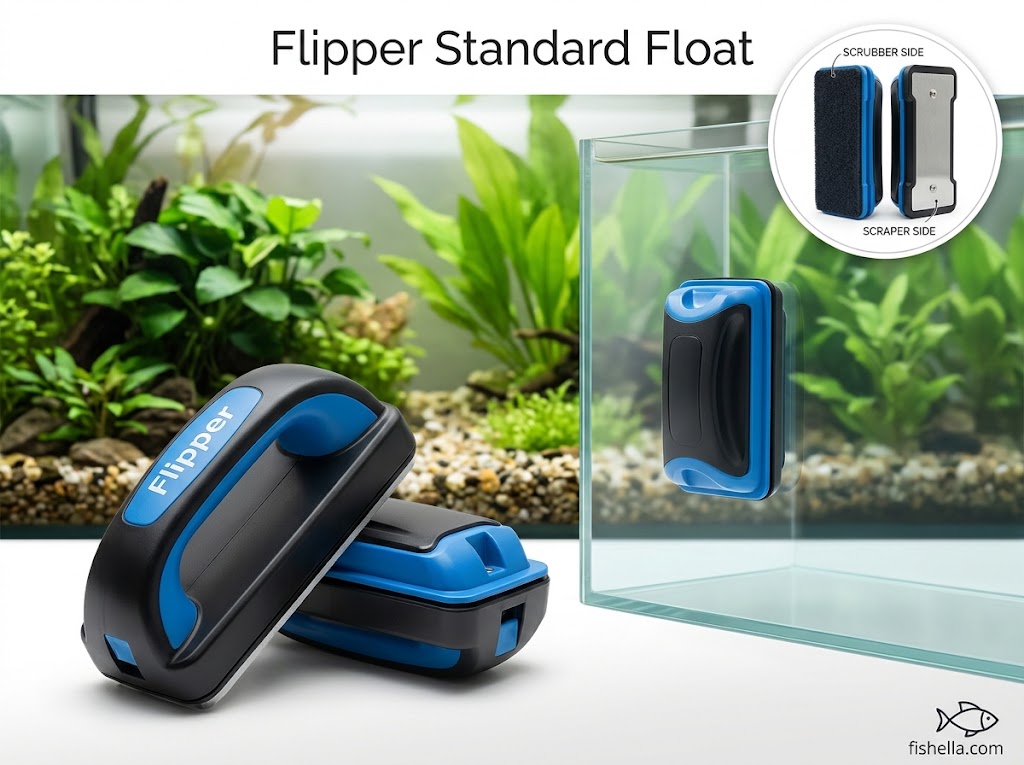
Overview: The Flipper Standard is the go-to magnetic cleaner for many hobbyists because it combines a scrubber and a scraper in one tool. Rotate the outer handle and the inner piece flips from a scrubbing pad to a scraping blade, so you can handle daily film and the occasional hard spot without changing tools. The Float version rises to the surface if it ever detaches, which saves you from fishing around the substrate.
Main features:
- Maximum panel thickness: 1/2 inch (12 mm).
- Includes stainless-steel and ABS replacement blades.
- Stainless steel is for glass; ABS is for acrylic.
- Recommended tank range: approximately 30–150 gallons.
Official specifications: Flipper Standard Float.
Pros:
- One tool handles both routine and stubborn algae
- Works on glass or acrylic with the correct blade
- Low-profile design that helps limit sand getting trapped
Cons:
- Costs more than basic magnetic cleaners
- Blades need replacing over time
- Not suited to walls thicker than 1/2 inch (see the Flipper Max)
Suitable tank material: Glass and acrylic. Use the stainless blade on glass only and the ABS blade on acrylic.
Best for: Hobbyists with mid-size tanks who want a single dependable tool.
Aqueon Algae Cleaning Magnet: Best Budget Aquarium Algae Scraper
Overview: If you only need to wipe away soft green film and diatoms, a simple magnetic cleaner such as the Aqueon is an inexpensive way to do it. It has a weighted inner piece that sinks, and a curved pad for wiping. Reviewers generally praise it as good value for routine cleaning.
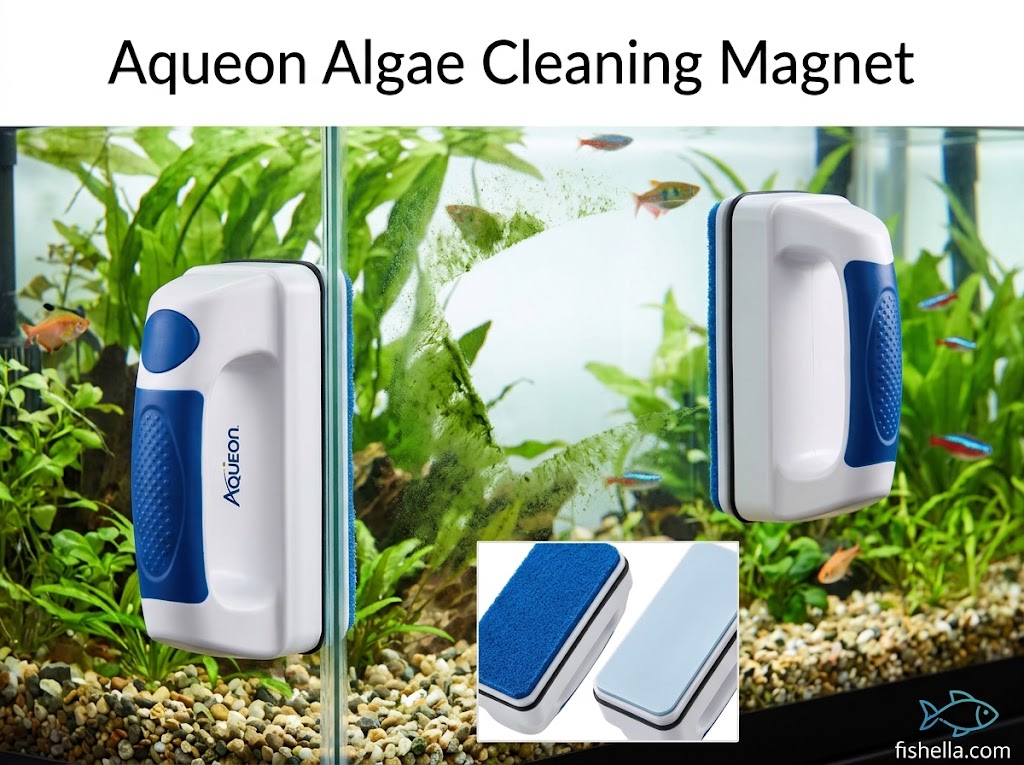
Main features:
- Two-piece magnetic design
- Weighted inner piece that sinks
- Curved cleaning pad
- Aimed at routine glass cleaning
Official specifications: Aqueon Algae Cleaning Magnets.
Pros:
- Affordable and easy to find
- Very simple to use
- Good for light, regular maintenance
Cons:
- No scraper blade, so hard algae spots can remain
- May stutter on some surfaces
- Confirm glass thickness and acrylic compatibility for your specific size
Suitable tank material: Check the listing for your model; match magnet size to your tank wall thickness.
Best for: Beginners and anyone with standard glass who cleans regularly.
Mag-Float Acrylic Series: Best Algae Scraper for Acrylic Aquariums
Overview: Acrylic scratches far more easily than glass, so it pays to buy a tool designed for it. Mag-Float makes acrylic-specific models with soft cleaning surfaces, and its design aims to keep sand and gravel off the pad. Sizes are matched to wall thickness, from small models up to the Large+ and extra-large versions.
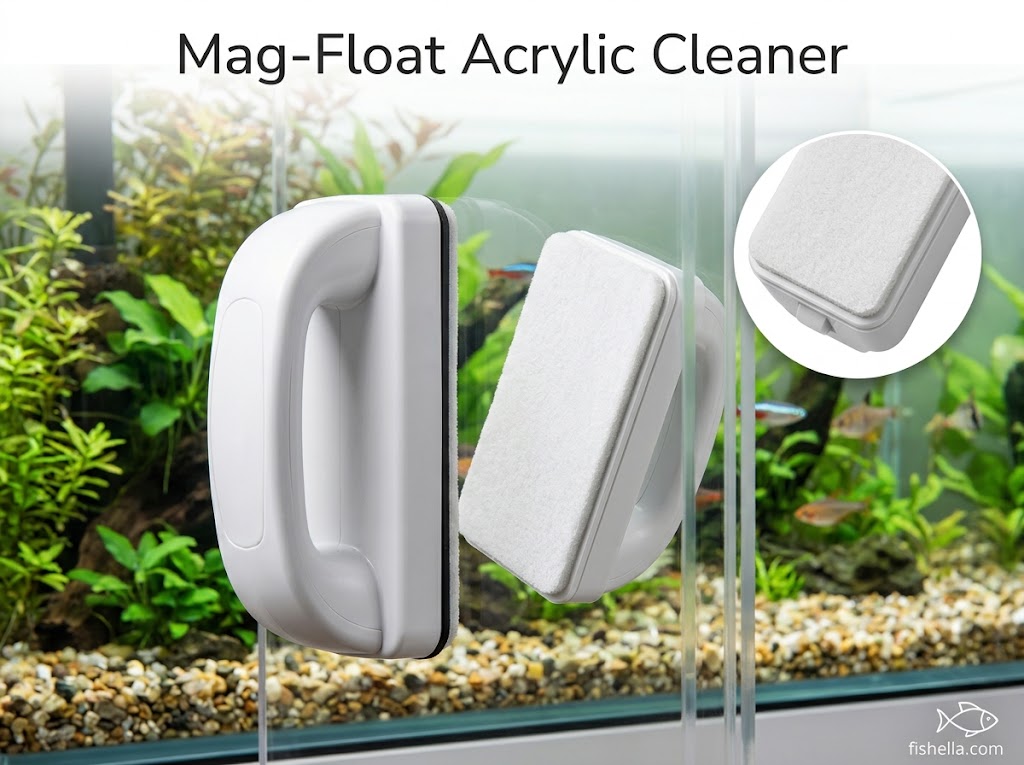
Main features:
- Mini: up to 3/16-inch thickness.
- Small: up to 3/16-inch thickness.
- Medium: up to 3/8-inch thickness.
- Large+: up to 3/4-inch thickness.
- X-Large: up to 1 1/4-inch thickness.
These are model-specific manufacturer ratings. Do not suggest that every Mag-Float acrylic cleaner has the same limit. Official specifications: Mag-Float Acrylic Series.
Pros:
- Built with acrylic in mind
- Wide size range to match your wall thickness
- Floats if separated
Cons:
- Larger acrylic models can be expensive
- Soft pads are not meant for baked-on, hard algae
- Glass-series Mag-Floats use metal blades and are not for acrylic
Suitable tank material: Acrylic (buy the acrylic-labeled model).
Best for: Acrylic tank owners, including large display tanks.
Flipper Platinum Hand Scraper: Best Aquarium Scraper for Stubborn Algae
Overview: When green spot algae or hard films resist a pad, a handheld scraper gives you direct control and more pressure. The Flipper Platinum Hand Scraper offers about 18 inches of reach and uses a credit-card-style blade system, so replacing blades is cheap and simple.
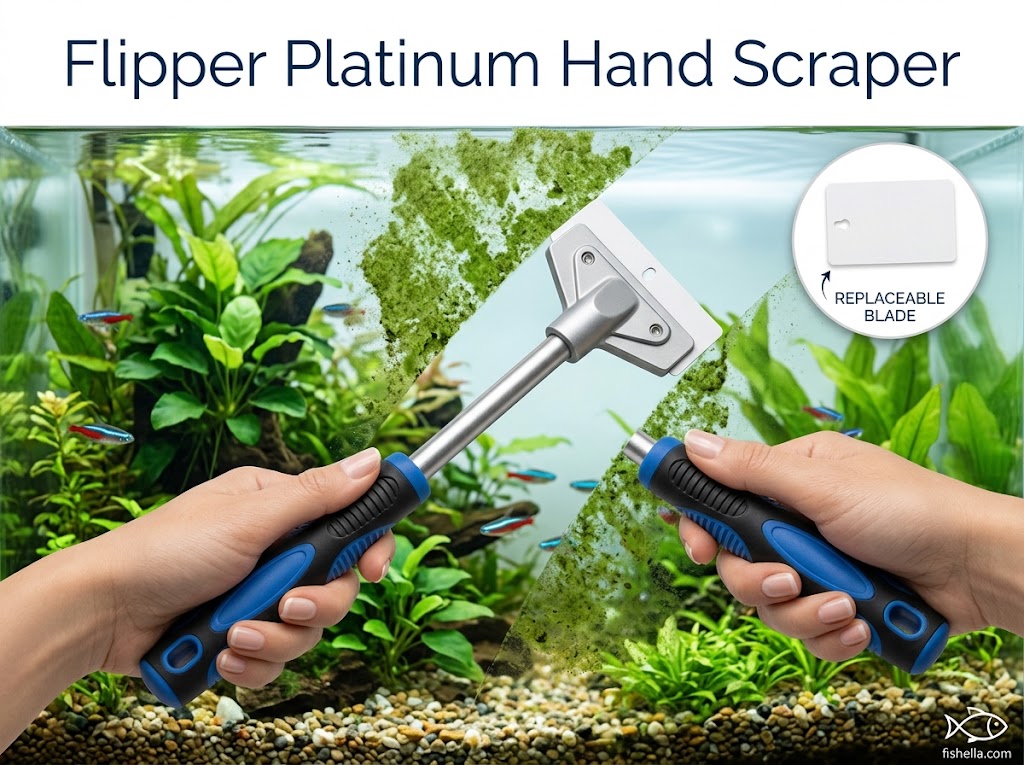
Main features:
- Handheld design with roughly 18 inches of reach
- Replaceable blade system
- Listed for glass and acrylic; choose the blade accordingly
Official specifications: Flipper Platinum Hand Scraper.
Pros:
- Strong scraping control on tough spots
- Inexpensive replacement blades
- Good for corners and edges
Cons:
- Your hands and arms get wet
- Easy to over-press, so use light, even pressure
- Never use a metal blade on acrylic
Suitable tank material: Glass, and acrylic only with a plastic blade, following the manufacturer’s blade guidance.
Best for: Tanks with stubborn spots that magnets leave behind.
Continuum AquaBlade: Best Long-Handle Aquarium Glass Scraper
Overview: Deep tanks make it hard to reach the lower glass. A long-handle scraper such as the Continuum AquaBlade P lets you keep your arm mostly out of the water and still reach the bottom corners. It comes with both a plastic blade and a stainless steel blade.
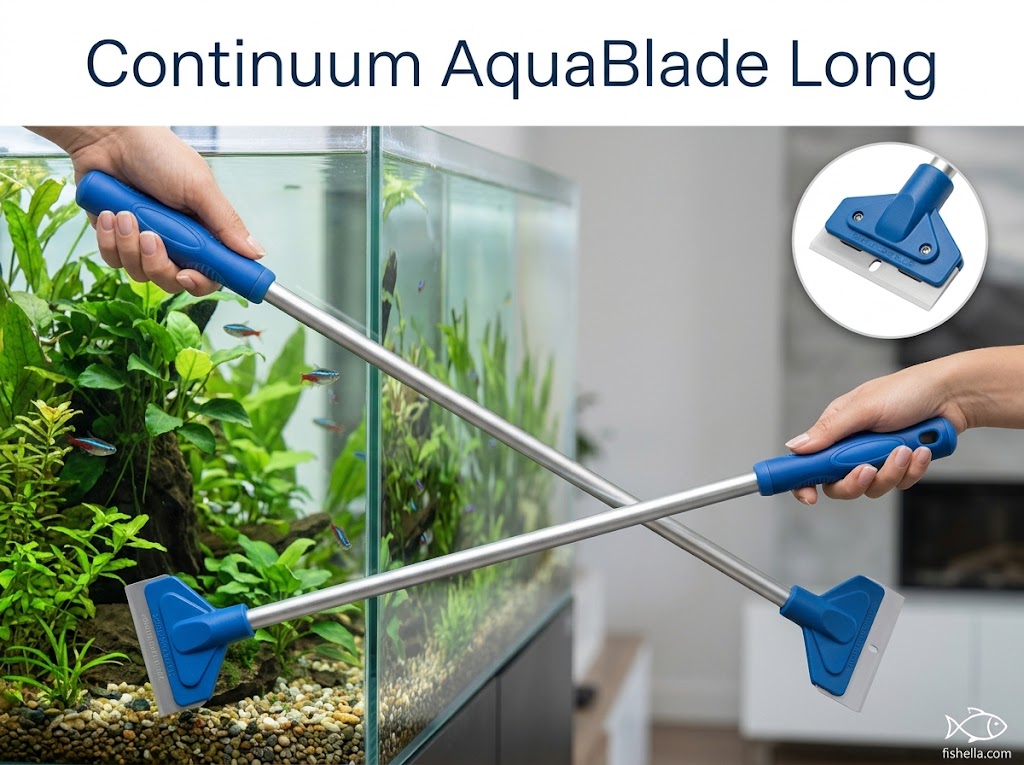
Main features:
- Extended handle for deep tanks (listed for tanks under about 35 inches deep)
- Plastic blade and stainless steel blade
- Works on glass or acrylic when you pick the correct blade
Official specifications: Continuum AquaBlade.
Pros:
- Reaches lower glass and corners
- Plastic blade option for acrylic
- Less wet arm time
Cons:
- Longer handles make it harder to control pressure
- Can scratch or nick silicone seams if used carelessly
- Needs a steady hand near the substrate
Suitable tank material: Glass (steel or plastic blade) or acrylic (plastic blade only).
Best for: Tall or deep tanks. If you prefer a lower-cost option, stainless-steel long-handle scrapers like the Kirecoo are another popular choice, but they are listed for glass only.
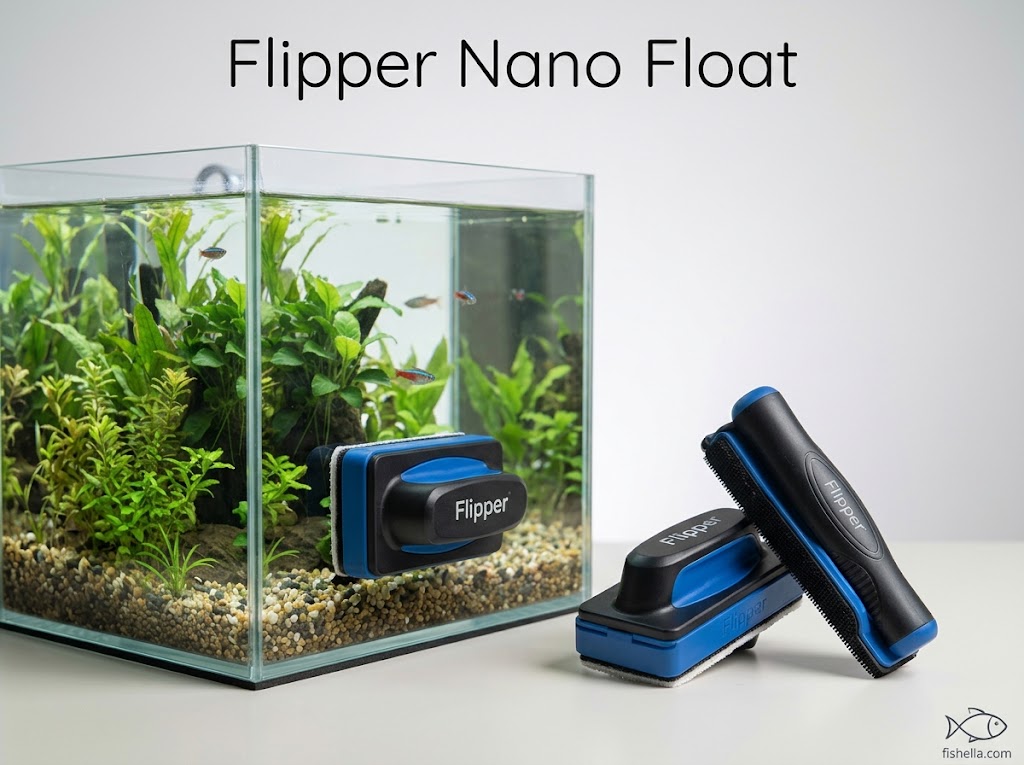
Flipper Nano Float: Best Magnetic Algae Scraper for Small Tanks
Overview: Small tanks need a small tool. The Flipper Nano is scaled down for thinner walls and compact aquariums, and still includes the flip-to-scrape feature. It is a good fit for a 10-gallon aquarium.
Main features:
- Rated for glass or acrylic up to 1/4 inch (6 mm) thick
- Recommended for tanks up to about 25 gallons
- Stainless steel blade for glass, with replacement every few months suggested by some retailers
Official specifications: Flipper Nano Float.
Pros:
- Compact, easy to maneuver in small spaces
- Scrub and scrape in one tool
- Floats if it detaches
Cons:
- Too weak for thicker walls
- Small head means more passes on bigger panes
Suitable tank material: Glass and acrylic up to 1/4 inch. Use acrylic-safe blades on acrylic.
Best for: Nano tanks, 5–25 gallon setups, and desktop aquariums.
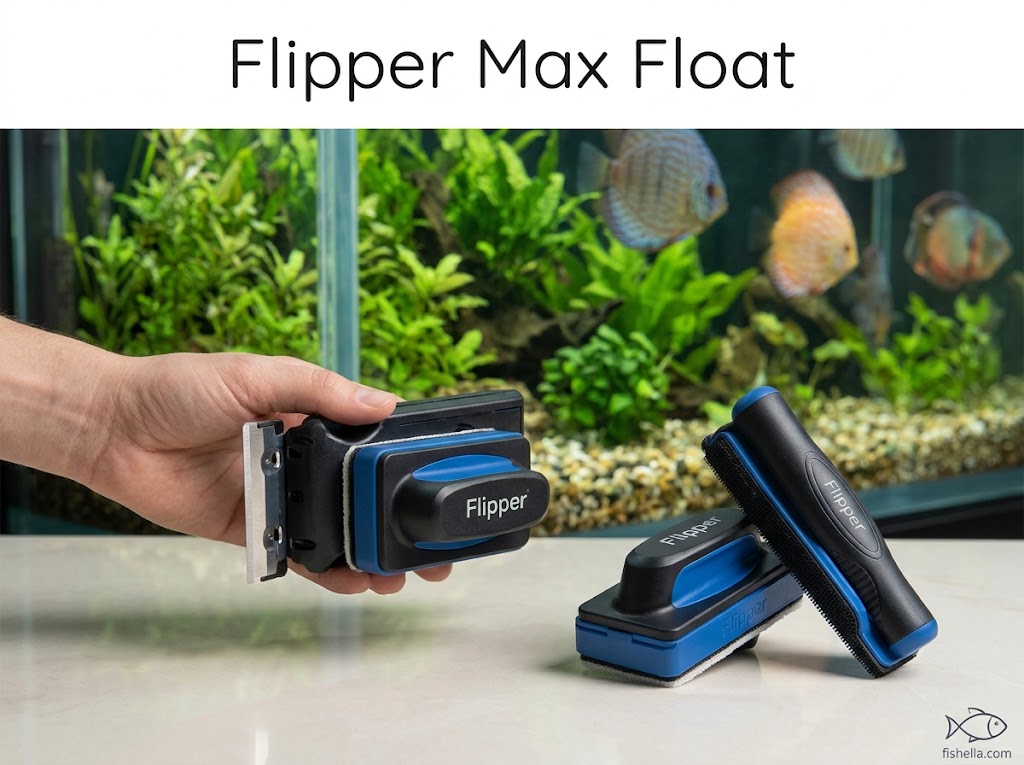
Flipper Max Float: Best Premium Magnetic Aquarium Cleaner
Overview: Large and custom tanks often have thick glass or acrylic walls that regular magnets cannot grip through. The Flipper Max uses stronger magnets and is built for those heavy-duty jobs.
Main features:
- Rated for thick walls (listings state up to 3/4 inch, so confirm for your model)
- Same flip design: scrub, then scrape
- Floating design
Official specifications: Flipper Max Float.
Pros:
- Handles thick glass and acrylic
- Strong grip reduces slipping
- Suited to large display tanks
Cons:
- Premium price
- Strong magnets require care: keep fingers clear and keep away from electronics and pacemakers
- Overkill for small tanks
Suitable tank material: Thick glass or acrylic. Use the correct blade for your tank material.
Best for: Large or thick-walled aquariums.
Important: Never use a metal blade on acrylic just because it fits the scraper. Always check the manufacturer’s material compatibility and blade instructions.
Which Aquarium Algae Scraper Should You Buy?
The best aquarium algae scraper depends on your tank and cleaning needs. Here is a quick guide to help you choose.
- For most medium-sized glass tanks: Choose the Flipper Standard Float. Its magnetic design combines a scrubber and scraper.
- For a budget-friendly option: Choose the Aqueon Algae Cleaning Magnet for routine cleaning.
- For acrylic aquariums: Choose the Mag-Float Acrylic model that matches your panel thickness.
- For stubborn green spot algae: Consider the Flipper Platinum Hand Scraper with the appropriate blade.
- For deep aquariums: Choose the Continuum AquaBlade Long with a suitable blade.
- For small aquariums: The Flipper Nano Float is a compact option for compatible panels.
- For thick aquarium panels: Consider the Flipper Max Float after checking its exact thickness rating.
My recommendation: If you own a standard glass aquarium, a magnetic cleaner with a replaceable scraper blade is a convenient starting point. Acrylic tank owners should prioritize soft pads and acrylic-safe plastic blades instead of stainless steel.
Always check your aquarium’s actual panel thickness before purchasing a magnetic cleaner.
Types of Aquarium Algae Scrapers
Magnetic Aquarium Algae Cleaners
A magnetic cleaner has two halves. One sits inside the tank and the other on the outside. When you slide the outer half, the inner half follows and wipes the glass, so your hands stay dry. This is why many people consider a magnetic cleaner the best magnetic aquarium algae scraper for daily upkeep.
Advantages: Fast, convenient, and great for routine cleaning. Many are small enough to leave in the tank.
Limitations: Magnet strength must match your wall thickness. Sand or gravel can get trapped between the pad and the glass and cause scratches. Pad-only models struggle with hard algae.
Handheld Aquarium Scrapers
A handheld scraper gives you manual control. You choose the blade, the angle, and the pressure, which makes it easier to deal with spots a magnet skips. Blades can be metal, ABS, or plastic, so always match the blade to your tank material. Handheld scrapers also reach corners and edges more precisely, but you will need to put your hand in the water.
Long-Handle Aquarium Scrapers
Long-handle scrapers stretch your reach in deep or tall tanks, and they keep your arm drier. The trade-off is control: the longer the handle, the harder it is to apply the right amount of pressure, and a careless pass can nick silicone seams. They work best for bottom corners and hard-to-reach spots.
For step-by-step cleaning methods, see our guide on how to remove algae from aquarium glass.
Magnetic vs. Manual Aquarium Scraper – Which Is Better?
| Feature | Magnetic cleaner | Manual scraper |
|---|---|---|
| Daily cleaning | Convenient, hands stay dry | Requires hand in water |
| Deep corners | Depends on design | Better control with long handle |
| Tough algae | Model-dependent | Often better scraping control |
| Glass tanks | Compatible models | Compatible models |
| Acrylic tanks | Acrylic-safe pads only | Plastic-safe blades recommended |
Which should you choose? Most owners do best with both: a magnetic cleaner for quick weekly wipe-downs and a small handheld scraper for corners and hard spots. If you only want one tool, a two-in-one magnetic cleaner with a blade (like the Flipper) covers the most ground. If you have a very deep tank, add a long-handle scraper. If you have an acrylic tank, buy tools labeled for acrylic.
How to Choose the Best Aquarium Algae Scraper
1. Glass vs. Acrylic Tank Compatibility
This is the most important decision. Acrylic scratches much more easily than glass. Use acrylic-labeled tools, plastic blades, and soft pads on acrylic. Metal blades are for glass only.
2. Magnetic Strength and Tank Glass Thickness
Every magnetic cleaner has a maximum wall thickness. Too weak and it will not hold; too strong and it can be hard to move. Measure your glass or check the tank specs, then match the cleaner to it.
3. Blade Material and Safety
Stainless steel blades are good for hard algae on glass. Plastic and ABS blades are safer for acrylic and for silicone seams. Replace dull or nicked blades, since a damaged blade can scratch.
4. Handle Length and Tank Depth
Measure your tank’s depth. Shorter handles give better control, while longer ones are better for deep tanks. Pick the shortest handle that still reaches the bottom.
5. Ease of Cleaning and Replacement Pads
Look for tools you can rinse easily and for replaceable pads or blades. Cheap, available replacements keep the tool working well for years.
6. Price and Durability
A low-cost scraper is fine for light algae, but sturdier designs with replaceable parts often last longer. Check manufacturer product pages, such as Fluval, for official specifications and care instructions, and always confirm compatibility on the product’s own page.
How to Use an Aquarium Algae Scraper Safely
- Check the scraper and pad before use. Look for grit, cracks, or a dull or damaged blade.
- Remove trapped gravel or sand. Rinse the cleaning surface so nothing abrasive scratches the glass.
- Use the correct blade for your tank material. Metal for glass only; plastic or ABS for acrylic.
- Avoid excessive pressure. Use smooth, steady strokes and let the tool do the work.
- Clean corners carefully. Use a handheld scraper or the edge of your magnetic cleaner, and avoid cutting into silicone seams.
- Rinse and maintain the scraper after use. Rinse the scraper’s cleaning surfaces with clean water after use. Remove trapped debris, dry the tool as recommended by its manufacturer, and store it safely.”
For general background on aquarium and aquatic animal care, see the educational resources from UF/IFAS Extension and the Merck Veterinary Manual. These sites are references for general fish care; they do not endorse any particular scraper.
Common Mistakes to Avoid When Cleaning Aquarium Glass
- Using a glass blade on acrylic. This is the quickest way to leave deep scratches.
- Letting sand get trapped under a magnetic cleaner. Lift or rinse the pad if you hear grinding.
- Scraping too aggressively. Hard pressure scratches glass and damages seams.
- Ignoring the corners. Algae in corners spreads back across the glass.
- Leaving dirty scraper pads in the aquarium. Debris collects and can scratch.
- Using household cleaning chemicals near aquarium water. Residue can harm fish. Use only plain water and aquarium-safe tools.
Cleaning treats the symptoms. To reduce regrowth, read our guide to aquarium algae control methods.
Frequently Asked Questions
What is the best aquarium algae scraper?
For most owners, a two-in-one magnetic cleaner like the Flipper Standard is the best all-rounder because it scrubs soft algae and flips to a blade for tough spots. The best choice still depends on your tank material, wall thickness, and algae type.
Are magnetic aquarium cleaners worth it?
Yes, for routine cleaning. They keep your hands dry and make quick work of light algae. They are less effective on hard, baked-on algae unless they include a blade, and they must be matched to your glass thickness to work properly.
Can aquarium scrapers scratch glass?
Yes, if sand or gravel gets trapped under the pad, if the blade is damaged, or if you press too hard. Rinse your tool, check the blade, and use steady, light pressure to keep glass scratch-free.
What is the safest algae scraper for acrylic tanks?
Choose a tool labeled for acrylic, such as an acrylic-specific magnetic cleaner with a soft pad or a scraper with a plastic or ABS blade. Never use a metal blade on acrylic, and always follow the manufacturer’s instructions.
Are magnetic or handheld aquarium scrapers better?
Magnetic cleaners are better for quick, regular maintenance, while handheld scrapers give more control for corners and stubborn spots. Many aquarists use both. If you want just one tool, a magnetic cleaner with a built-in blade is a good compromise.
How do I remove stubborn algae from aquarium glass?
Use a scraper blade suited to your tank: stainless steel for glass, plastic or ABS for acrylic. Keep the surface wet, use short, even strokes, and avoid pressing hard. Consider our guide on how to remove algae from aquarium glass.
How often should I clean aquarium glass?
Most owners wipe the front glass once a week as part of regular maintenance, and scrape harder spots as needed. Tanks with strong light or heavy feeding may need more frequent cleaning, and fixing the cause helps reduce how often you clean.
Can I use a razor blade in my fish tank?
Only on glass, with care. Razor blades can cut silicone seams and will scratch acrylic. Use a dedicated aquarium blade holder, keep the blade flat, and never use a metal blade on acrylic or plastic tanks.
What is the best algae scraper for a 10-gallon aquarium?
A small magnetic cleaner such as the Flipper Nano is a good fit. It is rated for walls up to 1/4 inch and tanks up to about 25 gallons. Confirm your glass thickness, since some small tanks have thinner or thicker panes.
Can I use an aquarium algae scraper on a planted tank?
Yes. You can use an aquarium algae scraper in a planted tank. However, work carefully around plant leaves, decorations, and the substrate. Avoid dragging a magnetic cleaner through sand or gravel because trapped particles can scratch the glass.
Is a magnetic aquarium cleaner better than a sponge?
A magnetic cleaner is more convenient for regular glass cleaning because you can control it from outside the tank. A sponge gives you direct control but requires your hand to enter the water. Always use a clean, aquarium-safe sponge that matches your tank material. Never use a household kitchen sponge with cleaning chemicals or abrasive surfaces.
Final Verdict: Which Aquarium Algae Scraper Is Best?
The best aquarium algae scraper depends on your tank material, panel thickness, and cleaning needs.
Here are my top three recommendations:
- Best overall: Flipper Standard Float – A convenient magnetic cleaner with both scrubbing and scraping functions.
- Best budget: Aqueon Algae Cleaning Magnet – A simple option for regular cleaning, with separate glass and acrylic pads.
- Best for acrylic tanks: Mag-Float Acrylic – A dedicated magnetic cleaner with different sizes for different panel thicknesses.
If you have a small aquarium, consider the Flipper Nano Float. For stubborn algae, the Flipper Platinum Hand Scraper offers more direct control. Owners of deep aquariums can consider the Continuum AquaBlade Long.
Before buying, measure your aquarium panel and confirm blade compatibility. The right scraper makes regular maintenance easier and helps protect your aquarium from unnecessary scratches.
Ready to choose? Compare the current prices and specifications of our top recommendations before purchasing.