
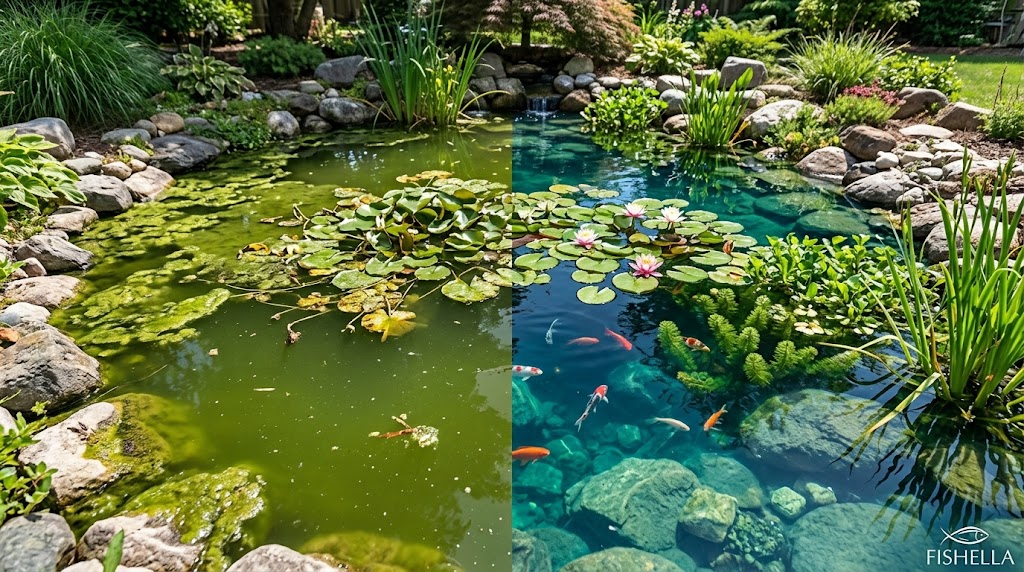
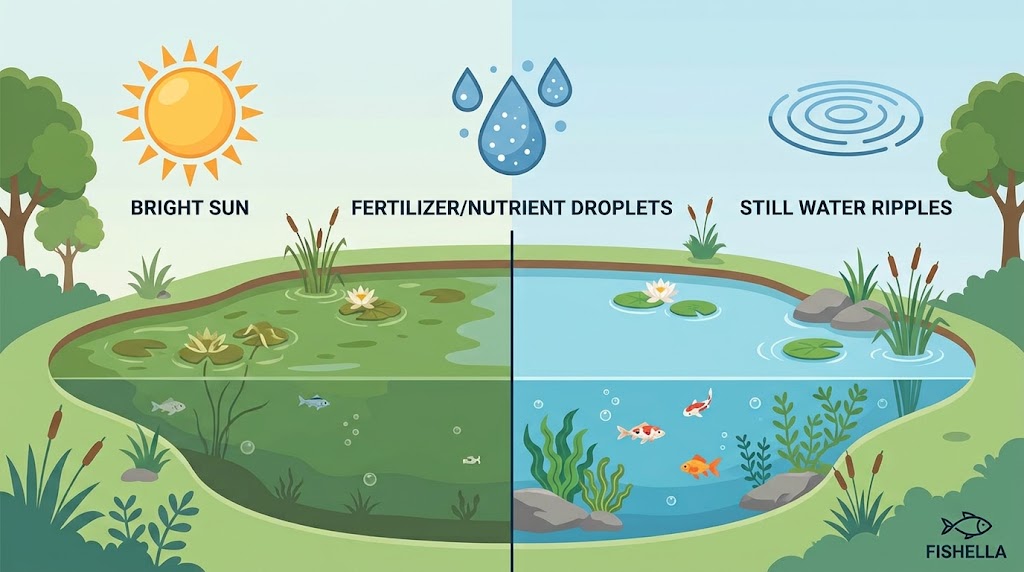
Green water, slimy walls and floating mats are the classic signs that algae has taken over. Effective algae control starts with one idea: algae is not the real problem, it is a symptom. It appears when light, nutrients and still water come together. Fix those three, and the algae has nothing left to feed on. At FISHELLA, we help fish keepers keep their water clean, clear and safe, and this guide shows you exactly how to do that.
This guide explains what algae is, what causes an algae bloom, how to identify each type, and how to remove and prevent it in ponds, pools, aquariums and water tanks.
Quick Answer: What Is Algae Control?
Algae control is the practice of preventing, removing and managing algae growth in water. It combines three strategies:
- Physical control: brushing, netting, filtration, shading
- Biological control: aquatic plants, algae-eating fish, barley straw
- Chemical control: algaecide, chlorine, hydrogen peroxide
The most successful plans use all three, starting with the gentlest option first.
What Is Algae and Why Does It Grow?
Algae are photosynthetic organisms that live in water. Like plants, they use sunlight to produce energy, and in doing so they release oxygen. They range from microscopic single cells (phytoplankton) to visible strands like string algae.
In balanced water, algae is harmless and even useful. Problems begin when nutrient levels rise and algae multiplies rapidly. This process is linked to eutrophication, where water becomes overloaded with nutrients, especially nitrate and phosphate. The result is an algae bloom. If your Fish tank develops cloudy water, read our guide on why aquarium water becomes cloudy to identify common causes and learn how to restore clear, healthy water.
What Causes Algae Growth in Water?
| Cause | Why it feeds algae | Common source |
|---|---|---|
| Excess sunlight | Powers photosynthesis | Open tanks, shallow ponds, unshaded pools |
| Nitrate and phosphate | Acts like fertilizer | Fish waste, leftover food, lawn runoff, dead leaves |
| Stagnant water | Lets algae settle and multiply | Poor circulation, weak pumps |
| Warm temperature | Speeds up growth | Summer heat |
| Poor filtration | Leaves cells and nutrients in the water | Clogged or undersized filters |
| Unbalanced water chemistry | Reduces sanitizer effectiveness | Wrong pH or low chlorine |
Waste and decaying food also raise nutrient levels, and understanding what causes sudden ammonia spikes in an established freshwater tank can help you stop algae before it starts.
Types of Algae and How to Identify Them
| Type | Appearance | Where it appears | Difficulty |
|---|---|---|---|
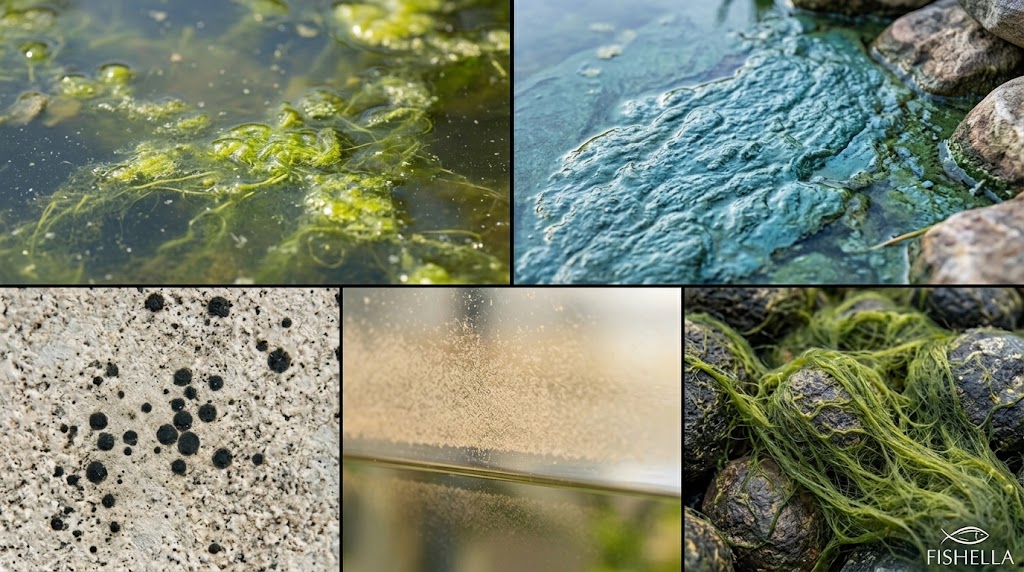
| Green algae | Green water, slippery film | Ponds, pools, tanks | Easy |
| Blue-green algae (cyanobacteria) | Paint-like scum, musty smell | Ponds, lakes, still water | Medium, can be toxic |
| Black algae | Dark spots with deep roots | Pool walls, concrete | Hard |
| Brown algae (diatoms) | Dusty brown coating | New aquariums | Easy |
| String algae (blanket weed) | Long green hair-like strands | Ponds, rocks, plants | Medium |
Blue-green algae deserves special attention. It is technically a bacterium, and some species produce toxins. The U.S. EPA’s guide to harmful algal blooms explains how these blooms affect water quality and health.
Brown algae and green spot algae are especially common in fish tanks, and our step-by-step guide on how to remove algae from an aquarium shows you how to clean each type safely.
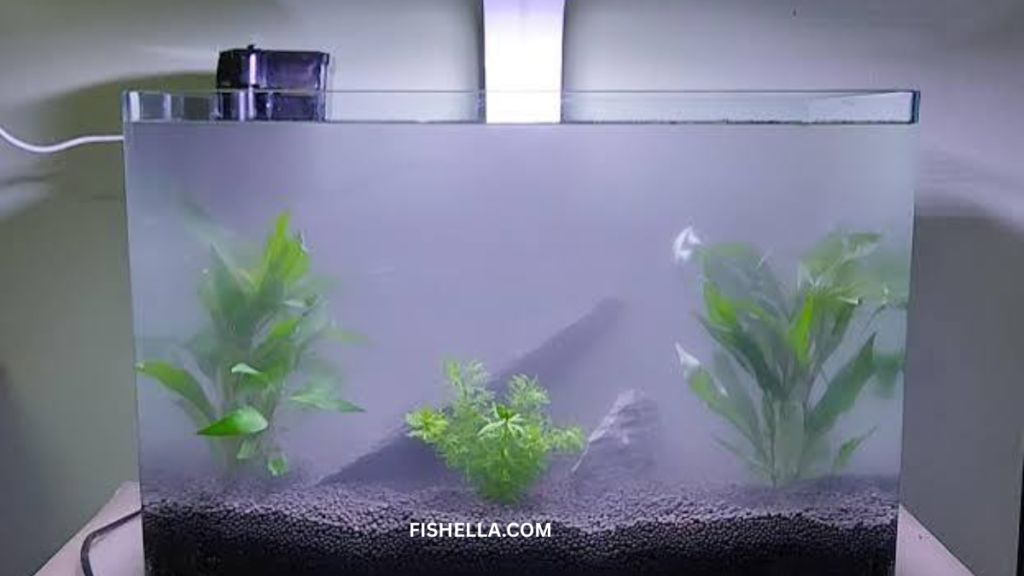
New aquariums often go through a cloudy or brownish phase, and our guide on how to clear cloudy water in a newly set up fish tank explains what is normal and what needs action.
Signs of Algae in Your Water
- Water turning green, cloudy or brown
- Slippery walls, steps or decorations
- Persistent green, black or brown patches
- Earthy or musty smell
- Floating mats or stringy clumps
- Fish gasping at the surface, a sign of low dissolved oxygen
If you notice fish gasping at the surface, low oxygen from a heavy bloom could be the cause, but it’s worth reading why your fish might be dying to rule out other problems too.
Is Algae Harmful to Humans, Pets and Fish?
Most common green algae is a nuisance, not a danger. But heavy blooms consume oxygen at night, which can stress or kill fish. Certain cyanobacteria release toxins that may harm people and animals. The CDC’s information on harmful algal blooms recommends staying out of water that looks like scum, paint or pea soup and keeping pets away from it.
How to Get Rid of Algae: Step by Step
Step 1: Remove what you can physically
Scrub surfaces, net string algae and clean or backwash filters. This lowers the algae load immediately.
Step 2: Reduce light
Add shade cloth, floating plants or tank lids. For aquariums, limit lighting to 6 to 8 hours a day.
Step 3: Cut nutrients
Stop overfeeding, remove debris and do partial water changes. Test nitrate and phosphate regularly.
Step 4: Improve circulation and aeration
Moving, oxygen-rich water discourages algae. Use pumps, fountains or air stones.
Step 5: Use natural treatments
- Aquatic plants compete with algae for nutrients
- Barley straw slowly releases compounds that discourage growth in ponds
- UV clarifiers kill free-floating algae as water passes through
- Diluted vinegar cleans empty tanks and decorations (rinse well before use)
- Hydrogen peroxide can work in small systems when dosed carefully
Step 6: Use algaecide or chlorine only if needed
Algaecide damages algae cells so they cannot photosynthesize or reproduce. Copper-based products are strong but can harm fish and invertebrates. Non-copper products are gentler. Chlorine is a sanitizer that kills algae quickly in pools, especially as a shock treatment, while algaecide works best as a preventive partner to it.
Always check that a product is labeled safe for your water type, and treat heavy blooms in stages so decaying algae does not drain the oxygen.

Algae Control by Water Type
Each water body has its own challenges. Here is where to go next:
- Swimming pool: How to get rid of algae in a swimming pool
- Pond: Natural pond algae control methods
- Aquarium: How to remove algae from an aquarium
- Water tank: How to clean algae from a water tank
- Products: Best algaecides and how to choose one
Algae Prevention Tips
- Control nutrients: feed fish only what they finish in a few minutes
- Manage sunlight: add shade and avoid direct sun on tanks
- Keep water moving: run pumps and aeration consistently
- Maintain filtration: clean or replace media on schedule
- Cover storage tanks: no light means no algae
- Balance water chemistry: test pH and sanitizer weekly in pools
- Build a routine: a short weekly check beats an emergency cleanup

Frequently Asked Questions
Why is my water turning green?
Free-floating algae is multiplying, usually because of sunlight, excess nutrients and weak circulation.
What kills algae instantly?
Nothing is truly instant. Pool shock is fastest in swimming pools, often within 24 hours. In ponds and aquariums, gradual methods are safer for fish.
Can algae come back after treatment?
Yes, if light, nutrients and stagnant water are not fixed.
Is algae dangerous for pets?
Common algae is mostly harmless, but blue-green algae can be toxic. Keep pets away from scummy water.
How long does it take to kill algae?
From one or two days with chlorine shock to several weeks with natural methods.
Conclusion
Algae control works best when you treat the cause, not just the color of the water. Limit light, reduce nutrients, keep water moving and stay consistent. Use natural methods first, and choose algaecide or chlorine only when the situation needs it.
Pingback: How to Remove Algae from Aquarium: 9 Proven Steps
Pingback: Fish Tank Algae: How to Control It With Aquarium Lighting
Pingback: Best Aquarium Algae Scraper: 7 Top Picks for Tanks (2026)