
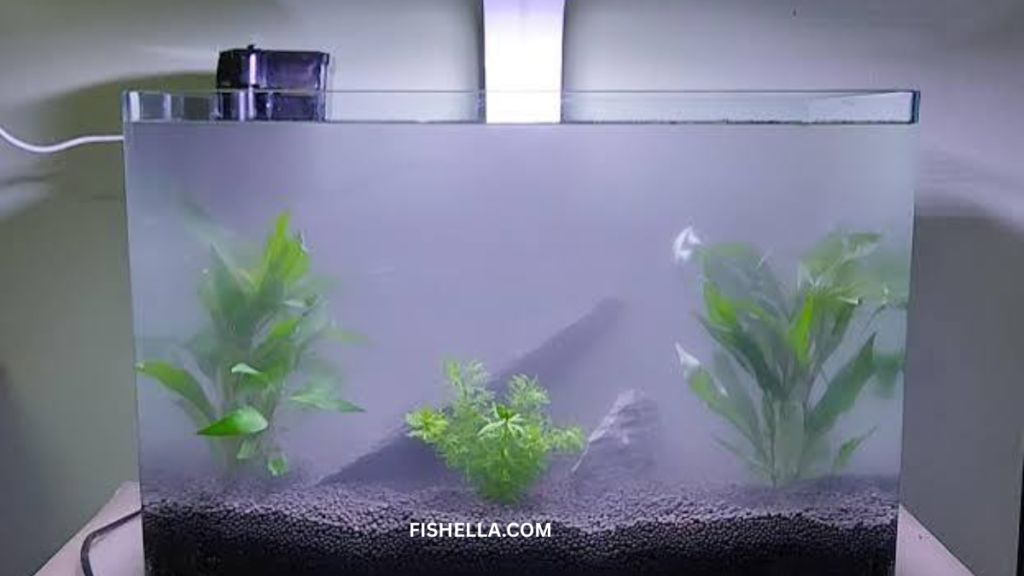
Cloudy aquarium water is usually caused by a bacterial bloom, suspended algae, excess waste, substrate dust, poor filtration, or a recent water change. The water’s color, when the cloudiness started, your tank’s age, and water-test results will help you find the real cause.petsradar.
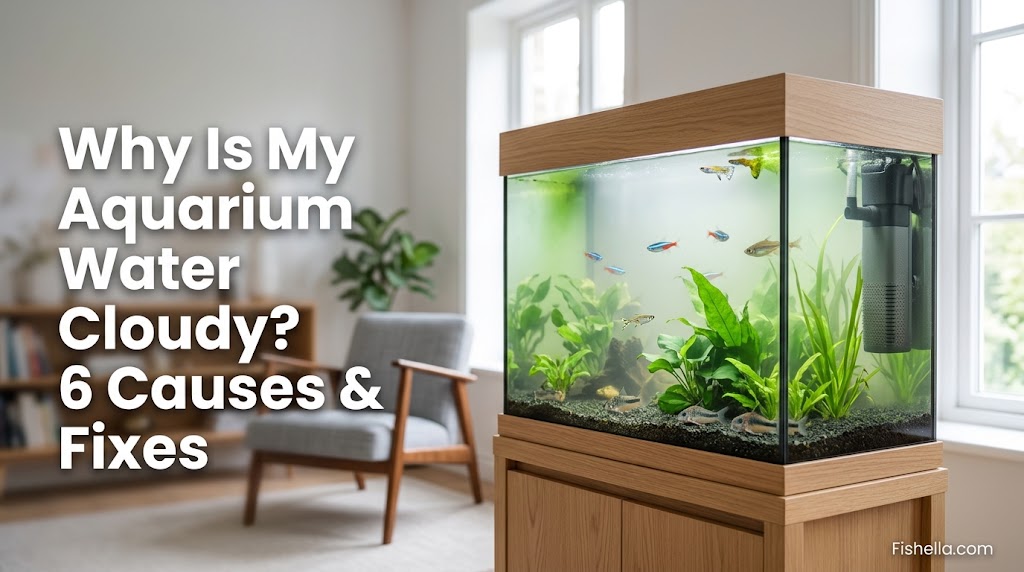
If your fish are acting normally and your ammonia and nitrite readings are zero, cloudy water is often a maintenance or balance issue rather than an emergency. But it should still be investigated because the same waste buildup that clouds the water can eventually affect fish health.
Why Is My Aquarium Water Cloudy?
Cloudy water means something is suspended in the water column—bacteria, algae, fine particles, or dissolved organic material. In an established aquarium, the most common triggers are overfeeding, too much light, disturbed substrate, a clogged or over-cleaned filter, and changes made during water changes.aqueon.
Use this quick diagnostic table before adding any product or doing a large water change:
| Water appearance | Possible cause | What to check |
|---|---|---|
| White or milky | Bacterial bloom or suspended particles | Ammonia, nitrite, overfeeding, recent filter cleaning |
| Green | Suspended algae | Light duration, direct sunlight, nitrate and phosphate |
| Gray or dusty | Substrate dust or debris | Gravel vacuuming, filter intake, recent tank disturbance |
| Yellow or brown | Tannins or dissolved organic waste | Driftwood, dead leaves, decaying plants, waste buildup |
Color alone does not confirm the cause. For example, white cloudy aquarium water can come from bacteria, while a hazy tank after gravel cleaning may simply be stirred-up debris that settles on its own.petsradar.
6 Common Causes of Cloudy Aquarium Water
1. Bacterial Bloom in an Established Aquarium
A bacterial bloom happens when free-floating bacteria multiply quickly in the water. In an established tank, it often follows extra organic waste from overfeeding, a dead fish or plant, disturbed substrate, or replacing too much filter media at once.chewy.
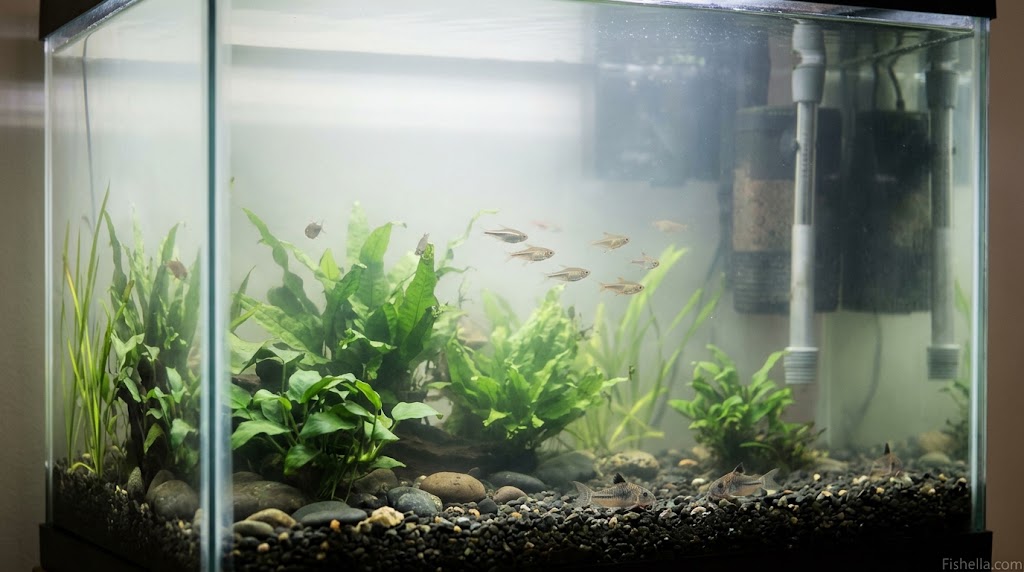
This is different from the common bacterial bloom in a brand-new tank. A new aquarium may cloud while its biological filter is still developing; if that is your situation, see Fishella’s guide to clearing cloudy water in a newly set-up fish tank.
What to do:
- Test ammonia, nitrite, nitrate, and pH.
- Stop feeding for 24 hours, then resume small portions.
- Remove visible dead leaves, uneaten food, and debris.
- Rinse mechanical filter media in removed tank water—do not replace all media at once.
- Avoid a full tank clean or complete filter teardown, which can disrupt beneficial bacteria.chewy.
If ammonia or nitrite is above zero, treat it as a water-quality problem first. Perform a partial water change, reduce feeding, and make sure your filter is running properly.
2. Green Water Caused by Algae
Green, pea-soup-colored water is usually suspended algae, not bacteria. Tiny floating algae multiply when the tank receives too much light and has available nutrients, especially nitrate and phosphate.aqueon. See how to control algae in a fish tank?
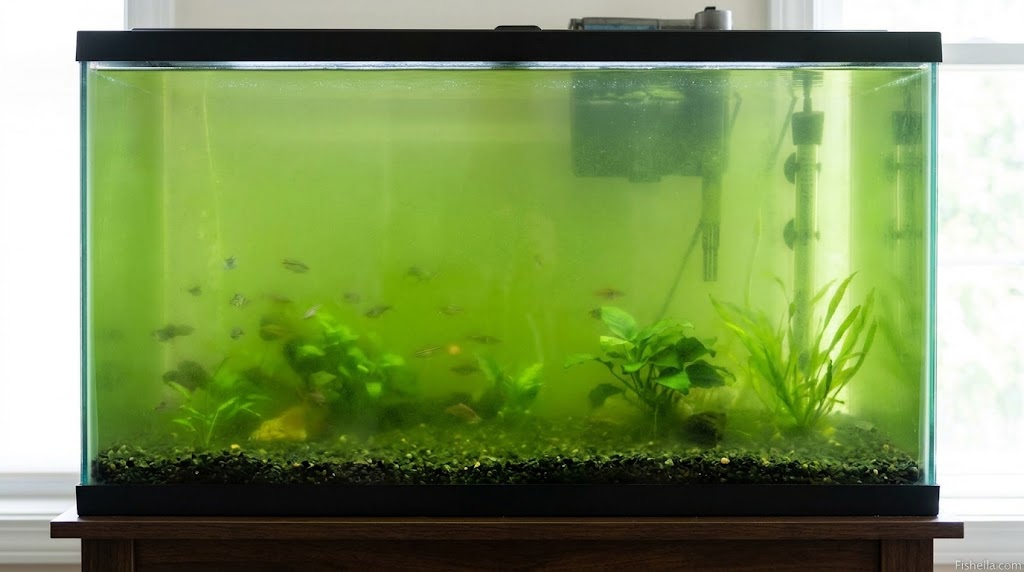
Common triggers include direct sunlight, aquarium lights left on too long, overfeeding, overstocking, and infrequent water changes. Green water can appear suddenly in an otherwise established aquarium when one of these conditions changes.aqueon.
What to do:
- Reduce lighting to about 6–8 hours per day.
- adjusting aquarium lighting to prevent algae.
- Move the aquarium out of direct sunlight.
- Test nitrate and phosphate if possible.
- Feed less and remove leftovers promptly.
- Use a UV sterilizer for persistent green water; it targets suspended algae in the water column.
- Avoid relying only on chemical clarifiers, since they may clump algae without fixing the light or nutrient problem.aqueon.
3. Excess Waste From Overfeeding or Overstocking
Uneaten food, fish waste, and decaying plant matter add organic material to the water. This can feed bacteria, raise nutrients that support algae, and create a persistent hazy look—especially in tanks with heavy stocking or infrequent gravel cleaning.

A useful clue is cloudy water that returns soon after cleaning. If the tank clears after a water change but becomes hazy again within days, look closely at feeding amounts, stocking level, and filtration.
What to do:
- Feed only what fish finish within about 30 seconds to 2 minutes.
- Vacuum the substrate during routine water changes.
- Remove dead leaves and old plant material.
- Consider whether the tank is overstocked for its filter and maintenance routine.
- Increase water-change frequency slightly rather than making huge, disruptive changes.
For a feeding guide context: To keep your fish healthy and prevent digestive blockages, make sure to read about betta fish overfeeding and bloating so you can spot the warning signs early.
4. Substrate Dust and Disturbed Debris
Gray, dusty, or speckled water often comes from fine particles in gravel, sand, decorations, or accumulated waste. This is common after planting, rearranging rocks, deep-cleaning substrate, or stirring the bottom during a water change.petsradar.
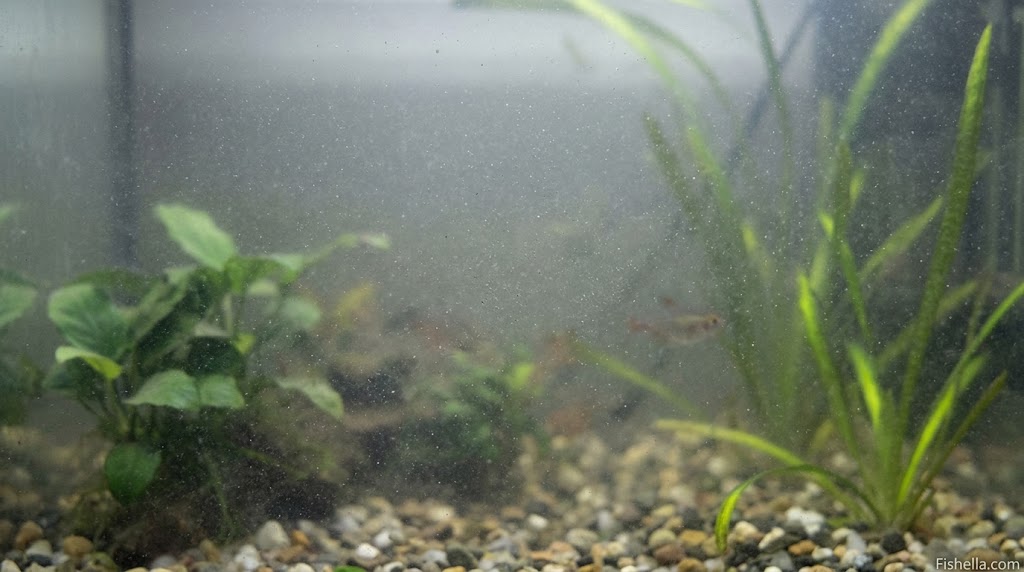
This type of cloudiness is usually harmless if fish behave normally and water parameters are stable. It often clears as the filter removes the particles.
What to do:
- Let the filter run and avoid adding more disturbance.
- Check that the filter intake is not clogged.
- Use a gravel vacuum during the next partial water change.
- Rinse new gravel, sand, or decorations thoroughly before adding them.
- If dust persists, use fine mechanical filter media such as filter floss to trap particles.
5. Filtration Problems
Your filter does two important jobs: it traps particles mechanically and supports beneficial bacteria that process fish waste biologically. If the filter is undersized, clogged, turned off often, or cleaned too aggressively, the aquarium can become cloudy.

Cloudiness after replacing filter cartridges or washing media under tap water can occur because beneficial bacteria are reduced. Tap water can also contain chlorine or chloramine, which may harm the bacteria living in filter media. How to clean Aquarium filter sponge without killig bacteria?.
What to do:
- Match filter flow to your tank size and stocking level.
- Clean mechanical media gently in a bucket of removed aquarium water.
- Never replace biological media all at once.
- Keep the filter running continuously.
- Use a dechlorinator whenever adding tap water.
- If the filter is too small for the bioload, upgrade gradually rather than making several changes at once.
6. Cloudiness After a Water Change
Many owners notice cloudy fish tank water after a water change. This can happen when tap water contains fine particles or dissolved minerals, when refill water stirs substrate, or when a large water change is combined with filter cleaning and disturbs the tank’s balance.petsradar.
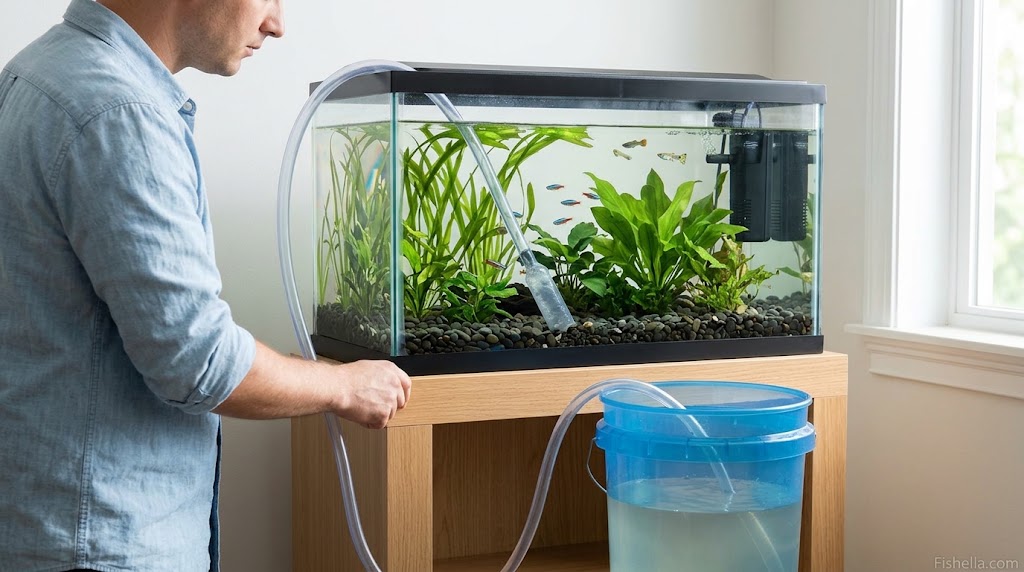
Small bubbles can also make water look milky for a short time. If the haze clears within a few hours and fish are normal, it is usually not a concern.
What to do:
- Match the new water’s temperature to the aquarium.
- Add dechlorinator before or as directed when refilling.
- Pour replacement water onto a plate, saucer, or plastic bag to avoid stirring substrate.
- Keep water changes moderate—often 20–30%—unless you are addressing a specific emergency.
- Do not combine a large water change with a full filter cleaning.chewy
Can Cloudy Aquarium Water Harm Fish?
Cloudy water itself does not always harm fish, but the cause can. A bacterial bloom may signal excess waste or a disruption in biological filtration, while green water points to excess light and nutrients. If ammonia or nitrite is present, fish can be at risk even if the water only looks slightly hazy.aqueon.
Watch for gasping at the surface, rapid breathing, lethargy, clamped fins, red or inflamed gills, or fish hiding more than usual. If you see these signs, test the water immediately and take action based on the results.
How to Clear Cloudy Aquarium Water Safely
Follow this simple order instead of adding multiple products at once:
- Test the water. Check ammonia, nitrite, nitrate, and pH.
- Identify the color and timing. White, green, gray, and brown haze point to different problems.
- Remove the source. Cut back feeding, remove debris, reduce light, or fix filtration.
- Do a partial water change if needed. Use dechlorinated, temperature-matched water.
- Clean the filter gently. Rinse media in old tank water; do not replace everything.
- Wait before adding chemicals. Give the tank 24–48 hours to respond after correcting the cause.
For most established aquariums, patience plus better maintenance clears cloudy water more reliably than repeatedly adding clarifiers. If the water remains cloudy after addressing feeding, lighting, filtration, and water quality, test your source water and consider a UV sterilizer for recurring green water.aqueon. how to remove algae from an aquarium?
How to Prevent Cloudy Water in an Established Aquarium
- Feed small, measured portions and remove uneaten food.
- Keep a consistent weekly or biweekly water-change schedule.
- Vacuum substrate regularly without deep-cleaning it all at once.
- Keep aquarium lights on a timer and avoid direct sunlight.
- Rinse mechanical filter media in removed tank water.
- Replace filter media gradually, never all at once.
- Test water weekly, especially after adding fish, plants, or new equipment.
- Quarantine new fish and inspect plants for dying leaves before adding them.
When to Act Quickly
Seek immediate action if cloudy water comes with detectable ammonia or nitrite, a dead fish, a strong rotten smell, or stressed fish. In those cases, reduce feeding, perform an appropriate partial water change with dechlorinated water, check the filter, and retest rather than waiting for the cloudiness to disappear on its own.chewy.
For a helpful maintenance setup, consider a reliable liquid test kit, a gravel vacuum, filter floss for fine particles, and—only for recurring green water—a properly sized UV sterilizer. These tools make it easier to diagnose the cause instead of guessing.
FAQ
Why is my aquarium water cloudy but my fish are fine?
Cloudy water can be harmless if it is caused by temporary suspended particles, microbubbles, or a mild bacterial bloom. Test ammonia and nitrite anyway; if both are zero and your fish are eating and swimming normally, focus on reducing feeding, cleaning debris, and checking filtration rather than panicking.
Why did my aquarium water suddenly become cloudy?
A sudden change in a previously clear tank is often linked to overfeeding, a dead plant or fish, disturbed substrate, a clogged filter, or cleaning filter media too aggressively. These changes can add waste or particles to the water and trigger a bacterial bloom.
Why is my fish tank water cloudy after a water change?
Cloudiness after a water change may come from stirred-up gravel, particles in tap water, a temperature mismatch, or a large water change combined with filter cleaning. Use dechlorinated, temperature-matched water and pour it gently over a plate or bag to avoid disturbing the substrate.
Why is my aquarium water white and cloudy?
White or milky water usually means free-floating bacteria are multiplying in the water column. In an established aquarium, this can follow extra organic waste, overfeeding, or a disruption to the biological filter, so test ammonia and nitrite promptly.
Why is my fish tank water green?
Green water is caused by suspended single-celled algae, usually encouraged by too much light and excess nutrients such as nitrate or phosphate. Reduce the light period, block direct sunlight, feed less, and consider a UV sterilizer if the problem keeps returning.
Can cloudy aquarium water harm fish?
The cloudiness itself is not always dangerous, but the underlying cause can be. If ammonia or nitrite is present, or fish are gasping, lethargic, or breathing rapidly, treat it as a water-quality emergency and take action right away.
How long does it take to clear cloudy aquarium water?
Dust or debris from disturbed substrate may settle or be filtered out within 24–48 hours. Bacterial blooms and green water can take several days to clear, especially if you do not remove the excess food, waste, or light that caused them.
Should I do a water change if my aquarium water is cloudy?
A partial water change of about 20–30% can help if waste, nutrients, or poor water quality are contributing to the problem. Avoid changing all the water or cleaning the entire filter at once, because that can further disrupt beneficial bacteria.
Can I use a water clarifier for cloudy aquarium water?
A clarifier can clump tiny particles so the filter can remove them, but it does not fix the underlying cause. Use it only after checking water parameters and addressing overfeeding, lighting, waste, and filtration; it is not the best first solution for bacterial blooms or green water.
How do I prevent cloudy water in an established aquarium?
Feed measured portions, vacuum substrate regularly, keep lights on a timer, avoid direct sunlight, rinse mechanical filter media in removed tank water, and replace filter media gradually. Consistent small maintenance habits prevent most recurring cloudiness.
Conclusion
Cloudy aquarium water in an established tank usually has a clear cause: bacterial growth, suspended algae, excess waste, substrate dust, filtration problems, or a recent water change. Instead of adding a clarifier immediately, identify the water color, test ammonia and nitrite, and look for recent changes in feeding, lighting, cleaning, or filtration.
Most cases improve with simple corrections: feed less, remove debris, maintain a regular partial water-change schedule, clean filter media gently, and control light exposure. If your fish are stressed or ammonia or nitrite is present, act quickly; otherwise, give the tank time to rebalance after fixing the underlying issue.
For green water specifically, reducing light and managing nutrients are essential, while persistent algae problems may need a more complete algae-control routine. With consistent maintenance, most aquariums return to clear, healthy water without drastic interventions.

Pingback: how to clear cloudy water in a newly set up fish tank
Pingback: Algae Control: Causes, Removal Methods & Prevention Tips