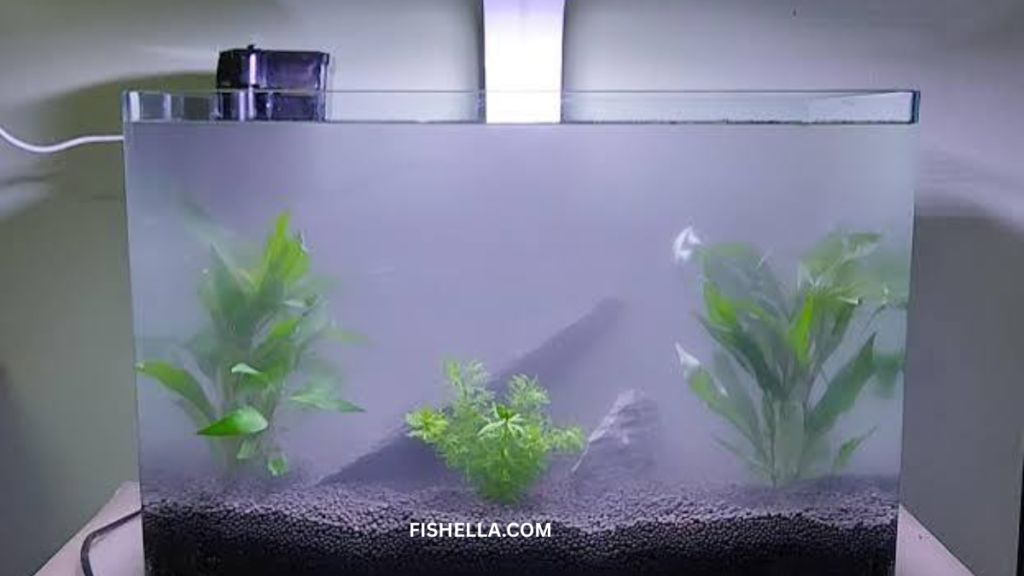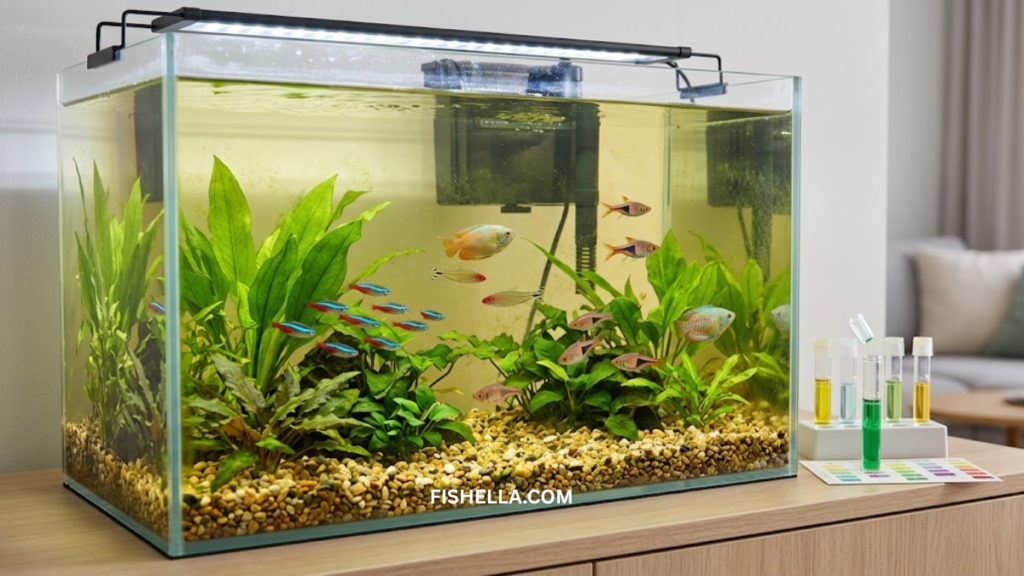
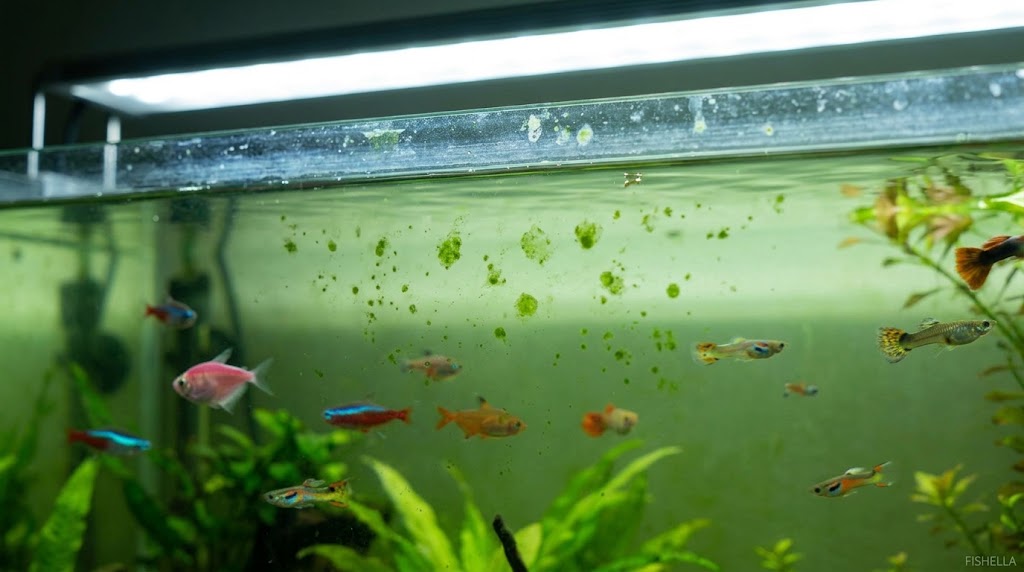
Fish tank algae is one of the most common problems in the hobby, and lighting is often the cause. Too much light, or light that stays on too long, gives algae the energy it needs to spread. The good news is that you can fix it without harsh chemicals.
In this guide, you will learn how to spot the main types of algae, adjust your lights, and keep your tank clean. These steps work for most fish tank algae problems, from green water to fuzzy strands on your plants. Show Image
The Short Answer: Control Fish Tank Algae With Better Light Habits
To slow fish tank algae, follow these four rules:
- Run your lights for 6 to 8 hours a day.
- Use a timer so the schedule never changes.
- Keep the tank out of direct sunlight.
- Dim the light if algae keeps coming back.
Give each change two to four weeks to show results. Algae rarely disappears overnight, so patience matters.
Why Light Causes Fish Tank Algae
Algae is a simple, plant-like organism. Like plants, it uses light to make energy. When your tank gets more light than your plants can use, algae takes the extra.
Light is only one piece of the fish tank algae puzzle. Algae also feeds on nutrients from fish waste, leftover food, and tap water. When light and nutrients are both high, algae grows fast. When your plants are healthy and the light is balanced, plants win the competition.
Do not aim for a tank with zero algae. The aquarium care brand sera notes that a completely algae-free tank is not realistic, and a small amount is normal. Your goal is control, not perfection. For a full plan that covers every algae type, read our algae control guide.
Common Types of Fish Tank Algae
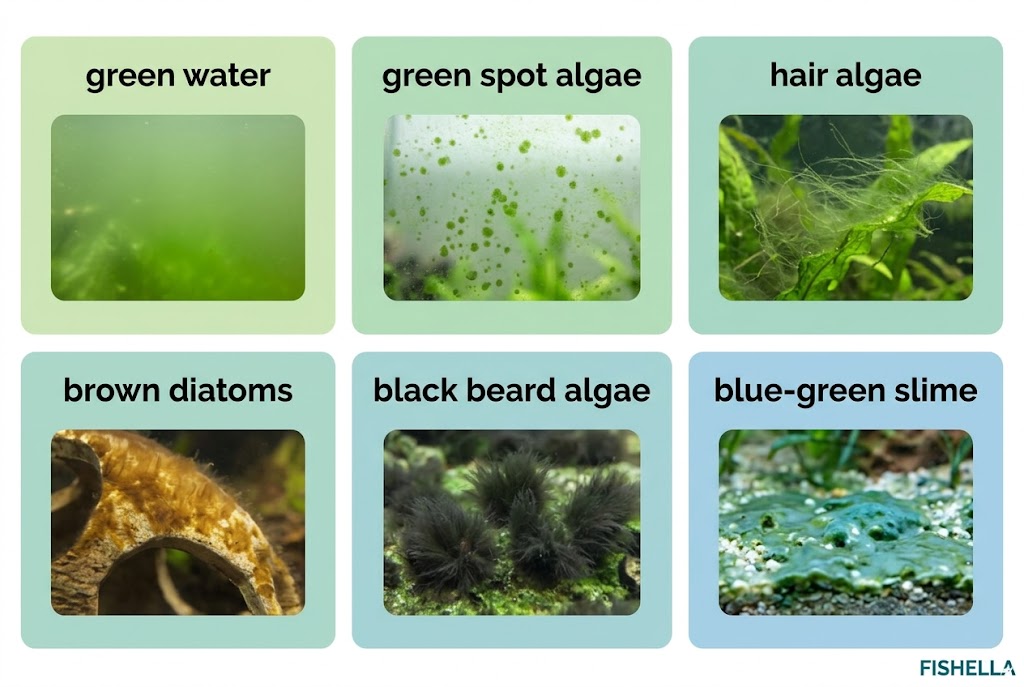
Different algae need different fixes. Match what you see in your tank to the table below.
| Type | What It Looks Like | Common Cause |
|---|---|---|
| Green water | Cloudy, pea-soup water | Too much light, direct sun, extra nutrients |
| Green spot algae | Hard green dots on glass | Strong light, low phosphate |
| Hair (thread) algae | Long green strands on plants and decor | Extra nutrients, long light hours |
| Brown algae (diatoms) | Brown dust on glass and decor | New tank, low light, silicates |
| Black beard algae | Dark tufts on leaf edges and decor | Unstable CO2, poor water flow |
| Blue-green slime | Slimy, dark green mat with a musty smell | Low flow, dirty substrate |
Blue-green slime is actually a bacteria called cyanobacteria, but hobbyists treat it like algae. Brown algae is very common in new tanks and often fades on its own. If your tank is new, make sure it is fully cycled. Our guide on how to cycle a fish tank fast shows you how.
Step 1: Set the Right Light Schedule
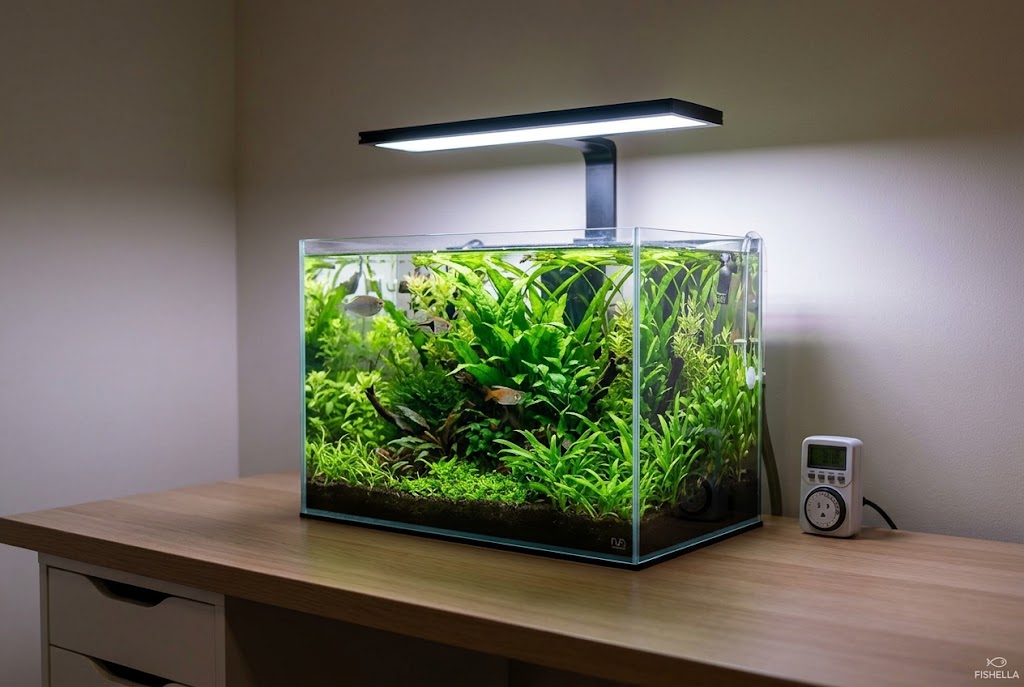
Fish tank algae grows fastest when lights stay on too long. Start with 8 hours a day. If algae keeps spreading, drop to 6 hours for two weeks. Change the time by 30 minutes at a time, not in big jumps. Charterhouse Aquatics also warns that long lighting periods often lead to green algae, hair algae, and cyanobacteria.
Use a simple outlet timer so the schedule stays the same every day. For a full chart by tank type, read our aquarium light schedule guide.
Still seeing algae? Try the siesta method. Turn the lights on from 9 a.m. to 1 p.m., off from 1 p.m. to 4 p.m., and on again from 4 p.m. to 8 p.m. You keep 8 hours of light, but the midday break can slow algae down.
Step 2: Lower the Light Intensity
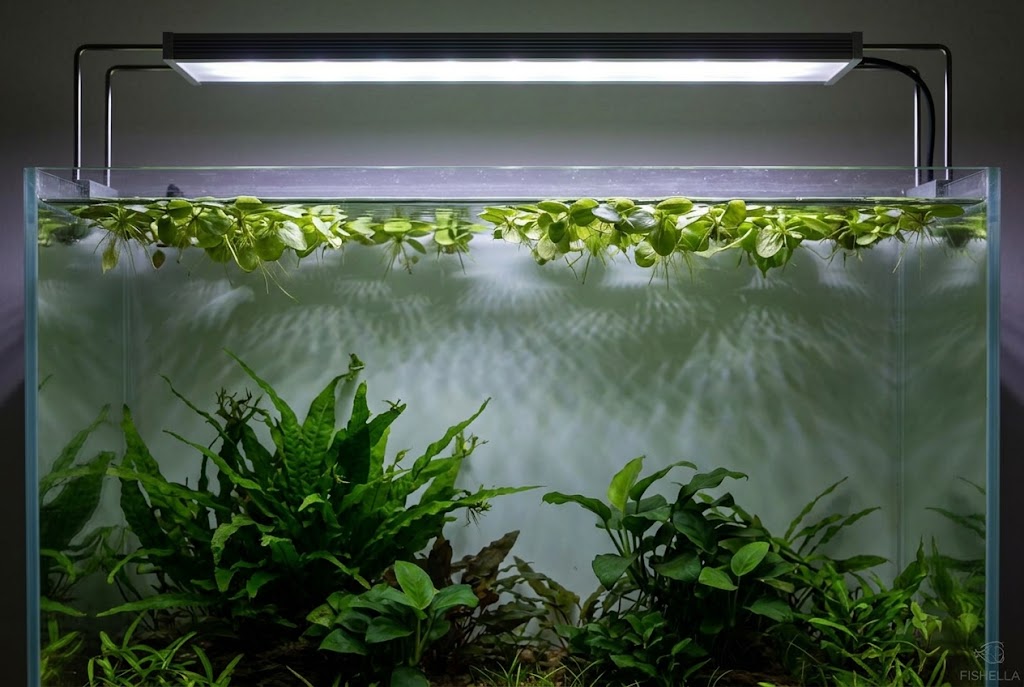
Brightness matters as much as hours. A very strong light can cause algae even on a short schedule.
Here is how to reduce it:
- Turn down the dimmer if your light has one.
- Raise the light higher above the tank.
- Add floating plants like frogbit or salvinia to create shade.
- Choose low-light plants, such as java fern and anubias, if your light is weak.
Make one change at a time. That way, you will know what actually worked. Thinking about a new light? Compare LED vs fluorescent aquarium lights before you buy.
Step 3: Block Direct Sunlight
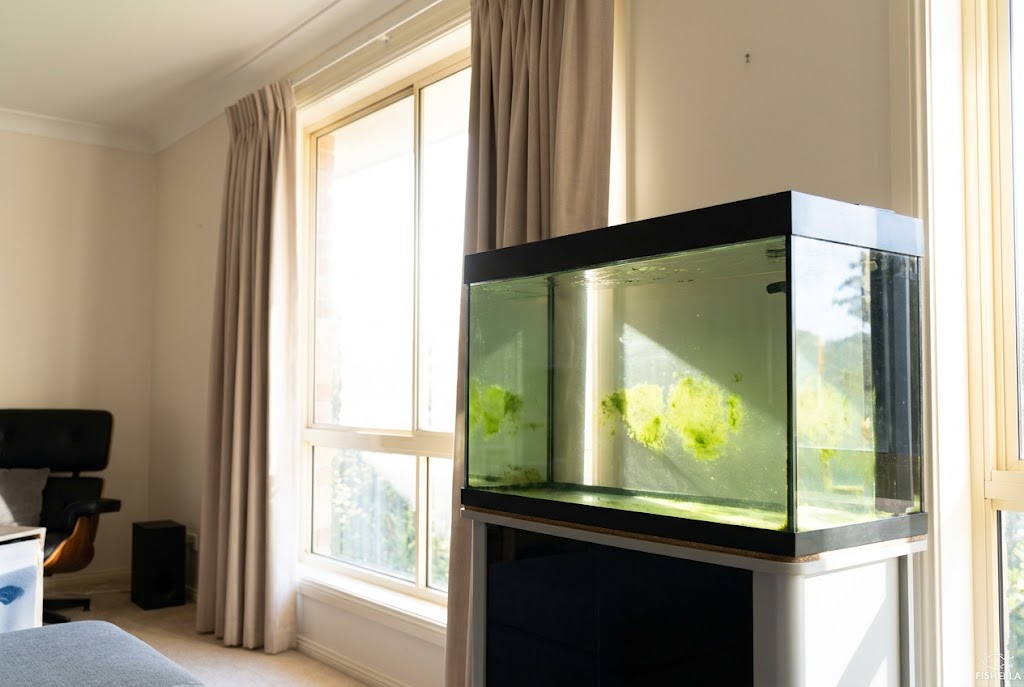
Sunlight adds hours of light you cannot control. Even one hour of sun through a window can trigger an algae bloom.
Move your tank away from windows if you can. If you cannot, close the curtains during the brightest part of the day. A dark background on the back glass also helps.
Step 4: Try a Blackout for Green Water
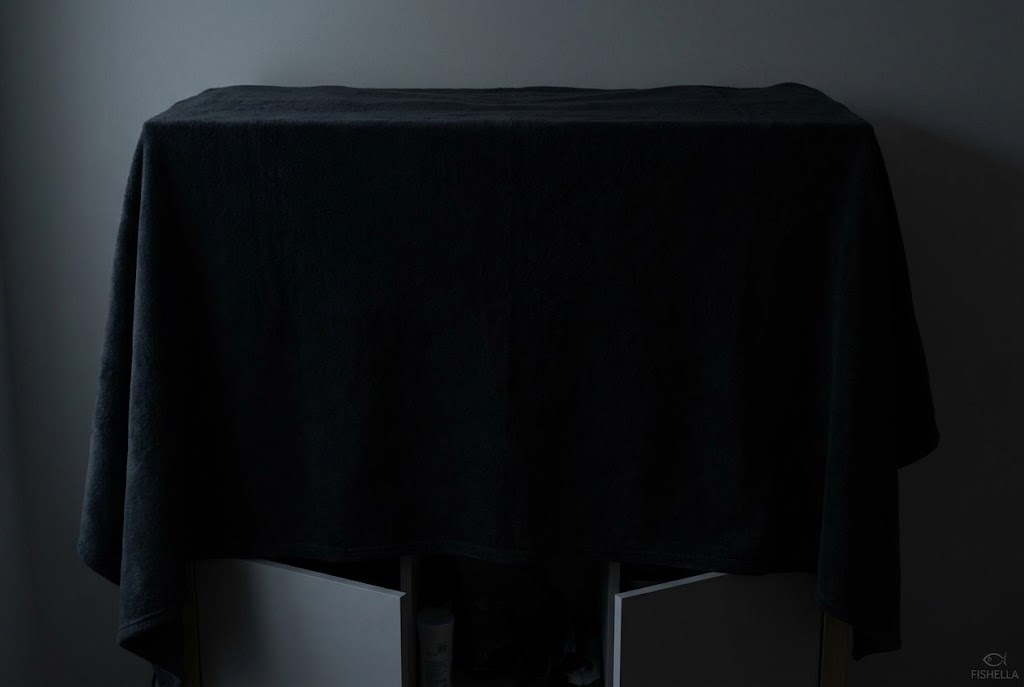
A blackout is a quick reset for green water. It works well in freshwater tanks with hardy plants and fish.
- Do a water change. Replace about 50% of the water.
- Turn off the light. Cover the tank with a thick blanket or cardboard so no light gets in.
- Wait three days. Feed your fish very lightly or skip a day.
- Uncover the tank. Do another water change.
- Restart the lights. Use a shorter schedule of 5 to 6 hours and build up slowly.
Do not use this method on a reef tank. Corals need light to survive.
Step 5: Choose the Right Light Color
Color matters less than hours and brightness. For most freshwater tanks, a full-spectrum white light around 6500K works well. If your light is very strong, algae can grow no matter which color you choose. Fix the schedule and intensity first.
Fix the Nutrients Too
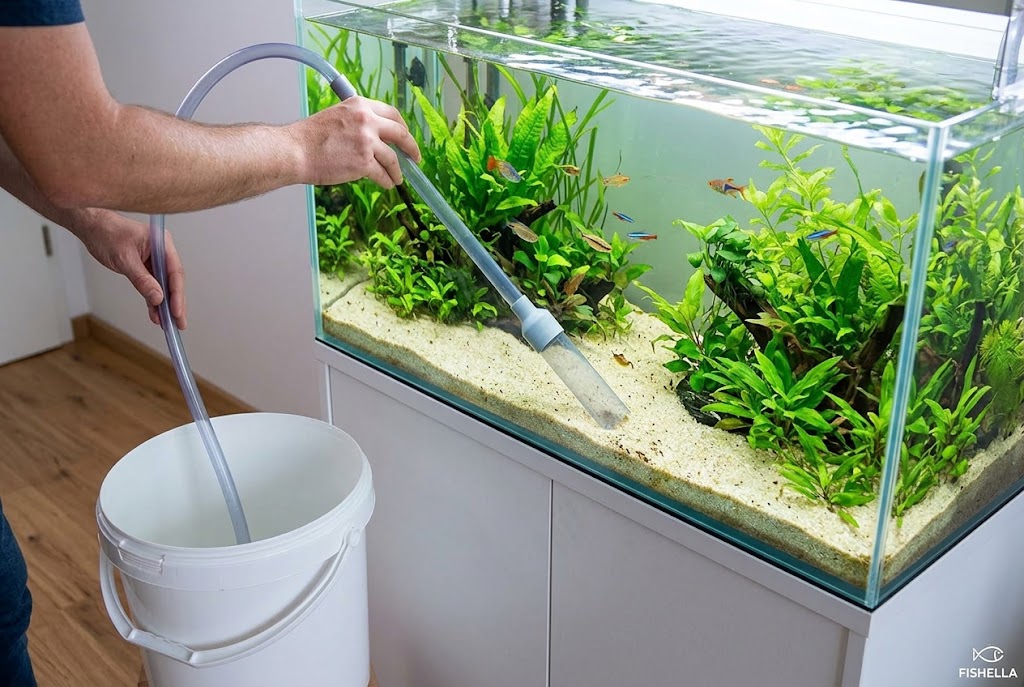
Light is only half of the fish tank algae equation. Nutrients are the other half. Even a perfect light setup will struggle if the water is full of waste.
Follow these habits:
- Feed only what your fish eat in about two minutes.
- Do weekly water changes. Our guide on how to clean a fish tank walks you through it.
- Vacuum the gravel to remove trapped waste.
- Rinse your filter media in old tank water, not tap water.
- Add fast-growing plants to soak up extra nutrients.
Add a Cleanup Crew
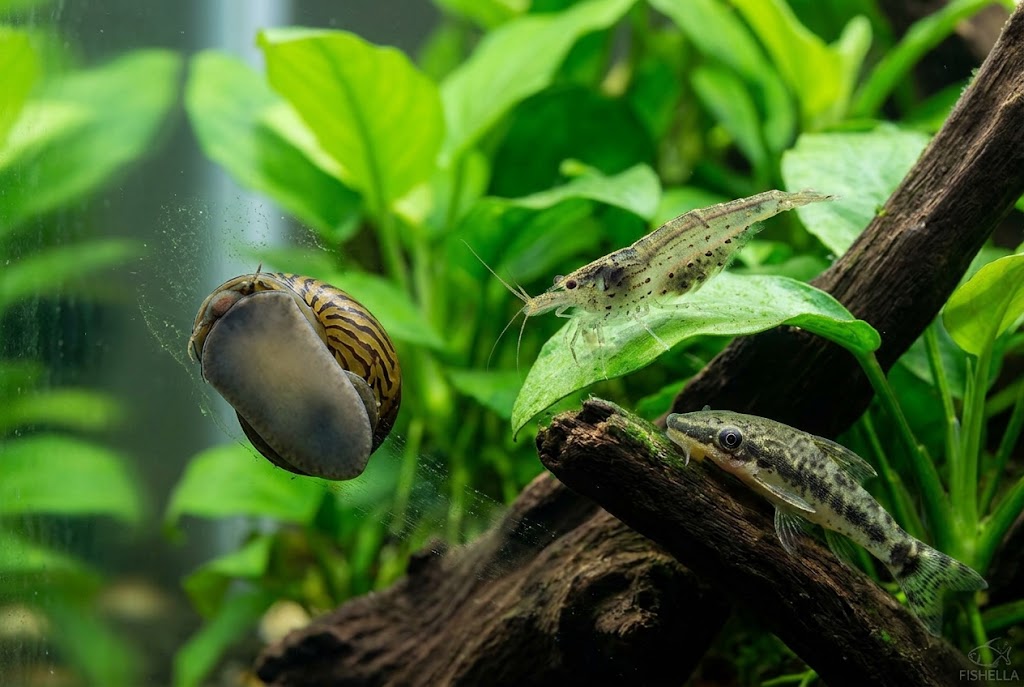
Algae eaters can help, but they cannot solve fish tank algae alone. Think of them as helpers, not a cure.
Good options for many freshwater tanks include:
- Nerite snails for glass and decor
- Amano shrimp for soft hair algae
- Otocinclus catfish for brown algae and soft green film
Check your tank size, water hardness, and tank mates before you buy. Some fish also need a mature tank with enough algae to eat.
Common Mistakes to Avoid
- Leaving lights on too long. More hours means more algae.
- Changing everything at once. You will not know what worked.
- Skipping water changes. Extra nutrients keep feeding algae.
- Overfeeding. Leftover food breaks down and fuels growth.
- Expecting fish tank algae to vanish overnight. Real results take a few weeks.
Frequently Asked Questions
Does aquarium light cause algae?
Yes, too much light can. But light is not the only cause. Algae also needs nutrients, so you must balance both.
How long does it take to reduce algae?
Most tanks show improvement in two to four weeks after you fix the light schedule and cut extra nutrients.
How do I get rid of fish tank algae fast?
Start by scrubbing the glass and removing loose algae by hand. Then do a water change and cut your light time to 6 hours. For green water, try a three-day blackout. For a full step-by-step cleanup, follow our guide on how to remove algae from aquarium.
Will a blackout kill all algae?
No. It works best on green water and some soft algae. Stubborn types like black beard algae need better nutrient control and water flow.
Is algae harmful to fish?
Most common algae is not toxic. However, heavy blooms can lower oxygen levels at night. Blue-green slime should be removed quickly.
Final Thoughts
Controlling fish tank algae comes down to balance. Keep your lights on for 6 to 8 hours, block direct sun, and keep nutrients low. Change one thing at a time, stay consistent, and give your tank a few weeks to adjust. With steady care, your water will stay clear and your plants will thrive.
Have an algae problem you cannot solve? Share it in the comments and we will help you find the cause.