
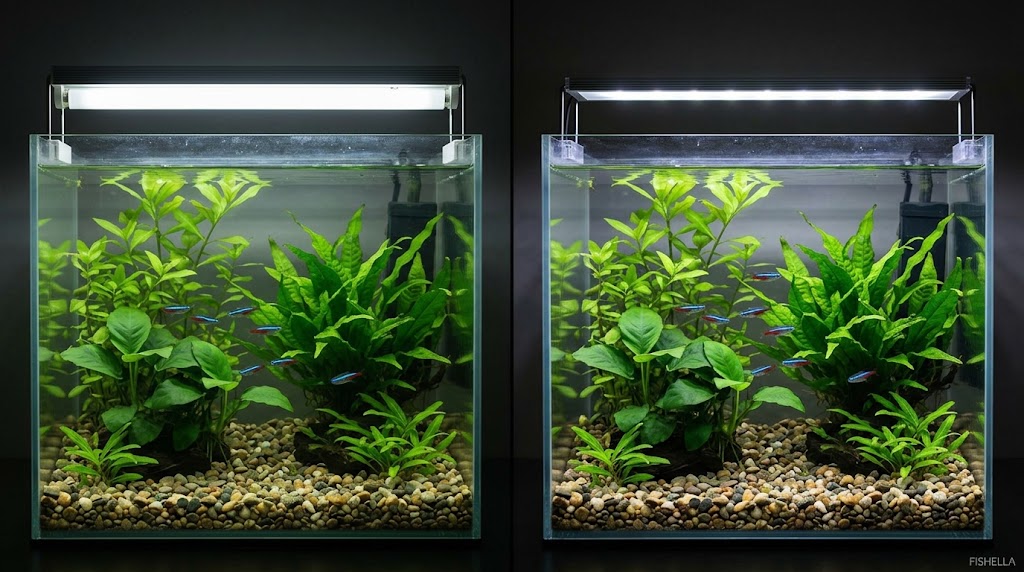
LED vs fluorescent aquarium lights is one of the first choices you face when you buy a new light. Both types work, but they differ in cost, lifespan, energy use, and control. The right pick depends on your tank, your budget, and your plans.
In this guide, you will learn how each light works, what it costs over time, and which one fits your setup. You will also get simple steps for switching without causing an algae bloom. Show Image
The Short Answer: LED vs Fluorescent Aquarium Lights
For most tanks today, LED is the better choice. It lasts longer, uses less power, runs cooler, and gives you more control. Fluorescent lights still make sense if you already own a working fixture or need a very low upfront cost.
Here is a quick comparison:
| Feature | LED | Fluorescent |
|---|---|---|
| Upfront cost | Higher | Lower |
| Lifespan | Up to about 50,000 hours | About 6 to 12 months of daily use |
| Energy use | Low | Higher |
| Heat | Low | Moderate |
| Light control | Dimming, timers, color settings | Limited |
| Bulb replacement | Rare | Every year or so |
| Best for | Most freshwater and reef tanks | Budget setups and older fixtures |
How Fluorescent Aquarium Lights Work
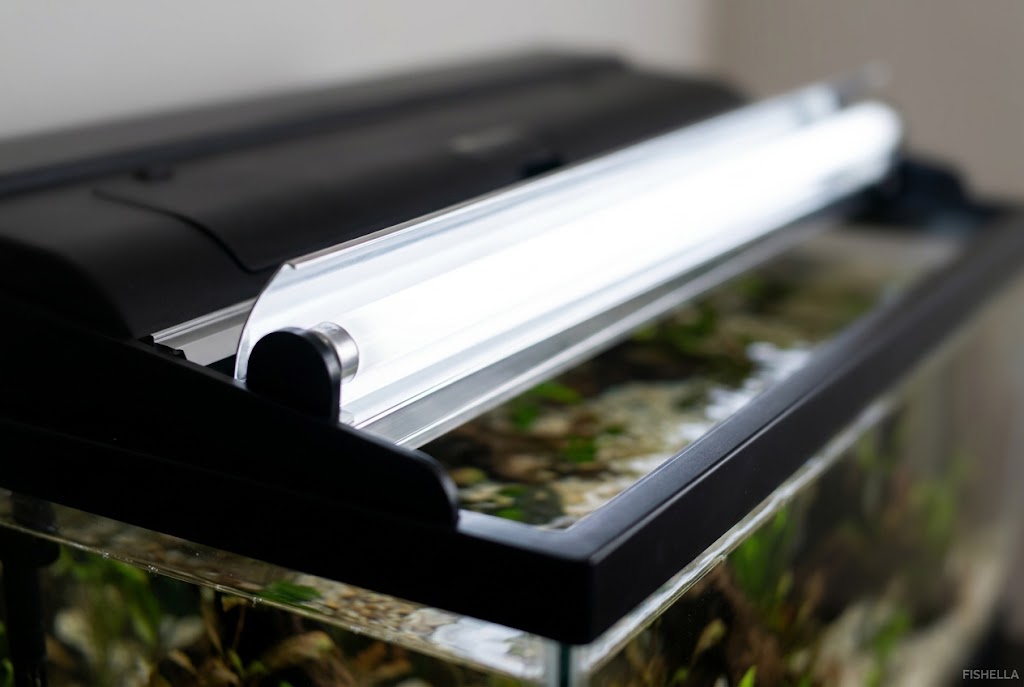
Fluorescent tubes pass electricity through gas inside a glass tube. The gas makes the coating glow. Common types include T8 tubes and the brighter T5 tubes.
Pros:
- Low purchase price
- Widely available in many sizes
- Even light across the tank
- Fits many older hoods and fixtures
Cons:
- Output fades and the color shifts as the tube ages
- Tubes need replacing about once a year
- Higher power use
- Limited dimming and color control
When you compare LED vs fluorescent aquarium lights, the tube’s aging is the biggest drawback. A tube may still glow, but it can lose strength and color well before it burns out. Plants and corals notice that change even when you do not.
How LED Aquarium Lights Work
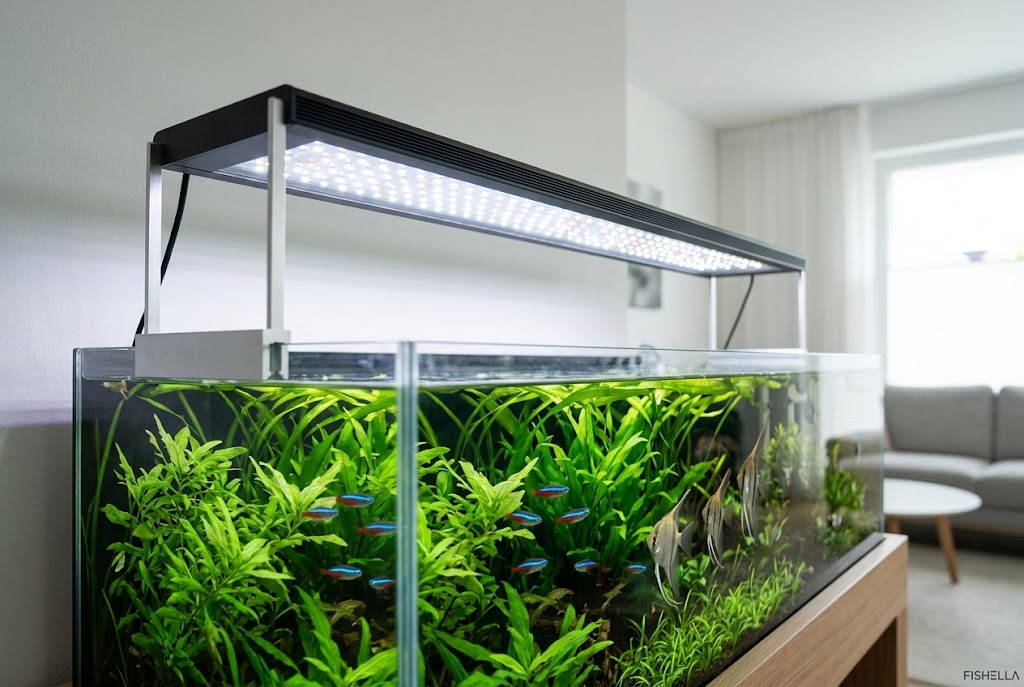
LEDs are small chips that turn electricity into light. They last a long time and use very little power. Many models also offer built-in timers, dimmers, and sunrise and sunset modes.
Pros:
- Long lifespan
- Low energy use
- Less heat
- Adjustable brightness and color
- Slim fixtures that do not block your view
Cons:
- Higher upfront price
- Strong LEDs can cause algae if you run them too long
- Some older hoods cannot hold an LED fixture
One tank lighting guide notes that fluorescent lights cost less at first but need frequent replacement, while LEDs last far longer. That pattern is the main reason many hobbyists switch.
LED vs Fluorescent Aquarium Lights: Cost Over Time

Fluorescent lights look cheaper at the register. LEDs usually win over a few years.
Here is a simple example. Say you run a light 8 hours a day, which equals 2,920 hours a year. Electricity costs $0.17 per kilowatt-hour in this example.
| Light | Power | Yearly Energy | Yearly Electric Cost |
|---|---|---|---|
| Fluorescent | 50 watts | 146 kWh | about $25 |
| LED (similar brightness) | 9 watts | 26 kWh | about $4.50 |
Add the cost of a new tube every year, and the gap grows. A UK LED supplier estimates that an LED bar can last around 50,000 hours, while a fluorescent tube averages about 7,000 hours. Your own numbers will vary with your local power rate and the fixture you pick.
LED vs Fluorescent Aquarium Lights for Plants and Corals
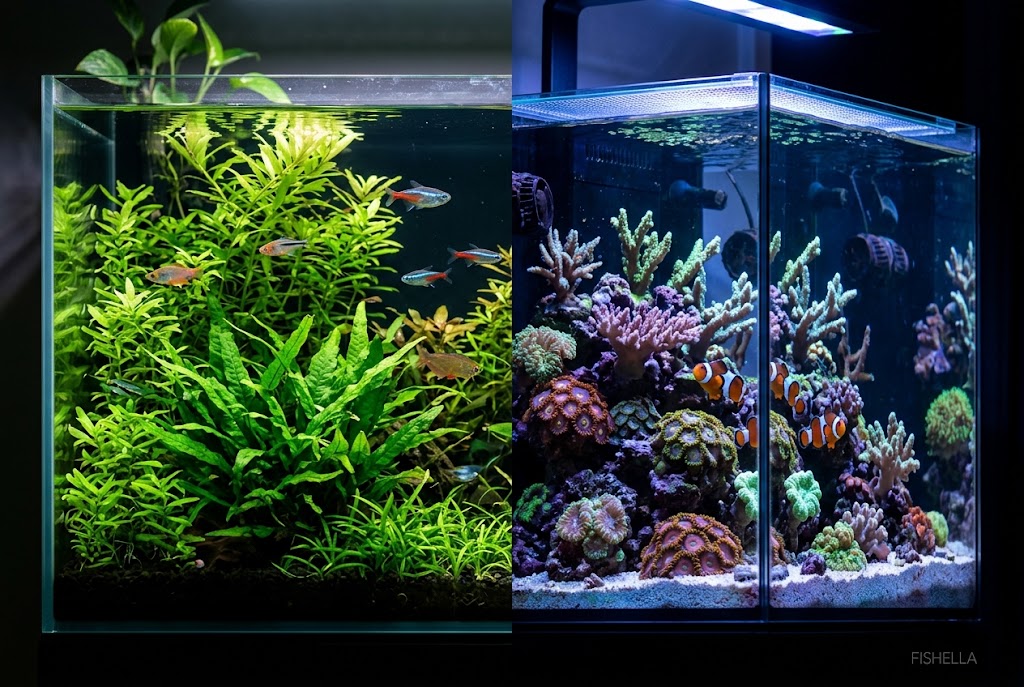
Both lights can grow plants and corals. What matters most is the right brightness and the right color.
Planted tanks: Fluorescent T5 lights have grown plants well for many years. Modern full-spectrum LEDs do the same and let you adjust brightness. That control helps you balance growth against algae. Low-light plants like java fern and anubias do fine under either type.
Reef tanks: Most reef keepers now choose LEDs. They offer strong blue and white channels and give you precise control over color. Fluorescent T5 fixtures still work, but tubes need regular replacement to keep the right spectrum.
Fish-only tanks: Either light works. Pick the one that fits your hood and budget.
Heat, Safety, and Energy Use
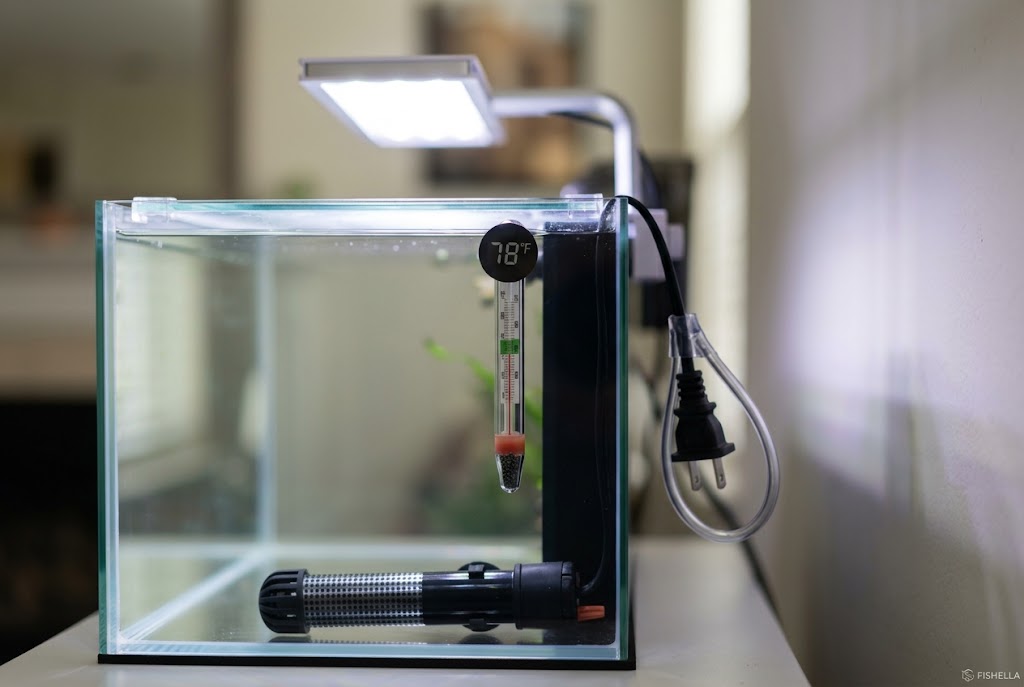
Fluorescent tubes give off more heat, especially in a closed hood. In a small tank, that warmth can push the water temperature up. LEDs run cooler, so they put less stress on your heater and your fish.
LEDs also draw far less power. That saves money and helps if you run several tanks. Whichever light you buy, keep cords and plugs away from water and use a drip loop.
Light Color and Control
Fluorescent tubes come in fixed colors. You pick a color when you buy the tube, and you must swap the tube to change it.
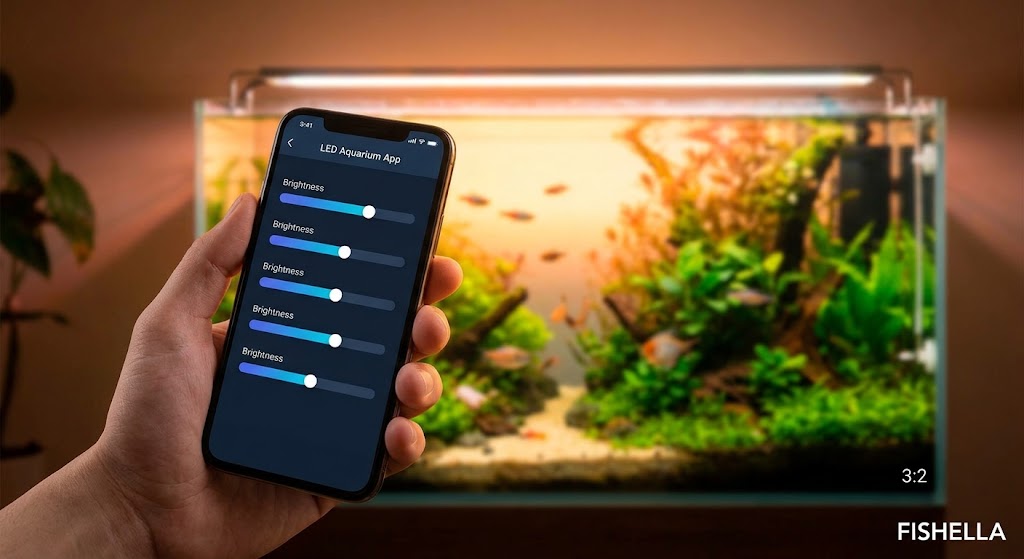
LEDs give you far more options. Many fixtures let you:
- Dim the light with a dial or an app
- Change color and intensity
- Set a gentle sunrise and sunset
- Add a soft moonlight mode at night
This control makes LEDs easier to tune. If algae appears, you can lower the brightness instead of buying new tubes. Our aquarium light schedule guide shows how many hours to run your light for each tank type.
Which Light Should You Buy?
The answer to LED vs fluorescent aquarium lights depends on your setup.
Choose LED if:
- You are buying a new light
- You want lower power bills
- You want dimming, timers, and color control
- You keep a reef or a planted tank
Choose fluorescent if:
- You already own a working fixture
- Your budget is very tight right now
- Your hood only fits tubes
If you are unsure, go with LED. You will pay more at first, but you will likely spend less over time. If you are still building your tank, our guide on setting up a freshwater aquarium covers the other gear you need.
How to Switch From Fluorescent to LED
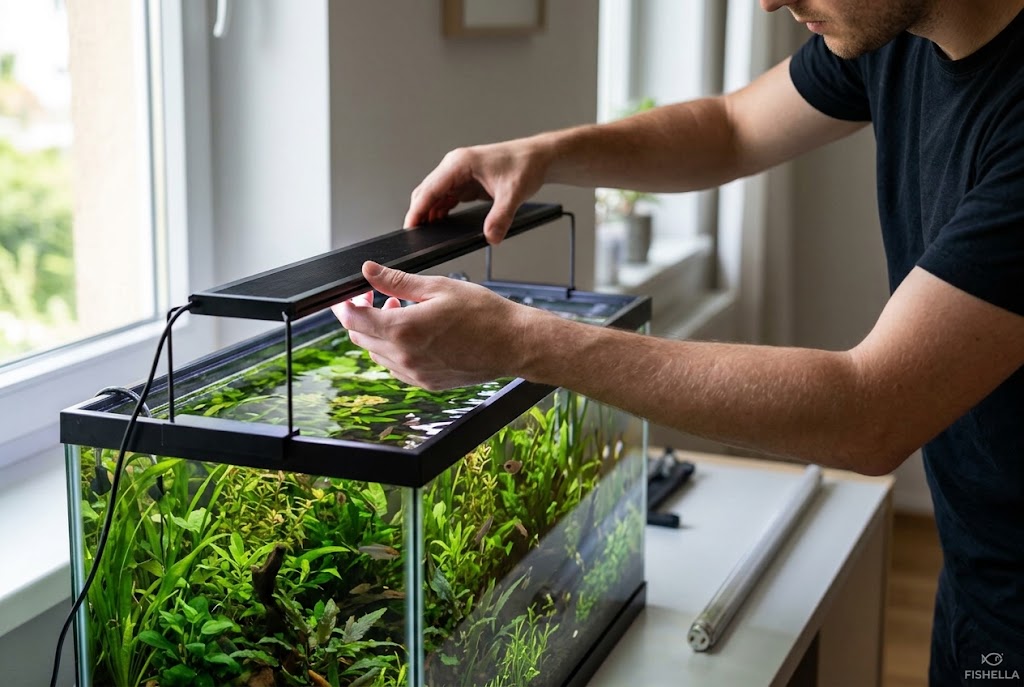
A new light can change how your tank behaves. Follow these steps to avoid an algae bloom.
- Pick a similar brightness. Do not buy a much stronger light than you had before.
- Start with a short schedule. Run the new light for 5 to 6 hours a day at first.
- Dim it if you can. Begin at about 50% brightness.
- Raise it slowly. Add a little brightness or 30 minutes every week.
- Watch your plants and glass. Look for algae or pale growth.
- Keep the tank clean. Do weekly water changes using our steps on how to clean a fish tank.
If algae shows up anyway, read our guide on fish tank algae to find the cause and fix it.
Common Mistakes to Avoid
- Buying the brightest LED you can find. Stronger is not always better.
- Keeping tubes too long. Old fluorescent tubes lose strength and shift color.
- Switching with no schedule change. A new LED often needs shorter hours at first.
- Ignoring your hood. Check that the fixture fits before you buy.
- Choosing only by price. The best deal in the LED vs fluorescent aquarium lights debate is the one that costs less over several years.
Frequently Asked Questions
Are LED lights better than fluorescent lights for aquariums?
For most tanks, yes. LEDs last longer, use less power, and give you more control. Fluorescent lights still work well if you already own a good fixture.
Do LED aquarium lights cause more algae?
Not by themselves. Algae grows when a tank gets too much light for too long. A strong LED can cause that, but you can dim it and shorten the schedule.
How often should I replace fluorescent aquarium tubes?
Plan on every 6 to 12 months. The tube may still glow after that, but its brightness and color fade.
Can I grow live plants under LED lights?
Yes. A full-spectrum LED supports most aquarium plants. Match the brightness to the plants you keep.
Can I put an LED in a fluorescent hood?
Sometimes. Some LED tubes and strips fit older hoods. Check your hood size and the fixture’s instructions first.
Final Thoughts
LED vs fluorescent aquarium lights is an easy choice for most hobbyists. LEDs cost more upfront, but they last longer, use less power, and give you better control. Fluorescent lights still work if you already own one or need to save money today. Whichever you choose, use a timer, start with short hours, and adjust slowly.
Have a question about your own lighting setup? Drop it in the comments and we will help you out.
Pingback: Fish Tank Algae: How to Control It With Aquarium Lighting