
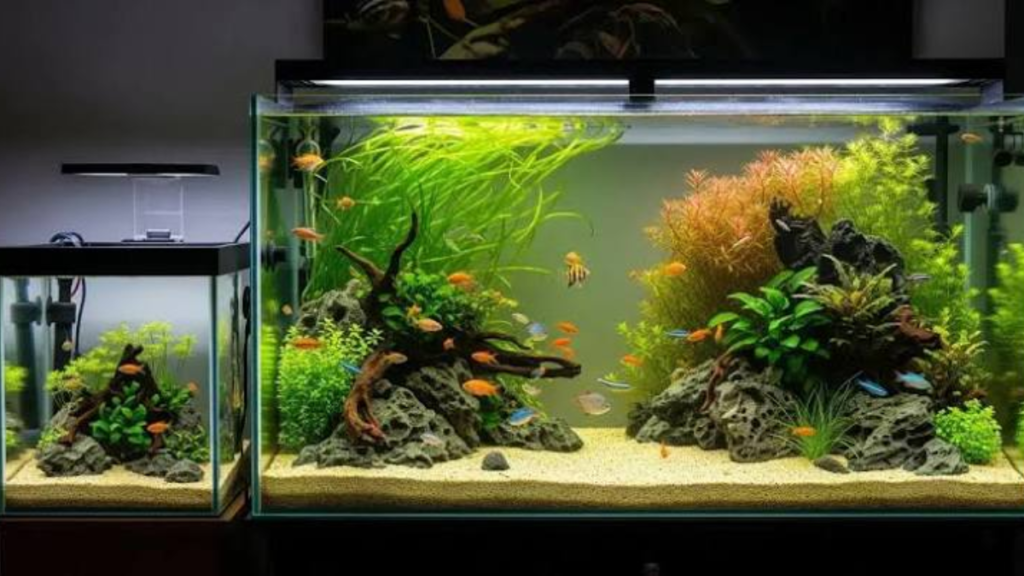
Setting up a freshwater aquarium can be one of the most enjoyable ways to bring nature into your home. Watching colorful fish swim through plants, rocks, and driftwood creates a relaxing environment, but a beautiful aquarium also needs to be a healthy one.
For beginners, the key is not simply filling a tank with water and adding fish. A successful freshwater aquarium setup requires the right equipment, safe water, proper placement, suitable decorations, and—most importantly—time for the biological filter to become established.
This guide by FISHELLA explains how to set up a freshwater aquarium step by step, so you can create a stable environment for your fish from the beginning. Learn how to set up a hospital tank for sick fish to safely isolate sick fish and help prevent illness from spreading to healthy tank mates.
What Do You Need for a Freshwater Aquarium?
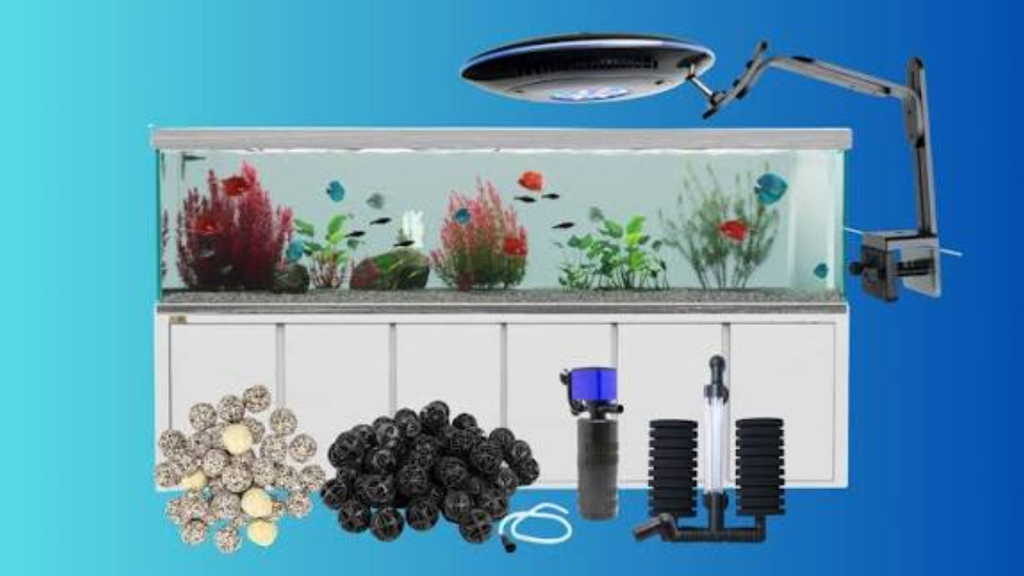
Before buying fish, gather the basic equipment you will need. Having everything ready makes the setup process much easier.
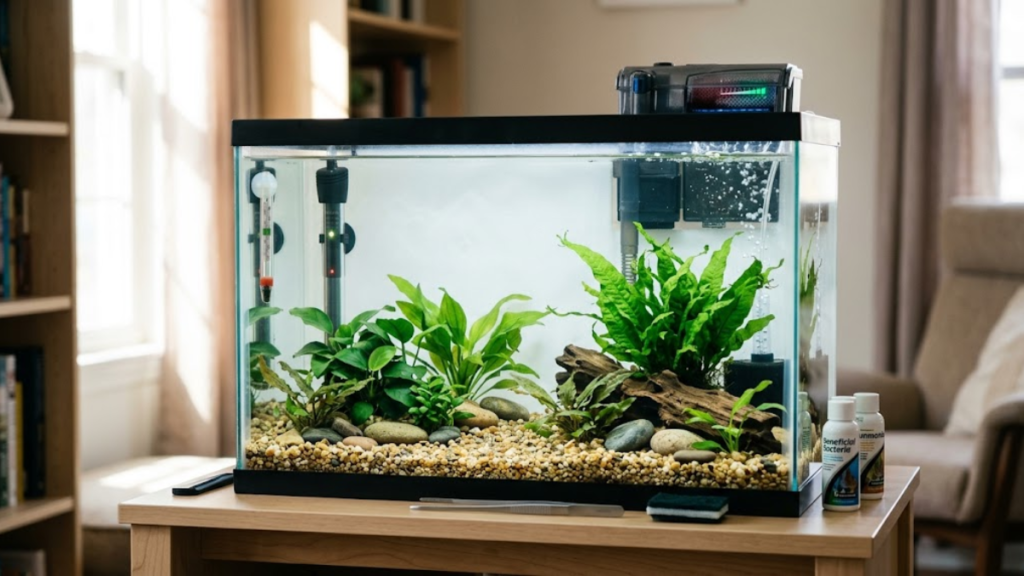
Freshwater aquarium equipment checklist
- Aquarium and properly sized stand
- Aquarium filter
- Heater for tropical fish
- Aquarium thermometer
- Water conditioner
- Aquarium test kit
- Substrate such as gravel or sand
- Aquarium plants and decorations
- Aquarium light
- Tank lid or cover
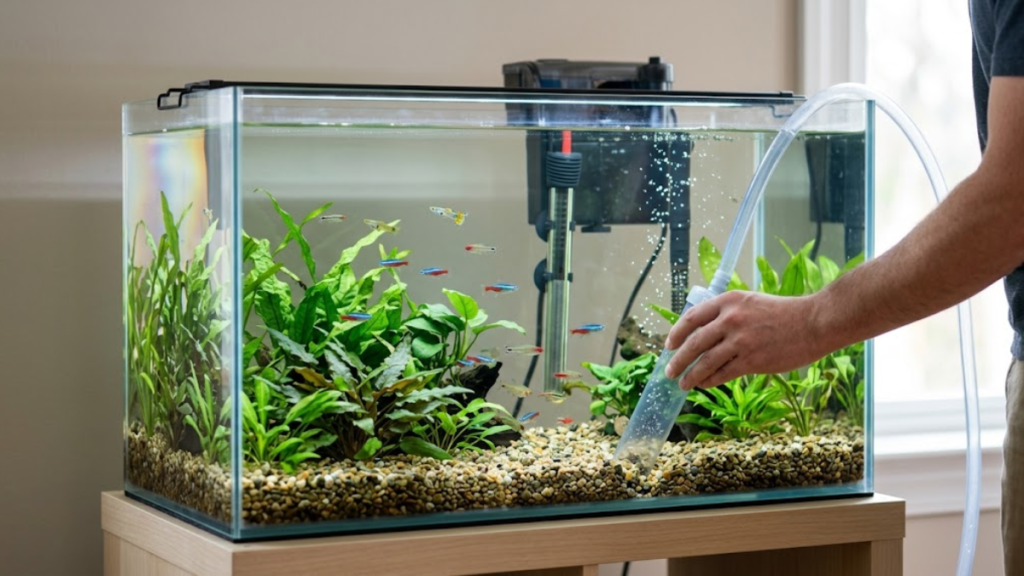
- Gravel vacuum for future maintenance
- Bucket dedicated to aquarium use
The aquarium filter is particularly important because it provides mechanical and biological filtration. Beneficial bacteria eventually live on filter media and other surfaces in the aquarium, helping process fish waste.
If you are keeping tropical freshwater fish, you will usually also need an aquarium heater. The appropriate temperature depends on the fish species, so research the requirements of your chosen fish before setting the temperature.
For beginners, a water test kit is also a smart investment. Testing ammonia, nitrite, nitrate and other parameters helps you understand what is happening inside your aquarium rather than relying only on how clear the water looks. Always follow proper quarantine procedures for new fish to help prevent diseases from spreading to your aquarium.
Choosing the Right Aquarium
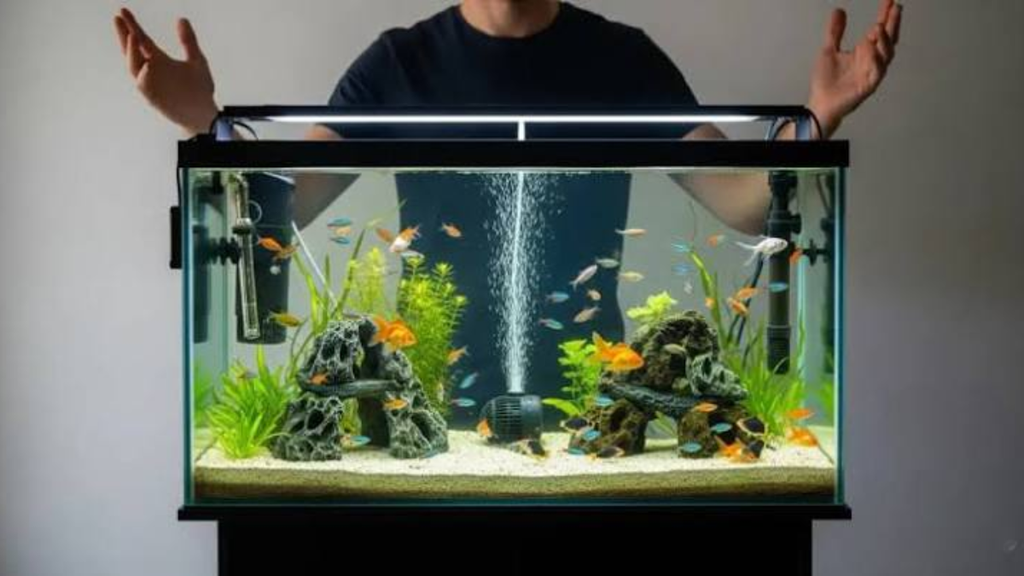
Choosing the right tank size is one of the most important decisions when setting up a freshwater aquarium.
Although a small aquarium may seem easier and cheaper, larger aquariums generally provide greater water stability. A larger volume of water can give beginners more room for small mistakes in feeding, stocking and maintenance.
Think about three things before purchasing a tank:
- Available space
- Your budget
- The adult size and needs of your fish
A long, horizontal aquarium is often useful because it provides swimming space and a larger surface area for gas exchange. The shape of the aquarium should also match the fish you plan to keep. If you are planning to keep a betta, make sure the aquarium meets its space, temperature, filtration, and water-quality needs. For a complete care guide, read our Betta Fish Care: Complete Beginner’s Guide 2026.
Do not choose fish first and then try to squeeze them into an unsuitable aquarium. Instead, research the adult size, behavior, swimming requirements and compatibility of the species before purchasing your fish.
Where Should You Place Your Aquarium?

The location of your aquarium can affect water temperature, algae growth, maintenance and even safety.
Choose a sturdy, level location that can safely support the aquarium’s weight when it is filled with water, substrate and decorations. Use a stand designed to support your particular aquarium rather than an ordinary table or cabinet.
Keep the aquarium away from:
- Direct sunlight
- Drafty doors and windows
- Heating and air-conditioning vents
- High-traffic areas
- Uneven surfaces
- Places where spilled water could damage electronics
Direct sunlight can contribute to excessive algae growth and unwanted temperature changes. Your aquarium should also be positioned somewhere that gives you convenient access to an electrical outlet and enough space to perform maintenance.
Before filling the aquarium, make sure the stand is level and stable.
Preparing Water for Your Aquarium
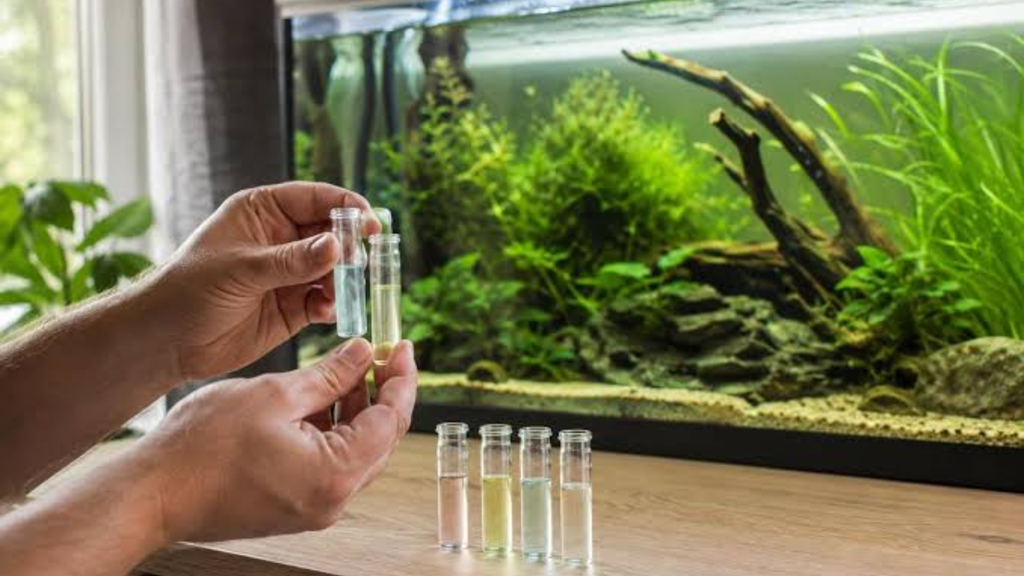
Water preparation is an essential part of setting up a freshwater aquarium.
If you are using municipal tap water, do not assume that water safe for people is automatically safe for fish. Drinking-water systems may use disinfectants such as chlorine or chloramine. These chemicals need to be neutralized or removed before aquarium water is used. The U.S. Environmental Protection Agency explains that chloramines are widely used as drinking-water disinfectants, while aquarium guidance notes that chlorine and chloramine can harm fish.
Use an aquarium water conditioner according to the manufacturer’s instructions whenever preparing tap water.
You should also avoid adding extremely cold or hot water directly to an established aquarium. Replacement water should be prepared so that its temperature is reasonably close to the aquarium water.
For a new aquarium, fill the tank with treated water and begin operating the appropriate equipment. However, remember that clean-looking water is not the same thing as biologically mature water.
Decorating Your Freshwater Aquarium
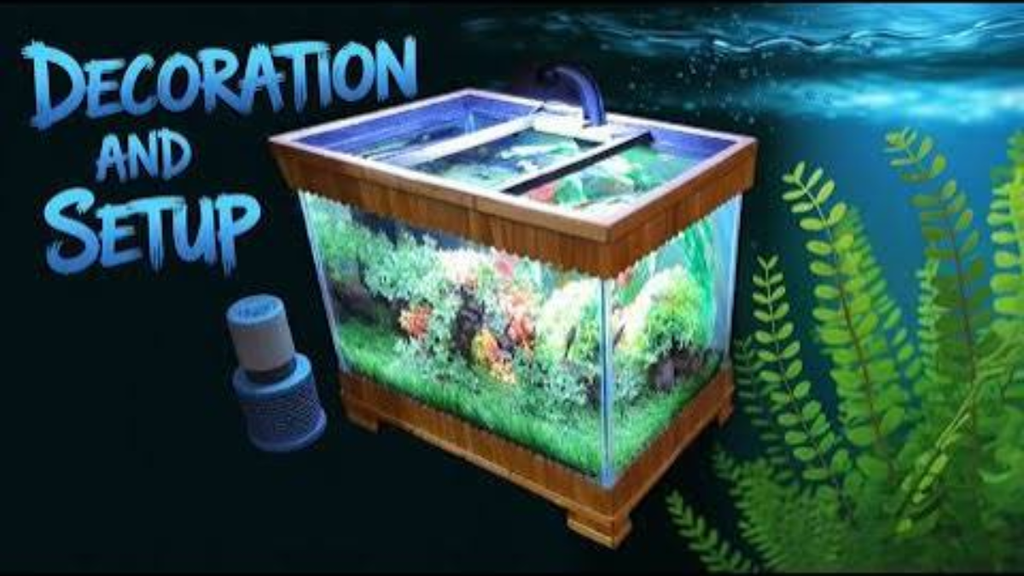
Now comes the fun part: decorating your freshwater aquarium.
Substrate such as gravel or aquarium sand provides a natural-looking foundation and gives beneficial microorganisms additional surfaces on which to live. Rinse new gravel or suitable substrate with plain water before adding it to the tank. Never use household soap or cleaning chemicals.
You can decorate your aquarium with:
- Live aquarium plants
- Artificial plants
- Aquarium-safe rocks
- Driftwood
- Caves and shelters
- Other aquarium-safe decorations
Think about your fish when creating the layout. Some species prefer open swimming space, while others appreciate plants, caves or hiding places.
A simple arrangement can look more natural when taller plants and decorations are positioned toward the back and shorter elements are placed toward the front.
Most importantly, make sure rocks, wood and decorations are aquarium-safe and securely positioned. Avoid sharp objects that could injure fish.
How To Set Up Your Freshwater Aquarium

Setting up a freshwater aquarium becomes much easier when you follow the process step by step..
Step 1: Position the aquarium
Place the aquarium on its appropriate stand and check that everything is level and stable. Leave enough space behind the tank for filter equipment, electrical cords and hoses.
Step 2: Add the substrate
Rinse your gravel or other substrate with plain water and spread it evenly across the bottom of the aquarium.
Step 3: Install the equipment
Install the filter, heater and thermometer according to their manufacturer’s instructions. Position the filter outlet so that it provides useful water movement without creating excessive current for your fish.
Step 4: Add water
Add room-temperature water carefully so that you do not disturb the substrate. A clean plate or saucer placed on the substrate can help distribute the water flow while filling.
Add the appropriate water conditioner according to the product instructions.
Step 5: Add decorations and plants
Arrange your plants, rocks, driftwood and other aquarium-safe decorations. Leave enough open swimming space for your fish.
Step 6: Start the equipment
Turn on the filter and heater according to their instructions and monitor the aquarium temperature with your thermometer.
For electrical equipment, keep cords arranged so that water cannot run directly into an electrical outlet. A downward section of cord before the outlet is commonly called a drip loop. Aqueon’s aquarium setup guidance also recommends using drip loops with electrical equipment.
Step 7: Test the water
Begin testing the aquarium water regularly. Pay particular attention to ammonia, nitrite and nitrate as the biological filter develops.
Do not rush to add fish simply because the aquarium looks clean and the filter is running.
Establishing the Biofilter (Cycling the Tank)
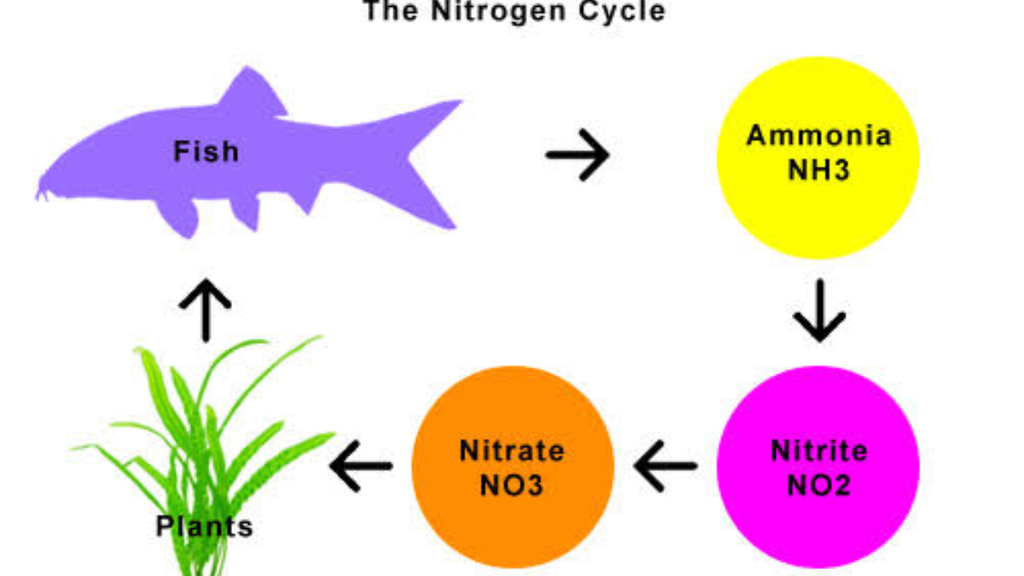
Proper cycling is one of the most important steps when setting up a freshwater aquarium.
Cycling an aquarium means establishing a population of beneficial nitrifying bacteria that can process toxic fish waste. Fish waste and decomposing organic material contribute ammonia to the water. Beneficial bacteria convert ammonia into nitrite and then convert nitrite into nitrate.
This biological process is known as the aquarium nitrogen cycle.
A new aquarium does not become biologically mature simply because the filter has been running for 24 or 48 hours. Cycling can take several weeks, and the exact timeline varies depending on the method and conditions. Aqueon specifically notes that simply running a new aquarium for 24–48 hours is not the same as cycling it.
How do you know when a tank is cycled?
Regularly test the water for:
- Ammonia
- Nitrite
- Nitrate
A properly established biological filter should be able to process ammonia without allowing dangerous ammonia and nitrite accumulation.
For a fishless cycle, an appropriate ammonia source is used to feed the developing bacteria while you monitor the water. Some aquarium keepers also use commercially available beneficial bacteria products or established biological filter media to help seed a new aquarium.
Do not add a full group of fish immediately after setting up the tank. Stock gradually and continue monitoring water parameters.
A stable biological filter is one of the foundations of long-term aquarium health.
Final Thoughts
Learning how to set up and maintain a freshwater aquarium correctly can prevent many common beginner problems.
Start with an appropriately sized aquarium, choose reliable equipment, treat your tap water, create a safe environment with suitable decorations, and give the biological filter enough time to develop.
Most importantly, do not rush the cycling process. Patience during the first few weeks can make aquarium keeping much easier in the months and years ahead.
Once your freshwater aquarium is fully cycled and your water parameters are stable, you can begin introducing suitable fish gradually and enjoy the rewarding hobby of freshwater fishkeeping.
For additional aquarium setup and water-quality information, see the guidance from Aqueon, U.S. Environmental Protection Agency (EPA), and PetMD.
FAQ
What are the steps to setting up a freshwater aquarium for the first time?
Choose the right tank and equipment, add rinsed substrate and decorations, fill it with conditioned water, and start the filter and heater. Test the water and cycle the tank before adding fish.
What is the best way to set up a freshwater fish tank?
The best approach is to create a stable environment from the beginning: use suitable equipment, treat tap water, arrange safe decorations, and establish the biological filter. Avoid rushing the cycling process.
What chemicals are needed to start a freshwater aquarium?
For most tap-water setups, the essential treatment is a water conditioner that neutralizes chlorine or chloramine. You may also need other treatments depending on your water parameters and the specific fish species.
How long do you have to wait to put fish in a freshwater tank?
There is no fixed number of days. Wait until the aquarium has completed its nitrogen cycle and tests show 0 ammonia and 0 nitrite, with nitrate present at an appropriate level.
Pingback: How to Cycle a Fish Tank Fast: Beginner’s Guide
Pingback: How to Clean a Fish Tank: Easy Beginner’s Guide
Pingback: Why Is My Betta Fish Making Bubbles at the Top of the Tank? - Fishella
Pingback: Aquarium Light Schedule: How Many Hours Is Best?