
Learning how to do a water change without removing fish helps you keep your aquarium clean without causing unnecessary stress. For most routine freshwater aquarium maintenance, you can leave your fish inside the tank while removing old water and adding properly prepared replacement water. You do not need to catch your fish or move them to another container.
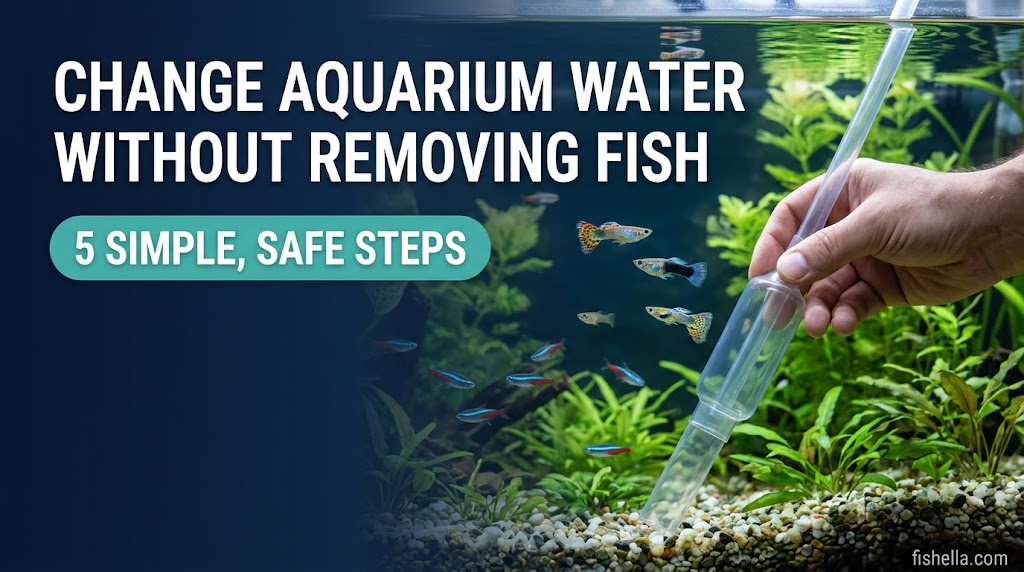
The safest method is to remove a portion of the aquarium water with a siphon, prepare replacement water at a similar temperature, and add it slowly. Always treat tap water for chlorine or chloramine as needed. Watch your fish throughout the process, especially in small tanks or aquariums containing baby fish.
This guide explains how to change aquarium water safely, what equipment you need, how much water to replace, and which mistakes to avoid. Follow our complete guide to fishless cycling to establish beneficial bacteria before adding fish to your aquarium.
Can You Change Aquarium Water Without Removing Fish?
Yes, you can change aquarium water without removing fish. In fact, leaving fish in their established aquarium is usually the better choice during routine partial water changes.
Catching fish with a net and moving them into another container can cause unnecessary stress. Moving them also exposes them to sudden temperature changes and differences in water chemistry.
A partial water change allows you to remove waste and replace some of the old water while keeping your fish in their familiar environment.
However, you should take extra care when using a siphon around small fish, shrimp, and fry. Keep the intake away from animals, and use a suitable intake guard when needed.
Important: If the aquarium contains dangerously high ammonia or nitrite levels, do not delay necessary water changes. Follow an appropriate water-quality correction plan while keeping replacement water safe for your fish.
What You Need for a Safe Aquarium Water Change
Gather your supplies before starting. Having everything ready helps you complete the process smoothly.
- Aquarium siphon or gravel vacuum: Removes old water and accessible debris.
- Clean bucket: Collects aquarium water or holds replacement water. Use a bucket reserved for aquarium use, without soap or cleaning chemical residue.
- Water conditioner: Treats tap water for chlorine and chloramine when required.
- Thermometer: Helps you compare the replacement water temperature with the aquarium.
- Water test kit: Helps you check ammonia, nitrite, nitrate, and other relevant water parameters.
- Towel: Catches splashes and spills.
For small aquariums, choose a siphon with a gentle flow. A large siphon can remove water too quickly and may pull small fish toward its intake.
How to Do a Water Change Without Removing Fish
Follow these steps to learn how to do a water change without removing fish safely and effectively.
Step 1: Check the Aquarium Before Starting
Look at your fish and inspect the aquarium before removing water. Check for unusual swimming, visible illness, dead fish, or other problems that may require attention.
Check the water temperature and review recent water test results if available. This information helps you decide how much water to replace.
Prepare your bucket, siphon, and water conditioner before beginning.
Turn off the aquarium heater before draining water below its normal operating level. Exposed heaters can overheat, crack, or become damaged. Follow the manufacturer’s instructions and allow the heater to cool before exposing it to air.
You can usually leave the filter running if its intake remains submerged and it continues operating normally. Turn it off if the water level will expose the intake or cause the filter to run dry.
Step 2: Remove Old Water With an Aquarium Siphon
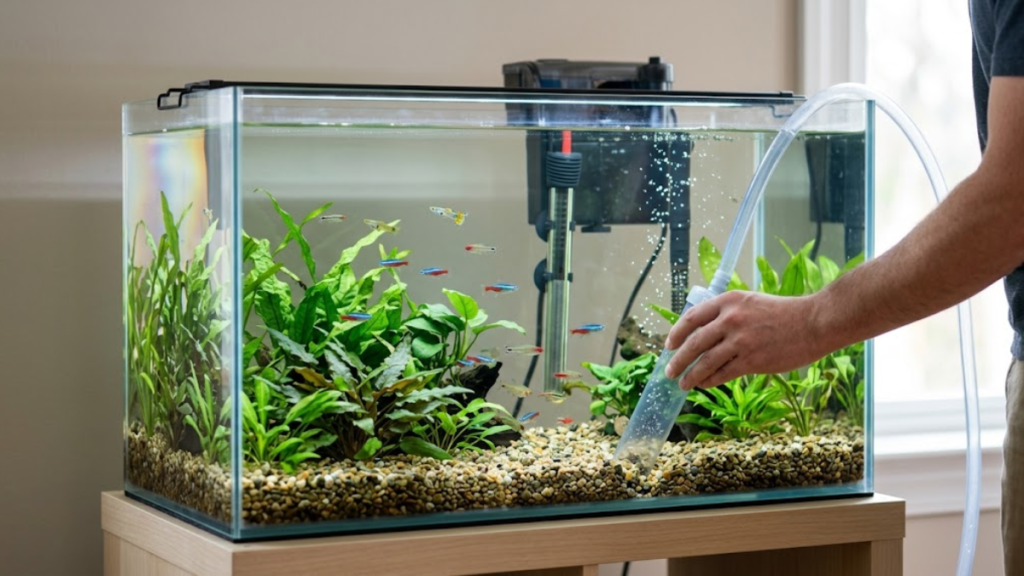
Place the siphon outlet into your aquarium-only bucket or a suitable drain. Start the siphon according to its instructions.

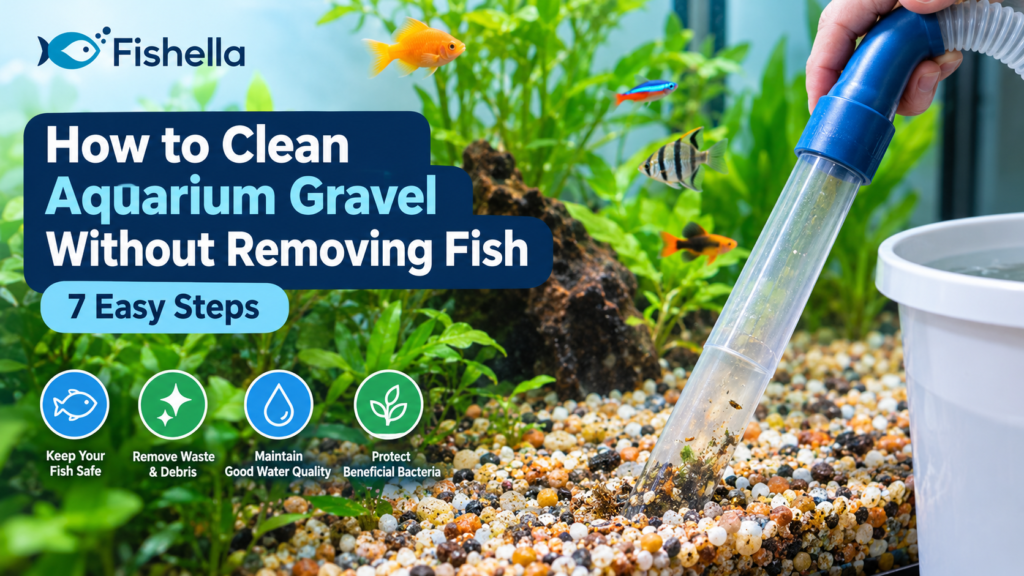
Guide the intake gently over the gravel or substrate. Remove visible waste, leftover food, and loose debris without disturbing the entire aquarium.
Keep these safety tips in mind:
- Watch where your fish swim while siphoning.
- Keep the intake away from fish, shrimp, and small fry.
- Use a fine intake guard when appropriate.
- Avoid digging deeply into the substrate unless your aquarium’s setup requires it.
- Monitor the water level so you do not remove more water than intended.
A gravel vacuum can help remove debris trapped between gravel pieces. However, planted tanks and aquariums with delicate substrates may need gentler cleaning.
Stop siphoning once you have removed the planned amount of water.
Step 3: Prepare and Condition the Replacement Water
Never assume that tap water is safe for fish simply because it is safe for people.
Municipal water may contain chlorine or chloramine, which can harm fish and aquatic organisms. Use an aquarium water conditioner that treats the disinfectants present in your water supply.
Before adding replacement water to your aquarium, choose the best aquarium water conditioner to help neutralize chlorine and chloramine in tap water.

Follow the product label for the correct dosage and application method. Some conditioners are designed for treating water in a separate bucket, while others can be used according to directions when adding water directly to an aquarium.
If you use a bucket, measure the replacement water and condition it as directed before adding it to the tank.
Next, compare its temperature with the aquarium water. Aim for a similar temperature to avoid sudden changes that can stress fish.
Do not rely on leaving tap water standing to remove chloramine. Use a suitable treatment product instead.
For help choosing a suitable product, see our guide to the best aquarium water conditioner.
Step 4: Add the New Water Slowly
Once the replacement water is properly prepared, refill the aquarium gently.
Pouring water directly onto fish, plants, or loose substrate can frighten fish and stir up debris. Instead, pour slowly against the inside glass or onto a clean, aquarium-safe surface that diffuses the flow.
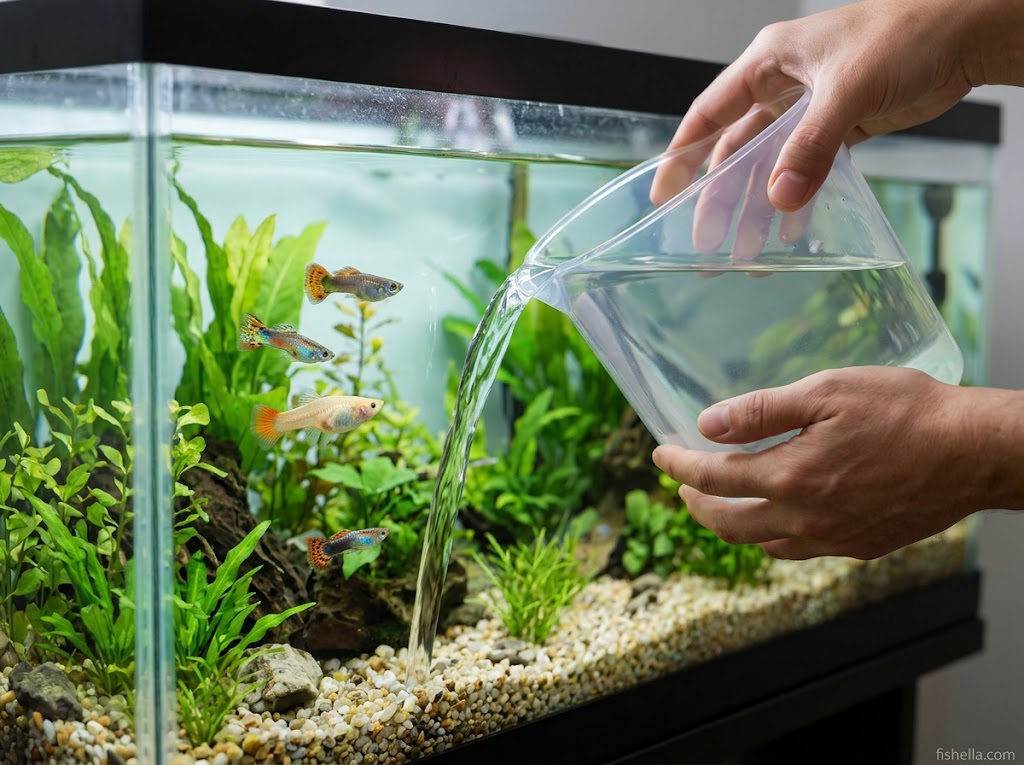
You can also use a clean container to add small amounts of water at a time.
As you refill the tank:
- Watch your fish for signs of distress.
- Avoid creating strong currents.
- Keep the replacement water temperature similar to the tank.
- Do not overfill the aquarium.
- Make sure the water is treated appropriately.
A slow refill is especially helpful for small tanks, planted aquariums, and tanks containing delicate fish.
Step 5: Restart Equipment and Check the Aquarium
After refilling, restore the normal water level and check your equipment.
Make sure the filter intake is submerged and the filter is circulating water properly. Restart any equipment you switched off, following the manufacturer’s instructions.
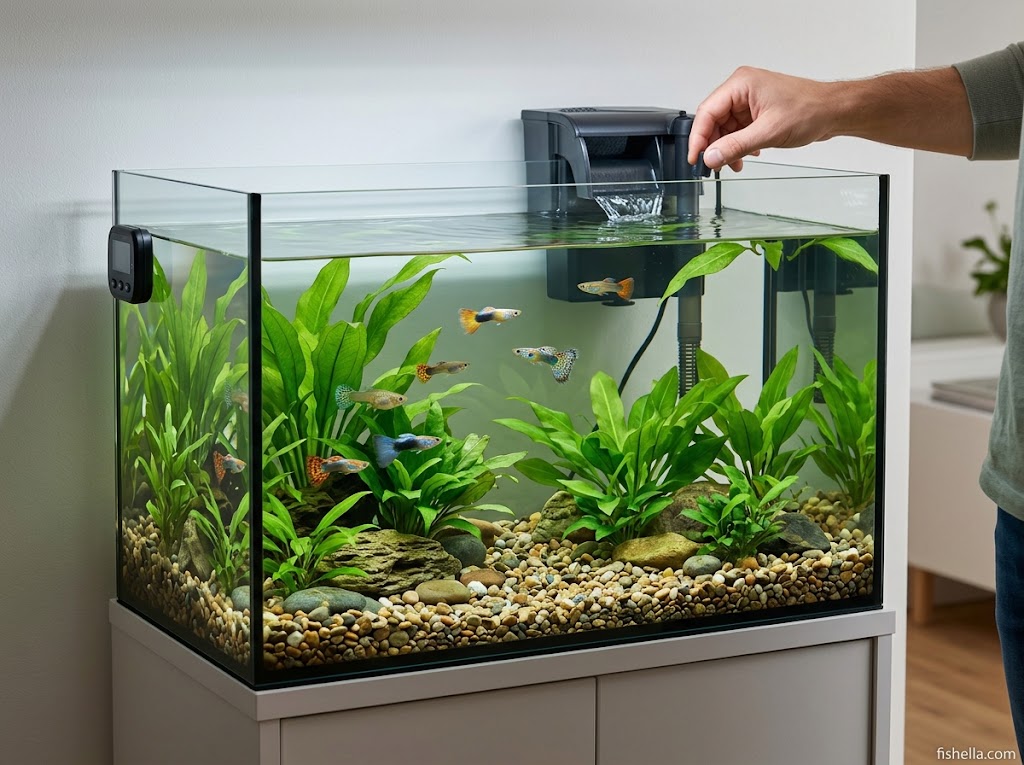
Before restarting the heater, ensure it is properly submerged and has cooled as required by its instructions. Never operate a heater outside its permitted water level.
Check the aquarium for leaks, unusual noises, and poor water flow.
Watch your fish for the next several minutes. Normal swimming and breathing are reassuring signs, although they do not replace water testing when water quality is uncertain.
If you suspect a water-quality problem, test the water and take appropriate corrective action.
How Much Water Should You Change in a Fish Tank?
For many established freshwater aquariums, a partial water change of around 20–30% is a reasonable starting point. The right amount depends on stocking levels, feeding, filtration, water-test results, and the needs of your fish.
Here is a simple example:
| Aquarium size | 20% water change | 30% water change |
|---|---|---|
| 5 gallons | 1 gallon | 1.5 gallons |
| 10 gallons | 2 gallons | 3 gallons |
| 20 gallons | 4 gallons | 6 gallons |
| 30 gallons | 6 gallons | 9 gallons |
These amounts use the aquarium’s stated capacity for easy planning. Actual water volume may be lower because of substrate, decorations, and equipment.
You do not need to replace all the aquarium water during every routine cleaning. Large or complete water changes may be necessary in certain emergencies, but they should be guided by the problem and the safety of the replacement water.
Test your water regularly. Ammonia and nitrite should generally remain at zero in an established, properly functioning freshwater aquarium. Nitrate trends can help you determine whether your maintenance routine is working.
Regular water testing helps you identify problems before they seriously affect your fish. For additional information about fish health and water-quality management, consult the Merck Veterinary Manual’s fish health resources.
How Often Should You Change Aquarium Water?
Many freshwater aquariums benefit from weekly partial water changes, but there is no single schedule that suits every tank.
A heavily stocked aquarium may need more frequent maintenance than a lightly stocked, mature aquarium. Small aquariums can also experience faster changes in water quality because they contain less water.
Use these factors to set your routine:
- Fish population: More fish generally produce more waste.
- Feeding habits: Uneaten food and excess waste can affect water quality.
- Tank size: Smaller aquariums have less water to dilute waste.
- Filtration: A suitable, well-maintained filter supports biological filtration but does not eliminate the need for water changes.
- Water test results: Rising nitrate or detectable ammonia and nitrite may signal a problem.
Test your water and adjust your schedule as needed instead of relying only on the calendar. Choosing the right water conditioner is essential when preparing replacement water. Read our comparison of Seachem Prime vs. API Stress Coat to understand their differences and select a product that suits your aquarium’s needs.
If you are setting up a new aquarium, learn about the aquarium nitrogen cycle. A properly established biological filter helps process toxic fish waste.
How to Change Water in a Small Fish Tank
Small tanks require extra care because even a modest amount of replacement water can cause a noticeable change in temperature or water chemistry.
Use a small siphon or gentle gravel vacuum so you can control the amount of water removed. Measure the replacement water rather than estimating it by eye.
Prepare the new water carefully and add it slowly. Avoid stirring up the entire substrate or disturbing decorations unnecessarily.
Small aquariums also need close monitoring between water changes. Test the water regularly, avoid overfeeding, and make sure the tank has suitable filtration for its inhabitants.
Remember that a small tank is not automatically easier to maintain. Its limited water volume can make water-quality problems develop quickly.
How to Change Aquarium Water With Baby Fish
Baby fish, also called fry, can be difficult to see and may be small enough to enter a siphon. Use a gentle siphon and inspect the intake carefully throughout the process.
A fine mesh intake guard can reduce the risk of accidentally removing fry, provided it does not block the siphon or create a hazard. If your aquarium contains baby guppies, read our guide to baby guppy care for tips on protecting fry and helping them grow in a healthy environment.
Remove water slowly and avoid disturbing breeding areas, dense plants, or hiding places. Prepare replacement water at a similar temperature and add it gently.
If you accidentally collect a fry in the waste bucket, inspect the collected water before disposing of it. Return the fry to the aquarium using a clean, fish-safe method if it can be recovered safely.
Common Aquarium Water Change Mistakes to Avoid
When learning how to do a water change without removing fish, avoid sudden temperature changes and untreated tap water.
Adding Untreated Tap Water
Chlorine and chloramine can harm fish. Use a suitable conditioner according to its instructions before the water reaches your fish. Before adding tap water to your aquarium, read our guide on whether betta fish can live in tap water to understand why water treatment is essential for fish safety.
Using Water at a Very Different Temperature
Sudden temperature changes can stress fish. Compare the replacement water with the aquarium and adjust it before refilling.
Removing Too Much Water by Accident
Monitor the water level while siphoning. Removing more water than planned can expose equipment and make refilling more disruptive.
Leaving the Heater On While Draining Water
A heater that becomes exposed to air while powered can overheat or break. Turn it off before draining below its operating level and follow its cooling instructions.
Cleaning All Filter Media Under Untreated Tap Water
Beneficial bacteria live on filter media, substrate, and other aquarium surfaces. These bacteria help process fish waste.
Do not replace or aggressively clean all biological filter media at once. If cleaning is necessary, follow the filter manufacturer’s instructions and use an appropriate method that protects the biological media. Good aquarium maintenance starts with understanding the conditions your fish need to stay healthy. Explore the University of Florida IFAS Extension’s educational resources for science-based information about aquatic animals and water quality.
Stirring Up the Entire Substrate
Aggressive cleaning can disturb plants, decorations, and substrate-dwelling animals. Remove accessible debris without unnecessarily disrupting the entire tank.
Assuming Clear Water Means Safe Water
Water can look clear while containing harmful ammonia or nitrite. Use an appropriate test kit when checking water quality, especially if fish behave unusually or the tank is newly established. Regular water testing helps you monitor ammonia, nitrite, and nitrate levels. Compare the API Master Test Kit vs. test strips to choose a suitable way to check your aquarium water quality.
Frequently Asked Questions
Can you change aquarium water with fish inside?
Yes. You can usually perform routine partial water changes with fish inside the aquarium. Use a siphon carefully, prepare replacement water properly, and avoid sudden temperature changes.
Should you turn off the filter during a water change?
Not always. A filter can generally remain on if its intake stays submerged and it operates normally. Turn it off if the water level could expose the intake or cause the filter to run dry. Restore normal operation after refilling.
Can you add tap water directly to a fish tank?
Only when it has been made safe for your fish according to the water treatment requirements. Tap water may contain chlorine or chloramine, so use a suitable conditioner as directed. Also check that the temperature is appropriate.
Can I change 50% of my aquarium water at once?
A 50% water change may be appropriate in some situations, including certain water-quality emergencies. However, it is not necessary for every routine cleaning. Prepare the replacement water carefully and base the amount on the aquarium’s condition and water-test results.
How often should I change aquarium water?
Many freshwater aquariums benefit from weekly partial water changes. Your ideal schedule depends on stocking, feeding, tank size, filtration, and water-test results.
Do I need to remove fish before cleaning the gravel?
Usually not. You can gently vacuum accessible debris while fish remain in the aquarium. Work carefully around fish, plants, and small fry, and avoid disturbing the entire substrate unnecessarily.
Can a water change stress fish?
Yes, if it causes sudden temperature or water-chemistry changes, strong currents, or rough handling. A careful partial water change with properly prepared replacement water helps reduce these risks.
Final Thoughts
Once you know how to do a water change without removing fish, regular aquarium maintenance becomes easier and safer. You can usually change aquarium water without removing fish by using a siphon, replacing only the planned amount, and adding properly conditioned water at a similar temperature.
Work slowly, protect small fish from the siphon, and make sure your filter and heater operate safely after refilling. Regular water testing will help you choose an appropriate maintenance schedule for your aquarium.
A calm, consistent routine makes aquarium cleaning easier and helps maintain a healthier environment for your fish.
For a more complete aquarium maintenance routine, read our guide on how to clean a fish tank to learn how to remove debris and keep your aquarium clean and healthy.
Pingback: How to Clean a Fish Tank: Easy Beginner’s Guide
Pingback: How to Clean Aquarium Gravel Without Removing Fish (7 Steps)