
Baby guppy care focuses on clean water, frequent small meals, gentle filtration, and protection from adult fish. Guppy fry are born fully formed and can swim and eat shortly after birth. They do not need a yolk-sac feeding stage like many egg-laying fish. With the right setup, you can help your baby guppies grow into healthy juveniles.
The most important part of raising guppy fry is maintaining stable water quality while providing enough nutritious food. Feed small portions three to four times daily, remove uneaten food, and monitor ammonia and nitrite. Dense aquatic plants and a fry-safe sponge filter also improve survival.
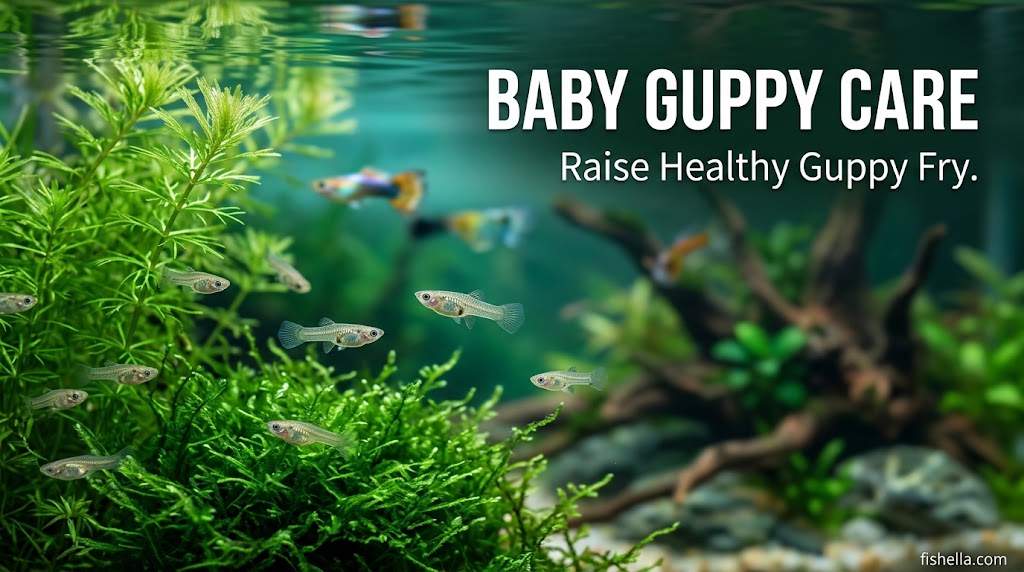
This guide explains what baby guppies eat, how to set up a fry tank, when to separate young fish, and how to recognize common problems. For a complete overview of adult fish care, start with our Guppy Fish Care: Complete Beginner’s Guide.
What Do Baby Guppies Eat?
Baby guppies can eat shortly after birth because they are livebearers. Their tiny mouths need food with particles small enough to swallow. Choose nutritious foods that support growth without quickly polluting the water.
Good foods for guppy fry include: For more information about general guppy nutrition and care, consult the PetMD guppy fish care sheet.
- Powdered fry food: A convenient option formulated for the nutritional needs of young fish.
- Finely crushed flakes: Crush quality tropical fish flakes into a fine powder.
- Baby brine shrimp: Newly hatched brine shrimp provide protein and encourage active feeding.
- Microworms: These small live foods can supplement a varied fry diet.
- Finely sized commercial microfoods: Choose products suitable for livebearer fry.
Learn how to choose the best food for guppies, including flakes, micro pellets, frozen foods, and live foods to support healthy growth and natural color.
How Often Should You Feed Guppy Fry?
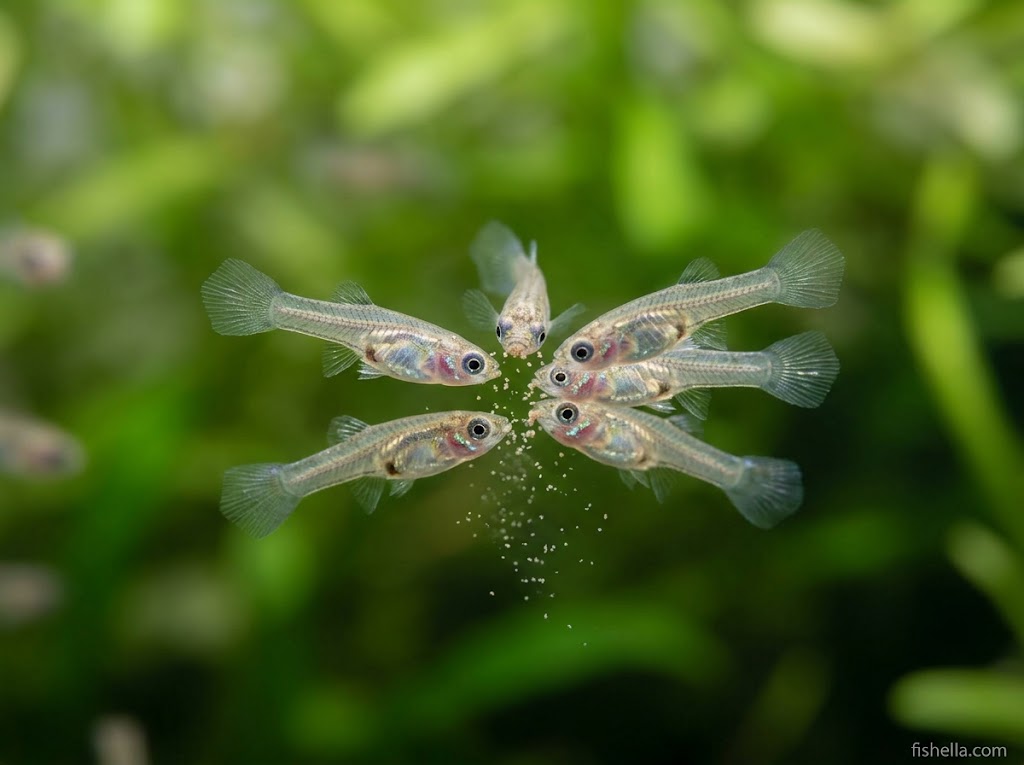
Feed baby guppies three to four small meals daily as a practical starting routine. Very young fry may benefit from more frequent feeding if you can maintain excellent water quality.
Offer only what the fry can eat within a few minutes. Start with a small pinch, observe their feeding response, and adjust the amount as needed.
Avoid adding extra food simply because the fry appear hungry. Uneaten food breaks down and can increase ammonia, putting young fish at risk.
Remove leftover food with a small siphon or suitable aquarium tool. Take care not to suck up the fry.
How to Set Up a Baby Guppy Tank
A separate fry tank can make feeding, cleaning, and monitoring young guppies easier. However, a separate tank is not essential if the main aquarium provides enough cover and suitable water conditions.
For a dedicated fry setup, prepare these essentials:
- Tank: A 5- to 10-gallon aquarium can work for a small group, depending on fry numbers and growth.
- Filter: Choose a gentle sponge filter or protect the intake of another suitable filter.
- Heater: Use a thermostatically controlled heater if needed to maintain a stable temperature.
- Thermometer: Check the water temperature regularly.
- Plants: Add dense plants and floating cover for hiding places.
- Water test kit: Monitor ammonia, nitrite, and nitrate.
- Cover: Use an aquarium lid to reduce evaporation and prevent fish from jumping.
A larger grow-out tank may become necessary as the fry grow or their numbers increase. Avoid overcrowding because it increases waste and makes water quality harder to control.
Best Filter for Baby Guppies
Baby guppies are small enough to get trapped against strong filter intakes. A sponge filter provides biological filtration with gentle water movement and helps protect tiny fry.
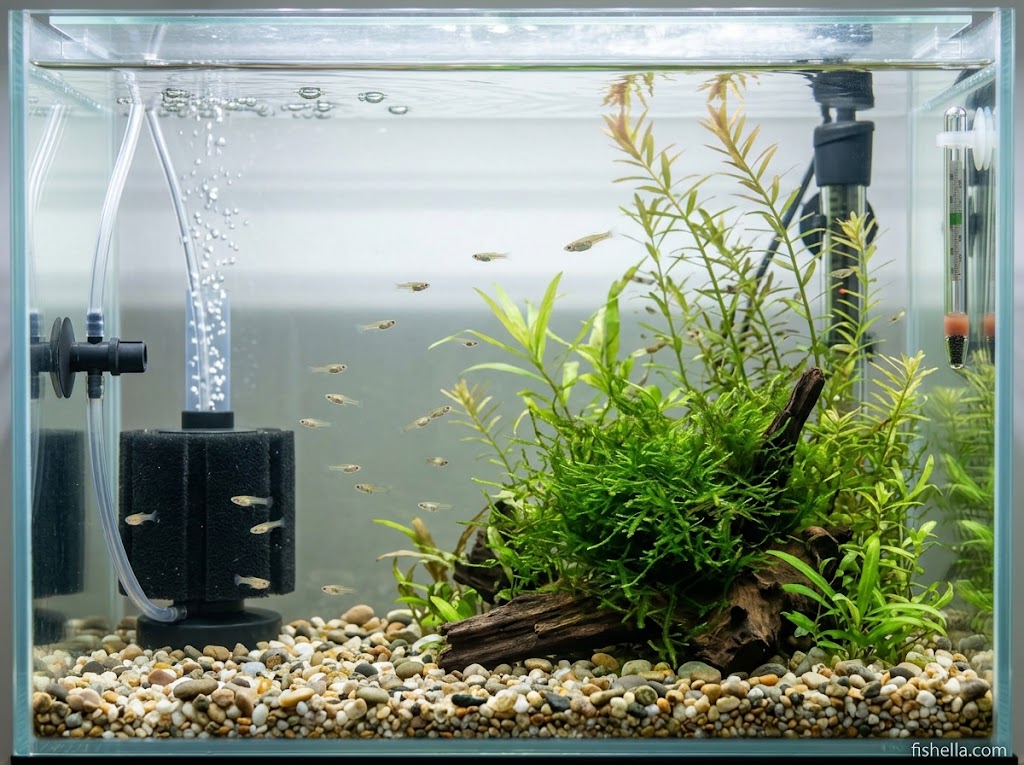
Choose a model appropriate for your tank size and adjust the airflow to prevent excessive current.
Read our guide to the best filter for guppies for help choosing suitable filtration. If you use a hang-on-back filter, fit a suitable pre-filter sponge over the intake.
Never clean established filter media with untreated tap water. Chlorine and chloramine can damage beneficial bacteria. Gently rinse the media in removed aquarium water when maintenance is needed.
Best Temperature for Guppy Fry
Aim for a stable temperature around 76–80°F for a typical tropical guppy fry setup. The appropriate temperature can vary with the strain and existing aquarium conditions.
Avoid sudden temperature changes during water changes. Match the replacement water closely to the tank temperature.
Do not increase the temperature simply to force faster growth. Stable conditions, appropriate feeding, and good water quality matter more than chasing rapid growth.
Should You Use Substrate?
Both bare-bottom and substrate-based fry tanks can work.
A bare bottom makes uneaten food and waste easier to see and remove. Fine, aquarium-safe substrate can also work when you clean it carefully.
Avoid sharp decorations, deep areas where waste collects, and equipment that makes routine maintenance difficult.
How to Protect Baby Guppies From Adult Fish
Adult guppies may eat their own fry. Other aquarium fish can also prey on young guppies, so hiding places are important.
Use these methods to improve fry survival:
- Add dense live plants, such as Java moss, for shelter.
- Provide floating plants with roots that create cover near the surface.
- Use a separate, properly cycled fry tank when practical.
- Keep the filter intake protected against accidental fry capture.
- Avoid placing tiny fry with larger fish that may eat them.
A breeder box or net can provide temporary separation, but it is not always suitable for long-term housing. Limited space and poor water circulation can stress fish.
If you move a pregnant female before birth, provide adequate space and hiding places. Return her to the main aquarium after she gives birth if the setup allows.
Important: Do not move fry into an uncycled aquarium just to protect them. An established, stable aquarium is safer than a new tank with uncontrolled ammonia.
Water Changes for Baby Guppies
Clean water is essential for healthy fry. Frequent feeding creates waste, and small tanks can develop dangerous ammonia levels quickly.
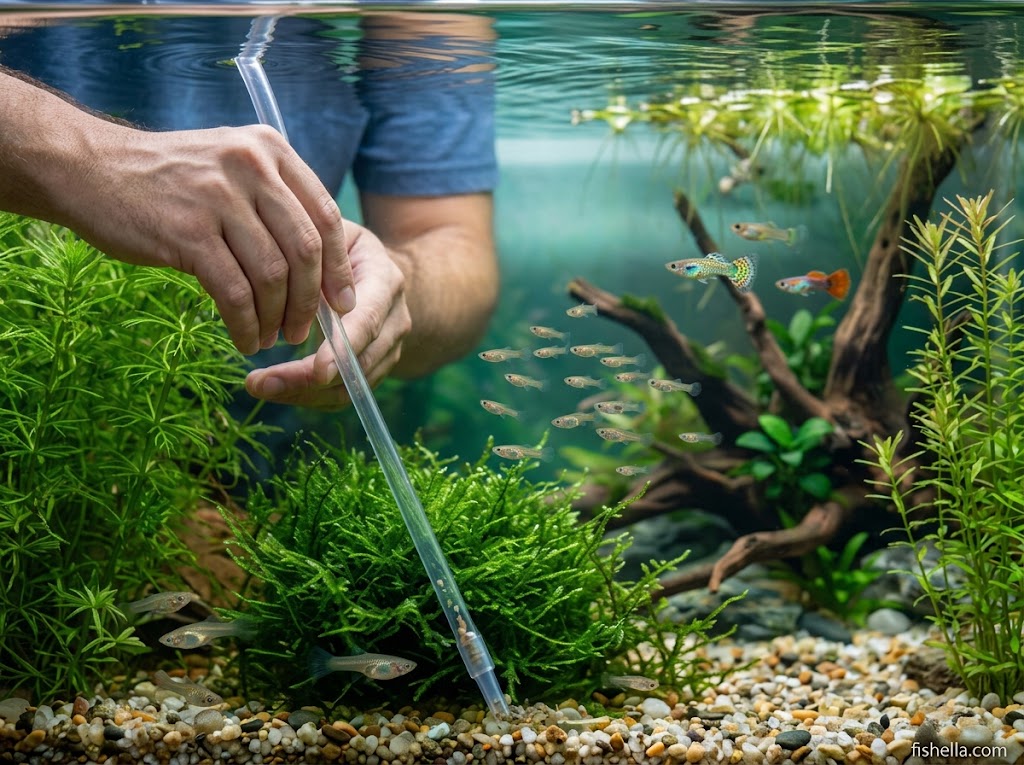
Start with partial water changes of about 10–20% daily or every other day in a heavily fed fry tank. Adjust the schedule according to tank size, stocking, feeding, and water test results. Some lightly stocked, mature tanks may need less frequent changes.
Follow these steps:
- Test the water, especially ammonia and nitrite.
- Prepare replacement water with an appropriate conditioner.
- Match the replacement water temperature closely.
- Remove waste and uneaten food carefully.
- Add the new water slowly to avoid disturbing the fry.
- Retest if fish show signs of stress or water quality is uncertain.
Keep ammonia and nitrite at 0 ppm. Keep nitrate low through regular maintenance and testing.
If ammonia or nitrite is detectable, take prompt corrective action with an appropriately sized partial water change and check the filter and biological filtration. Do not wait for the next scheduled maintenance day. For additional guidance on maintaining suitable aquarium conditions, read the OATA care guide for guppies and mollies.
For more guidance on tap water, read our article about guppy tap water and water conditioner.
Plants That Help Baby Guppies Survive
Aquatic plants provide cover, reduce stress, and create areas where fry can escape adult fish. Some plants also support natural microorganisms that young fish may pick at between meals.
Useful options include:
- Java moss: Creates dense cover close to the substrate.
- Guppy grass: Offers fine, tangled shelter for tiny fish.
- Water sprite: Provides leafy cover and can grow quickly in suitable conditions.
- Floating plants: Create shaded areas and refuge near the water surface.
Choose plants that suit your lighting, water conditions, and maintenance routine. Remove decaying leaves and excess plant growth so waste does not accumulate.
Baby Guppy Growth Timeline
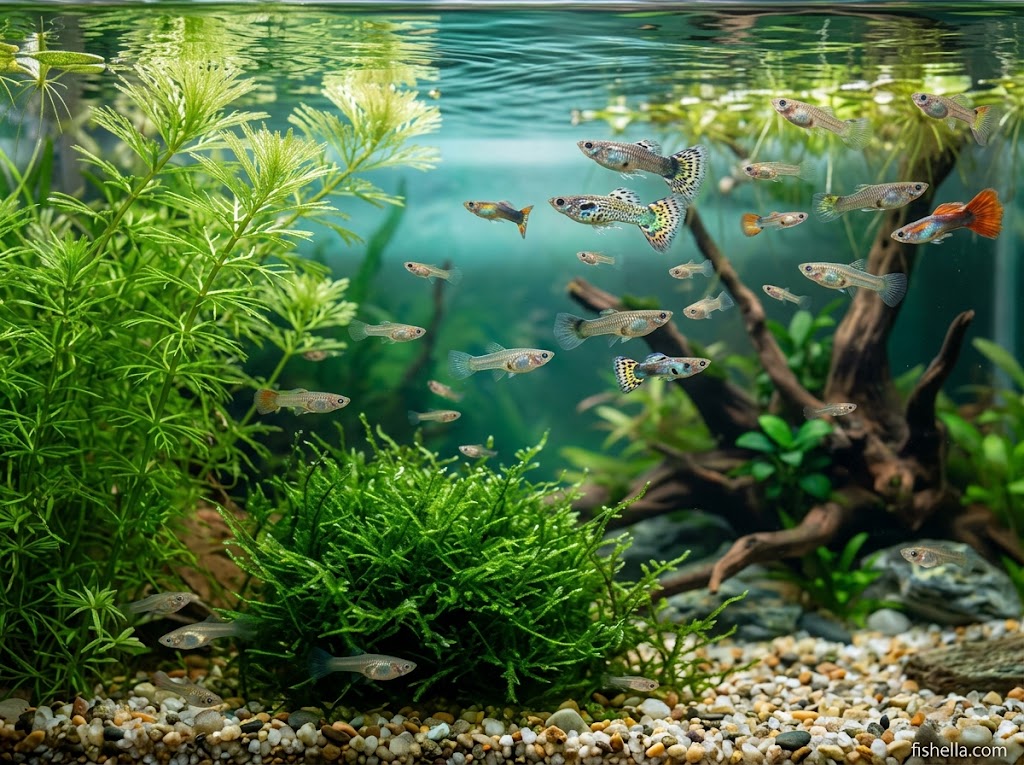
Guppy fry grow at different rates depending on genetics, nutrition, water quality, temperature, and stocking density. Use the following timeline as a general guide rather than a fixed schedule.
| Age | Typical Development | Care Priorities |
|---|---|---|
| Birth to 2 weeks | Tiny, active fry begin feeding immediately | Small meals, hiding places, stable water |
| 2–4 weeks | Body size increases and coloration may begin to develop | Varied food, careful cleaning, regular testing |
| 4–8 weeks | Differences in size and developing sex characteristics may become easier to notice | More swimming space and population management |
| 2–4 months | Many guppies approach maturity, although timing varies | Suitable housing, sex separation if needed, balanced nutrition |
Some guppies mature earlier or later than this timeline. Do not judge health by age alone. Consistent growth, active swimming, a good appetite, and intact fins are more useful signs.
When Can Baby Guppies Join the Main Tank?
There is no single age that guarantees safety. Consider the size of the fry and the fish already living in the main aquarium.
A common starting point is around 6–8 weeks, but some fry need more time. Move them only when they are too large to be easily swallowed by potential predators and can compete for food.
Before transferring them, check that the main tank is cycled, stable, and not overcrowded. Acclimate the fry carefully to differences in temperature and water chemistry.
How to Tell Male and Female Guppy Fry Apart
Sexing young guppies can be difficult because their markings and body shapes may not be fully developed.
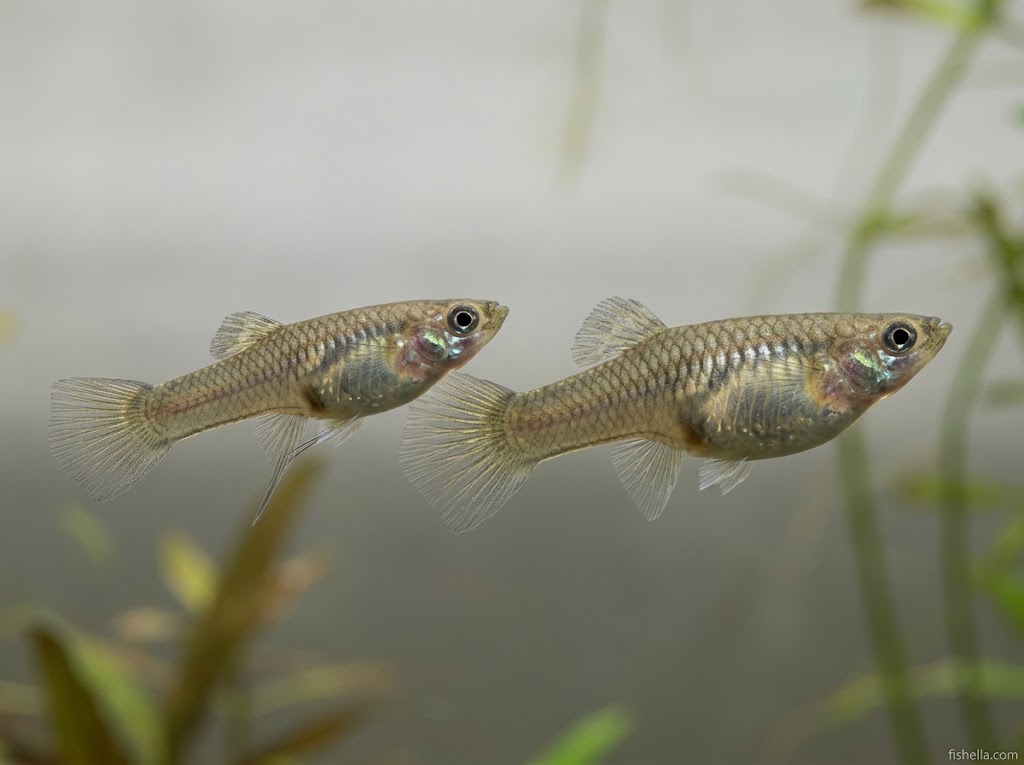
As they grow, look for these general differences:
- Males: Often develop more colorful bodies and larger, flowing tails. The anal fin becomes narrow and pointed, forming a gonopodium.
- Females: Usually develop a broader body and a fan-shaped anal fin. A gravid spot may become visible near the abdomen.
These features become easier to identify as the fish mature. Color alone is not a reliable way to determine sex.
Read our detailed guide to male vs. female guppies for identification tips.
If you keep males and females together, expect additional fry. Guppies reproduce readily, and population growth can quickly exceed the space available.
Common Baby Guppy Problems and How to Prevent Them
Slow Growth
Slow growth can result from inadequate nutrition, overcrowding, poor water quality, stress, or genetics.
Offer appropriately sized food several times daily. Maintain stable water conditions and provide enough space as the fry grow.
Sudden Deaths
Sudden losses may indicate ammonia or nitrite problems, temperature changes, contamination, disease, or insufficient oxygen.
Test the water immediately. Check that the filter and heater work properly, and remove any dead fish or uneaten food.
Do not assume that disease is the cause before checking water quality.
Fry Disappearing
Fry may hide among plants, become trapped in filter intakes, or be eaten by larger fish.
Inspect the tank carefully before assuming they have died. Add dense cover and protect filter intakes to reduce avoidable losses.
Deformities
Spinal or body deformities can be associated with genetics, developmental problems, or unsuitable rearing conditions. Not every deformity has the same cause.
Maintain good water quality and provide a balanced diet. Avoid breeding affected fish when a hereditary problem is suspected, and seek advice from an experienced aquatic veterinarian when appropriate.
Signs of Illness
Watch for persistent lethargy, rapid breathing, loss of appetite, clamped fins, abnormal swimming, or visible growths and lesions.
First check ammonia, nitrite, temperature, and filtration. If symptoms persist, isolate affected fish when appropriate and seek guidance from an aquatic veterinarian. Avoid adding medications without a clear reason, especially in a tank containing sensitive fry.
Responsible Fry Management and Rehoming
Guppies can produce more young than a home aquarium can support. Plan for population growth before breeding them.
Consider these responsible options:
- Separate males and females when you need to prevent additional breeding.
- Ask reputable local aquarium stores whether they accept healthy guppies.
- Find suitable homes with experienced fish keepers.
- Maintain adequate space and filtration for the fish you keep.
Avoid releasing unwanted guppies into ponds, streams, lakes, or other natural waterways. Released aquarium fish can harm local ecosystems and spread disease.
If you want to understand how quickly your fish may reproduce and mature, read our Guppy Fish Care Guide and plan your tank capacity accordingly.
Frequently Asked Questions About Baby Guppy Care
What is the best food for baby guppies?
Powdered fry food, finely crushed flakes, and newly hatched baby brine shrimp are useful options. Offer small portions that fry can swallow easily, and vary the diet when possible.
How many times a day should I feed guppy fry?
Feed them three to four small meals daily as a starting routine. More frequent feeding may help very young fry, provided you remove waste and maintain excellent water quality.
Do baby guppies need a separate tank?
No. A separate fry tank can improve survival and make feeding easier, but dense plants and suitable filtration may allow fry to survive in the main aquarium.
How often should I change water in a guppy fry tank?
Heavily fed fry tanks may need small partial water changes daily or every other day. Test the water and adjust the schedule to prevent ammonia and nitrite buildup.
Do baby guppies need a heater?
A heater is useful when the room temperature cannot maintain a stable tropical aquarium temperature. Use a thermostat and thermometer to prevent sudden changes.
When do baby guppies get their colors?
Some fry begin showing color within their first few weeks, while others develop noticeable patterns later. Genetics, strain, nutrition, and age influence coloration.
When can I tell if a guppy fry is male or female?
Sex differences often become easier to see around 4–8 weeks, but development varies. Look at the anal fin and other developing features rather than relying on color alone.
How long do guppies live?
Many guppies live around 2–3 years under suitable care, although lifespan varies. Genetics, water quality, diet, and disease prevention influence longevity. See our guide to how long guppies live.
Can baby guppies live with goldfish?
It is generally not recommended. Goldfish have different temperature and housing needs, and larger goldfish may eat small guppies. Learn more about how big common goldfish get before considering aquarium compatibility.
What types of guppies can I raise?
Common guppy varieties differ in colors, patterns, and tail shapes. Choose healthy fish from a reputable source and prioritize suitable care over appearance alone. Explore our guide to types of guppies.
Which fish can live with guppies?
Choose peaceful species with compatible water requirements and adult sizes. Tiny fry are vulnerable even in otherwise peaceful community aquariums. Review our guide to the best guppy tank mates before adding other fish.
Final Thoughts
Successful baby guppy care depends on consistent feeding, clean water, gentle filtration, and enough room to grow. Start with small meals, test the water regularly, and remove uneaten food before it breaks down.
Provide plants or other safe hiding places, protect fry from filter intakes, and plan for the growing population. With a stable routine and careful observation, you can raise healthier guppies while avoiding many common beginner mistakes.
Pingback: Best Filter for Guppies: 5 Tips for Choosing the Right One
Pingback: How Long Do Guppies Live? guppy Lifespan & 7 Key Factors
Pingback: Types of Guppies: 9 Popular Colors, Patterns and Tail Shapes