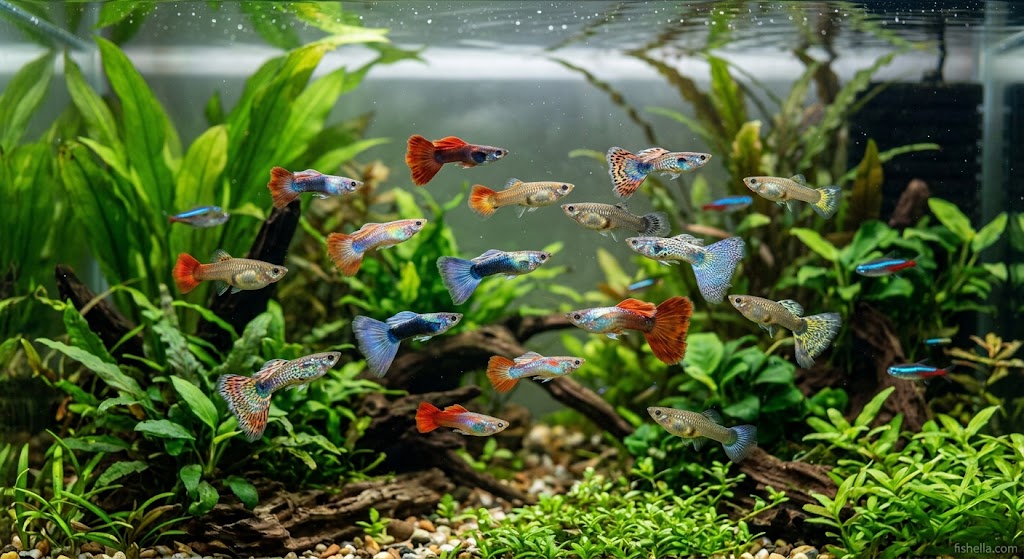
The best guppy tank mates are peaceful fish and invertebrates that share similar water requirements and will not attack guppies’ flowing fins. Corydoras catfish, platies, harlequin rasboras, and nerite snails can be good choices when the tank is large enough. However, compatibility depends on water conditions, adult size, group needs, and individual behavior. Read our guppy fish care guide for the complete setup and care requirements.
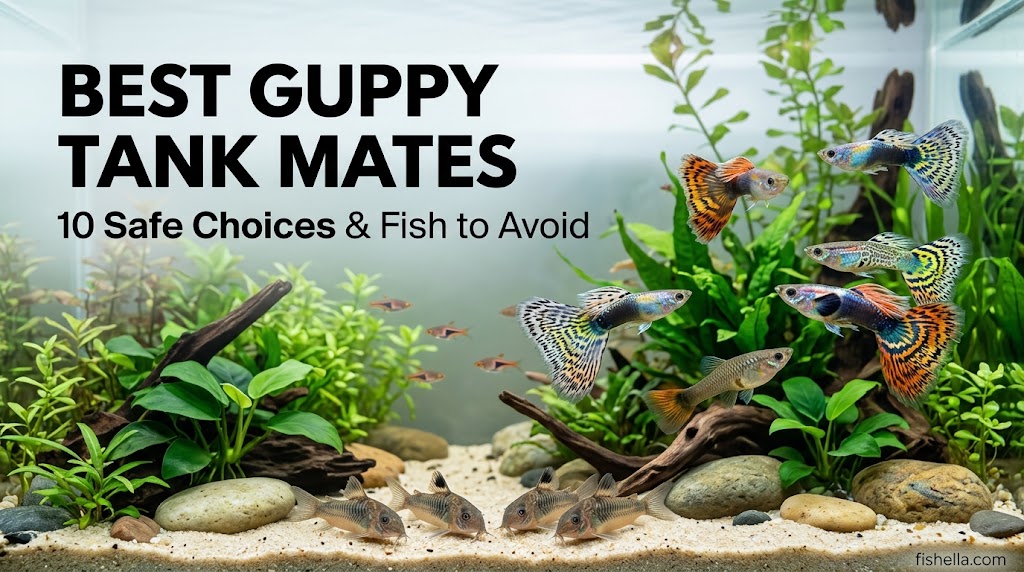
Choosing the best guppy tank mates depends on your aquarium size, water conditions, and fish behavior. Peaceful species such as corydoras catfish and platies can be suitable companions when their care needs match. Always check adult size, group requirements, and breeding risks before adding new fish.
What Makes a Good Guppy Tank Mate?
Before adding another species, check these five factors:
- Peaceful behavior: Choose fish that do not chase, bully, or nip guppies’ fins.
- Similar water needs: Make sure both species thrive in the same temperature, pH, and water hardness.
- Compatible adult size: Avoid fish large enough to swallow guppies.
- Enough swimming space: Every species needs room to swim and behave naturally.
- Suitable group size: Schooling fish and social bottom dwellers need appropriate groups.
Guppies generally thrive in warm water around 72–82°F. They often do well in neutral to slightly alkaline water, although their preferred conditions vary by strain and source. Choose tank mates that can thrive in your aquarium’s stable water conditions rather than constantly adjusting the water for different species.
Best Guppy Tank Mates: 10 Compatible Choices
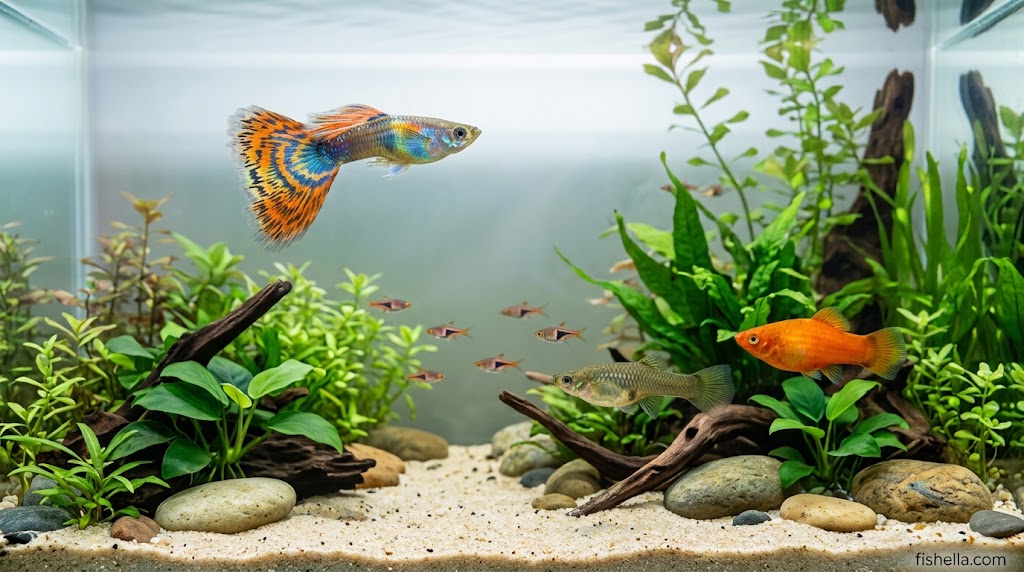
These species can work in a peaceful community aquarium when their individual care requirements are met.
| Tank Mate | Compatibility | Important Considerations |
|---|---|---|
| Corydoras catfish | Very good | Keep a suitable group of the same species and provide a soft, safe substrate. |
| Platies | Very good | Similar water preferences, but both species may produce many fry. |
| Harlequin rasboras | Good with suitable water | Keep a school and check that your water hardness suits them. |
| Ember tetras | Conditional | Small and peaceful, but their preferred water conditions may differ from those of guppies. |
| Neon tetras | Conditional | Can work in a suitable community tank, but often prefer softer water than guppies. |
| Mollies | Good with enough space | Need room to grow and may increase the tank’s stocking level quickly. |
| Swordtails | Good in larger tanks | Active fish that need swimming space; males may display territorial behavior. |
| Otocinclus catfish | Conditional | Best for mature, stable, algae-rich aquariums with suitable group sizes. |
| Nerite snails | Very good | Peaceful algae grazers that generally do not reproduce successfully in freshwater. |
| Cherry shrimp | Conditional | Adult shrimp may coexist with guppies, but baby shrimp can be eaten. |
1. Corydoras Catfish
Corydoras are peaceful bottom-dwelling fish that usually leave adult guppies alone. They spend much of their time searching the substrate for food.
Choose a suitable Corydoras species and keep a group rather than a single fish. Provide a clean aquarium with smooth sand or another substrate that protects their delicate barbels.
Remember that Corydoras need their own food. They should not rely on leftover guppy flakes.
2. Platies
Platies are among the most practical fish to consider with guppies. Both are peaceful livebearers and can thrive in similar water conditions.
The main challenge is breeding. Mixed-sex groups can produce frequent batches of fry, increasing the aquarium’s population.
Plan for extra fish before keeping both species together. Read our guppy breeding guide to understand fry care and population control.
3. Harlequin Rasboras
Harlequin rasboras are active schooling fish with peaceful temperaments. They can add movement and color to a community aquarium.
Keep a proper school and provide enough swimming space. Check your water hardness and pH before choosing them, because their preferred conditions may not perfectly match those of guppies.
4. Ember Tetras
Ember tetras are small, colorful fish that can work in carefully planned community aquariums. Their peaceful nature makes them worth considering.
However, small size alone does not guarantee compatibility. Ember tetras generally prefer softer, more acidic water than many guppies do.
Choose this pairing only when your water conditions suit both species. Keep the tetras in a proper school and avoid overcrowding.
5. Neon Tetras
Neon tetras are popular schooling fish, but they need more consideration than a simple compatibility chart suggests.
They often prefer softer water than guppies. Although some aquariums can accommodate both, a stable compromise must suit the fish you keep.
Neon tetras may also eat newborn guppy fry. If you want to raise baby guppies, provide a separate fry setup or another reliable breeding plan. If you’re raising newborn guppies, read our complete guide to baby guppy care to learn about fry feeding, safe tank setup, water changes, and healthy growth.
6. Mollies
Mollies share several care requirements with guppies and can be suitable companions in larger aquariums.
However, mollies vary in adult size, and some varieties need considerably more space than beginners expect. A small aquarium may become overcrowded when both species are kept together.
Check the adult size of your chosen molly variety and plan for breeding before purchasing a group.
7. Swordtails
Swordtails are active livebearers that can share an aquarium with guppies under suitable conditions.
They need more swimming space than a small guppy group. Males can also display territorial behavior, especially when space is limited.
Consider swordtails for a larger community aquarium rather than a small starter tank. Plan for the additional offspring if you keep males and females together.
8. Otocinclus Catfish
Otocinclus catfish are small algae grazers that usually avoid conflicts with guppies.
They are not an easy substitute for a cleanup crew, though. These fish need a mature aquarium with stable water conditions and a reliable supply of suitable food.
Keep an appropriate group and supplement their diet when natural algae is insufficient. Avoid adding them to a newly established aquarium that cannot support their needs.
9. Nerite Snails
Nerite snails are one of the simplest tank-mate options for many guppy aquariums.
They graze on algae and generally leave healthy fish alone. Unlike many freshwater snails, their eggs do not normally develop into a growing population in freshwater.
However, nerite snails still need suitable water conditions and enough food. They cannot replace regular tank cleaning or water changes.
10. Cherry Shrimp
Cherry shrimp can coexist with adult guppies in a planted aquarium, but their babies face a greater risk.
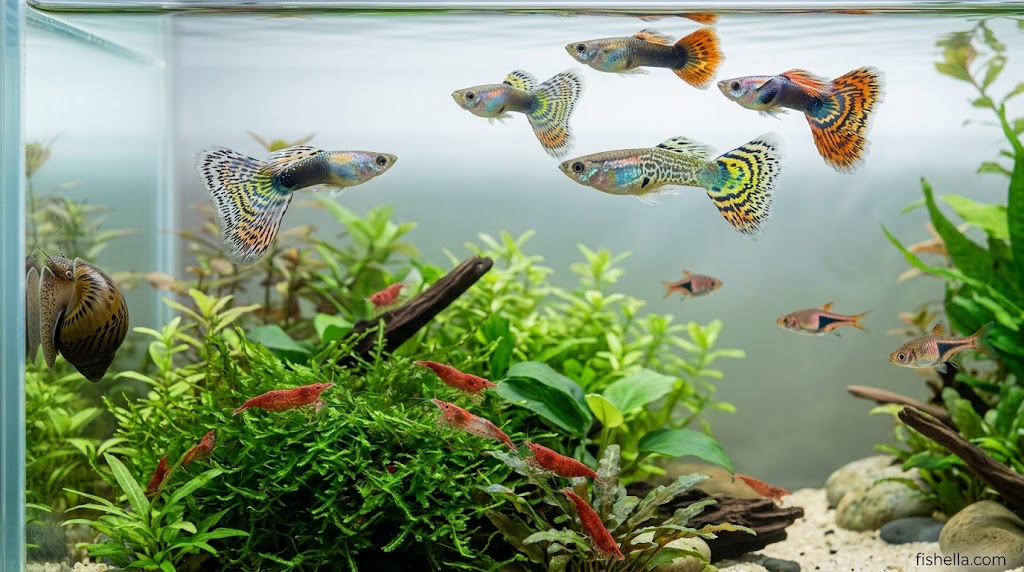
Guppies may eat tiny shrimp, especially when the tank has limited cover. Dense moss, fine-leaved plants, and other hiding places improve the chances of survival.
If breeding shrimp is your main goal, a separate shrimp aquarium is usually the safer option.
Fish to Avoid Keeping With Guppies
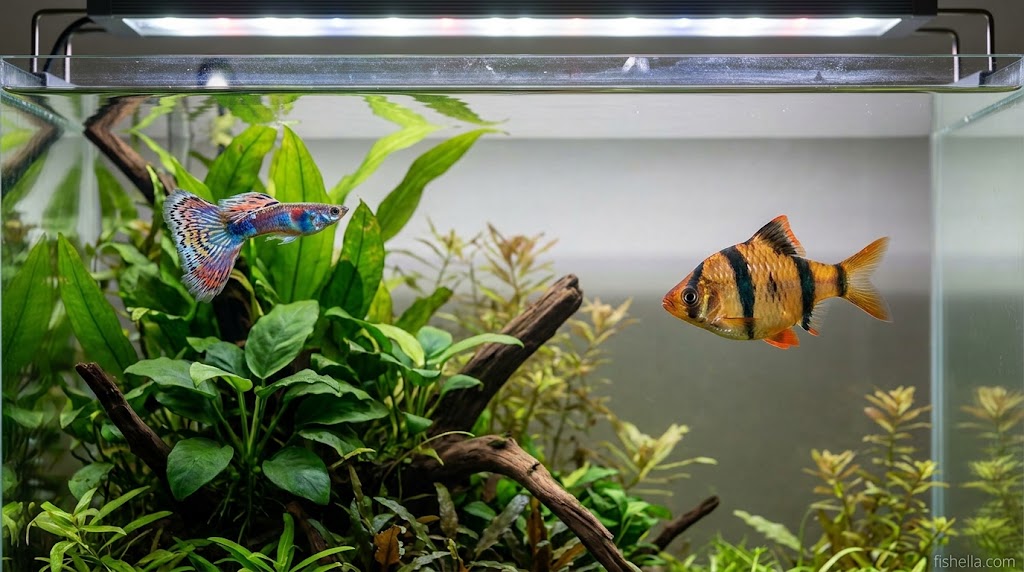
Some fish are too aggressive, too predatory, or too different in their care requirements to make reliable companions.
| Fish to Avoid | Why It Is Risky |
|---|---|
| Tiger barbs | Can nip guppies’ flowing fins. |
| Serpae tetras | May nip fins, particularly in unsuitable groups or crowded tanks. |
| Large or aggressive cichlids | May attack or eat guppies. |
| Bettas | Individual behavior varies, but attacks and fin damage are possible. |
| Goldfish | Prefer different temperature conditions and may eat small guppies. |
| Large predatory catfish | Some species may swallow adult guppies or their fry. |
| Aggressive or territorial gouramis | May chase or injure guppies, depending on the species and individual fish. |
Can Guppies Live With Betta Fish?
Keeping guppies with bettas is risky. Some bettas attack guppies, while others may tolerate them temporarily.
Male guppies’ colorful, flowing tails can trigger aggression in some bettas. Guppies may also stress a betta or become targets of repeated chasing.
For beginners, keeping guppies and bettas in separate aquariums is the safer choice. Proper tank conditions and compatible tank mates can help reduce stress. Learn more about factors that affect your fish’s lifespan in our guide to how long guppies live
Can Guppies Live With Goldfish?
No, goldfish are generally unsuitable tank mates for guppies. Goldfish usually need cooler water, grow larger, and may eat smaller fish.
Even if both species appear peaceful initially, their different care requirements make this an unreliable pairing.
Can Guppies Live With Platies, Mollies, and Swordtails?
Yes, these livebearers can often share a community aquarium with guppies. They have broadly similar care requirements, but tank size and breeding must be considered.
Mixed-sex groups can produce many fry, so the population may grow faster than expected. Keeping females and males together also requires enough females to reduce persistent attention from males. Before keeping mixed-sex guppies, learn how to identify males and females in our male vs. female guppy guide
A ratio of about two to three females per male is a common starting point for mixed-sex livebearer groups. It does not eliminate harassment or guarantee that every female will remain stress-free.
If you do not want to raise fry, consider an appropriately planned single-sex group instead. Remember that previously mated females may still give birth after separation.
What Size Tank Do Guppies Need With Tank Mates?
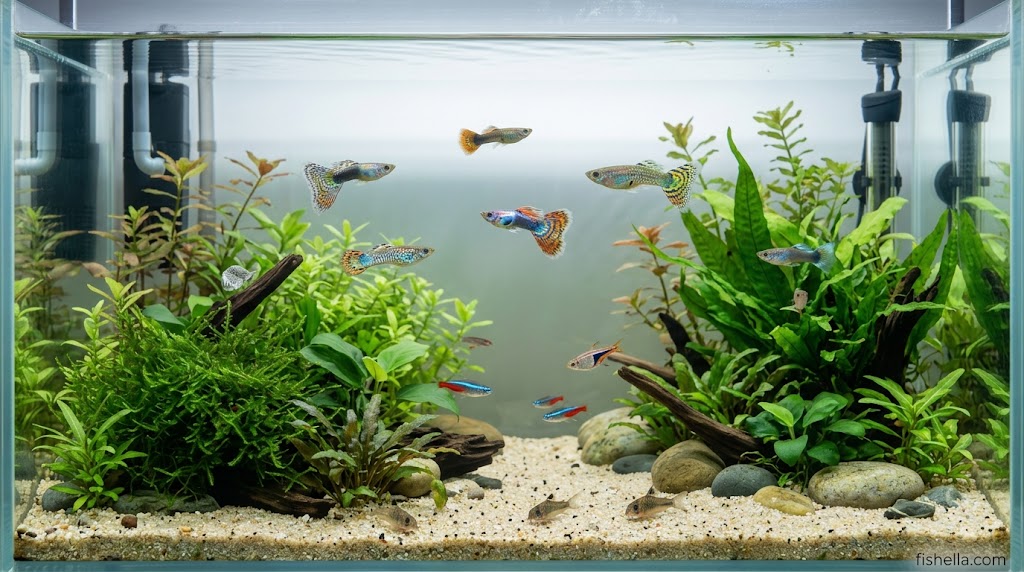
A larger aquarium provides more swimming space and helps keep water conditions stable.
- 10 gallons: Best reserved for a carefully planned, lightly stocked setup. Options are limited.
- 20 gallons: A more practical starting point for a small community with compatible fish.
- 29 gallons or larger: Offers more flexibility for active fish and carefully selected groups.
These are planning guidelines, not universal stocking limits. The right size depends on adult fish size, group requirements, filtration, plants, and breeding. Sentence: “Before choosing community fish, review the University of Florida IFAS Extension’s aquarium fish care resources to learn more about responsible aquarium care.”
Do not add another species simply because the aquarium looks empty. Consider the needs of every fish before increasing the stocking level.
Read our best tank size for guppies guide before planning your community aquarium.
How to Introduce New Guppy Tank Mates
Adding new fish carefully reduces stress and helps you identify potential problems early.
- Quarantine new fish. Keep them in a separate, appropriately equipped aquarium before introducing them to your community.
- Check water conditions. Confirm that temperature and water chemistry suit both species.
- Acclimate them carefully. Follow an appropriate acclimation method for the species and the water they arrive in.
- Add fish gradually. Avoid adding several new groups at once because the biological filter (best filter for guppies ) may struggle with the increased waste.
- Provide hiding places. Plants and decorations help fish avoid constant contact and reduce stress.
- Monitor behavior and water quality. Test ammonia and nitrite after new additions, and watch for chasing, damaged fins, or difficulty feeding.
Sentence: “For more information about fish health and disease prevention, consult the Merck Veterinary Manual
How to Keep a Guppy Community Peaceful
Good stocking decisions matter more than the number of species in your aquarium.
- Maintain stable water conditions and perform regular water changes.
- Use a suitable filter and avoid overcrowding.
- Provide plants and open swimming areas.
- Feed each species an appropriate diet.
- Watch for fin damage, persistent chasing, hiding, or reduced appetite.
- Have a backup plan if one fish becomes aggressive.
For mixed-sex guppies, a ratio of two to three females per male can help reduce harassment. An all-male group is another option, although chasing and displaying may still occur.
If aggression continues, separate the fish rather than waiting for injuries to develop.
Frequently Asked Questions
What is the safest tank mate for guppies?
Nerite snails are a low-conflict option for many guppy aquariums. Corydoras can also work well when their group, substrate, and aquarium requirements are met.
Can guppies live with shrimp?
Yes, adult cherry shrimp can sometimes coexist with guppies. However, guppies may eat baby shrimp, so provide dense plant cover or use a separate shrimp tank.
Can guppies live with snails?
Yes. Nerite snails are generally peaceful companions. Make sure they have suitable water conditions and enough algae or supplemental food.
Can guppies live with neon tetras?
Sometimes. Both species need peaceful surroundings, but neon tetras often prefer softer water than guppies. Check their water requirements before combining them.
Can guppies live with bettas?
This is a risky pairing because some bettas attack guppies or damage their fins. Separate aquariums are safer for beginners.
How many tank mates can I add to a guppy tank?
There is no single number that works for every aquarium. Tank dimensions, adult fish size, group needs, filtration, and breeding all affect stocking capacity.
Start with a realistic stocking plan and increase the population only when the aquarium can support it.
Final Thoughts
The best guppy tank mates are peaceful species that share suitable water conditions and have enough space to thrive. Corydoras, platies, nerite snails, and carefully selected schooling fish can be good options for the right aquarium.
Avoid fin nippers, large predators, and fish with incompatible temperature requirements. Most importantly, plan for breeding and monitor the community after every addition.
A well-planned aquarium helps guppies and their companions stay healthy without unnecessary stress.
| Guppies come in many colors and tail patterns. Explore our guide to the different types of guppies before choosing fish for your aquarium. |