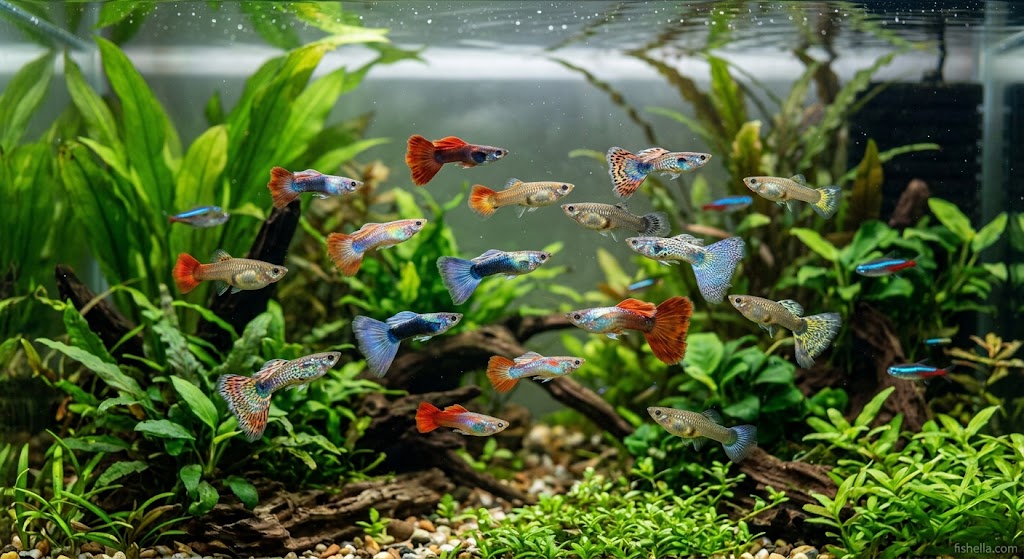
There are many types of guppies available for home aquariums. These colorful freshwater fish come in different body colors, patterns, and tail shapes. Most fancy guppies belong to the species Poecilia reticulata. Breeders select specific traits to create attractive strains. This guide explains popular guppy varieties and helps beginners choose healthy fish. Start with our complete guppy fish care guide to learn the basics of keeping guppies healthy.
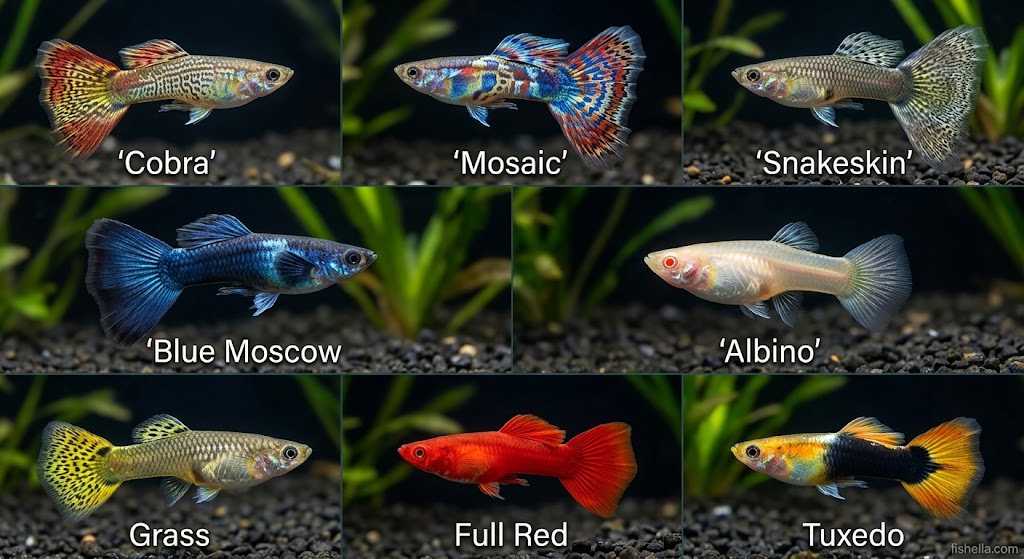
How Guppy Strains Are Classified
Guppy breeders classify fish by their colors, body patterns, and tail shapes. Some strains have one dominant color, while others display several colors and markings.
A strain is a group of guppies bred to preserve certain traits. For example, Blue Moscow guppies often have deep blue coloring. Cobra guppies display dark, net-like body markings.
However, strain names can vary between breeders. A fish may also show traits from several strains because different varieties can breed together.
When identifying guppies, examine these three features:
- Color: Blue, red, yellow, green, orange, or mixed colors.
- Pattern: Spots, stripes, metallic scales, or net-like markings.
- Tail shape: Fan-shaped, rounded, pointed, or elongated fins.
If you’re raising newborn guppies, read our complete guide to baby guppy care to learn about fry feeding, safe tank setup, water changes, and healthy growth.
9 Popular Types of Guppies
These varieties are popular among aquarium hobbyists because of their different colors and patterns. Their appearance can vary depending on the breeder and individual fish.
1. Cobra Guppies
Cobra guppies have dark spots and connected markings across their bodies. Their patterns often resemble a snake’s markings. Many have colorful tails in shades of red, yellow, orange, or blue.
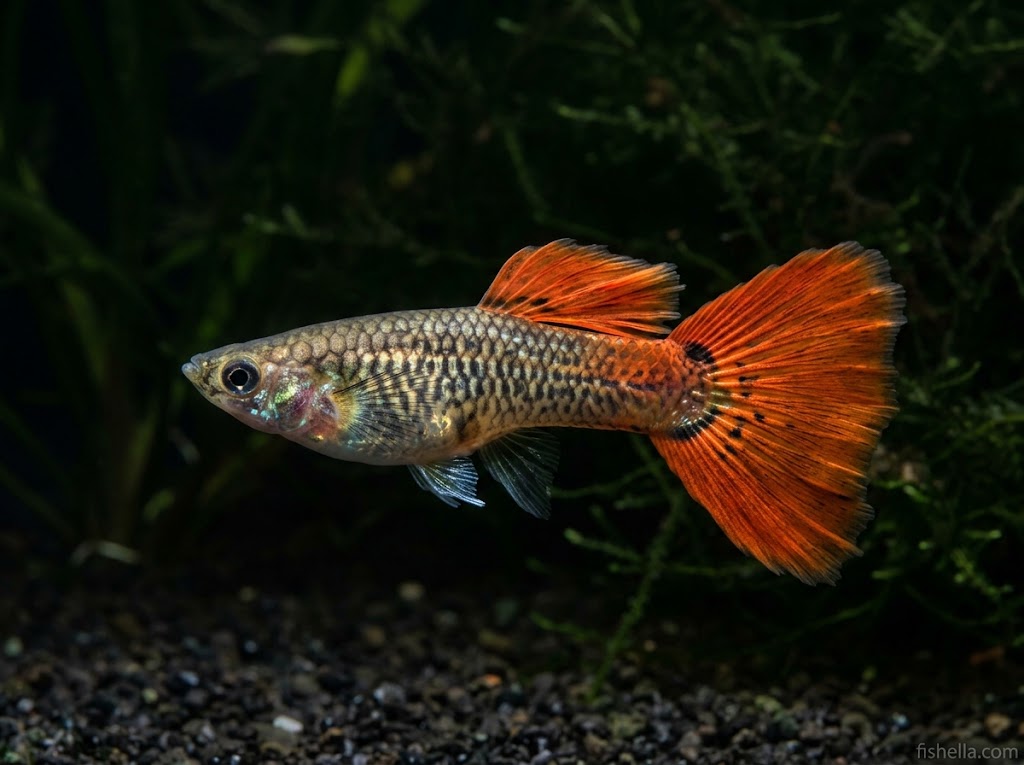
Cobra guppies are attractive choices for community aquariums. However, their hardiness depends on their breeding history and living conditions. Choose active fish from a clean tank instead of relying on appearance alone.
2. Mosaic Guppies
Mosaic guppies have intricate patterns across their tails. Their markings may include spots, irregular shapes, and several bright colors.
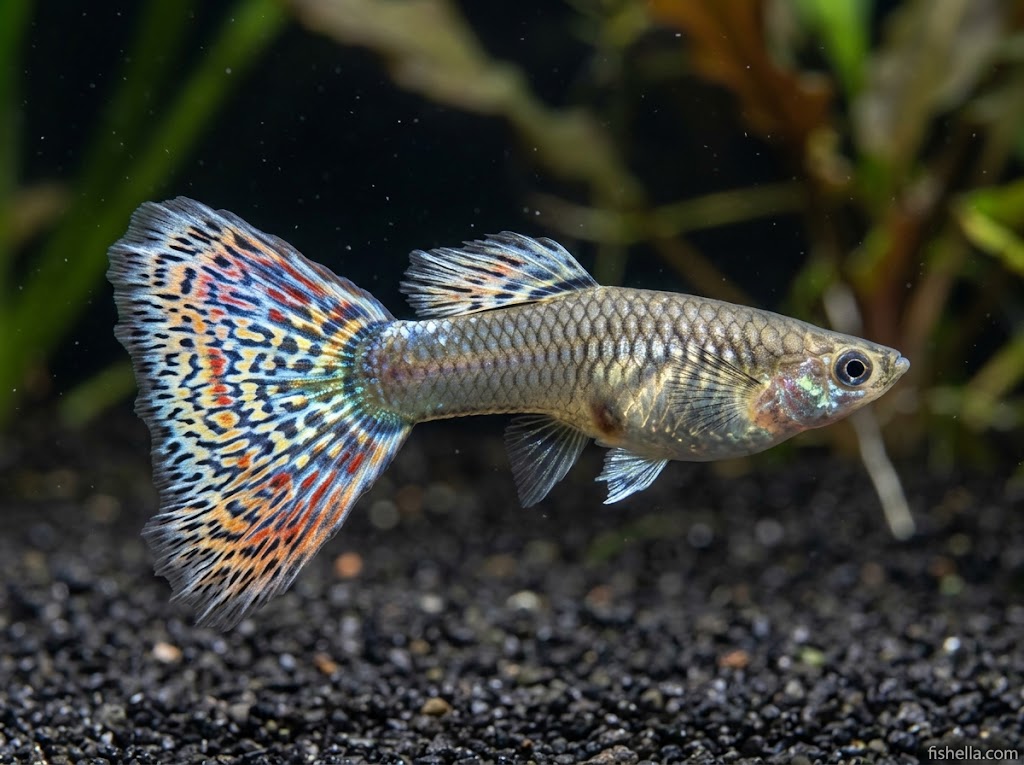
Common colors include red, blue, yellow, and orange. Their broad, patterned tails make them popular display fish.
Look for a mosaic guppy with clear eyes, an active swimming style, and undamaged fins.
3. Snakeskin Guppies
Snakeskin guppies have repeating patterns that resemble a snake’s skin. Their bodies may display dark lines, loops, or connected markings.
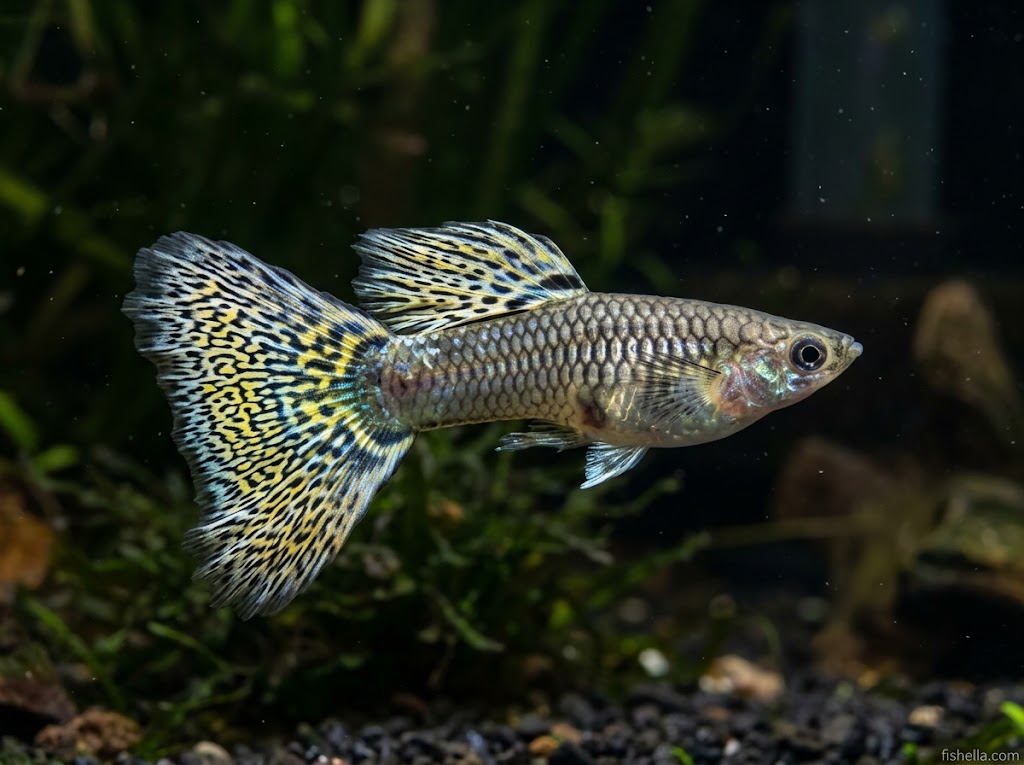
These patterns often extend onto the tail. Snakeskin guppies come in many color combinations, including yellow, green, red, and blue.
They are a good option for hobbyists who enjoy detailed patterns rather than solid colors.
4. Moscow Guppies
Moscow guppies are known for their rich colors and metallic appearance. Popular varieties include Blue Moscow, Green Moscow, and Purple Moscow.
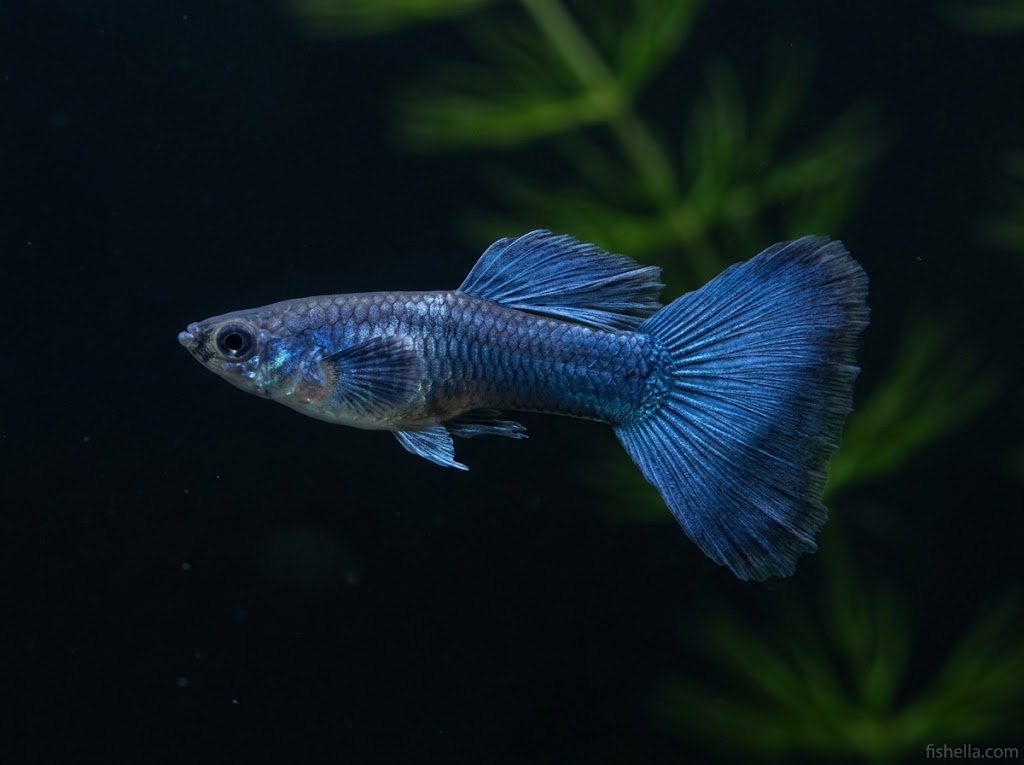
Many have dark, colorful bodies with matching tails. Their appearance can make them stand out in a planted aquarium.
Provide clean water, a suitable diet, and stable temperatures. These conditions help support healthy growth and vibrant coloration. Learn how to recognize common signs of illness, identify unusual behavior, and understand when your fish may need help with our Guppy Symptoms Guide.
5. Albino Guppies
Albino guppies have reduced dark pigmentation. Many have pale bodies and red or pink eyes, although their exact coloring varies.
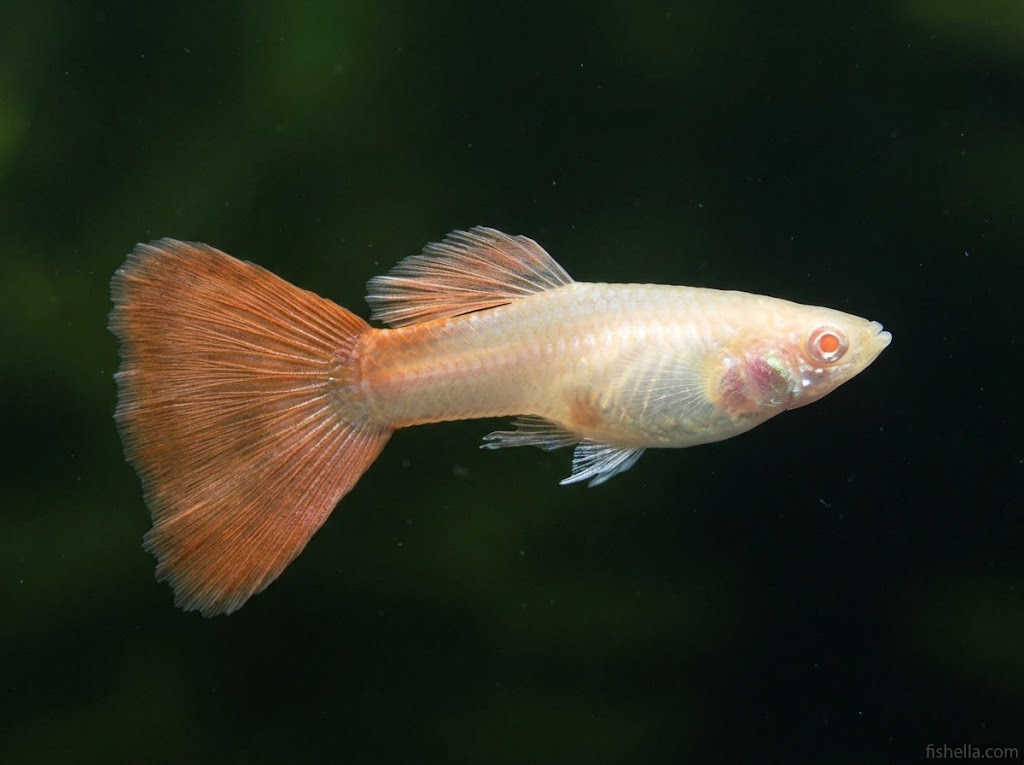
Their lighter appearance makes them different from many other fancy guppies. Some albino lines may have reduced vision or greater sensitivity to bright light.
Use moderate aquarium lighting and provide shaded areas with plants. Avoid choosing fish based only on their unusual appearance.
6. Grass Guppies
Grass guppies usually have tiny spots across their tails. These markings resemble scattered blades of grass or small speckles.
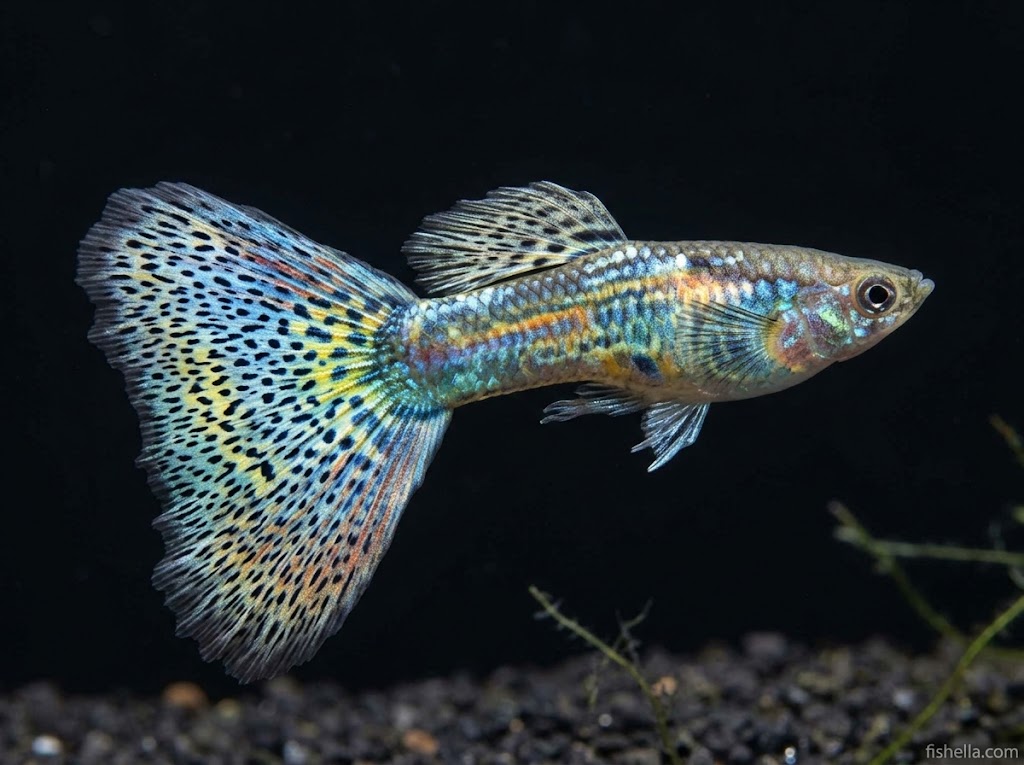
Breeders produce grass patterns in several colors, including red, blue, yellow, and green. The small markings create a detailed look without large patches of color.
Check the fish’s body and fins carefully when buying. A healthy grass guppy should swim normally and respond to food. Learn how to choose the best food for guppies, including flakes, micro pellets, frozen foods, and live foods to support healthy growth and natural color.
7. Full Red Guppies
Full Red guppies display strong red coloring across much of their bodies and fins. Some have darker areas, while others show a more uniform red appearance.
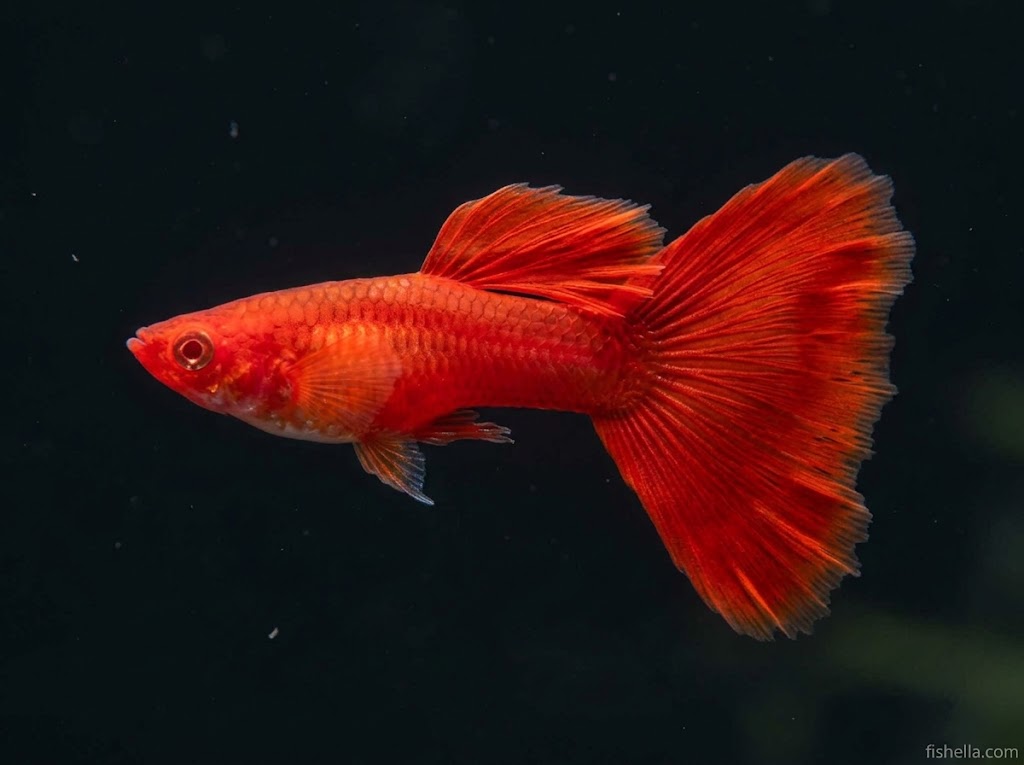
Breeders select these fish for their intense coloration. Their exact shade can range from bright orange-red to deep red.
Keep them in stable water conditions and offer a balanced diet. Poor health, stress, and unsuitable water can affect their appearance.
8. Tuxedo Guppies
Tuxedo guppies typically have a darker rear body and a lighter or brighter front section. The contrast creates a pattern similar to a formal tuxedo.
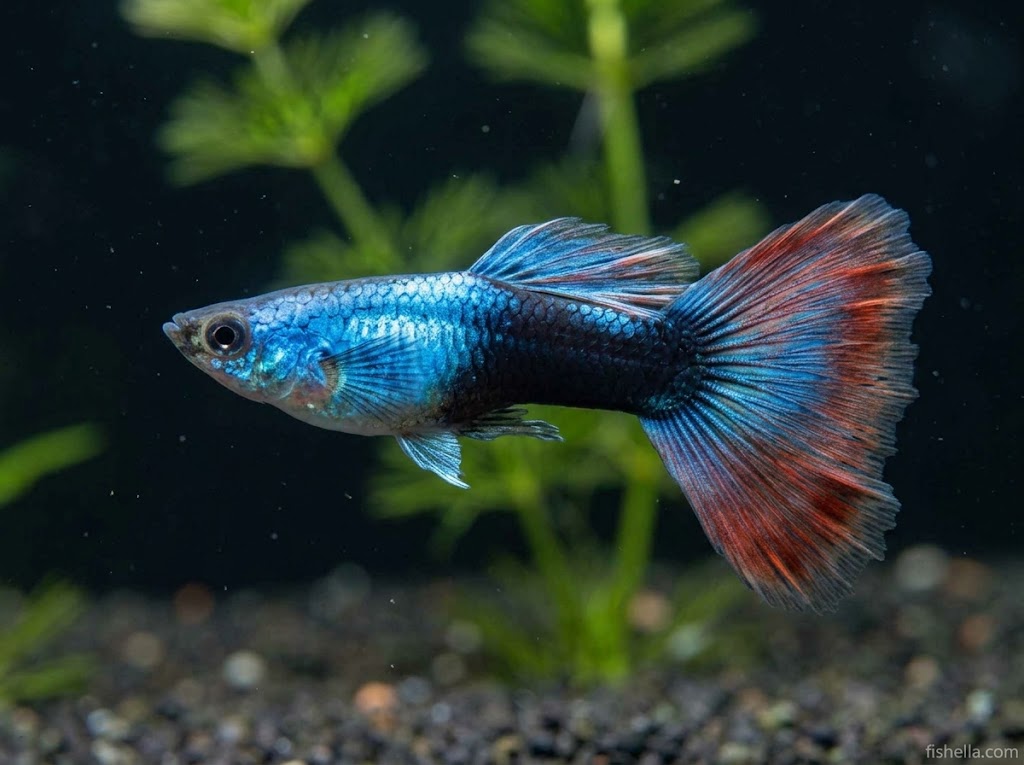
They come in different color combinations, including blue, red, yellow, and black. Their body patterns can vary between breeding lines.
Tuxedo guppies can suit beginners when they come from a healthy, well-maintained stock.
9. Endler-Type Guppies
Endler’s livebearers are small, colorful fish closely related to common guppies. Their scientific name is Poecilia wingei, while common guppies are Poecilia reticulata.
Endlers often display bright green, orange, black, and blue markings. Their smaller size makes them appealing for carefully planned aquariums.
However, Endlers and guppies can interbreed. If you want to preserve a pure Endler line, keep them separate from common guppies. Learn more about Endler’s livebearer.
Common Guppy Tail Types
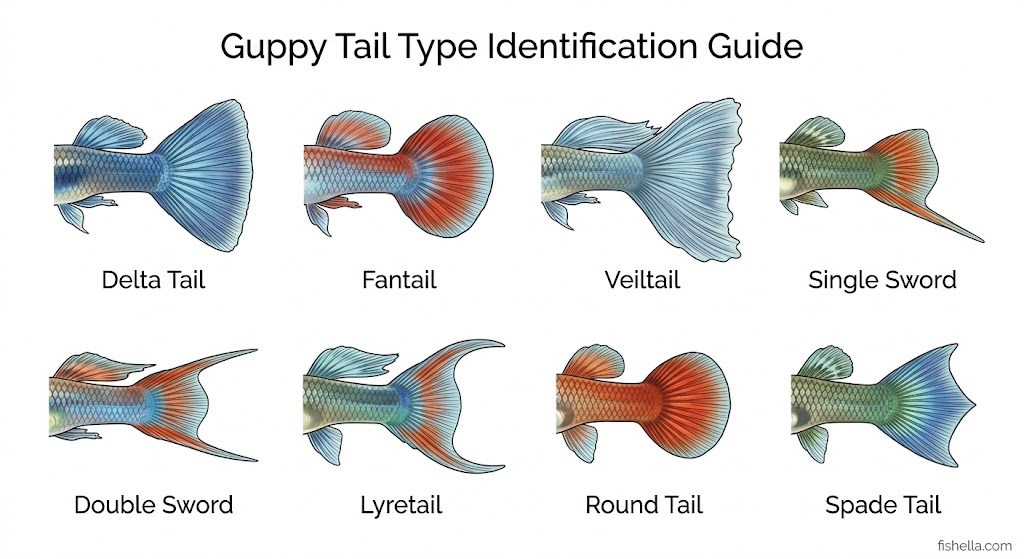
Guppy tails come in many shapes. Breeders select these shapes to create different appearances.
Delta Tail
Delta-tail guppies have broad, triangular tails. Their large fins often display bright colors and detailed patterns.
Fantail
Fantail guppies have wide, fan-shaped tails with a rounded outer edge. Their appearance is similar to delta tails, but the exact shape varies.
Veiltail
Veiltail guppies have long, flowing tails. Their fins create an elegant appearance, but long fin edges may be more vulnerable to damage.
Swordtail
Swordtail guppies have one or two narrow extensions along the tail. A single-sword tail has one extension, while a double-sword tail has two.
Lyretail
Lyretail guppies have extended upper and lower tail rays. These extensions give the tail a forked appearance.
Round Tail
Round-tail guppies have small, rounded tails. Their compact fins create a different look from large-finned fancy varieties.
Spade Tail
Spade-tail guppies have tails shaped somewhat like a spade. The tail usually narrows near the body and widens toward the outer edge.
Other Tail Shapes
Some guppies have flag, pin, or spear-shaped tails. Breeders may use slightly different names for similar shapes.
Large fins do not automatically make a guppy less healthy. However, long tails can limit movement in some fish and may suffer damage from aggressive tank mates.
Which Guppy Type Is Best for Beginners?
Common guppies and healthy, moderately finned varieties are practical choices for beginners. They are often easier to manage than delicate show strains, although individual health and breeding quality matter more than the strain name.
Consider these options:
- Common guppies: A practical starting point for new fishkeepers.
- Cobra guppies: A colorful choice with distinctive body markings.
- Mosaic guppies: Ideal if you prefer patterned tails.
- Tuxedo guppies: A good option if you like contrasting body colors.
- Endler’s livebearers: Worth considering for their small size, provided you plan their stocking and breeding carefully.
Before choosing a variety, make sure your aquarium is fully cycled and has stable water conditions. Guppies need suitable space, filtration, and regular maintenance regardless of their appearance.
Our guppy fish care guide explains how to set up a suitable aquarium.
How to Choose Healthy Guppies
Choosing healthy fish is more important than finding a rare color or expensive strain.
Follow these steps when buying guppies.
- Inspect the aquarium. Look for clean water and normally swimming fish. Avoid tanks with dead or visibly sick fish.
- Check the eyes and body. Healthy fish should have clear eyes and no obvious sores or unusual swelling.
- Examine the fins. Avoid fish with severely torn, clamped, or deteriorating fins.
- Observe their activity. Choose fish that swim normally and respond to their surroundings.
- Ask about feeding. Find out what food the breeder uses and whether the fish eat reliably.
- Quarantine new fish. Keep newcomers in a separate, appropriately equipped aquarium before introducing them to established fish.
Do Different Guppy Types Need Different Care?
Most fancy guppies need similar basic care. Their colors and patterns do not usually change their fundamental aquarium requirements.
Provide a fully cycled tank, stable water parameters, suitable filtration, and a balanced diet. Avoid sudden changes in temperature or water chemistry.
Some breeding lines may be more delicate than others. Long-finned fish can also need extra protection from fin-nipping tank mates.
For reliable fishkeeping guidance, consult the University of Florida IFAS Extension and its aquarium-related resources. You can also review the Merck Veterinary Manual for veterinary information about fish health and disease.
Frequently Asked Questions
How many types of guppies are there?
There is no single official count. Breeders produce many strains with different colors, body patterns, and tail shapes. New combinations can appear through selective breeding.
What is the most colorful guppy?
Blue Moscow, Full Red, Mosaic, and Cobra guppies are popular for their bright colors and patterns. The most colorful variety depends on your personal preference and the individual fish.
Are fancy guppies harder to keep than common guppies?
Some fancy strains may be more delicate because of their breeding history or elaborate fins. However, many fancy guppies thrive when they receive suitable care and stable water conditions.
Can different guppy strains breed together?
Yes. Different strains of common guppies can interbreed. Their offspring may display mixed colors, patterns, and tail shapes.
Can guppies breed with Endlers?
Yes. Common guppies and Endler’s livebearers can interbreed. Keep them separate if you want to maintain a pure Endler line.
Which guppy tail type is best?
There is no single best tail type. Delta and fantail guppies offer broad, colorful fins, while round-tail varieties have a compact appearance. Choose fish with healthy fins and normal swimming behavior.
Conclusion
The many types of guppies offer a wide range of colors, patterns, and tail shapes. Cobra, Mosaic, Moscow, Albino, and Full Red guppies each bring a different look to an aquarium.
Beginners should focus on healthy fish rather than rare strains or dramatic fins. Choose an appropriate aquarium, maintain stable water conditions, and quarantine new arrivals.