Fishella is reader-supported. If you buy through links on this Amazon page, we may earn a commission at no extra cost to you.
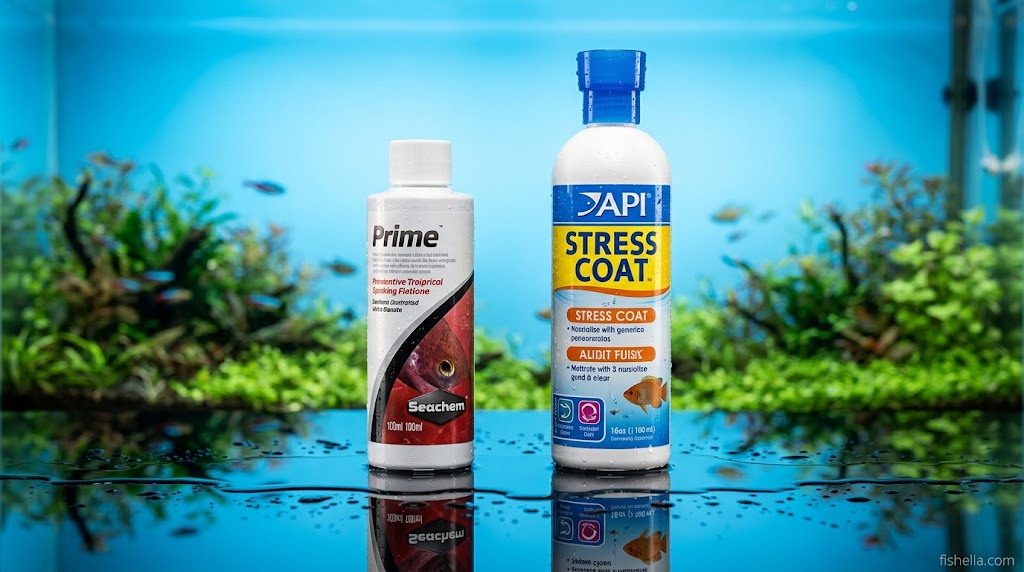
Seachem Prime vs API Stress Coat is one of the most common questions new fish keepers ask, and the answer is simpler than the forums make it sound. Both remove chlorine and chloramine from tap water. The difference is what each one does beyond that. Prime is a concentrated conditioner that also detoxifies ammonia and nitrite. Stress Coat is a more traditional conditioner with aloe vera added for the slime coat. Below, I’ll show you which one fits your tank.
Quick Verdict
- Buy Seachem Prime if you want the best value, run a new or cycling tank, or want a safety net against ammonia spikes.
- Buy API Stress Coat if you’re treating torn fins, shipping stress, or fish with visible damage and want the aloe vera.
- Short on time? Prime is the better everyday choice for most hobbyists.
Check Seachem Prime price on Amazon
Check API Stress Coat price on Amazon
Seachem Prime vs API Stress Coat: Quick Comparison Table
| Feature | Seachem Prime | API Stress Coat |
|---|---|---|
| Removes chlorine and chloramine | Yes | Yes |
| Binds heavy metals | Yes | Yes |
| Detoxifies ammonia and nitrite | Yes, temporarily (24 to 48 hours) | No meaningful effect |
| Aloe vera slime coat support | No | Yes |
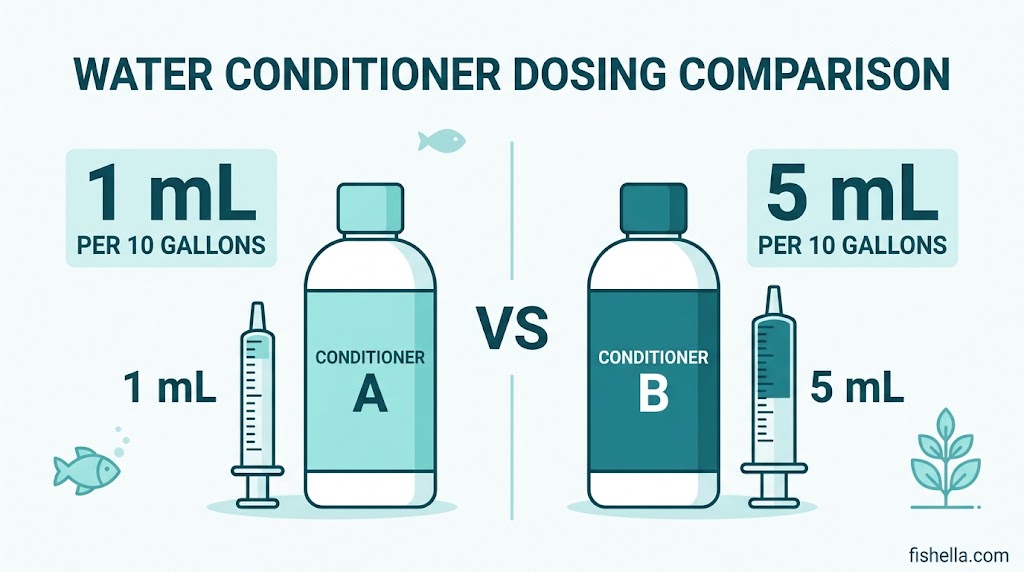
| Dose | 1 mL per 10 gallons | 5 mL per 10 gallons |
| Concentration | Very high | Standard |
| Best for | Cycling, daily water changes, emergencies | Injured or stressed fish |
What Is Seachem Prime?
Prime is a highly concentrated conditioner. It neutralizes chlorine and chloramine, locks up heavy metals, and temporarily converts toxic ammonia into a safer form your filter bacteria can still consume. According to Seachem’s own product page, that protection lasts about a day or two, so it buys you time and does not fix a cycle problem.
The dose is tiny. One milliliter treats 10 gallons, so one 100 mL bottle covers up to 1,000 gallons. That’s why it lasts so long.
Watch out for: a strong sulfur smell (normal) and overdosing in tanks with very low oxygen, since heavy doses can slightly reduce dissolved oxygen.
Explore our best Betta water conditioner buying guide to compare Betta-safe water treatments and choose the right option for your aquarium.
What Is API Stress Coat?
API Stress Coat is a dechlorinator with aloe vera added. The aloe is meant to soothe fish and support their protective slime layer, which helps after transport, handling, or minor injury. It handles chlorine, chloramine, and metals just fine.
What it does not do is detoxify an active ammonia or nitrite spike. If your test kit shows readings, Stress Coat won’t protect your fish the way Prime does.
If you test your water regularly, our guide on the API Master Test Kit vs test strips will help you pick the right one.
Seachem Prime vs API Stress Coat: Head-to-Head
Ammonia and nitrite protection. Prime wins clearly. If you’re doing a fish-in cycle or catch a sudden spike, Prime gives you a temporary safety window. Stress Coat offers nothing comparable.
Slime coat support. Stress Coat wins on paper. The aloe vera is useful for damaged or newly shipped fish. For healthy, established fish, many experienced keepers consider it unnecessary, and some report it can cloud water or leave residue with frequent use.
Dosing and ease. Prime needs a very small amount, and it’s easy to overdose by accident if you eyeball it. Use a syringe or a dosing cap. Stress Coat needs five times as much liquid per gallon, which is more forgiving but burns through the bottle faster.
Safety for sensitive tanks. Both are widely used with fish, shrimp, and plants when dosed correctly. For planted setups, see our picks for the best aquarium light for a planted tank.
Seachem Prime vs API Stress Coat: Cost Per Water Change
This is where the gap shows up. Because Prime is dosed at 1 mL per 10 gallons and Stress Coat at 5 mL per 10 gallons, a single bottle of Prime treats far more water. Prices change often, so check the current listings, but per gallon treated Prime is usually the cheaper option by a wide margin.
For more options at different budgets, see our roundup of the best aquarium water conditioners.
Which Should You Choose for Your Tank?
Betta fish (5-gallon tank). Prime is the easier pick for weekly water changes, and you only need a few drops. Keep Stress Coat on hand if your betta tears a fin. Build the rest of the setup with our guides to the best heater and best filter for a 5-gallon betta tank. Flaring after a water change is normal, but see how often is too much.
New or cycling tank. Prime. The ammonia and nitrite detox is the whole reason to choose it.
Injured or newly shipped fish. Stress Coat is a reasonable choice for the aloe support.
Large tanks (55 gallons and up). Prime. The cost difference gets significant at volume.
Planted tank. Either works. Healthy plants also absorb ammonia, so see the best live plants for betta tanks.
Can You Use Prime and Stress Coat Together?
Yes. They don’t conflict. Some keepers use Prime for routine water changes and add Stress Coat only when fish are injured or stressed. You don’t need both for everyday care, though, and doubling up on dechlorinators is unnecessary.
Common Mistakes to Avoid
- Overdosing Prime. More isn’t better. Measure it.
- Treating Prime as a cycle fix. It’s temporary protection. Keep testing and doing water changes.
- Skipping the conditioner on small top-offs. Even small amounts of untreated tap water can harm fish if your supply uses chloramine.
- Using Stress Coat to solve ammonia. It won’t.
Good nutrition also reduces stress. If you keep bettas, see the best betta pellets for color enhancement.
FAQ
Does API Stress Coat remove ammonia?
No. It removes chlorine and chloramine, but it does not meaningfully detoxify ammonia or nitrite.
How much Seachem Prime do I use per gallon?
Roughly 1 mL per 10 gallons (about 5 mL per 50 gallons). For a 5-gallon tank, that’s a few drops.
Is Stress Coat safe for bettas?
Yes, when dosed according to the label.
Which is better for chloramine?
Both neutralize it. Prime is cheaper per treated gallon.
Is the aloe vera in Stress Coat necessary?
Not for healthy, established fish. It’s most useful for injured or stressed ones.
Final Verdict: Seachem Prime vs API Stress Coat
For most aquariums, Prime is the smarter everyday buy: it’s concentrated, cost-effective, and protects against ammonia and nitrite spikes. Stress Coat earns its place when you’re nursing damaged fish and want the aloe vera. In the Seachem Prime vs API Stress Coat debate, the best answer for beginners is Prime, with Stress Coat as an optional extra.