

Disclosure: This post contains affiliate links. If you buy through them, Fishella may earn a small commission at no extra cost to you.
The best live plants for betta tanks are low-maintenance, soft-leaved species that don’t need CO₂ injection and give your fish natural resting leaves, hiding spots, and surface shade. Anubias, Java Fern, Java Moss, Amazon Frogbit, Cryptocoryne, Amazon Sword, and Hornwort or Water Sprite all fit that description. They’re gentle on delicate fins and forgiving for beginners. Every plant below is easy to find in the USA, and I’ve linked each one so you can order it in a few clicks.
Bettas also do best in a tank that’s about 40% to 60% planted. That level of coverage helps them feel secure, stay active, and show brighter color. Avoid plastic plants and stiff, sharp decorations, because they can tear a betta’s long fins. Soft live plants are the safer choice. Most of the plants here also thrive in low-to-moderate lighting.
Why Live Plants Matter for Bettas
In the wild, bettas live in shallow, heavily vegetated waters across Southeast Asia, such as rice paddies and slow streams. A planted tank copies that setting, and the benefits go beyond looks:
- Resting spots: Bettas breathe air from the surface and like to rest on broad leaves near the top.
- Lower stress: Cover and shade help a shy or new fish settle in.
- Better water quality: Fast-growing plants take up ammonia and nitrates.
- Bubble-nest support: Floating plants give males an anchor for nests.
If you’re still setting up the tank, see our betta tank setup guide for sizing, filtration, and heater basics.
The 7 Best Live Plants for Betta Tanks
1. Anubias (Nana and Coin Leaf)
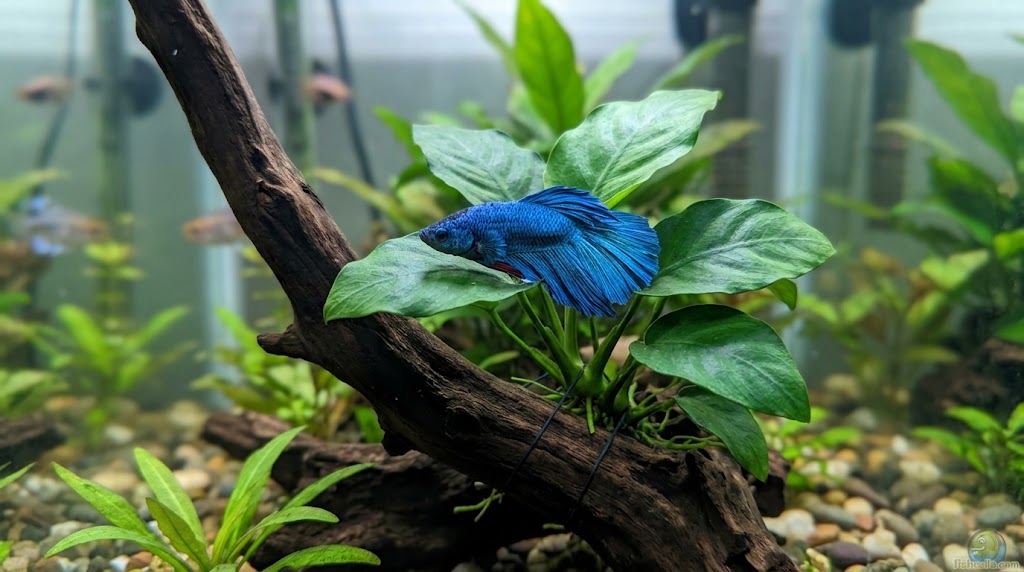
Anubias has broad, sturdy leaves that sit mid-tank to near the top, so it works as a natural hammock for resting. Planting tip: Don’t bury the thick rhizome in the substrate. Attach it to driftwood or a rock with thread or gel glue.
2. Java Fern
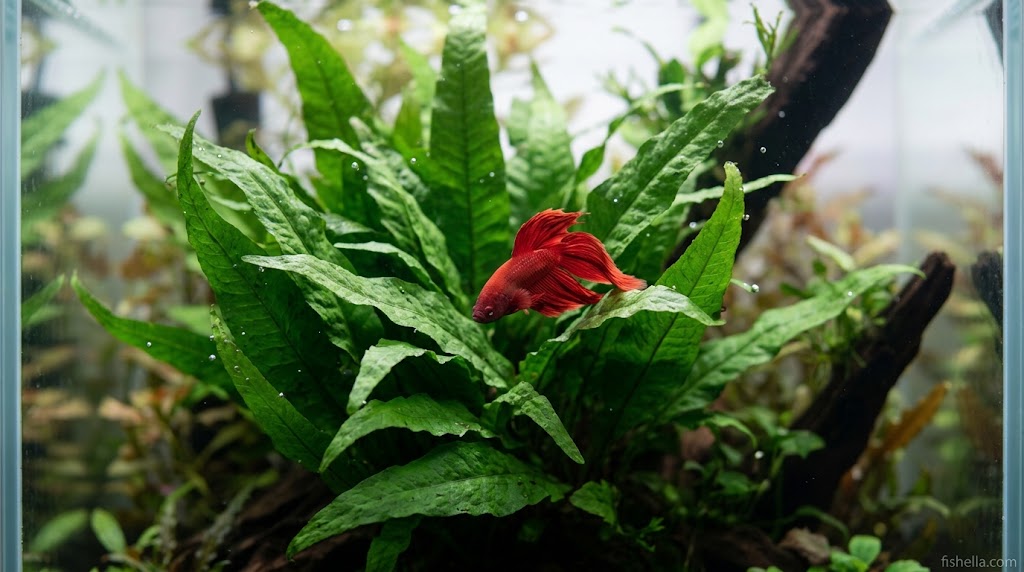
Java Fern grows long, textured green leaves and builds a dense, jungle-style background that bettas like to weave through. Like Anubias, it needs its rhizome attached to hardscape rather than buried.
3. Java Moss
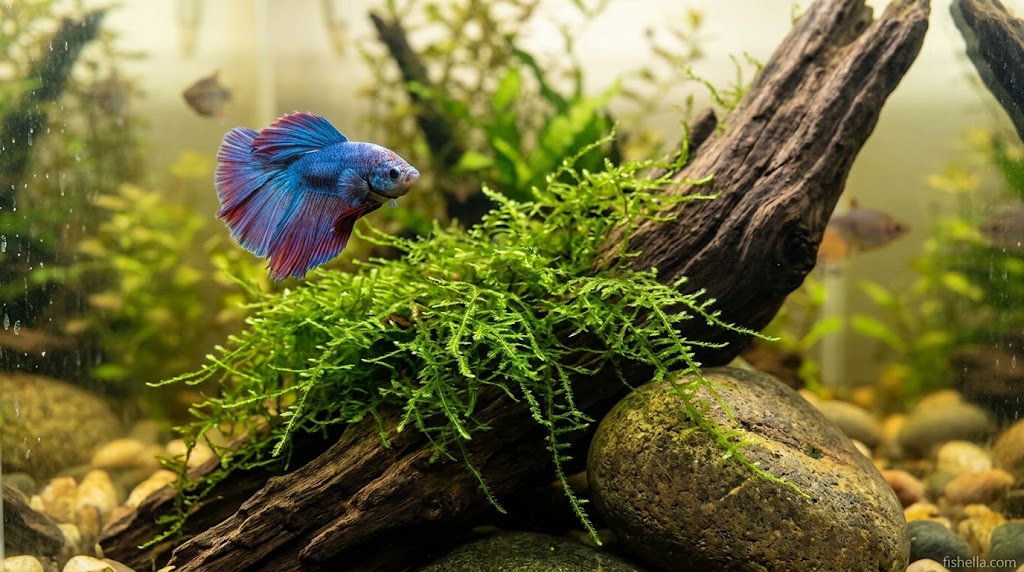
This soft, fin-safe moss can carpet the bottom or drape over wood. It makes cozy resting mats and natural cover. Use it on driftwood, rocks, or a mesh pad. Trim it occasionally so it doesn’t clog the filter.
4. Amazon Frogbit

This floating plant has round surface pads where bettas can rest right where they come up to breathe. Its long, dangling roots offer safety and anchor bubble nests. Keep a gap in the coverage so your betta can still reach the surface for air.
5. Cryptocoryne (Crypts)

Crypts are compact to flowing plants for the foreground and midground. They echo a betta’s native Southeast Asian habitat and give dense cover at the lower levels. Crypts can “melt” (lose leaves) after a move or a big change in water conditions. Be patient, because they usually regrow.
6. Amazon Sword

This is the classic centerpiece for tanks of 10 gallons or more. Its massive leaves give bettas plenty of room to hide and rest. It’s a heavy root feeder, so plant it in nutrient-rich substrate or add root tabs.
7. Hornwort and Water Sprite
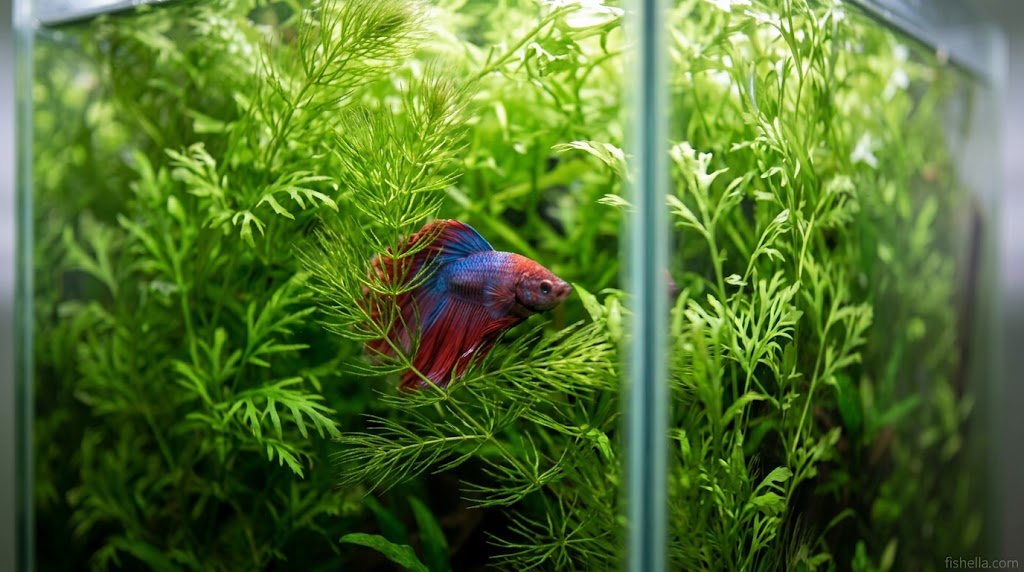
Both are fast-growing, soft, and feathery. They absorb excess ammonia and nitrates while giving bettas lots of shelter. Hornwort can float or be lightly anchored. Water Sprite works well planted or floating.
Quick Comparison
| Plant | Placement | Difficulty | Best For |
|---|---|---|---|
| Anubias | Mid/top (attach to hardscape) | Very easy | Resting leaves |
| Java Fern | Background (attach) | Very easy | Dense cover |
| Java Moss | Carpet/draped | Easy | Soft resting mats |
| Amazon Frogbit | Floating | Easy | Surface shade, bubble nests |
| Cryptocoryne | Foreground/midground | Easy–moderate | Low-level cover |
| Amazon Sword | Background/center | Easy | 10+ gallon tanks |
| Hornwort / Water Sprite | Floating or planted | Very easy | Water quality, shelter |
Quick Care Tips for a Planted Betta Tank
- Fin safety: Choose soft live plants over plastic or stiff decor. A simple test is to run a pair of pantyhose over a decoration. If it snags, skip it.
- Lighting: Low-to-moderate light is enough for all seven plants. No CO₂ system is needed.
- Coverage: Aim for roughly 40% to 60% planted space, and leave open swimming room and clear access to the surface.
- Quarantine new plants: Rinse them well and consider a short soak before adding them, to avoid hitchhiking pests like snails.
- Maintenance: Remove dead or melting leaves quickly to keep water quality stable.

For more on feeding, heating, and tank mates, read our betta fish care guide. If you’re choosing equipment, our best betta tanks and filters roundup covers gentle-flow options that suit these plants.
Frequently Asked Questions
Do bettas need live plants?
Not strictly, but live plants give resting spots, cover, and cleaner water, so most keepers find bettas do better with them.
What are the best live plants for a beginner betta tank?
Anubias, Java Fern, and Java Moss are the easiest. They need little light and almost no care.
How many plants should I put in a betta tank?
Aim for 40% to 60% coverage, and keep open water so your betta can swim and reach the surface.
Can I use real plants without CO₂ or special lighting?
Yes. Every plant in this list does well with standard aquarium lighting and no CO₂ injection. For a consistent lighting routine, follow our guide to aquarium light timer settings for plants to choose daily lighting hours and help reduce algae growth.
Are live plants safer than plastic for betta fins?
Generally, yes. Soft live leaves are much less likely to tear long fins than stiff plastic or sharp decor.
Final Thoughts
Adding live plants is one of the simplest ways to make a betta tank healthier and more natural. Start with Anubias, Java Fern, and a floating plant like Amazon Frogbit. They’re affordable, hardy, and fin-safe, and you can add more as your confidence grows.
Further reading (external):
Pingback: Best Betta Hammock and Leaf Perch: 3 Safe Picks for 2026
Pingback: How Much Substrate Per Gallon? Easy Tank Size Guide