

If your betta fish is staying at the top of the tank, don’t panic yet. Bettas have a special organ that lets them breathe air, so quick trips to the surface are normal. But constant hovering, gasping, or heavy breathing can point to poor water quality, cold water, strong current, or illness. This guide helps you tell the difference. You will learn what to check first, what to do step by step, and when to call an aquatic vet.
Is It Normal for a Betta Fish to Stay at the Top?
Yes, short visits to the surface are normal. A healthy betta swims up, takes a gulp of air, and swims back down. It may also rest near the top or hang out by a floating plant.
Relaxed behavior looks calm. The fish swims freely, eats well, and reacts to you. Its fins are open and its color looks normal.
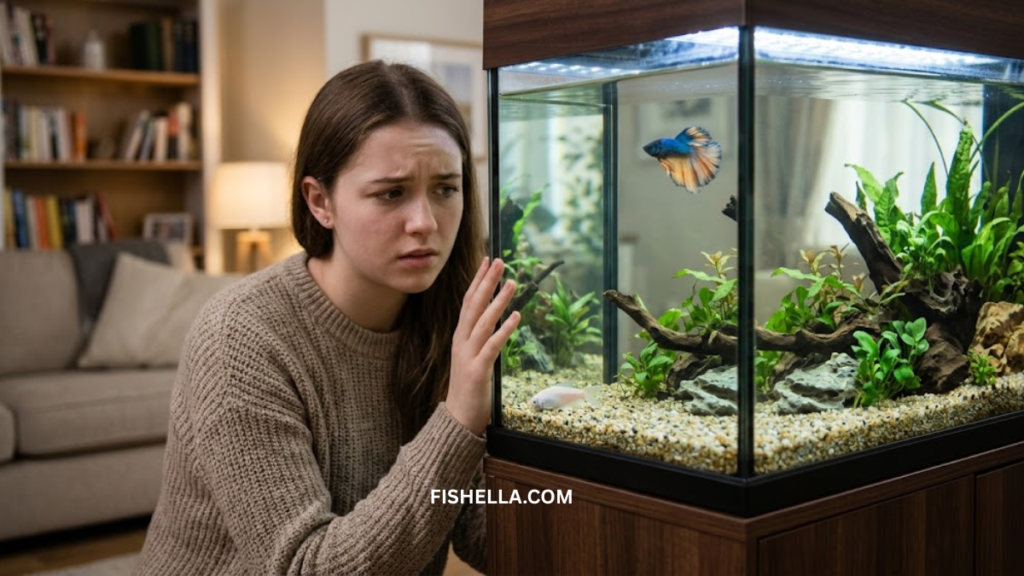
Distress looks different. The fish stays glued to the surface for hours. It may gasp, breathe fast, ignore food, or hang still with clamped fins.
One symptom alone does not tell you what is wrong. Look at the whole picture: breathing, swimming, appetite, and water test results.
7 Reasons Your Betta Fish Is Staying at the Top of the Tank
1. Normal Surface Breathing
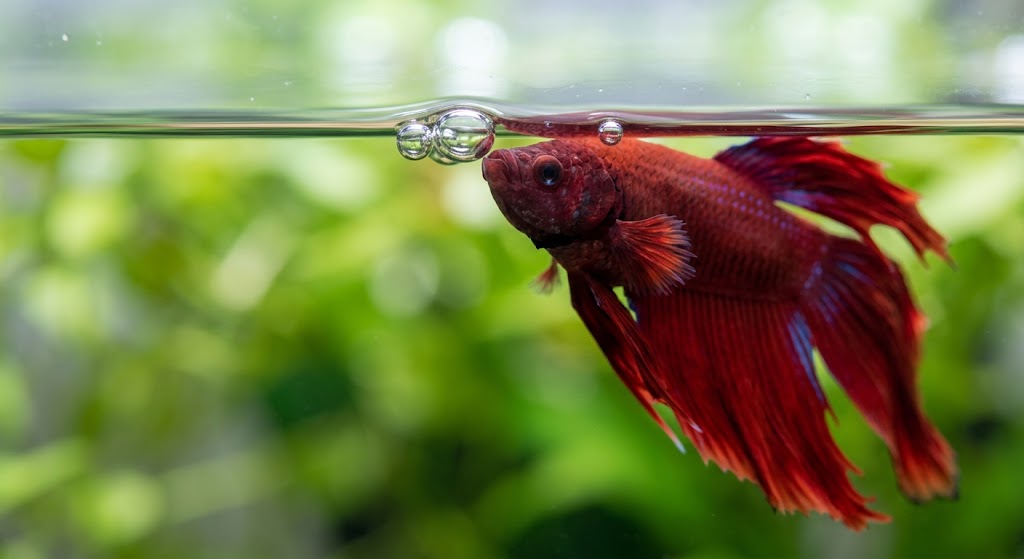
Bettas belong to a group called labyrinth fish. They have a maze-like organ above the gills that lets them breathe air at the surface, according to UF/IFAS Extension. This trait evolved in warm, low-oxygen waters.
So a betta that swims up every few minutes is just breathing. This is not a warning sign. Trouble starts when the visits become constant or look frantic.
Surface hovering together with white spots or rubbing can signal illness. Check our betta fish ich guide for next steps.
2. Poor Water Quality
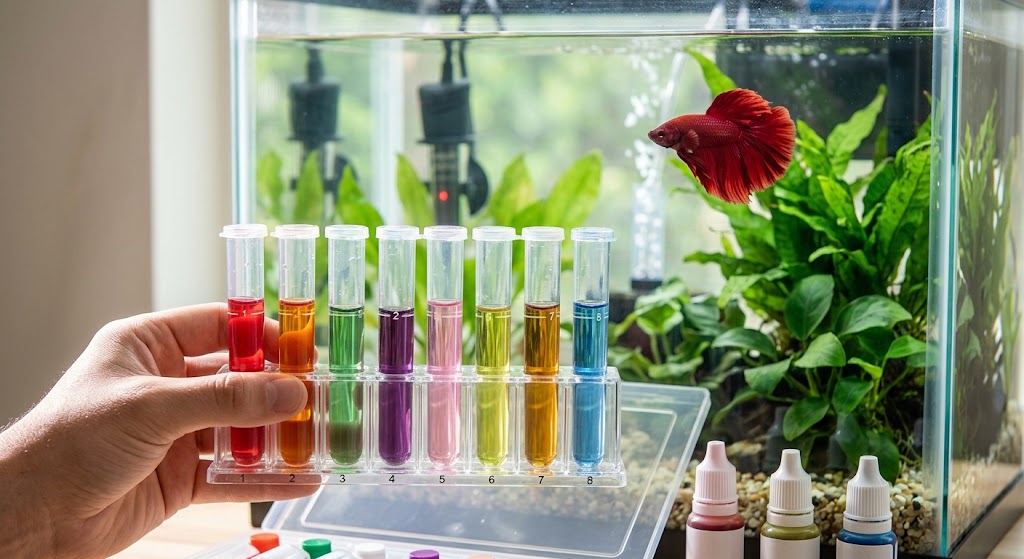
Ammonia and nitrite are the biggest water-quality dangers. Fish waste, uneaten food, and a tank that has not finished cycling can all cause them. Both can damage the gills.
The Merck Veterinary Manual says poor water quality is the most common cause of environmentally induced disease in aquarium fish. It also notes that high ammonia is among the parameters most likely to kill fish directly.
A 2023 lab study on bettas suggests they may breathe more air when ammonia and nitrite are present. That could explain why a betta with bad water spends more time at the surface. Ammonia and nitrite should both read 0 ppm in an established tank.
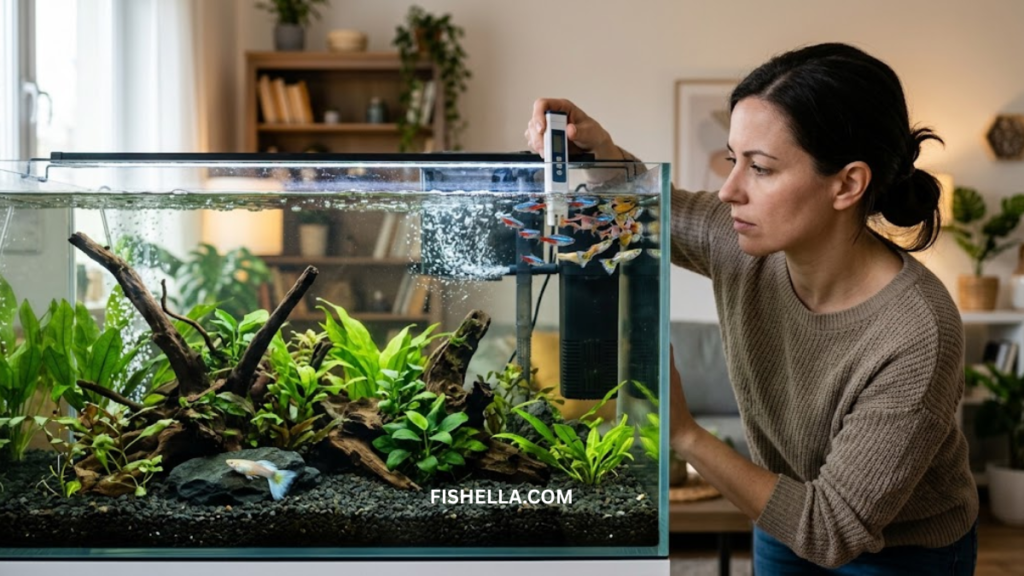
Use a liquid aquarium test kit. Test strips are less exact. Test ammonia, nitrite, nitrate, and pH.
3. Incorrect Water Temperature
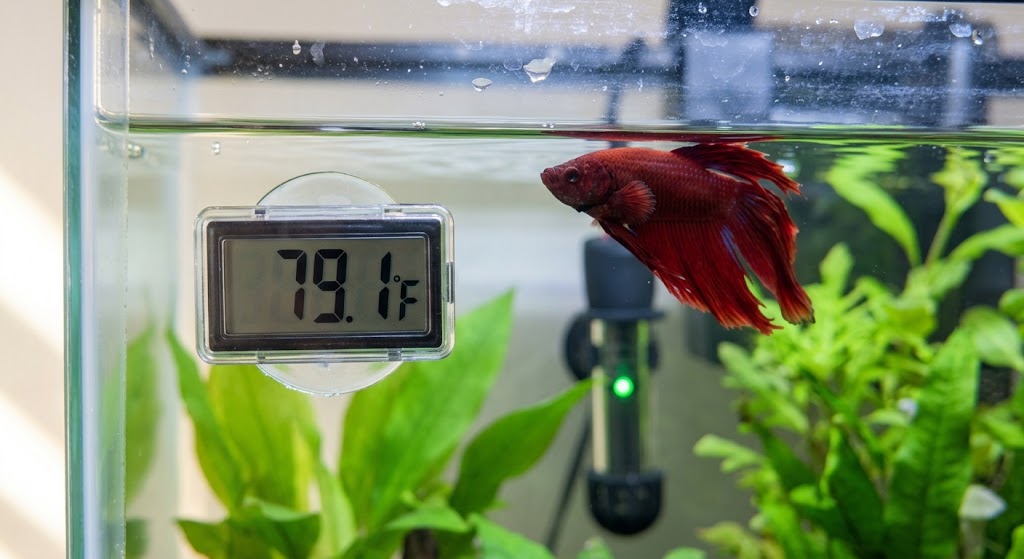
Bettas are tropical fish. Most keepers aim for 76°F to 82°F. Cold water slows a betta down and weakens its immune system.
A fish in cold water may sit still near the top. It may also refuse food. Sudden swings stress fish too.
Place an aquarium thermometer at the far end of the tank from the heater. Read it more than once a day. Our betta fish water temperature guide explains how to set up and check a heater.
4. Low Dissolved Oxygen or Water-Quality Emergencies
Gasping at the surface can have more than one cause. The Merck Veterinary Manual lists low dissolved oxygen, high nitrite, and gill disease as possible reasons fish gulp air at the surface.
Bettas can use air, so low oxygen is not always the problem. Do not assume it is the cause. Test the water first.
Warm, stagnant water holds less oxygen. A gentle ripple at the surface can help. Avoid a strong splash, because bettas dislike heavy flow.
5. Stress or Excessive Filter Flow
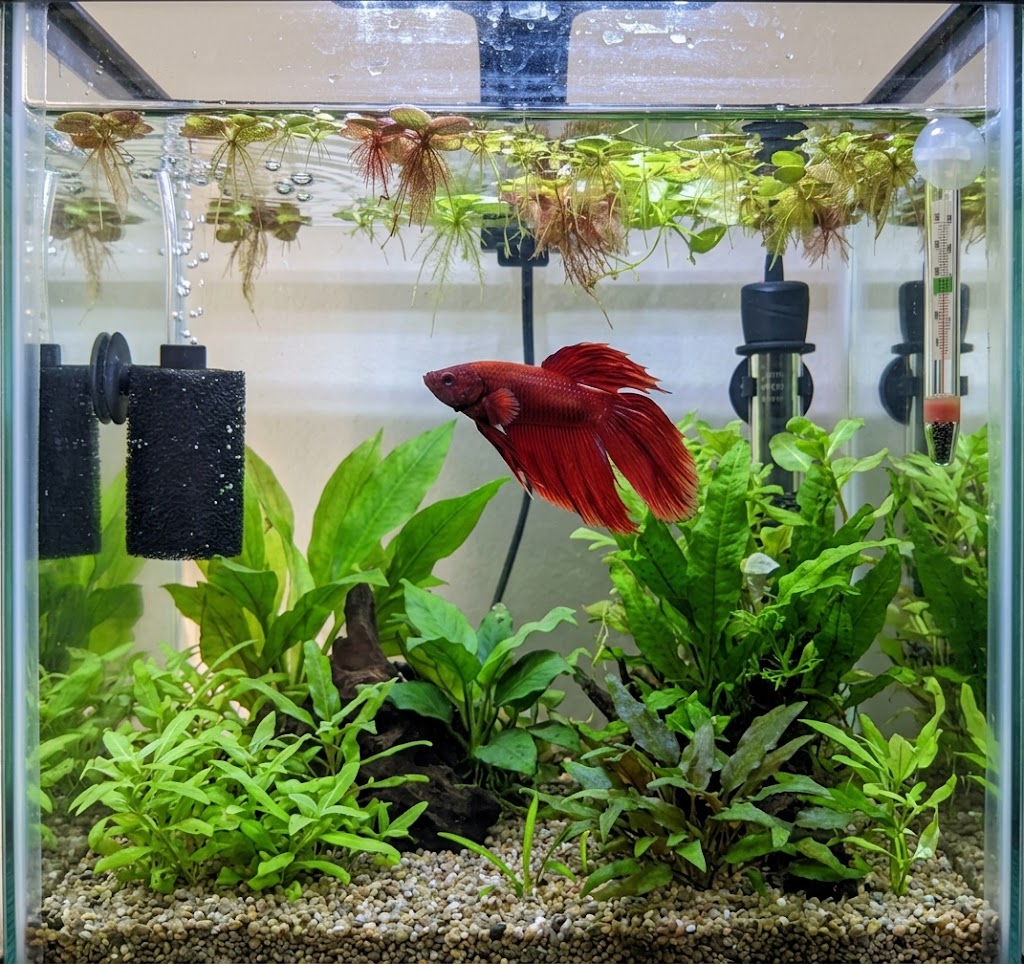
Bettas have long fins and are not strong swimmers. A strong filter current can wear them out. A tired betta may park near the surface, where the water is calmer.
Other stressors include a bare or tiny tank, bright lights, and noisy spots. Sudden changes, like moving the tank or doing a big cleaning, can also upset a betta.
Watch how your fish moves. If it fights the current, slow the flow. You can use a sponge pre-filter, a baffle, or an adjustable filter. A roomy tank also helps. See our best tank size for a betta guide.
6. Illness or Breathing Problems
Gill disease, parasites, and infections can make breathing harder. A sick betta may show fast gill movement, loss of appetite, or unusual tiredness. Some also show clamped fins or faded color.
Many problems look alike at first. Poor water can cause the same signs as a parasite. That is why you test the water before you treat anything.
If water and temperature are fine and the signs continue, ask an aquatic veterinarian for help. Our guide on why a betta may be breathing heavily covers the breathing signs in more detail.
7. Resting, Sleeping, or Other Natural Behavior
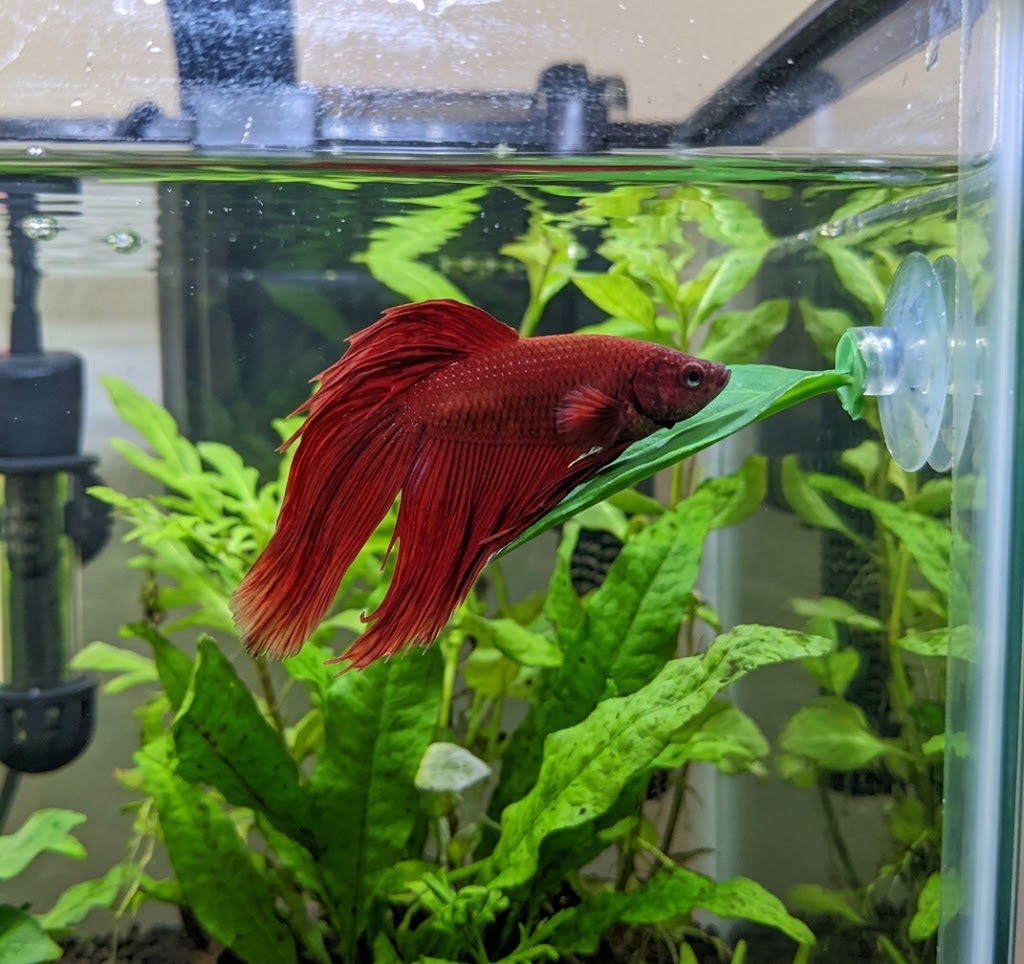
Bettas rest. Many sleep near the surface, on a leaf, or in a hammock. A resting fish is still and calm, but it wakes up when you move close or turn on the light.
A male may also hang near the top while he builds a bubble nest. Our guide on betta bubbles at the top of the tank explains that behavior.
Here is the key difference. A resting betta responds to you and eats normally. A distressed betta stays still, looks weak, and may not react at all.
What to Do If Your Betta Fish Staying at Top of Tank
Work through these steps in order. Stay calm and make changes slowly.
- Observe your betta. Watch the breathing speed, swimming, appetite, and response to you. Note any clamped fins, color changes, or odd spots.
- Test the water. Check ammonia, nitrite, nitrate, and temperature. Write the numbers down.
- Check the equipment. Make sure the heater works and the filter is running. Look for strong flow or a clogged filter.
- Fix unsafe water. If ammonia or nitrite shows above 0 ppm, do a partial water change. Replace about 25% to 50% of the water, based on how high the readings are. Use water that is treated with a conditioner and matched to the tank temperature. Retest afterward and repeat as needed. Our guide on using tap water safely for bettas shows the steps.
- Keep things stable and calm. Change the temperature only 1°F to 2°F at a time. Lower the filter flow. Keep lights on a steady schedule and avoid tapping the glass.
- Get help if needed. Contact an aquatic veterinarian if signs are severe, last more than a day or two, or get worse.
Do not replace all the water at once. Do not add random medicine. Do not change the temperature quickly. These moves can make a stressed fish worse.
Betta Fish Staying at the Top but Not Eating
A short surface visit is normal. A betta staying at the top of the tank and not eating is more worrying. A healthy betta usually eats eagerly. Skipping meals for a day can happen, but repeated refusal is a warning.
Check for these extra signs:
- Fast or heavy gill movement
- Clamped fins held tight to the body
- Faded color or a dull look
- Swelling, white spots, or red streaks
- Trouble swimming down
- Ammonia or nitrite above 0 ppm
- Water that is too cold
Test the water and check the temperature first. Fix any problem you find. Offer a small amount of food once a day, and remove any leftovers.
Call an aquatic vet if your betta refuses food for more than two or three days. Call sooner if breathing looks hard or the fish seems weaker.
When Is It an Emergency?
Some signs need quick action. Test the water right away and call an aquatic vet for urgent advice if you see any of these:
- Severe, non-stop gasping at the surface
- Loss of balance, rolling, or floating on one side
- Inability to swim down or move normally
- Collapse or lying still with very rapid gills
- Signs that get worse within hours
While you wait for advice, check ammonia, nitrite, and temperature. Fix what you can with small, careful steps. Do not experiment with medicine. Learn how to set up a hospital tank for sick fish to safely isolate sick fish and help prevent illness from spreading to healthy tank mates.
How to Prevent Surface-Related Problems
Good habits stop most problems before they start.
- Test often. Check the water weekly. Test daily in a new or uncycled tank.
- Keep the temperature steady. Use a reliable heater and a thermometer.
- Use gentle filtration. Choose a filter that cleans well without blasting your betta.
- Do regular maintenance. Change part of the water each week and remove uneaten food. Always treat new water with conditioner.
- Give your fish room. A larger tank stays cleaner and steadier. See our betta fish care guide for setup basics.
- Learn normal behavior. Watch your betta every day. Small changes are easier to catch early.
Frequently Asked Questions
Why is my betta fish staying at the top of the tank?
The cause may be normal breathing, resting, or a bubble nest. It may also be poor water quality, cold water, strong flow, or illness. Test the water and check the temperature first.
Is it normal for a betta fish to stay near the surface?
Yes, in short visits. Bettas breathe air and often rest near the top. Constant hovering with gasping or no appetite is not normal.
Why is my betta fish gasping at the top of the tank?
Gasping can come from ammonia, nitrite, low oxygen, or gill problems. Test the water right away. Do a partial water change if ammonia or nitrite is present.
Why is my betta fish floating at the top and not moving?
It may be resting or sleeping. Gently turn on the light and watch for a reaction. If the fish does not respond or looks weak, treat it as urgent and test the water.
Why is my betta fish staying at the top but not eating?
Stress, cold water, poor water quality, or illness can all cause this. Look for other signs, like clamped fins or fast breathing. Call a vet if it lasts more than a few days.
Can poor water quality cause a betta fish to stay at the surface?
Yes. Ammonia and nitrite can harm the gills and make breathing harder. Always test before you try other fixes.
Do betta fish need oxygen if they breathe air?
Yes. Bettas use both their gills and their labyrinth organ. Clean, oxygen-rich water still matters.
How can I help my betta fish return to normal behavior?
Fix the cause. Keep the water clean, the temperature steady, and the flow gentle. Be patient and make changes slowly.
Conclusion
A betta fish staying at the top of the tank is not always a problem. Short surface trips, resting, and bubble nests are normal. Constant gasping, heavy breathing, or refusing food is not.
Check the water quality, temperature, and other symptoms before you guess a cause. Then act in small, steady steps. For more help, explore the other betta fish care guides on Fishella.
Pingback: Betta Fish Water Temperature: Ideal Range and Tips
Pingback: Betta Fish Clamped Fins: Causes, Symptoms & Fixes