
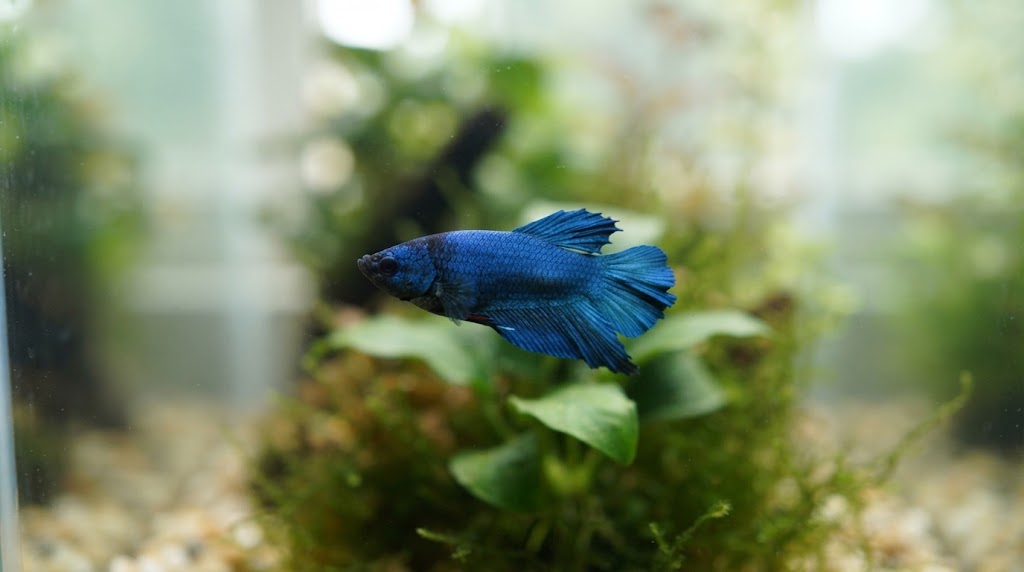
You walk up to the tank and something looks off. Your betta, who usually flares and glides around, is holding its fins tight against its body. It looks smaller, duller, and a little sad.
Betta fish clamped fins are one of the earliest warning signs a fish keeper can spot. Clamping is a symptom, not a disease. Your betta is telling you that something is wrong with its water, its tank, or its health. If you’re new to bettas, start with our betta fish care guide to check your basics.
What Do Betta Fish Clamped Fins Look Like?
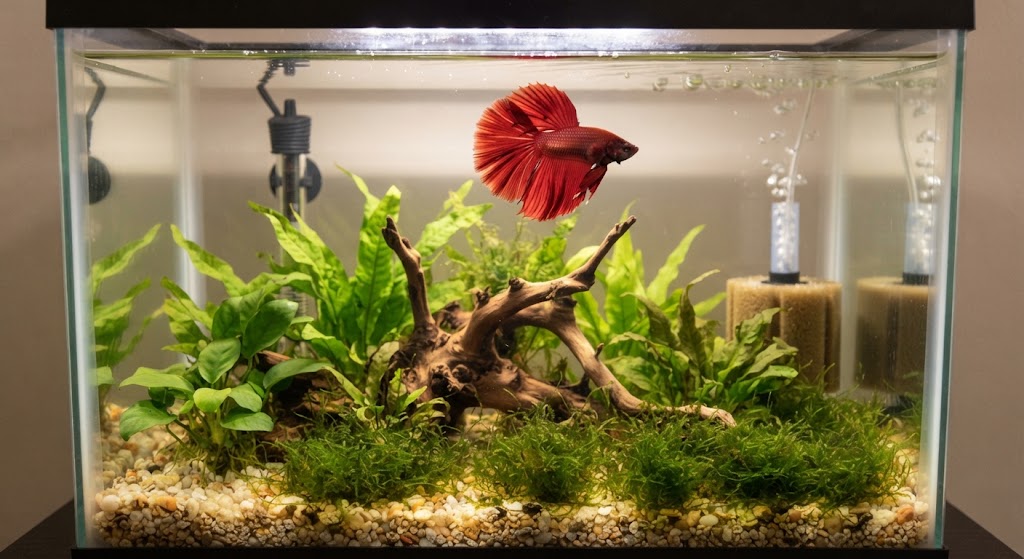
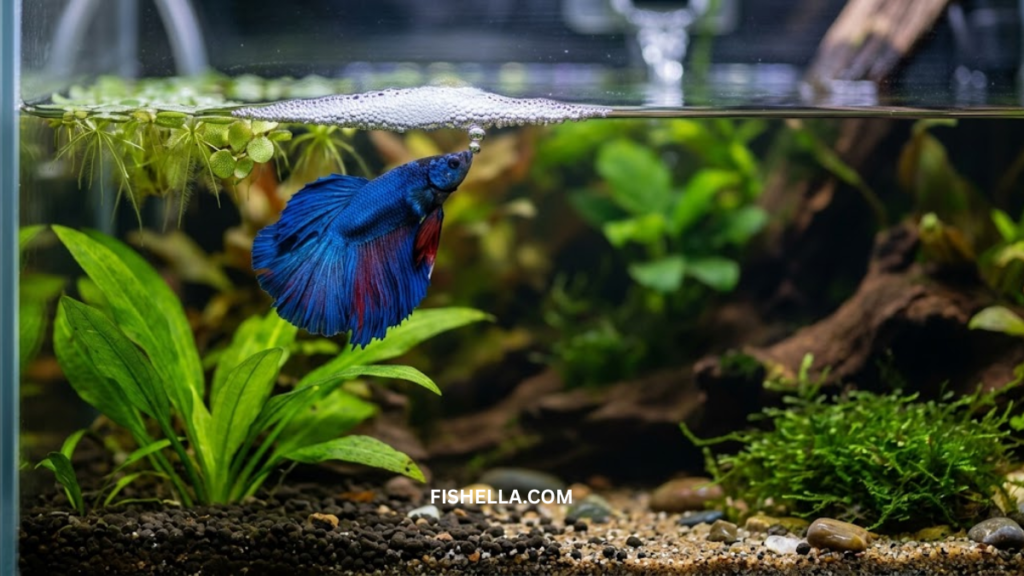
A healthy betta carries its fins open and relaxed. A confident one may even build a bubble nest, which you can read about in why your betta makes bubbles at the top of the tank.
With betta fish clamped fins, the fins look folded or “glued” to the body. The tail may droop into a narrow point. Sometimes one fin is clamped, but usually several are.
Watch for these companion signs:
- Hiding or sitting at the bottom
- Faded color
- Very little swimming
- Eating less or refusing food
- Rapid gill movement
Clamped Fins vs. a Resting Betta
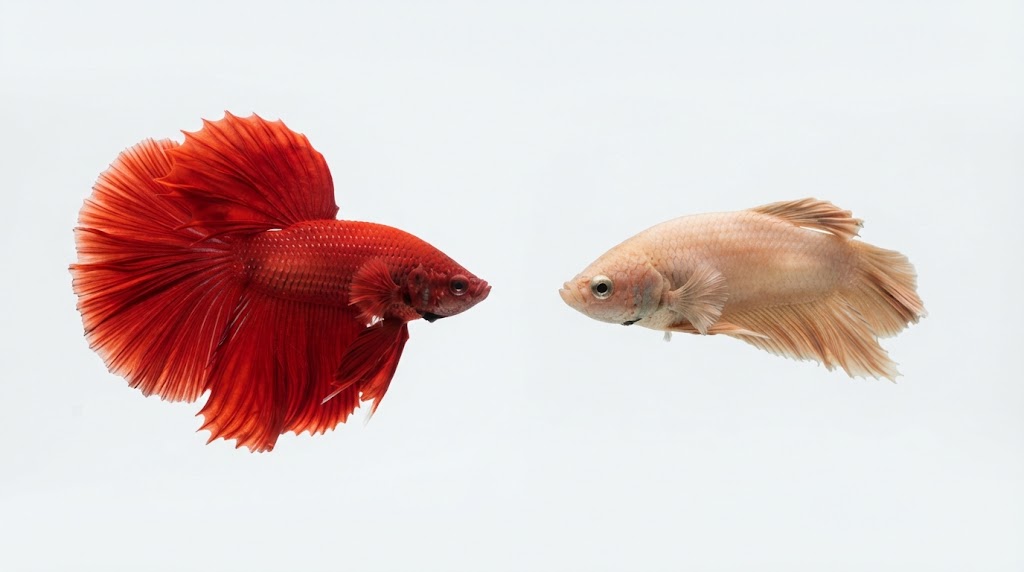
Not every folded fin is an emergency. Bettas rest, sleep, and relax their fins at night or when they settle into a favorite spot. A resting betta perks up quickly when you approach or when food drops in.
True clamping lasts for hours or days, and the fish seems dull or withdrawn. If your betta eats and moves normally, watch it for a day before making changes. If the fins stay shut, look for a cause.
Clamped fins together with surface hovering can signal stress, so read about a betta staying at the top of the tank.
Top Causes of Clamped Fins in Betta Fish
Poor Water Quality
This is the most common cause. Ammonia and nitrite are toxic even in small amounts, and a tank that hasn’t fully cycled is a frequent reason. Experts at Aquariadise also point to water quality first.
Cold or Unstable Temperature
Bettas are tropical fish and do best at 78°F to 80°F (25°C to 27°C). An unheated tank in a cool American home often falls well below that. See our guide to betta fish water temperature and our tropical fish care guide for heater tips.
Stress and Tank Size
Strong filter currents, fin-nipping tank mates, and constant bright light all cause stress. A tank that’s too small does too. Wondering if a betta can live in a 1-gallon tank? It can survive, but it rarely thrives. See the best tank size for betta fish.
Illness
Clamped fins can appear before other symptoms of:
- Fin rot, a bacterial infection that frays the fin edges. See our full betta fin rot guide for stages and treatment.
- Ich, a parasite that causes tiny white dots. Clamped fins with tiny white dots may point to ich. Our guide to betta fish ich symptoms and treatment explains how to tell it apart from other problems.
- Velvet, which leaves a gold or rust-colored dust.
- Swim bladder disorder, which affects balance and buoyancy.
A New Home or a Birth Defect
A betta that just came home often clamps its fins for a day or two while it adjusts to the new water. Some bettas are also born with permanently clamped fins due to a genetic problem. If the fish has looked this way since you bought it and acts normal, this may be the reason.
Quick Fix Checklist
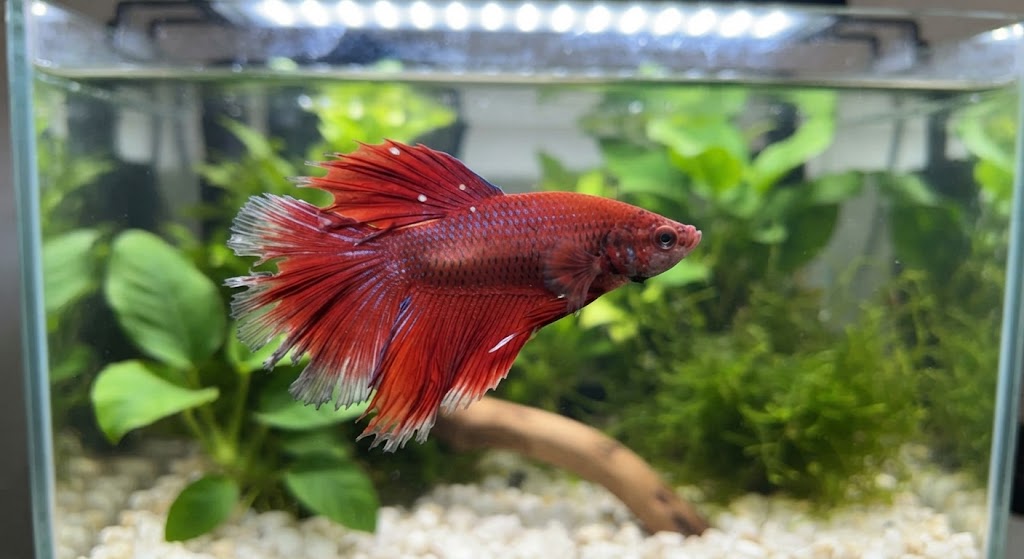
Work through these in order, and keep each step simple:
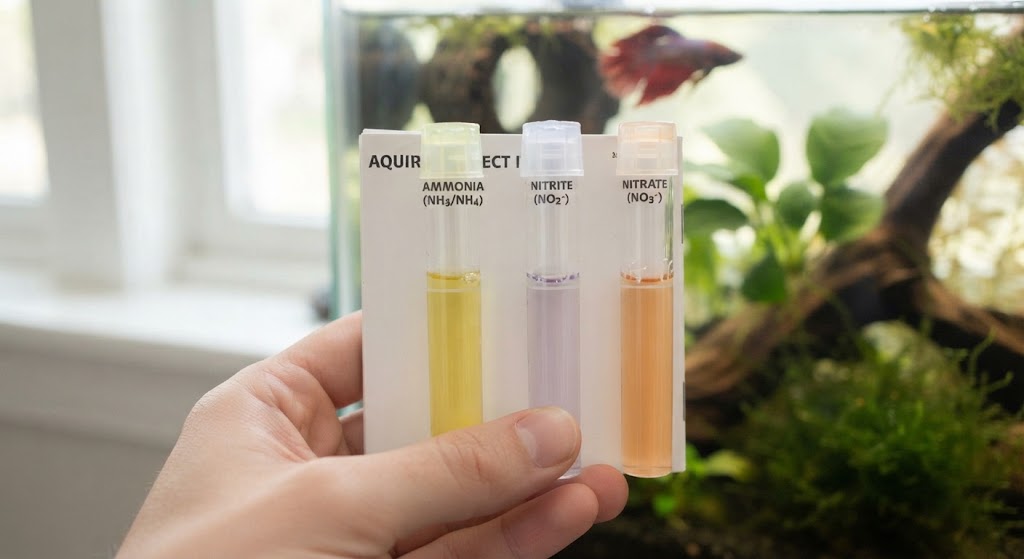
- Test the water. Ammonia and nitrite should read 0 ppm.
- Change some water. Replace part of the tank with conditioned, temperature-matched water. Not sure about your tap? Read can betta fish live in tap water.
- Check the thermometer. Use a separate one and confirm the tank stays at 78°F to 80°F.
- Calm the tank. Soften the filter flow, remove sharp decor, dim the lights, and move aggressive tank mates.
- Look for illness. Check for white spots, dusting, or ragged edges, and treat the specific problem if you find one.
Give each change a couple of days to work. Bettas don’t like constant tinkering.
When Is It an Emergency?
Most cases are mild and improve once the cause is fixed. Act quickly if clamped fins come with any of these:
- Refusing food for more than two days (see why your betta fish is not eating)
- Gasping at the surface
- Red sores or visible tissue loss
- Floating sideways or struggling to swim
In these cases, contact an aquatic veterinarian or an experienced fish store.
How Long Do Betta Fish Clamped Fins Last?
If the cause is simple, like a cold tank or a dirty water spike, you’ll usually see improvement within two to five days. An infection can take a week or two. Betta fish clamped fins that last longer than a week, despite good water and temperature, point to disease or a deeper problem.
Clamped fins rarely go away on their own. A short stressor, like moving the tank, may pass, but ongoing clamping needs a fix.
Are Clamped Fins Contagious?
No. Clamped fins themselves can’t spread. But the cause, such as a parasite or poor water, can affect other fish in the same tank. Bettas usually live alone, so this is mostly a concern if yours shares a tank.
Preventing Clamped Fins
Keep it simple:
- Do regular weekly water changes.
- Use a reliable heater and thermometer.
- Feed small portions of quality food. You can add variety with homemade betta fish food.
- Choose a tank of at least 5 gallons.
FAQs
What does it mean if my betta has clamped fins?
Clamped fins mean your betta is stressed or unwell. The fish holds its fins tight against its body because of poor water quality, cold water, bad tank conditions, or an illness like fin rot or ich. Test the water and check the temperature first.
Can clamped fins be cured?
Yes, in most cases. Clamped fins are a symptom, so they clear up once you fix the cause. Correct the water quality, keep the temperature at 78°F to 80°F, and reduce stress. Most bettas improve within two to five days. Infections can take a week or two.
What are the signs of an unhappy betta?
An unhappy betta may show:
- Clamped or drooping fins
- Hiding or staying at the bottom
- Faded color
- Loss of appetite
- Little or no swimming
- Fast gill movement
- Stress stripes on the body
These usually point to poor water, a small tank, or the wrong temperature. See our betta fish care guide to check your setup.
Why are my betta’s fins stringy?
Stringy or shredded fins usually come from fin rot, fin nipping, rough decorations, or dirty water. If the edges look ragged and keep shrinking, it may be fin rot. Read our betta fin rot guide for treatment steps. If the damage is not spreading, a snag or nip is more likely.
Final Thoughts:
Think of clamped fins as your betta asking for help. The earlier you notice, the better the odds. Test the water, check the temperature, lower the stress, and look for signs of illness.
Most cases of betta fish clamped fins clear up once the underlying problem is fixed, and soon your betta will be back to flaring and showing off those flowing fins.
Pingback: Betta Fish Ich: Symptoms, Treatment, and Prevention