
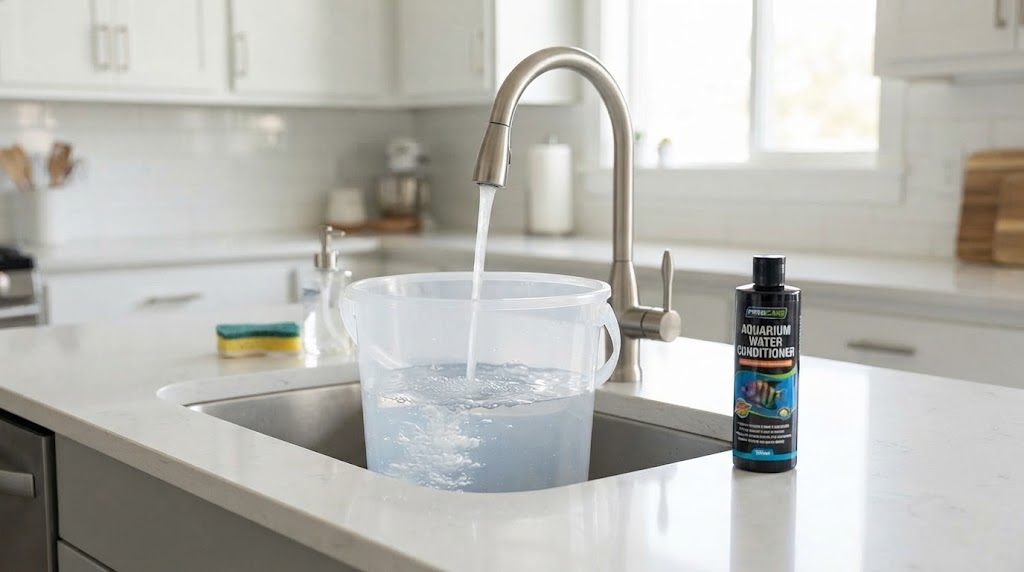
Can betta fish live in tap water? Yes, they can, as long as you treat the water first. Most municipal tap water contains disinfectants that harm fish gills, but a good water conditioner removes them in seconds. This guide explains what is in tap water, how to prepare it, and what to avoid so your betta stays healthy.
Can Betta Fish Live in Tap Water Without Treatment?
Water suppliers add chlorine or chloramine to kill bacteria. These chemicals protect people, but they irritate and damage the gills of fish. Some water supplies also carry trace metals, such as copper from household pipes, which harm fish and invertebrates.
- Gill damage and stress that weakens the immune system
- Harm to beneficial bacteria that live in the filter
- Danger for snails and shrimp from metals in the water
Chlorine vs Chloramine
Chlorine gradually escapes when water sits out for a day or more. Chloramine is a more stable compound that contains chlorine and ammonia, and it does not leave the water on its own. Many suppliers use chloramine, so letting a bucket sit often does not solve the problem. A conditioner is the faster and more reliable choice.
- Chlorine: can evaporate when water sits, though a conditioner works faster
- Chloramine: stays in the water and needs a conditioner that breaks it down
- Your supplier: read your local water quality report to see which one you have

How to Prepare Tap Water for a Betta Fish
Follow the same routine for every water change. It takes only a few minutes, and it protects your betta from avoidable stress.
- Fill a clean bucket that you use only for your aquarium.
- Add a water conditioner that removes chlorine and chloramine. Dose it for the volume of new water, following the label.
- Match the temperature to your tank within about 2°F, using a thermometer. Our betta fish water temperature guide lists the safe range.
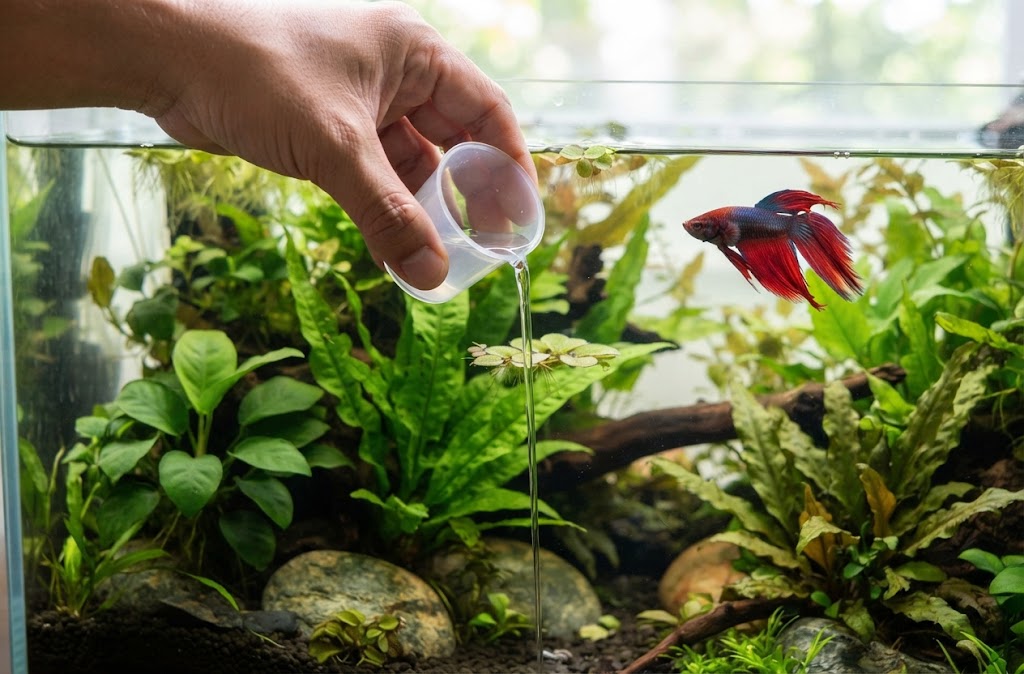
- Pour the water in slowly, away from your betta, or pour it over a cup or plate to soften the flow.
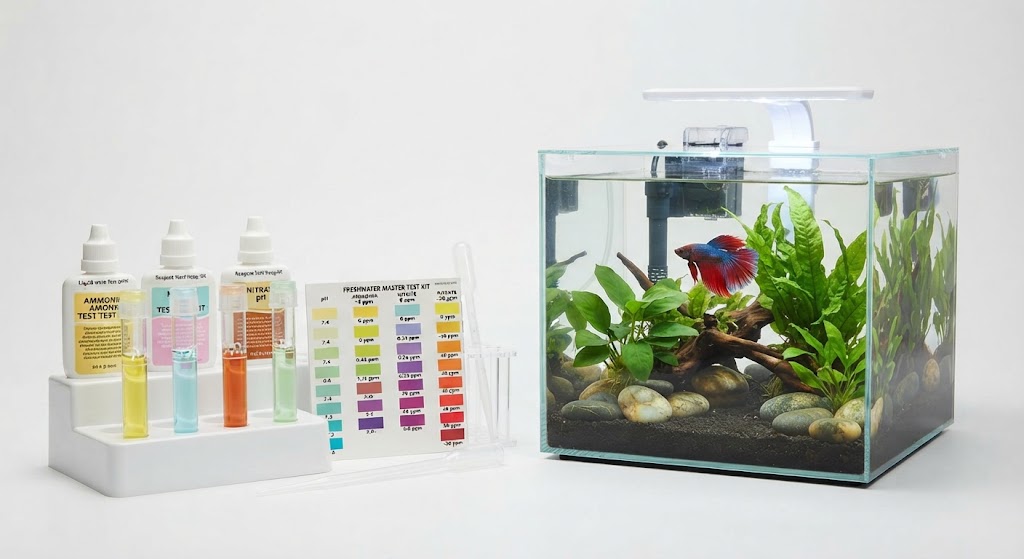
- Test the water afterward. Some conditioners detoxify the ammonia that chloramine releases, but you should still confirm the tank reads safe.
What About Hot, Softened, and Well Water?
Not every home water source behaves the same way. Check each type before you use it.
- Hot tap water: avoid it for aquarium use, since it may carry more metals from the water heater and plumbing. Start with cold water and let the heater warm the tank.
- Softened water: avoid it, because softeners swap minerals for sodium and the result may not suit your fish.
- Well water: it usually has no chlorine, but it may contain iron, high hardness, or other minerals, so test it first.
Can Betta fish Live in Tap Water With Different pH Levels?
Tap water chemistry varies by region. Many keepers aim for a pH around 6.5 to 7.5 for bettas, but stable values matter more than chasing a perfect number. Chemical pH adjusters often cause swings that stress fish more than the original numbers did. Our freshwater pH guide explains how to test and what to do with the results.
- Test pH, ammonia, nitrite, and nitrate each week
- Avoid frequent chemical adjustments
- Keep temperature and water changes consistent
Common Mistakes to Avoid
Can betta live in tap water safely every time? Yes, and most problems come from skipped steps rather than bad water. These habits cause the most trouble.
- Skipping conditioner for a small water change
- Using more conditioner than the label recommends
- Relying on standing water when your supplier uses chloramine
- Pouring cold water straight into the tank
- Rinsing filter media under the tap, which can kill beneficial bacteria. Our guide on how to choose an aquarium filter explains how filters work.
If your betta starts hovering at the surface after a water change, see what to do when a betta stays at the top of the tank.
Choosing a Water Conditioner
Many water conditioners look alike on the shelf, so read the label before you buy. A good product removes the disinfectants in your local water and makes dosing simple for a small tank.
- Pick a product that clearly states it removes both chlorine and chloramine
- Check whether it also binds metals such as copper
- Choose a liquid that is easy to measure for small volumes
- Keep a spare bottle at home so you never skip a water change
For help choosing a suitable product, see our guide to the best aquarium water conditioner.
How Often Should You Change a Betta’s Water?
Regular water changes keep waste low, and they matter more in small tanks. Many keepers change 20 to 30 percent of the water each week, though a smaller or heavily stocked tank may need more frequent changes. Test the water to learn what your tank needs. A larger tank, as our tank size guide explains, also stays steadier between changes.
- Test ammonia and nitrite before and after changes
- Change more often if ammonia or nitrite appears
- Vacuum debris from the substrate during changes
- Never replace all the water at once
Topping Off Evaporated Water
Water evaporates from every aquarium, and minerals stay behind in the tank. Replace the lost water with treated tap water that matches the temperature. Treat even small top-offs with conditioner, because untreated water exposes your betta to chlorine or chloramine.
Quick Water Change Checklist
Keep this short list near your tank so every water change follows the same safe pattern.
- Add conditioner to the bucket before the water touches the tank
- Match the temperature with a thermometer
- Pour slowly and keep the water away from your betta
- Test the water if you notice any change in behavior
For a safe and stress-free aquarium cleaning routine, learn how to do a water change without removing fish while keeping your fish in the tank.
Frequently Asked Questions
Can betta live in tap water straight from the faucet?
No. Treat it with a water conditioner first, and match the temperature to the tank.
Is bottled water better than tap water for bettas?
Not necessarily. Distilled or purified water lacks minerals, while properly treated tap water is usually cheaper and fine for most bettas.
Can betta live in tap water in a small bowl?
Yes, but only after treatment. Treated water matters in any container, and a larger tank keeps conditions steadier. Read our guide to the best tank size for a betta for more.
Final Thoughts
So, can betta fish live in tap water? Yes, when you treat it with a water conditioner, match the temperature, and test your results. This routine takes little time and prevents many health problems. For more daily habits, read our betta fish care guide, and see the FishBase Betta splendens profile for the species’ natural habitat.
Pingback: How to Acclimate a Betta Fish to a New Tank