
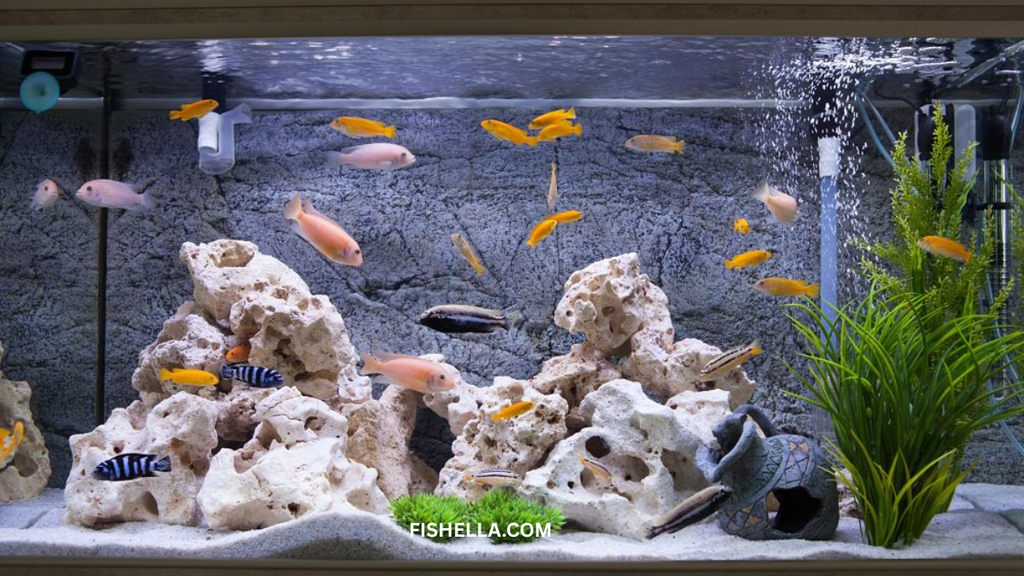
Learn how to take care of tropical fish with simple tips for tank setup, water quality, temperature, feeding, filtration, and regular aquarium care. If you’re new to fishkeeping, tropical fish can seem deceptively simple to look after. They’re colorful, they’re calm, and a tank full of them looks so peaceful sitting in a living room.
But learning how to take care of tropical fish the right way means understanding a few things most beginners never get told at the pet store — like stable water temperature, good filtration, the right food, and a simple maintenance routine. Here’s the good news: none of this is complicated once you know what to do. This guide walks you through everything a beginner actually needs, step by step, so your fish stay healthy and your tank stays easy to manage.
What Are Tropical Fish?
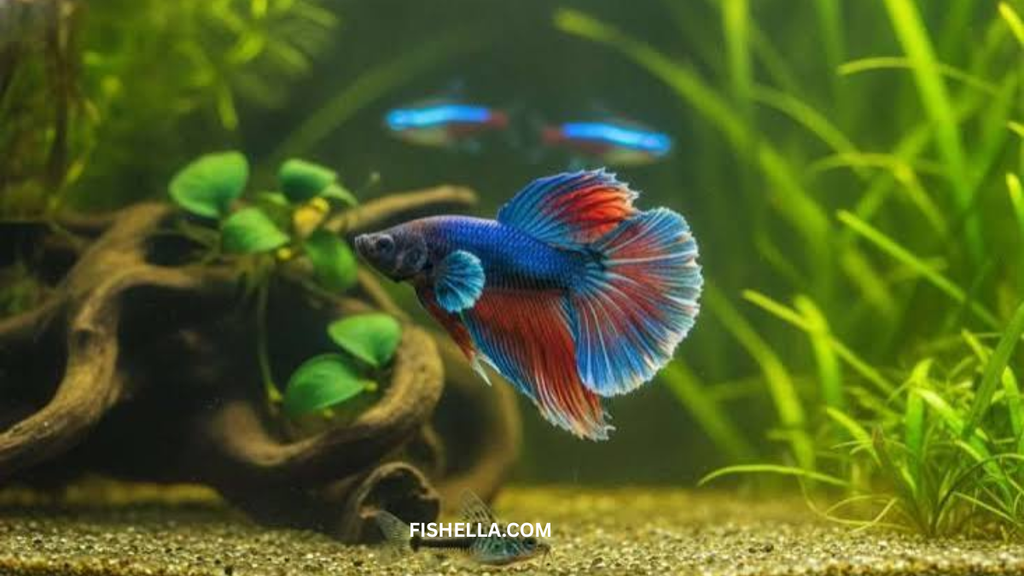
Tropical fish are freshwater or marine species that naturally live in warm regions of the world, like the rivers and lakes of South America, Africa, and Southeast Asia. Because of where they come from, most tropical freshwater fish need warm, fairly stable water to stay healthy — unlike coldwater fish such as goldfish, which can tolerate a much wider temperature range. This is one thing many beginners overlook when they first set up a tank: a tropical fish tank almost always needs a heater, while a coldwater setup usually doesn’t.
Some of the most popular tropical freshwater fish for beginners include betta fish, guppies, tetras, gouramis, mollies, platies, and angelfish. Each of these species has its own personality, tank size needs, and water preferences, so it’s worth saying clearly: not all tropical fish have the same care requirements. A betta, for example, is a solitary fish that doesn’t want tank mates crowding its space, while tetras are a schooling species that need to be kept in groups to feel secure. Researching your specific fish before you buy them will save you a lot of trouble later.
How to Take Care of Tropical Fish: The Basics
Before diving into the details, it helps to see the whole picture. Successful tropical fish care really comes down to ten habits:
- Choosing an appropriately sized aquarium
- Cycling the aquarium before adding fish
- Maintaining a stable water temperature
- Monitoring water quality regularly
- Using proper filtration
- Feeding the right amount of the right food
- Performing regular partial water changes
- Choosing fish species that are compatible with each other
- Watching fish behavior for early signs of trouble
- Sticking to a consistent maintenance routine
None of these steps are difficult on their own. The challenge for beginners is usually just not knowing they matter — so let’s go through each one. Going away for a few days? Learn how to feed your betta fish when on vacation to discover safe feeding options, avoid overfeeding, and prevent uneaten food from harming your aquarium’s water quality.
Choose the Right Aquarium Size
There’s no single “best” tank size that works for every tropical fish, no matter what a quick internet search might tell you. The right size depends on the adult size of your fish, how active they are, whether they need to swim in open water or prefer to hide, and whether they’re a schooling species that needs several tankmates of their own kind. That said, a bigger tank is generally more forgiving for beginners, because a larger volume of water dilutes waste and holds a more stable temperature than a small one.
Overcrowding is one of the fastest ways to create water quality problems, since more fish means more waste, and more waste means your filtration and water changes have to work harder to keep up. A tropical aquarium setup that looks fine on day one can turn into a stressful, unhealthy environment within weeks if it’s packed with more fish than it can support.
| Fish Type | General Tank Consideration | Important Note |
| Betta fish | Can be kept in a modest single-fish setup | Still needs a heater, filter, and enough swimming room — bigger is better |
| Small schooling fish (tetras, rasboras) | Needs a longer tank and a group of 6 or more | Schooling fish get stressed and skittish in groups that are too small |
| Livebearers (guppies, mollies, platies) | Breed quickly, so plan for population growth | A tank that fits today’s fish may be crowded in a few months |
| Gouramis | Need more space as they mature | Adult size and territorial behavior vary by species |
| Angelfish | Need tall, spacious tanks | Grow much larger than they appear as juveniles in the store |
Set Up the Tank Before Adding Fish
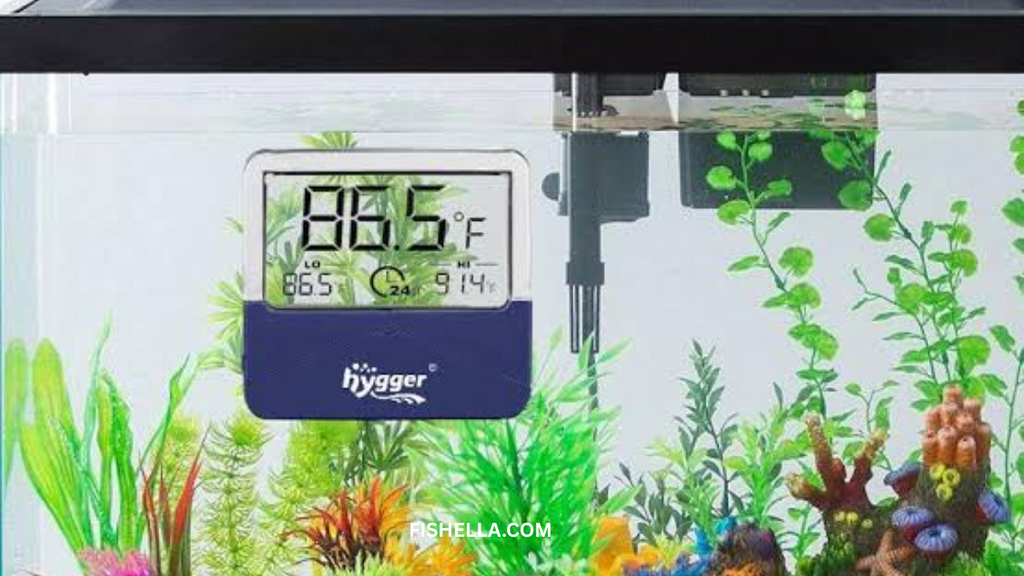
A tropical fish tank setup needs a bit more equipment than most beginners expect, but each item earns its place. Here’s what you’ll likely need:
Aquarium — sized appropriately for the fish you plan to keep
Filter — removes waste and houses the beneficial bacteria that keep water safe
Heater — keeps water at a stable, warm temperature
Thermometer — lets you confirm the heater is actually doing its job
Water conditioner — removes chlorine and chloramine from tap water before it touches your fish
Substrate — gravel or sand that supports plants and beneficial bacteria
Lighting — supports plant growth and gives fish a natural day-night cycle
Decorations or live plants — give fish places to hide, explore, and feel secure
Test kit — the only reliable way to know what’s actually happening in your water
Skipping any of these can create problems down the line. A heater without a thermometer, for instance, is a guess — you won’t know if it’s actually holding the right temperature until something goes wrong.
Cycle Your Aquarium Before Adding Fish

This is the step most beginners have never heard of, and it’s arguably the most important one. When fish waste and leftover food break down in the water, they produce ammonia, which is toxic even in small amounts. In an established tank, beneficial bacteria living in the filter and substrate convert that ammonia into nitrite (also toxic), and then into nitrate, which is far less harmful in normal amounts. This whole process is called the aquarium nitrogen cycle, and in a brand-new tank, those bacteria simply don’t exist yet.
That’s why adding fish to a tank on day one is risky — there’s nothing there yet to break down the ammonia they produce. Many experienced fishkeepers use “fishless cycling,” where you add an ammonia source to the empty tank and let bacteria build up over several weeks before any fish go in. Don’t worry if this seems like a lot at first; it just takes patience and a test kit to confirm ammonia and nitrite have dropped to zero before your fish move in. For a full walkthrough of this process, check out our guide on how to cycle a fish tank fast.
Keep the Water at the Right Temperature
Tropical fish are called “tropical” for a reason — they evolved in warm water and don’t have the biological tools to handle cold the way some other fish do. Most tropical freshwater fish do best somewhere in the mid-70s to low-80s Fahrenheit, but the ideal number really does depend on the species, so it’s worth checking the specific needs of the fish you keep rather than assuming one number fits all.
What matters just as much as the exact number is stability. Sudden temperature swings — even a few degrees within a short time — can stress fish and weaken their immune systems, making them more vulnerable to illness. A reliable aquarium heater paired with a thermometer is the simplest way to avoid this, and it’s worth checking the thermometer regularly rather than assuming the heater is working correctly forever.
Test and Maintain Water Quality
Aquarium water quality comes down to four main numbers: ammonia, nitrite, nitrate, and pH. In a healthy, fully cycled freshwater aquarium, ammonia and nitrite should read 0 ppm — anything above that is a sign something needs attention. Nitrate is different; it’s far less toxic and builds up gradually between water changes, but the acceptable range varies depending on the fish species you keep, so it’s not accurate to say one nitrate number is “safe” for every tank.
You don’t need to test water every single day once a tank is established, but there are moments when testing really matters:
- After setting up a new tank
- When adding new fish
- When fish are behaving strangely
- When the water looks cloudy or smells off
- After any major maintenance or equipment change
A simple liquid test kit is one of the best investments a beginner can make, since it tells you what’s actually happening rather than leaving you to guess.
Use a Good Filter
A fish tank filter does two jobs at once: mechanical filtration, which physically traps debris and uneaten food, and biological filtration, which houses the beneficial bacteria responsible for the nitrogen cycle. That second job is the one beginners often don’t realize is happening — the sponge or cartridge inside your filter isn’t just catching gunk, it’s home to a living colony of bacteria keeping your water safe.
This is exactly why you should never replace all of your filter media at once. Doing so wipes out most of that bacterial colony and can trigger a mini version of “new tank syndrome,” even in an aquarium that’s been running for months. Instead, rinse media in old tank water when it gets dirty, and replace it in stages if it needs to be swapped out. It’s also worth matching filter flow to your fish — some tropical species, like bettas, prefer gentle water movement rather than a strong current.
Feed Tropical Fish the Right Way

One thing many beginners overlook is just how little food tropical fish actually need. Most tropical fish do well with one to two small feedings a day, offering only what they can finish within about two minutes. Overfeeding is one of the most common beginner mistakes, and it causes two problems at once: it can lead to bloating or health issues in the fish, and leftover food breaks down in the water, driving up ammonia and putting extra strain on your filtration.
Different tropical fish also have different dietary needs — some are mostly herbivores, some need more protein, and some do best with a varied diet of flakes, pellets, and occasional live or frozen food. A simple feeding checklist can help keep things consistent:
- Feed small amounts, once or twice a day
- Remove uneaten food after a few minutes if you can
- Vary the diet with species-appropriate foods
- Watch body condition over time, not just appetite
- Skip a feeding occasionally rather than always topping off the bowl
Perform Regular Water Changes
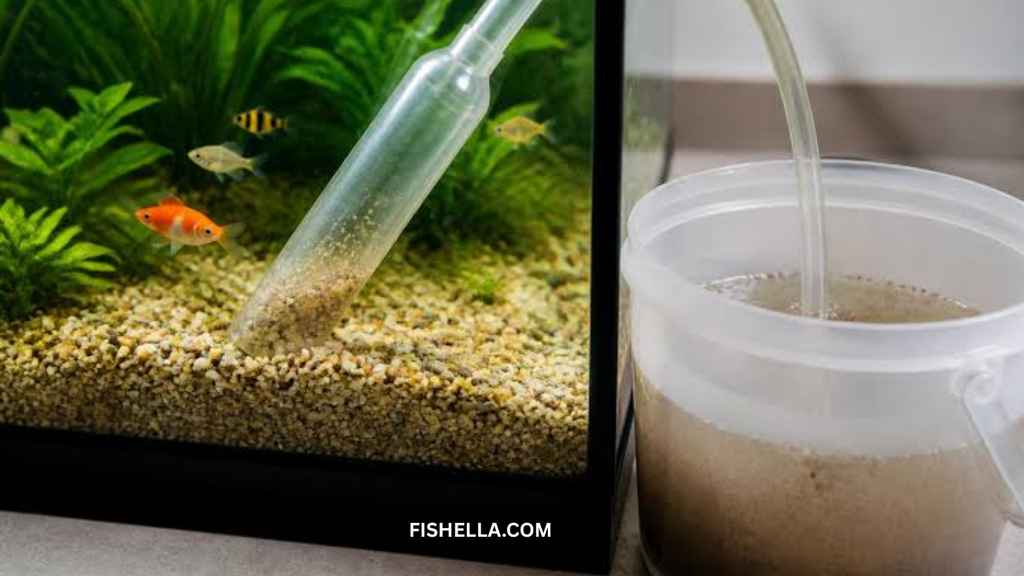
Even with great filtration, nitrate and other dissolved substances build up over time, and the only real way to remove them is by doing partial water changes. Most freshwater tanks benefit from a modest partial change on a regular basis rather than waiting until problems show up — the exact frequency and amount depend on your tank size, stocking level, and how your water tests are looking.
A few habits make this process safer for your fish. Always treat new tap water with a water conditioner for fish before adding it, since tap water often contains chlorine or chloramine that’s harmful to aquatic life. Try to match the temperature of the new water to the tank as closely as possible, since a big temperature swing during a water change can stress fish. And resist the urge to do a complete water change as routine maintenance — replacing all the water at once disrupts the beneficial bacteria colony and can undo weeks of stability. Small, consistent water changes are almost always easier to manage than a big rescue effort after water quality has already gotten bad.
Keep the Aquarium Clean Without Overcleaning
Fish tank cleaning is about balance, not sterility. The goal of a healthy tropical aquarium is a working biological environment, not a spotless, germ-free box — trying to make it too clean can actually strip away the beneficial bacteria your fish depend on.
Here’s what regular aquarium maintenance should actually include:
- Removing uneaten food after feeding
- Scooping out visible waste or debris
- Cleaning algae off the glass when it builds up
- Vacuuming the substrate during water changes to remove trapped waste
- Wiping the outside and inside glass for visibility
- Rinsing filter media in old tank water rather than tap water, and never all at once
Skip harsh cleaners, soap, or bleach anywhere near your tank equipment. Even small residues can be toxic to fish, and a well-maintained biological filter does most of the real cleaning work on its own.
Choose Tropical Fish That Can Live Together

Not every attractive tropical fish belongs in the same tank. Compatibility depends on several factors working together: adult size, temperament, preferred water temperature and parameters, swimming level (top, middle, or bottom of the tank), whether a species needs to school in groups, and whether it’s territorial or prone to nipping fins.
A peaceful community tank usually mixes fish that occupy different levels of the water column and share similar temperature needs, without pairing notoriously aggressive or fin-nipping species with slow-moving, long-finned fish like bettas. Before adding anything new, research that specific species — what looks like a harmless addition in the store can turn out to be territorial, predatory, or simply too large for your setup once it matures.
Watch Your Fish for Signs of Stress
Fish can’t tell you when something’s wrong, so learning to read their behavior is a real skill worth building. Some warning signs to watch for include:
- Hiding more than usual
- Loss of appetite
- Rapid or labored breathing
- Clamped fins held close to the body
- Unusual or erratic swimming
- Spending a lot of time at the surface gasping
- Sitting motionless on the bottom
- White spots or visible sores on the body
- Sudden aggression toward tankmates
If you notice any of these signs, don’t reach straight for medication. The first step should be checking your water parameters, since poor water quality is behind a huge share of tropical fish health problems. From there, research the specific symptoms for your species, since the right response to fin rot is very different from the right response to a parasite. According to UF/IFAS Extension’s research on Ichthyophthirius multifiliis (Ich), stress and declining water quality are major factors that make fish more vulnerable to this common and highly contagious parasite in the first place.
Common Tropical Fish Care Mistakes Beginners Make
Almost every beginner makes a few of these at some point — the key is catching them early:
- Adding fish before cycling the tank — without established bacteria, ammonia spikes can be deadly.
- Overfeeding — leftover food pollutes the water and can harm fish health.
- Overstocking — too many fish for the tank size overwhelms filtration.
- Skipping water tests — you can’t fix a problem you don’t know exists.
- Ignoring the heater — a heater that’s failed silently can chill an entire tank overnight.
- Choosing incompatible fish — mismatched temperaments or sizes lead to stress or injury.
- Replacing all filter media at once — this wipes out beneficial bacteria unnecessarily.
- Doing irregular maintenance — inconsistent care leads to bigger swings in water quality.
- Making sudden changes to water conditions — abrupt shifts in temperature or chemistry stress fish.
- Buying fish without researching adult size and needs — a fish that looks small in the store may need a much bigger home within a year.
Simple Tropical Fish Care Routine for Beginners
Every tank is a little different, but a basic routine like this gives most beginners a solid starting point:
| Task | How Often | What to Check |
|---|---|---|
| Feed fish | Daily | Appetite and amount actually eaten |
| Observe fish | Daily | Behavior, coloring, and appearance |
| Check equipment | Regularly | Heater and filter are running correctly |
| Test water | As needed, more often in new tanks | Ammonia, nitrite, nitrate, pH |
| Partial water change | Regularly | Water clarity and test results |
| Clean glass and decor | As needed | Algae buildup and debris |
| Maintain filter | Based on filter and media type | Flow rate and media condition |
This isn’t a rigid schedule that fits every aquarium — a heavily stocked tank will need more frequent attention than a lightly stocked one — but it’s a practical framework to build your own routine around.
How Much Work Is Tropical Fish Care?
Here’s the honest answer: tropical fish care takes more attention in the first month than it does after that. Once a tank is properly cycled and set up with the right equipment for your fish, day-to-day maintenance becomes a pretty light routine — a few minutes of feeding and observing daily, plus a bit of testing and cleaning on a regular basis. The key is consistency, not intensity. A simple routine followed reliably will keep your tank healthier than an inconsistent one where you occasionally do a big cleanup after things have already gone wrong.
Frequently Asked Questions About Tropical Fish Care
How often should tropical fish be fed?
Most tropical fish do well with one to two small feedings a day, offering only as much as they can eat within a couple of minutes. Overfeeding is far more common — and more harmful — than underfeeding.
What temperature should a tropical fish tank be?
Most tropical freshwater fish prefer water somewhere in the mid-70s to low-80s Fahrenheit, but the exact ideal depends on the species you’re keeping. A reliable heater and thermometer are the best way to keep temperature stable.
How often should I change tropical fish tank water?
Regular partial water changes are the standard approach for most freshwater tanks, with the exact frequency depending on tank size and stocking level. Complete water changes aren’t recommended as routine maintenance, since they disrupt beneficial bacteria.
Do tropical fish need a filter?
Yes. A filter provides both mechanical filtration, which removes debris, and biological filtration, which supports the beneficial bacteria responsible for keeping ammonia and nitrite at safe levels.
Can I put different tropical fish together?
Sometimes, but not automatically. Compatibility depends on adult size, temperament, water needs, and behavior, so it’s worth researching each species before combining them in one tank.
How do I know if my tropical fish are stressed?
Watch for hiding, loss of appetite, clamped fins, rapid breathing, or unusual swimming patterns. These signs usually point to a water quality issue worth investigating first.
Can beginners keep tropical fish?
Yes, tropical fishkeeping is very manageable for beginners once you understand the basics of cycling, temperature, filtration, and feeding. The learning curve is mostly in the first few weeks.
Do tropical fish need a heater?
Most tropical species do, since they come from naturally warm environments and can’t tolerate the temperature swings of an unheated home aquarium.
Conclusion:
Learning how to take care of tropical fish really comes down to a handful of habits: stable water temperature, good filtration, suitable food, compatible fish, and a simple maintenance routine you actually stick to. None of these require special expertise — they just require a little patience while your tank finds its balance, especially in those first few weeks of cycling. Once that foundation is in place, tropical fishkeeping settles into an easy, rewarding rhythm. Take it one step at a time, and your tank will show it.
Pingback: Why Is My Betta Fish Making Bubbles at the Top of the Tank? - Fishella
Pingback: How Long Do Betta Fish Live? 7 Tips to Extend Life
Pingback: Fish Care Guide: Everything You Need for Healthy Fish
Pingback: Betta Fish Clamped Fins: Causes, Symptoms & Fixes