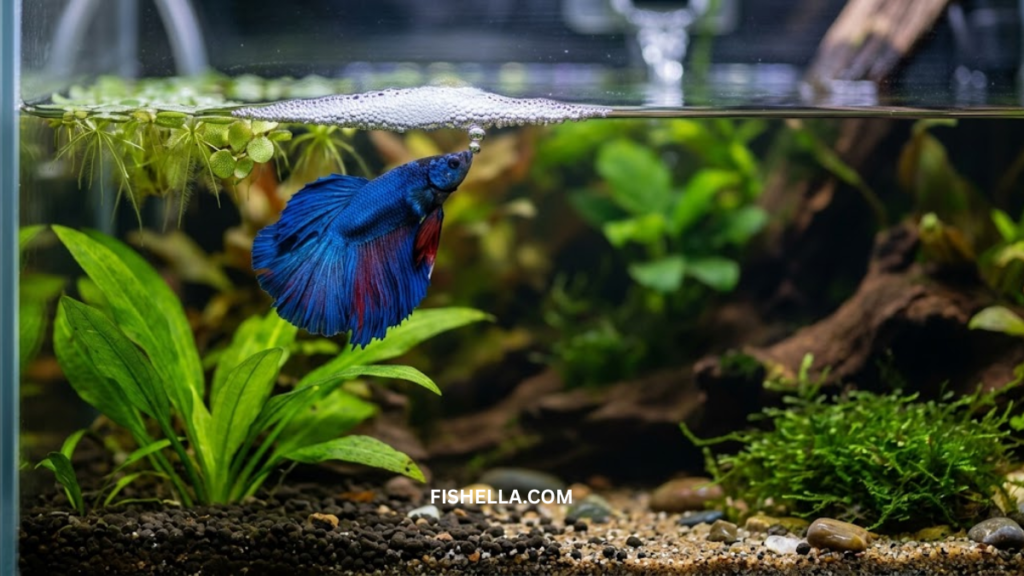
A still betta can give you a scare. Most of the time, your fish is just resting. A sleeping betta may float near the top, sit on a leaf, or settle on the bottom. Its gills usually keep moving slowly. This guide shows how to tell if a betta fish is sleeping or dead. You will learn safe ways to check your fish and what to do next. Stillness alone does not prove a fish has died.
Betta fish may rest quietly and become active when they notice movement nearby. Learn whether betta fish recognize their owners to better understand some of their everyday behaviors.

How to Tell If a Betta Fish Is Sleeping or Dead
Start with a calm check. Do not touch the tank yet. Look at three things: the gills, the body, and how your fish reacts to light and movement outside the tank.
A sleeping betta usually shows slow gill movement. It may drift or wiggle a fin when you turn on a light. A dead betta has no gill movement over several minutes of careful watching. Its body may look stiff, faded, or cloudy.
No single sign is a perfect test. Use the table below as a guide, not a final answer.
| What you see | Likely resting | May be seriously ill | May be dead |
|---|---|---|---|
| Gills | Slow, steady movement | Fast, weak, or gasping | No movement over several minutes |
| Position | Leaf, hammock, bottom, or near top | Lying on its side or stuck at the bottom | Motionless, may float or sink |
| Reaction | Wakes slowly with light | Weak or delayed reaction | No reaction at all |
| Color and eyes | Normal or slightly pale | Dull color, clamped fins | Faded body, cloudy or sunken eyes |
Signs Your Betta Fish Is Sleeping
Betta fish resting behavior can look odd to new owners. Bettas rest in many places and positions. They have no eyelids, so their eyes stay open.
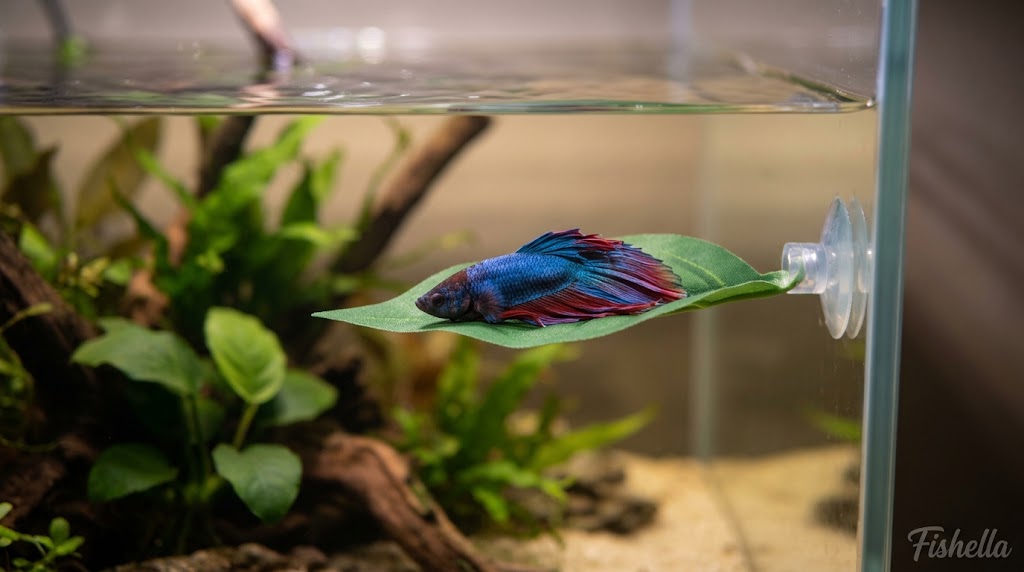
Common Resting Positions
- Lying on a leaf, hammock, or decoration
- Hovering near the surface
- Sitting still on the bottom
- Tucked in a corner or plant
Other Signs of Normal Rest
- The fish rests more at night or when the room is dark.
- Colors may look a little paler.
- It swims off after you turn on the light.
- It eats and acts normally during the day.
A betta sleeping at the bottom of the tank can be normal. Watch the gills before you worry.
Signs Your Betta Fish May Be Seriously Ill or Dying
Signs of a dying betta fish can look like sleep at first. The difference is usually in the pattern. A sick fish acts strange for hours or days, not just at night.
Watch for these warning signs:
- Lying on its side and struggling to right itself
- Staying at the bottom all day, even when the lights are on
- Fast or heavy gill movement
- Clamped fins, dull color, or white patches
- Refusing food for more than a day or two
- Swimming in odd ways or gasping at the surface
One sign alone cannot name a disease. Fish experts at the University of Florida IFAS Extension note that gasping at the surface, hanging listlessly, or not eating can mean something is wrong. Many problems cause similar behavior. If you see white patches or torn fins, read our guide to common betta fish diseases and symptoms.
Why Water and Temperature Matter
Bettas are tropical fish. Many care guides suggest keeping the water between 76°F and 82°F. Cold water can slow your fish down. Very hot water can stress it. A betta fish water temperature guide can help you set up a safe range.
Poor water quality is another common cause. Fish waste and old food make ammonia and nitrite. Both can harm fish. New tanks often have unsafe ammonia, so learn how to cycle a fish tank before adding your betta.University extension guidance on fish health says to check oxygen, ammonia, nitrite, and pH when fish seem sick. In a settled tank, ammonia and nitrite should both read zero.
What If Your Betta Fish Is Not Moving but Still Breathing?
A betta fish not moving but breathing is alive. That means you should act, not panic.
Your fish may be resting. It may also be weak from cold water, stress, or poor water quality. A betta lying on its side but alive needs close watching. Look at the gills, the tank temperature, and your water test results.
Keep the room quiet. Dim the lights after your check. Give the fish time to rest while you test the water.
How to Check Your Betta Fish Safely

Follow these steps in order.
- Watch from a few feet away. Turn on a soft light. Look at the gill covers behind the eyes. Watch for several minutes.
- Look for small signs of life. Check for fin twitches, eye movement, or slow drifting.
- Check the thermometer. Make sure the tank is in a safe range for bettas.
- Test the water. A liquid test kit can measure ammonia, nitrite, and nitrate. Follow the kit directions.
- Wait and watch again. Check again in 30 to 60 minutes.
Do not tap the glass. Do not shake the tank. Do not poke or scoop the fish again and again. These actions stress a weak fish. They can also make a confusing situation harder to read.

Safe First Steps If Your Betta Looks Distressed
- If ammonia or nitrite is above zero: Do a partial water change. Use dechlorinated water at the same temperature as the tank.
- If the temperature is off: Fix it slowly over several hours. Sudden changes can shock your fish.
- If the tank has no filter or heater: Plan to fix this soon.
- If you are unsure: Do not add medicine. Medicine without a clear reason can add stress.
Not sure how much to change? See how often to change betta fish water.
When to Seek Help for Your Betta Fish
Call an aquatic or exotic animal veterinarian if you see any of these:
- Gasping that does not improve after water fixes
- Lying on its side for more than a few hours
- Swollen belly, raised scales, or open sores
- Not eating for several days
- Sudden changes after a new tank, new water, or new tank mate
Call ahead. Not every vet treats fish. If you cannot reach a vet, a trusted local aquarium shop can help you read your water test. They cannot replace a vet’s exam.
If your betta has passed away, remove it from the tank. Then test the water. A dead fish can foul the water fast. It is not your fault. Many new owners go through this.
Now you know how to tell if a betta fish is sleeping or dead. Watch the gills, check the water, and stay calm.
Frequently Asked Questions
How long should I watch before I decide my betta is dead?
There is no set time that proves death. Watch the gills for several minutes in good light. Also check the body, eyes, and reaction. If you are unsure, test the water and check again later.
Can a betta sleep on its side?
Some bettas rest at odd angles. But lying on its side for hours, or struggling to right itself, is a warning sign. Check the water and temperature right away.
Why is my betta at the bottom of the tank all day?
Cold water, poor water quality, stress, or illness can all cause this. Old age may also play a part. Check the temperature and test for ammonia and nitrite first.
Is a betta that is not moving but breathing in danger?
It may be. Slow gill movement means it is alive. If the stillness lasts through the day, treat it as a health concern.
Should I tap the glass to see if my betta reacts?
No. Tapping stresses a fish and does not give a clear answer. Use light and quiet observation instead.