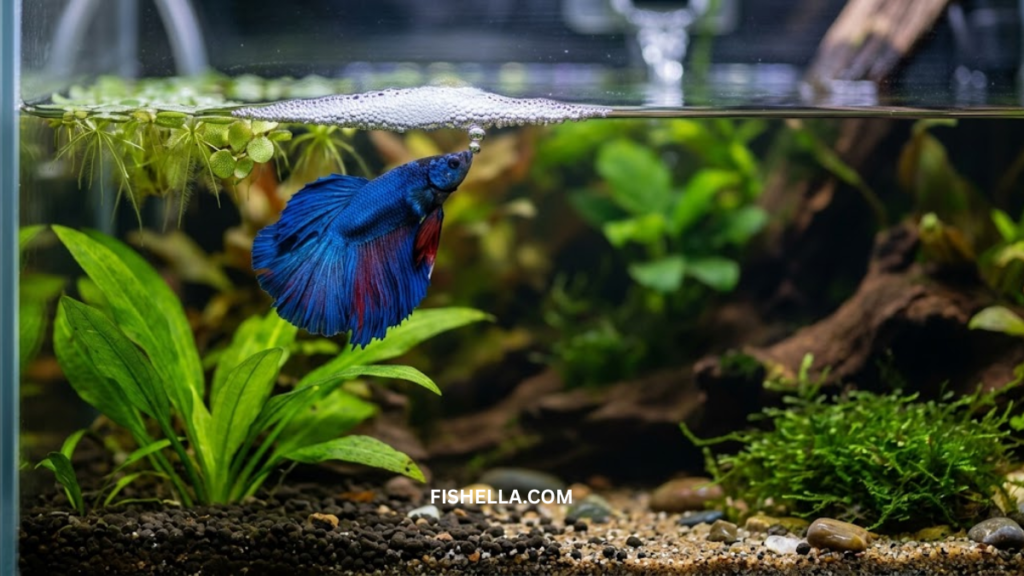
How often to change water in a 5 gallon betta tank? For a cycled, filtered tank with one betta, change about 25% to 30% of the water every week. This means replacing approximately 1.25 to 1.5 gallons in a full 5-gallon tank.
An uncycled tank needs more frequent water changes because ammonia and nitrite can build up quickly. Test the water daily and change it whenever the readings indicate a problem.
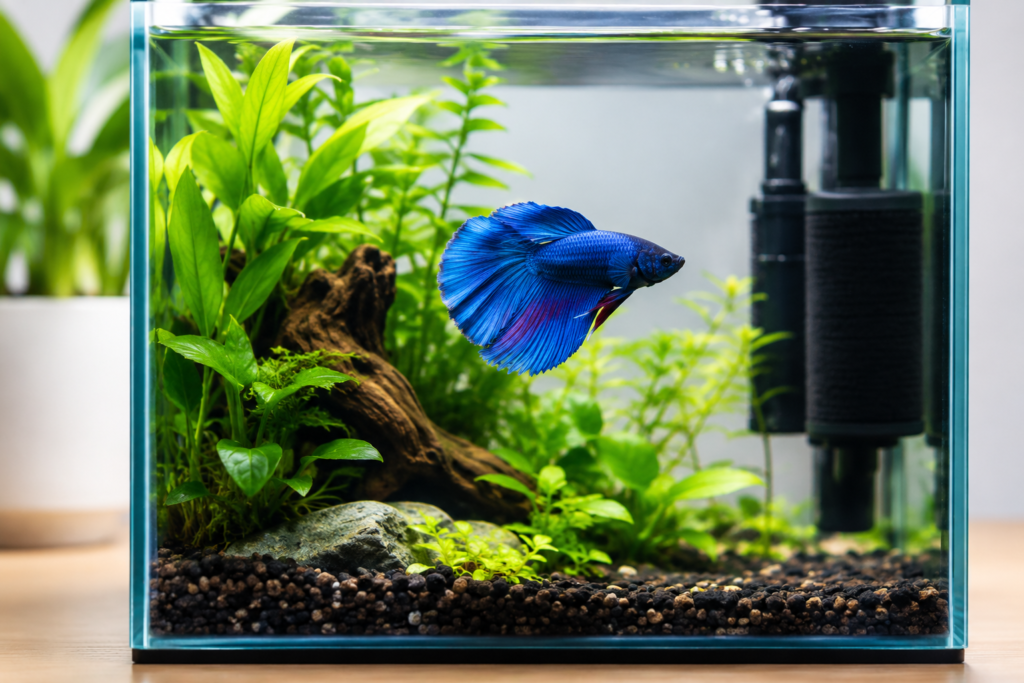
Your feeding habits, filter, live plants, and water test results can also affect your schedule. Follow the routine below to keep your betta’s water clean and stable.
Quick 5-Gallon Betta Water Change Schedule
| Tank Condition | Water Change Amount | Frequency |
|---|---|---|
| Cycled, filtered tank with one betta | 25%–30% | Once a week |
| Heavily planted, lightly stocked tank | 20%–25% as a starting point | Weekly, adjusted using tests |
| Uncycled tank with a betta | As needed based on test results | Test daily; change water when needed |
| Detectable ammonia or nitrite | Often 25%–50%, depending on the reading | Promptly, then retest |
| Nitrate approaching or exceeding 40 ppm | Often 40%–50% | Promptly, then retest |
These amounts are starting points, not fixed rules for every aquarium. Match the replacement amount to your test results and the fish’s condition.
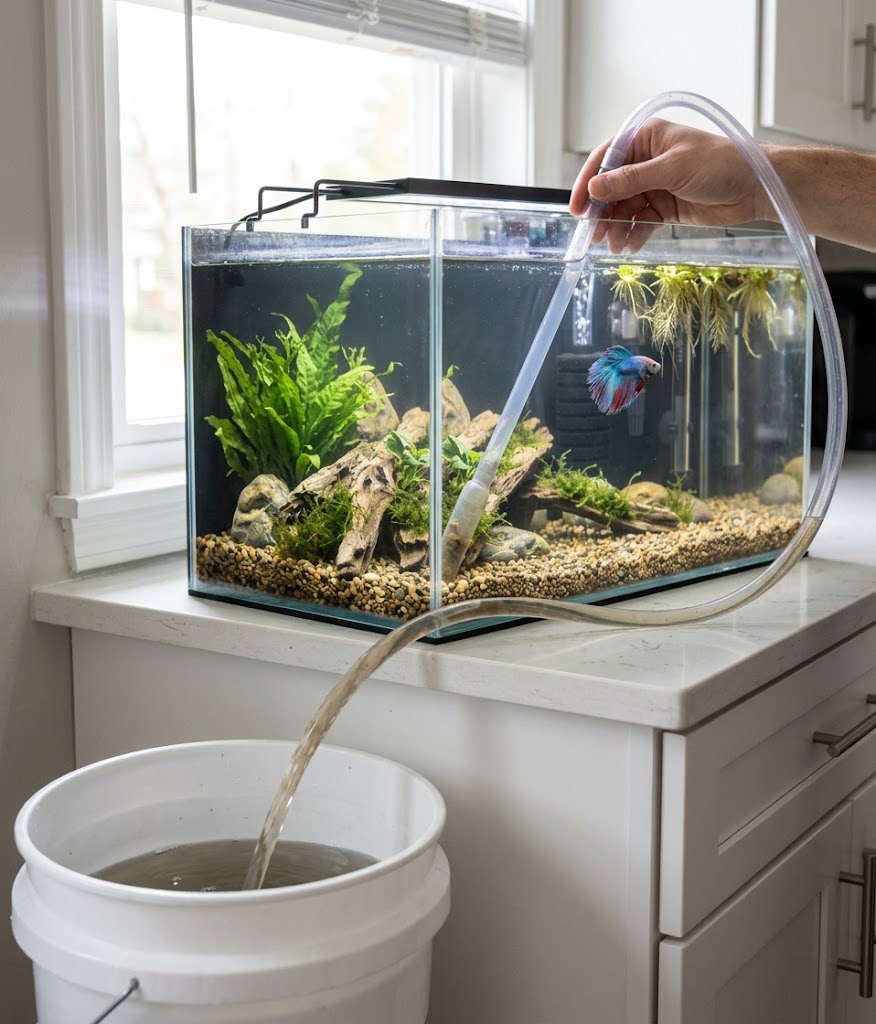
A 5-gallon aquarium may hold less than 5 gallons of actual water after you add gravel, decorations, and equipment. Adjust the amount you remove to the tank’s actual water volume.
Why Does a 5-Gallon Betta Tank Need Regular Water Changes?
Betta fish produce waste, and leftover food breaks down in the water. These processes release ammonia, which can harm your fish. Beneficial bacteria in an established aquarium convert ammonia into nitrite and then nitrate.
A cycled filter supports these bacteria, but it does not remove all the waste that builds up over time. Water changes help control nitrate and other dissolved pollutants.
Small aquariums have less water to dilute waste than larger tanks. Regular maintenance helps keep water quality stable and reduces stress on your betta.
Weekly Water Change Routine for a 5-Gallon Betta Tank
Follow these five steps to maintain a cycled aquarium.
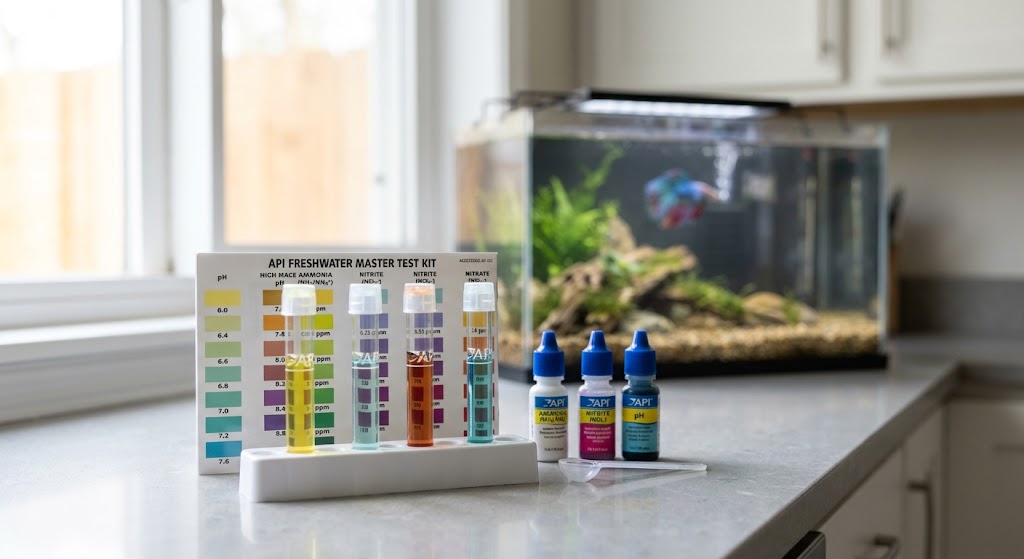
- Test the water. Check ammonia, nitrite, and nitrate with a reliable aquarium test kit. Ammonia and nitrite should both read 0 ppm.
- Remove 25% to 30% of the water. For a full 5-gallon tank, remove approximately 1.25 to 1.5 gallons.
- Prepare replacement water. Use a water conditioner that treats chlorine and chloramine in tap water. To compare two popular water conditioners, see our guide to Seachem Prime vs. API Stress Coat before choosing a product for your aquarium.
- Match the temperature. Keep replacement water close to the aquarium’s temperature to avoid sudden changes.
- Refill slowly. Add the treated water gently to avoid disturbing your betta or uprooting plants.
Choose one day each week for maintenance. Keep the schedule consistent, but change it when water tests show that your tank needs extra attention. Use a reliable aquarium test kit to check ammonia, nitrite, and nitrate levels, and see the available testing products from API Fishcare. If you are unsure which testing method to use, read our comparison of the API Master Test Kit vs. test strips to choose the right option for monitoring your aquarium water.
For detailed cleaning instructions, read our guide on how to clean a fish tank. Choose a suitable tank with enough space for your betta, along with a reliable filter and heater, using our guide to the best betta fish tanks.
What If Your Betta Tank Is Not Cycled?
An uncycled aquarium does not have enough established beneficial bacteria to process fish waste reliably. Ammonia and nitrite can rise quickly, even when the water looks clear.
If your betta already lives in an uncycled tank, follow these precautions:
- Test ammonia and nitrite every day.
- Perform a partial water change promptly when either reading is detectable.
- Adjust the amount you replace according to the test results and fish’s condition.
- Use a suitable water conditioner for all replacement tap water.
- Feed small portions and remove uneaten food.
- Keep the filter running and preserve its beneficial bacteria.
Retest after a water change to check whether the readings have improved. Continue testing until the aquarium can process waste reliably. If you are setting up your first aquarium, compare the best aquarium starter kits to find a setup that suits your space and budget.
Whenever possible, cycle the aquarium before adding fish. Follow our guides to fishless cycling step by step and how to cycle a fish tank fast.
Signs You Need to Change Water More Often
Your regular schedule may not be enough if waste builds up quickly. Check your water tests and look for these warning signs:
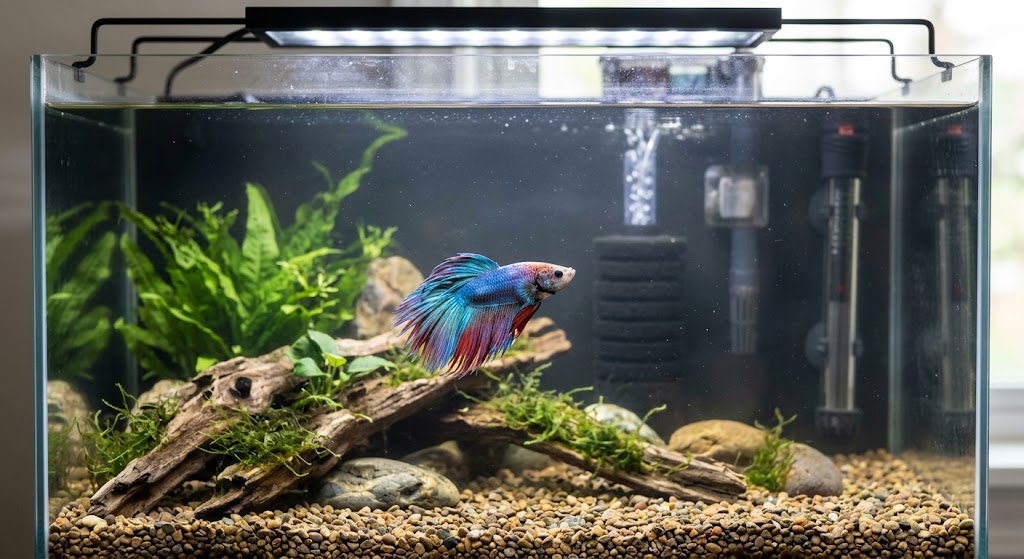
- Ammonia or nitrite above 0 ppm
- Nitrate approaching or exceeding 40 ppm
- Uneaten food or visible waste collecting on the substrate
- Cloudy water that persists after you check the filter and feeding routine
- A betta that gasps at the surface, becomes unusually inactive, or clamps its fins
Cloudy water and unusual behavior can have several causes. Test the water rather than relying on appearance alone.
If ammonia or nitrite is detectable, perform an appropriate partial water change promptly. If your betta struggles to breathe, increase surface agitation and check the water conditions immediately.
Can You Change Too Much Water?
A large water change is not automatically harmful. The main risks are sudden temperature or water-chemistry changes and poor treatment of replacement water.
For routine maintenance, a partial water change of 25% to 30% is a sensible starting point. Larger changes may be necessary when ammonia, nitrite, or other pollutants reach unsafe levels.
Follow these precautions:
- Treat replacement tap water before adding it to the aquarium.
- Match the replacement water’s temperature closely.
- Avoid sudden changes in pH or other water conditions.
- Keep the filter media wet and avoid washing it in untreated tap water.
- Avoid replacing all the filter media at once, because this can remove beneficial bacteria.
If your tank has an urgent water-quality problem, do not avoid a necessary larger water change just to follow your normal schedule.
What Affects Your Betta Water Change Schedule?
Several factors determine whether your tank needs only routine maintenance or more frequent changes.
Feeding Habits
Uneaten food breaks down and adds waste to the aquarium. Feed an appropriate amount and remove leftovers. If you notice frequent food waste, reduce the portion rather than relying on extra water changes alone.
Live Plants
Healthy live plants absorb some nitrate and can help improve water quality. However, plants do not eliminate the need for regular testing and water changes.
Learn more in our guide to a low-tech planted tank for beginners.
Tank Mates
Snails, shrimp, and other fish add waste to a small aquarium. A higher bioload may require more frequent water changes. Make sure your aquarium has enough space for every animal you keep.
Filter Performance
A properly sized filter supports beneficial bacteria and helps remove suspended debris. However, even a good filter does not replace water changes.
Read our guide on how to choose an aquarium filter.
Water Temperature
Keep your betta’s water temperature stable and appropriate for the species. Temperature alone does not determine your water change schedule, but sudden changes can stress your fish.
See our betta fish water temperature guide.
Common Water Change Mistakes to Avoid
Avoid these mistakes when maintaining a small betta aquarium:
- Adding untreated tap water
- Using replacement water that is much hotter or colder than the tank
- Skipping water tests when the aquarium is uncycled
- Overfeeding and leaving uneaten food in the tank
- Rinsing filter media in untreated tap water
- Replacing all filter media at once
- Assuming clear water is always safe
- Following the same schedule even when test results show a problem
Simple, consistent maintenance helps protect your betta and keeps your aquarium stable.
Frequently Asked Questions
Can I change 100% of the water in a betta tank?
A complete water change is usually unnecessary for routine aquarium maintenance. It can cause stress if the replacement water differs significantly in temperature or chemistry. Use partial changes when possible, but address serious contamination promptly.
Do I need to change water if my betta tank has a filter?
Yes. A filter supports beneficial bacteria and removes some debris, but it does not eliminate nitrate or every dissolved pollutant. Continue regular water changes even when the water looks clean.
Is changing water every two weeks enough for a 5-gallon betta tank?
Not necessarily. A weekly water change is a better starting point for a typical 5-gallon betta tank. Consider a longer interval only if repeated water tests confirm that water quality remains suitable.
How much water should I change in a 5-gallon betta tank?
Start with 25% to 30% per week in a cycled, filtered aquarium. That equals about 1.25 to 1.5 gallons when the tank contains a full 5 gallons of water. Adjust the amount if your actual water volume differs.
Should I remove my betta during a water change?
No. For a routine partial water change, leave your betta in the aquarium. Removing the fish adds unnecessary handling and stress.
Final Thoughts
For a typical cycled, filtered 5-gallon betta tank, change 25% to 30% of the water once a week. Test ammonia, nitrite, and nitrate regularly, and increase water changes when the results indicate a problem.
A consistent routine, suitable filtration, careful feeding, and properly treated replacement water help keep your betta’s environment healthy.
For complete guidance on tank setup, feeding, water quality, and daily care, visit our betta fish care guide.