
Keeping aquarium fish can be a rewarding hobby, but responsible fishkeeping involves more than choosing colorful fish and feeding them every day. Fish depend on their owners for a suitable environment, proper attention, protection from stress, and consistent long-term care.
Many beginners focus on buying an aquarium and selecting fish. However, they may overlook important decisions such as choosing compatible species, recognizing normal behavior, introducing new fish safely, and preparing for emergencies.
This fish care guide explains how to become a more responsible fishkeeper. You will learn what to consider before buying fish, how to help new arrivals settle in, how to recognize behavioral changes, and how to maintain good habits throughout your fish’s life.
Whether you are keeping your first freshwater fish or improving an existing aquarium, these practical tips can help you make better decisions. Learn how to keep your betta healthy with this complete Betta Fish Care Guide.
What Is Responsible Fish Care?
Responsible fish care means understanding the needs of your fish and providing suitable conditions throughout their lives.
Every species has different requirements. Some fish prefer living in groups, while others are territorial. Some spend most of their time near the surface, while others prefer the middle or bottom of the aquarium.
A responsible fishkeeper learns these differences before bringing fish home.
Good fish care includes:
- Researching a fish’s adult size and natural behavior.
- Choosing compatible species.
- Observing fish every day.
- Providing appropriate hiding and resting places.
- Preventing unnecessary stress.
- Recognizing unusual behavior.
- Planning for long-term care.
- Seeking professional help when necessary.
Fish cannot explain when something is wrong. Your observations help you recognize changes before they become serious problems. Learn how to keep your goldanfish healthy with this complete Goldfish Care Guide.
1. Understand the Responsibility Before Buying Fish
Before purchasing an aquarium fish, consider whether you can provide the care it needs.
Fishkeeping involves ongoing responsibilities. You need time to observe your animals, maintain their environment, purchase suitable supplies, and respond when problems occur.
A fish may live for several years, depending on its species and living conditions. Some larger species can live much longer.
Do not choose a fish simply because it looks attractive in a store.
Ask yourself these questions:
- Can I provide enough space for its adult size?
- Can I meet its environmental requirements?
- Does it need to live with other fish?
- Can I provide suitable food?
- Can I afford routine supplies and unexpected care?
- Do I have time to monitor its behavior?
- What will happen if I need to travel?
These questions help prevent impulse purchases.
Consider the Long-Term Commitment
A small fish at a pet store may grow considerably after purchase.
Its adult size can affect swimming space, compatibility, feeding requirements, and the amount of care needed.
Some fish also reproduce quickly. Livebearers such as guppies can produce more young than beginners expect.
Before buying a species, research its expected lifespan, adult size, breeding behavior, and social requirements.
For general species-selection advice, explore our guide to the best fish pets for beginners.
2. Choose Fish That Match Your Experience
Not every fish is suitable for every beginner. Some species tolerate a wider range of conditions, while others require more specialized care.
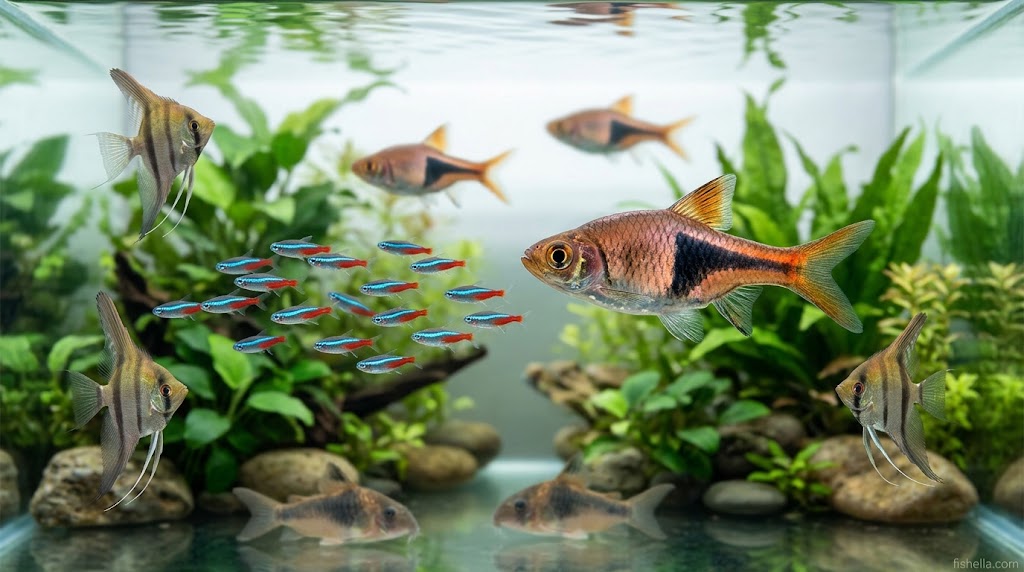
Your experience level, available aquarium space, and maintenance routine should influence your choice. Before buying new fish, learn how to select healthy fish by checking their appearance, swimming behavior, and aquarium conditions
Consider These Five Factors
1. Adult size
Research how large the fish becomes when fully grown. Never choose an aquarium based only on the size of a young fish.
2. Temperament
Some fish are peaceful, while others defend their territory or attack smaller tank mates.
3. Social behavior
Certain species need groups of their own kind. Others prefer living alone.
4. Environmental requirements
Temperature, water hardness, pH, and other conditions differ between species.
5. Activity level
Active swimmers may need more open space than fish that spend much of their time resting or exploring sheltered areas.
Do Not Mix Fish Just Because They Look Similar
Two freshwater species may look compatible but have different environmental needs.
For example, some fish prefer cooler conditions, while others require warmer tropical water.
Their behavior also matters. A peaceful fish may become stressed when kept with aggressive or fin-nipping companions.
Before purchasing a new species, research its complete care requirements.
Our tropical fish care guide explains important considerations for keeping tropical freshwater fish.
3. Learn How to Recognize Healthy Fish Before Purchase
Choosing a healthy fish is an important part of responsible fishkeeping.
A fish may look attractive in a display aquarium but still show early signs of stress or illness.
Spend a few minutes observing the fish before purchasing it.
What Does a Healthy Fish Look Like?
Look for these general signs:
- It swims normally for its species.
- Its breathing appears steady.
- Its fins are not obviously damaged.
- Its body has no visible open sores.
- It responds normally to its surroundings.
- It shows interest in its environment.
- It does not appear extremely weak or uncoordinated.
Remember that natural behavior varies. Some species rest more often, while others are constantly active.
Warning Signs to Watch For
Avoid rushing into a purchase if you notice:
- Several fish gasping near the surface.
- Fish lying motionless when they should be active.
- Visible white spots or unusual growths.
- Damaged or deteriorating fins.
- Unusual swimming or balance problems.
- Fish repeatedly scratching against objects.
- Several dead fish in the same display system.
One unusual behavior does not always indicate disease. However, several warning signs deserve attention.
Observe the Entire Display Aquarium
Do not inspect only the fish you intend to purchase.
Look at the other fish sharing its aquarium. If several fish appear unhealthy, the display system may have a larger problem.
Ask the seller:
- How long have these fish been in the store?
- Are they eating normally?
- Have any fish recently become sick?
- What water conditions are they kept in?
- Are these fish captive-bred or wild-caught?
A responsible seller should be willing to answer reasonable questions.
If you are uncertain about a fish’s condition, wait before purchasing it.
4. Prepare Before Bringing New Fish Home
Buying fish is only one part of the process. You should prepare everything before the animal arrives.
A suitable aquarium should already be established and ready for the particular species.
Do not purchase fish first and then begin preparing their environment.
Prepare a Safe Arrival Plan
Before visiting the store:
- Confirm that the aquarium is ready.
- Check that the equipment is operating.
- Research the species’ environmental requirements.
- Make sure the fish has enough suitable space.
- Prepare a clean container or suitable transport arrangement if needed.
- Have an appropriate acclimation plan.
- Avoid buying additional fish without checking compatibility.
Your aquarium should be ready to receive the new arrival without rushed changes.
For help with the initial aquarium preparation, see our freshwater aquarium setup guide.
Transport New Fish Carefully
Fish can experience stress during transport because of movement, temperature changes, and limited water volume.
Ask the store to pack the fish appropriately.
Keep the bag away from direct sunlight and extreme temperatures. Avoid leaving fish inside a parked vehicle, especially during hot or cold weather.
Go home directly when possible.
Long, unnecessary stops increase the time fish spend inside a small transport bag.
5. Introduce New Fish Carefully
Moving a fish into a different aquarium is a significant environmental change. The water temperature and chemistry may differ from those at the store.
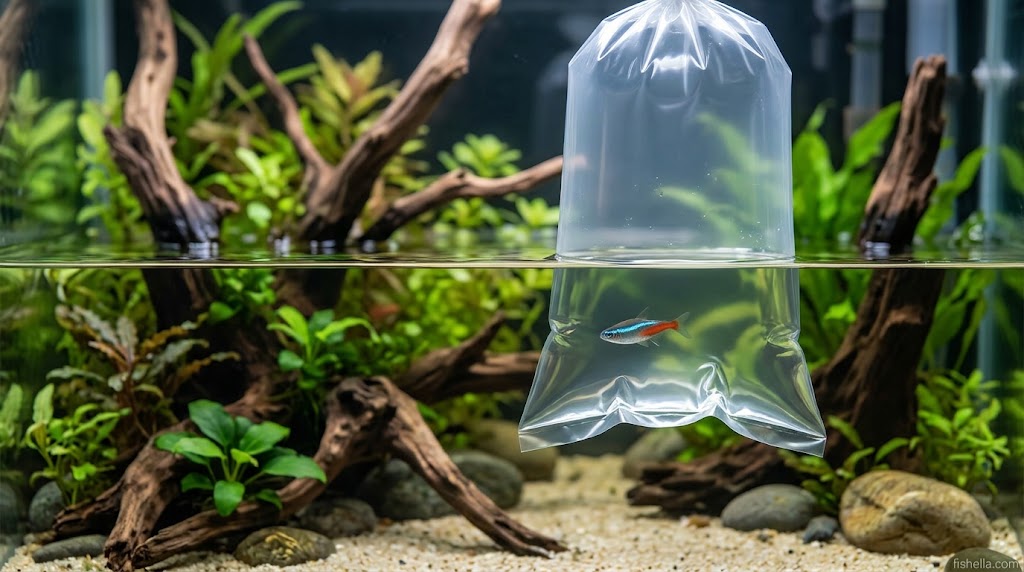
A sudden transition can increase stress.
Why Acclimation Matters
Acclimation helps fish adjust to their new environment.
The appropriate method depends on the species, transport conditions, and differences between the two water sources.
Some hardy freshwater fish may be suitable for a temperature-floating and gradual water-mixing approach. Sensitive species may require a more controlled method.
Do not automatically use the same procedure for every aquatic animal. A separate quarantine setup can help reduce the risk of introducing disease to established fish. Read more about fish quarantine and disease prevention
Important Steps After Arrival
- Keep the transport container protected from excessive light.
- Avoid shaking or rapidly moving the bag.
- Follow an appropriate acclimation method.
- Avoid adding transport water to the display aquarium.
- Transfer the fish carefully.
- Keep the aquarium environment calm after introduction.
For detailed instructions, follow our how to acclimate fish using the drip method guide.
That article explains when drip acclimation is useful and why it is not necessary for every fish.
6. Give New Fish Time to Settle
New fish may behave differently during their first few days in an aquarium.
They are adjusting to unfamiliar surroundings, lighting, movements, sounds, and other animals.
Some fish explore immediately. Others hide until they feel secure.
Do not assume that every fish will become active immediately.
What Can You Expect During the First Few Days?
A newly introduced fish may:
- Explore different parts of the aquarium.
- Stay near plants or decorations.
- Avoid unfamiliar tank mates.
- Show less interest in food initially.
- React to movement outside the aquarium.
- Spend time in sheltered areas.
Observe the fish without constantly disturbing it.
Avoid tapping the glass, moving decorations repeatedly, or placing your hands inside the aquarium unnecessarily.
Do Not Add More Fish Immediately
Adding several fish at once can make it harder to observe individual behavior.
It may also increase the aquarium’s biological load and introduce additional disease risks.
Introduce fish gradually according to your stocking plan.
Monitor the existing fish after every addition.
If the aquarium shows signs of stress or an environmental problem, stop adding new animals until the issue is resolved.
7. Learn to Read Your Fish’s Behavior
Fish communicate through movement, posture, feeding behavior, social interactions, and responses to their surroundings.
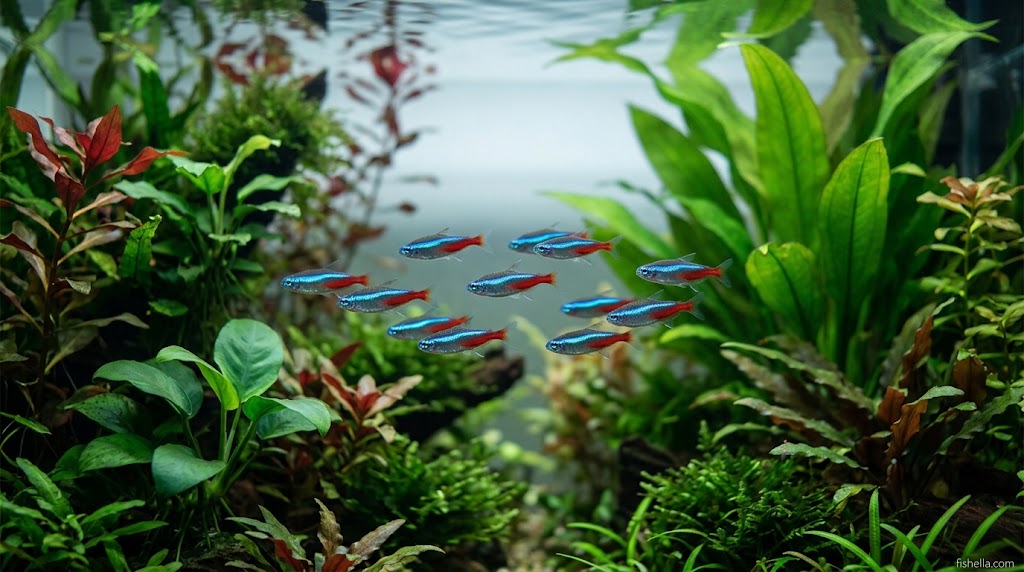
Learning what is normal for your species helps you recognize changes.
Observe Normal Swimming Patterns
Some fish swim continuously through open water.
Others spend more time near the substrate, plants, or aquarium decorations.
A fish that naturally rests during the day should not automatically be considered sick.
Learn the normal activity pattern of each species you keep.
Watch Their Breathing
Fish use their gills to obtain oxygen from water.
Steady gill movement is generally expected.
However, rapid breathing, persistent surface gasping, or unusual gill movement can indicate a problem.
Check the environment promptly if these signs appear.
Observe Their Appetite
A healthy feeding response can provide useful information about a fish’s condition.
However, appetite varies between species and individuals.
A fish that misses one meal is not necessarily sick.
Repeated food refusal, especially when combined with unusual swimming or physical changes, deserves investigation.
Notice Changes in Social Behavior
Watch how fish interact.
Repeated chasing, biting, fin damage, and preventing another fish from accessing food may indicate an unsafe social arrangement.
Do not assume that aggression is harmless simply because the fish are the same size.
If one fish repeatedly attacks another, separate them when necessary.
For additional information about stress signs in tropical fish, read our tropical fish care guide.
8. Reduce Unnecessary Stress in the Aquarium
Stress is an important concern in fishkeeping.
Fish may experience stress because of unsuitable surroundings, aggressive tank mates, repeated disturbance, sudden environmental changes, or other problems.
Long-term stress can affect normal behavior and make fish more vulnerable to illness.
Provide Suitable Hiding Places
Plants, caves, and other aquarium-safe decorations can give fish places to retreat.
However, decorations should match the species.
A fish that prefers open swimming space may not benefit from an aquarium filled with large decorations.
Consider the following:
- Provide sheltered areas for shy species.
- Leave enough open swimming space.
- Avoid sharp decorations.
- Check that caves and openings cannot trap fish.
- Use aquarium-safe materials.
- Keep decorations stable.
Avoid Constant Disturbance
Repeatedly tapping the glass or chasing fish with a net can create unnecessary stress.
Perform maintenance calmly and avoid sudden movements.
Do not rearrange the entire aquarium every few days without a good reason.
Maintain a Predictable Lighting Routine
Fish benefit from a regular light and dark cycle.
Constant lighting can interfere with normal resting behavior and encourage algae growth.
Use a consistent aquarium lighting schedule appropriate for your fish and plants.
For more detailed lighting advice, read our aquarium light schedule guide.
Watch the Filter Flow
Strong water movement can be uncomfortable for some fish, particularly species that naturally prefer gentle currents.
Observe whether fish struggle to swim, remain behind decorations, or avoid certain areas.
Do not switch off filtration to solve a current problem. Adjust the flow appropriately while maintaining biological filtration.
Our guide to slowing down aquarium filter flow explains practical options.
9. Understand Relationships Between Tank Mates
Community aquariums require more than choosing fish that have similar body sizes.
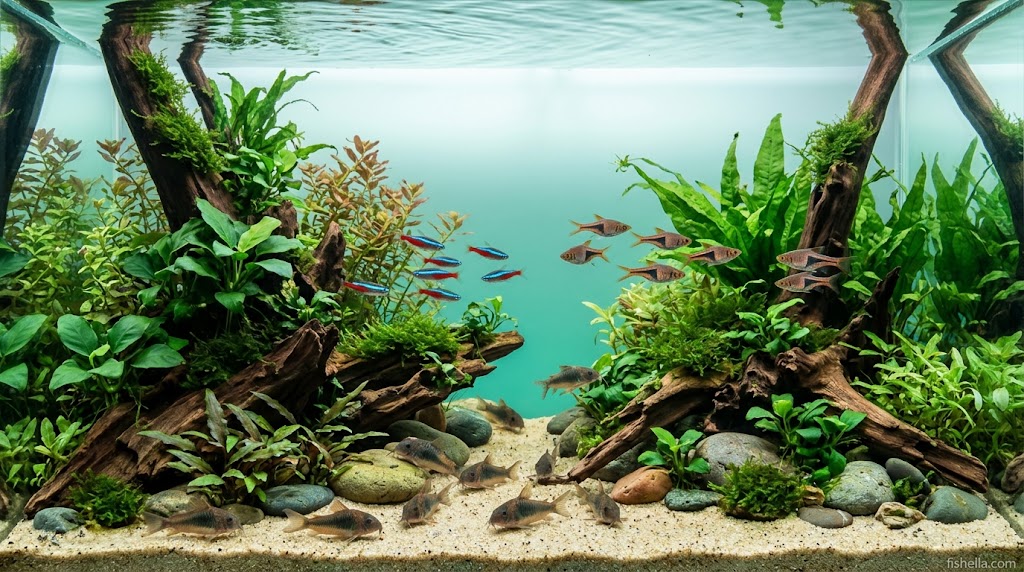
A peaceful aquarium depends on compatible behavior and environmental requirements.
Watch for Bullying
Some fish establish territories and defend particular areas.
Others may chase smaller fish or nip long fins.
Look for repeated patterns rather than judging one brief interaction.
Warning signs include:
- One fish constantly chasing another.
- Fish hiding whenever a particular tank mate approaches.
- Torn or damaged fins.
- Fish being prevented from reaching food.
- One animal remaining trapped in a corner.
- Repeated attacks during feeding.
Provide Enough Space
Crowding can increase competition and make it difficult for fish to avoid aggressive companions.
Aquarium decorations and plants can create visual barriers, but they cannot make fundamentally incompatible species safe together.
Be Prepared to Separate Incompatible Fish
If aggression continues, separation may be necessary.
Have a suitable alternative aquarium or rehoming plan available before introducing potentially territorial species.
Do not wait until a fish has severe injuries before taking action.
For betta owners, our betta fish tank mates guide explains species compatibility considerations.
10. Build a Simple Daily Fish Care Routine
Daily observation is one of the most useful habits in fishkeeping.
You do not need to spend hours watching your aquarium. A few minutes of careful observation can help you identify changes.
Daily Observation Checklist
Before feeding:
- Look at each fish.
- Check swimming behavior.
- Notice unusual hiding.
- Look for visible injuries.
- Check whether fish are breathing normally.
During feeding:
- Observe which fish approach the food.
- Notice whether one fish is being bullied.
- Check whether food reaches the intended animals.
- Avoid adding more food than necessary.
After feeding:
- Remove uneaten food when appropriate.
- Look for unusual behavior.
- Check that aquarium equipment is operating.
Why Consistency Matters
A regular routine helps you understand your fish’s normal behavior.
For example, a fish that usually swims actively but suddenly remains hidden may be experiencing a problem.
You may not notice this change if you only look at the aquarium once every few days.
11. Manage Feeding Without Overfeeding
Feeding is an important part of fish care, but giving more food does not automatically improve fish health.
Different species need different diets, and their nutritional requirements can change as they grow.
The purpose of a feeding routine is to provide suitable nutrition without creating unnecessary waste. Regular observation, proper nutrition, water quality checks, and consistent maintenance are important parts of routine fish health care
Observe How Your Fish Eat
Pay attention to:
- Whether all fish get access to food.
- Whether food is being eaten.
- Whether some fish consistently miss meals.
- Whether one fish dominates feeding.
- Whether food remains uneaten.
Some fish feed at the surface, others in the middle of the water, and some search the bottom.
Make sure the food reaches the appropriate feeding area.
Adjust Feeding to the Species
Do not assume that every fish can eat the same food.
Research whether your species is primarily carnivorous, herbivorous, or omnivorous.
Also consider the fish’s age and natural feeding behavior.
For specialist feeding advice, use the relevant Fishella species and food guides rather than applying one diet to every aquarium.
Watch for Physical Changes
Changes in body condition can provide useful information.
A fish that becomes noticeably thinner may not be receiving enough food or may have a health problem.
An unusually swollen abdomen may have several possible causes.
Do not diagnose a disease based on appearance alone.
12. Understand How Fish Needs Change Over Time
Fish care does not remain exactly the same throughout an animal’s life.
Young fish may have different nutritional and social requirements from mature adults.
Some species also change behavior as they become larger or reach breeding maturity.
Growth and Adult Size
A fish that fits comfortably in an aquarium as a juvenile may need more space as it grows.
Review the aquarium’s suitability periodically.
Do not wait until the fish is visibly overcrowded before making a plan.
Changes in Social Behavior
Some fish become more territorial as they mature.
A community arrangement that initially appears peaceful may become unsuitable later.
Watch for new chasing, fin damage, or competition for territory.
Aging Fish
Older fish may become less active or show changes in feeding behavior.
However, do not automatically attribute every unusual symptom to age.
Environmental problems and illness can affect fish at any life stage.
If an older fish develops persistent symptoms, investigate the cause.
Reassess Your Aquarium Regularly
Ask yourself:
- Have my fish reached adult size?
- Is there enough swimming space?
- Are all animals still compatible?
- Are they eating normally?
- Has their behavior changed?
- Does the current aquarium still meet their needs?
Responsible fishkeeping means adapting as your animals develop.
13. Keep Simple Fish Care Records
A small aquarium journal can help you identify patterns and understand changes. You do not need complicated software.
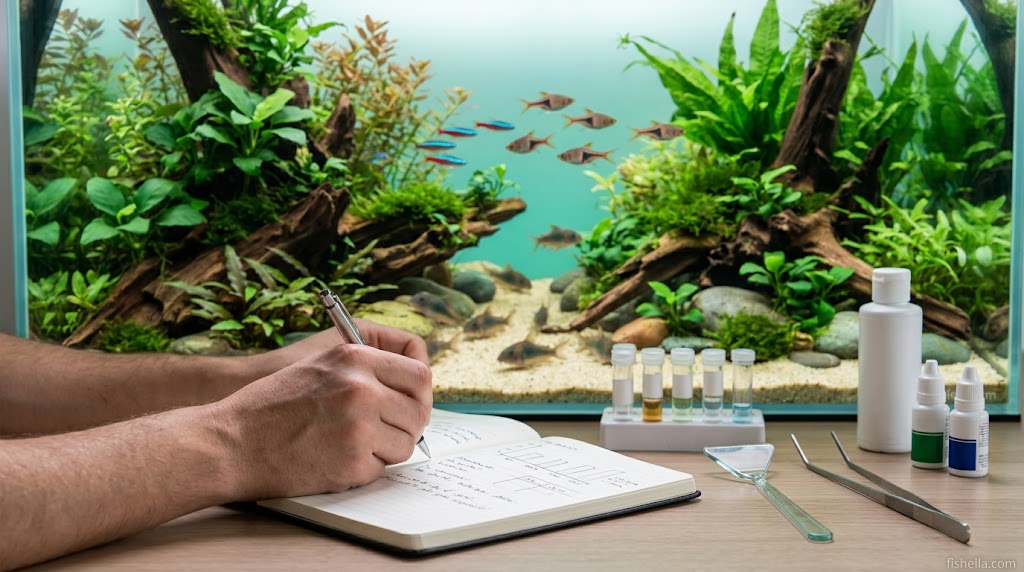
A notebook or spreadsheet is enough.
What Should You Record?
Consider keeping track of:
| Record | Why It Helps |
|---|---|
| Fish purchase date | Tracks how long you have kept each fish |
| Species and number | Helps monitor stocking |
| Feeding routine | Identifies changes in appetite |
| Water test results | Shows changes over time |
| Water changes | Helps review maintenance |
| New fish introductions | Helps trace possible problems |
| Unusual behavior | Supports early problem detection |
| Treatments | Prevents confusion about previous medication |
| Equipment changes | Helps identify possible causes of stress |
Look for Patterns
For example, suppose a fish becomes unusually inactive after a new decoration is introduced.
Your records may help you connect the change with that event.
This does not prove the decoration caused the problem, but it gives you useful information to investigate.
Similarly, keeping water test records can help identify recurring problems.
Why Photographs Can Help
Taking occasional photographs can help you compare body condition, fin appearance, and physical changes over time.
Use consistent lighting and viewing angles where possible.
Avoid using flash repeatedly if it disturbs the fish.
14. Prepare for Aquarium Problems and Emergencies
Even well-maintained aquariums can experience unexpected problems.
A heater may stop working, a filter may fail, or several fish may suddenly show unusual behavior.
Being prepared can help you respond calmly.
Keep Basic Emergency Supplies
Useful items may include:
- A suitable water conditioner.
- An aquarium thermometer.
- A reliable water test kit.
- A clean aquarium-only bucket.
- A gravel vacuum.
- A backup air pump or suitable aeration option.
- A spare heater appropriate for your aquarium.
- A separate, suitable quarantine or hospital setup when possible.
Choose equipment according to your aquarium and the fish you keep.
Recognize Urgent Warning Signs
Take immediate action when you notice:
- Several fish gasping at the surface.
- Multiple fish suddenly becoming weak.
- Sudden loss of balance.
- Rapid or labored breathing.
- A failed heater during extreme temperatures.
- Filter failure accompanied by worsening water conditions.
- Several unexplained deaths.
Do not immediately add random medication.
First identify whether the problem involves water quality, oxygen, temperature, equipment, or disease.
Know When to Seek Professional Help
An aquatic veterinarian is the appropriate professional for diagnosing serious fish health problems.
Seek help when symptoms are severe, continue despite correcting environmental issues, or affect several animals.
A reputable aquarium store may help with equipment and basic water testing, but it cannot replace veterinary diagnosis.
For urgent situations, use our specialist resources:
15. Plan for Fish Care When You Travel
Leaving an aquarium unattended requires preparation.
Do not assume that a fish can safely go without attention simply because you are away for a few days.
Your plan should depend on the species, aquarium stability, feeding requirements, and length of your absence.
Prepare Before Leaving
Before a trip:
- Check that the aquarium equipment works.
- Review the fish’s normal behavior.
- Confirm that the aquarium is stable.
- Complete necessary routine maintenance.
- Arrange a reliable person to check the aquarium if needed.
- Leave clear feeding instructions.
- Provide emergency contact information.
Avoid making major changes immediately before departure.
Choose a Responsible Fish Caretaker
If someone will look after your aquarium, explain the routine clearly.
Do not simply tell them to feed the fish whenever they look hungry.
Prepare written instructions covering:
- What food to use.
- How much food to provide.
- When to feed.
- Which equipment must remain switched on.
- What unusual signs to watch for.
- Who to contact during an emergency.
Pre-measured portions can help prevent accidental overfeeding.
Be Careful With Automatic Feeders
Automatic feeders can be useful, but they should be tested before your trip.
Check that the food dispenses correctly and that the amount is appropriate.
Do not install a new feeder for the first time on the day you leave.
16. Practice Responsible Fish Ownership
Responsible fishkeeping also means thinking about the wider environment. Aquarium fish and plants should never be released into lakes, rivers, ponds, or other natural waterways.
Some aquarium species can survive outside their original habitats and become invasive.
They may compete with native wildlife or introduce diseases.
What If You Can No Longer Keep Your Fish?
Sometimes personal circumstances change.
You may move home, lose access to suitable space, or discover that your aquarium cannot safely accommodate a growing fish.
Do not abandon the animal or release it outdoors.
Consider:
- Contacting a reputable aquarium store.
- Asking a local aquarium club for help.
- Finding an experienced fishkeeper.
- Contacting a responsible rehoming organization.
- Checking whether a suitable public aquarium accepts donations.
Be honest about the fish’s species, size, health, and behavior.
A responsible new owner needs accurate information before accepting the animal.
Do Not Buy Fish as Impulse Gifts
Fish should not be surprise gifts unless the recipient has already agreed and prepared for their care.
An aquarium is a long-term responsibility, not a decoration that can be discarded when interest fades.
Always consider the animal’s welfare before making a purchase.
17. Review Your Fish Care Routine Regularly
A good fishkeeping routine should change when your aquarium needs change.
Review your care habits periodically.
Ask yourself:
- Am I observing every fish?
- Are all fish getting enough food?
- Are there signs of aggression?
- Are the fish growing normally?
- Is the aquarium still suitable?
- Have I recorded important changes?
- Do I have an emergency plan?
- Can I provide the same level of care long term?
These questions encourage better decisions.
A successful aquarium is not measured only by its appearance. The health, behavior, and welfare of its animals matter much more.
Frequently Asked Questions About Fish Care
What is the most important part of fish care?
Providing a suitable and stable environment is essential. Fish also need appropriate nutrition, compatible companions, regular observation, and long-term attention.
How do I know if my fish is healthy?
Look for normal species-specific swimming, steady breathing, appropriate feeding behavior, and a healthy physical appearance. Sudden changes deserve attention.
Should I buy all my fish at once?
Not usually. Gradual introductions make it easier to observe new fish and monitor changes in the aquarium. They also help avoid sudden increases in biological load.
Why is my new fish hiding?
A newly introduced fish may hide because its surroundings are unfamiliar. However, persistent hiding can also indicate stress, aggression, or unsuitable conditions. Observe its overall behavior.
Can fish recognize their owners?
Some fish learn to associate people with feeding and may respond when someone approaches the aquarium. However, these behaviors do not necessarily prove human-like recognition.
How often should I observe my fish?
Observe your fish every day. Check their swimming, breathing, feeding response, and interactions with other animals.
Is it normal for fish to rest?
Yes. Fish need periods of rest, although their resting patterns vary by species. Learn what is normal for your particular fish.
Why do fish suddenly become aggressive?
Possible reasons include territorial behavior, overcrowding, breeding activity, unsuitable companions, and environmental stress. Observe the interactions and separate fish if necessary.
Can I leave my fish alone during a short trip?
That depends on the species, aquarium stability, and length of your absence. Prepare a suitable care plan and arrange someone to check the aquarium when necessary.
What should I do if several fish suddenly become sick?
Treat it as a potential aquarium emergency. Check water conditions, temperature, equipment, and oxygen availability. Avoid random medication and contact an aquatic veterinarian when needed.
Should I release unwanted aquarium fish into a pond?
No. Never release aquarium fish into natural waterways. Find a responsible rehoming option instead.
Final Thoughts
Good fishkeeping is built on responsible decisions and consistent observation.
Choose fish carefully, understand their natural behavior, prepare before bringing them home, and give them time to settle. Watch how they interact, respond to changes, and adjust their care as they grow.
Do not wait for visible illness before paying attention to your aquarium. Small changes in behavior can provide important clues about your fish’s welfare.
You do not need to know everything on your first day. Continue learning, use reliable specialist resources, and seek professional help when a problem goes beyond routine aquarium care.
At Fishella, our goal is to make freshwater fishkeeping easier through practical guides that help beginners make informed decisions and provide better care for their fish.
Pingback: Lucky Fish for Home: 7 Best Choices and Where to Place Them