If you want to know how to stop betta fish jumping out of tank, start with a secure, well-fitted lid that still allows airflow and has no gaps around cables, tubing or filters. Then fix the cause: keep the water clean, stable and warm, and give your betta a calm setup with hiding places. A lid blocks the escape, but it doesn’t solve whatever is making your fish want to leave.
Learning how to stop betta fish jumping out of tank setups starts with understanding why the fish leaps in the first place. Bettas jump better than most people expect. Jumping is natural for them, and wild bettas are athletic and leap out of the water to catch food. A small gap, a lowered lid or a half-open filter hole is all it takes.
For a complete overview of your fish’s needs, read our Betta Fish Care Guide for beginner-friendly advice on tank setup, feeding, water quality, and health.
Why Do Betta Fish Jump Out of Tanks?
Bettas jump for different reasons. Knowing which one applies to your fish tells you which fix matters most. Before you apply any tip on how to stop betta fish jumping out of tank, work out which cause fits your fish: water, temperature or stress.
Poor water quality
Ammonia and nitrite irritate a betta’s gills and skin. Ammonia can damage the gills and soft tissue, and a fish in uncomfortable water may try to escape it. Jumping combined with gasping, clamped fins or lethargy often points to a water problem, especially in a new or uncycled tank.
Incorrect water temperature
Bettas are tropical fish. Water that is too cold or too hot makes them restless or sluggish. Most keepers aim for about 76–82°F (24–28°C). A fish in water outside that range may behave erratically, including darting and leaping.
Learn how to maintain the ideal temperature for your betta with our Betta Fish Water Temperature Guide.
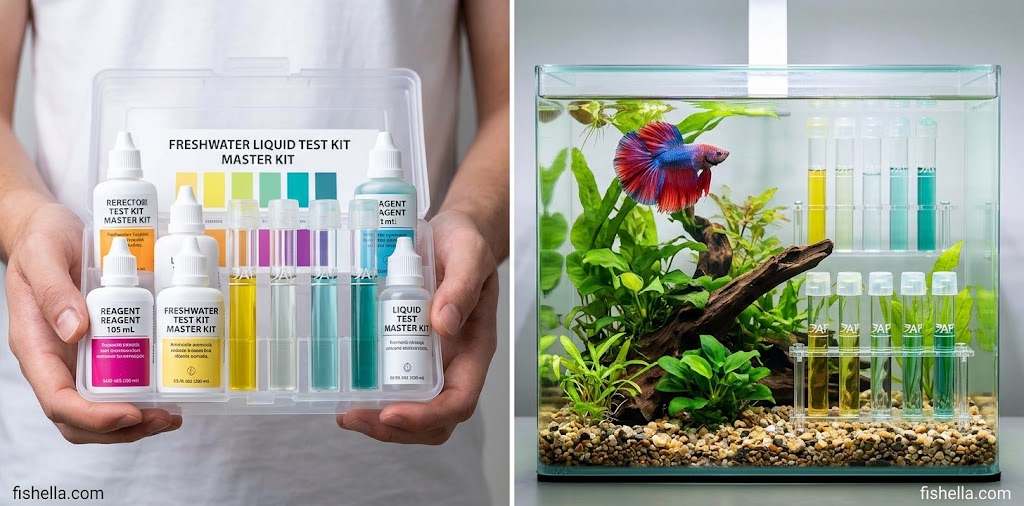
Stress, sudden changes, and unsuitable surroundings
Stressors include:
- A tank that is too small or bare
- Strong filter flow that pushes a long-finned betta around
- Reflections in the glass, especially for males
- Aggressive or unsuitable tank mates
- Sudden light changes, loud noise or vibration
- Shadows passing over an open tank
Fish can also leap out of fright or simple curiosity. Expect an occasional startle jump. Repeated jumping means something in the setup needs attention. Learn how to recognize and manage aggressive behavior in bettas with our guide to Aggressive Betta Fish.
How to Stop Betta Fish Jumping Out of Tank
The nine tips below show how to stop betta fish jumping out of tank by combining physical barriers with better care.
1. Install a secure aquarium lid
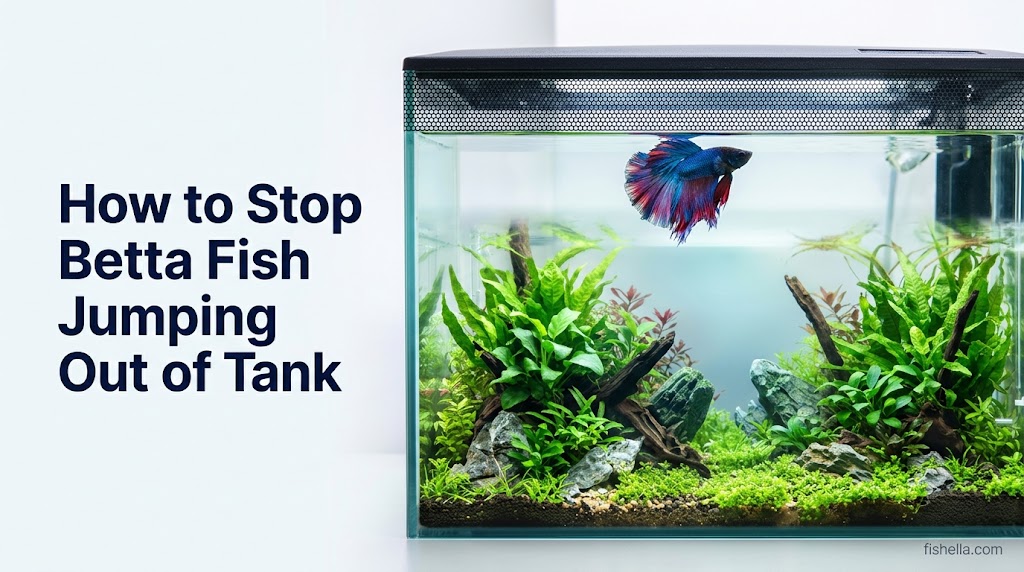
This is the most important fix. Use a glass top, a hood or a fitted mesh cover that sits flush on the rim. A lid that wobbles, slides or only covers part of the tank still leaves a way out. Check that a determined fish can’t push the lid up or squeeze through the edges. If you only follow one piece of advice on how to stop betta fish jumping out of tank, make it this one.
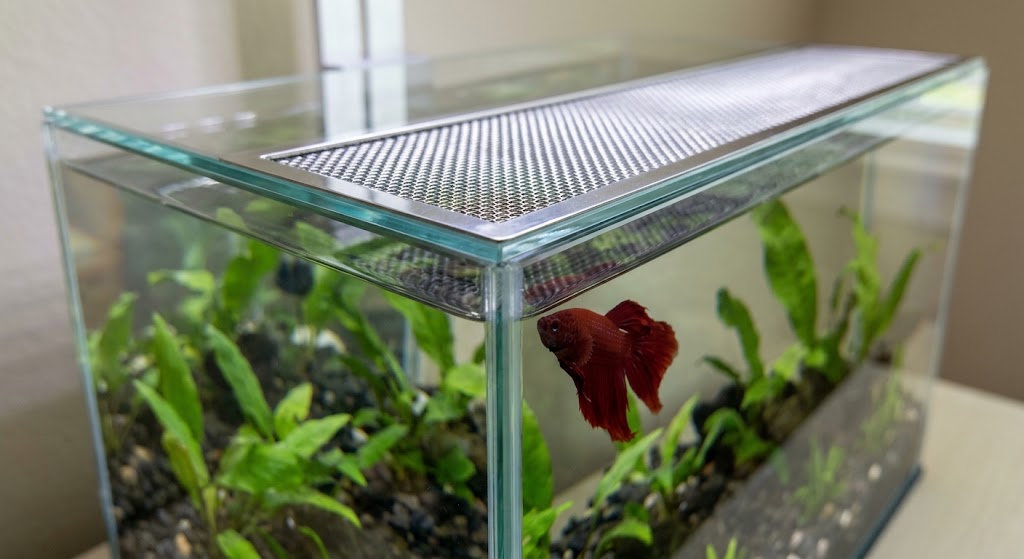
2. Leave no escape gaps around equipment
Filters, heaters, airline tubing and light cables usually need openings. Cut those openings only as large as the equipment needs. Fill leftover space with foam, filter sponge or a custom-cut piece of plastic. Corners and the strip behind the filter are the usual escape points.
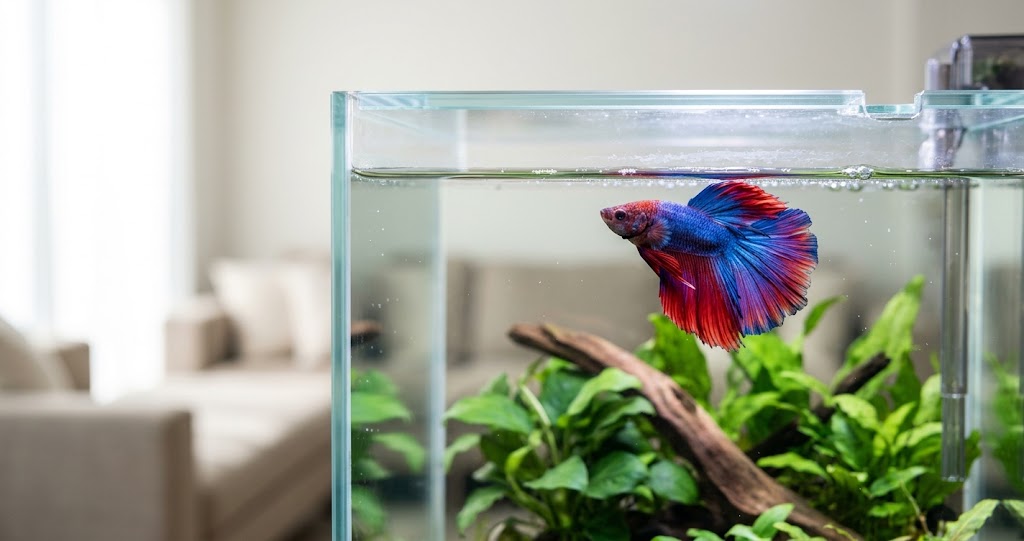
3. Maintain safe water parameters
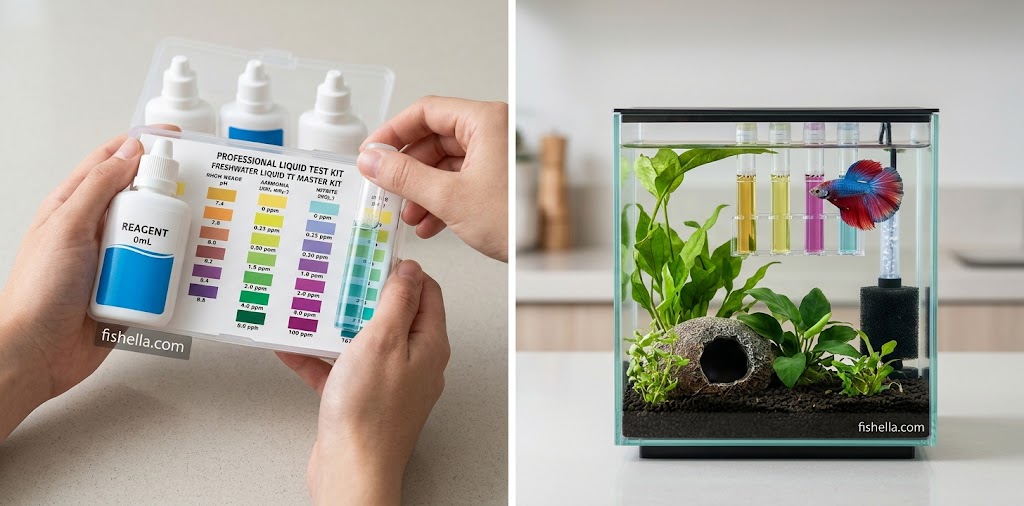
Test your water regularly with a liquid test kit. Ammonia and nitrite should read zero, and nitrate should stay low. Cycle the tank before adding a betta, change part of the water on a steady schedule, and don’t overfeed. Clean water removes one of the most common triggers for jumping. Clean water is a quiet but important part of how to stop betta fish jumping out of tank for good.
4. Keep the water temperature stable
Use an adjustable heater and a thermometer, and check the reading daily. Avoid placing the tank near windows, vents or radiators, where temperature swings are common. Stability matters as much as the number itself.
5. Reduce stress and provide hiding places
Give your betta a larger tank, ideally at least 5 gallons, with live or silk plants, caves and a resting spot near the surface. Soft decorations protect long fins. Reduce harsh filter flow with a sponge or baffle. Cover or reposition anything that creates a mirror-like reflection. Don’t keep bettas with fin-nippers or aggressive fish. Check care guides for betta tank setup and habitat basics.
6. Maintain an appropriate water level
A very full tank makes jumping easy. Lowering the water a few centimetres below the rim helps reduce escapes, though a lower level alone is no substitute for a lid. Bettas also breathe air from the surface, so leave a small air gap between the water and the lid so your fish can reach the surface easily.
7. Avoid sudden disturbances during maintenance
Move slowly during water changes. Avoid fast hand movements over the surface, loud tapping on the glass and large shadows. Turn on the room light before the tank light so the fish isn’t startled. Pour treated water gently rather than dumping it in.
8. Check the tank after water changes
After every water change or cleaning session, check that the lid is back in place, no equipment has shifted, and no new gap has appeared. Also confirm the temperature and water level look right. Many jumps happen right after maintenance, when the lid is half-open or the heater has been moved.
Learn how often to replace aquarium water and keep conditions stable with our guide on How Often to Change Water in a 5-Gallon Betta Tank.
9. Monitor repeated jumping behavior
Note when your betta jumps, such as at feeding time, at night, after lights-on or after a water change. Patterns point to causes. If jumping continues after you’ve fixed the lid and tested the water, review tank size, flow, lighting and decor. If the fish also shows clamped fins, spots, bloating, heavy breathing or loss of appetite, get advice from an aquatic vet or an experienced fish-health professional.

Do Betta Fish Need a Lid on Their Tank?
Yes. A lid is strongly recommended for any betta tank, even if your fish has never jumped. Bettas can leap from the water, and one lapse can be fatal.
A good betta lid:
- Fits snugly with no gaps at the edges
- Is heavy or secure enough that the fish can’t push it up
- Has small, controlled openings for cables, tubing and feeding
- Allows airflow, since bettas breathe at the surface and need a layer of air above the water
- Leaves a small gap between water and lid so the fish can reach the surface
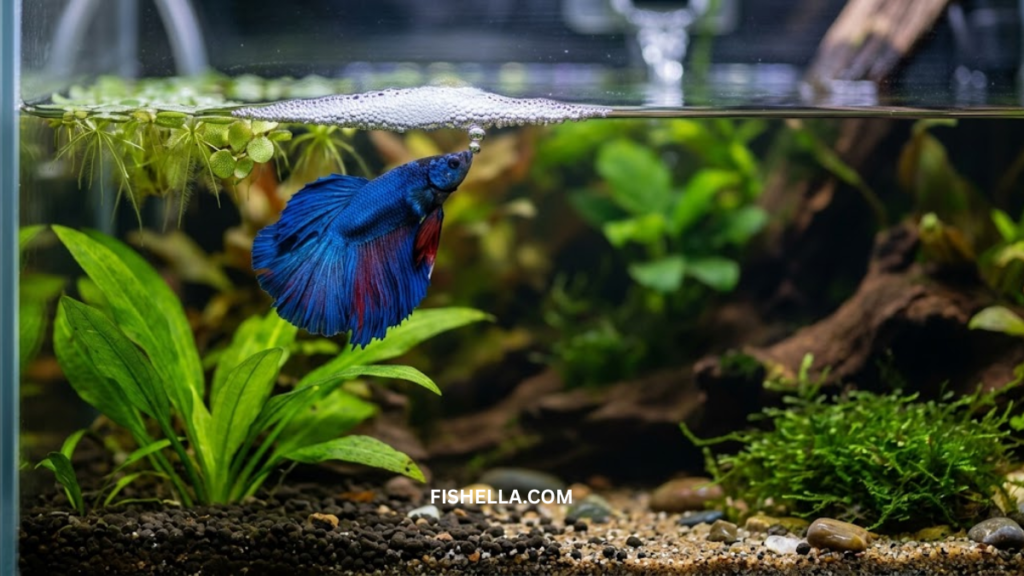
Bettas use a labyrinth organ to gulp air, so don’t seal the tank airtight. Mesh or a lid with ventilation slots balances safety and airflow. Warm, humid air beneath the lid is good for them, but the air gap must stay open. Some owners find that bettas learn to associate lid openings with feeding, so keep the feeding hole small and cover it right after feeding.
What to Do If Your Betta Fish Jumps Out of the Tank
- Act quickly. Wet your hands and gently scoop the fish up. Dry hands can damage its slime coat.
- Return it to clean, suitable tank water at the right temperature, or to a quiet hospital container filled with water from the tank. Don’t use hot or cold water.
- Keep the water calm. Reduce flow, dim the light and leave the fish alone for a while.
- Check the water for ammonia, nitrite and temperature to find out what pushed the fish to jump.
- Fix the escape route before anything else. Don’t leave the tank uncovered.
- Watch for the next several days. Look for tattered or damaged fins, missing scales, red patches, white or cloudy spots, trouble swimming, lying on the bottom, or refusing food.
Seek advice from an aquatic vet if the fish can’t swim normally, has visible injuries, is breathing rapidly, stays at the bottom, or doesn’t improve within a day or two. Quick action matters, but many bettas recover if they were out for only a short time.
Frequently Asked Questions
Can betta fish jump over a tank rim?
Yes. If the water level is high and the tank is open, a betta can clear the rim, so use a fitted lid.
How high can a betta fish jump?
There is no single reliable figure. It depends on the fish’s size, health and motivation, and on how close the water is to the rim. Plan for a betta to reach the top of any open tank.
Why does my betta jump at night?
Common causes include sudden light changes, low-level disturbances, reflections, hunger-related excitement or an uncomfortable water condition. Check the lights, water and temperature, and keep a lid on the tank overnight.
Can poor water quality make a betta jump?
Yes. Ammonia, nitrite and unstable conditions can irritate a betta and lead to attempts to escape. Test the water and correct any problems, and treat water quality as one possible cause among several.
Can a betta fish survive outside its tank?
Briefly. Bettas have a labyrinth organ that lets them breathe air, so they can survive out of water for a short time, but it’s dangerous and shouldn’t be tested. Return the fish to water as quickly as possible.
Conclusion:
The most reliable way to stop betta fish from jumping out of a tank is to install a secure lid. Good water quality, stable temperatures, and a suitable aquarium also help support your fish’s well-being.
If jumping continues, investigate possible environmental problems and watch for signs of illness. A few practical precautions can help keep your betta safe inside its aquarium.