Learning how to place aquarium heater correctly keeps your fish warm, calm, and healthy. A badly placed heater leaves cold spots, melts decorations, cracks in the air, or burns curious fish. This guide shows you where to put an aquarium heater, step by step
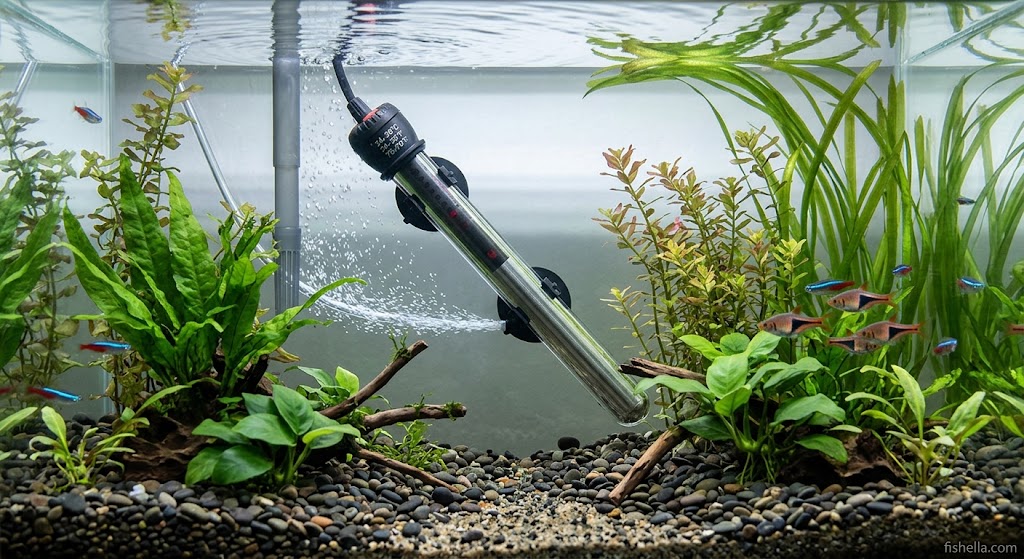
Quick answer: Put a submersible heater at the back or side of the tank, near the filter outflow or intake. Keep it fully underwater, at least 1 inch (2.5 cm) above the substrate, and mount it upright or at an angle with the suction cups on clean glass. Then check the temperature with a thermometer on the opposite side of the tank.
For ideal temperatures by species, see our betta fish water temperature guide. This article covers placement and setup only.
Why Heater Placement Matters
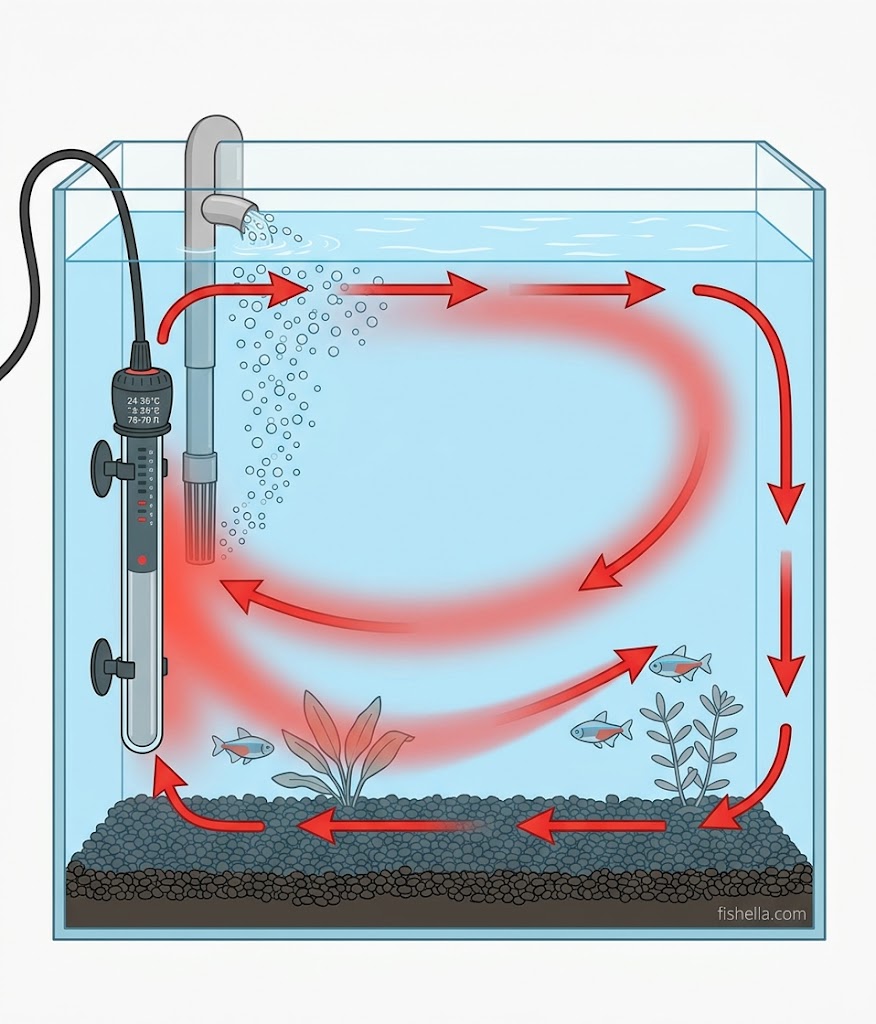
A heater only warms the water right around it. Without water movement, that warm water stays near the heater while the far side of the tank stays cooler. Fish end up stressed, and the heater’s built-in thermostat can switch off too early because it senses the warm water around itself. A good position uses water flow to carry heat across the whole tank. Knowing how to place aquarium heater correctly means heat reaches every corner, not just the area around the heater.
How to Place Aquarium Heater Correctly: Best Location
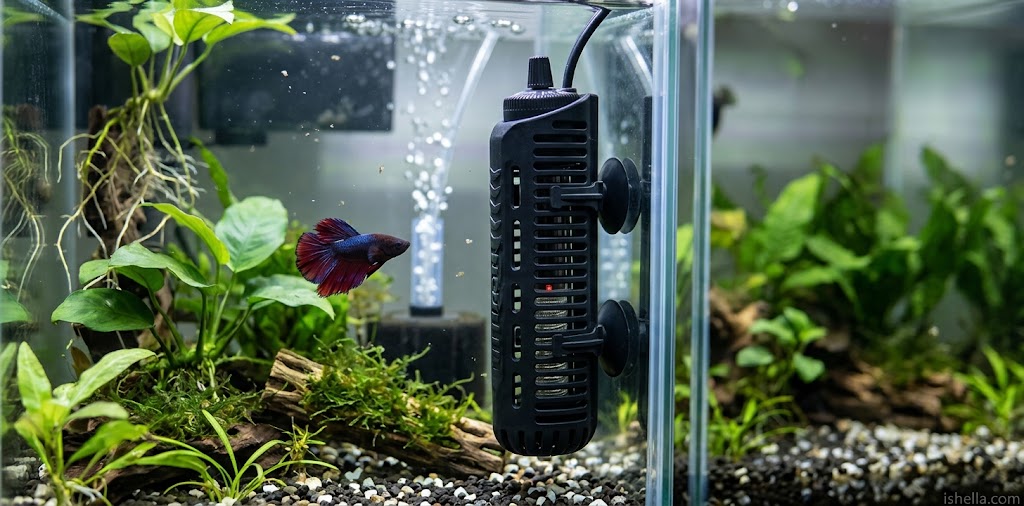
- Near the filter outflow or intake. Moving water mixes the heat evenly. Our filter buying guide explains how flow works. Aim for the edge of the flow, not straight into the jet.
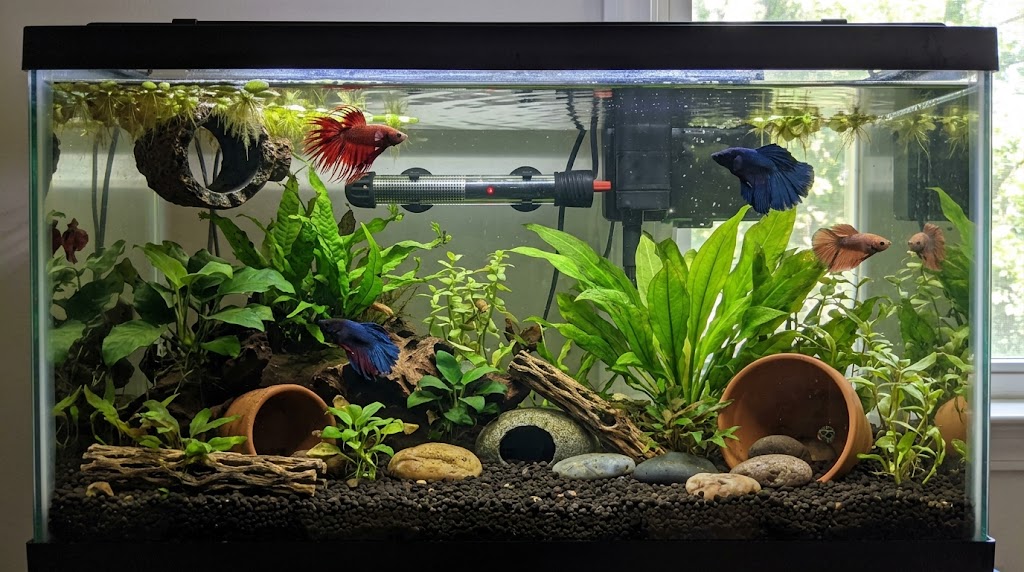
- At the back or side of the tank. It stays out of sight and away from most fish traffic.
- Fully underwater. Most heaters must be completely submerged. A few models are marked for partial submersion, so always check the label and manual.
- Slightly above the substrate. Leave at least 1 inch (2.5 cm) so the heater never touches sand or gravel.
- Upright, angled, or horizontal. Many heaters allow a 45-degree or horizontal mount. A low angle spreads heat over more area and works well in shallow tanks. Some models must keep the control end above water, so check the manual first.
How Deep Should an Aquarium Heater Be?
The whole heater should sit below the waterline, with the water level above any “minimum water line” marked on the glass. Keep a margin of an inch or two (3–5 cm), because evaporation slowly lowers the water level between top-offs. Warm water rises, so a heater in the lower half of the tank heats the water column more evenly than one placed near the surface.
Places to Avoid
- Directly in the blast of a strong pump. Fast flow can make the thermostat misread the temperature and cycle too often. Place it beside the flow instead.
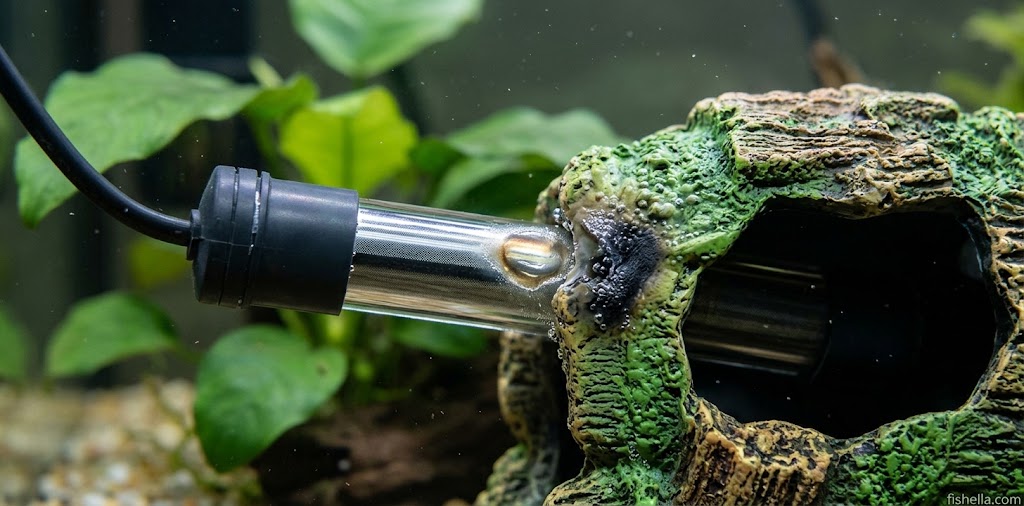
- Touching plastic plants or décor. Heat can melt them.
- Buried in the substrate. It will overheat and may crack.
- Next to a fish’s favorite hiding spot. Fish can burn themselves on bare glass.
- Behind big rocks or driftwood. Heat gets trapped and the thermostat reads wrong.
- Near the surface in a tank where the water level drops. The heater can end up exposed to air.
Step-by-Step: How to Install a Heater
Follow these steps to place aquarium heater correctly, whatever the tank size.
1. Pick the right size
A common rule is 3 to 5 watts per gallon (roughly 0.8 to 1.3 watts per liter). Use the higher number for small tanks or tanks in cool rooms.
| Tank size | Heater wattage |
|---|---|
| 5 gallons (19 L) | 25 W |
| 10 gallons (38 L) | 50 W |
| 20 gallons (76 L) | 100 W |
| 40 gallons (150 L) | 150–200 W |
| 55 gallons (208 L) | 200–250 W |
For tanks over about 40 gallons, consider two smaller heaters at opposite ends. They heat more evenly, and if one fails the other keeps the tank from dropping to a dangerous temperature. For more help choosing wattage for different tank types, see this aquarium heater size guide.
2. Unplug before you work
Always unplug the heater before you place, adjust, or move it.
3. Let it adjust to the water
If the heater has been out of water, let it sit in the tank for 15 to 20 minutes before you plug it in. This lets the glass reach the water temperature and lowers the risk of cracking.
4. Mount it with the suction cups
Press the suction cups firmly onto clean, dry-wiped glass and give each one a tug to check it holds. Re-check after a day, since cups can slip.
5. Add a guard if needed
Use a heater guard if you keep bettas, goldfish, or large cichlids. Guards stop fish from touching hot glass. Bettas also have delicate fins, so see our 5 gallon betta tank water change.
6. Plug it in and set the temperature
Set the dial a few degrees below your target, then raise it slowly. Wait a few hours between changes and confirm with a thermometer rather than trusting the dial.
7. Verify with a thermometer
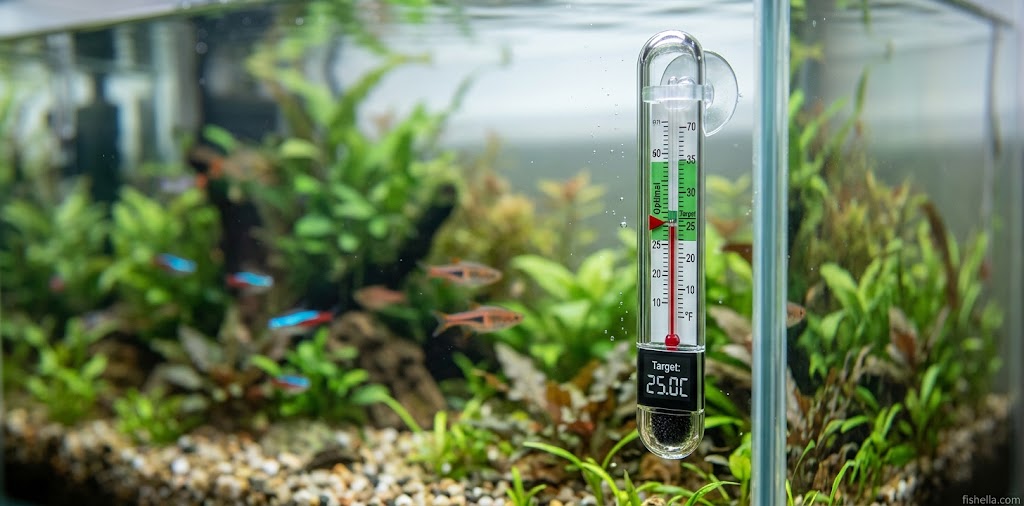
Place a thermometer on the side of the tank opposite the heater. If the two sides differ by more than about 1–2°F (1°C), move the heater closer to the flow or add a small pump to improve circulation. If you can, use a second thermometer to cross-check, because cheap ones can be off by several degrees. If the temperatures differ, you have not yet managed to place aquarium heater correctly. Move it closer to the flow
Water Change Safety
Unplug the heater before every water change. If the water level drops below the heater while it is on, the exposed glass can crack when cold water touches it. After refilling, wait 10 to 15 minutes before you plug it back in. Follow our steps for a water change without removing fish.
Heater Safety Tips
- Buy a heater with a built-in thermostat and auto shut-off.
- Check the temperature every day.
- Make a drip loop in the cord so water cannot run down into the plug.
- Replace heaters every 2 to 3 years, or sooner if the temperature starts to drift.
- Keep a spare heater on hand for emergencies.
- Keep the cord away from pets and children.
Special Cases
Sump or canister setups. Use an inline heater on the return line, after the pump, so the heated water flows straight back into the tank.
Quarantine or hospital tanks. Use a small adjustable heater. See our hospital tank setup guide.
Tanks in cold rooms. Choose a higher wattage and use a lid to hold heat in.
Planted tanks. Keep the heater clear of roots and dense plant growth.
Troubleshooting
| Problem | Fix |
|---|---|
| Water too cold | Increase wattage, add a lid, or check the dial and thermometer |
| Water too hot | Unplug immediately; replace the heater if the thermostat is stuck |
| Uneven temperature | Move the heater near the flow or add a small pump |
| Heater keeps clicking on and off | Normal. The thermostat is working |
| Heater is cracked | Unplug it, replace it, and check your water level |
FAQ
Where is the best place to put an aquarium heater?
At the back or side of the tank, near the filter outflow or intake, fully underwater and just above the substrate.
Can I lay a heater flat?
Yes, if the manufacturer allows it. Many heaters are designed for horizontal use near the bottom.
Should the heater touch the glass?
Only through the suction cups. The heater body should not rest against the glass, because that can cause stress cracks.
Do I need a heater in a room-temperature tank?
For tropical fish, yes. Room temperature often swings too much between day and night.
Can a heater be placed vertically?
Yes. Most can be mounted upright, as long as the heater stays fully submerged.
Final Thoughts
Place your heater near water flow, leave a gap above the substrate, keep it fully submerged, and check the result with a thermometer on the far side of the tank. Safe placement keeps heat even and your fish healthy. Learn how to set up a hospital tank for sick fish to safely isolate sick fish and help prevent illness from spreading to healthy tank mates.