Pearl betta blue spots can look alarming when they show up on your fish. Don’t panic. In most cases, blue flecks come from normal color development, not disease. This guide explains the common causes, shows you how to tell harmless changes from real illness, and tells you when to take action. If you are new to the hobby, start with this complete guide to betta fish care.
What Are Pearl Betta Fish Blue Spots?

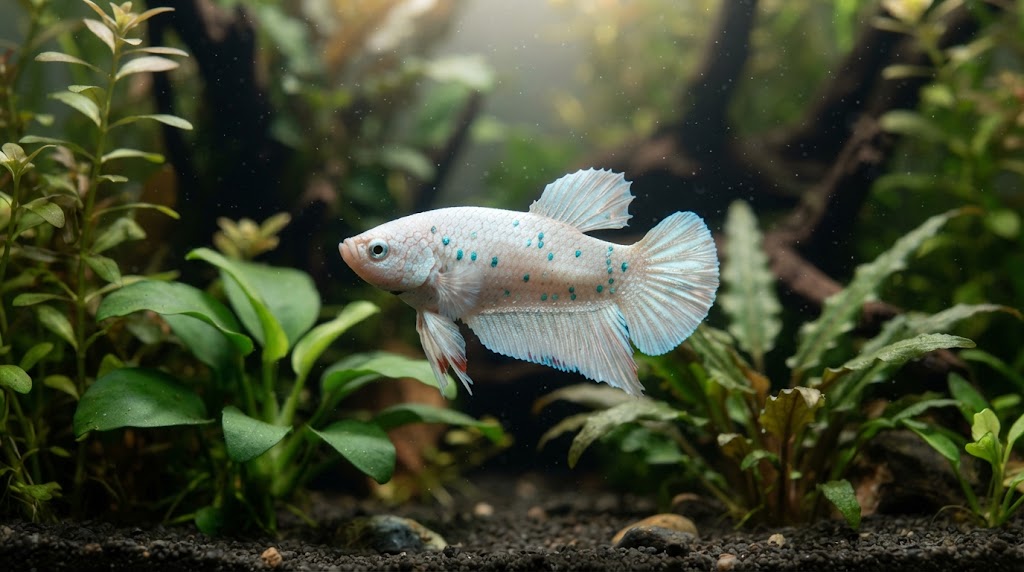
Pearl bettas have round, shimmering scales that reflect light. Blue spots usually appear as small patches of color on the body or fins. They can look metallic, turquoise, or deep blue, depending on your tank lighting and your fish’s genetics.
Many owners spot them for the first time after a water change, a new light, or a photo with flash. That timing often makes the change look sudden, even when it developed slowly. Males and females both change color, so female betta fish care owners may notice the same thing.
What Causes Pearl Betta Blue Spots?

The most common causes are natural. Here are the main reasons you may see new color:
- Marbling genes: Betta genetics include “jumping genes” (transposons) that move around the DNA. These marbling genes in bettas can add, remove, or rearrange color patches at any age.
- Iridescence: Light bounces off the scales and creates blue or green flashes. The fish may look different from every angle.
- Maturity: Young bettas often “color up” as they grow. Their patterns can change for months.
- Stress or mood: A tank change, a new tank mate, or a reflection can temporarily alter your betta’s color.
If you plan on breeding your betta, remember that marbling genes can pass to the fry. In most cases, pearl betta blue spots are flat, smooth, and part of the scale itself. They don’t bother the fish.
Normal Color Change vs. Illness
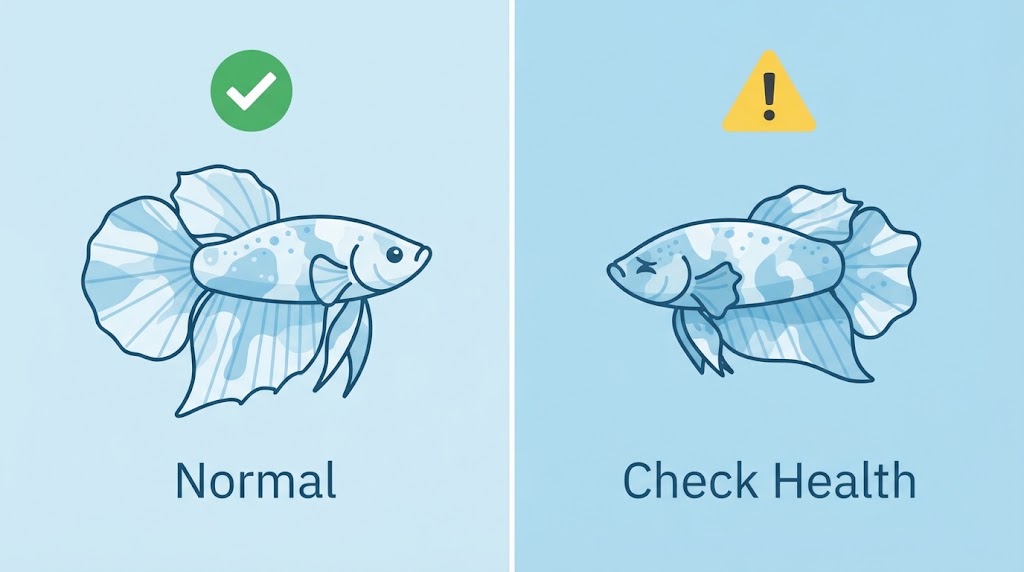
Healthy color change looks very different from disease. Check these signs before you worry.
Signs of harmless color change:
- The spots are flat and smooth.
- Your betta eats, swims, and explores normally.
- The fins stay open and relaxed.
- The spots stay in place or change slowly.
Warning signs of illness:
- Spots look raised, fuzzy, or powdery.
- Your betta scratches against decor.
- The fins stay clamped to the body.
- Your betta hides, gasps at the surface, or refuses food.
- The spots spread fast or the scales look ragged.
Hobbyists often discuss sudden betta color changes in forums, and the usual advice is to compare behavior, not just color. If your fish shows only the first list, relax. If you see anything from the second list, read the next sections.
Other Causes to Rule Out
Sometimes blue or dark patches come from damage or poor conditions. Rule out these causes:
- Bruising: A hard knock against a sharp decoration, or a fight with an aggressive neighbor, can leave a dark blue or purple mark. Check the guide on betta fish tank mates if you keep your betta with other fish. Bruises usually fade within days to weeks.
- Water quality problems: Ammonia and nitrite can irritate the skin and gills. This often comes with sluggish behavior or fast breathing.
- Parasites: Velvet looks like fine gold or rust-colored dust, and ich looks like tiny white grains. Neither is blue, but they can confuse owners in low light. Read this vet-reviewed guide to velvet disease in betta fish to learn the early signs. If your betta has white spots instead of blue ones, see our guide on white spots on betta fish before you treat anything.
- Fin or scale damage: Torn edges or rot can look discolored and uneven.
- Overfeeding problems: A bloated betta can look swollen or off-color. Learn more about betta fish overfeeding and bloating.
How to Check Your Betta at Home
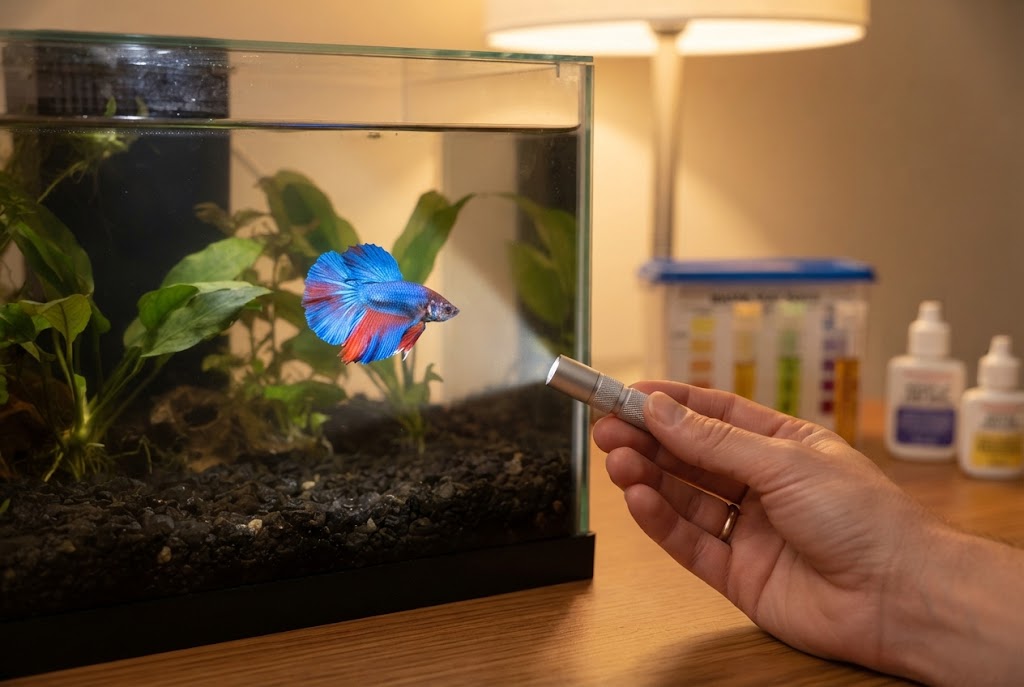
A quick check at home gives you clear answers. Follow these steps:
- Use a flashlight. Shine it from the side to see whether the spots are flat or raised.
- Take photos. Photograph your betta every few days. Compare the pictures to see whether the spots change or spread.
- Test your water. Ammonia and nitrite should read 0 ppm. Keep the temperature between 78°F and 80°F (25°C to 27°C). This guide on how to take care of tropical fish covers water testing and tank basics.
- Watch behavior. Note appetite, swimming, and fin position for several days.
What to Do If You Suspect a Problem
Start with water quality, because it causes or worsens most fish health problems. Do a partial water change and retest. Remove any sharp decor that could injure your fish. Then keep watching for changes.
If the spots turn fuzzy, spread, or come with clear signs of illness, contact an aquarium-fish vet or a trusted aquatic specialist. Don’t add random medications on a guess. The wrong treatment can stress your betta more than the original problem.
How to Keep Your Betta Healthy

Good care keeps colors vibrant and reduces health risks. Follow these habits:
- Keep your betta in a heated, filtered tank of at least 5 gallons.
- Change part of the water on a regular schedule.
- Feed a high-quality betta pellet diet in small portions.
- Choose smooth, fish-safe decorations.
- Avoid sudden changes in temperature or water chemistry.
Frequently Asked Questions
Are pearl betta blue spots dangerous?
Usually not. Most are normal color changes tied to genetics, age, or lighting. They become a concern only when they come with other symptoms.
Can a betta change color as an adult?
Yes. Marbling genes can change a betta’s pattern at any age, so new colors may appear long after your fish is full-grown.
How long do bruise-like blue marks last?
Minor bruises often fade within days to a few weeks if water quality stays good.
Should I treat my betta right away?
Don’t treat without a clear sign of disease. Check the water first, observe your fish, and treat only when symptoms point to a specific problem.
Final Thoughts
Pearl betta blue spots usually mean your fish is simply changing color. Watch the spots, test your water, and track your betta’s behavior. If the spots stay flat and your fish acts normal, enjoy the new look. If symptoms appear, act early and ask for expert help.