
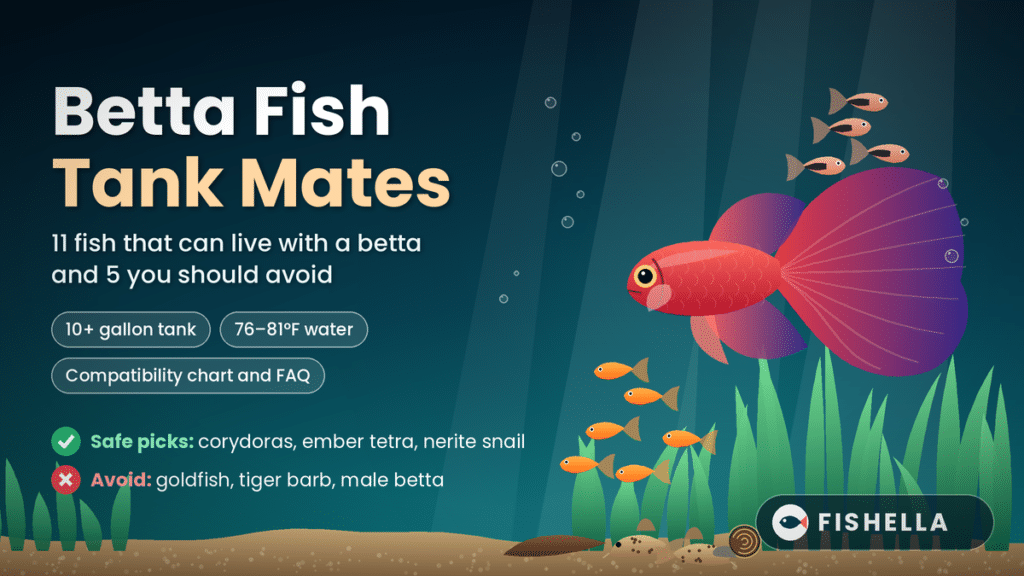
Finding the right betta fish tank mates takes more than picking peaceful fish from a store shelf. A betta’s personality, your tank size, and the water temperature all decide whether a community tank succeeds or ends in stress and injury. The good news is that many bettas live happily with the right companions. This guide shows you which fish work, which ones to avoid, and how to set up your tank for success.
Can Betta Fish Live with Other Fish?
Yes, some bettas can live with other fish, but no one can guarantee it. Every betta has its own temperament. One male may ignore a school of tetras, while another may attack anything that moves.
Wild bettas (Betta splendens) come from the shallow rice paddies and slow streams of Southeast Asia, including Thailand, Cambodia, Laos, and Vietnam (Wikipedia). Males defend small territories, and breeders developed the long-finned varieties you see in stores. Those long fins make bettas slower swimmers and easier targets for fin nippers.
Before you buy any tank mate, read our guide to aggressive betta fish so you can judge your own fish’s temperament. Before you choose betta fish tank mates, read our guide to aggressive betta fish so you can judge your own fish’s temperament. Learn about compatibility, potential risks, and safe tank-sharing tips in our guide: Can Betta Fish Live With Ghost Shrimp? Risks & Tips.
Do Betta Fish Get Lonely?
No. Bettas are solitary by nature and do not need company. A betta kept alone in a properly sized, well-decorated tank is not lonely. It needs space, clean water, hiding spots, and daily enrichment.
Add tank mates only if you want a more active community tank, not because you think your betta needs a friend. Add betta fish tank mates only if you want a more active community tank, not because you think your betta needs a friend.
To keep your betta active and mentally stimulated, explore these Betta Fish Toys and Enrichment Ideas for safe ways to encourage natural behavior and reduce boredom.
Rules for Choosing Betta Fish Tank Mates
Follow these six rules before you buy any companion.
- Choose a tank of at least 10 gallons. Bettas can live in 5 gallons alone, but a community needs more room. A 20-gallon long tank works even better. See our comparison of a 5 gallon vs 10 gallon tank for betta fish for details.
- Match the temperature. Bettas thrive at 76–81°F (24–27°C). Avoid fish that need cooler water.
- Pick peaceful, small fish. Choose species that stay calm and do not nip fins.
- Avoid bright, flowing fins. Fish with colorful tails can trigger your betta’s aggression.
- Buy schooling fish in groups. Small groups of six or more spread out aggression and keep the fish confident.
- Provide hiding places. Live plants, caves, and driftwood break the line of sight.
11 Best Betta Fish Tank Mates
Here are the best options, from safest to riskiest.
1. Corydoras Catfish
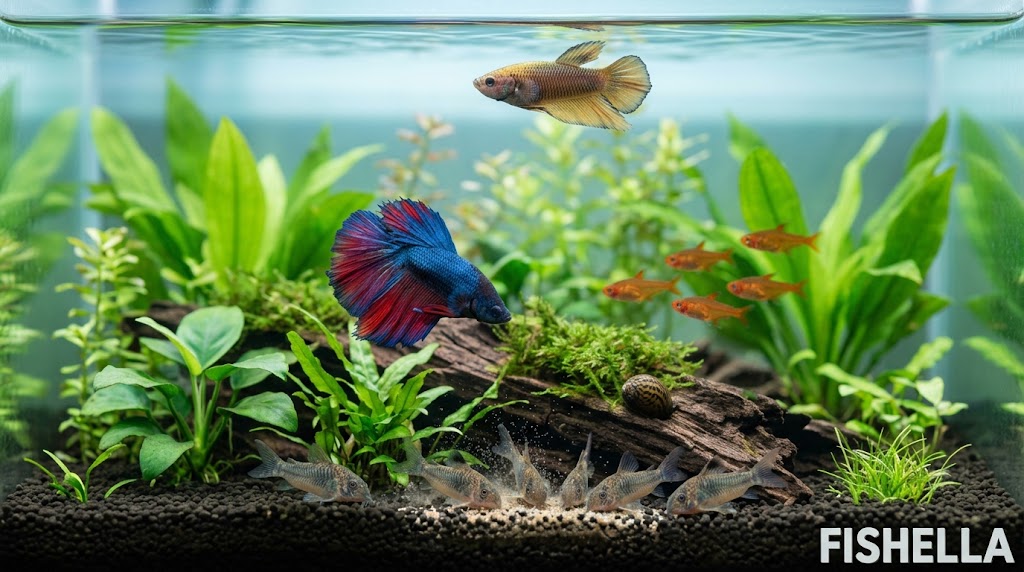
Corydoras are calm bottom dwellers that rarely interact with bettas, which swim near the top. Choose small species such as pygmy corydoras, Corydoras habrosus, or Corydoras sterbai. Keep at least six together and use sand or smooth gravel to protect their barbels.
2. Kuhli Loaches
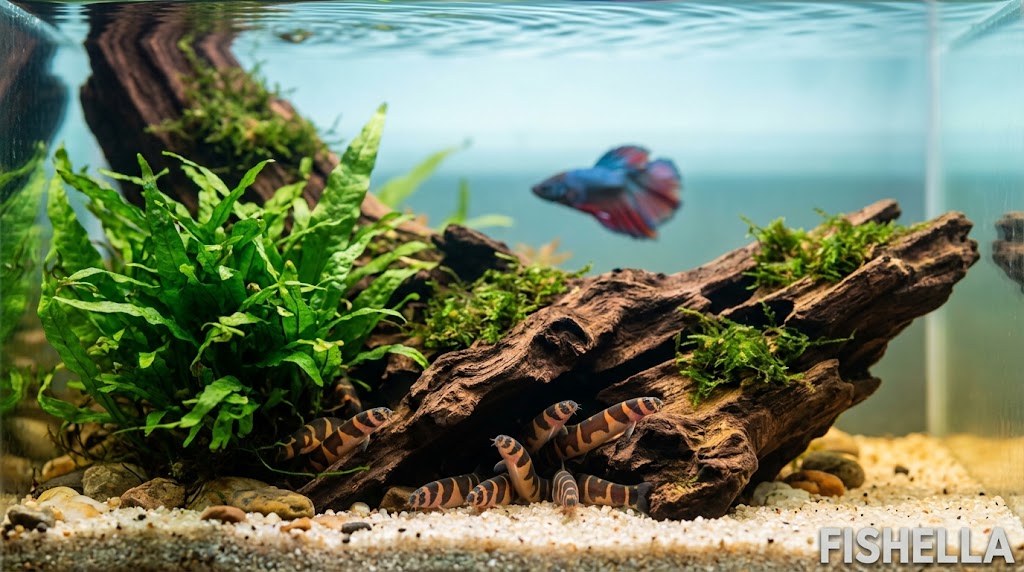
Kuhli loaches look like small eels and spend most of the day hiding. They tolerate warm water well and stay out of a betta’s way. Keep five or more in a tank of at least 20 gallons, and cover the filter intake so they cannot slip inside.
3. Harlequin Rasboras
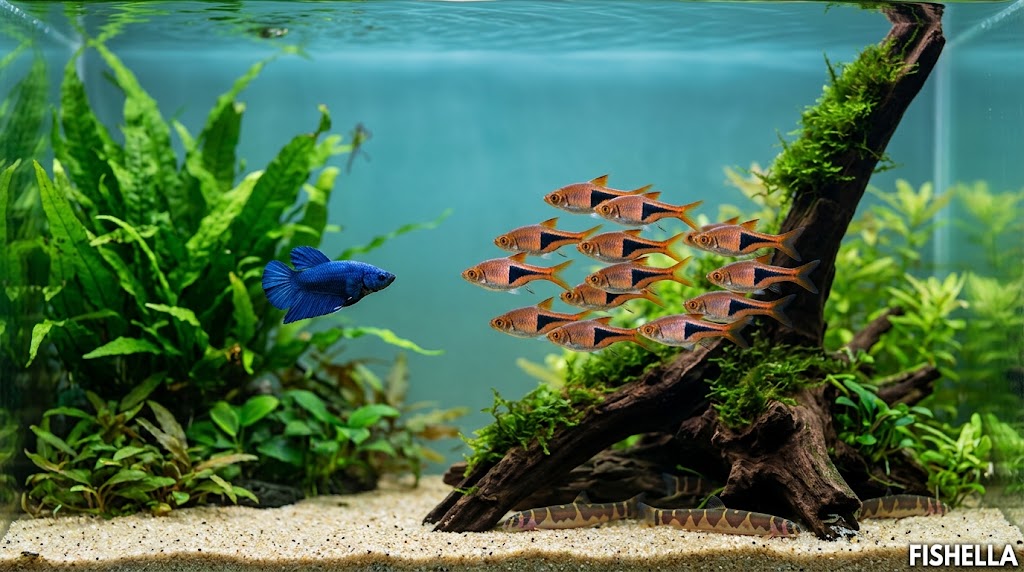
These peaceful schooling fish stay in the middle of the tank and have short, plain fins. Keep six or more in a 10-gallon tank or larger. Their orange-and-black color looks striking next to a betta.
4. Ember Tetras
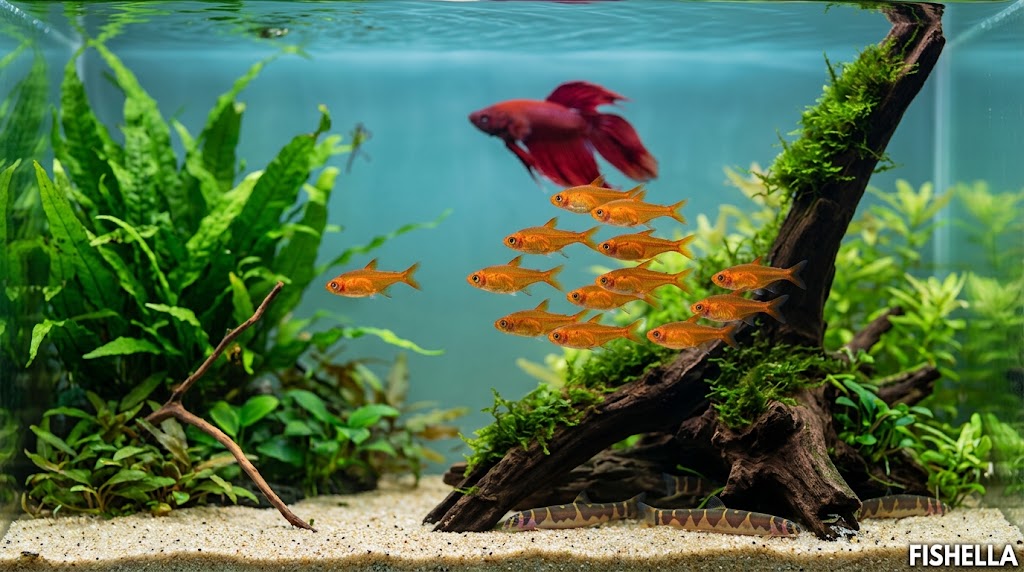
Ember tetras stay tiny, calm, and warm-water friendly. A school of six or more fits in a 10-gallon tank. Their small size and non-aggressive nature make them a popular choice.
5. Otocinclus Catfish
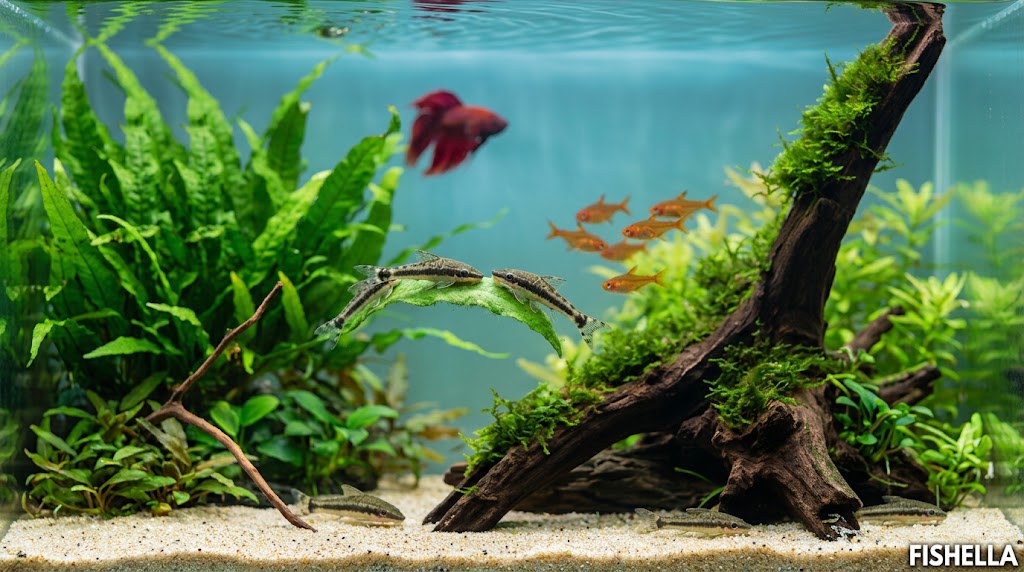
Otocinclus eat algae and ignore other fish. However, they need a mature tank with plenty of algae, and they die easily in new tanks. Add them only after your tank has run for at least a few months, and keep three or more together.
6. Nerite Snails
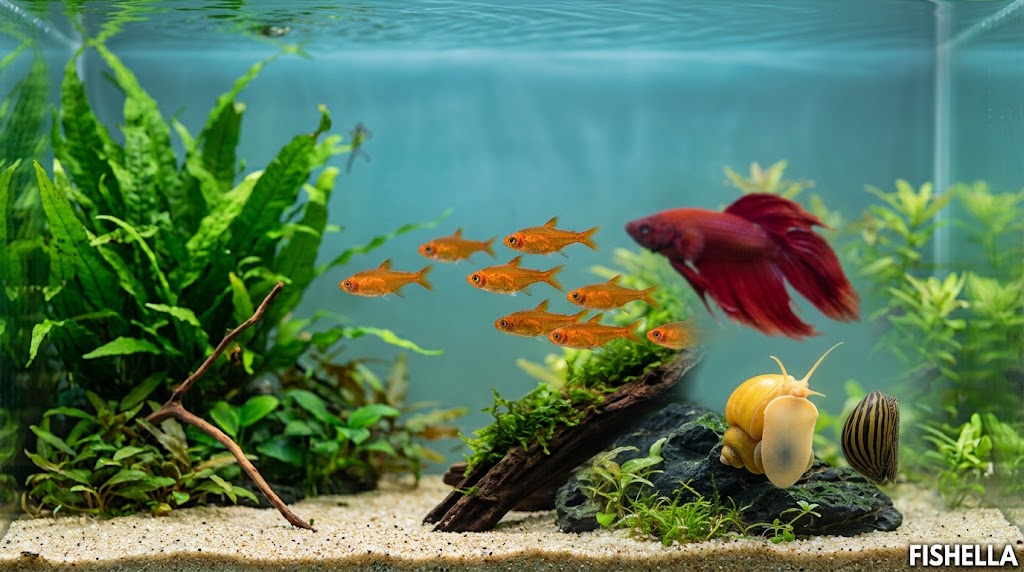
Nerite snails rank among the safest companions. They clean algae, do not breed in freshwater, and have hard shells that bettas cannot damage. Make sure the lid fits tightly, because they sometimes climb out.
7. Mystery Snails
Mystery snails add color and personality. Bettas sometimes nip their antennae, so watch for damage during the first week. Their shells protect the rest of the body.
8. Amano Shrimp
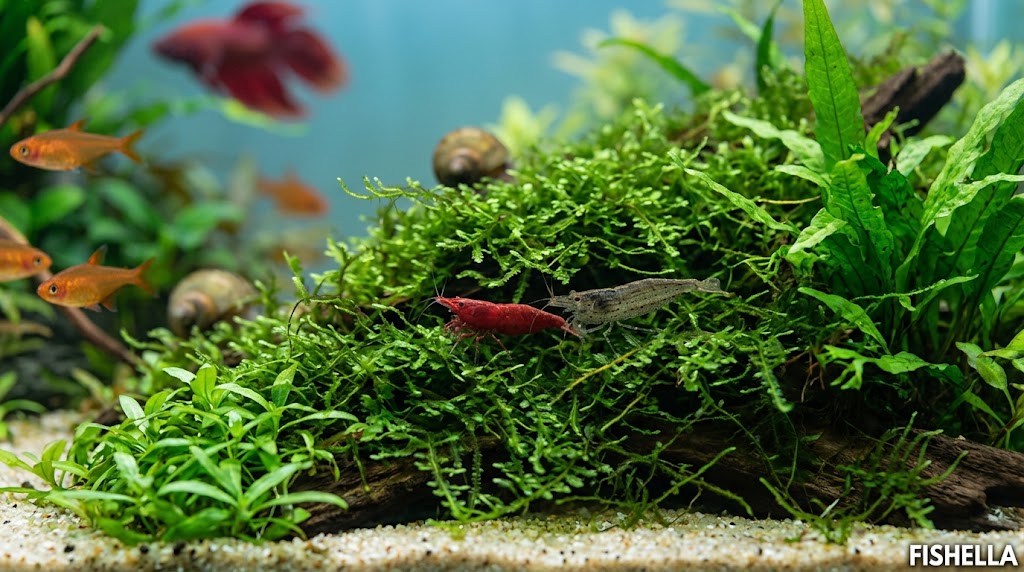
Amano shrimp grow larger than cherry shrimp, which makes them harder for a betta to eat. Provide dense plants such as java moss so they can hide. Some bettas still hunt them, so keep a backup plan.
9. Neon Tetras (Use Caution)
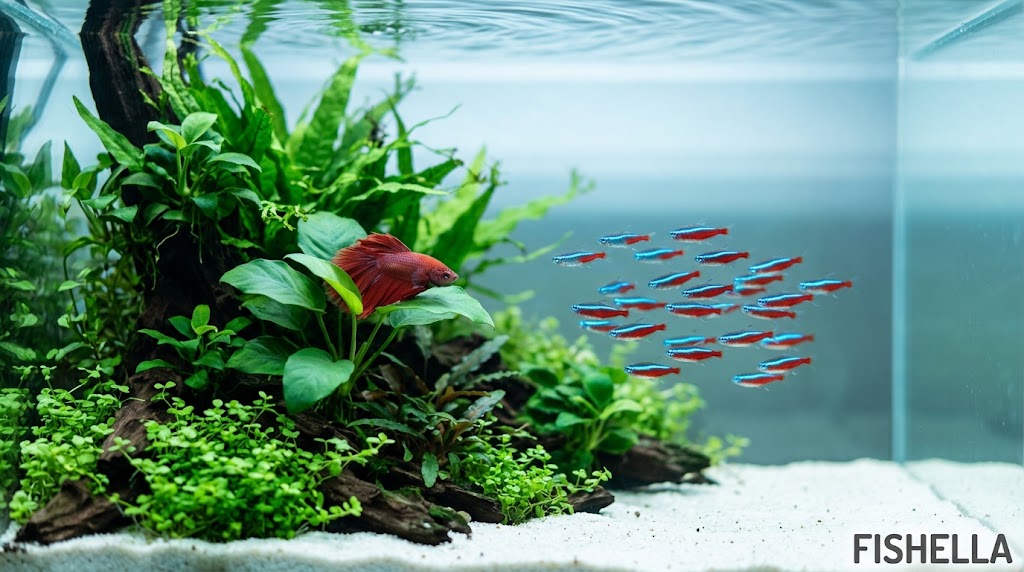
Neon tetras work in some betta tanks but not all. They prefer slightly cooler water, and some bettas chase them. If you try them, keep at least six in a 10-gallon tank or larger and watch closely for stress.
10. Cherry Shrimp and Ghost Shrimp (Risky)
Many bettas treat small shrimp as snacks. If you want to try, plant the tank heavily and add at least six shrimp so a few survive. Expect some losses.
11. African Dwarf Frogs (Conditional)
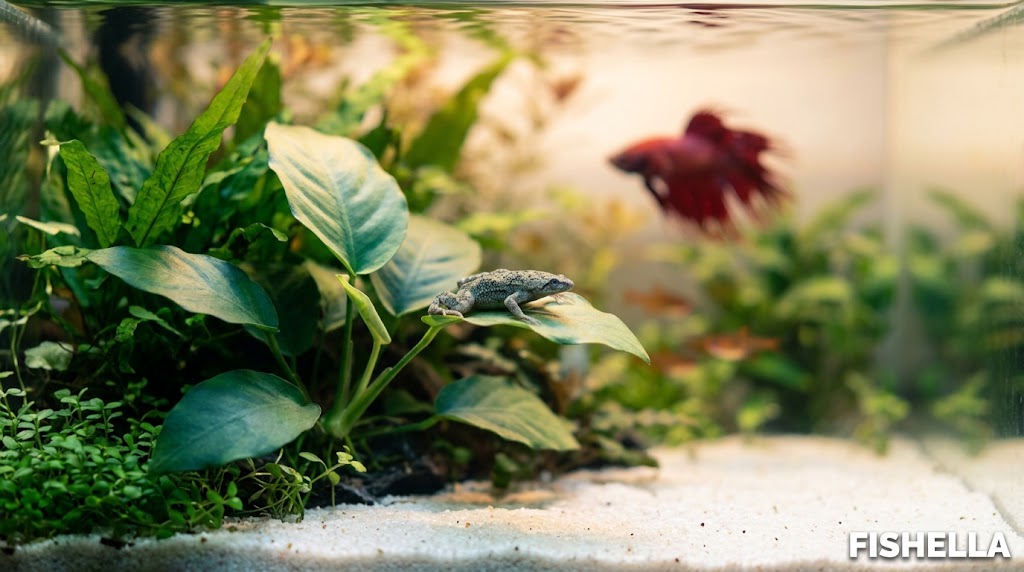
African dwarf frogs share the warm temperature range, but they eat slowly and struggle to compete for food. Bettas may also nip their toes. Feed them with a turkey baster or target feeder, and never confuse them with larger African clawed frogs, which can eat small fish.
Betta Compatibility Chart
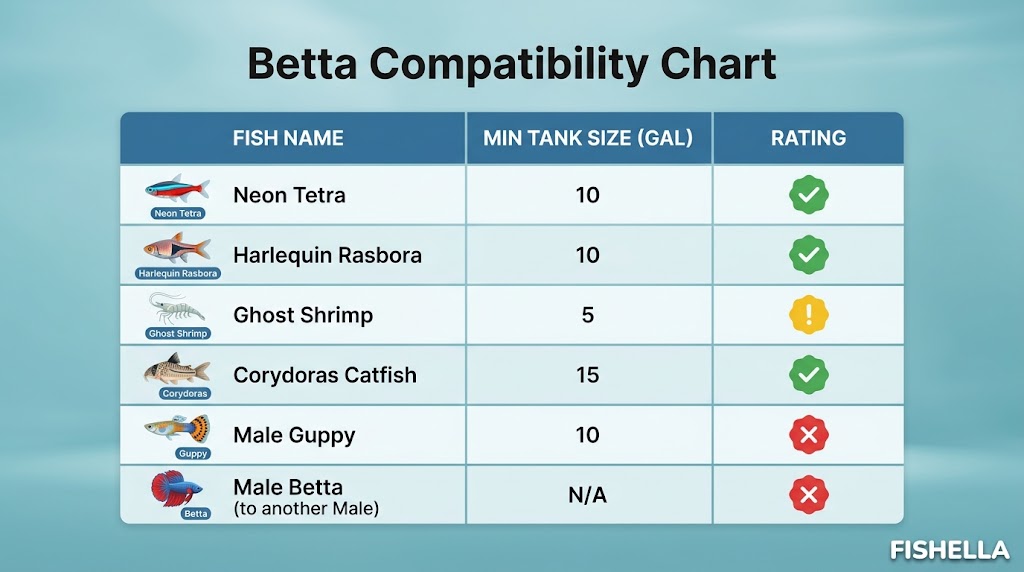
This chart summarizes the best betta fish tank mates by tank size, group size, and compatibility.
| Tank Mate | Minimum Tank Size | Group Size | Compatibility |
|---|---|---|---|
| Corydoras (small species) | 10 gallons | 6+ | Excellent |
| Kuhli loach | 20 gallons | 5+ | Very good |
| Harlequin rasbora | 10 gallons | 6+ | Very good |
| Ember tetra | 10 gallons | 6+ | Very good |
| Otocinclus | 10 gallons (mature tank) | 3+ | Good |
| Nerite snail | 5 gallons | 1+ | Excellent |
| Mystery snail | 5 gallons | 1+ | Good |
| Amano shrimp | 10 gallons | 3+ | Fair |
| Neon tetra | 10 gallons | 6+ | Fair |
| Cherry or ghost shrimp | 10 gallons | 6+ | Risky |
| African dwarf frog | 10 gallons | 2+ | Risky |
5 Fish to Avoid Keeping with a Betta
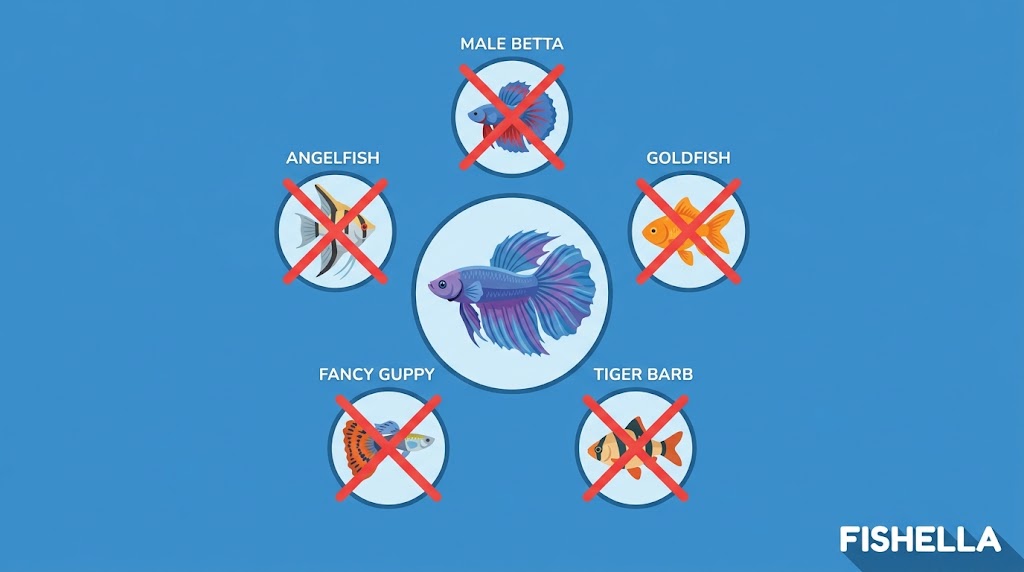
These fish cause fights, stress, or health problems.
- Another male betta. Males fight until one dies. Never house them together.
- Goldfish. Goldfish need cooler water, produce heavy waste, and outgrow a betta tank. Also, goldfish food does not suit bettas’ needs. Read our article on whether bettas can eat goldfish food.
- Tiger barbs. They nip long fins and can shred a betta’s tail within days.
- Fancy guppies. Male guppies have bright, flowing tails that look like rival bettas. Bettas often attack them.
- Cichlids, including angelfish. They grow large, act aggressively, and often bully or eat a betta.
Also skip gouramis, red-tail sharks, and common plecos. Gouramis look similar to bettas and trigger territorial fights, and common plecos grow far too large for a small tank. Guppies can be challenging tank mates for bettas, so learn about the potential risks in our guide to Can Betta Fish Live With Guppies? What to Know before introducing them to your aquarium.
Can Female Bettas Live Together?
Sometimes. A group of female bettas, called a sorority, can work in a tank of 20 gallons or larger with five or more females and many hiding spots. However, fights still happen, and this setup suits experienced keepers. Learn more in our guide to female betta fish care and our article on whether female betta fish will kill each other.
Female bettas can share a tank with each other, but they make poor betta fish tank mates for most other species in a small setup.
How to Introduce Tank Mates to a Betta
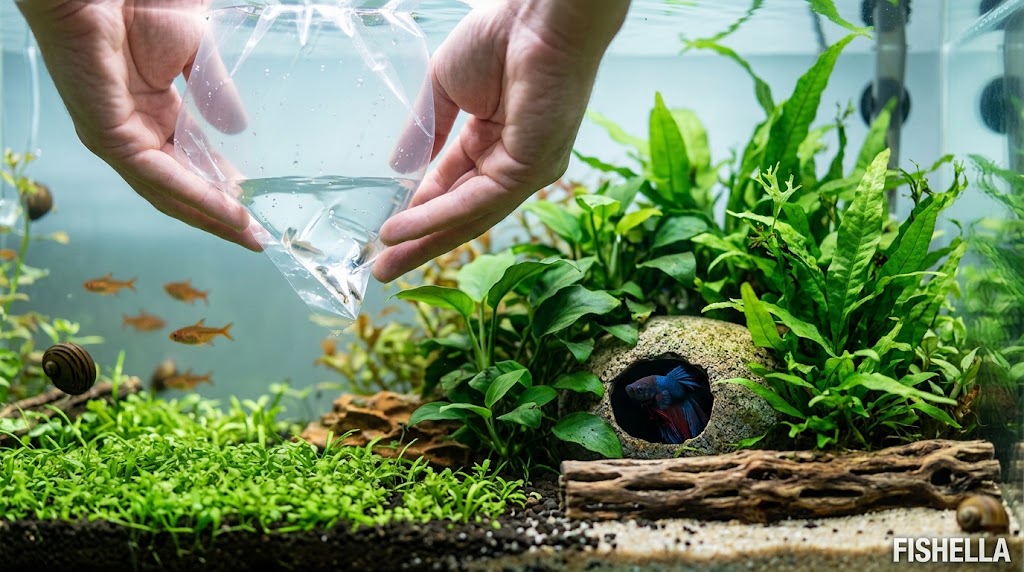
A careful introduction helps new betta fish tank mates settle in without injury.
- Quarantine new fish for two to four weeks. This step prevents disease from spreading to your betta.
- Add tank mates first when possible. A betta is less territorial when it arrives in an established community.
- Rearrange the decor. Moving plants and caves resets your betta’s territory.
- Feed your betta first. A full betta is less likely to chase.
- Watch the tank for the first few hours. Look for chasing, fin nipping, and hiding.
- Keep a backup tank ready. Separate any fish that cannot settle.
Signs Your Betta Is Stressed
Check your tank daily for these warning signs:
- Clamped or torn fins
- Faded color or dark stress stripes
- Hiding all day
- Constant flaring at other fish
- Loss of appetite (see why your betta fish is not eating)
- Rapid gill movement
If you notice these signs, separate the fish and test your water.
Best Tank Setup for a Betta Community
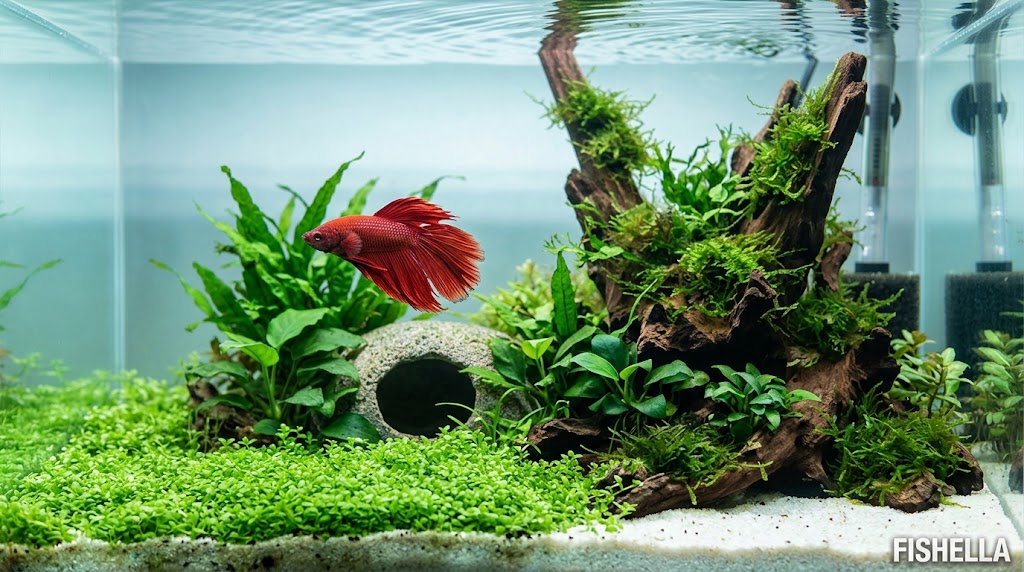
A good setup prevents most problems between a betta and its tank mates.
- Plants: Use live plants such as java fern, anubias, and hornwort. They break sight lines and improve water quality.
- Hiding spots: Add caves, driftwood, and smooth decorations without sharp edges.
- Filtration: Choose a gentle filter. Strong currents tire bettas with long fins.
- Heater: Keep the temperature steady at 76–80°F.
- Water testing: Check ammonia, nitrite, and nitrate weekly. More fish create more waste.
For more details, see our full Betta Fish Care guide and our article on the best tank size for a betta fish. You can also check species profiles on FishBase for range and habitat data.
Sample Stocking Ideas
These combinations work best in a 10-gallon tank or larger:
- 10 gallons: One betta, six ember tetras, and one nerite snail
- 10 gallons: One betta and six pygmy corydoras
- 20 gallons long: One betta, six harlequin rasboras, five kuhli loaches, and two nerite snails
Never add every species at once. Stock slowly, and let your filter catch up with the added waste.
Frequently Asked Questions
Can betta fish live with other fish?
Yes, but only with peaceful, well-chosen species in a tank of 10 gallons or larger. Individual temperament matters, so watch your betta closely.
Can two betta fish live together?
Two males cannot. A group of five or more females can live together in a large, heavily planted tank, but only experienced keepers should try.
Can betta fish live with snails?
Yes. Nerite snails work best, and mystery snails usually do well too.
Can betta fish live with shrimp?
Sometimes. Many bettas eat small shrimp, so provide dense plants and expect some losses. Larger Amano shrimp survive more often.
Can betta fish live with guppies?
Usually not. Male guppies look like rival bettas and often get attacked.
Do bettas get lonely?
No. Bettas live alone in the wild and do not need companions.
How many fish can live with a betta in a 10-gallon tank?
One betta plus one small school of six peaceful fish, such as ember tetras or pygmy corydoras, plus a snail. Do not overstock.
Can you keep a betta in a community tank?
Yes, if the tank is large enough, the fish are peaceful, and you monitor behavior. Always keep a spare tank in case the betta attacks.
What are the best betta fish tank mates for beginners?
Corydoras, ember tetras, harlequin rasboras, and nerite snails work best for beginners. They stay peaceful, tolerate warm water, and rarely trigger a betta’s aggression.
Final Thoughts
The best betta fish tank mates are calm, small, and comfortable in warm water. Start with a tank of at least 10 gallons, add plenty of plants, choose species from the safe list, and watch your fish closely. If your betta shows constant aggression, keep it alone. A single betta in a large, well-decorated tank lives a healthy, happy life.
Pingback: Betta Fish Care: Complete Beginner’s Guide 2026
Pingback: How Many Betta fish in a 10 Gallon Tank? The Complete Safe Guide