
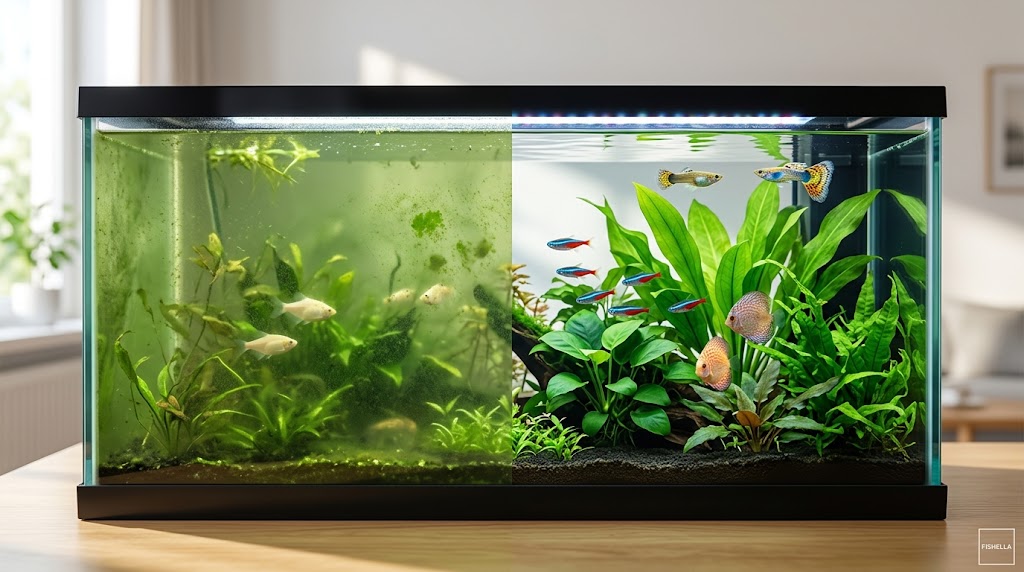
If you want to know how to remove algae from aquarium glass, plants and decorations, start with one fact: algae needs light, nutrients and time, and your tank supplies all three. You can scrub the glass clean in ten minutes, but the algae returns within days unless you fix what feeds it. At FISHELLA, we focus on solving the cause, so this guide shows you how to clean your tank today and keep it clean for good, without harming your fish.
What Is Aquarium Algae?
Algae are simple, plant-like organisms that use light to make energy. Every aquarium contains some, because spores arrive on new plants, in tap water and on fish equipment. A thin film of algae is normal and harmless. Some fish and shrimp even graze on it.
Trouble starts when growth explodes. Excess light or nutrients can turn a healthy tank green, brown or fuzzy within weeks. For a wider look at algae in ponds, pools and water tanks, read our complete algae control guide.
What Causes Algae in a Fish Tank?
Algae grows when your tank has too much of the following:
- Light. Direct sunlight through a window and lights that run all day both fuel algae. Most tanks do well with six to eight hours of light daily.
- Nitrate and phosphate. These nutrients build up from fish waste, uneaten food and decaying plant leaves. Tap water can also contain phosphate.
- Overfeeding. Leftover food breaks down and releases nutrients into the water.
- Infrequent maintenance. Skipped water changes let nutrients climb.
- Weak plant growth. Healthy plants compete with algae for nutrients. Struggling plants leave those nutrients free for algae.
- Immature tanks. New tanks often bloom with algae while the biological balance settles. Nitrogen cycling explains why waste-related nutrients fluctuate in the early weeks.
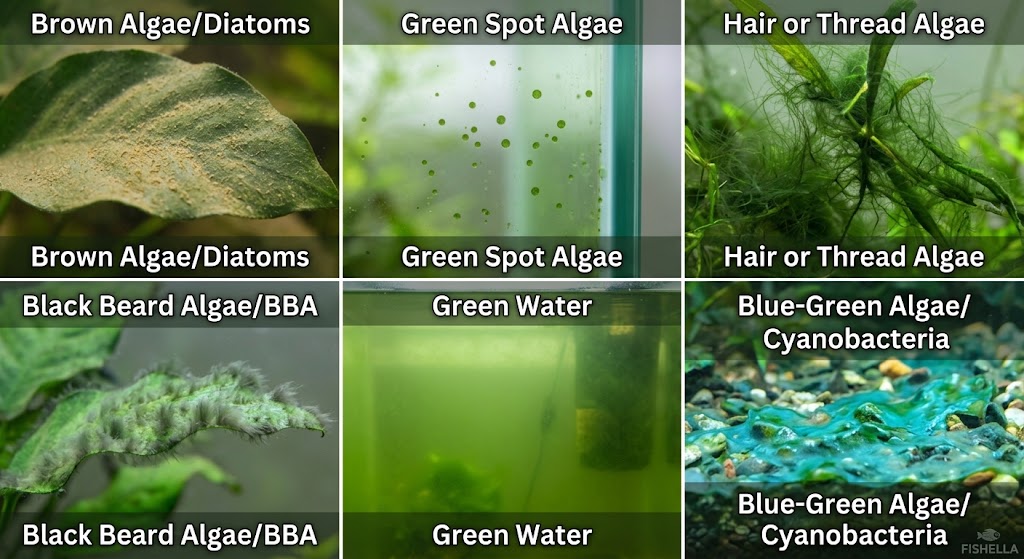
Common Types of Aquarium Algae
Identifying the type helps you choose the right fix.
| Algae type | What it looks like | Typical cause | Difficulty |
|---|---|---|---|
| Brown algae (diatoms) | Dusty brown film on glass, gravel and leaves | New tank, silicates, low light | Easy |
| Green spot algae | Hard, round green dots on glass | Strong light, low phosphate | Medium |
| Green dust algae | Fine green coating that wipes off | Long light periods | Easy |
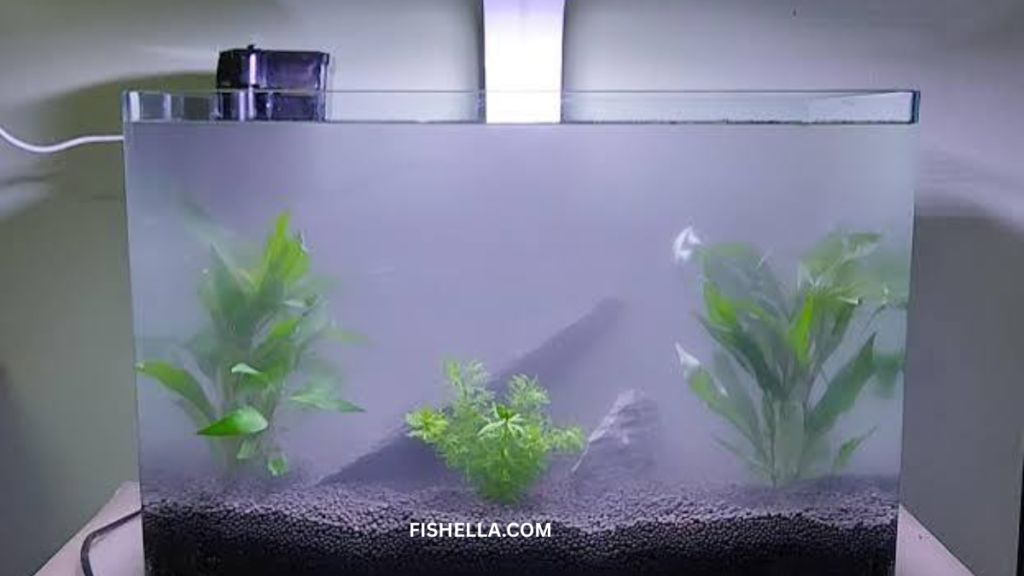
| Green water | Cloudy, pea-green water | Nutrient surge, too much light | Medium |
| Hair or thread algae | Long green strands on plants and decor | Excess nutrients, unstable plant growth | Medium |
| Black beard algae | Dark tufts on plant edges and hardscape | Unstable CO₂ and inconsistent nutrients | Hard |
| Blue-green algae (cyanobacteria) | Slimy, dark green or bluish sheets with a musty smell | Low flow, dirty substrate, excess nutrients | Medium |
Two notes on the table. Diatoms use silica, which is why they commonly appear in new tanks and usually fade as the tank matures. Blue-green algae is really bacteria, and it can smother plants quickly, so remove it promptly. If your Fish tank develops cloudy water, read our guide on why aquarium water becomes cloudy to identify common causes and learn how to restore clear, healthy water.
How to Remove Algae from Aquarium: 9 Steps
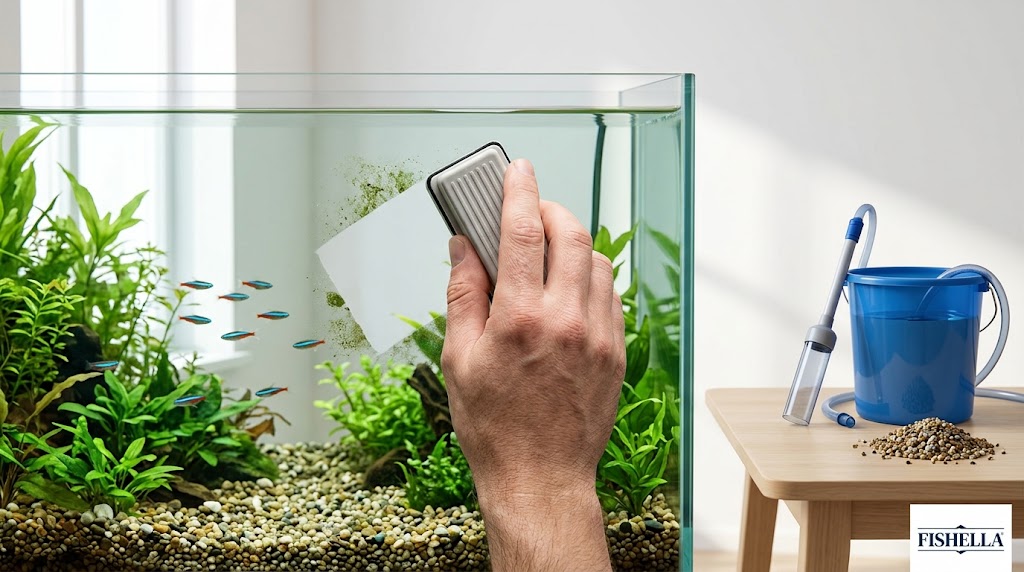
Step 1: Scrape and wipe the glass
Use an algae scraper, magnetic cleaner or a clean sponge kept only for aquarium use. On acrylic tanks, choose a soft pad, because hard blades can scratch the surface. Never use soap, glass cleaner or detergent, since residue can poison fish.
Step 2: Remove algae from plants and decorations
Pinch off badly infested leaves. For hair algae, twirl it around a toothbrush or a stick and pull it out. Take decorations and rocks out of the tank and scrub them under running water.
If a decoration stays stubbornly green, soak it in a bleach solution of one part household bleach to 19 parts water for about ten minutes. Rinse it thoroughly, soak it in dechlorinated water, and let it air dry before you put it back. Never use bleach on plants you plan to keep, and never add it to a tank that contains fish.
Step 3: Vacuum the substrate
Use a gravel vacuum to lift trapped waste from the substrate. Detritus feeds algae, so this step removes a major nutrient source.
Step 4: Change 20 to 30 percent of the water
Replace the water with dechlorinated water at the same temperature. Regular partial water changes dilute nitrate and phosphate. A weekly change of 10 to 25 percent works for most freshwater tanks.
Step 5: Shorten the lighting period
Put your light on a timer. Start with six hours a day and adjust slowly. If you use a blackout to fight a heavy bloom, cover the tank for three to four days. Keep in mind that plants can suffer without light, so this approach suits tanks with tough plants or few plants.
Step 6: Stop overfeeding
Feed only what your fish finish in about two minutes. Remove leftovers promptly.
Step 7: Add live plants
Fast-growing plants such as hornwort, water sprite and anacharis absorb nutrients quickly. Floating plants also shade the water and reduce light. Use them to make your tank harder for algae to win.
Step 8: Add algae-eating helpers
Cleanup crews work best as support, not as your main strategy. See the next section for choices.
Step 9: Test your water
Use a liquid test kit to check nitrate. Many hobbyists aim for below 20 ppm in algae-prone or planted tanks, and many freshwater fish tolerate levels up to about 40 ppm. Also check phosphate if algae keeps coming back. Testing shows you the real problem instead of guessing.
Best Algae Eaters for a Freshwater Aquarium
No animal removes all algae on its own, and none replaces regular maintenance. Match each species to your tank size and fish.
- Nerite snails. They graze on glass and hardscape and do not breed in freshwater. They can lay hard white eggs on surfaces. Keep a tight lid, as they climb out.
- Amano shrimp. They pick at hair algae and soft films. Keep them with peaceful fish only, because larger or aggressive fish may eat them.
- Otocinclus catfish. They eat soft algae and diatoms. Keep them in small groups in a mature tank that already has natural algae growth, because they can starve in spotless new tanks.
- Siamese algae eater. It grazes on some hair algae and grows to around six inches. Confirm the black stripe runs into the tail fin, since other fish get sold under a similar name.
- Bristlenose pleco. It stays smaller than common plecos and eats algae along with vegetable wafers. It also produces a lot of waste, so it needs strong filtration.
Betta owners should be careful here. Some bettas ignore snails and shrimp, while others attack them. Read our Betta fish care guide for tank setup and tank mate advice, and our female betta fish care guide if you keep females in a planted community or sorority tank. If you are still choosing which fish to keep, browse our list of the best fish pets before you buy.
Are Chemical Algae Treatments Safe?
Chemicals should come last, not first. Algaecides can harm shrimp, snails, sensitive fish and plants, and killing a large amount of algae at once can drop oxygen levels as it decays. Some liquid carbon products that hobbyists use for spot treatment can damage sensitive plants such as Vallisneria and are risky for shrimp, so read the label carefully. If you choose a treatment, dose slowly, run extra aeration and watch your fish closely. Treat any product labeled for ponds or pools as unsafe for your aquarium unless the label clearly says otherwise.
Blue-green algae sometimes needs extra steps. Remove as much as you can by hand, vacuum the substrate, increase water flow and reduce nutrients. Some aquarists use antibiotics as a last resort, but these can harm beneficial bacteria in your filter, so research the product first and follow its instructions exactly.
How to Prevent Algae in Your Aquarium
- Keep lights on a timer and avoid direct sunlight on the tank.
- Change water regularly, using a consistent weekly schedule.
- Feed carefully and remove uneaten food.
- Clean your filter media in old tank water, not tap water, to protect helpful bacteria.
- Stock sensibly. Too many fish create too much waste.
- Grow healthy plants and trim dying leaves quickly.
- Improve water flow so waste does not settle in dead spots.
- Test water monthly so you catch nutrient build-up early.
Frequently Asked Questions
Is algae bad for fish?
A small amount is harmless and can even be a food source. Heavy blooms use up oxygen at night and can stress fish, and blue-green algae can smother plants.
Why does my new tank have brown algae?
New tanks often produce diatoms because of silicates and an unsettled biological balance. Brown algae usually fades within a few weeks to a few months as the tank matures. Wipe it off and be patient.
How often should I clean algae from my aquarium?
Wipe the glass once or twice a week during routine maintenance. Increase the frequency if your tank gets sunlight or you are treating a bloom.
Can I remove algae without removing my fish?
Yes. You can scrape glass, remove plant leaves, vacuum the substrate and change water with fish still inside. Only bleach-clean decorations and equipment outside the tank.
How long does it take to get rid of algae?
Expect visible improvement within one to two weeks, and a stable fix in two to four weeks once light, feeding and nutrient levels are under control.
Will a UV sterilizer help?
It can clear green water, because it kills free-floating algae cells as water passes through it. It does not remove algae stuck to glass or plants.
Final Thoughts
Removing algae is a routine, not a one-time job. Clean the glass, reduce light, control feeding, change water and grow healthy plants. Use snails, shrimp or fish as helpers, and use chemicals only as a careful last option. Follow these steps and your tank will stay clear, healthy and easy to enjoy.
Pingback: Algae Control: Causes, Removal Methods & Prevention Tips