
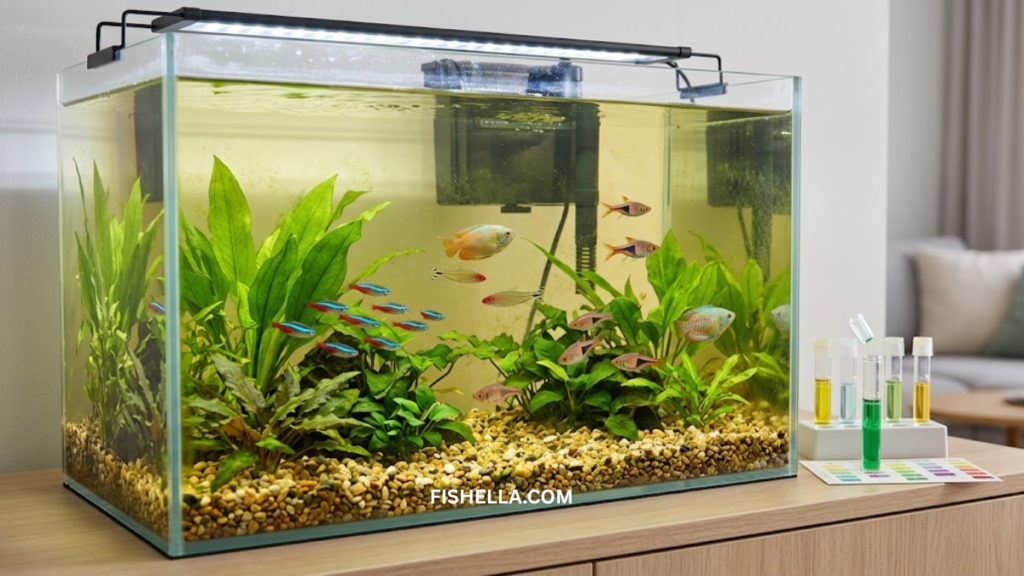
A sudden ammonia reading can be scary when your aquarium has been stable for months or even years. If you’re wondering what causes sudden ammonia spikes in an established freshwater tank, the answer is usually a change in the tank’s biological balance, an increase in waste, or a problem with filtration. Even an established aquarium can experience an ammonia spike when something disrupts the nitrogen cycle.
Ammonia is only one part of healthy aquarium chemistry, so learn how all the key parameters work together in our complete guide to fish tank water quality.
The important thing is to find the cause quickly and protect your fish. Learn how to lower ammonia in a fish tank safely and effectively.
What Causes Sudden Ammonia Spikes in an Established Freshwater Tank?
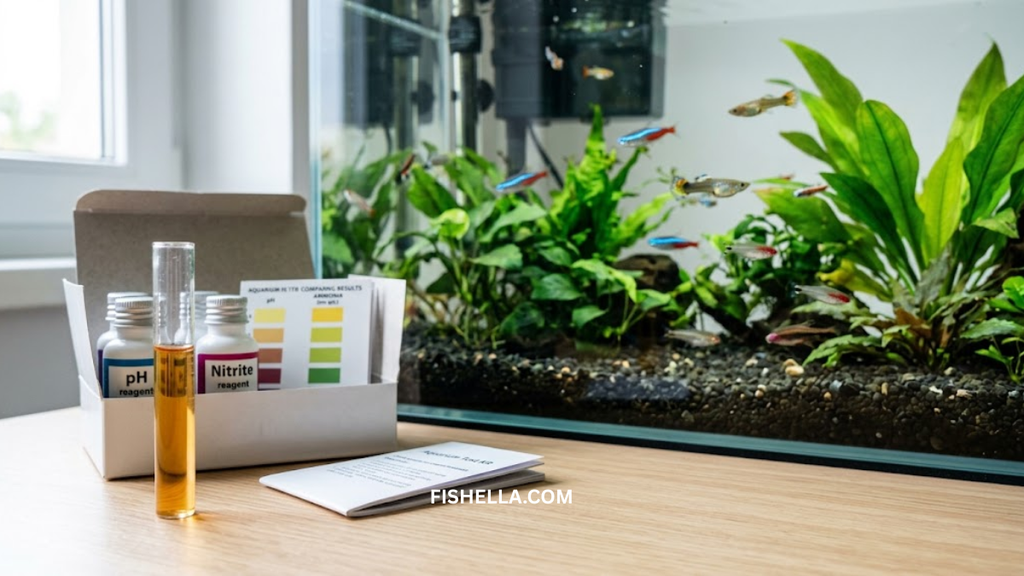
An established aquarium normally has beneficial bacteria that process fish waste.
These bacteria help convert ammonia into nitrite and then nitrate. If something produces more ammonia than the biological filter can handle, or if the beneficial bacteria population is damaged, ammonia can rise.
Common causes include:
- Overfeeding
- A dead fish
- Decaying plants
- Too many new fish
- Filter problems
- Replacing biological filter media
- Cleaning filter media incorrectly
- Medication that affects bacteria
- Chlorine or chloramine exposure
- A sudden pH change
- Long periods without proper maintenance
- Overstocking
- Heavy organic waste
Aqueon explains that ammonia can rise because of overfeeding, heavy stocking, insufficient filtration, and other disruptions to the aquarium system.
What Is the Safe Ammonia Level in a Freshwater Aquarium?
For a stocked freshwater aquarium, the target is 0 ppm ammonia. Ammonia is toxic to fish, and its toxicity is affected by factors such as pH and temperature. Higher pH and temperature increase the proportion of more toxic free ammonia.
If your test shows ammonia above zero in an established aquarium, don’t ignore it. Instead, start looking for the reason. High ammonia can push a betta to the surface, as our guide on betta fish at the top of the tank explains.
1. Overfeeding Can Cause an Ammonia Spike
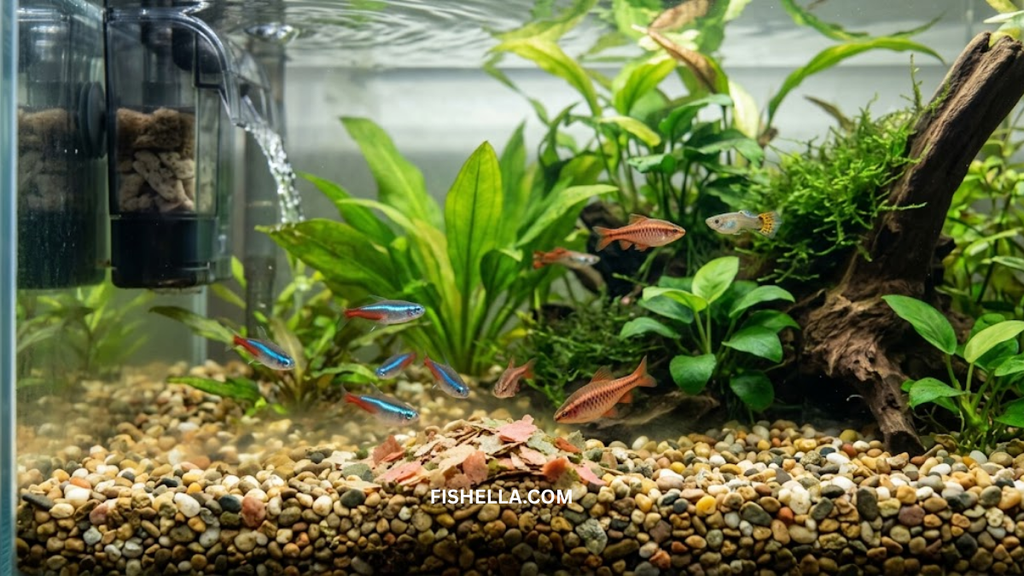
Overfeeding is one of the most common aquarium problems. Fish don’t always eat everything you put into the tank. Uneaten food eventually breaks down and adds organic waste. That waste can increase ammonia and put extra pressure on your biological filter.
Look for:
- Food sitting on the substrate
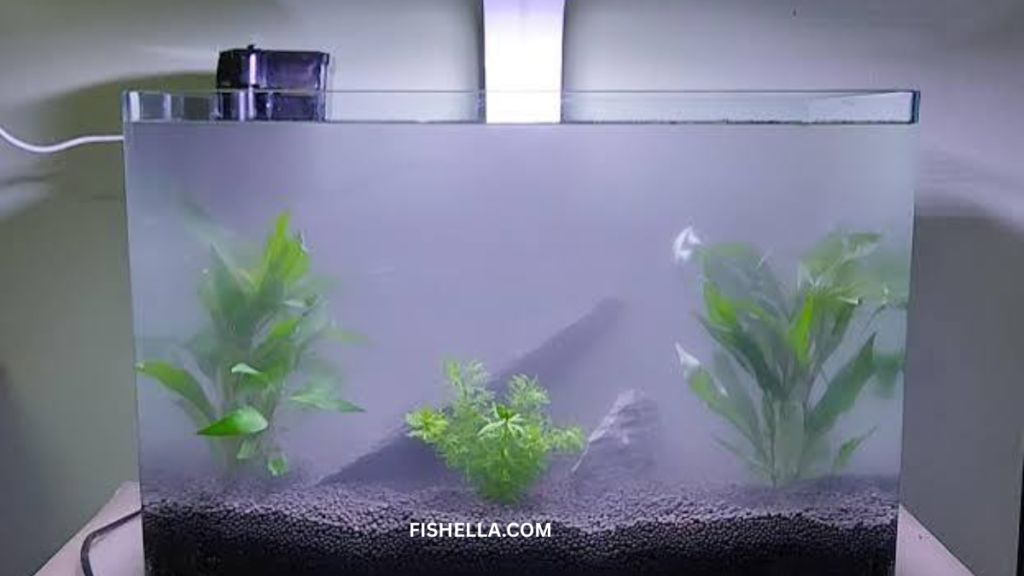
- Cloudy water
- Bad smells
- Dirty filter media
- Increased algae
- Rising ammonia
Aqueon recommends removing uneaten food and reducing feeding when overfeeding is suspected.
2. A Dead Fish Can Cause a Sudden Ammonia Spike
A dead fish can cause ammonia to rise quickly, especially in a smaller aquarium. If one fish disappears, don’t automatically assume it is hiding.
Check:
- Behind decorations
- Inside caves
- Under driftwood
- Around plants
- Inside filter compartments
A decomposing fish adds organic material to the aquarium. The same problem can happen with dead shrimp, snails, or large amounts of decaying plant material.
3. Adding Too Many Fish at Once
Your aquarium may be established, but that doesn’t mean its biological filter can instantly handle any number of new fish. If you suddenly add a large group of fish, the amount of waste can increase faster than the bacteria can adjust. This creates a sudden increase in the biological load.
Add new fish gradually whenever possible.
4. Replacing Your Filter Media Can Cause an Ammonia Spike
This is a big one.Beneficial bacteria live on aquarium surfaces, including biological filter media. If you replace all of your established biological media at once, you may remove a large part of the bacteria responsible for processing ammonia.
The aquarium may then temporarily lose some of its biological capacity. Instead of replacing everything at once, maintain biological media carefully and follow the manufacturer’s maintenance instructions.
5. Cleaning Filter Media With Tap Water
Another possible problem is cleaning biological media in untreated tap water. Many public water systems use chlorine or chloramine to disinfect drinking water. These chemicals can harm fish and can also interfere with beneficial aquarium bacteria.
The EPA notes that chlorine and chloramine need to be removed or neutralized before treated water is used in aquariums. When maintaining biological media, many fish keepers rinse it gently in removed aquarium water rather than directly under untreated tap water.
6. A Filter Failure Can Trigger an Ammonia Spike
A filter that stops working can create problems quickly.
Check whether:
- The filter is plugged in
- Water is flowing normally
- The impeller is working
- The intake is blocked
- The filter media is packed with debris
- The biological media has dried out
If the filter has been without water flow or oxygen for a long time, the biological system may be damaged. PetMD identifies a filter that is new, recently replaced, or has been dry or without oxygen for too long as a possible cause of biological filtration problems.
7. Medication Can Affect the Biological Filter
Some aquarium medications can affect beneficial bacteria or change the tank’s biological balance. This doesn’t mean you should avoid treating sick fish. It means you should monitor water parameters during and after treatment. If ammonia appears after medication, increase testing and be ready to respond if levels rise.
8. A Sudden pH Change Can Affect the Aquarium Cycle
A major pH change can stress fish and may also disrupt the biological system. PetMD notes that a sudden pH swing can damage bacterial colonies and contribute to ammonia buildup. This is one reason you should avoid making sudden, unnecessary changes to aquarium chemistry. Follow our complete guide to fishless cycling to establish beneficial bacteria before adding fish to your aquarium.
Test first, then make changes gradually.
9. Overstocking Can Cause Ammonia Problems
An aquarium can slowly become overstocked. Maybe you started with six fish and gradually added more over several months. The tank may look fine until the waste load becomes too much for the biological filter.
A heavily stocked aquarium also has less room for error. If ammonia keeps returning, look at the entire stocking level rather than treating each spike as a separate problem.
10. Tap Water Can Add Ammonia or Chloramine Problems
Don’t assume every water change automatically improves water quality. Test your tap water if you’re having repeated ammonia problems.
Some water supplies use chloramine, which is made using chlorine and ammonia. The EPA says more than one in five Americans use drinking water treated with chloramines. Always use an appropriate aquarium water conditioner when adding tap water.
What Should You Do When Ammonia Suddenly Spikes?
If you find measurable ammonia in an established aquarium, take the situation seriously.
Step 1: Test Again
First, confirm the reading.
Test:
- Ammonia
- Nitrite
- Nitrate
- pH
- Temperature
If possible, also test your source water.
Step 2: Look for the Source
Check for:
- Dead fish
- Dead shrimp or snails
- Uneaten food
- Decaying plants
- Dirty substrate
- Filter failure
- Recent filter-media replacement
- Recent medication
- Recent addition of fish
Finding the cause is important because a water change may reduce ammonia temporarily while the original problem continues.
Step 3: Perform a Partial Water Change if Ammonia Is Elevated
If ammonia is elevated, a partial water change can help reduce the concentration. Use properly conditioned water and try to match the aquarium’s temperature.
PetMD recommends partial water changes when ammonia or nitrite levels are elevated and emphasizes treating tap water for chlorine and chloramine.
Step 4: Increase Testing
Don’t test once and forget about it. During an ammonia problem, test regularly until ammonia and nitrite return to zero and remain stable.
Step 5: Reduce Waste
Remove uneaten food and dead organic material. Feed lightly while you’re dealing with the problem, without completely withholding food for an extended period.
Step 6: Check the Filter
Make sure the filter is running properly. Don’t replace all established biological media during an ammonia emergency unless there is a specific reason to do so.
Can an Established Tank Suddenly Crash?
Yes.
An aquarium can be stable for a long time and still experience a biological crash. The phrase “established tank” does not mean “immune to problems.” A mature aquarium depends on living bacteria, stable water chemistry, adequate filtration, reasonable stocking, and controlled waste.
If one of those factors changes significantly, ammonia can rise.
Ammonia Spike vs. Nitrite Spike
Ammonia and nitrite are different problems, although they are closely connected. The basic nitrogen cycle works like this:
Fish waste and organic waste → Ammonia → Nitrite → Nitrate
Beneficial bacteria help move the process from one stage to the next. PetMD and Aqueon both describe this biological process as a key part of aquarium filtration.
If ammonia rises, nitrite may rise afterward as the bacteria process the extra ammonia. That’s why testing both is important.
How to Prevent Sudden Ammonia Spikes
A simple maintenance routine can prevent many ammonia problems.
Every Day
- Watch your fish
- Remove obvious uneaten food
- Check that the filter is running
Every Week
- Test water when appropriate
- Check fish health
- Inspect filter flow
- Look for dead plant material
During Water Changes
- Use a proper water conditioner
- Match temperature
- Avoid destroying biological filter media
- Check your water parameters if problems have occurred
When Adding Fish
- Add fish gradually
- Avoid sudden large increases in stocking
- Monitor ammonia and nitrite after adding new fish
Quick Checklist for an Ammonia Spike
If your established aquarium suddenly shows ammonia:
- Test ammonia again.
- Test nitrite and pH.
- Check the tap water.
- Look for dead fish or animals.
- Remove uneaten food.
- Check for decaying plants.
- Inspect the filter.
- Think about recent medication.
- Review any recent filter-media changes.
- Perform an appropriate partial water change if ammonia is elevated.
- Continue testing until the aquarium stabilizes.
Frequently Asked Questions
What causes sudden ammonia spikes in an established freshwater tank?
Common causes include overfeeding, dead fish, decaying plants, adding too many fish, filter failure, replacing biological media, improper filter cleaning, medication, sudden pH changes, and contaminated or improperly conditioned water.
Should ammonia be zero in an established aquarium?
Yes. The target ammonia reading for a normally functioning stocked aquarium is 0 ppm.
Can overfeeding cause an ammonia spike?
Yes. Uneaten food breaks down and increases organic waste. That can raise ammonia, especially if the biological filter cannot process the additional waste quickly enough.
Can a dead fish cause an ammonia spike?
Yes. A dead fish adds decomposing organic material to the aquarium and can cause ammonia to rise.
Can changing the filter cause an ammonia spike?
Yes. Replacing established biological filter media can remove a significant amount of beneficial bacteria and reduce the aquarium’s ability to process ammonia.
How quickly can ammonia rise?
It depends on the amount of waste, aquarium size, temperature, pH, stocking level, and biological filtration. A large amount of decaying material can cause a noticeable rise surprisingly quickly.
How do I lower ammonia in a freshwater aquarium?
First find the source, then use appropriate partial water changes with conditioned water, remove decaying waste, reduce excess feeding, check the filter, and monitor ammonia and nitrite closely.
Final Thoughts
A sudden ammonia spike in an established freshwater tank is usually a sign that something has changed.
Don’t focus only on lowering the number. Try to find why the ammonia appeared in the first place.
Check the fish, food, filter, plants, stocking level, recent maintenance, medications, and source water. Once the cause is corrected and the biological filter becomes stable again, ammonia should return to zero.
For more help with aquarium water quality, continue reading Fishella’s Water & Fish Health content and our guide on How to Cycle a Fish Tank Fast
External sources to link: Aqueon’s freshwater water-quality guide, PetMD’s 2026 fish-care guidance, and EPA’s chloramine information.
Pingback: Algae Control: Causes, Removal Methods & Prevention Tips
Pingback: Can Goldfish Live in a Bowl? What Experts Advise
Pingback: Common Freshwater Fish Diseases: Symptoms & Treatment
Pingback: How to Lower Ammonia in Fish Tank: 6 Effective Methods