Disclosure: As an Amazon Associate, Fishella earns from qualifying purchases. This means we may earn a commission if you buy through our Amazon links, at no extra cost to you.
The best beneficial bacteria for aquarium use is Seachem Stability for most hobbyists. It works in freshwater and saltwater, stores easily, and fits new tanks, fish additions, and filter cleanings. API Quick Start is the best budget pick, Tetra SafeStart Plus suits new freshwater tanks, and FritzZyme 7 is a strong choice for fast cycling.
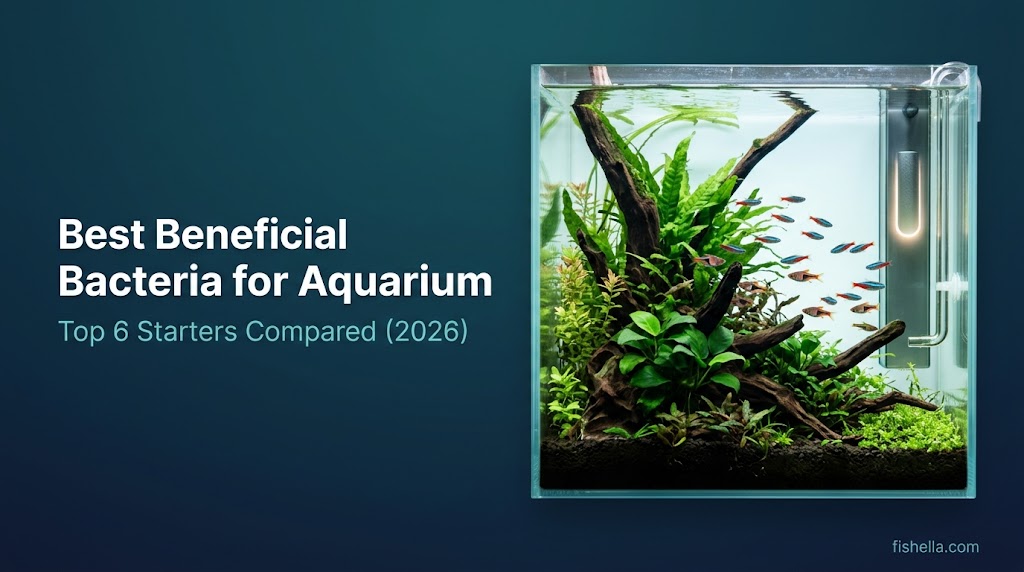
Bottled bacteria do not replace patience or water testing, but they can shorten the nitrogen cycle by seeding your filter with the microbes that convert toxic ammonia into nitrite and then nitrate. A properly dosed starter, plus a reliable ammonia source, often helps a new tank reach a safe cycle faster than waiting for bacteria to grow on their own.
This guide compares the top aquarium bacteria starter products, explains how to choose one, and shows you how to use it step by step. You will also find short answers to the most common questions. Disclosure: if you buy through links on this page, we may earn a commission at no extra cost to you. Product details come from manufacturer information and published hobbyist experience, so always check the label for current directions.
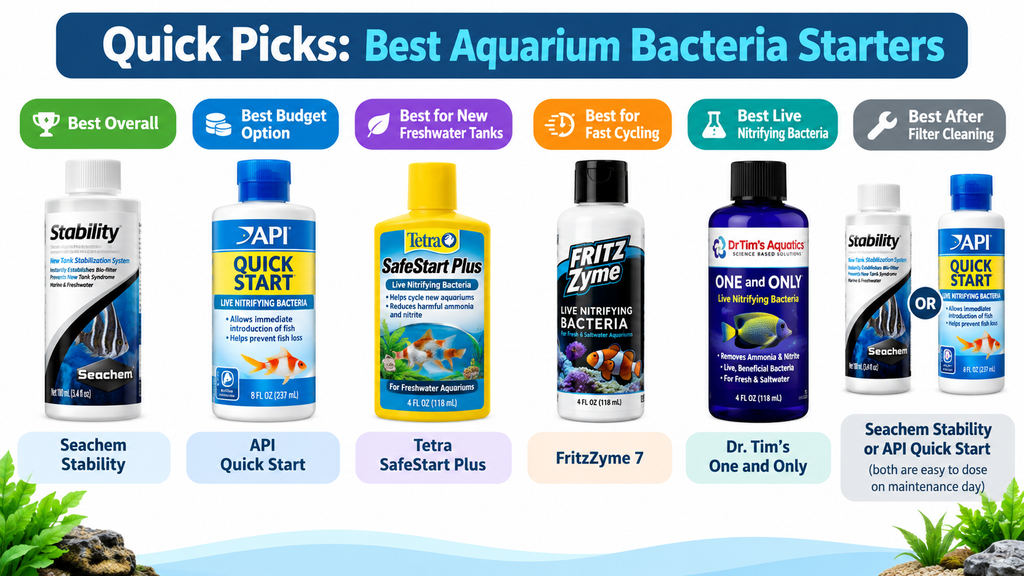
Quick Picks: Best Aquarium Bacteria Starters
- Best overall: Seachem Stability
- Best budget option: API Quick Start
- Best for new freshwater tanks: Tetra SafeStart Plus
- Best for fast cycling: FritzZyme 7
- Best live nitrifying bacteria: Dr. Tim’s One and Only
- Best after filter cleaning: Seachem Stability or API Quick Start (both are easy to dose on maintenance day)
Comparison Table: Aquarium Bacteria Starter Comparison
| Product | Best for | Water type | Key strength | Main drawback |
|---|---|---|---|---|
| Seachem Stability | All-around use | Freshwater and saltwater | Versatile, easy daily dosing | Can take up to a week of dosing |
| API Quick Start | Budget buyers | Freshwater and saltwater | Low cost, widely available | Mixed results reported when stored warm |
| Tetra SafeStart Plus | New freshwater tanks | Freshwater | Simple one-dose approach | Check label for tank-size limits |
| FritzZyme 7 | Fast cycling | Freshwater | High bacteria concentration | Freshwater-focused, higher price |
| Dr. Tim’s One and Only | Fishless cycling | Freshwater | Live nitrifying bacteria | Needs an ammonia source |
What Is Beneficial Bacteria in an Aquarium?
Beneficial bacteria are microorganisms that break down fish waste. They live on filter media, gravel, decorations, and glass, and they power the aquarium’s biological filter.
How the Nitrogen Cycle Works
Fish, uneaten food, and decaying plants release ammonia, which is toxic even at low levels. One group of bacteria converts ammonia into nitrite, which is also toxic. A second group converts nitrite into nitrate, which is much less harmful and is removed by water changes and plant uptake. You can read a clear scientific overview of this process in the nitrogen cycle entry on Wikipedia and a detailed look at nitrifying bacteria.
Image alt text suggestion: “aquarium cycling bacteria converting ammonia to nitrite to nitrate”
Nitrifying Bacteria vs. Other Aquarium Bacteria
Nitrifying bacteria, such as Nitrosomonas and Nitrospira groups, handle the ammonia and nitrite steps. Some products also contain heterotrophic or Bacillus strains that help break down organic waste. Both types can be useful, but only nitrifiers complete the core cycle.
Where Beneficial Bacteria Live
Most colonies grow in the filter, because it offers high surface area and constant oxygen-rich flow. Keep your media in the tank water, not under the tap, to protect those colonies. For a deeper look at filter choices, see our guide to best aquarium filters.
Do You Need Bottled Bacteria? Does It Really Work?
Yes, bottled bacteria can work, but results depend on the product’s quality, storage, and your tank conditions. Some products contain live nitrifying bacteria, and others rely on shelf-stable strains that build up over several days. Quality varies, so buy from retailers that store products properly and check the expiration date.
Bottled bacteria help most when you:
- Set up a new tank
- Add fish to an established tank
- Replace filter media or clean a filter heavily
- Finish a medication course that harmed your bacteria
You may not need a starter if you can move mature, healthy filter media from a stable tank. An established sponge or ceramic media from a healthy tank is often the best seed you can get.
How We Chose the Best Beneficial Bacteria for Fish Tanks
We compared products using these criteria:
- Bacteria type and concentration: nitrifying strains and label claims
- Speed to ammonia and nitrite reduction: manufacturer guidance and hobbyist reports
- Shelf life and storage: expiration dates and handling needs
- Ease of use: dosing schedule and tank-size flexibility
- Value: cost per treated gallon
- Customer feedback: patterns across verified buyer reviews
We also reviewed each brand’s own instructions: Seachem, API Fishcare, Tetra, Fritz Aquatics, and Dr. Tim’s Aquatics.
Best Beneficial Bacteria for Aquariums: Top Picks Reviewed
1. Seachem Stability: Best Overall
Overview: Seachem Stability is a popular bottled bacteria for aquariums that uses shelf-stable bacterial strains and works in both freshwater and saltwater.
Pros
- Works in freshwater and saltwater
- Simple dosing for new tanks and maintenance
- Widely available
Cons
- Directions call for repeated dosing over about a week
- Results vary with water conditions
Best for: hobbyists who want one reliable product for every situation.
Verdict: Our top choice for general use, especially if you keep more than one tank.
2. API Quick Start: Best Budget Aquarium Bacteria Starter
Overview: API Quick Start is an affordable starter you can find in most pet stores. It targets new tanks and water changes.
Pros
- Low price per treatment
- Easy to find
- Simple directions
Cons
- Quality depends on storage at the retailer
- Some users report slower results
Best for: beginners on a budget.
Verdict: A solid entry-level option. Check the date and buy from a store with good turnover.
3. Tetra SafeStart Plus: Best for New Freshwater Tanks
Overview: Tetra SafeStart Plus is designed to help set up new freshwater aquariums quickly and safely.
Pros
- Made for new freshwater setups
- Clear dosing steps
- Trusted brand
Cons
- Freshwater only
- Follow label limits for tank size
Best for: first-time freshwater hobbyists.
Verdict: A good pick when you want a straightforward new-tank starter.
4. FritzZyme 7: Best for Fast Cycling
Overview: FritzZyme 7 is a concentrated freshwater bacteria starter often chosen by hobbyists who want quick results.
Pros
- Concentrated formula
- Popular among experienced fish keepers
Cons
- Higher price
- Freshwater focus
Best for: hobbyists who want the fastest, most hands-on cycle.
Verdict: A strong option when speed matters and the budget allows.
5. Dr. Tim’s One and Only: Best Live Nitrifying Bacteria
Overview: Dr. Tim’s One and Only is a live nitrifying bacteria product built for fishless cycling.
Pros
- Live nitrifying bacteria
- Backed by detailed fishless cycling instructions
Cons
- Requires an ammonia source and regular testing
- Less common in big-box stores
Best for: hobbyists who prefer a controlled, fishless cycle.
Verdict: Best for careful planners who test often.
6. Optional Sixth Pick
Add a saltwater-specific or premium product here after you verify its current formula and reviews.
Head-to-Head Product Comparisons
Seachem Stability vs. API Quick Start
Seachem Stability usually costs more but offers wider use, including saltwater. API Quick Start costs less and suits simple freshwater setups. Which should you choose? Pick Stability for versatility and Quick Start for budget.
API Quick Start vs. Tetra SafeStart Plus
Both target new tanks. Tetra focuses on freshwater startup, while API Quick Start covers more everyday uses. Which should you choose? Choose Tetra for a dedicated new-tank dose and API for ongoing use.
FritzZyme 7 vs. Seachem Stability
FritzZyme 7 is concentrated and freshwater-focused. Stability is flexible and works across water types. Which should you choose? Choose FritzZyme for speed in freshwater and Stability for flexibility.
Best Bacteria by Situation
Best Bacteria Starter for a New Fish Tank
Tetra SafeStart Plus or Seachem Stability. Dose at setup and test water every few days.
Best Aquarium Bacteria for Faster Cycling
FritzZyme 7 gives many hobbyists the fastest results, especially with a steady ammonia source.
Best Bacteria for Aquarium Cycling Without Fish
Dr. Tim’s One and Only works well when you add pure ammonia and track results with a test kit.
Best Bottled Bacteria for a New Aquarium
Seachem Stability balances cost, availability, and ease of use.
Best Bacteria for Freshwater Fish Tanks
All five top picks work in freshwater. Choose by budget and cycling style.
Best Aquarium Bacteria After Filter Cleaning
API Quick Start or Seachem Stability. Dose after cleaning to restore any lost bacteria.
Best Bacteria for Cycling a Fish Tank Quickly
Combine a concentrated starter with seeded filter media from a healthy tank when possible.
Buying Guide: How to Choose Beneficial Bacteria for Your Aquarium
Live Bacteria vs. Shelf-Stable Formulas
Live products contain active nitrifiers and need fresh handling. Shelf-stable products use dormant spores that activate in your tank. Both can work if stored correctly.
Strain Types and Bacteria Count
Look for nitrifying strains. Be cautious with vague claims like “billions of bacteria” without strain information.
Freshwater vs. Saltwater Compatibility
Match the product to your water. Some products work only in freshwater, so read the label.
Shelf Life, Storage, and Expiration Dates
Check the date and avoid bottles that sit in warm storage. Heat can reduce effectiveness.
Dosing, Tank Size, and Price per Gallon
Compare the cost per treated gallon, not just the bottle price.
Red Flags to Avoid
- No expiration date or batch code
- Promises of an instant cycle
- Poor storage at the retailer
For related products, see our guide to fish tank cycling products and best water test kits.
How to Use Aquarium Bacteria Starter: Step by Step
Cycling a New Tank With Bacteria (Fishless Method)
- Set up the tank, filter, heater, and substrate.
- Add dechlorinator to treated tap water.
- Dose the bacteria starter according to the label.
- Add an ammonia source, such as pure ammonia or fish food, as directed.
- Test ammonia, nitrite, and nitrate every two to three days.
- Re-dose ammonia when levels drop.
- Add fish gradually when ammonia and nitrite read zero and nitrate appears.
Cycling With Fish in the Tank
Add only a few hardy fish, feed lightly, test daily, and perform water changes if ammonia or nitrite rises. Dose bacteria as directed.
Adding Beneficial Bacteria to the Filter
Pour the dose into the tank near the filter intake, or follow the label. Leave the filter running so bacteria can colonize the media.
How to Tell the Cycle Is Complete
Your cycle is complete when ammonia and nitrite both read zero within 24 hours of adding an ammonia source, and nitrate is measurable.
Common Mistakes When Using Beneficial Bacteria
- Rinsing filter media in tap water, which can kill bacteria
- Overdosing or underdosing
- Using an expired bottle
- Skipping an ammonia source in a fishless cycle
- Not testing the water
- Adding bacteria while using certain medications that can harm them
Tips to Keep Beneficial Bacteria Healthy
- Maintain steady oxygen and flow
- Keep temperature and pH stable
- Avoid unnecessary antibiotics
- Clean filters gently in used tank water
- Do not replace all filter media at once
For ongoing care, see aquarium maintenance tips.
Final Verdict: Which Is the Best Beneficial Bacteria for Aquariums?
For most people, Seachem Stability is the best beneficial bacteria for aquarium use because it is flexible and easy. Choose API Quick Start if you want to save money, Tetra SafeStart Plus for a new freshwater tank, FritzZyme 7 for speed, and Dr. Tim’s One and Only for a fishless cycle.
Whichever product you choose, test your water often and follow the label. Bacteria help, but good testing and patience protect your fish.
Frequently Asked Questions
What is the best beneficial bacteria for aquariums?
Seachem Stability is the best choice for most aquarists because it works across water types and situations. API Quick Start is the best budget option, and FritzZyme 7 suits fast freshwater cycling.
Does bottled bacteria really work?
Yes, quality bottled bacteria can help establish your biological filter. Results depend on freshness, storage, dosing, and ammonia availability. Always test your water to confirm the cycle is progressing.
How long does aquarium bacteria take to work?
Most tanks need one to six weeks to cycle, even with a starter. Concentrated products may shorten that time. Test ammonia and nitrite regularly to confirm progress.
Can you add beneficial bacteria with fish in the tank?
Yes. Most products are safe for fish. Dose as directed, feed lightly, and monitor ammonia and nitrite daily during the first weeks.
Do beneficial bacteria remove ammonia?
Yes. Nitrifying bacteria convert ammonia into nitrite, and other bacteria convert nitrite into nitrate. This process keeps your tank safer for fish.
Should you add bacteria when starting a new aquarium?
Yes, it can speed up the cycle and reduce stress on fish. Pair it with an ammonia source and regular testing.
How often should you add beneficial bacteria?
Follow the product label. Many hobbyists dose at setup, after filter cleanings, after medications, and when adding new fish.
Can you add too much beneficial bacteria to an aquarium?
Extra bacteria rarely harm fish, but overdosing wastes product and can add organic load in some formulas. Stick to the label.
Do aquarium bacteria starters expire?
Yes. Check the expiration date and storage instructions, because old or heat-damaged products may work poorly.
How do you know when an aquarium cycle is complete?
The cycle is complete when ammonia and nitrite read zero and nitrate is present after you add an ammonia source. Confirm with a liquid test kit.
Conclusion: Which Is the Best Beneficial Bacteria for Aquarium Use?
Seachem Stability is the best beneficial bacteria for aquarium use for most hobbyists. It works in freshwater and saltwater, suits new tanks and maintenance days, and is easy to find. Choose the product that matches your situation:
- Tight budget: API Quick Start
- New freshwater tank: Tetra SafeStart Plus
- Fast cycling: FritzZyme 7
- Fishless cycle: Dr. Tim’s One and Only
A bottled starter shortens the cycle, but it does not replace testing. Check ammonia and nitrite regularly, follow the label, and add fish gradually. Your tank is ready when ammonia and nitrite read zero and nitrate appears.