By the Fishella team. This post contains Amazon affiliate links. If you buy through them, we may earn a commission at no extra cost to you.
Choosing the best aquarium fertilizer for planted tanks depends on the plants you keep, your substrate, lighting and CO2 setup. Some plants absorb many nutrients through their leaves, while others rely more on their roots.
Liquid fertilizers add nutrients to the water column. Root tabs place nutrients in the substrate near the roots. Many planted aquariums use one type, while tanks with different plant groups may benefit from both.
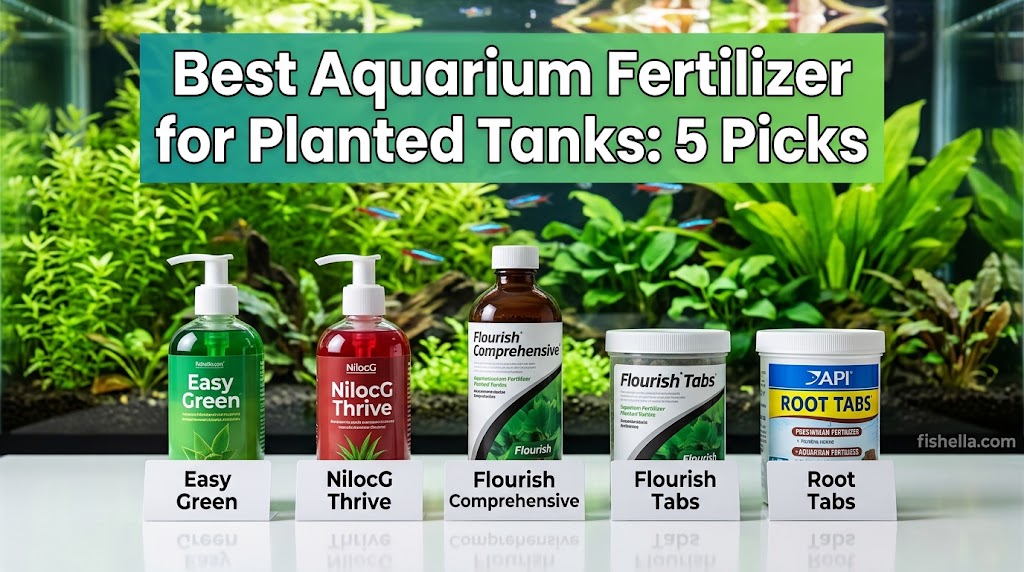
In this guide, we compare five popular options: Aquarium Co-Op Easy Green, NilocG Thrive, Seachem Flourish Comprehensive, Seachem Flourish Tabs and API Root Tabs. We explain what each product is designed to provide, where it may fit, and what to consider before dosing.
The right fertilizer is only one part of plant care. Lighting, CO2, water conditions and regular maintenance also affect plant growth. Use this guide to choose a fertilizer that matches your aquarium instead of adding more nutrients than your plants need.
Quick answer: Choose Aquarium Co-Op Easy Green for the best overall liquid fertilizer. Pair it with Seachem Flourish Tabs if your plants feed through their roots. On a tight budget, grab API Root Tabs.
How we selected these fertilizers: We compared the products by fertilizer type, stated nutrient coverage, intended use, dosing instructions and suitability for different planted-tank setups. We also considered practical differences between all-in-one liquids, trace-nutrient supplements and root tabs. This is a research-based comparison of product information, not a claim that Fishella personally tested every fertilizer. Product formulas and labels can change, so check the current manufacturer’s instructions before use.
Quick Picks: Best Aquarium Fertilizers at a Glance
| Product | Type | Best suited to | Main consideration |
|---|---|---|---|
| Aquarium Co-Op Easy Green | All-in-one liquid | Beginners and many low- to medium-tech tanks | Check the label dose against your tank’s plant growth and nutrient needs |
| NilocG Thrive | All-in-one liquid | Planted tanks with higher nutrient demand | Use the correct Thrive formula and follow its dosing instructions |
| Seachem Flourish Comprehensive | Liquid supplement | Aquariums needing additional trace nutrients | It is not the same type of product as a complete NPK fertilizer |
| Seachem Flourish Tabs | Root tabs | Root-feeding plants such as swords and crypts | Place tabs in the substrate near plant roots |
| API Root Tabs | Root tabs | Rooted plants in tanks using inert substrate | Check the current package for nutrient information and replacement instructions |
The 5 Best Aquarium Fertilizers for Planted Tanks
Aquarium Co-Op Easy Green — Best Overall
Best for: Beginners and anyone running a low- to medium-tech planted tank.
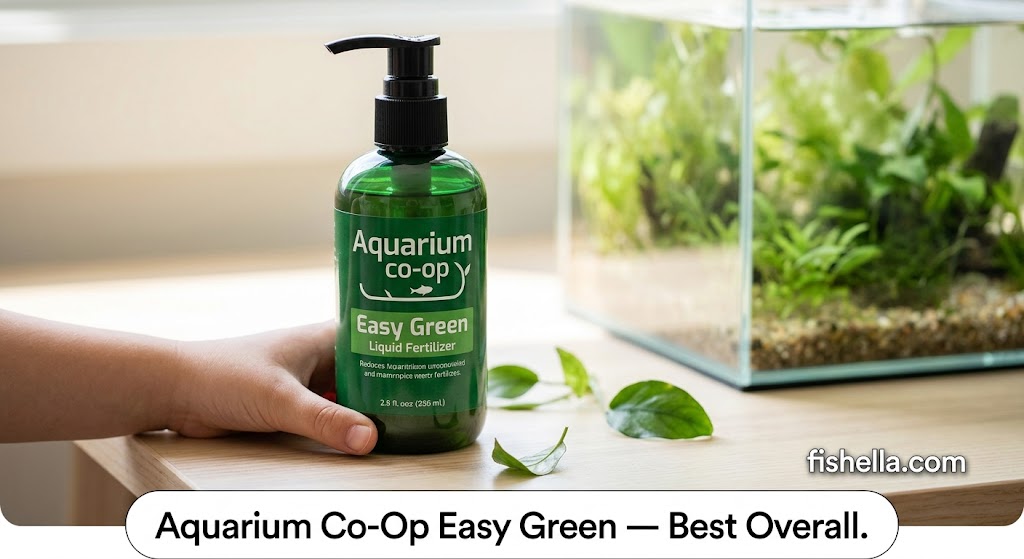
Nutrient coverage: Easy Green is an all-in-one liquid. Its guaranteed analysis lists nitrogen, phosphate, and potash (an NPK ratio of 2.66-0.46-9.21), along with trace elements such as zinc. Aquarium Co-Op also says that 1 mL in 10 gallons raises nitrate by about 3 ppm, which makes it easy to track.
Pros:
- Covers most plants with a single bottle
- Comes with a built-in pump, so you skip the measuring cups
- Aquarium Co-Op labels it safe for fish, shrimp, and snails
- Strong value, because a little goes a long way
Cons:
- High-tech tanks with heavy plant loads may need extra potassium or iron
- Does not feed heavy root feeders on its own, so add root tabs for those plants
Dosing considerations: Aquarium Co-Op recommends 1 pump per 10 gallons once a week for low- to medium-light tanks, and double that for medium- to high-light tanks. The company also suggests keeping nitrate between 20 and 50 ppm. Test your water, record each dose, and adjust from there. For help, read the Aquarium Co-Op nitrate guide.
Who should buy it: Buy Easy Green if you want one simple product that works. It suits first-time planted tank owners and busy hobbyists who want steady results without a spreadsheet.
NilocG Thrive — Best for High-Demand Plants
Best for: Hungry plants in medium- to high-tech tanks with strong light and CO2.
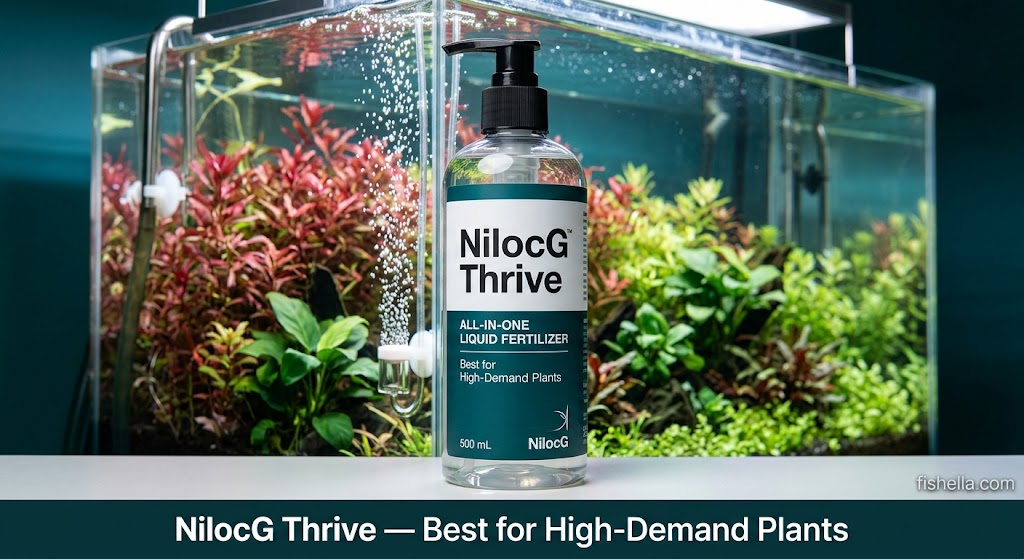
Nutrient coverage: NilocG Thrive is a concentrated all-in-one liquid that supplies both macronutrients and micronutrients. The brand builds it around the popular Estimative Index (EI) dosing method, and the 500 mL bottle claims to treat up to 2,500 gallons. NilocG also sells Thrive C, a lower-strength option with a carbon source for low-tech tanks, and Thrive S, a copper-free formula for shrimp tanks.
Pros:
- Delivers macros and micros in one bottle, so you skip a stack of separate supplements
- Highly concentrated, so one bottle lasts a long time
- Pump design keeps dosing clean and simple
- Offers variants for low-tech and shrimp setups
Cons:
- Strong dosing makes it easy to overdo in a lightly planted tank
- Soft-water and RO/DI tanks may need a separate GH booster for calcium and magnesium
Dosing considerations: Hobbyists commonly dose Thrive a few times per week in tanks with strong light and CO2. Start at the low end of the label range, watch your plants for two weeks, and increase slowly. Pair every dose with regular water changes to keep nutrients from building up.
Who should buy it: Buy Thrive if you run a high-light or CO2-injected tank and want an all-in-one liquid that keeps up with fast growth. Pair it with a quality light and CO2 kit for the best results.
Seachem Flourish Comprehensive — Best Trace-Nutrient Supplement
Best for: Tanks that already have nitrogen and phosphorus (from fish waste or another fertilizer) but lack trace elements.
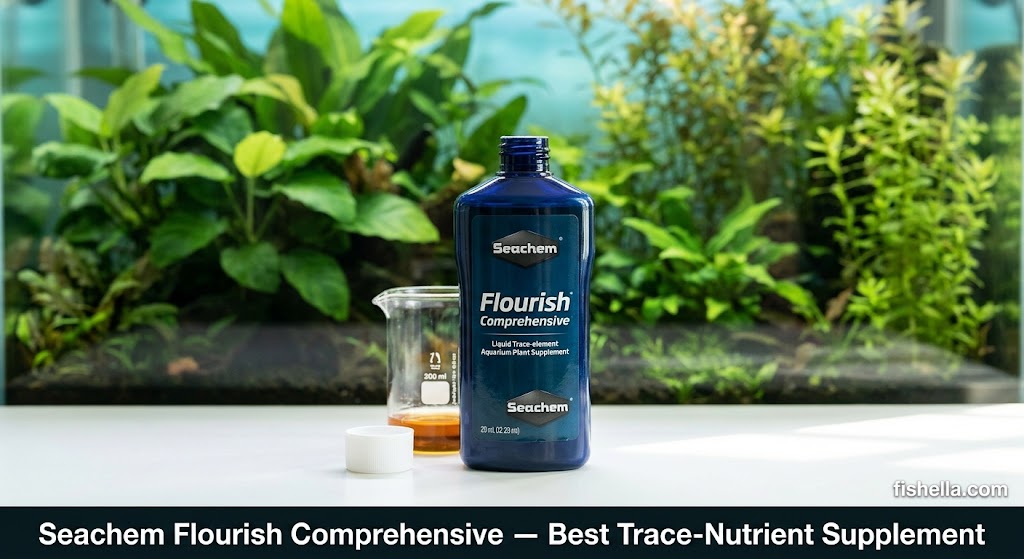
Nutrient coverage: Flourish Comprehensive is a micronutrient supplement. It supplies iron, manganese, and other trace elements that plants need in small amounts. It does not provide enough nitrogen or phosphorus to serve as a complete fertilizer on its own.
Pros:
- Fills trace-element gaps and helps with pale or yellowing new growth
- Widely available at pet stores and online
- Works well alongside a nitrogen-rich fertilizer or a heavily stocked tank
Cons:
- Not an all-in-one product, so you may need extra macronutrients
- Takes more fine-tuning than Easy Green or Thrive
Dosing considerations: Follow the label for your tank volume, and start with the lower dose. Seachem’s label calls for dosing a few times per week. If you also use an all-in-one fertilizer, cut back so you do not double up on trace elements.
Who should buy it: Buy Flourish Comprehensive if your plants look pale despite good light, or if you want to boost a fertilizer that lacks trace elements. Learn more on the Seachem Flourish page.
Seachem Flourish Tabs — Best Root Tabs
Best for: Heavy root feeders such as Amazon swords, cryptocoryne, and vallisneria in gravel or sand.
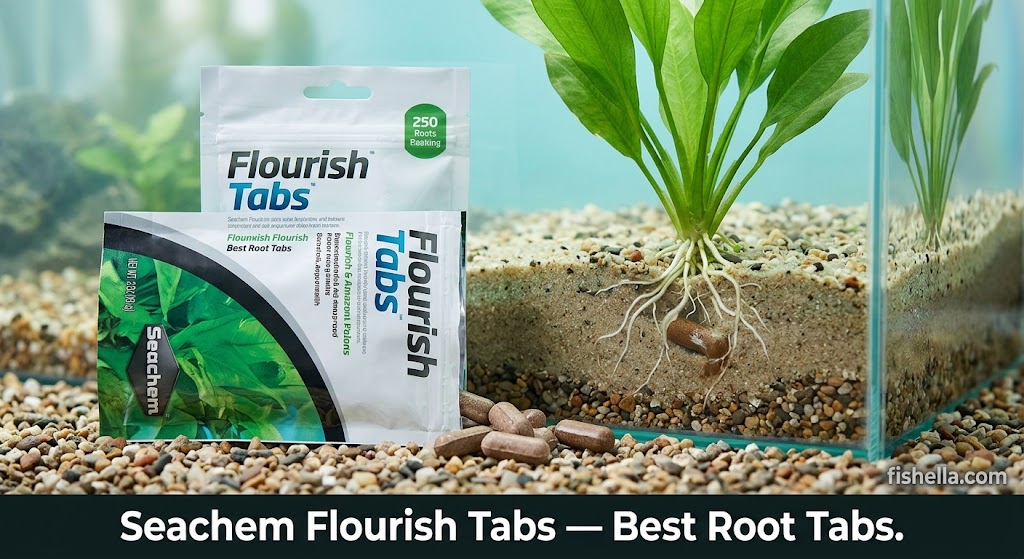
Nutrient coverage: Flourish Tabs deliver nutrients directly to the root zone, including iron and other essentials that root-feeding plants pull from the substrate. Check the current package label for the full nutrient list.
Pros:
- Places nutrients right where root feeders need them
- Lasts for weeks to months, so you dose less often
- Works well in inert substrates such as gravel and sand
Cons:
- Does not feed floating plants or fast-growing stems that take up water-column nutrients
- Costs more per tab than budget options
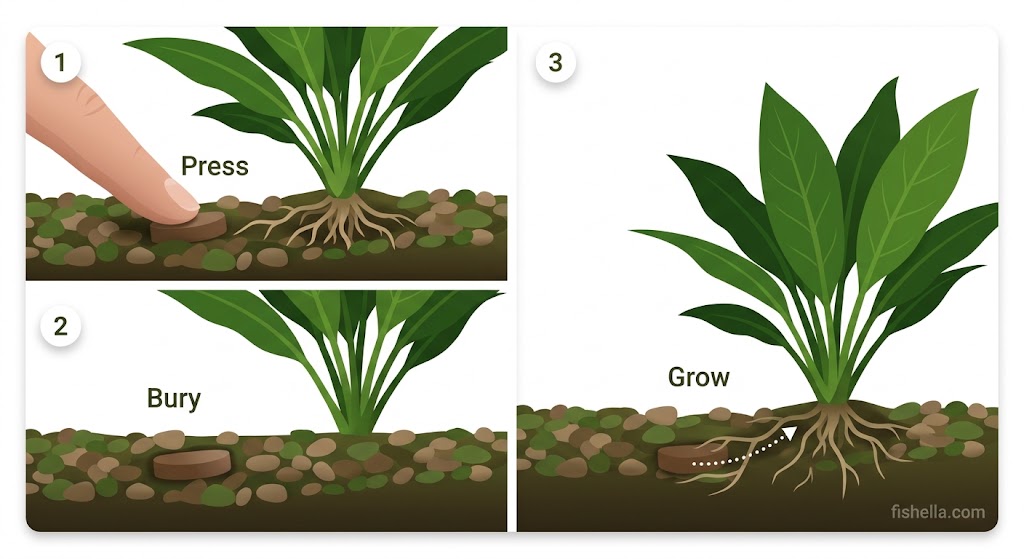
Dosing considerations: Push each tab into the substrate near the roots, and avoid disturbing it afterward. Follow the label for spacing and replacement timing, which Seachem sets at roughly every few months. Bury tabs deep so they do not leak into the water column and feed algae.
Who should buy it: Buy Flourish Tabs if you keep sword plants, crypts, or other heavy root feeders in gravel or sand, and want a trusted, easy-to-find option.
API ROOT TABS — Best Budget Root Tabs
Best for: Hobbyists who want to feed root plants without spending much.
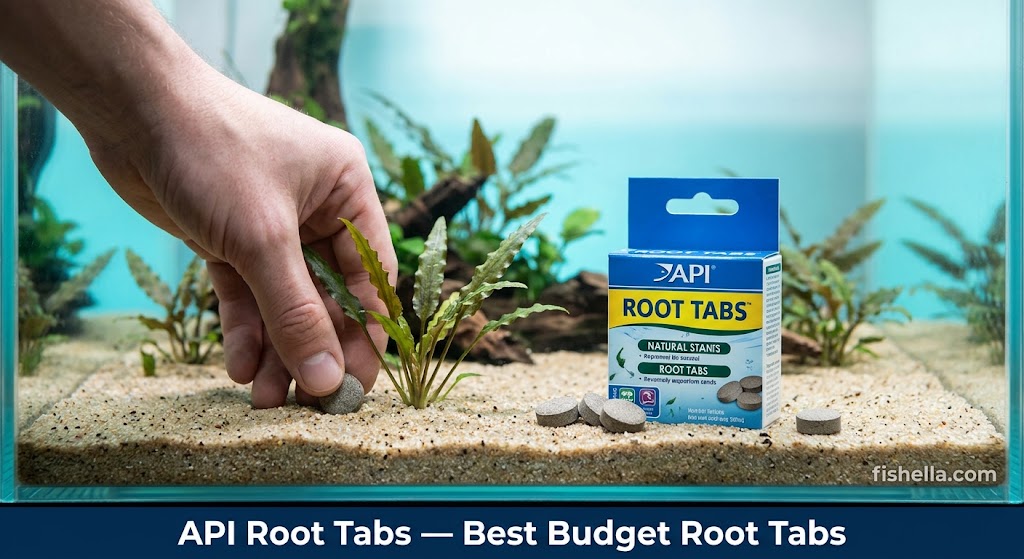
Nutrient coverage: API Root Tabs focus on iron-rich root nutrition for plants rooted in gravel or sand. Check the current label for the complete ingredient list before you buy.
Pros:
- Low cost per tab
- Easy to find at major retailers and online
- Simple to use: push a tab into the substrate and walk away
Cons:
- Offers a simpler nutrient profile than premium tabs
- Requires more frequent replacement than some pricier options
Dosing considerations: Follow the label for how many tabs to use and how often to replace them. Place each tab a few inches from the plant’s base, then bury it fully. Replace tabs on schedule, and watch for new growth that turns yellow, which signals hunger.
Who should buy it: Buy API Root Tabs if you run a small or budget-conscious tank with a few root feeders and want a no-fuss way to keep them fed.
Liquid Fertilizer vs. Root Tabs: Which Is Better?
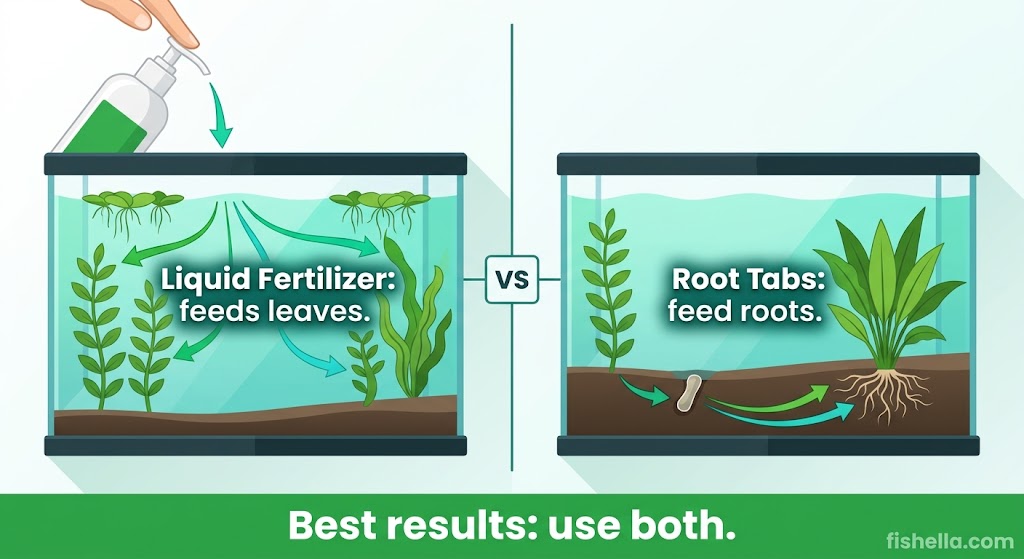
Neither wins outright. Liquid fertilizer feeds plants through their leaves, while root tabs feed plants through their roots. Your plant list decides which one matters more.
When to use liquid fertilizer
Use liquid fertilizer when your tank holds stem plants, floaters, mosses, ferns, or epiphytes. These plants pull nutrients from the water column. Liquids also work well in tanks with gravel or sand, and they let you adjust the dose quickly if you spot a deficiency.
When to use root tabs
Use root tabs when you keep swords, crypts, vallisneria, or bulb plants. These plants have thick root systems and take up most of their nutrients from the substrate. Root tabs also help in inert substrates, such as plain gravel, that contain no nutrients of their own.
Can you use both together?
Yes, and most planted tanks benefit from it. A liquid fertilizer such as Easy Green feeds the plants that absorb nutrients through their leaves, while root tabs feed the plants that absorb them through their roots. Aquarium Co-Op itself recommends pairing liquid fertilizer with root tabs for heavy root feeders. Start with one product, watch your plants, and add the other as needed.
How to Choose the Right Aquarium Plant Fertilizer
Low-tech vs. high-tech planted tanks
Low-tech planted tanks usually have moderate lighting and no injected CO2. Plant growth is often slower, so begin with a modest fertilizer routine that matches the plants and product label. Avoid adding several supplements before you know what your aquarium needs.
High-tech tanks use stronger lighting and injected CO2 to support faster plant growth. These aquariums may need more consistent nutrient dosing because plants can use nutrients more quickly.
Choose a fertilizer based on its nutrient coverage, not just whether it is marketed for low-tech or high-tech tanks. Check the exact formula and dosing instructions. For better plant growth, balance fertilizer with suitable lighting, CO2 and regular maintenance.
If you plan to upgrade your lighting, see our guide to the best aquarium light for a planted tank.
Nutrients: nitrogen, phosphorus, potassium, and trace elements
Aquarium plants use macronutrients such as nitrogen, phosphorus and potassium, along with smaller amounts of trace elements such as iron, manganese and zinc. Each nutrient has a different role in plant growth.
Not every fertilizer supplies all these nutrients in the same amounts. Some products are designed as all-in-one fertilizers, while others mainly provide trace elements or nutrients for the root zone.
Read the guaranteed analysis or nutrient information on the product label before choosing a fertilizer. If you already use an all-in-one product, check its ingredients before adding another supplement. This helps prevent unnecessary overlap.
For more information about aquarium water conditions, explore our water parameters guides.
Root-feeding vs. water-column-feeding plants
Root feeders, such as Amazon swords and crypts, use their roots to pull nutrients from the substrate. Water-column feeders, such as hornwort, anacharis, and floating plants, absorb nutrients through their leaves and stems. Match your fertilizer to your plants: liquids for water-column feeders, root tabs for root feeders. Our aquarium setup guides can help you plan your substrate and plant layout.
Fertilizer for Tanks With Shrimp and Snails
If you keep shrimp or snails, check the fertilizer’s full ingredient information and manufacturer guidance before dosing. Some plant fertilizers contain trace elements, including copper, but the formula and concentration matter.
Do not assume that every fertilizer containing copper is automatically unsafe, or that every product marketed for planted tanks is suitable for every invertebrate aquarium.
For a shrimp tank:
- Choose a product whose manufacturer provides guidance for shrimp or invertebrates.
- Follow the label dose carefully. Avoid adding extra fertilizer.
- Check whether the product is a standard formula or a special invertebrate-focused version.
- Observe your shrimp after introducing a new product.
- Keep up with regular water changes and stable water conditions.
Aquarium Co-Op states that Easy Green is suitable for fish, shrimp and snails. NilocG also offers different Thrive formulas, so check that you are buying the correct version for your aquarium.
For more information about preparing replacement water, see our guide to the best aquarium water conditioner.
How to avoid overdosing and excess algae
Fertilizer is only one part of the balance between plant growth and algae. Excess nutrients are not the only possible cause of algae. Lighting, CO2, plant growth and aquarium maintenance also matter.
Use these habits to manage your planted tank:
- Follow the fertilizer label instead of adding extra doses to speed up growth.
- Keep your lighting schedule consistent.
- Match nutrient dosing to the amount and type of plants you keep.
- Remove dead or decaying leaves during maintenance.
- Perform regular water changes suited to your aquarium.
- Make gradual changes when adjusting fertilizer, lighting or CO2.
If algae appears, review the whole aquarium rather than immediately stopping all fertilizer. Healthy plant growth and consistent maintenance can help you manage algae over time.

If algae still appears, check out our algae control guides for fixes. For a deeper look at fertilizer basics, read the Aquarium Co-Op plant fertilizer.
How to Dose Aquarium Fertilizer Correctly
The correct fertilizer dose depends on the product, actual water volume, plant growth and aquarium conditions. A dose that suits a densely planted tank may be too much for a small tank with only a few slow-growing plants.
Use these steps when starting a fertilizer routine:
- Calculate your water volume. Use the aquarium’s actual water volume as closely as possible, allowing for substrate and decorations.
- Read the product label. Check the recommended amount, frequency and whether the dose is based on aquarium volume.
- Start cautiously. If the manufacturer allows a reduced starting dose, begin at the lower end rather than adding extra fertilizer.
- Keep a dosing record. Write down the product, amount and date so you can identify changes over time.
- Observe new growth. Look for changes in new leaves and overall plant growth over the following weeks.
- Avoid stacking products blindly. Two fertilizers may contain some of the same nutrients. Check their labels before combining them.
Example: Planning a Fertilizer Dose for a 10-Gallon Tank
Suppose you have a 10-gallon aquarium with a few rooted plants and some stem plants. First, check whether the plants need nutrients in the water column, the substrate or both.
If you choose a liquid fertilizer, calculate the dose using the product’s label and your aquarium’s actual water volume. If you also keep heavy root feeders, consider root tabs according to their package instructions.
Do not copy another aquarist’s dose without checking the product and tank conditions. Keep the routine consistent, observe plant growth and make gradual changes.
How to Recognize Possible Nutrient Problems in Aquarium Plants
Plant leaves can show signs of stress when nutrients are insufficient, but a damaged or yellow leaf does not automatically mean your aquarium needs more fertilizer. Lighting, CO2, water conditions and normal older-leaf loss can also affect plant appearance.
Watch for changes such as:
- Pale or yellow new growth: Check whether the plant is receiving suitable light and nutrients, including trace elements.
- Older leaves turning yellow: Review the plant’s growth pattern and nutrient supply before increasing fertilizer.
- Small or slow new leaves: Check lighting, CO2 availability and whether the fertilizer routine matches the plant’s needs.
- Holes or damaged leaf edges: Consider nutrient availability and other possible causes, rather than assuming one nutrient is missing.
Look at several leaves and the overall plant before changing your dosing routine. Remove badly damaged leaves when appropriate, check your aquarium conditions and make one gradual adjustment at a time.
If the problem continues, identify the plant species and review its specific care requirements before adding more fertilizer.
Frequently Asked Questions
What is the best fertilizer for aquarium plants?
For most hobbyists, Aquarium Co-Op Easy Green is the best all-around choice because it covers the main nutrients in one easy-to-dose bottle. If you keep heavy root feeders, add root tabs such as Seachem Flourish Tabs. If you run a high-tech tank, consider NilocG Thrive.
Are liquid fertilizers better than root tabs?
Neither is better in every tank. Liquid fertilizers feed plants that absorb nutrients through their leaves, and root tabs feed plants that absorb them through their roots. Many planted tanks use both.
Do aquarium plants need fertilizer if I have fish?
Sometimes not. Fish waste supplies nitrogen and some phosphorus, so a lightly planted, heavily stocked tank may grow plants without extra fertilizer. Fast-growing plants, strong lighting, or low fish loads usually call for added nutrients, especially potassium and trace elements.
Can aquarium fertilizer cause algae?
Yes, if you overdose or if your light and CO2 do not match your nutrient levels. Algae thrive on imbalance. Start with small doses, test your water, and keep a steady maintenance routine.
How often should I fertilize a planted tank?
It depends on the product and your tank. Easy Green calls for a weekly dose in low- to medium-light tanks, while stronger all-in-one liquids such as Thrive often get dosed a few times per week in high-tech tanks. Root tabs last much longer and usually need replacing every month or two, or as the label directs. Always follow the label and adjust based on how your plants look.
Is aquarium fertilizer safe for shrimp?
Many are, but check the label every time. Aquarium Co-Op states that Easy Green is safe for fish, shrimp, and snails, and NilocG offers Thrive S, a copper-free formula for shrimp tanks. Avoid products that contain copper, and dose conservatively in shrimp-only tanks.
Final Verdict: Which Aquarium Fertilizer Should You Choose?
The best aquarium fertilizer depends on your plants and how your tank is set up.
- Best overall liquid: Aquarium Co-Op Easy Green is a convenient all-in-one option for many beginner and low- to medium-tech planted tanks.
- For higher-demand planted tanks: Consider NilocG Thrive if its nutrient profile and dosing instructions match your setup.
- For trace nutrients: Seachem Flourish Comprehensive is worth considering when you need a supplement rather than another complete fertilizer.
- Best root-tab option: Seachem Flourish Tabs are designed for plants that feed heavily through their roots.
- Budget root-tab option: API Root Tabs are another option to compare for rooted plants.
You do not need to buy every product on this list. Start with the fertilizer type that matches your plants, follow its label and observe new growth before making changes.
Remember that fertilizer cannot replace suitable lighting, CO2, a healthy substrate or regular aquarium maintenance. A balanced routine is more useful than adding more products.
Looking for more gear? Browse all of our aquarium product reviews to build a healthier, greener tank.