
Guppy fish are colorful, active freshwater fish that can bring life to almost any suitable aquarium. Their flowing tails, wide range of colors, and fascinating breeding behavior make them popular with beginner and experienced fish keepers alike. However, keeping guppies healthy requires more than adding fish to a tank and feeding them every day. You need the right aquarium, stable water conditions, appropriate nutrition, compatible tank mates, and regular maintenance.
This complete guppy fish care guide explains how to choose healthy guppies, set up their aquarium, maintain good water quality, prevent common diseases, and care for newborn fry. You will also learn how to identify male and female guppies, select suitable tank mates, recognize signs of pregnancy, and avoid mistakes that can shorten a guppy’s lifespan.
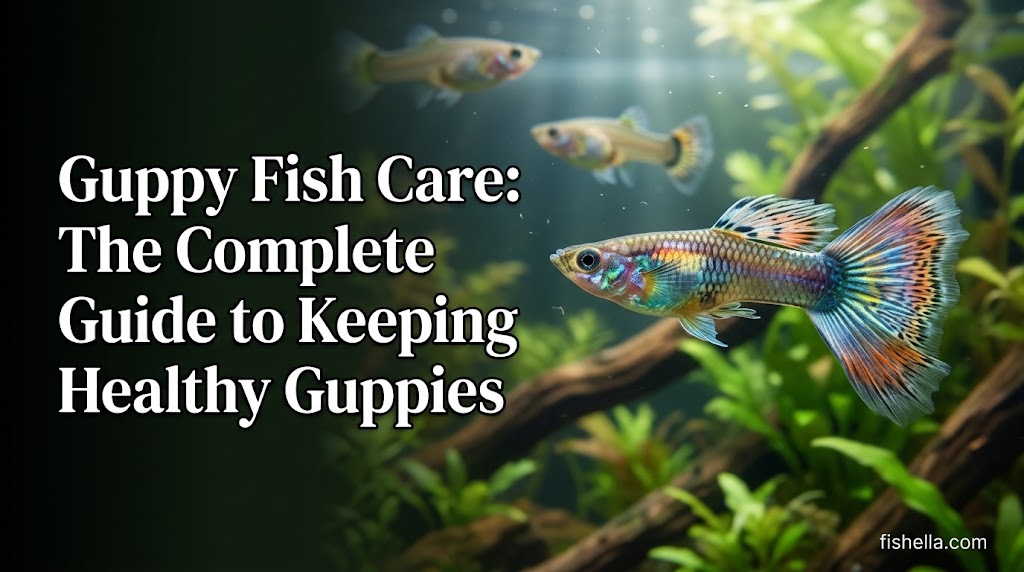
Whether you are setting up your first aquarium or improving an established guppy tank, this guide will help you make informed decisions and build a healthier environment for your fish.
Guppy Fish Care at a Glance
Before choosing your fish, understand their basic care requirements.
| Care requirement | Recommended guidance |
|---|---|
| Scientific name | Poecilia reticulata |
| Common name | Guppy fish |
| Fish type | Freshwater livebearer |
| Adult size | Usually around 1–2.5 inches, depending on sex and variety |
| Average lifespan | Approximately 2–3 years in many home aquariums |
| Recommended beginner tank | 10 gallons or larger |
| Water temperature | Approximately 75–78°F for a stable community setup |
| Acceptable temperature range | Approximately 72–82°F, depending on strain and conditions |
| pH | Around 7.0–8.0 is a useful target |
| Water hardness | Generally medium-hard to hard water |
| Ammonia | 0 ppm |
| Nitrite | 0 ppm |
| Nitrate | Preferably below 20 ppm, with lower levels beneficial |
| Diet | Omnivorous |
| Feeding frequency | Adults once or twice daily; fry several small meals daily |
| Filtration | Required |
| Heater | Recommended whenever room temperatures fluctuate or fall below the target range |
| Social needs | Keep compatible groups with enough swimming space |
| Breeding | Livebearer; females give birth to free-swimming fry |
These figures provide a starting point, not a substitute for testing your aquarium. Guppies can tolerate some variation, but sudden changes in temperature, pH, and mineral content can stress them.
1. What Are Guppy Fish?
The guppy (Poecilia reticulata) belongs to the Poeciliidae family, a group of fish known for livebearing reproduction. Unlike fish that scatter eggs, female guppies develop their young internally and give birth to free-swimming babies.
Wild guppies originate from parts of northeastern South America and nearby Caribbean islands, including Venezuela, Trinidad, Barbados, and Guyana. They inhabit varied freshwater environments, including streams, ponds, canals, and densely vegetated waterways.
According to FishBase’s guppy species profile, guppies occupy a range of habitats and have become established outside their native range. People have introduced them to some regions for mosquito control, although introductions can also affect native aquatic ecosystems.
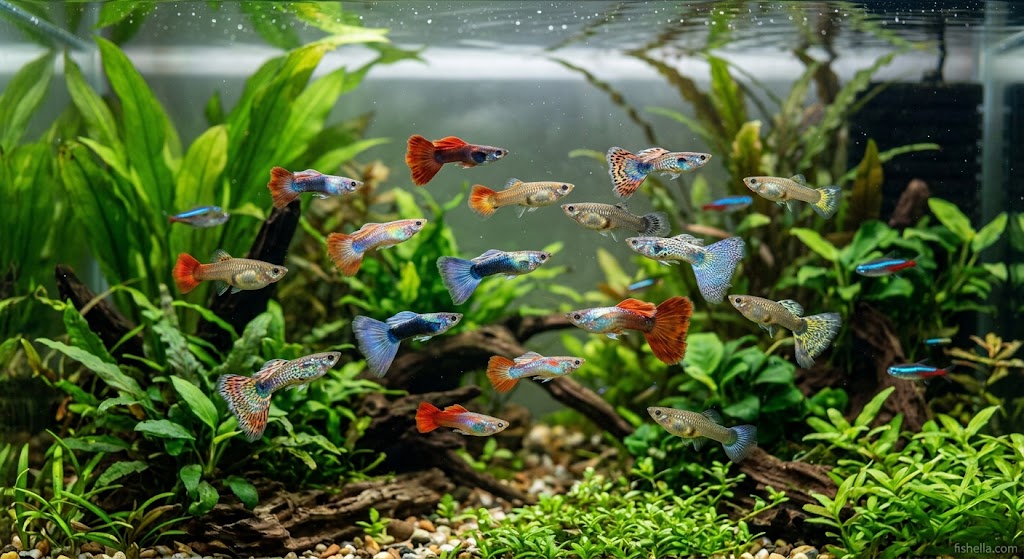
In home aquariums, breeders have developed many fancy guppy varieties with different colors, patterns, body shapes, and tail types. These varieties have helped make guppies one of the most recognizable ornamental freshwater fish.
Why Are Guppies So Popular?
Guppies offer several advantages for aquarium owners:
- Attractive appearance: Their colors include red, blue, yellow, orange, green, black, and combinations of several shades.
- Active behavior: They spend much of the day swimming, exploring plants, and interacting with other fish.
- Small adult size: Most varieties fit comfortably in appropriately sized home aquariums.
- Accessible food options: They eat commercial flakes, micro pellets, and several suitable frozen or live foods.
- Interesting reproduction: Watching fry grow into adult fish can be rewarding for keepers who plan for breeding.
- Variety: Selective breeding has produced many tail shapes, color patterns, and body markings.
However, small size does not mean you can keep guppies in an unfiltered bowl. They still need sufficient space, stable water conditions, and proper care.
Are Guppies Good Fish for Beginners?
Yes. Guppies can be excellent beginner fish when you prepare their aquarium properly.
They adapt to a range of conditions, accept many foods, and generally behave peacefully around compatible fish. Their needs are also relatively straightforward compared with those of some more demanding tropical species.
Nevertheless, guppies can become sick when ammonia accumulates, temperatures fluctuate, or owners overcrowd their aquariums. Fancy strains may also have delicate fins or genetic weaknesses associated with selective breeding.
The biggest challenge for many beginners is reproduction. A mixed-sex group can produce repeated broods, increasing the population and biological load of the tank.
If you want to start with guppies, learn about different types of guppies before choosing a variety. Consider appearance, adult size, swimming ability, and the reliability of the breeder.
2. How Long Do Guppy Fish Live?
Most pet guppies live approximately two to three years under suitable aquarium conditions. Some live longer, while others die much earlier because of poor water quality, disease, stress, or unfavorable genetics.
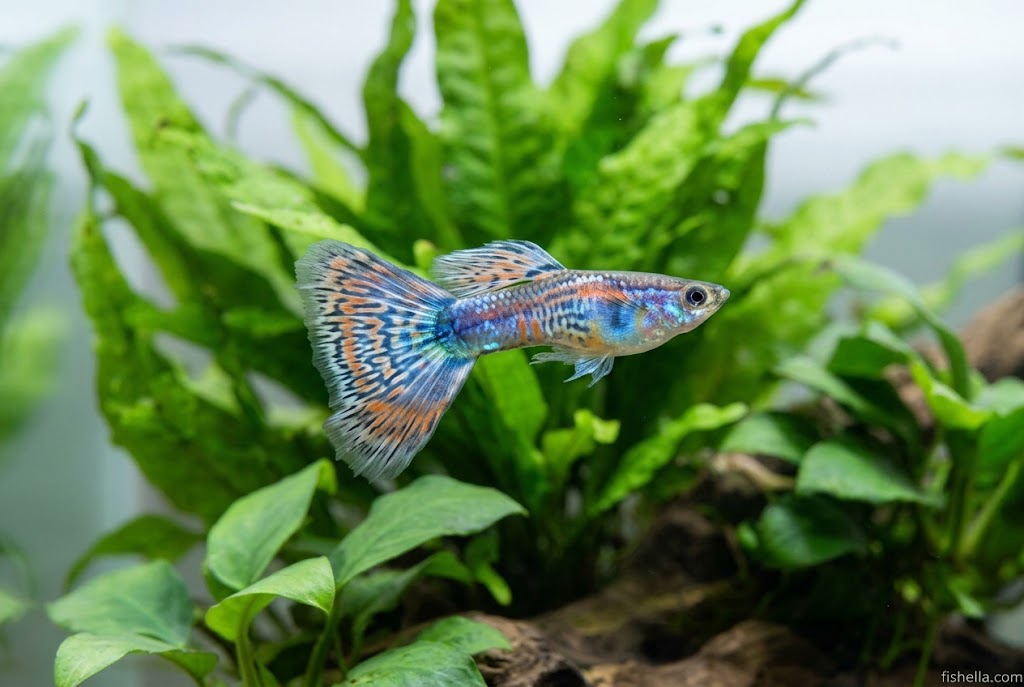
You cannot control every factor that determines a guppy’s lifespan, but you can improve its chances of living a healthy life.
What Affects a Guppy’s Lifespan?
Water quality: Ammonia and nitrite can damage a fish’s gills and interfere with normal body functions. Consistently clean water helps reduce avoidable stress.
Temperature: Guppies need suitable, stable temperatures. Keeping them continuously at the upper end of their tolerance range can increase metabolism and may affect longevity.
Nutrition: A varied, balanced diet supports normal growth, immune function, and reproductive health. Excessive feeding, however, can cause digestive problems and pollute the aquarium.
Genetics: Selectively bred fancy guppies may inherit weaknesses that affect health, fertility, or lifespan.
Breeding frequency: Repeated pregnancies can place additional demands on female guppies. A balanced social environment and appropriate nutrition are especially important for breeding females.
Stress: Overcrowding, aggressive tank mates, inadequate hiding places, and sudden environmental changes can weaken a fish’s condition.
How Can You Help Guppies Live Longer?
Maintain stable water conditions, avoid unnecessary medication, feed appropriate portions, and monitor your fish daily. Choose healthy stock from a reputable source and quarantine new arrivals before introducing them to your established aquarium.
For more specific advice, read our guide to how long guppies live and how to extend their lifespan.
3. How Big Do Guppy Fish Get?
Adult size depends on sex, genetics, and variety.
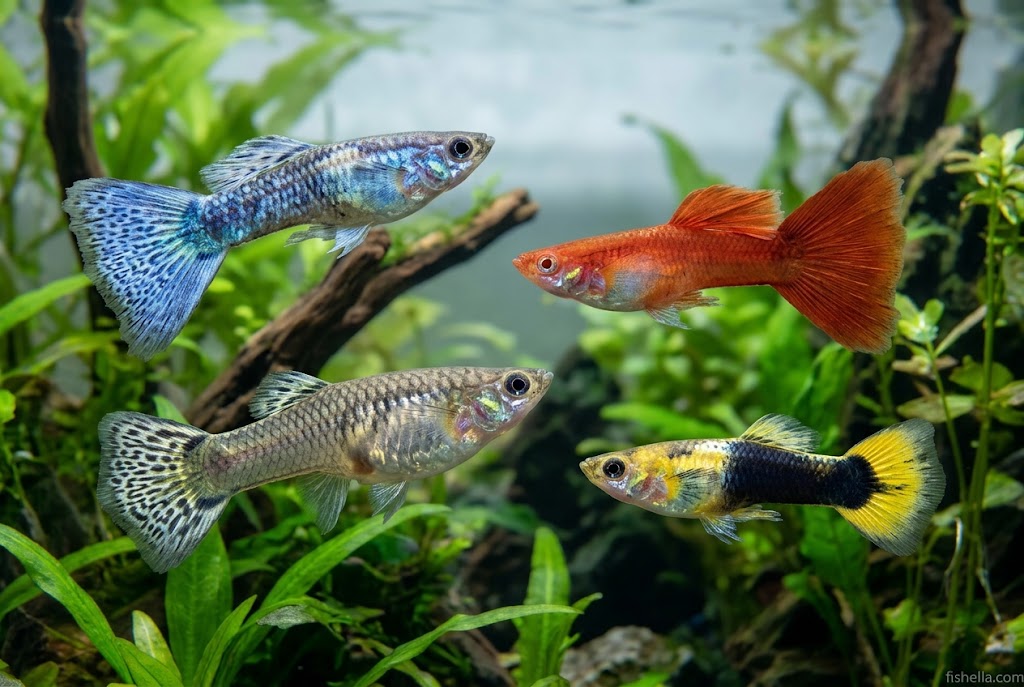
Male guppies commonly reach approximately 1–1.5 inches in body length, while females often grow to around 2–2.5 inches. Long-finned varieties may appear larger because their tails extend well beyond their bodies.
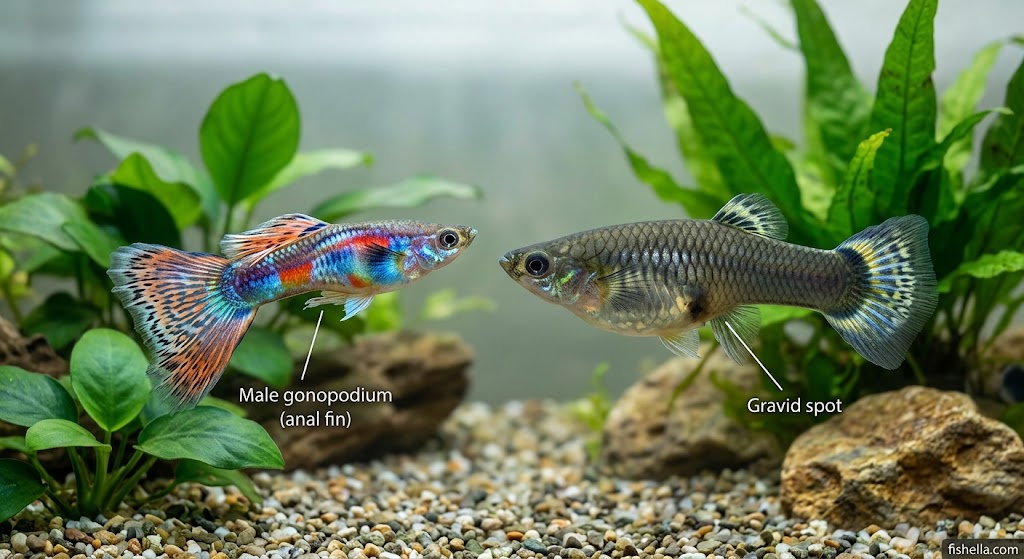
Females generally have deeper bodies and fuller abdomens, especially during pregnancy. Males tend to be slimmer and display more elaborate coloration.
When planning your aquarium, consider the number of fish, their adult size, their offspring, and the amount of space needed for swimming. Do not calculate stocking capacity using body length alone.
When Do Guppies Reach Adult Size?
Guppies can mature within a few months, although growth varies with genetics, nutrition, temperature, and water quality.
Young fish need frequent access to suitable food, clean water, and enough space to develop normally. Crowded conditions and poor nutrition can slow growth.
Warm water may accelerate growth and maturation, but increasing temperature simply to produce larger fish faster is not a good long-term strategy. Keep the aquarium within a suitable range instead.
4. Types of Guppy Fish and How to Choose One
Guppies come in many varieties, and breeders often classify them according to color, pattern, tail shape, or combinations of these characteristics.
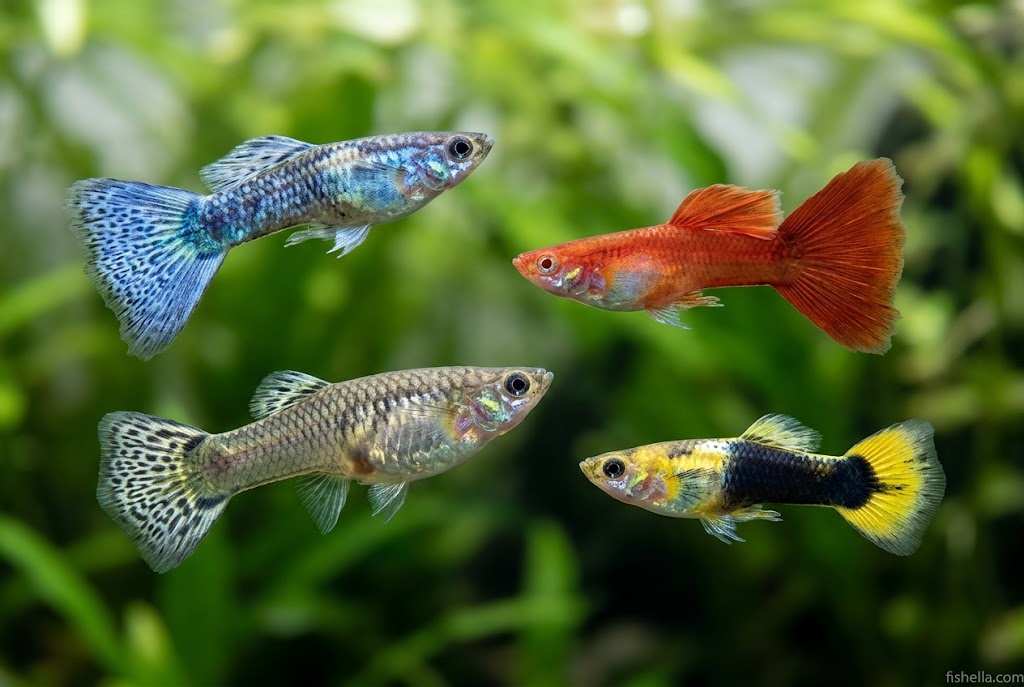
Common varieties include:
- Cobra guppies: Display distinctive markings that resemble a snakeskin pattern.
- Mosaic guppies: Feature intricate patterns across the tail.
- Grass guppies: Usually have fine, grass-like spots or markings.
- Snakeskin guppies: Show winding, chain-like patterns on their bodies.
- Tuxedo guppies: Often have a darker rear body that contrasts with the front.
- Albino guppies: Have reduced dark pigmentation and often display light-colored eyes.
- Delta-tail guppies: Feature broad, triangular tail fins.
- Veiltail guppies: Have long, flowing tails with a rounded appearance.
- Endler-type guppies: Small, colorful livebearers associated with Endler’s guppy, a distinct species commonly identified as Poecilia wingei.
Some trade labels describe overlapping or selectively bred characteristics rather than formally distinct species.
Which Guppy Variety Is Best for Beginners?
Choose healthy, active fish from a reputable breeder rather than selecting a variety based on color alone.
Look for clear eyes, intact fins, normal swimming, and steady breathing. Avoid fish with visible ulcers, fuzzy growths, severely clamped fins, or unusual lethargy.
Ask the seller about the fish’s age, diet, water conditions, and previous exposure to disease. If you plan to breed guppies, ask about their lineage and whether the breeder has selected for health as well as appearance.
5. How to Tell Male and Female Guppies Apart
Knowing the difference between male and female guppies helps you select a suitable group, prevent unwanted breeding, and understand normal behavior.
| Feature | Male guppy | Female guppy |
|---|---|---|
| Body size | Usually smaller and slimmer | Usually larger with a fuller abdomen |
| Color | Often brighter and more elaborate | Often less colorful, although some varieties are vivid |
| Anal fin | Develops a narrow reproductive fin called a gonopodium | Retains a broader, fan-shaped anal fin |
| Body shape | Generally slender | Usually deeper-bodied |
| Gravid spot | Usually absent | May show a dark area near the rear of the abdomen |
The gonopodium is the most useful physical feature for distinguishing mature males from females. Color alone is unreliable because breeding has produced colorful females as well as males.
Can You Keep Only Male Guppies?
Yes. An all-male group prevents reproduction as long as you correctly identify every fish and do not introduce females later.
Male-only groups can work well, but males may still chase one another or compete for attention. Provide sufficient swimming space, plants, and visual barriers. Monitor behavior rather than assuming that all-male groups will automatically remain peaceful.
Can You Keep Only Female Guppies?
Yes. An all-female group can also prevent future breeding, but females purchased from mixed-sex tanks may already carry sperm.
Female guppies can store sperm and produce additional broods after separation from males. If you want a strictly nonbreeding aquarium, ask about the fish’s history and be prepared for possible fry.
For a more detailed comparison, see our guide to male vs. female guppies.
6. What Is the Best Tank Size for Guppy Fish?
Tank size plays a major role in guppy fish care because it affects swimming space, water stability, filtration, and stocking capacity.
A 10-gallon aquarium is a practical starting point for a small guppy group. A 20-gallon aquarium offers more room and makes it easier to manage a growing population.
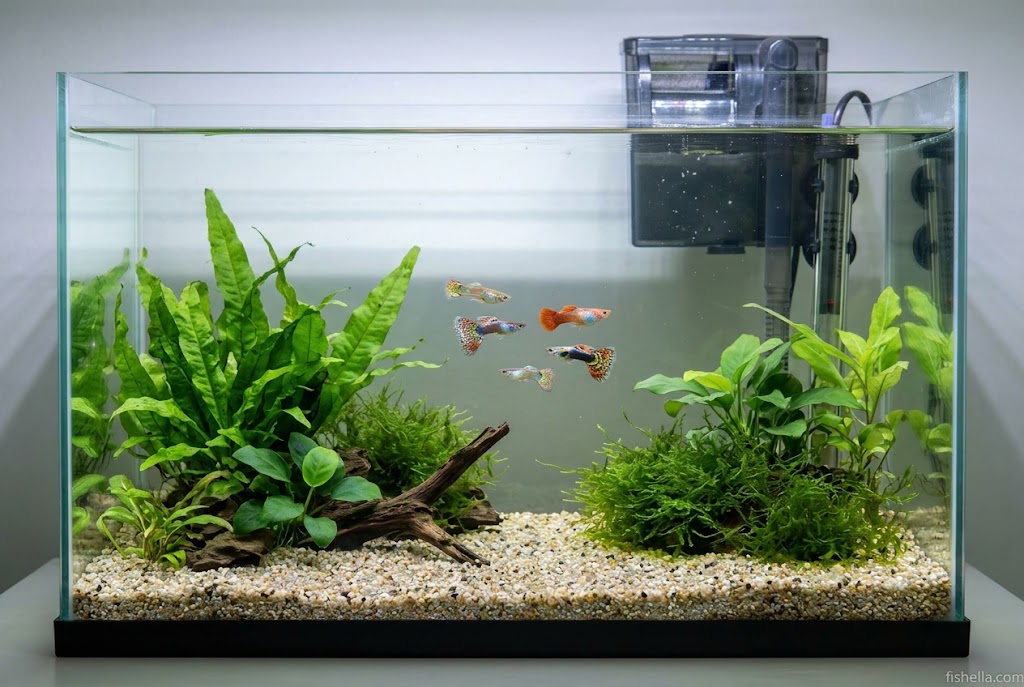
A five-gallon aquarium leaves less room for error and should not be treated as the ideal permanent home for a growing colony.
How Many Guppies Can You Keep in a Tank?
The appropriate number depends on adult size, filtration, plants, feeding, water changes, and whether the fish reproduce.
Use the following table as a conservative planning guide rather than a universal stocking formula.
| Tank size | Suggested starting group | Important consideration |
|---|---|---|
| 5 gallons | Very limited setup; not ideal for a beginner group | Water conditions can change rapidly |
| 10 gallons | Approximately 4–6 guppies | Monitor waste and plan for offspring |
| 20 gallons | Approximately 8–12 guppies | More swimming space and greater stability |
| 29 gallons | Approximately 12–15 guppies as an initial plan | Actual capacity depends on filtration and adult population |
These figures are starting estimates, not guaranteed maximums. A breeding colony can outgrow any of these aquariums if you do not manage the population.
Can Guppies Live in a 5-Gallon Tank?
A five-gallon aquarium can accommodate a very limited setup, but it is less forgiving than a larger tank.
Small volumes experience faster changes in temperature and water chemistry. Waste also accumulates more quickly relative to the amount of water available.
If you choose this size, avoid adding a breeding group or multiple tank mate species. Use suitable filtration, maintain stable temperatures, test the water frequently, and be ready to move the fish into a larger aquarium if conditions become difficult to maintain.
For most beginners, a 10-gallon or larger aquarium is the more practical choice.
Is a 10-Gallon Tank Enough for Guppies?
A properly cycled 10-gallon tank can support a small group of guppies when you provide suitable filtration, stable water conditions, and routine maintenance.
Choose an aquarium with enough horizontal swimming space, and leave open areas between plants. Avoid adding more fish simply because the tank looks empty.
Remember that guppies reproduce quickly. A group of four or five adults may eventually become a much larger colony if you keep males and females together.
Why Is a Larger Aquarium Easier to Maintain?
Larger aquariums generally dilute waste more effectively and resist sudden environmental changes.
They also offer more space for plants, hiding places, and compatible tank mates. A larger volume does not eliminate the need for filtration or water changes, but it can make routine maintenance more manageable.
7. The Best Water Parameters for Guppies
Healthy guppies need clean water with suitable mineral content and stable chemistry. You should test your aquarium instead of relying on appearance alone.
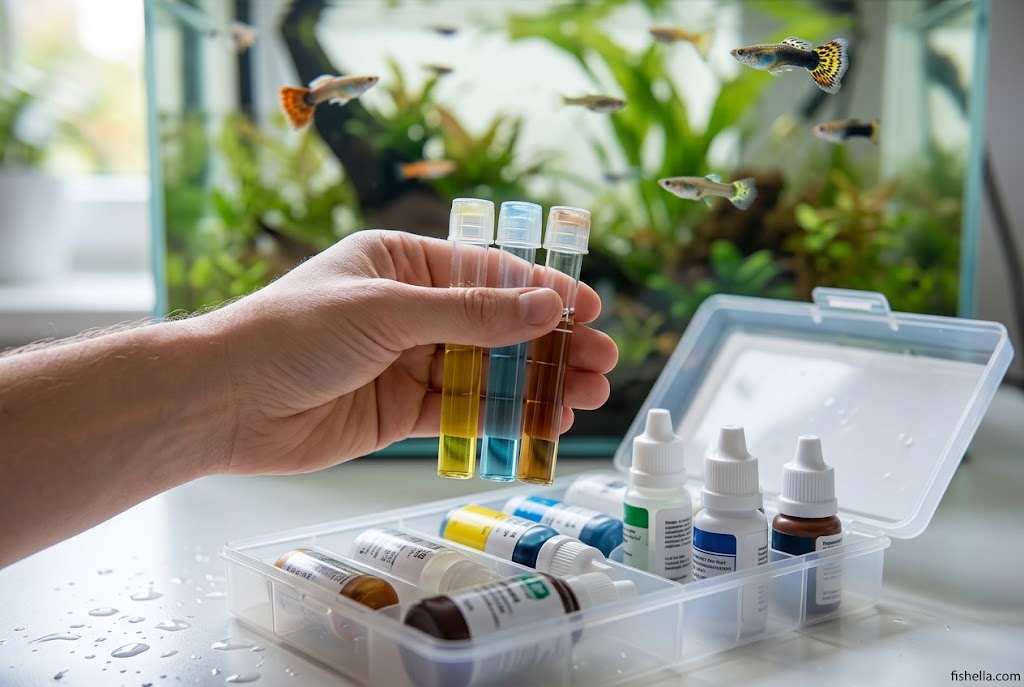
Clear water can still contain harmful ammonia or nitrite.
Recommended Guppy Water Parameters
| Parameter | Practical target |
|---|---|
| Temperature | 75–78°F for a typical community aquarium |
| Broader temperature range | Approximately 72–82°F, depending on strain and conditions |
| pH | Around 7.0–8.0 |
| Ammonia | 0 ppm |
| Nitrite | 0 ppm |
| Nitrate | Preferably below 20 ppm |
| General hardness (GH) | Medium-hard to hard water is generally suitable |
| Carbonate hardness (KH) | Maintain adequate buffering and avoid sudden changes |
The Ornamental Aquatic Trade Association’s guppy care guidance provides additional information about suitable water conditions and aquarium maintenance.
What Temperature Do Guppies Need?
Maintain a stable temperature, usually around 75–78°F for a typical community setup.
Guppies can tolerate a broader range, but stability matters. Cold water can slow activity and digestion, while excessive heat increases metabolic demands and reduces the amount of dissolved oxygen available.
Use an aquarium heater with a thermostat when needed and check the water with a separate thermometer. Avoid placing the aquarium beside air conditioners, heaters, drafty windows, or other sources of sudden temperature changes.
Do not increase the temperature automatically when a fish becomes sick. First identify the likely problem and check the treatment instructions if medication is necessary.
What pH Is Best for Guppies?
Guppies generally do well in neutral to slightly alkaline water. A stable pH around 7.0–8.0 is a reasonable target for many captive guppies.
However, the best practical target also depends on the source water and the fish’s existing conditions.
Do not add pH-adjusting chemicals simply to achieve an exact number. Sudden changes can cause more stress than a slightly different but stable reading.
Test your tap water and aquarium water, and learn whether your local supply contains suitable mineral levels.
Do Guppies Need Hard Water?
Guppies generally prefer water with moderate to high mineral content. General hardness measures minerals such as calcium and magnesium, while carbonate hardness helps buffer changes in pH.
If your source water already has suitable hardness, you may not need to adjust it.
If your water is very soft, test GH and KH before choosing a correction method. Avoid adding salt or mineral products without understanding how they affect water chemistry.
Why Must Ammonia and Nitrite Stay at Zero?
Ammonia and nitrite are toxic waste-related compounds that can harm fish even when the aquarium looks clean.
Fish release ammonia through normal waste processes, and decomposing food adds more. Beneficial bacteria convert ammonia into nitrite and then into nitrate as part of the nitrogen cycle.
In a properly functioning, established aquarium, tests should show zero ammonia and zero nitrite.
If either appears in an established tank:
- Test the water again to confirm the result.
- Perform an appropriate partial water change with conditioned, temperature-matched water.
- Check the filter and make sure it is operating.
- Remove uneaten food and reduce feeding temporarily.
- Retest frequently until the readings return to zero.
If fish are gasping or several fish appear distressed, improve aeration and address the water problem immediately.
What Nitrate Level Is Safe for Guppies?
Nitrate is less acutely toxic than ammonia or nitrite, but it accumulates as the aquarium processes waste.
Aim to keep nitrate low, preferably below 20 ppm when practical, and investigate readings that continue rising. Regular water changes, appropriate stocking, controlled feeding, and healthy plants can help manage nitrate.
Test your source water too, because tap water may already contain nitrate.
Can Guppies Live in Tap Water?
Yes, if the water is suitable and properly conditioned.
Many water supplies contain chlorine or chloramine, which can harm fish and damage beneficial filter bacteria. Use a water conditioner designed to neutralize the disinfectants present in your supply.
Match the replacement water’s temperature to the aquarium and avoid sudden changes in pH or hardness.
Read our guide to using tap water for guppies before filling a new aquarium.
8. How to Set Up a Guppy Fish Aquarium
A well-planned aquarium makes it easier to maintain good water quality and observe your fish.
Essential Equipment
Prepare these items before buying guppies:
- A suitable aquarium, preferably 10 gallons or larger for beginners.
- A filter that provides biological and mechanical filtration.
- An adjustable heater if needed to maintain the target temperature.
- A separate aquarium thermometer.
- A water conditioner appropriate for your tap water.
- A liquid test kit or reliable testing system.
- Aquarium substrate and safe decorations.
- Live or artificial plants.
- A secure aquarium lid.
- A siphon or gravel vacuum for maintenance.
You do not need expensive decorations or specialized equipment to keep guppies healthy. Prioritize stable water, appropriate filtration, and safe materials.
If you are choosing your first setup, explore our guide to the best aquarium starter kits.
Do Guppies Need a Filter?
Yes. Filtration helps remove suspended debris and provides a surface where beneficial bacteria process waste.
A filter does not remove every pollutant, so it cannot replace water changes. Choose a filter suitable for your aquarium’s volume and fish population.
Sponge filters are particularly useful for guppy fry because they provide gentle flow and reduce the risk of tiny fish being drawn into an intake. Hang-on-back filters can also work well when you protect the intake and control excessive current.
If the flow pushes guppies around the tank or prevents them from swimming comfortably, reduce it or redirect the outlet.
Do Guppies Need a Heater?
A heater is recommended when room temperatures fluctuate or fall below the aquarium’s target range.
Choose a thermostat-controlled model sized for your tank and local conditions. Follow the manufacturer’s installation instructions, keep the heater properly submerged where required, and use a separate thermometer to verify performance.
Never place a cold-water replacement directly into the aquarium if its temperature differs substantially from the tank.
Which Substrate Is Best for Guppies?
Fine gravel and aquarium sand can both work well.
Gravel is relatively easy to vacuum, while sand can suit planted aquariums and some bottom-dwelling species. Whichever you choose, rinse it before adding it and avoid materials that can release unwanted chemicals or sharply alter water chemistry.
A bare-bottom aquarium can also work, especially in a quarantine or fry-rearing setup, although it may offer less natural appearance and fewer surfaces for beneficial microorganisms.
Which Decorations Are Safe?
Choose smooth rocks, aquarium-safe driftwood, and decorations without sharp edges.
Long-finned guppies can tear their fins on rough surfaces. Check decorations carefully before placing them in the tank.
A secure lid is also useful because guppies may jump when startled or stressed.
Which Plants Are Best for Guppies?
Live plants provide shelter, grazing surfaces, and hiding places for young fish. They can also help absorb some nitrate as they grow.
Beginner-friendly options include:
- Java moss.
- Java fern.
- Anubias.
- Guppy grass.
- Hornwort.
- Water sprite.
- Floating plants such as frogbit, where permitted and appropriate.
Place taller plants toward the back and sides, leaving open swimming areas in the middle.
Avoid letting floating plants cover the entire surface. Fish still need adequate gas exchange, and the filter must continue moving water effectively.
9. How to Cycle a Guppy Tank Before Adding Fish
Aquarium cycling establishes beneficial microorganisms that convert toxic nitrogen waste into less harmful compounds.
A new tank may look ready while lacking the biological filtration needed to support fish. Adding guppies before the aquarium can process waste increases the risk of ammonia and nitrite poisoning.
What Is the Nitrogen Cycle?
The aquarium nitrogen cycle involves several processes:
- Fish waste and decomposing organic matter release ammonia.
- Ammonia-oxidizing microorganisms convert ammonia into nitrite.
- Other microorganisms convert nitrite into nitrate.
- Water changes, plant growth, and other processes help control nitrate accumulation.
The filter’s biological media provides an important surface for these microorganisms to grow.
How to Perform a Fishless Cycle
A fishless cycle is generally safer than exposing fish to developing ammonia and nitrite levels.
Step 1: Set up the aquarium.
Install the filter, heater, substrate, and decorations. Fill the tank with suitable water and add the appropriate conditioner.
Step 2: Add a controlled ammonia source.
Use an aquarium cycling method designed for fishless cycling. If you use pure ammonia, confirm that it contains no soaps, fragrances, or other unsuitable additives.
Follow the instructions for your chosen cycling method rather than adding an arbitrary amount.
Step 3: Monitor the water.
Test ammonia, nitrite, and nitrate regularly. Keep the filter running throughout the process.
Step 4: Confirm that the aquarium processes waste.
A completed cycle should demonstrate that the biological filter can process the intended ammonia input and return both ammonia and nitrite to zero within the appropriate test interval.
Step 5: Prepare the tank for fish.
Once the cycle is established, reduce nitrate with a suitable water change and confirm that the water parameters match the needs of your fish.
Add guppies gradually instead of immediately introducing a large population.
The RSPCA’s aquarium environment guidance explains why fishless cycling helps prevent harm from ammonia and nitrite spikes.
What If You Already Added Guppies to an Uncycled Tank?
Do not add more fish.
Test ammonia and nitrite frequently, perform appropriate partial water changes when necessary, and maintain strong biological filtration and aeration. Feed lightly enough to limit additional waste without compromising normal nutrition.
Continue monitoring until the aquarium develops sufficient biological filtration. Bottled bacteria products may help in some situations, but you should verify the results with testing rather than assuming the tank has cycled.
10. How to Acclimate New Guppies
Acclimation helps fish adjust to differences between transport water and aquarium water.
Sudden changes in temperature or chemistry can stress guppies, especially after a long journey.
Step-by-Step Acclimation
- Turn down the aquarium lighting to reduce stimulation.
- Follow the fish seller’s instructions for matching the temperature of the transport water to the aquarium.
- If the bag is suitable for floating, keep it securely closed while temperatures equalize.
- Adjust water chemistry gradually using an appropriate acclimation method when needed.
- Transfer the fish with a suitable net or container while minimizing the amount of transport water entering the aquarium.
- Observe the fish closely after release and avoid feeding a large meal immediately.
Do not leave a transport bag floating for an unnecessarily long period. Oxygen and water chemistry can deteriorate during transport, so follow a sensible acclimation procedure rather than extending it without reason.
Why Should You Quarantine New Guppies?
Quarantine allows you to observe new fish before exposing an established aquarium to possible parasites or infections.
A separate, appropriately equipped quarantine tank should have suitable filtration, stable temperature, and safe water conditions.
Observe new fish for changes in appetite, breathing, swimming, and fin condition. A quarantine period of two to four weeks is a practical starting point, although the appropriate duration depends on the source, health concerns, and disease risks.
Avoid sharing wet equipment between quarantine and display tanks unless you disinfect it appropriately.
11. What Do Guppy Fish Eat?
Guppies are omnivores. Their natural diet includes small aquatic animals, insect larvae, and other edible organic material.
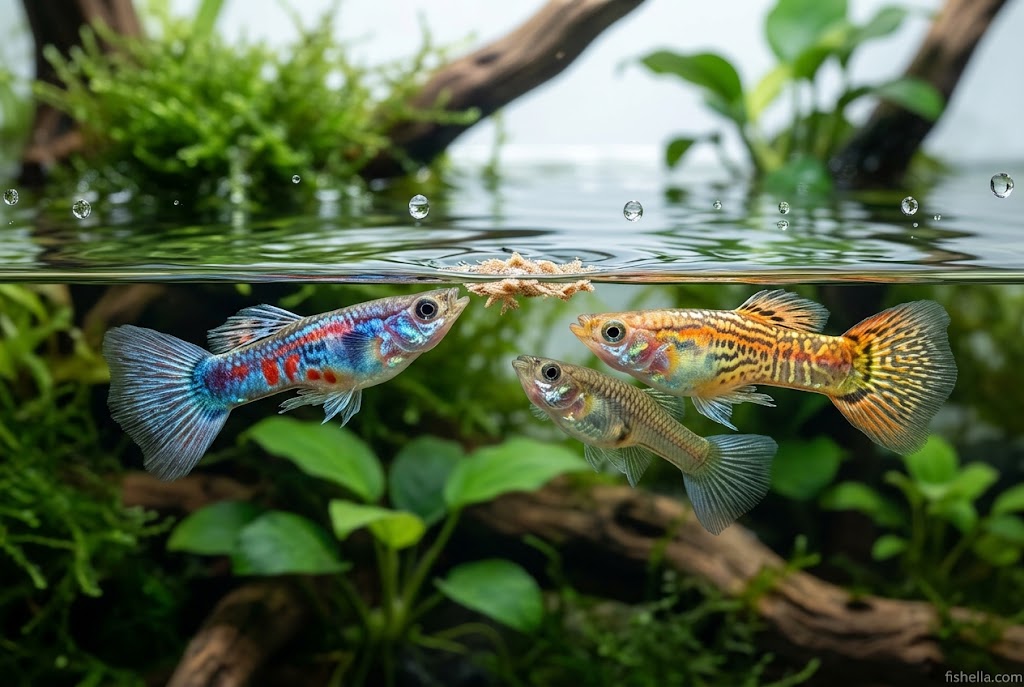
In an aquarium, provide a balanced diet that meets their nutritional needs without allowing uneaten food to accumulate.
Best Foods for Guppies
High-quality flakes: Suitable as a convenient daily staple when the formulation meets the needs of small omnivorous fish.
Micro pellets: Useful for adult guppies when the pellet size allows them to eat comfortably.
Baby brine shrimp: A useful food for fry and an occasional supplement for adults.
Daphnia: Can provide dietary variety and encourage natural feeding behavior.
Frozen foods: Appropriate products can supplement a balanced staple diet.
Spirulina-containing foods: Provide plant-based ingredients as part of a varied diet.
Choose products from reputable manufacturers and check their intended use, ingredient quality, storage instructions, and expiration date.
For a more detailed comparison, read our guide to the best food for guppies.
How Often Should You Feed Guppies?
Feed adult guppies once or twice daily, adjusting the amount to their size, activity, and condition.
Young fry generally need more frequent small meals because they are growing rapidly. Several small feedings may work better than one large meal, provided you remove excess food and maintain good water quality.
You do not need to feed constantly simply because guppies gather at the glass whenever you approach the aquarium.
How Much Food Should You Give Guppies?
Offer a small portion that the fish can consume quickly, usually within about one minute for a typical adult feeding.
Observe how efficiently the group eats. If food remains uneaten, reduce the portion and remove leftovers.
Feeding needs vary with fish size, food type, temperature, and whether the fish are breeding or growing. Use their condition and water quality to guide adjustments.
Can Guppies Eat Vegetables?
Guppies can benefit from appropriate plant-based ingredients included in a balanced diet.
Commercial foods containing algae or spirulina can provide convenient plant material. You may also offer small amounts of suitable, properly prepared vegetables occasionally, provided the pieces are soft enough for the fish to consume.
Remove leftovers promptly. Do not assume that every vegetable, seasoning, or food prepared for humans is safe for aquarium fish.
Can Guppies Eat Live or Frozen Foods?
Yes. Appropriate live and frozen foods can add variety to a guppy’s diet.
Buy live foods from reputable suppliers or culture suitable species under controlled conditions. Poorly sourced live food may introduce unwanted organisms.
Thaw frozen food according to the manufacturer’s instructions, offer small portions, and discard leftovers. Frozen foods should supplement rather than replace a nutritionally complete staple diet.
What Are the Signs of Overfeeding?
Watch for these warning signs:
- Uneaten food collecting on the substrate.
- Cloudy water or increasing waste.
- Bloated fish or unusual inactivity.
- Persistent changes in feces.
- Rising ammonia or nitrate readings.
- Increasing algae associated with excess nutrients and light.
If you notice these signs, review feeding amounts, remove leftovers, test the water, and adjust maintenance as needed.
Why Is Your Guppy Not Eating?
A guppy may stop eating because of stress, unsuitable water, temperature problems, bullying, digestive issues, or illness.
Start by testing the water and checking the temperature. Observe whether other fish show similar behavior and look for physical changes.
Offer a small amount of familiar food rather than repeatedly adding large portions of different foods.
If appetite loss persists or occurs alongside rapid breathing, severe weakness, swelling, or abnormal swimming, seek advice from an aquatic veterinarian.
12. Best Tank Mates for Guppies
Guppies are generally peaceful, but their long fins and small size make compatibility important.
Choose tank mates with similar water requirements, compatible behavior, and suitable adult size. A species that appears peaceful in a store may still chase, nip, or eat smaller fish in your aquarium.
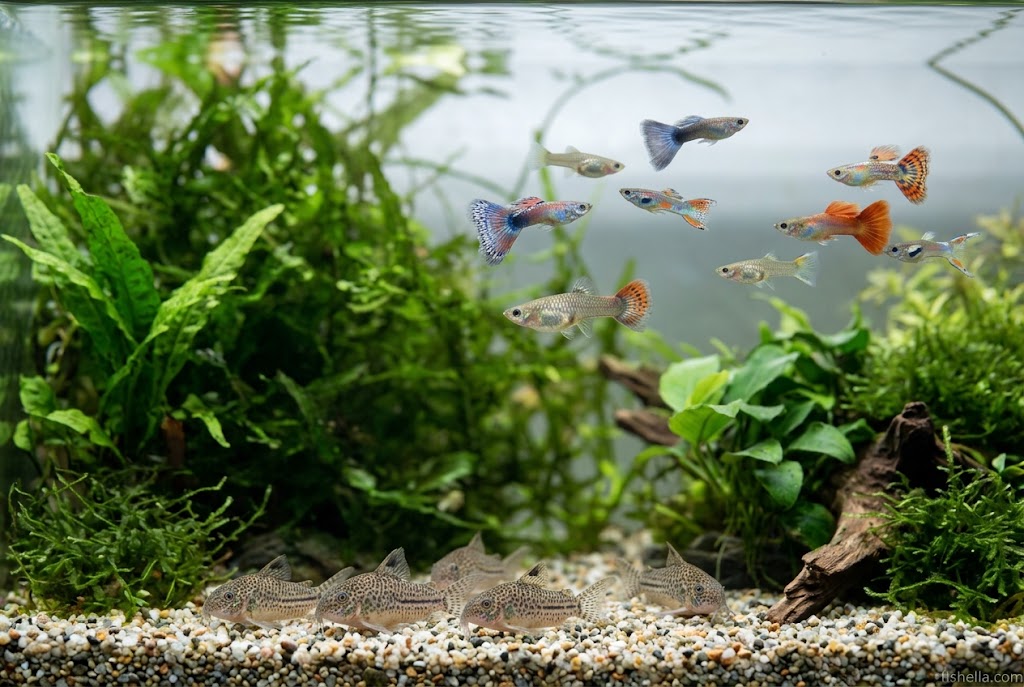
Suitable Guppy Tank Mates
Depending on aquarium size and water conditions, potential companions include:
- Corydoras catfish.
- Small, peaceful rasboras.
- Selected small tetras.
- Peaceful danios, where swimming space and current suit both species.
- Nerite snails.
- Some dwarf shrimp, with the understanding that baby shrimp may be eaten.
Other livebearers, including platies and mollies, may sometimes share an aquarium with guppies. However, they have different space requirements and may increase the total population through breeding.
Do not add every compatible species to a small tank. A peaceful community still needs adequate space, filtration, and a manageable waste load.
Can Guppies Live with Betta Fish?
Sometimes, but the combination is unpredictable.
Some bettas attack colorful guppies, particularly males with elaborate tails. Guppies may also nip a betta’s fins.
A larger, well-planted aquarium may reduce conflict, but it cannot guarantee compatibility. If you attempt this combination, provide a backup tank and separate the fish immediately if you observe persistent aggression or injury.
For beginners, keeping guppies separately is the more predictable option.
Can Guppies Live with Goldfish?
No. Goldfish generally need cooler water than tropical guppies, and their adult size and waste production create additional compatibility problems.
Goldfish may also eat small guppies. Choose tank mates according to their long-term requirements rather than their current size.
Can Guppies Live with Shrimp?
Adult shrimp may coexist with guppies in a well-planted aquarium, but tiny shrimp are vulnerable to predation.
Provide dense moss and other cover if you want shrimp to reproduce. Make sure the shrimp species and guppies can tolerate the same water conditions.
How Can You Prevent Fin Nipping and Aggression?
Provide enough space, maintain suitable group sizes, and add plants that interrupt direct lines of sight.
If you keep males and females together, a group with approximately two or three females per male may help distribute courtship pressure. However, this ratio is not a guarantee against harassment, and it increases the number of potential offspring.
Separate fish that consistently injure or corner other inhabitants.
13. Guppy Fish Behavior: What Is Normal?
Observing normal behavior helps you recognize problems early.
Healthy guppies typically swim actively, explore their surroundings, respond to feeding, and interact with other fish. Their exact activity level varies with time of day, age, and aquarium conditions.
Why Do Guppies Chase Each Other?
Chasing can occur during courtship, competition, or social interactions.
Brief chasing is not always a problem. However, persistent pursuit can exhaust a fish, prevent it from eating, or cause fin damage.
Look for a pattern rather than judging one short interaction. If one fish spends most of its time hiding, inspect the group for aggression and check whether the aquarium provides enough space and cover.
Why Do Guppies Hide?
New fish may hide while adjusting to an unfamiliar aquarium.
Plants, dim lighting, and suitable cover can help them feel secure. However, a fish that suddenly hides continuously may be experiencing stress, bullying, or illness.
Check the water, inspect the fish’s body and fins, and observe whether other tank inhabitants behave normally.
Why Do Guppies Stay Near the Surface?
Guppies naturally spend time in the upper parts of an aquarium, especially when they expect food.
Persistent gasping, rapid breathing, or several fish crowding the surface can indicate low oxygen, ammonia exposure, nitrite exposure, or gill problems.
Increase surface agitation when needed, test the water, and investigate equipment problems promptly.
Why Do Guppies Stay at the Bottom?
A guppy may rest near the substrate because of stress, illness, weakness, bullying, or unsuitable water conditions.
Check the temperature, test ammonia and nitrite, and look for other symptoms such as clamped fins, loss of appetite, or abnormal breathing.
Do not diagnose a disease from one behavior alone.
Our Guppy Symptoms Guide explains additional warning signs and practical first steps.
14. Guppy Breeding: How Do Guppies Reproduce?
Guppies reproduce through internal fertilization. The male uses a modified anal fin called a gonopodium to transfer sperm to the female.
Unlike egg-laying fish, female guppies develop their young internally and give birth to live, free-swimming fry.
How Often Do Guppies Have Babies?
A female may produce a brood roughly every four weeks under favorable conditions, although timing varies with temperature, health, age, and individual biology.
A single brood may contain only a few fry or several dozen. Larger females can sometimes produce more young than smaller females.
Female guppies can also store sperm and produce multiple broods after mating. Consequently, separating a female from males does not guarantee that she will stop producing babies immediately.
How Can You Tell If a Guppy Is Pregnant?
Look for several signs rather than relying on a single feature.
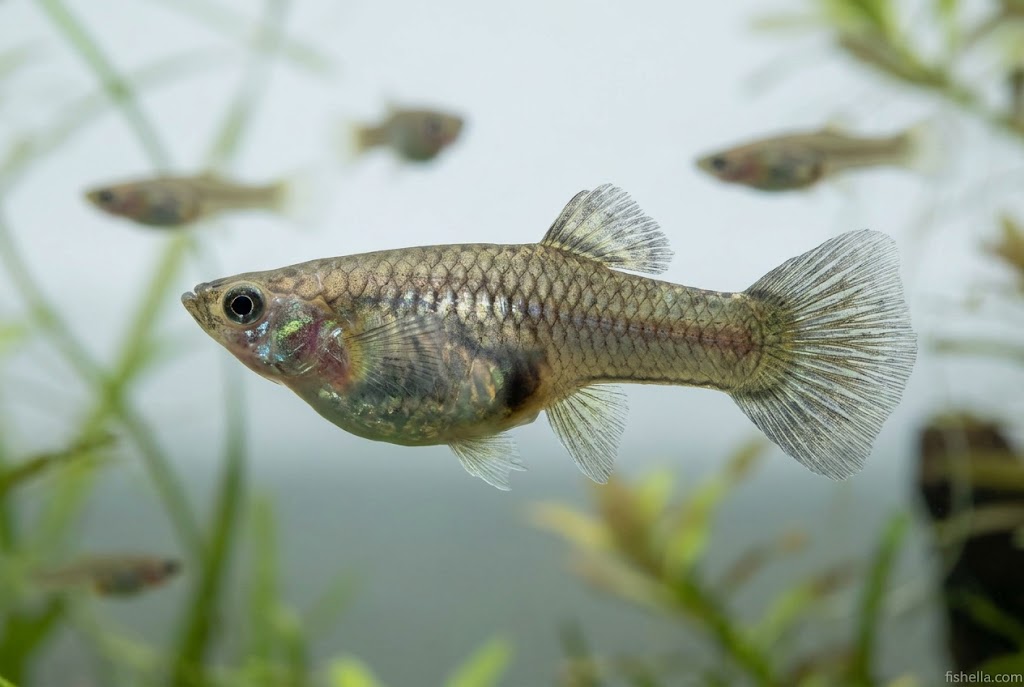
Enlarged abdomen: The belly becomes fuller as the young develop.
Gravid spot: A dark area near the rear of the abdomen may become more noticeable.
Changes in body shape: A heavily pregnant female may develop a squarer appearance near the rear of her belly.
Behavioral changes: Some females seek cover or become less active near birth, although these behaviors are not universal.
A swollen belly can also indicate digestive problems or illness. Consider the fish’s sex, recent breeding history, appetite, and overall condition before assuming pregnancy.
How Long Are Guppies Pregnant?
Gestation often lasts around three to four weeks, but the timing varies.
Temperature, genetics, stress, and the female’s condition can influence the interval. Avoid repeatedly disturbing a pregnant fish to check whether she is ready to give birth.
Should You Use a Breeder Box?
A breeder box can temporarily separate newborn fry from adults, but a small box may restrict movement and create stress when used for too long.
Dense live plants may provide enough cover for some fry to survive in the main aquarium. A separate, properly equipped nursery tank offers more space when you intend to raise many young fish.
Choose the method according to your goals, available space, and ability to maintain clean water.
15. Baby Guppy Care: How to Raise Healthy Fry
Newborn guppies can swim and begin feeding shortly after birth. However, their small size makes them vulnerable to adult fish, poor water quality, and unsuitable food.
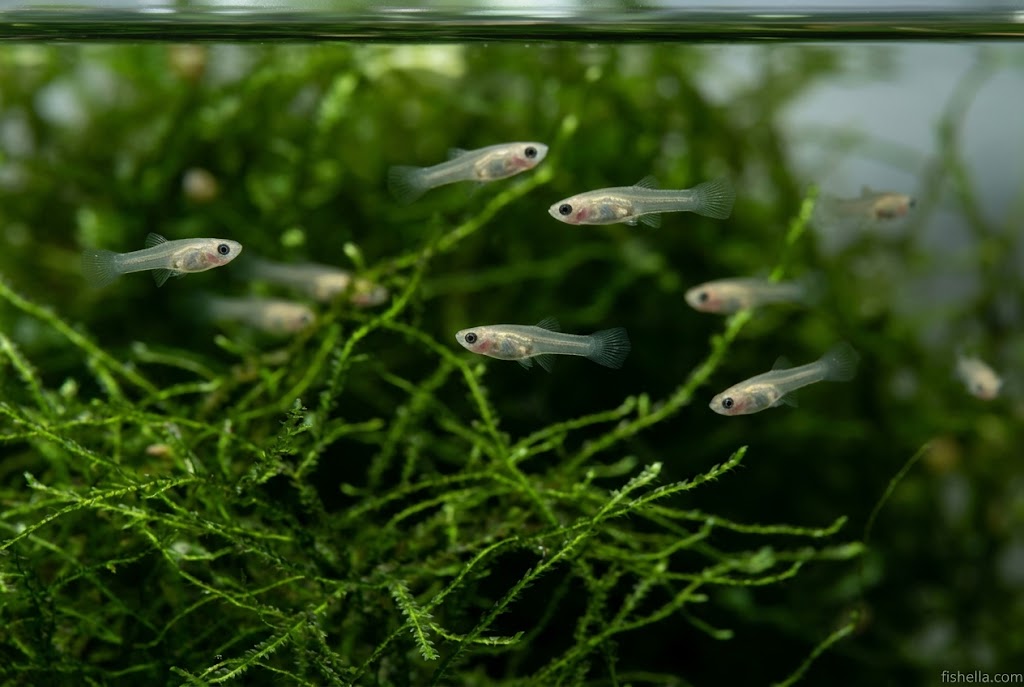
How to Set Up a Fry Tank
Use a clean, appropriately sized aquarium with stable temperature, gentle filtration, and safe cover.
A sponge filter is useful because it provides biological filtration without a strong intake that could trap tiny fish.
Keep the tank free from sharp decorations and leave enough open space for fry to swim and feed.
What Do Baby Guppies Eat?
Suitable foods include:
- Commercial fry food.
- Finely crushed, nutritionally complete flakes.
- Baby brine shrimp.
- Appropriately sized microworms or other suitable cultured foods.
Feed small amounts several times daily. Remove excess food to prevent waste from building up.
How Often Should You Feed Guppy Fry?
Fry commonly benefit from three to five small meals daily, depending on age, food type, and water quality.
Frequent feeding supports growth, but it also increases waste production. Use small portions and monitor the water carefully.
How Do You Keep Fry Water Clean?
Perform small, regular water changes using conditioned water that matches the aquarium’s temperature and chemistry.
Avoid strong siphon flow that could accidentally remove fry. Inspect the sponge filter and other equipment to ensure that the system continues operating properly.
Test ammonia and nitrite frequently, especially when the fry grow and their food intake increases.
When Can Baby Guppies Join Adult Fish?
There is no single age that guarantees safety.
Wait until the young fish are large enough that adult fish cannot easily swallow them, and confirm that the main aquarium has sufficient space and filtration for the additional population.
Some adult guppies may eat fry even when food is readily available. If survival matters, use suitable separation and provide adequate cover.
For a dedicated walkthrough, read our guide to baby guppy care.
16. Common Guppy Fish Diseases and Their Warning Signs
Guppies may develop disease when parasites, bacteria, poor environmental conditions, or other stressors affect their health.
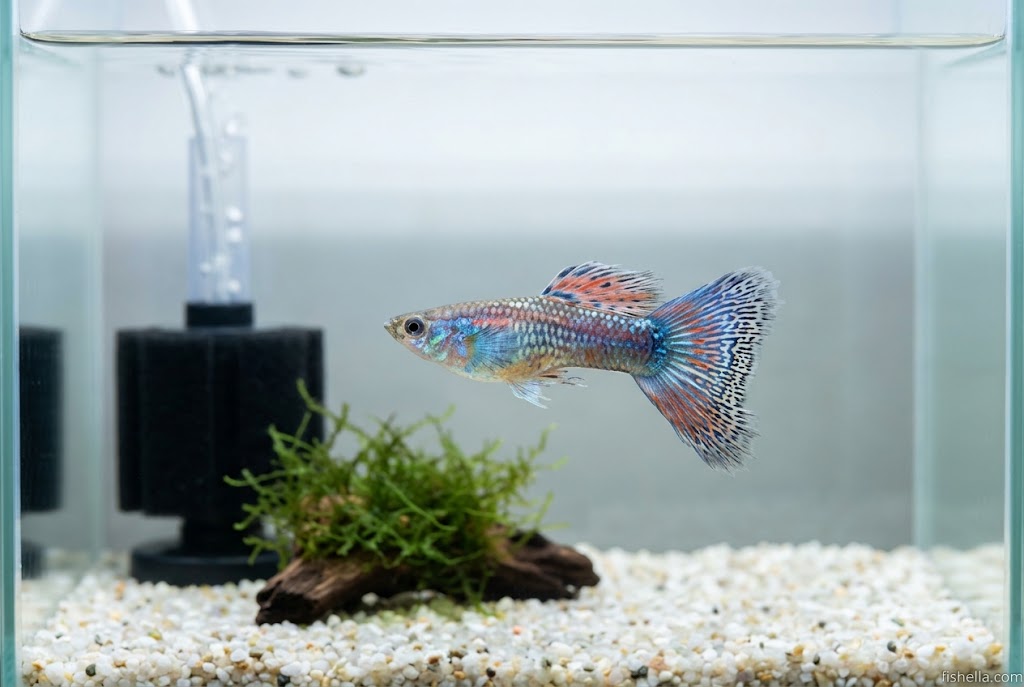
Not every abnormal behavior indicates an infection. Several diseases produce similar symptoms, so diagnosis requires careful observation and, in some cases, professional examination.
Common Signs of Illness
Watch for:
- Clamped fins.
- Loss of appetite.
- Rapid breathing.
- White spots or unusual patches.
- Torn or deteriorating fins.
- Swelling or abnormal body shape.
- Rubbing against decorations.
- Loss of balance.
- Unusual lethargy.
- Persistent isolation from the group.
When several fish develop symptoms simultaneously, check the aquarium environment first. Poor water quality can affect the entire population quickly.
What Causes Fin Rot in Guppies?
Fin rot is a general term used for progressive fin damage that may involve bacterial infection and is often associated with poor water quality, injury, or stress.
Affected fins may appear ragged, frayed, shortened, or discolored.
Start by testing the water, correcting any problems, and removing sources of injury or aggression. More severe cases may require an appropriate treatment selected according to the diagnosis.
Do not assume that every torn fin is fin rot. Physical injury and fin nipping can produce similar appearances.
What Is Ich in Guppies?
Ich, also called white spot disease, is caused by the parasite Ichthyophthirius multifiliis.
It commonly produces small white spots on the body or fins. Affected fish may also rub against objects, breathe rapidly, or become less active.
White spots alone do not establish a diagnosis because other conditions can produce similar changes.
If you suspect ich, test the water, observe other fish, and seek an appropriate treatment specifically labeled for the suspected condition and your aquarium inhabitants.
Follow the product instructions carefully. Do not raise the temperature automatically or combine medications without checking their suitability. Warmer water holds less dissolved oxygen, so maintain adequate aeration during treatment.
Why Is My Guppy Bloated?
A swollen abdomen can result from pregnancy, constipation, internal disease, or fluid accumulation.
Consider whether the fish is female and may be pregnant. Look for other signs such as raised scales, abnormal swimming, severe weakness, or loss of appetite.
A swollen abdomen accompanied by raised scales or significant lethargy may indicate a serious condition. Seek prompt advice from an aquatic veterinarian rather than treating the fish based on appearance alone.
What Causes White or Fuzzy Growths?
Fuzzy patches may be associated with fungal-like growth, bacterial conditions, or damaged tissue. The appearance and location of the growth can help narrow the possibilities, but visual inspection alone may not confirm the cause.
Check the water, inspect the fish for injuries, and consider isolating the affected fish when appropriate.
Avoid adding broad-spectrum medication without understanding the likely problem and the product’s safety requirements.
Why Is My Guppy Swimming Erratically?
Erratic swimming may reflect stress, unsuitable water conditions, injury, neurological problems, or other illness.
Check ammonia, nitrite, temperature, and oxygenation. Look for additional signs such as loss of balance, abnormal breathing, or physical damage.
If the behavior continues or the fish cannot swim normally, seek professional advice.
When Should You Quarantine a Sick Guppy?
Use a separate quarantine tank when a fish has potentially contagious symptoms, requires targeted treatment, or is being injured by other fish.
Provide suitable filtration, stable temperature, and clean water. Avoid moving a severely weak fish unnecessarily if the transfer would create additional stress; assess the situation carefully.
Follow treatment instructions and monitor the fish’s response. If the condition worsens or the diagnosis remains unclear, consult an aquatic veterinarian.
17. How to Prevent Guppy Diseases
Prevention focuses on reducing stress and maintaining a stable aquarium.
Follow these practices consistently:
- Cycle the aquarium before adding fish.
- Test the water regularly.
- Maintain stable temperature and suitable water chemistry.
- Avoid overcrowding.
- Feed a balanced diet in appropriate portions.
- Quarantine new fish when practical.
- Remove uneaten food and decaying material.
- Provide suitable cover and compatible tank mates.
- Inspect equipment and maintain proper filtration.
- Avoid unnecessary medications and sudden environmental changes.
Good care cannot prevent every disease, but it reduces many avoidable risks and helps you identify problems earlier.
18. Guppy Fish Tank Cleaning and Maintenance
Regular maintenance removes waste and helps maintain stable water conditions.
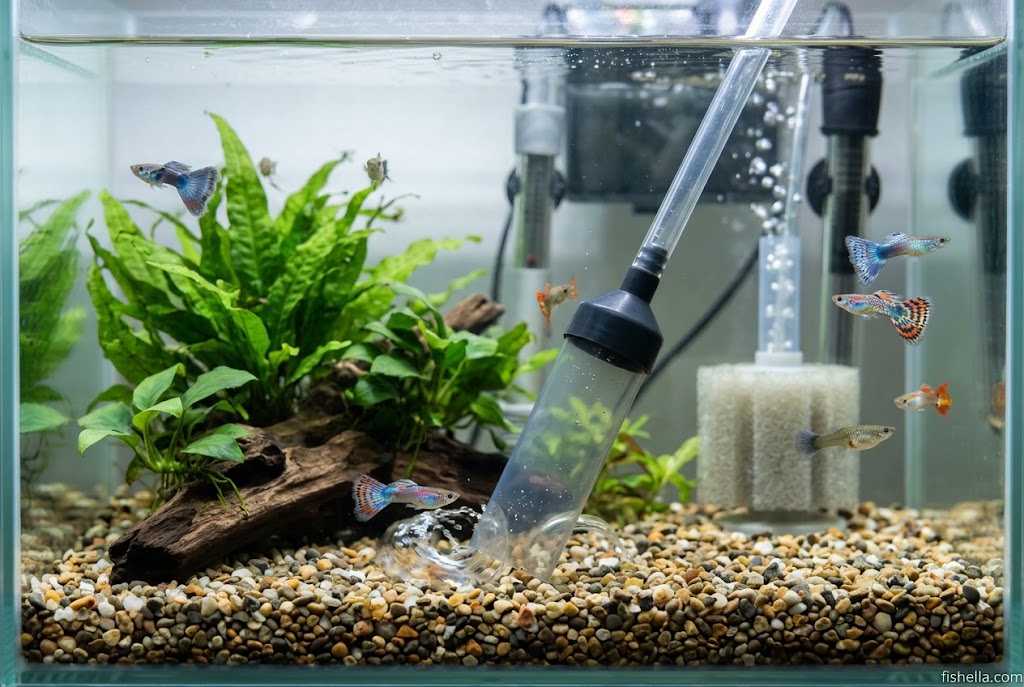
A practical routine for many established aquariums includes a weekly partial water change of approximately 20–30%. Adjust the amount and frequency according to stocking, feeding, filtration, plants, and test results.
Daily Guppy Care
Spend a few minutes checking your fish and equipment.
- Observe swimming, breathing, and appetite.
- Confirm that the temperature remains stable.
- Check that the filter is operating.
- Remove uneaten food when necessary.
- Look for new injuries or unusual behavior.
Daily observation helps you notice problems before they become severe.
Weekly Guppy Tank Maintenance
For many established tanks, a weekly routine should include:
- Testing ammonia, nitrite, and nitrate.
- Checking pH and hardness when appropriate.
- Changing a portion of the water.
- Removing visible debris.
- Vacuuming the substrate where needed.
- Cleaning algae from the glass.
- Inspecting the filter and heater.
If ammonia or nitrite appears, do not wait until the next scheduled maintenance session. Investigate and correct the problem promptly.
How to Perform a Partial Water Change
Step 1: Prepare the replacement water.
Use suitable water and add the correct conditioner for your supply. Match its temperature to the aquarium.
Step 2: Remove some aquarium water.
Use a siphon or gravel vacuum to remove water and collect debris from the substrate.
Step 3: Add the replacement water slowly.
Avoid creating a strong current that disturbs fish, plants, or the substrate.
Step 4: Restore equipment operation.
Check the heater, filter, and any other equipment after the water change. Follow the manufacturer’s safety instructions when handling electrical equipment.
Step 5: Monitor the aquarium.
Observe the fish and test the water when the aquarium has experienced a problem or when the maintenance procedure requires verification.
Avoid routine full water changes. They can create unnecessary instability and disturb the aquarium’s established biological system.
How to Clean an Aquarium Filter
The filter contains beneficial microorganisms that help process fish waste. Clean it gently when flow decreases or maintenance is necessary.
Rinse reusable biological media in removed aquarium water when appropriate, rather than untreated tap water containing chlorine or chloramine.
Avoid replacing all biological media at once. If a component requires replacement, follow the manufacturer’s guidance and preserve as much established biological filtration as possible.
For a more detailed walkthrough, see our article on cleaning an aquarium filter sponge without killing beneficial bacteria.
Monthly and Occasional Maintenance
Once a month, inspect the heater, filter intake, tubing, lighting, and other equipment. Trim dead plant leaves and check that decorations remain stable.
Replace expired test reagents and worn components according to their instructions. Do not replace functioning filter media merely because a calendar reminder says it is time.
19. Common Guppy Fish Care Mistakes to Avoid
Even experienced aquarium owners can overlook simple problems. Avoid these common mistakes to keep your guppies healthier.
Adding Fish Before Cycling the Tank
A new aquarium may not have enough beneficial bacteria to process fish waste.
Cycle the aquarium properly and verify the results before adding the intended population.
Keeping Too Many Guppies
Overcrowding increases waste, competition, and stress. It can also make it harder to maintain stable water quality.
Plan for adult size and reproduction rather than buying fish according to how empty the tank looks.
Overfeeding
Excess food contributes to waste and may cause digestive problems.
Feed measured portions, observe how quickly the fish eat, and remove leftovers.
Making Sudden Water Changes
Large, abrupt changes in temperature or water chemistry can stress guppies.
Use conditioned replacement water and make adjustments carefully, especially when the source water differs substantially from the aquarium.
Ignoring Small Changes in Behavior
A fish that begins hiding, breathing rapidly, or refusing food may be responding to an environmental problem.
Observe the whole aquarium and test the water before assuming the issue is a specific disease.
Mixing Incompatible Species
Some fish nip fins, compete aggressively, or require different temperatures.
Research adult size, behavior, and water requirements before introducing a new species.
Breeding Without a Population Plan
Guppies reproduce readily, and their offspring increase the aquarium’s biological load.
Decide how you will manage the young fish before keeping mixed sexes together. Never release unwanted fish into local waterways.
20. A Simple Guppy Fish Care Checklist
Use this checklist to make daily and weekly care easier.
Daily
- Check that all fish swim and breathe normally.
- Verify the aquarium temperature.
- Confirm that the filter operates correctly.
- Feed suitable portions.
- Remove uneaten food.
- Look for signs of illness or aggression.
Weekly
- Test ammonia and nitrite.
- Check nitrate and other relevant water parameters.
- Perform an appropriate partial water change.
- Remove waste from the substrate.
- Clean the glass if necessary.
- Inspect the filter, heater, and plants.
Monthly
- Review stocking levels and the number of fry.
- Inspect equipment and filter flow.
- Trim unhealthy plant growth.
- Review feeding portions and water-test trends.
- Check whether new fish or equipment need quarantine or monitoring.
Adjust this routine to the actual condition of your aquarium. A heavily stocked breeding tank may need more frequent testing and water changes than a lightly stocked planted aquarium.
21. Frequently Asked Questions About Guppy Fish Care
Are Guppies Easy to Keep?
Yes. Guppies are relatively easy to care for when you provide a cycled aquarium, suitable filtration, stable water conditions, balanced food, and regular maintenance.
Their main challenges include managing reproduction, preventing overcrowding, and recognizing early signs of illness.
How Many Guppies Should a Beginner Buy?
A small group of approximately four to six guppies in a properly cycled 10-gallon aquarium can be a reasonable starting point.
Choose an appropriate sex ratio or a single-sex group, and plan for the possibility that females may already carry sperm.
Can Guppies Live Without a Filter?
A filter is strongly recommended because it supports biological filtration and helps maintain suitable water conditions.
An unfiltered aquarium is harder to manage and leaves less margin for error. Do not confuse a fish’s ability to survive temporarily with a suitable long-term environment.
Do Guppies Need an Air Pump?
Not every guppy aquarium requires a separate air pump. However, adequate gas exchange and oxygen levels are essential.
An air pump can power a sponge filter or air stone and may improve surface movement. The correct setup depends on the filter, stocking, temperature, and overall oxygen demand.
Can Guppies Live Without a Heater?
They may tolerate stable room temperatures within a suitable range, but many homes experience temperature fluctuations.
Use a heater when necessary to maintain consistent conditions, and verify the actual water temperature with a thermometer.
Can Guppies Live Alone?
Guppies are generally kept in groups, and many show more natural social behavior when they have compatible companions.
If you keep a single fish temporarily for quarantine or treatment, make sure its needs remain met. For a permanent setup, plan an appropriate group and enough space.
Do Guppies Need Light at Night?
No. Guppies need a normal day-night cycle rather than continuous bright lighting.
Use aquarium lighting on a consistent schedule and provide a dark period for rest. Excessive lighting can also encourage algae growth.
Can Guppies Live in Cold Water?
Guppies are tropical fish and generally need warmer water than many cold-water species.
Avoid sudden temperature drops and do not keep them in an aquarium that regularly falls below their suitable range.
Do Guppies Need Aquarium Salt?
Not routinely. Salt is not a universal requirement for freshwater guppies, and adding it unnecessarily can affect other aquarium inhabitants and water conditions.
Use salt only when there is a clear, appropriate reason and you understand the requirements of every species in the aquarium.
Why Are My Guppies Dying One by One?
Possible causes include ammonia or nitrite exposure, temperature instability, disease, overcrowding, poor nutrition, or problems introduced with new fish.
Test the water immediately and observe the remaining fish. If multiple fish show distress, prioritize correcting environmental problems and seek professional advice when needed.
Why Is My Guppy Losing Color?
Color changes can occur because of stress, poor health, environmental changes, or normal variation.
Check water quality, temperature, feeding, and interactions with other fish. Persistent color loss alongside weakness, appetite changes, or abnormal swimming warrants further investigation.
How Can I Tell If My Guppy Is About to Give Birth?
A heavily pregnant female may have a fuller, more squared abdomen and a prominent gravid spot. She may also seek cover.
These signs vary between fish, and no single behavior reliably predicts the exact time of birth. Provide a calm environment and suitable cover instead of repeatedly disturbing her.
Will Guppies Eat Their Babies?
Yes. Adult guppies may eat newborn fry, including their own offspring.
Dense plants can give fry places to hide. A separate nursery aquarium can improve survival when you intend to raise a large number of young fish.
Can Different Guppy Varieties Breed Together?
Yes. Different color and tail varieties of Poecilia reticulata can interbreed.
Their offspring may display mixed colors, patterns, and fin characteristics. If you want to preserve a particular line, maintain controlled breeding groups and keep reliable records.
How Often Should I Change Guppy Tank Water?
For many established aquariums, a weekly partial water change of approximately 20–30% is a useful starting point.
Adjust the schedule based on water tests, stocking, feeding, and filtration. If ammonia or nitrite is detectable, take action rather than waiting for the next scheduled change.
Can Guppies Live with Neon Tetras?
They can sometimes share an aquarium if their water conditions, temperatures, behavior, and space requirements are compatible.
Choose an appropriately sized tank, maintain suitable group sizes for both species, and monitor the fish for stress or aggression.
Can Guppies Live with Mollies and Platies?
Sometimes. These fish share some general care requirements, but their adult sizes, activity, and water needs differ.
Mollies in particular may need more space than beginners expect. Research each species and account for breeding before mixing livebearers.
How Do I Know If My Guppy Tank Is Healthy?
Healthy guppies generally swim normally, eat readily, breathe steadily, and maintain intact fins and a normal body shape.
Your test results should also show zero ammonia and nitrite, with nitrate kept low through suitable maintenance. Clear water alone does not prove that the aquarium is healthy.
Conclusion: How to Keep Guppy Fish Healthy for Years
Successful guppy fish care depends on consistency. Choose a suitably sized aquarium, cycle the filter before stocking, maintain stable water conditions, provide a varied diet, and monitor the fish every day.
A 10-gallon or larger aquarium offers a practical starting point for a small group, while a larger tank can make maintenance easier. Keep ammonia and nitrite at zero, manage nitrate through appropriate water changes, and avoid sudden changes in temperature or water chemistry.
Pay attention to behavior as well as appearance. Persistent hiding, gasping, appetite loss, damaged fins, or unusual swimming can signal a problem that deserves investigation.
Finally, plan for reproduction before keeping males and females together. Guppies can produce repeated broods, so responsible population management is part of good fish care.
With a suitable environment, balanced nutrition, compatible tank mates, and regular maintenance, guppies can remain active, colorful, and rewarding aquarium fish throughout their lives.
References and Further Reading
The following sources provide additional information about guppy biology, aquarium conditions, and responsible fish care:
- FishBase: Guppy (Poecilia reticulata) species profile
- Ornamental Aquatic Trade Association: How to look after guppies and mollies
- RSPCA: Choosing an aquarium environment for pet fish
- Aquarium Co-Op: Guppy care guide
- PetMD: Guppy fish care sheet
For more aquarium-specific advice, explore Fishella’s guides to guppy symptoms, guppy food, baby guppy care, and guppy lifespan.
Pingback: Male vs Female Guppy: 6 Easy Ways to Tell Them Apart
Pingback: Types of Guppies: 9 Popular Colors, Patterns and Tail Shapes
Pingback: Best Filter for Guppies: 5 Tips for Choosing the Right One
Pingback: Best Guppy Tank Mates: 10 Safe Choices and Fish to Avoid
Pingback: Baby Guppy Care: Feeding, Tank Setup & Fry Growth
Pingback: Guppy Symptoms Guide: 10 Warning Signs and Solutions