
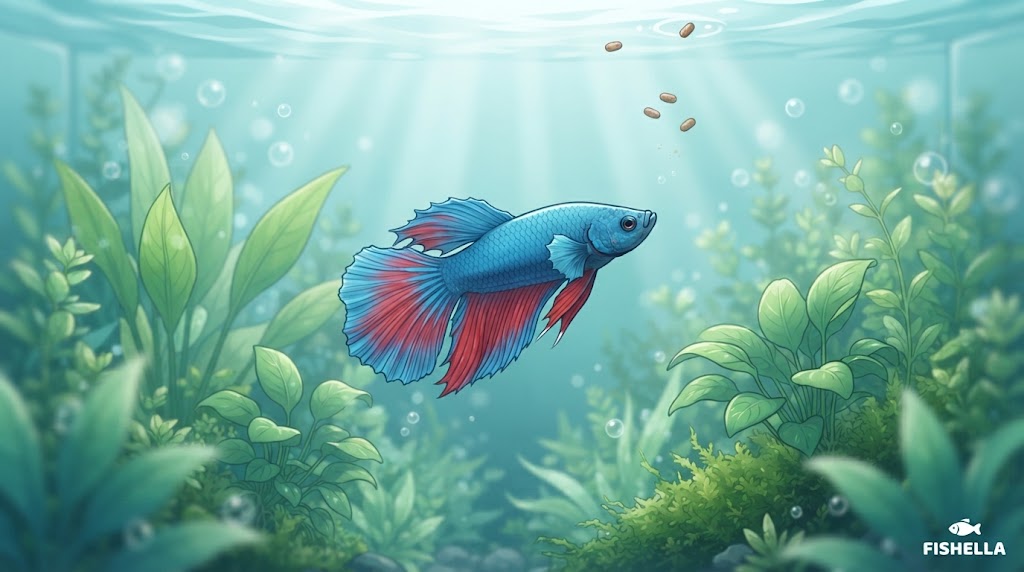
Betta fish overfeeding and bloating can worry new fish owners, especially when their fish has a swollen belly but still begs for food. Overfeeding may contribute to digestive problems, but a swollen belly does not always mean your Betta has eaten too much. Constipation, egg development, and serious health problems can also cause swelling.
In this guide, you’ll learn how to recognize signs of overfeeding, understand other possible causes of bloating, and take safe steps to help your fish. You’ll also learn which warning signs need prompt veterinary attention. For advice on feeding, water quality, and tank setup, see our complete Betta fish care guide.
Can Betta Fish Be Overfed?
Yes. Betta fish can eat more than they need, especially when owners offer food every time they beg at the glass. Begging does not always mean your Betta is hungry.
Overfeeding can cause problems in two ways:
- Digestive problems: Excessive portions can contribute to digestive discomfort and constipation.
- Poor water quality: Uneaten food breaks down and adds waste to the aquarium. This can increase ammonia and make the water unsafe for your fish.
Feed measured portions that suit your Betta’s food type and size. Remove uneaten food instead of letting it collect in the tank.
The University of Florida IFAS guide to fish health management discusses proper fish care and management practices. Did you know your betta fish can learn simple tricks with a little patience? Discover how to train your betta fish to follow your finger, swim through hoops, and respond to food rewards with easy steps that beginners can try at home.
Signs of Overfeeding and Bloating

Look for several signs together rather than relying on one symptom:
- A rounded or swollen belly, especially after eating
- Uneaten food collecting at the bottom of the tank
- Changes in bowel movements or little visible waste
- Reduced activity or unusual hiding
- Difficulty staying balanced while swimming
- Reduced appetite or unusual behavior
A slightly fuller belly after a meal may be normal. However, persistent swelling, worsening symptoms, or changes in swimming and appetite deserve closer attention.
Test the aquarium water if you notice leftover food or unusual behavior. Ammonia and nitrite should both be 0 ppm in an established aquarium.
Common Causes of Betta Fish Overfeeding and Bloating

1. Overfeeding. Too many pellets, too many feedings, or treats given too often.
2. Dry or unsuitable food. Some dry foods change in size after absorbing water. Large portions can contribute to digestive discomfort. Follow the feeding instructions for your specific food.
3. Constipation. Constipation may cause a swollen belly or changes in waste. However, these signs can have other causes, so do not assume constipation without checking your Betta’s overall condition.
4. Swim bladder problems. Swim bladder issues can be linked to overfeeding or constipation and may cause floating, sinking, or swimming sideways. The swim bladder is not the only possible cause of these signs, so avoid assuming it without checking other symptoms.
5. Dropsy (a serious sign). Dropsy is not a disease on its own but a symptom of internal problems, such as organ failure or infection. The classic sign is scales sticking out like a pinecone, often with a swollen body, lethargy, and loss of appetite. It needs prompt attention and the outlook is often poor.
6. Egg-bound female. Females can look swollen when carrying eggs. A small white dot near the belly, called the egg spot, is normal. You can read more in our female Betta fish care guide.
7. Other internal issues. Parasites, tumors, or bacterial infections can also cause swelling. These are hard to tell apart without expert help.
Overfeeding Bloat vs. Dropsy: How to Tell the Difference
| Sign | Possible feeding-related bloating | Possible dropsy |
|---|---|---|
| Scales | Usually lie flat | May stick outward like a pinecone |
| Belly | May become fuller after eating | May remain swollen or worsen |
| Behavior | May remain active | May become lethargic or hide |
| Appetite | May remain normal | May decrease |
| Next step | Review portions and test water | Seek prompt veterinary advice |
These signs are clues, not a diagnosis. Raised scales, persistent swelling, or worsening behavior need prompt attention from an aquatic veterinarian.
How to Fix Betta Bloating at Home

If your Betta has overfeeding and bloating but is still active and has flat scales, these steps are a reasonable first approach. To keep your betta active and mentally stimulated, explore these Betta Fish Toys and Enrichment Ideas for safe ways to encourage natural behavior and reduce boredom.
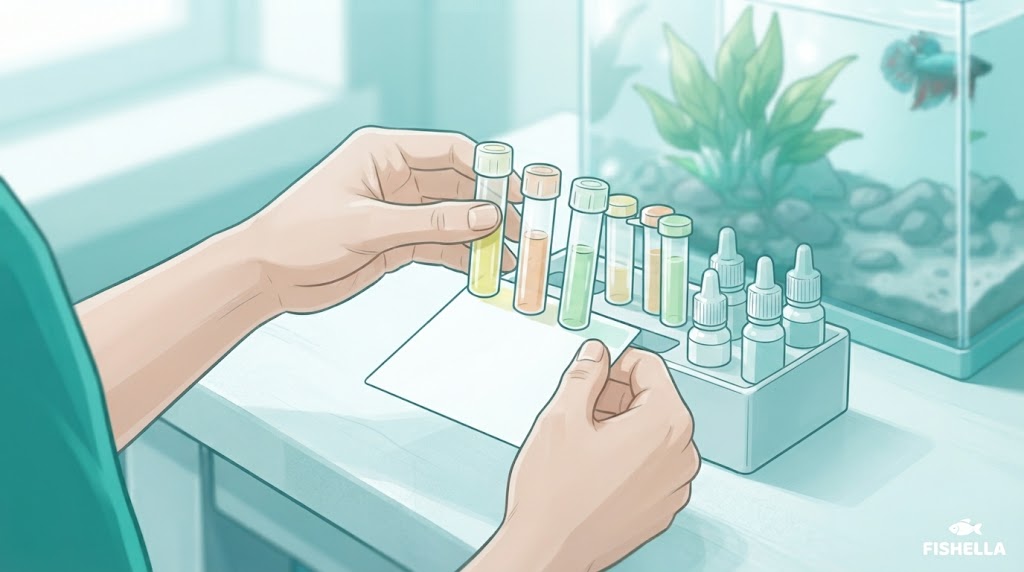
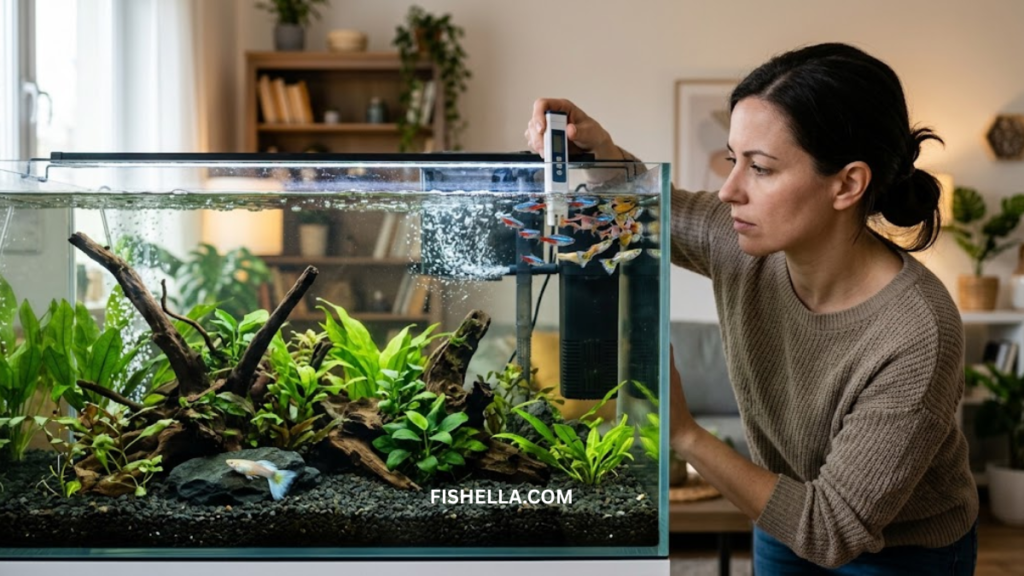
Step 1: Test the water. Check ammonia, nitrite, nitrate, pH, and temperature. Ammonia and nitrite should both be 0 ppm. Keep the water temperature stable, ideally around 76–80°F (24–27°C), and use properly conditioned water for water changes.
Step 2: Review your feeding routine. If your otherwise healthy adult Betta has mild swelling after overeating, a brief pause in feeding may be reasonable. Avoid prolonged fasting, especially if your fish is thin, weak, or already refusing food. Persistent swelling needs investigation rather than repeated fasting.
Step 3: Avoid unproven home remedies. Do not rely on peas, oils, or other household foods to treat bloating. Bettas are carnivorous fish and need an appropriate, nutritionally balanced diet. If swelling continues or your fish shows other symptoms, seek advice from an aquatic veterinarian.

Step 4: Check the food and portion size. Follow the instructions for your Betta’s specific food. If the manufacturer recommends soaking, prepare the food as directed. Avoid oversized portions and remove uneaten food promptly.
Step 5: Keep the tank clean and stable. Do an appropriate partial water change with conditioned water if tests show a problem, and keep the temperature steady.
Step 6: Restart feeding with smaller portions. Go back to small portions and watch your fish’s body condition over the next several days.
Avoid adding medications or salts based only on a guess. If you’re considering Epsom salt for swelling, research the correct dose carefully or ask an aquatic vet first, since the wrong amount can harm your fish.
Beginner Tip: Overfeeding problems usually improve when portions get smaller and feeding becomes consistent. Making many changes at once can stress your Betta more.
How Much Should You Feed a Betta Fish?

The right portion depends on your Betta’s size, activity, and the type and size of food. Follow the food label as a starting point, then adjust portions based on your fish’s condition and whether food remains uneaten.
- Feed only what your Betta can finish promptly.
- Remove any uneaten food.
- Keep a quality Betta pellet as the staple and offer frozen or live foods only occasionally.
- Soak dry or freeze-dried foods before feeding.
- Don’t increase portions just because your Betta begs.
For food choices, see our guides on homemade Betta fish food and whether Betta fish can eat goldfish food.
How to Prevent Bloating in the Future

- Stick to a consistent, measured feeding routine.
- Use a quality, protein-rich Betta pellet as the staple.
- Soak dry and freeze-dried foods first.
- Vary the diet occasionally with suitable frozen foods.
- Keep water stable, warm, and tested regularly.
- Watch your Betta’s body shape during the first few weeks to learn its normal baseline.
To help prevent feeding-related problems, learn how many pellets to feed a betta fish and adjust the portion to suit your fish and its food.
When to See an Aquatic Vet

Seek professional help if you notice:
- Scales sticking out like a pinecone
- Bloating that lasts more than several days after adjusting feeding
- Refusal to eat combined with swelling
- Severe difficulty swimming or staying upright
- Red streaks, sores, or visible lesions
- Rapid breathing or extreme lethargy
If your Betta has stopped eating altogether, read why your Betta fish is not eating for other possible causes. A healthy, well-fed Betta can live for several years, and you can learn more in how long Betta fish live.
Frequently Asked Questions
How long can a Betta fish go without food?
A healthy adult Betta can usually manage a day or two without food, and sometimes longer, but long fasting isn’t recommended as a routine. If your Betta refuses food for an extended period, investigate the cause.
Will my Betta’s bloating go away on its own?
Mild bloating from overfeeding can improve after adjusting portions and briefly fasting. Bloating that persists or comes with other symptoms needs a closer look.
Are peas safe for Bettas?
Peas are not a necessary part of a Betta’s diet. Bettas are carnivorous fish, so choose nutritionally appropriate Betta food instead of relying on peas to treat constipation. Persistent swelling or digestive changes may need veterinary assessment.
Is a bloated Betta always overfed?
No. Bloating can also come from swim bladder problems, dropsy, egg-carrying in females, parasites, or other illness.
Should I stop feeding a bloated Betta?
Do not automatically stop feeding every bloated Betta. If a healthy adult has mild swelling after overeating, a brief pause may be reasonable. Do not prolong fasting in a weak, thin, or unwell fish. Persistent swelling, raised scales, or difficulty swimming needs prompt attention.
How often should I feed my Betta?
Small portions once or twice a day are usually enough for adult Bettas, adjusted to the fish and food type.
Final Thoughts
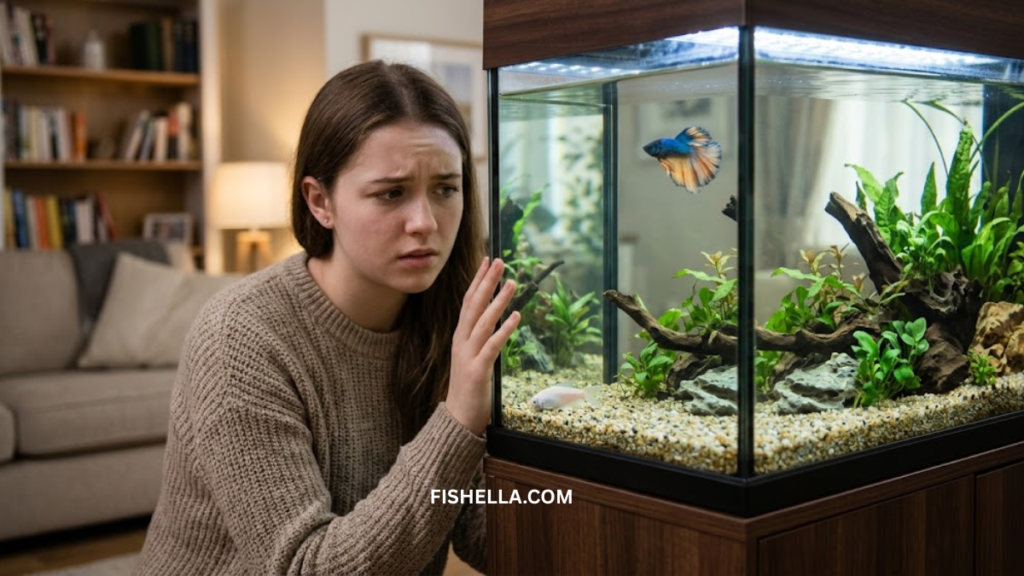
Betta fish overfeeding and bloating can be related to feeding habits, but a swollen belly can also signal illness. Check your Betta’s behavior, appetite, scales, and water quality before deciding what to do. Offer suitable food in measured portions, remove leftovers, and keep the aquarium conditions stable. If swelling persists or warning signs appear, seek advice from an aquatic veterinarian.
For more help with feeding, tank setup, and daily care, visit our complete Betta fish care guide.
Pingback: Betta Fish Laying on Side: Common Causes & Simple Fixes
Pingback: Betta Fish Not Eating: Causes and What to Do
Pingback: How to Build Trust With a Betta Fish: 6 Easy Tips
Pingback: Betta Fish Toys and Enrichment: Safe Ideas to Try