
Is your betta fish not eating?
It can be worrying when your betta swims toward the food but does not eat it. Sometimes, a betta may skip a meal because of stress or a recent change in its tank. Other times, refusing food can be an early sign of a water-quality problem or illness.
The good news is that you can check several things at home before you panic.
In this guide, you will learn why your betta fish is not eating, what you should check first, and when a lack of appetite may mean your fish needs veterinary help. Why Are My Fish Dying? →
Why Is My Betta Fish Not Eating?
The most common reasons include:
- Water that is too cold
- Stress from a new tank or environment
- Poor water quality
- Too much ammonia or nitrite
- Constipation or bloating
- The wrong type or size of food
- Overfeeding
- Illness or parasites
- Changes in the aquarium or daily routine
A betta that skips one meal is not always sick. However, if your betta stops eating for several days or shows other unusual signs, you should investigate the problem.
Fish health is closely connected to water quality, temperature, nutrition, and stress. Veterinary guidance also lists not eating, lethargy, swelling, weight loss, unusual swimming, and changes in breathing as possible signs of illness.
1. The Water Is Too Cold

Cold water is one of the first things to check when your betta stops eating. Bettas are tropical fish. Their body processes are strongly affected by water temperature. When the water becomes too cool, bettas can become less active and may lose interest in food. How to Clear Cloudy Water in a Newly Set-Up Fish Tank
For a home aquarium, keeping the water around 78°F to 80°F is a practical target within the normal warm-water range for bettas.
The University of Florida notes that bettas do not do well in cold water and that they thrive in warmer conditions. Aqueon also recommends warm water for bettas and notes that cooler water can make them inactive.
What to do
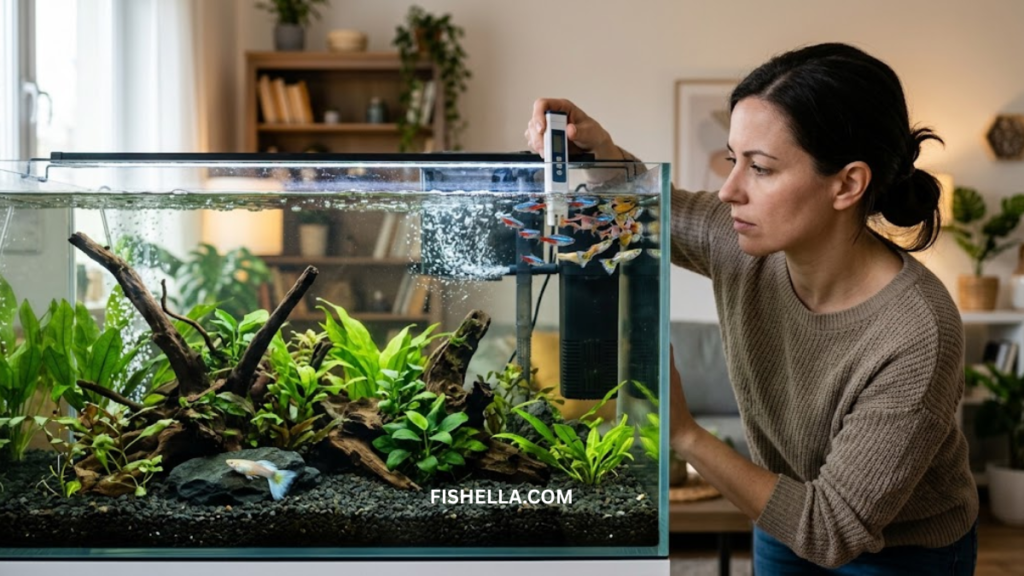
Check the actual water temperature with an aquarium thermometer. Do not rely only on the temperature of the room.
If the water is too cold, use a properly sized aquarium heater and raise the temperature gradually. Avoid sudden temperature changes because rapid changes can also stress fish.
2. Your Betta Is Stressed

Stress can make a betta stop eating.
A betta may become stressed after:
- Moving into a new aquarium
- Being transported home from a store
- Changing the tank setup
- Adding a new tankmate
- Loud activity around the aquarium
- Strong filter flow
- Sudden changes in temperature
- Poor water quality
- Aggressive tankmates
- Too much handling or disturbance
Bettas prefer calm water, and the University of Florida notes that heavy water flow can act as a stressor.
A new betta may also need some time to adjust to its new surroundings.
What to do
Keep the aquarium in a quiet area. Make sure the filter is not pushing your betta around the tank. Provide places where your fish can rest and feel secure. Avoid making several major changes at the same time.
If your betta recently moved into a new tank and otherwise looks healthy, give it some quiet time while checking the water and temperature. Tetra Whisper 135GPh
3. Poor Water Quality Is Affecting Your Betta

Poor water quality is another major reason a betta may stop eating.
Ammonia and nitrite are especially important.
These substances can become a problem when fish waste and uneaten food build up, when a biological filter is not working properly, or when a new aquarium has not completed its nitrogen cycle.
High ammonia can cause lethargy and poor appetite in fish.
What to test
If your betta is not eating, test:
- Ammonia
- Nitrite
- Nitrate
- pH
- Water temperature
Ammonia and nitrite should not be detectable in a healthy cycled aquarium.
If you recently started your aquarium, your tank may still be cycling.
You can learn more about this in our guide:
Internal link: How to Cycle a Fish Tank Fast
4. Your Betta May Be Bloated or Constipated

Overfeeding can cause digestive problems.
A betta’s stomach is small, so feeding too much food at once can create problems. A swollen belly may be associated with overfeeding or other health problems.
You may notice:
- A swollen belly
- Less activity
- Difficulty swimming
- Trouble staying at the normal level in the tank
- Refusing food
However, do not assume every swollen belly is simple constipation. Swelling can also occur with disease, fluid buildup, or other medical problems.
What should you do?
If your betta is otherwise active and you suspect simple overfeeding, temporarily reducing or skipping food can give the digestive system time to settle.
For a healthy adult betta with mild bloating, a short fasting period may be reasonable. Do not use fasting as the main treatment for a fish that is weak, severely ill, losing weight, or showing serious symptoms.
After the short break, offer a small amount of appropriate food rather than a large meal.
5. Your Betta Does Not Like the Food
Sometimes the problem is simply the food. Bettas are carnivorous fish and need an appropriate protein-rich diet.
Your betta may reject food if:
- The pellets are too large
- The food is old
- The food has lost its quality
- The food sinks too quickly
- The fish does not recognize the food
- You suddenly changed the diet
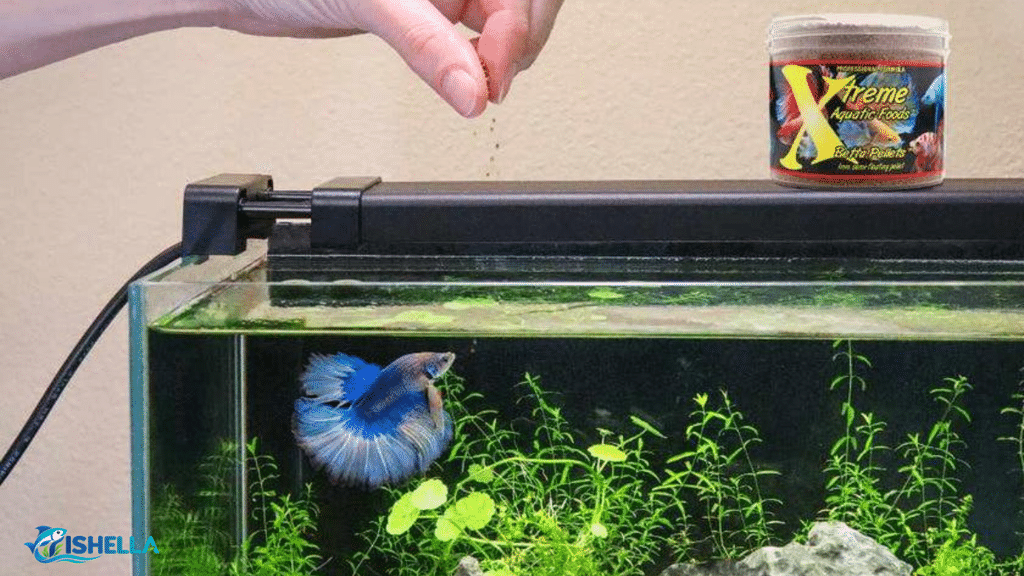
Bettas are surface feeders, so floating foods can make feeding easier. Aqueon also notes that stressed fish may become more selective about food. If your betta normally eats well, reviewing its feeding routine can help you spot changes. See our guide on how many pellets to feed a betta fish for practical portioning advice.
Try a different food
If your betta refuses its normal food, you can try a suitable betta pellet or another appropriate high-protein food.
Occasionally, frozen or live foods such as brine shrimp or bloodworms can encourage a reluctant fish to eat. The University of Florida lists live and frozen foods among feeding options for bettas.
Do not use treats as an excuse to overfeed.
6. Your Betta Is Being Overfed
Overfeeding can create two problems.
First, your betta may become full and refuse more food.
Second, leftover food can break down and contribute to poor water quality.
This can create a cycle:
Too much food → uneaten food → waste buildup → poor water quality → stress → loss of appetite
Feed small portions and remove uneaten food when necessary.
Aqueon notes that small meals are preferable to one large meal and recommends avoiding overfeeding.
7. Your Betta May Be Sick
A betta that refuses food can sometimes be sick. Watch your fish carefully.
Not eating becomes more concerning when it happens together with other symptoms such as:
- Extreme lethargy
- Rapid or difficult breathing
- Weight loss
- Swollen body
- White spots
- Fuzzy growths
- Torn or deteriorating fins
- Loss of color
- Clamped fins
- Unusual swimming
- Staying at the bottom for long periods
- Repeatedly hiding
- Abnormal feces
Merck Veterinary Manual lists not eating, lethargy, breathing changes, swelling, weight loss, abnormal swimming, and skin or fin changes among signs that can indicate illness in fish.
Some diseases and parasites can also cause loss of appetite and weight loss in bettas. Do not immediately add random medications to the aquarium. First, check the water, temperature, fish behavior, and physical symptoms. If your betta has several symptoms or continues refusing food, consider contacting a veterinarian experienced with fish.
8. A Recent Tank Change May Have Caused the Problem
Did you recently:
- Move your betta to another tank?
- Change the filter?
- Replace decorations?
- Perform a large water change?
- Add another fish?
- Deep-clean the aquarium?
- Change the water temperature?
Any major change can cause stress. Your betta may temporarily refuse food after a change in its environment. The important thing is to avoid making even more large changes without identifying the original problem. Keep the water temperature stable and test the water.
9. Your Betta May Be Reacting to Strong Water Flow
Bettas are not strong open-water swimmers. If your filter produces a strong current, your betta may spend a lot of energy fighting the flow. This can create stress and may reduce normal feeding behavior. The University of Florida notes that bettas prefer calm water and that heavy filtration can be harmful when the flow is too strong.
Signs the current may be too strong
Your betta may:
- Struggle to swim
- Get pushed around the aquarium
- Hide behind decorations
- Stay near the bottom
- Avoid open areas
- Have difficulty reaching food
If this sounds like your betta, reduce the flow if your filter allows it.
What Should You Do If Your Betta Is Not Eating?
- Do not try ten different treatments at once.
- Follow this simple checklist.
Step 1: Check the temperature
- Aim for stable warm water.
- Around 78°F to 80°F is a useful target for many home betta aquariums.
Step 2: Test the water
Check:
- Ammonia
- Nitrite
- Nitrate
- pH
If ammonia or nitrite is present, correct the water-quality problem promptly.
Step 3: Look at your betta
Check for:
- Swelling
- White spots
- Fin damage
- Fuzzy patches
- Rapid breathing
- Unusual swimming
- Weight loss
- Loss of color
Step 4: Think about recent changes
Ask yourself:
What changed before my betta stopped eating?
- Was the fish moved?
- Was the aquarium cleaned?
- Was a new fish added?
- Was the heater changed?
- Was the filter changed?
- The answer may help identify the cause.
Step 5: Check the food
Make sure the food is fresh, suitable for bettas, and small enough to eat. If your betta refuses its normal food but looks healthy, you can try a different appropriate food.
Step 6: Remove uneaten food
Do not allow uneaten food to sit in the aquarium. Food that remains in the tank can contribute to waste and water-quality problems.
Should You Change the Water If Your Betta Is Not Eating?
If water testing shows ammonia or nitrite, a partial water change may be needed. The exact amount depends on the test results and the condition of the aquarium. Always prepare replacement water properly and avoid a sudden temperature difference.
Do not perform repeated large water changes without understanding what is happening in the aquarium. Sudden changes in water chemistry can also stress fish.
If the problem is cloudy or dirty aquarium water, see our guide:
Internal link: How to Clear Cloudy Water in a Newly Set-Up Fish Tank
Should You Stop Feeding a Betta That Is Not Eating?
It depends on the reason. If your betta is simply stressed, repeatedly adding food will not solve the problem.
If the fish is bloated after overeating, a short fasting period may be appropriate for an otherwise healthy adult fish. But if your betta is already weak, losing weight, or showing signs of disease, do not assume that fasting is the answer.
The first priority is finding the underlying problem.
How Long Can a Betta Fish Go Without Eating?
A healthy adult betta can sometimes survive several days without food, but that does not mean you should intentionally leave your fish unfed. A sudden loss of appetite is more important than simply counting the number of missed meals.
If your betta has stopped eating and also shows weight loss, lethargy, abnormal swimming, breathing problems, swelling, or other symptoms, take the situation more seriously.
When Should You Worry About a Betta Not Eating?
One missed meal does not automatically mean something is wrong.
You should pay closer attention when:
- Your betta refuses food for several days
- Your fish is losing weight
- Your betta is very weak or inactive
- The belly is severely swollen
- Your fish is breathing unusually fast
- Your betta has white spots or fuzzy growths
- The fins are deteriorating
- Your fish is swimming abnormally
- Ammonia or nitrite is present
Not eating can be an early sign of illness, especially when other symptoms appear at the same time.
If your fish is severely ill or deteriorating quickly, seek help from a veterinarian familiar with fish.
How to Prevent Betta Feeding Problems
The best solution is prevention.
Keep the temperature stable
Use a reliable aquarium thermometer and monitor the water regularly.
Maintain good water quality
Test the aquarium when something seems wrong and keep up with regular maintenance.
Feed an appropriate diet
Use suitable betta food and avoid excessive portions.
Avoid overfeeding
Extra food does not make a betta healthier.
Uneaten food can also contribute to water-quality problems.
Keep the aquarium calm
Avoid strong currents and unnecessary disturbance.
Watch your fish every day
A few seconds of observation can help you notice changes early.
Look at your betta’s:
- Appetite
- Swimming
- Color
- Fins
- Body shape
- Breathing
- Activity level
Early changes are easier to investigate than a serious problem that has been ignored for weeks.

Final Thoughts
If your betta fish is not eating, do not immediately assume that it is dying.
Start with the basics. Check the temperature. Test the water. Look for stress. Check the food. Then look for signs of illness. Cold water, stress, poor water quality, overfeeding, unsuitable food, and illness can all affect appetite.
The most important thing is to find the cause instead of repeatedly offering more food. For a complete introduction to keeping a healthy betta, read our Betta Fish Care: Complete Beginner’s Guide.
If your betta is showing multiple warning signs or is getting worse, treat the situation as a health problem rather than simply a feeding problem.
Frequently Asked Questions
Why is my betta fish not eating?
A betta may stop eating because of cold water, stress, poor water quality, unsuitable food, overfeeding, bloating, or illness. Check the temperature and water parameters first.
Why is my betta fish not eating pellets?
Your betta may dislike the food, the pellets may be too large, or the fish may be stressed or sick. Check the water and temperature before changing foods.
How long can a betta fish go without eating?
A healthy adult betta may survive several days without food, but prolonged refusal to eat should not be ignored. Look for other symptoms and check water quality and temperature.
Why is my betta fish not eating but still active?
If your betta is active, start by checking the food, water temperature, and water quality. A picky eater or recent environmental change can sometimes explain a temporary loss of appetite.
Why is my betta fish not eating and hiding?
Hiding together with a loss of appetite can indicate stress or illness. Check the water parameters, temperature, filter flow, tankmates, and physical condition of the fish.
Why is my betta fish not eating and bloated?
Bloating can happen after overfeeding, but it can also have other causes. Avoid assuming it is simple constipation if the swelling is severe or your fish has other symptoms.
Should I feed my betta if it is not eating?
Do not keep adding food when your betta refuses to eat. Remove uneaten food and investigate the cause. If bloating or overfeeding is suspected, a short fast may be appropriate for an otherwise healthy adult fish.
Can cold water make a betta stop eating?
Yes. Bettas are tropical fish, and cold water can make them inactive and affect normal body processes. Check the aquarium temperature with a thermometer and keep it stable.
Can bad water quality make a betta stop eating?
Yes. Poor water quality can stress fish and reduce appetite. Ammonia and nitrite are especially important to test when a betta suddenly stops eating.
When should I take my betta to a veterinarian?
Consider veterinary help when your betta continues refusing food or has other warning signs such as severe lethargy, weight loss, abnormal breathing, swelling, unusual swimming, sores, or other physical changes.