
Choosing the best tank size for betta fish helps you provide enough swimming space and maintain stable water conditions. A tank that is too small can make it harder to control waste, temperature, and water quality.
Quick answer: A 5-gallon tank is a practical minimum for one betta fish. A 10-gallon tank is an excellent choice for beginners because it offers more swimming space and greater water stability.
The right tank also needs a suitable heater, gentle filtration, and a properly cycled environment. These essentials help your betta stay comfortable and healthy.
Why Tank Size Matters for Betta Fish
Tank size affects how easily you can maintain good water quality and provide enough room for natural behavior. A larger aquarium holds more water, which helps reduce sudden changes in temperature and water chemistry.
Small tanks can accumulate fish waste quickly, making ammonia control more difficult. They also provide less room for swimming, plants, and hiding places. If you’re choosing the right setup for your betta, explore our guide to the best 5-gallon betta fish tank kits to compare beginner-friendly options with essential features for a comfortable aquarium.
The University of Illinois College of Veterinary Medicine recommends a tank of 5 gallons or larger. Its guidance explains that this size supports normal swimming and hiding behavior while reducing the buildup of toxins. Read the University of Illinois betta care guide.
To keep your betta active and mentally stimulated, explore these Betta Fish Toys and Enrichment Ideas for safe ways to encourage natural behavior and reduce boredom.
What Is the Minimum Tank Size for a Betta Fish?
A 5-gallon tank is a practical minimum for one betta fish. It provides more swimming space and helps maintain stable water conditions when equipped with a suitable filter and heater.
You may see 1-gallon and 2.5-gallon tanks marketed for bettas. However, these smaller setups offer less room and leave less margin for changes in water quality. For a healthier, easier-to-maintain aquarium, choose at least 5 gallons.
A 10-gallon tank is an excellent option if you have enough space and budget. It provides additional swimming room and more water volume to help buffer changes in water conditions.
Why smaller tanks fall short:
- Water quality deteriorates quickly between cleanings
- Little to no room for a heater or filter
- No space for enrichment (plants, hiding spots, swimming room)
- Requires daily maintenance to stay safe for your fish
Best tank size for betta fish for Beginners: 5 vs. 10 Gallons
For most beginners, the choice comes down to two options: 5 gallons or 10 gallons. Both can work, but they come with real trade-offs.
5-Gallon Tank
Pros:
- Affordable and space-saving
- Enough room for a heater, small filter, and basic decor
- A solid entry point for apartment dwellers or desks
Cons:
- Water parameters shift faster, requiring more frequent monitoring
- Limited room if you later want tank mates or live plants
Learn about compatibility, potential risks, and safe tank-sharing tips in our guide: Can Betta Fish Live With Ghost Shrimp? Risks & Tips.
10-Gallon Tank
Pros:
- More stable water chemistry (bigger water volume = fewer sudden swings)
- Room for live plants, more decor, and a happier, more active betta
- Option to add compatible betta tank mates down the road
- Beginner-friendly kits are widely available at this size
Cons:
- Slightly higher upfront cost
- Takes up more counter or floor space
If you’re stuck deciding between the two, we’ve put together a full side-by-side comparison in our guide on 5-gallon vs. 10-gallon tanks for betta fish that walks through cost, maintenance, and long-term suitability.
Our recommendation for beginners: if your budget and space allow it, start with a 10-gallon tank. It gives you more room for error while you’re learning water chemistry basics, and your betta will have a noticeably better quality of life.
Tank Size Comparison Chart
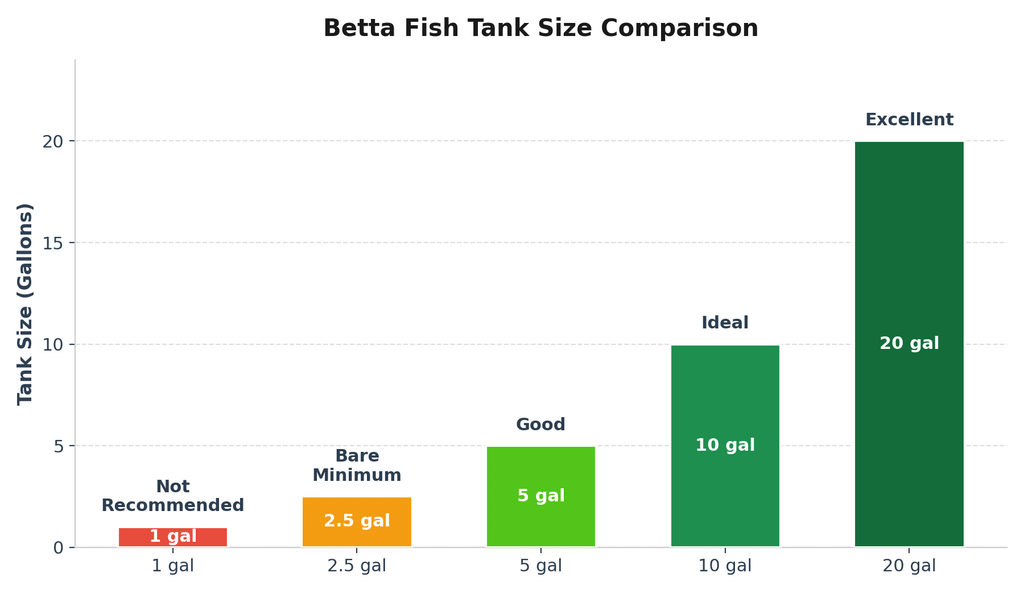
| Tank Size | Recommendation | Key Consideration |
|---|---|---|
| 1 gallon | Not recommended | Very limited swimming space and less stable water conditions |
| 2.5 gallons | Below the recommended minimum | Requires careful monitoring and offers less room |
| 5 gallons | Practical minimum | Suitable for one betta with proper equipment and maintenance |
| 10 gallons | Excellent beginner choice | More swimming space and greater water stability |
| 20 gallons or more | Suitable if properly maintained | Extra space for plants and a carefully planned aquarium layout |
Note: Tank size alone does not guarantee good care. Proper filtration, stable temperature, cycling, and regular water testing are also essential.
Factors to Consider When Choosing Your Tank Size
BeBefore choosing an aquarium, consider these four factors:
- Available space: Measure your desk, counter, or aquarium stand and check that it can support the filled tank.
- Budget: Include the cost of the aquarium, heater, filter, water conditioner, and test kit.
- Maintenance time: Every tank needs regular water testing and partial water changes. Smaller tanks generally offer less room for error.
- Tank mates: If you plan to add other animals, research their space requirements and compatibility first. A larger tank does not guarantee that tank mates will be safe together.
For a complete overview of your fish’s daily needs, read our Betta Fish Care Guide.
Essential Equipment for Your Betta Tank
Regardless of the size you choose, every betta tank needs three core pieces of equipment:
1. A Heater
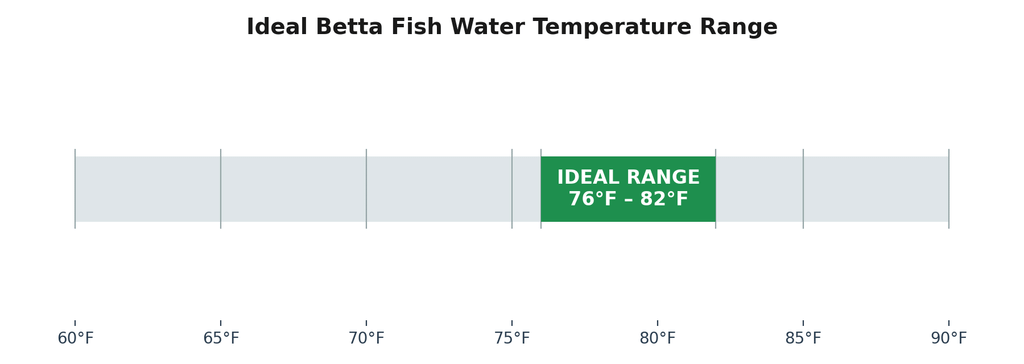
Bettas are tropical fish that need consistently warm water. A suitable aquarium heater helps maintain a stable temperature, while a thermometer lets you check the actual water temperature. Follow a reliable betta care guide for the appropriate temperature range, and avoid sudden changes that can stress your fish.
2. A Gentle Filter
Bettas need clean water, but strong currents can make swimming difficult, especially for fish with long fins. Choose a filter with adjustable flow or a sponge filter that provides gentle water movement.
If you are setting up a 5-gallon aquarium, see our guide to the best filter for a 5-gallon betta tank to compare suitable options. Choose a filter that maintains water quality without creating a strong current.
3. Substrate and Decor
Gravel or sand at the bottom, along with silk plants, caves, or driftwood, gives your betta places to explore and rest — closer to their natural environment.
If this is your very first aquarium of any kind, our guide to setting up a freshwater aquarium covers the full setup process step by step, from equipment to first fill.
Common Mistakes Beginners Make
- Choosing a tank that is too small: Start with at least 5 gallons for one betta.
- Skipping the nitrogen cycle: Establish beneficial bacteria before introducing your fish whenever possible. Read our guide on how to cycle a fish tank.
- Using unsuitable equipment: Provide a heater and gentle filtration to support stable water conditions.
- Adding incompatible tank mates: Research compatibility and the space requirements of every species before introducing other animals.
- Ignoring water tests: Check water quality regularly and perform partial water changes as needed.
Avoid assuming that a larger tank needs fewer water changes. Maintenance depends on water-test results, stocking, feeding, and filtration.
How to Set Up Your Betta Tank (Quick Overview)
- Choose a tank of at least 5 gallons, with 10 gallons as an excellent beginner option.
- Rinse the tank and substrate with warm water (no soap)
- Add substrate, decor, and plants
- Install your filter and heater
- Fill with dechlorinated water
- Cycle the tank before adding your fish
- Acclimate your betta slowly to avoid temperature shock
- Monitor water parameters for the first few weeks
Frequently Asked Questions
Can a betta fish live in a 1-gallon tank?
Technically, yes, but it’s not recommended. One-gallon tanks are difficult to keep stable, leading to rapid ammonia buildup and stress-related health issues. Read more: can a betta live in a 1-gallon tank.
What Is the Best Tank Size for a Beginner Betta Fish?
A 10-gallon tank is an excellent choice for beginners because it provides extra swimming space and helps maintain stable water conditions. A properly equipped 5-gallon tank is a practical minimum for one betta.
Do betta fish need a heater and filter?
Yes. Bettas are tropical fish and require water temperatures between 76-82°F, along with a gentle filter to maintain water quality without creating strong currents.
Is a 2.5-gallon tank good enough for a betta fish?
A 2.5-gallon tank is the bare minimum some hobbyists consider acceptable, but it requires much more frequent maintenance and offers little room for error.
How Many Gallons Does a Betta Fish Need at Minimum?
A 5-gallon tank is a practical minimum for one betta fish. Choose a suitable heater, gentle filter, and regular water testing to help maintain a healthy environment.
Can betta fish live with other fish?
Yes, in tanks of 10 gallons or more with carefully chosen, non-aggressive tank mates. Research compatibility thoroughly before adding any tank mates.
How often should I clean a betta fish tank?
Smaller tanks (5 gallons) typically need weekly water changes of 25-50%, while larger tanks (10+ gallons) can often go slightly longer between changes due to better water stability.
Do I need to cycle a new tank before adding my betta?
Yes. Cycling establishes beneficial bacteria that break down waste. Skipping this step is one of the most common causes of early fish loss in new tanks.
Sources: University of Illinois College of Veterinary Medicine; PetSmart Fish Care Learning Center
Conclusion
While a betta fish can survive in a small bowl, that’s not the same as giving them a life where they truly thrive. For beginners, a 5-gallon tank is the minimum, but a 10-gallon tank is the ideal starting point — offering more stable water, more room to explore, and more flexibility down the road.
Investing a little more upfront in tank size and equipment pays off in a healthier, more colorful, and longer-living betta fish.
Pingback: Can a Betta Fish Live in a 1 Gallon Tank? What You Need to Know
Pingback: Is a 2.5 Gallon Tank Good for a Betta Fish?
Pingback: 5 Gallon vs 10 Gallon Tank for Betta Fish: Which Size Is Right for Your Betta?
Pingback: How Many Litres Does a Betta Fish Need? Tank Size Guide
Pingback: Best Heater for 5 Gallon Betta Tank (2026 Top 5 Picks)
Pingback: How to Train Betta Fish: 4 Easy Tricks (Step-by-Step)
Pingback: How to Build Trust With a Betta Fish: 6 Easy Tips
Pingback: Best 5 Gallon Betta Fish Tank Kit: 2026 Buyer's Guide
Pingback: Betta Fish Toys and Enrichment: Safe Ideas to Try
Pingback: How to Slow Down Aquarium Filter Flow: 9 Easy Fixes
Pingback: Can Betta Fish Live With Ghost Shrimp? Risks & Tips
Pingback: Betta Fish and Snails: Best Types and Safe Setup Tips