
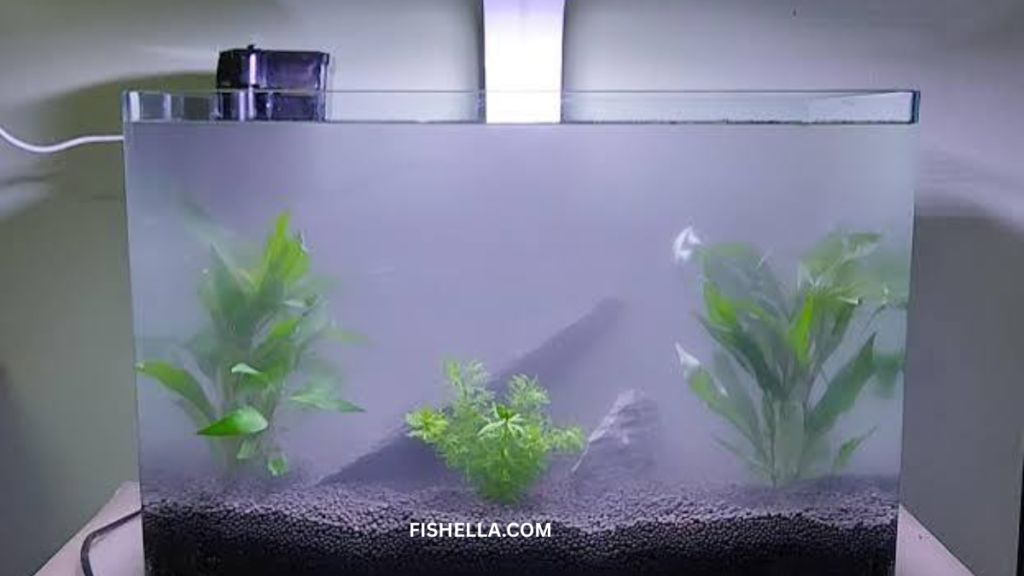
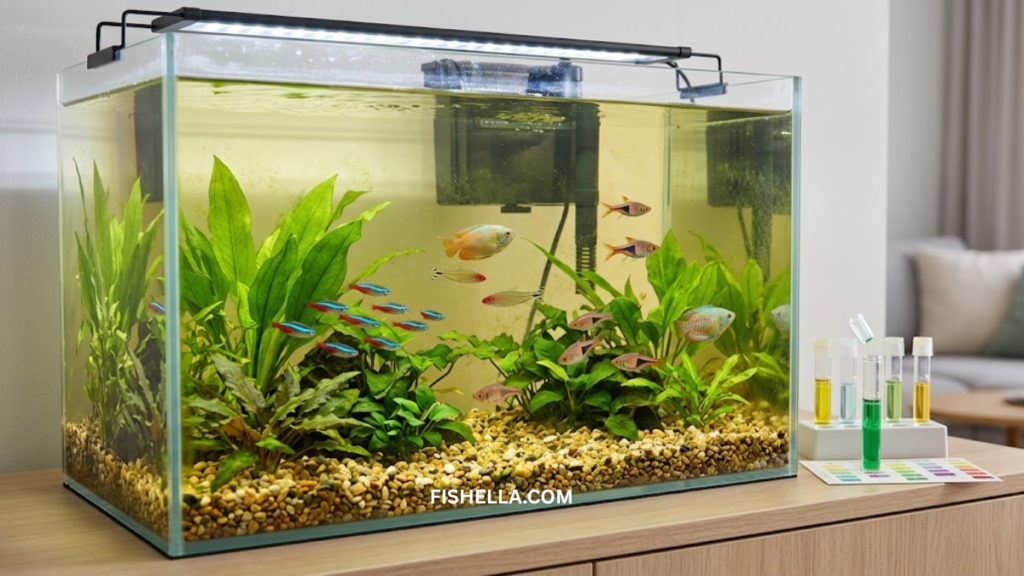
How to clear cloudy water in a newly set up fish tank. Learn what causes cloudy water, when to change the water, and how to keep your tank clear. Seeing cloudy water in a newly set up fish tank can be worrying, especially when you have just finished setting everything up. The good news is that cloudy water in a new fish tank is often caused by a normal bacterial bloom while the aquarium is developing its biological balance. In most cases, the water can clear on its own if ammonia and nitrite remain at safe levels.
Cloudy water often signals a young tank that is still settling, so keep testing and follow the steps in our guide to fish tank water quality while your aquarium matures.
Why Is My New Fish Tank Cloudy?
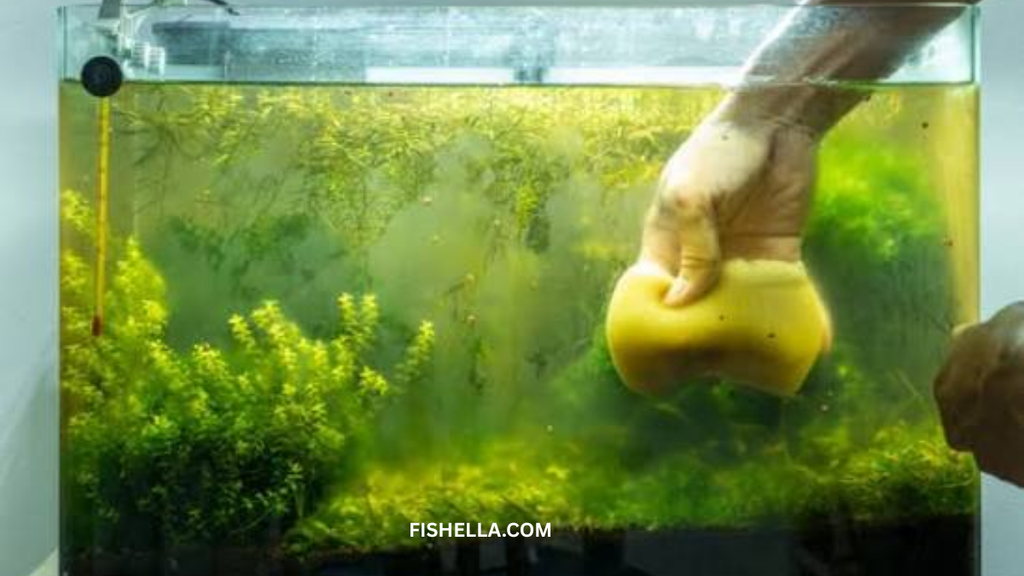
The most common reason for cloudy water in a newly set up fish tank is a bacterial bloom. When you first set up an aquarium, the beneficial bacteria needed to process fish waste are not yet fully established. As bacteria multiply and compete for available nutrients, the water can temporarily look white, gray, or milky. This is especially common during the first days or weeks of a new aquarium.
A new tank can also become cloudy because of:
- Unwashed gravel or sand
- Too much fish food
- Adding too many fish at once
- Decaying plant material
- Poor filtration
- Excess organic waste
- An aquarium that has not completed its nitrogen cycle
Aqueon notes that cloudy water in a new aquarium is commonly related to biological imbalance and can clear as the tank becomes established. If your Fish tank develops cloudy water, read our guide on why aquarium water becomes cloudy to identify common causes and learn how to restore clear, healthy water.
Is Cloudy Water in a New Fish Tank Dangerous?
Not always.
If the water is cloudy but your ammonia and nitrite are zero, the problem may simply be a temporary bacterial bloom. However, cloudy water can sometimes happen at the same time as rising ammonia or nitrite. That is why testing your water is more important than simply trying to make the aquarium look clear.
For a new aquarium, keep an eye on:
- Ammonia
- Nitrite
- Nitrate
- pH
- Water temperature
The goal in an established freshwater aquarium is 0 ppm ammonia and 0 ppm nitrite.
How to Clear Cloudy Water in a Newly Set Up Fish Tank
1. Test the Water First
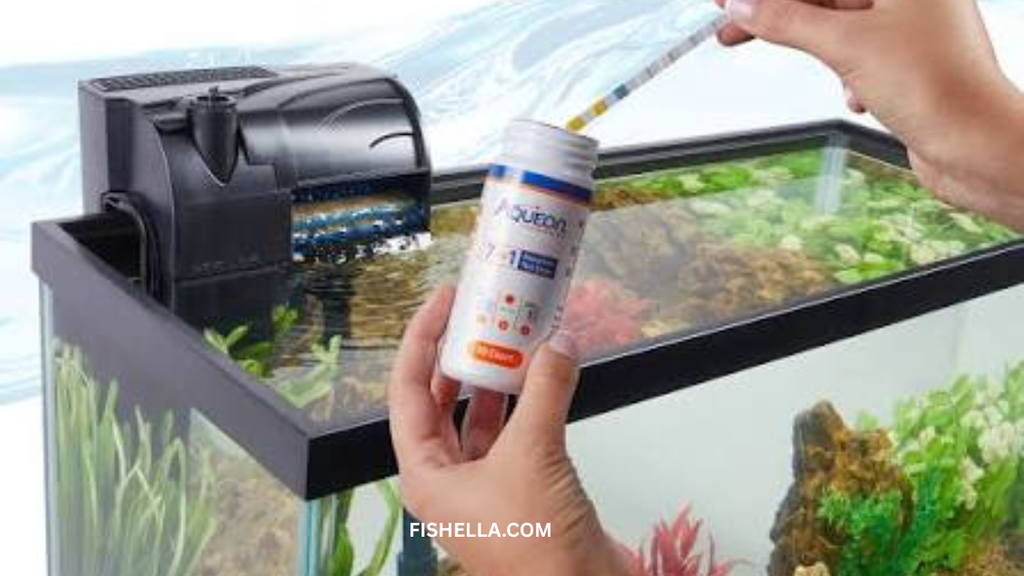
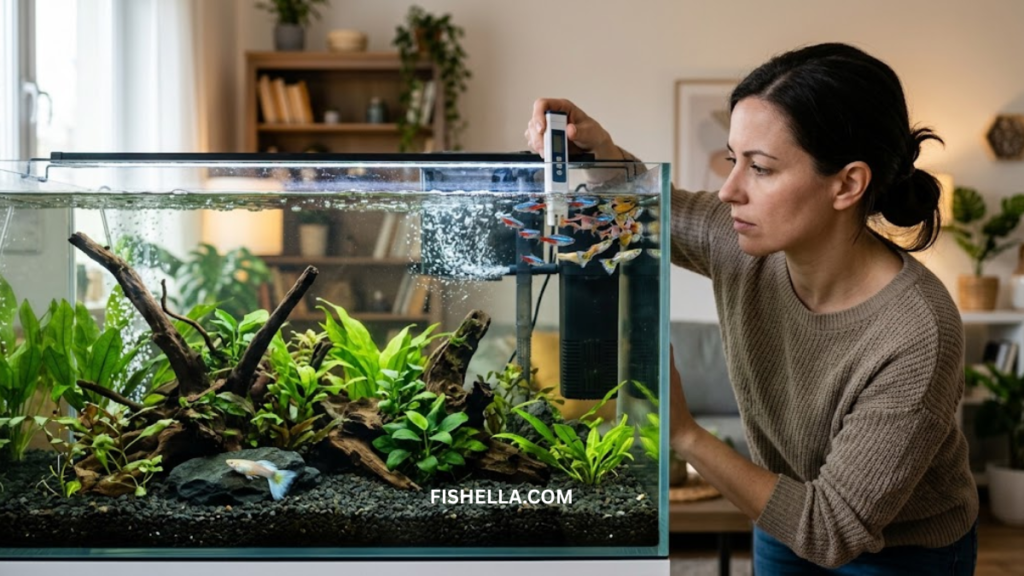
Before changing anything, test your aquarium water. A cloudy tank may look bad, but the water test tells you whether there is a more serious problem. If ammonia or nitrite is rising, do not simply wait for the cloudiness to disappear. Protect your fish by addressing the water-quality problem.
2. Don’t Overfeed Your Fish
Overfeeding is one of the easiest ways to make a new aquarium worse. Uneaten food breaks down and adds more organic waste to the tank. That waste can contribute to ammonia and encourage bacterial growth. Feed only what your fish can reasonably finish within a few minutes, and remove obvious leftover food.
3. Don’t Add More Fish Yet
Adding more fish while your aquarium is still developing its biological filter can increase the amount of waste faster than the beneficial bacteria can handle. Wait until your aquarium is stable before increasing the stocking level. Adding too many fish at once can contribute to ammonia and nitrite problems during the cycling process.
4. Keep the Filter Running
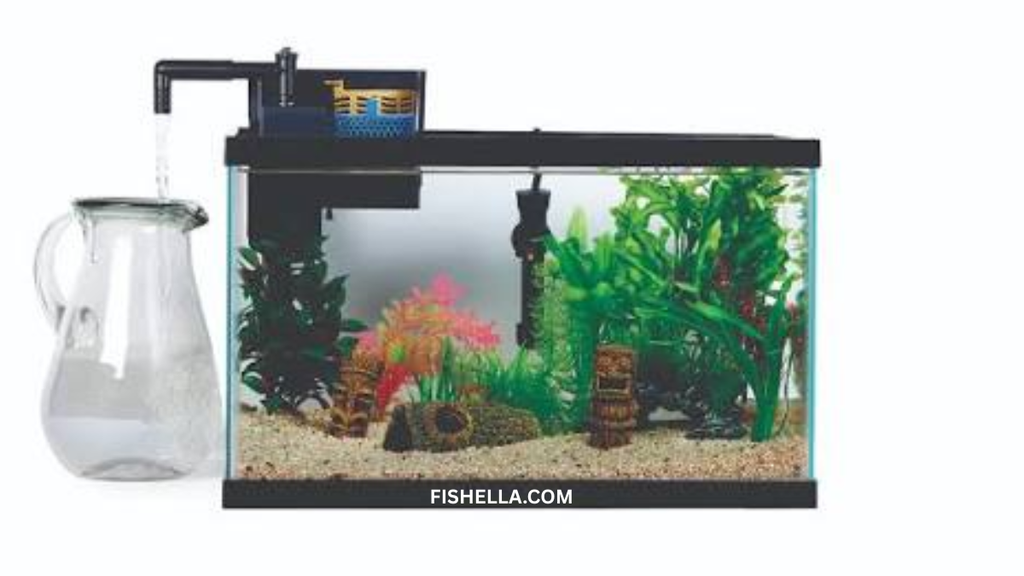
Your aquarium filter is one of the most important parts of the biological system. The filter provides a place for beneficial bacteria to grow. Turning it off for long periods can reduce oxygen and disturb the biological process. If the filter is working normally, keep it running continuously.
5. Don’t Replace New Filter Media Just Because the Water Is Cloudy
A common beginner mistake is replacing the filter cartridge as soon as the water turns cloudy. That can remove some of the developing beneficial bacteria. If the filter media is not physically damaged or clogged, don’t replace it simply because the water looks cloudy.
6. Check Your Gravel and Decorations
If the water became cloudy immediately after filling the aquarium, fine particles from gravel or sand may be responsible. This type of cloudiness is different from a bacterial bloom. Fine dust can remain suspended in the water after new substrate is added. Good mechanical filtration usually helps remove it over time.
7. Consider Live Plants
Live aquarium plants can become part of a healthy aquarium system. Plants use nutrients and can also take up ammonia, although they should not be considered a replacement for proper filtration and cycling. They can be especially useful in a freshwater aquarium where you want a more natural setup.
8. Use a Water Conditioner With Tap Water
If you’re using tap water, always use an aquarium water conditioner designed to treat chlorine and chloramine. This is particularly important because chlorine and chloramine can harm fish and interfere with beneficial bacteria. The U.S. EPA explains that chloramines are used by many public water systems in the United States.
Should You Do a Water Change When a New Tank Turns Cloudy?
There isn’t one answer for every cloudy tank. If the cloudiness is simply a bacterial bloom and ammonia and nitrite remain at zero, repeatedly changing large amounts of water may not solve the underlying issue.
However, if ammonia or nitrite is elevated, water changes become an important part of protecting your fish. So don’t make the decision based only on how cloudy the aquarium looks. Test the water first.
How Long Does Cloudy Water Last in a New Aquarium?
A bacterial bloom may clear within several days, although the exact time can vary depending on the aquarium. New aquariums are still developing their biological filtration, so patience is important.
Don’t keep adding chemicals or changing equipment every time the water looks cloudy. Give the biological system time to develop while monitoring water parameters. Aqueon specifically recommends testing ammonia and nitrite and allowing a new-tank bacterial bloom to settle when those levels are not rising.
What If Cloudy Water Doesn’t Go Away?
If your aquarium remains cloudy for an extended period, look for an underlying cause.
Check:
- Ammonia and nitrite
- Fish population
- Feeding amount
- Filter performance
- Dead fish or plants
- Uneaten food
- Substrate
- Water source
- Recent medications or treatments
Cloudiness in an established aquarium can have different causes from cloudiness in a brand-new tank.
Cloudy Water vs. Ammonia Problem
These two problems can happen together, but they are not the same thing. Cloudy water describes how the aquarium looks. Ammonia describes a water-quality problem.
Your aquarium can look cloudy while ammonia is zero. It can also look clear while ammonia is dangerously high. That’s why every fish keeper should keep an aquarium test kit available.
Quick Checklist for a Cloudy New Fish Tank
If your new aquarium suddenly turns cloudy:
- Test ammonia and nitrite.
- Keep the filter running.
- Stop adding new fish.
- Avoid overfeeding.
- Check for dead plants or fish.
- Make sure tap water is properly conditioned.
- Don’t replace biological filter media unnecessarily.
- Give a bacterial bloom time to settle if water parameters are safe.
- Take action if ammonia or nitrite rises.
Frequently Asked Questions
How do I clear cloudy water in a newly set up fish tank?
First, test ammonia and nitrite. If both are zero and the aquarium is newly established, the cloudiness may be a temporary bacterial bloom. Keep the filter running, avoid overfeeding and adding fish, and allow the biological system time to develop.
Why is my new fish tank cloudy after one day?
New substrate, fine particles, or early bacterial growth can make a new aquarium cloudy. If the cloudiness appeared immediately after adding water, check the substrate and mechanical filtration. If it appeared several days later, a bacterial bloom may be the reason.
Should I change the water if my new tank is cloudy?
Test the water before deciding. If ammonia or nitrite is elevated, a partial water change may be needed to protect the fish. If the water is cloudy because of a normal bacterial bloom and ammonia and nitrite are zero, repeated large water changes may not fix the cause.
Can I add fish when my new tank is cloudy?
It is better to wait until the aquarium is properly cycled and water parameters are stable. Adding more fish increases the waste load and can make ammonia and nitrite problems worse.
Does cloudy water mean my aquarium is cycling?
It can. A bacterial bloom is common during the early development of an aquarium’s biological filtration, but cloudy water alone does not prove that cycling is complete. Always use water testing to track the cycle.

Final Thoughts
Cloudy water in a newly set up fish tank can look scary, but it doesn’t automatically mean something is seriously wrong. In many new aquariums, the cloudiness is simply part of the biological system getting established.
The most important thing is to avoid panic. Test your water, feed lightly, don’t overstock, keep your filter running, and give the aquarium time to stabilize.
If you’re still building your aquarium, read our guide on Setting Up a Freshwater Aquarium and our guide on [How to Cycle a Fish Tank Fast] for the next steps.
Pingback: Algae Control: Causes, Removal Methods & Prevention Tips