Affiliate disclosure: This article may contain affiliate links. If readers purchase through qualifying links, Fishella may earn a commission at no additional cost to them. Publish this disclosure only if it accurately reflects your affiliate relationships and website policy.
Choosing the best root tabs for aquarium plants depends on what grows in your tank, the substrate you use, and how often you want to replenish fertilizer. A product that works well for Amazon swords may not be necessary for Java fern or Anubias, and buying the wrong formula can waste money.
Root tabs are particularly useful for rooted aquatic plants growing in nutrient-poor sand or gravel. They supply fertilizer within the substrate, where plants can absorb nutrients through their roots.
In this guide, we’ll compare three options—Aquarium Co-Op Easy Root Tabs, Seachem Flourish Tabs, and API Root Tabs—to help you choose the right product based on nutrient coverage, dosing convenience, and value.
Quick recommendation: Consider Aquarium Co-Op Easy Root Tabs for broader root-zone nutrition, Seachem Flourish Tabs for their trace-nutrient profile, and API Root Tabs as another option to compare for your budget. Always check the current product label before buying.
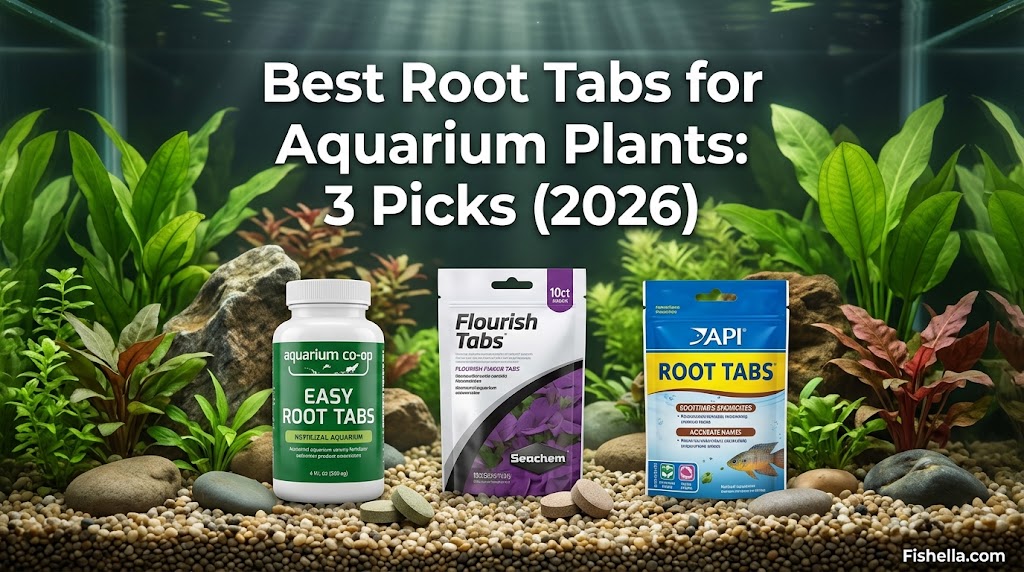
Quick Comparison: Best Root Tabs for Aquarium Plants
| Product | Best For | Main Buying Advantage | Consider Before Buying |
|---|---|---|---|
| Aquarium Co-Op Easy Root Tabs | Best overall | Broad nutrient profile | Monthly replenishment |
| Seachem Flourish Tabs | Trace-nutrient supplementation | Established product with a longer stated dosing interval | May need complementary nutrients |
| API Root Tabs | Budget-conscious buyers | Convenient option for beginners | Verify current nutrient analysis and package value |
These recommendations are based on product specifications and intended uses, not a controlled hands-on comparison. Actual results depend on plant species, substrate, lighting, and aquarium conditions.
1. Aquarium Co-Op Easy Root Tabs — Best Overall
Best for: Aquariums containing Amazon swords, cryptocoryne, vallisneria, and other root-feeding plants.
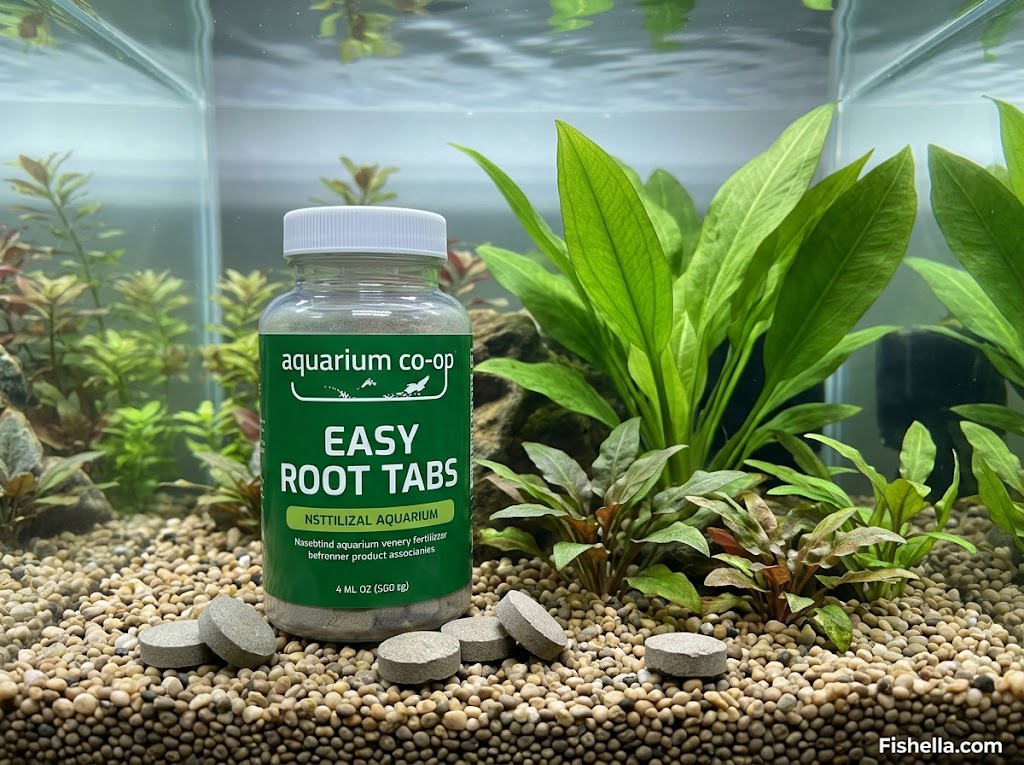
Aquarium Co-Op Easy Root Tabs are designed to supply nutrients directly to the substrate. Their formula combines mineralized topsoil, red clay, and plant nutrients, including nitrogen, phosphorus, potassium, magnesium, and iron.
The manufacturer offers 20- and 60-tablet packages. Its instructions recommend placing tablets at least one inch beneath the substrate and replenishing them monthly or as needed.
Why consider Easy Root Tabs?
- Provides several macronutrients and trace nutrients in one product.
- Suitable for inert gravel and sand, as well as established aquasoil setups.
- Allows targeted placement near nutrient-hungry root systems.
- Larger packages can be convenient for aquariums with many rooted plants.
Potential drawbacks
- Requires periodic replenishment.
- Plants may need additional nutrients depending on the overall aquarium setup.
- The initial purchase price may be higher than some smaller budget packages.
Buying verdict: This is a strong choice if your aquarium contains several heavy root feeders and you want a product with a broad nutrient profile.
Before purchasing, compare the 20- and 60-tablet packages and estimate how many tablets your planted area will require.
2. Seachem Flourish Tabs — Best for Root-Zone Trace Nutrients
Best for: Rooted plants that need additional trace elements in the substrate.
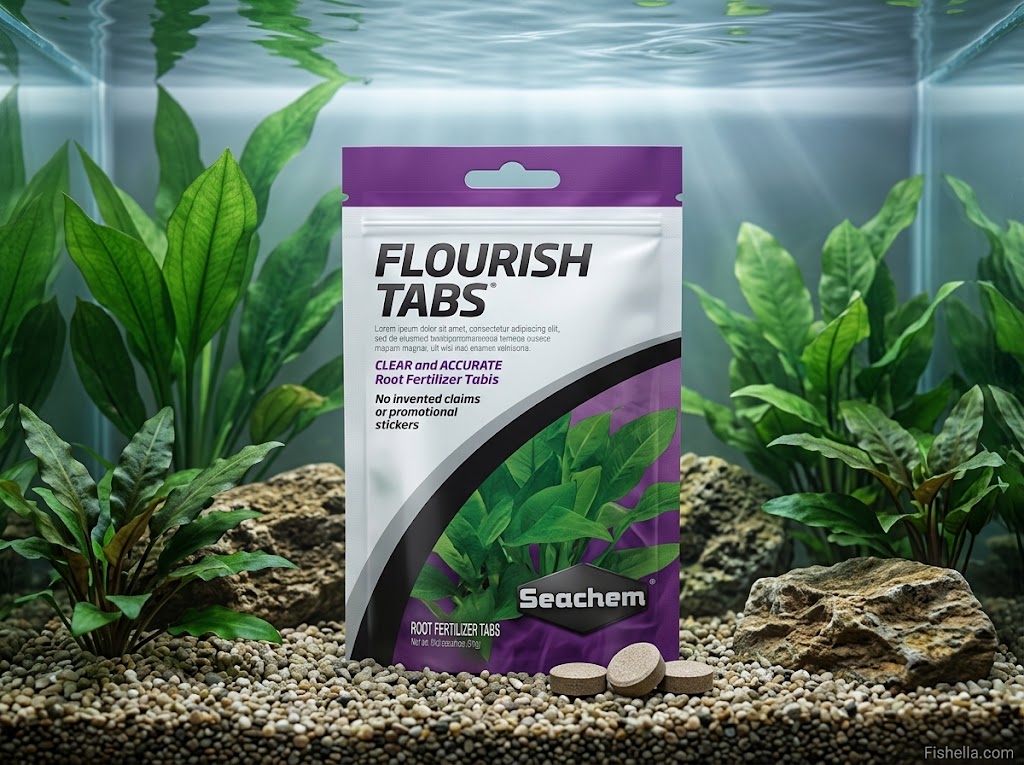
Seachem Flourish Tabs are designed to deliver nutrients around plant roots. The manufacturer’s product information describes a blend containing iron, manganese, magnesium, calcium, potassium, and other trace nutrients.
The product comes in 10- and 40-tablet packages. Seachem recommends replacing tablets approximately every three to four months, depending on the setup and growing conditions.
Why consider Flourish Tabs?
- Delivers nutrients directly to the root zone.
- Provides iron and other trace nutrients.
- Offers a longer stated replenishment interval than products intended for monthly replacement.
- Available in different package sizes.
Potential drawbacks
- Its nutrient profile differs from that of broader NPK-focused root fertilizers.
- You may need additional fertilization if your plants require nutrients not adequately supplied by the tabs.
- The total cost depends on package size and local availability.
Buying verdict: Choose Flourish Tabs if their nutrient profile suits your plants and you prefer a product with a longer stated replacement interval. Check the current label before deciding whether you need an additional fertilizer.
3. API Root Tabs — Best Budget Option to Compare
Best for: Beginners looking for a straightforward substrate fertilizer.
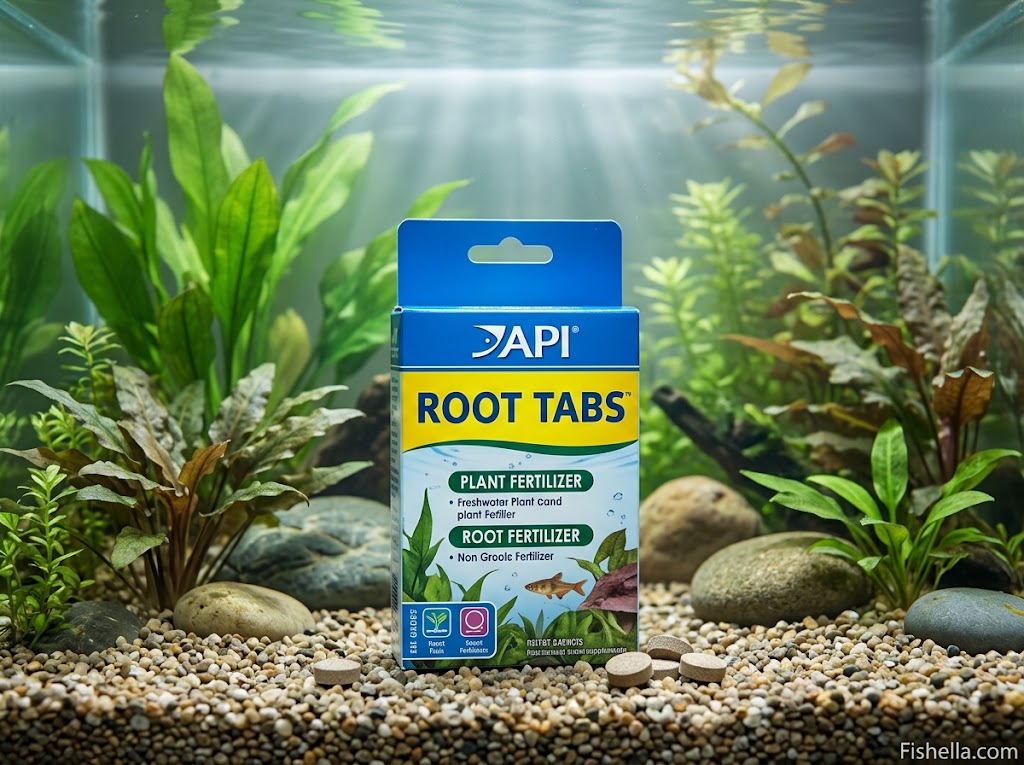
API Root Tabs are marketed for aquarium plants that benefit from root-zone nutrition. They are another option for aquariums with rooted plants growing in sand or gravel.
Before buying, review the current package for its nutrient analysis, tablet count, application instructions, and replacement schedule. Avoid assuming that all root tabs provide the same nutrient balance.
Why consider API Root Tabs?
- A simple option for beginners exploring root fertilization.
- May be convenient if stocked by your local aquarium retailer.
- Worth comparing against other brands on a cost-per-application basis.
Potential drawbacks
- Smaller packages may require more frequent repurchasing.
- The lowest upfront price does not always mean the lowest long-term cost.
- Its suitability depends on the current formula and your plants’ nutrient requirements.
Buying verdict: API Root Tabs are worth considering when price and availability are priorities. Compare the label and expected cost over several months before choosing them over a broader nutrient formula.
How to Choose the Right Root Tabs
Before adding a product to your shopping cart, evaluate these four factors.
1. Nutrient coverage
Different root tabs provide different combinations and quantities of nutrients.
Look at the guaranteed analysis or ingredient information on the package. Nitrogen, phosphorus, and potassium support plant growth, while iron and other trace elements contribute to essential plant functions.
Don’t assume that a tablet containing more ingredients is automatically better. Your plants’ requirements and the nutrients already available in your aquarium matter more than the length of the ingredient list.
2. Substrate compatibility
Your substrate influences how useful root tabs will be.
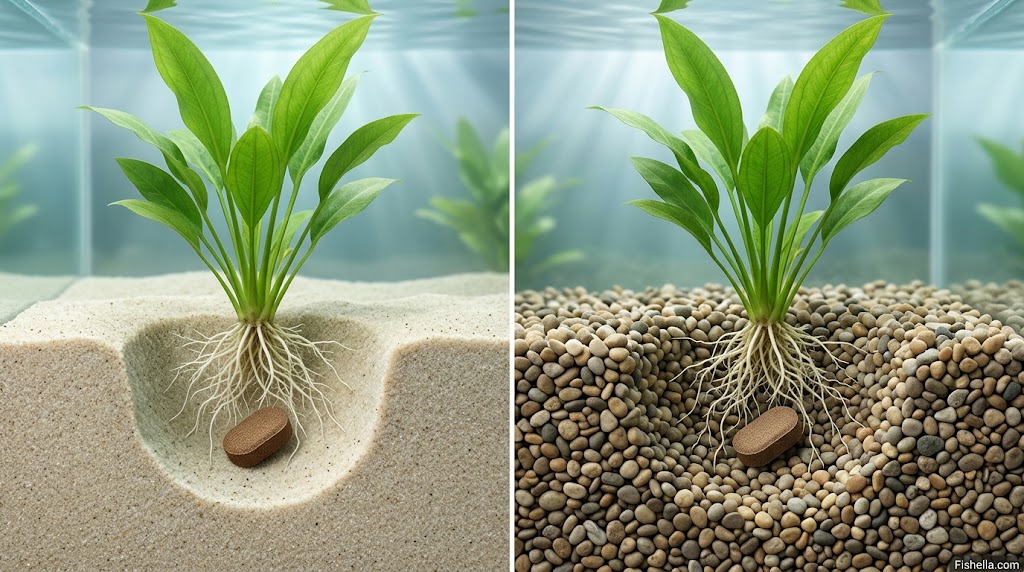
- Inert sand: Usually benefits from targeted root fertilization when nutrient-hungry plants are present.
- Inert gravel: Can support rooted plants but may provide little nutrition on its own.
- Fresh aquasoil: Often contains nutrients already, so additional root tabs may not be necessary immediately.
- Mature aquasoil: May benefit from supplementation as its available nutrients decline.
For help planning your substrate quantity, see Fishella’s guide to how much aquarium substrate you need per gallon.
3. Package size and long-term cost
Compare products using more than the shelf price.
Consider:
- Number of tablets per package.
- Recommended placement and spacing.
- Manufacturer’s replacement interval.
- Number and size of rooted plants in your tank.
- Cost of replenishing the product over three to six months.
A large package can offer better convenience, but only if its nutrient profile and dosing instructions suit your aquarium.
4. Compatibility with your aquarium inhabitants
Use fertilizers specifically intended for aquarium plants and follow their instructions. Bury tablets properly and check the manufacturer’s safety information if you keep shrimp, snails, or sensitive fish.
Do not assume that all fertilizers are interchangeable or that a product is safe simply because it is marketed for aquatic plants.
Which Root Tabs Should You Buy for Your Setup?
Use this quick guide to narrow down your choice.
| Your Setup | What to Look For |
|---|---|
| A few Amazon swords in gravel | A root tab with a suitable broad nutrient profile |
| Several crypts and vallisneria in sand | Root-zone nutrition and convenient replenishment |
| Rooted plants in established aquasoil | A product suited to any remaining nutrient gaps |
| A small aquarium with only one or two rooted plants | A small package to avoid unnecessary spending |
| A large, densely planted aquarium | Larger package sizes and predictable long-term costs |
| Mostly Anubias, Java fern, and floating plants | Consider whether root tabs are necessary at all |
If your aquarium is primarily a betta tank, plant selection may be more important than purchasing root fertilizer. Explore our guide to the best live plants for betta tanks.
How to Use Root Tabs Without Wasting Them
Correct placement helps keep fertilizer near plant roots instead of allowing it to disperse unnecessarily into the water.
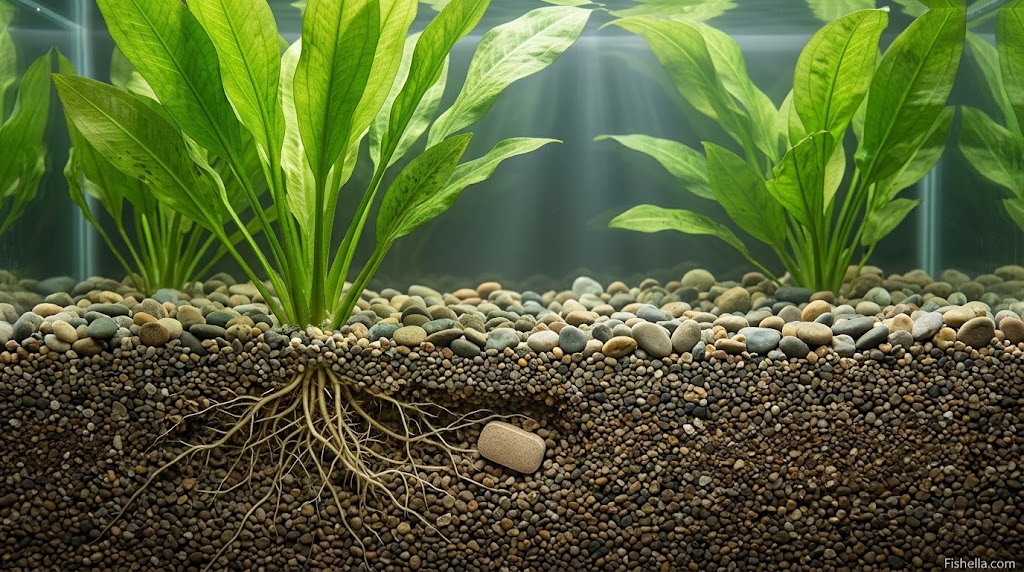
- Identify your rooted plants and locate their root zones.
- Push each tablet deep into the substrate according to its product instructions.
- Distribute tablets around larger plants when recommended by the manufacturer.
- Replenish fertilizer according to the specific product label rather than applying a universal schedule.
- Avoid disturbing the substrate directly above buried tablets during routine maintenance.
Aquarium Co-Op’s root-tab placement and dosing guide provides additional instructions for spacing, placement, and replenishment.
For substrate maintenance, see our guide to cleaning aquarium gravel without removing fish.
Root Tabs vs. Other Aquarium Fertilizers
Root tabs are a targeted way to deliver nutrients through the substrate. They are not a universal solution for every aquatic plant.
Root-feeding species such as Amazon swords and cryptocoryne often benefit from substrate fertilization. Plants such as Anubias and Java fern, which are commonly attached to rocks or driftwood, generally obtain more benefit from nutrients available in the water column.
Some aquariums need both root tabs and liquid fertilizer, while others can grow successfully with a simpler approach.
For a broader comparison of fertilizer types, products, and water-column nutrition, read Fishella’s best aquarium fertilizer for planted tanks guide.
Common Root Tab Buying Mistakes
Choosing the cheapest package automatically
Compare the amount of fertilizer, package size, and replacement interval. A cheaper package may cost more over time if it contains fewer tablets or requires more frequent replenishment.
Buying root tabs for every plant
Root tabs are most useful for plants that benefit from substrate feeding. If your aquarium contains mostly floating plants, mosses, and epiphytes, they may not be your first priority.
Assuming yellow leaves always mean a nutrient deficiency
Yellowing and poor growth can result from several causes, including inadequate light, unstable conditions, planting stress, and nutrient deficiencies. Investigate the problem before buying additional fertilizer.
Using extra tablets to accelerate growth
Excess fertilizer will not necessarily produce healthier plants. Follow the label and monitor new growth rather than increasing the dosage without a clear reason.
Ignoring aquarium maintenance
Lighting, water quality, substrate conditions, and general maintenance all affect plant growth. If algae becomes a problem, review Fishella’s aquarium algae control guide.
Frequently Asked Questions
What are the best root tabs for aquarium plants?
Aquarium Co-Op Easy Root Tabs are a strong option for broad root-zone nutrition. Seachem Flourish Tabs are worth considering for their trace-nutrient profile, while API Root Tabs provide another option to compare based on price and availability.
Are root tabs necessary for aquarium plants?
No. They are most useful for rooted plants growing in nutrient-poor substrates. Plants that primarily absorb nutrients from the water column may not need them.
Can I use root tabs in sand?
Yes. Root tabs can supply nutrients to plants growing in inert sand. Bury them according to the manufacturer’s instructions and avoid disturbing the substrate around them.
How often should root tabs be replaced?
The interval depends on the product. Aquarium Co-Op recommends monthly replenishment or replacement as needed, while Seachem gives an approximate three-to-four-month interval for Flourish Tabs. Follow the current label for your chosen product.
Are root tabs safe for shrimp and fish?
Use aquarium-specific products and follow the label. Check the manufacturer’s safety information for your particular formula, especially if your tank contains shrimp or other sensitive invertebrates.
Do root tabs cause algae?
They can contribute to nutrient problems if fertilizer escapes into the water, but algae also depends on lighting, nutrient availability, and overall aquarium conditions. Proper placement and sensible dosing help reduce unnecessary nutrient release.
Final Verdict
The best root tabs for aquarium plants are the ones that match your plants, substrate, and maintenance routine.
- Aquarium Co-Op Easy Root Tabs: A strong overall option for root feeders that need a broad range of nutrients.
- Seachem Flourish Tabs: Worth considering when their trace-nutrient profile and replacement interval fit your setup.
- API Root Tabs: An alternative to compare when upfront price and local availability matter.
Check the product label, calculate the ongoing cost, and choose the formula that addresses your aquarium’s actual needs. If your plants are already growing well, there may be no reason to add root tabs simply because they are available.