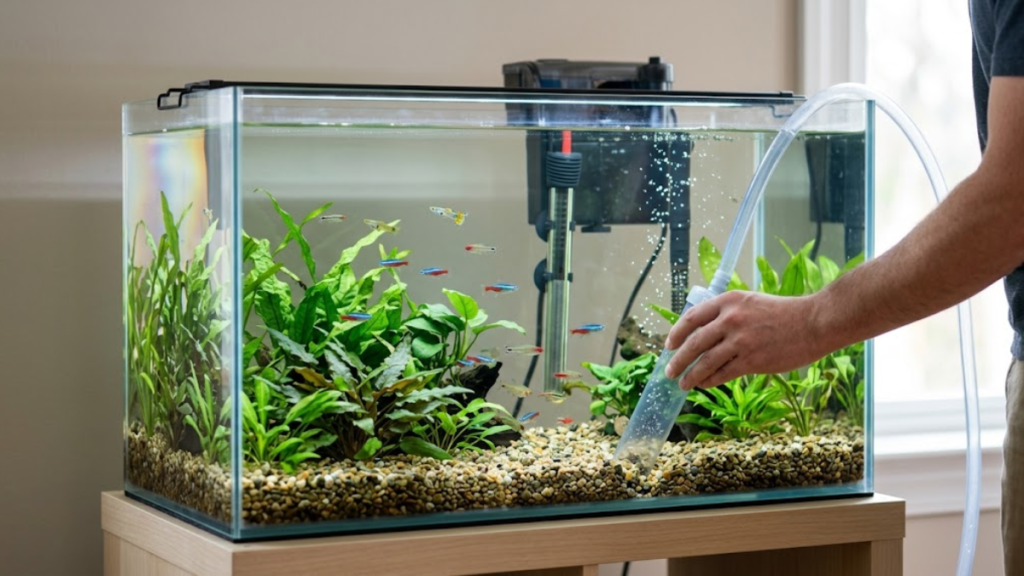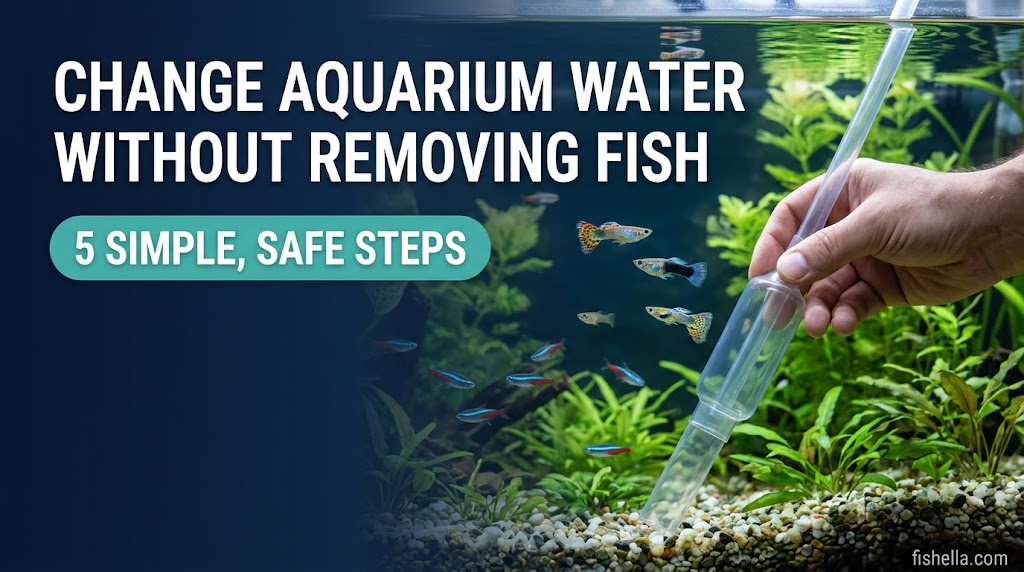
How to Clean Aquarium Gravel Without Removing Fish? You can clean aquarium gravel without removing fish by using a gravel vacuum during a partial water change. The vacuum removes fish waste, leftover food, and other debris trapped between the gravel. Your fish can usually stay in the tank while you work slowly and carefully.
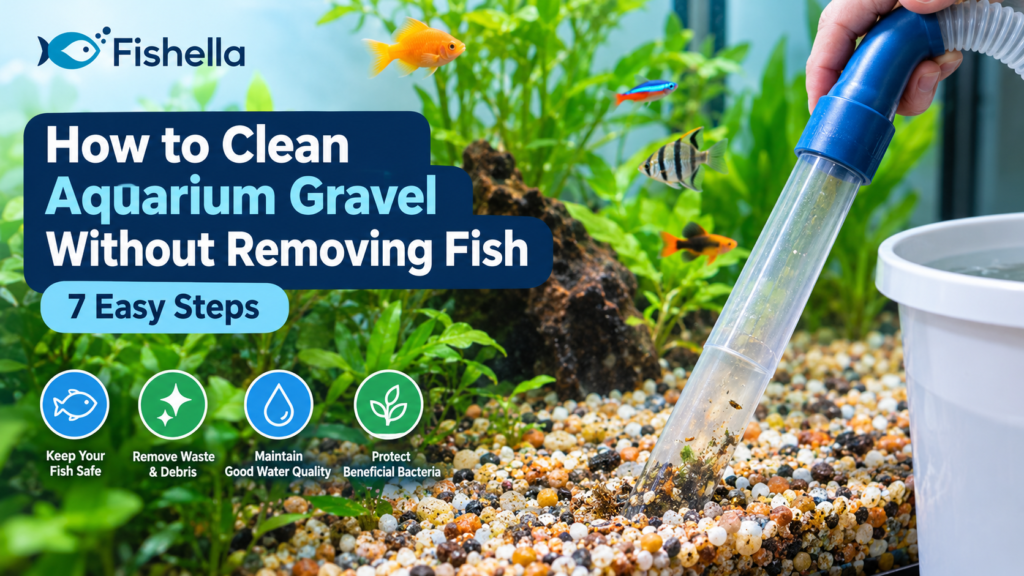
You do not need to remove all the gravel for routine cleaning. Instead, clean small sections at a time and avoid disturbing fish, plant roots, or the entire substrate bed. This approach helps you remove waste while maintaining a stable aquarium environment. While cleaning the gravel, you can also remove some old aquarium water and replace it safely. Follow our guide on how to do a water change without removing fish to keep your fish in the tank during routine maintenance.
Can You Clean Aquarium Gravel With Fish in the Tank?
Yes, you can usually clean aquarium gravel with fish inside. A gravel vacuum lets you remove debris without catching or moving your fish. Moving fish unnecessarily can cause stress, so routine gravel cleaning usually works best with them left in the aquarium.
Watch your fish as you vacuum. Keep the tube away from their bodies, fins, and tails. If a fish swims close to the opening, stop the siphon and let the fish move away before continuing.
Your substrate also affects how you clean the tank. Gravel usually allows you to vacuum debris between the stones. Sand needs a gentler technique because strong suction can remove the substrate.
If you keep a betta or another fish that prefers a particular substrate, read our guide to the best substrate for betta fish tanks: sand vs. gravel.
What You Need to Clean Aquarium Gravel
Gather your supplies before you begin. This helps you finish the water change without rushing.
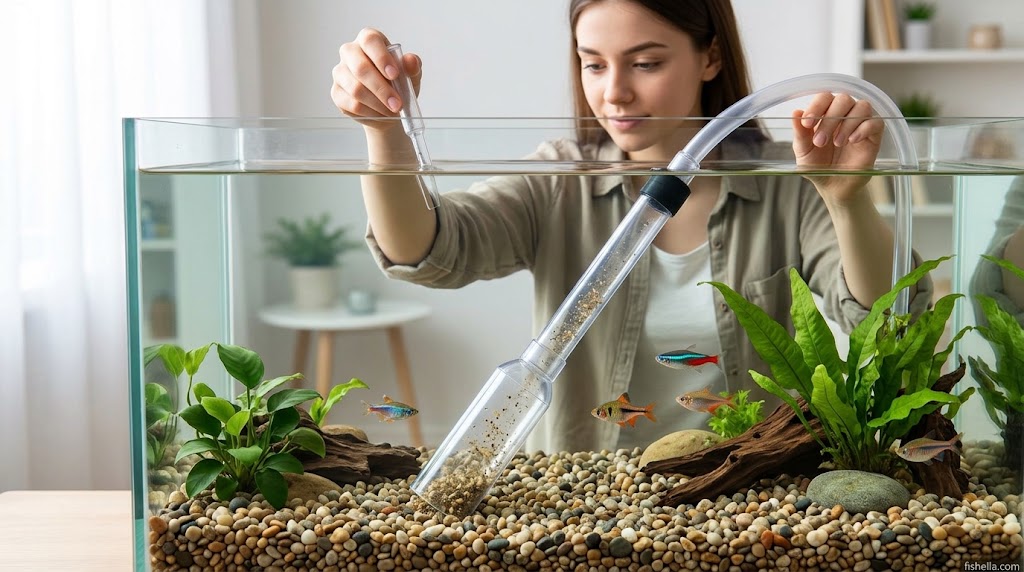
- Gravel vacuum: Removes waste and debris from the substrate.
- Dedicated bucket: Collects the dirty aquarium water. Never use a bucket that has held soap or household chemicals.
- Aquarium water conditioner: Treats tap water when required to neutralize chlorine and chloramine.
- Thermometer: Helps you check that replacement water is close to the tank’s temperature.
- Clean towel: Catches small spills around the aquarium.
Choose a vacuum that suits your tank size and substrate. A smaller vacuum often gives you better control in a small aquarium.
See our guide to the best gravel vacuum for a small aquarium to compare options for compact tanks.
How to Clean Aquarium Gravel Without Removing Fish
Follow these seven steps to remove waste while keeping your fish in the aquarium.
For a complete cleaning routine, follow our guide on how to clean a fish tank to remove algae, clean tank surfaces, and keep your aquarium healthy without harming beneficial bacteria.

Step 1: Prepare Your Aquarium
Wash your hands thoroughly and rinse them well before working in the tank. Do not use soap, lotion, or cleaning products on your hands immediately before handling aquarium equipment.
Place your dedicated bucket below the aquarium so the siphon can drain safely. Check the water level and identify areas where fish waste, leftover food, or dead plant leaves have collected.
If your aquarium has a heater, unplug it before the water level drops. Follow the manufacturer’s instructions and allow the heater to cool before exposing it to air. Switch off equipment that could run dry or become damaged during the water change.
Step 2: Set Up the Gravel Vacuum
Place the vacuum’s outlet hose securely inside your bucket. Start the siphon according to the manufacturer’s instructions.
Never start a siphon by sucking on the hose with your mouth. Aquarium water may contain microorganisms that can make people sick.
Test the flow before placing the vacuum near your fish. If the suction is too strong, use the vacuum’s flow control or gently restrict the hose as directed by its manufacturer.
Step 3: Vacuum Small Sections of Gravel
Lower the vacuum into the gravel and let it lift loose debris into the tube. Move it slowly across one small section at a time.
With ordinary gravel, allow the stones to rise briefly inside the tube. Lift the vacuum slightly so the gravel falls back while the waste flows into the bucket.
Avoid pushing the tube forcefully into the substrate. Stop if you disturb plant roots or notice fish becoming distressed.
For a small aquarium, clean only as much gravel as you can manage without removing too much water. You can finish the remaining sections during a later maintenance session.
Step 4: Remove Fish Waste and Uneaten Food
Pay attention to areas where debris collects, such as the spaces between decorations, around plants, and near feeding spots.
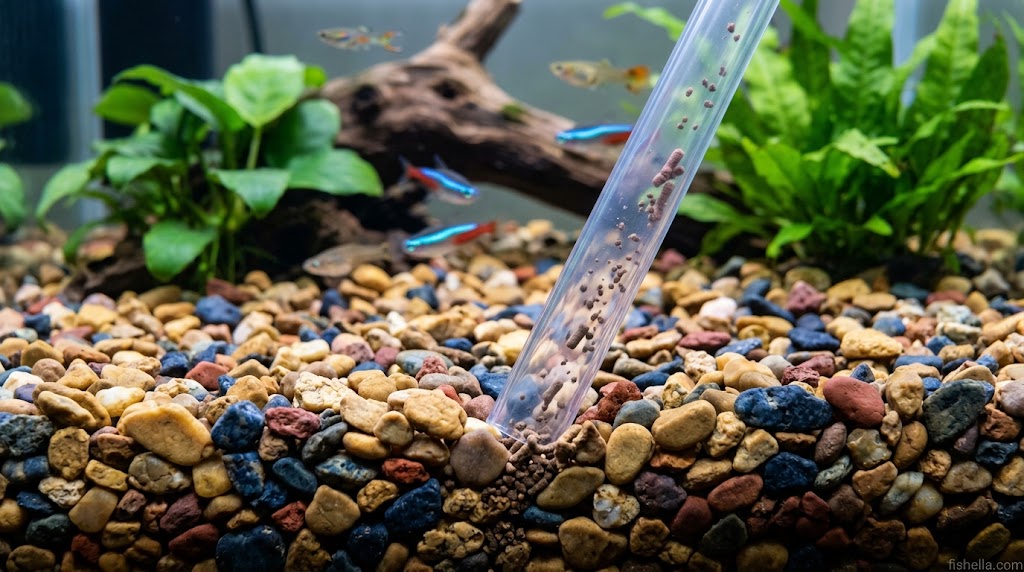
Use the gravel vacuum to remove visible fish waste and leftover food. Move decorations only when necessary, and avoid crushing plant roots or trapping fish behind objects.
Do not overfeed your fish after cleaning. Offer only the amount they can reasonably eat, according to their species and feeding needs. Less uneaten food means less waste will collect in the gravel.
Step 5: Watch the Water Level
Remember that a gravel vacuum removes water as well as debris. Check your bucket and aquarium regularly so you do not drain more water than planned.
For routine maintenance, many aquarists start with a partial water change of around 10–25%, then adjust according to the tank’s needs and water test results. This is a starting point, not a fixed rule for every aquarium.
If you reach your planned water-change amount before cleaning all the gravel, stop vacuuming. You can clean another section during your next maintenance session.
Never allow a heater or filter to run dry. Follow the equipment manufacturer’s instructions while the water level is low.
Step 6: Replace the Removed Water Safely
Prepare replacement water in a clean, aquarium-only container. If you use tap water, treat it with a suitable aquarium conditioner according to the product label to neutralize chlorine and chloramine.
Check the new water’s temperature before adding it. Aim to match the aquarium temperature closely to reduce sudden changes that could stress your fish.
Pour the water back slowly to avoid stirring up the gravel or pushing fish around. Do not add untreated tap water directly to the aquarium.
Step 7: Restart Equipment and Check Your Fish
Once the water level is safe, restart the heater, filter, and any other equipment you switched off. Follow the manufacturer’s instructions and confirm that everything operates normally.
Check the filter flow, heater position, and water level. Watch your fish for unusual swimming, rapid breathing, or other signs of stress.
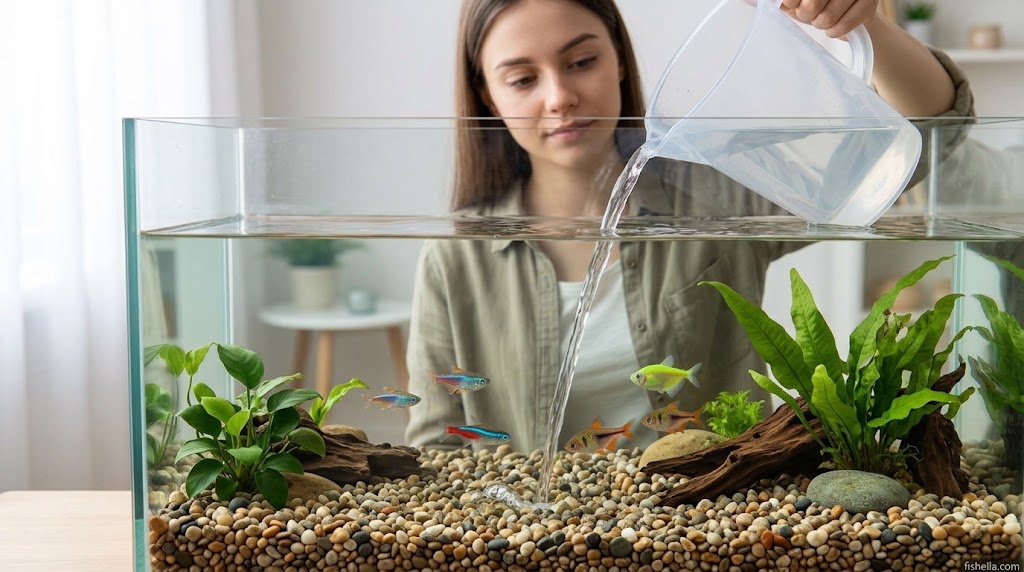
If the water becomes cloudy, avoid immediately repeating a deep cleaning. Let the filter work and check water parameters if you suspect a water-quality problem.
How to Clean Aquarium Gravel Without a Siphon
A gravel vacuum is usually the most practical option for removing debris from gravel. If you do not have one, you can use an aquarium-safe turkey baster to remove visible waste from the surface.
Gently draw up loose fish waste and leftover food without disturbing the entire gravel bed. This method works best for spot cleaning, not for removing debris trapped deep between the stones.
You can also use a suitable aquarium cleaning tool designed for your substrate. Avoid household vacuums, soaps, detergents, and chemical cleaners. Never stir up large amounts of debris without a plan to remove it.
For routine maintenance, a proper gravel vacuum is generally more effective than simply stirring the gravel and relying on the filter to catch the waste.
How to Protect Fish and Beneficial Bacteria While Cleaning
Beneficial bacteria help process fish waste through the aquarium’s nitrogen cycle. Many of these bacteria live in the filter media and on surfaces throughout the tank, including the substrate.
Follow these precautions to protect your aquarium’s biological balance:
- Clean gently: Avoid disturbing the entire gravel bed at once, especially in an established or heavily planted tank.
- Keep filter media intact: Do not thoroughly clean the filter at the same time as a major substrate cleaning unless there is a specific need.
- Avoid untreated tap water: Chlorine and chloramine can harm fish and beneficial bacteria.
- Never use soap: Household cleaners can leave residues that are dangerous to aquatic life.
- Protect plant roots: Vacuum around rooted plants rather than pulling up their substrate.
- Monitor water quality: Test ammonia and nitrite if fish show signs of distress or you suspect the biological filter is not working properly.
You do not need to sterilize aquarium gravel during routine maintenance. Your goal is to remove excess waste while keeping the aquarium’s biological system stable.
How Often Should You Vacuum Aquarium Gravel?
The right cleaning schedule depends on your aquarium’s stocking level, feeding habits, filtration, and plant growth.
Many freshwater aquariums benefit from gravel vacuuming during regular partial water changes, often weekly or every other week. A heavily stocked tank or one with messy eaters may need more frequent attention. A lightly stocked, planted aquarium may need less frequent substrate disturbance.
Use these signs to decide when to clean:
- Fish waste or leftover food is collecting on the gravel.
- Debris gathers around decorations or in low-flow areas.
- Water tests show a developing water-quality problem.
- Your usual maintenance routine no longer keeps waste under control.
Do not rely on clear-looking water alone. Water can look clean while dissolved waste or harmful nitrogen compounds remain. Test your water when needed and adjust your maintenance routine to the results.
Common Aquarium Gravel Cleaning Mistakes to Avoid
Avoid these mistakes when cleaning gravel with fish in the tank:
- Removing all the gravel: Routine cleaning rarely requires removing the substrate.
- Vacuuming too aggressively: Strong suction and sudden movements can stress fish and remove too much substrate.
- Changing too much water without a reason: Large changes can cause sudden shifts in water chemistry or temperature.
- Using untreated tap water: Chlorine and chloramine can harm fish and beneficial bacteria.
- Cleaning everything at once: Deep-cleaning the entire substrate and filter together can disrupt the aquarium’s biological balance.
- Ignoring leftover food: Uneaten food breaks down and adds to the waste load.
- Using household cleaning tools: Tools exposed to soap, detergents, or other chemicals may contaminate the aquarium.
A slow, consistent cleaning routine is usually better than waiting until the entire tank needs a major cleanup.
Frequently Asked Questions
Can I clean aquarium gravel without removing my fish?
Yes. You can usually vacuum gravel while your fish remain in the tank. Work slowly, use a suitable vacuum, and keep the tube away from fish.
Can a gravel vacuum hurt fish?
It can injure or trap a small fish if you do not use it carefully. Watch the vacuum opening, control the suction, and stop the siphon if a fish approaches too closely.
How do I remove fish poop from gravel?
Use an aquarium gravel vacuum to lift fish waste from between the stones. For visible waste on the surface, an aquarium-safe turkey baster can help with spot cleaning.
Can I clean aquarium gravel without changing all the water?
Yes. Gravel vacuuming is normally part of a partial water change. Stop when you reach your planned water-removal amount, and clean the remaining gravel during a later session if needed.
Should I remove all the gravel to clean a fish tank?
No. Removing all the gravel is unnecessary for routine maintenance and may disturb beneficial bacteria, especially in established aquariums. Use a gravel vacuum to remove accumulated waste instead.
Final Tips for Cleaner Aquarium Gravel
You can keep aquarium gravel clean without removing your fish by vacuuming gently, removing visible waste, and replacing water carefully. Start with small sections, watch your fish, and avoid disturbing the entire substrate at once.
Use a suitable gravel vacuum during regular partial water changes. Keep replacement water properly conditioned, maintain your filter, and test your water when necessary. A consistent routine helps keep your aquarium cleaner while protecting the fish and beneficial bacteria that depend on a stable environment.
These sources support the gravel-vacuuming method and aquarium maintenance advice.
- Petco: How to Use an Aquarium Gravel Vacuum — covers vacuum technique, fish safety, and beneficial bacteria.
- PetMD: How to Clean a Fish Tank — covers safe cleaning, partial water changes, and gravel siphoning.