
The best food for guppies is a high-quality tropical fish flake or micro pellet designed for small omnivorous fish. Add frozen or live foods, such as brine shrimp and daphnia, for variety. Plant-based ingredients, including spirulina, also help provide a balanced diet.
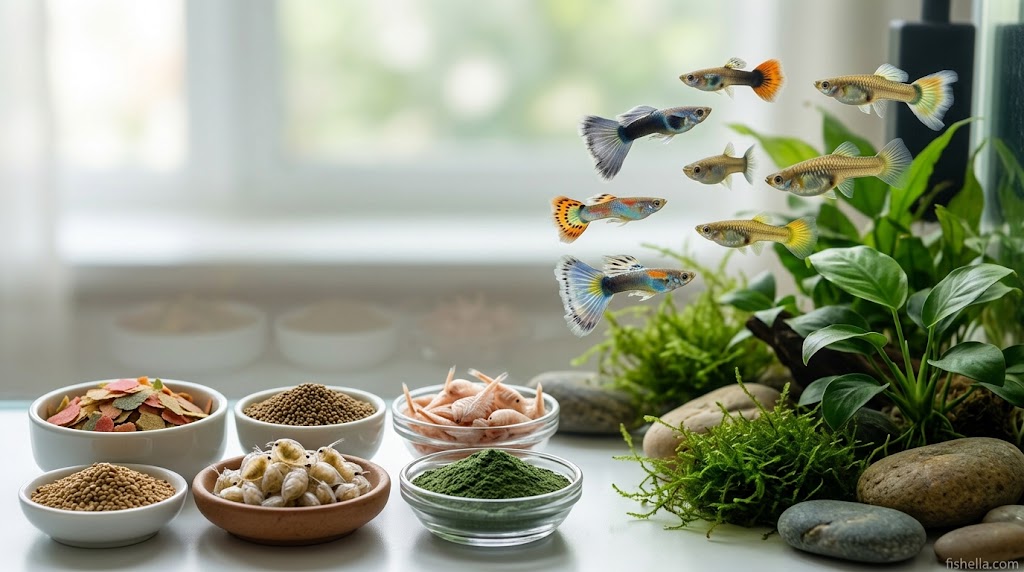
For most adult guppies, feed one or two small meals daily. Offer only what they can finish within about one minute, then remove uneaten food. Growing fry need smaller, more frequent meals to support healthy development.
The right diet depends on your guppies’ age, size, and condition. This guide explains which foods to choose, how much to feed, and how to avoid common feeding mistakes.
What Do Guppies Eat in the Wild?
Guppies are omnivores, meaning they eat both animal and plant-based foods. Their natural diet includes small insects, aquatic invertebrates, algae, and organic material.
According to FishBase’s guppy species information, wild guppies feed on small aquatic animals and other food sources found in their habitats.
Your aquarium diet should reflect this variety. A complete commercial food provides a reliable nutritional base, while suitable frozen, live, and plant-based foods add variety.
What Is the Best Food for Guppies?
The best food for guppies should provide balanced nutrition, suit their small mouths, and support healthy daily growth. Choose a complete staple food first, then use supplementary foods to add variety.
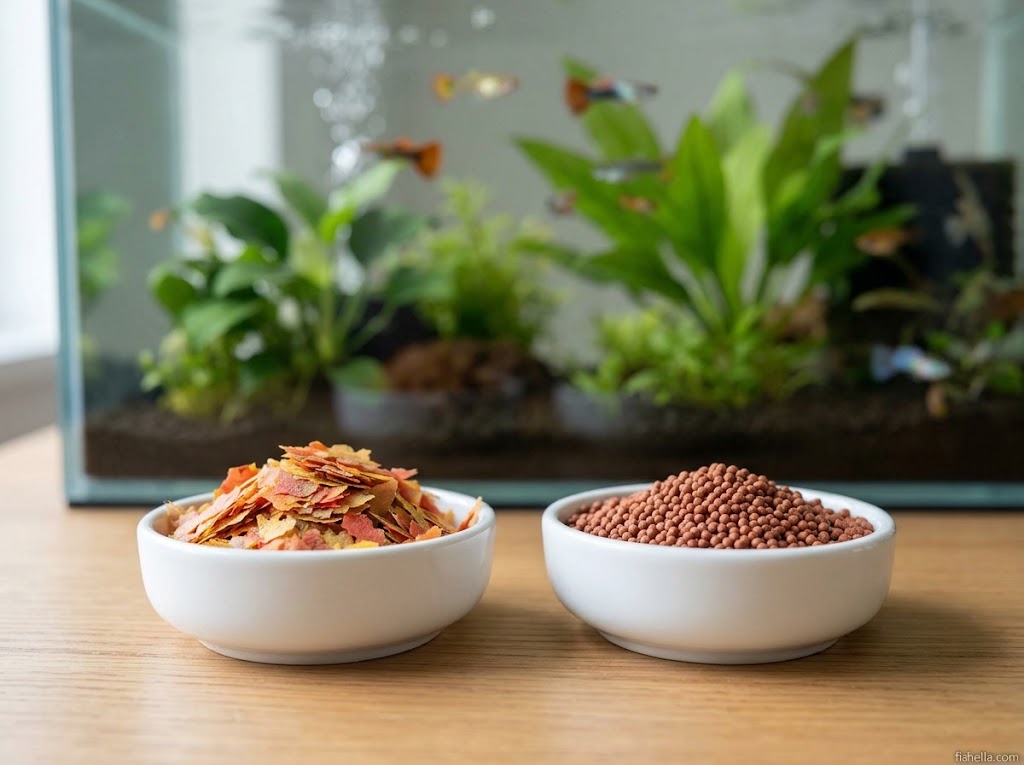
1. High-Quality Tropical Fish Flakes
Flakes are one of the easiest everyday foods for adult guppies. They float initially and soften as they absorb water.
Choose a nutritionally complete formula made for tropical fish or small omnivores. Look for a clear ingredient list and appropriate levels of protein, fat, vitamins, and minerals.
Best for: Everyday feeding, beginner fish keepers, and community aquariums.
Crush large flakes between your fingers before feeding. Smaller pieces are easier for guppies to eat and help reduce leftover food.
2. Micro Pellets
Micro pellets are another excellent staple option. Their small size makes them suitable for adult guppies and many juvenile fish.
Choose a pellet that fits comfortably in your fish’s mouth. Slowly sinking pellets allow guppies to feed at different levels of the aquarium.
Best for: Convenient portion control and everyday feeding.
Pellets are not automatically better than flakes. The nutritional quality of the formula matters more than its shape.
3. Spirulina-Based Fish Food
Spirulina is an algae-derived ingredient found in many fish foods. Spirulina-containing flakes or pellets can add plant-based nutrients to your guppies’ diet.
These foods are useful as part of a varied feeding plan. However, spirulina alone does not guarantee a complete diet.
Best for: Adding plant-based ingredients and dietary variety.
You can alternate a spirulina-containing food with a complete tropical fish staple. Check the label to make sure the product meets your fish’s nutritional needs.
4. Frozen Brine Shrimp
Frozen brine shrimp provide animal-based protein and variety. Most adult guppies can eat appropriately sized pieces.
Thaw a small portion according to the manufacturer’s instructions. Feed only what your fish can consume promptly.
Best for: Occasional variety and feeding active adult guppies.
Brine shrimp should supplement a complete staple food rather than replace it. Newly hatched baby brine shrimp are also useful for appropriately sized fry.
5. Frozen Daphnia
Daphnia are tiny aquatic crustaceans that make useful supplementary food. Their small size suits many guppies, including some juveniles.
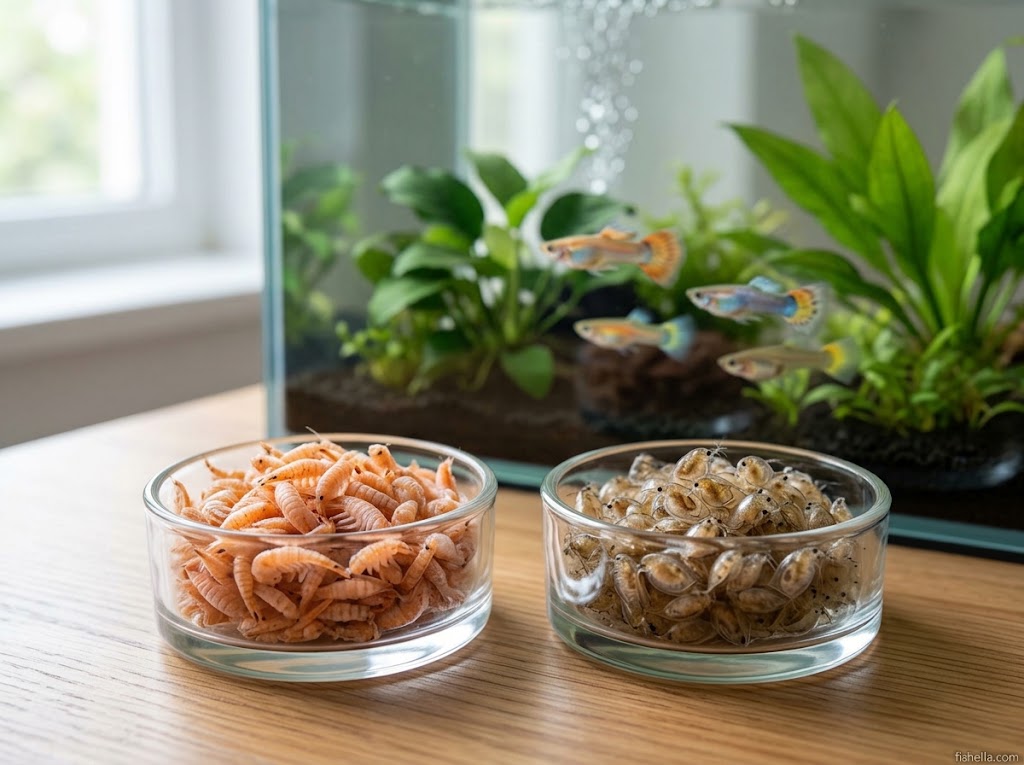
Use frozen daphnia as part of a varied diet. They should not be treated as a cure for constipation or bloating.
Best for: Adding variety with small aquatic prey.
Thaw the portion before feeding and remove leftovers. If a guppy develops persistent swelling or stops eating, investigate the underlying problem instead of relying on a particular food.
6. Bloodworms
Bloodworms are the larvae of non-biting midges. Frozen bloodworms can provide dietary variety for adult guppies that can swallow them safely.
Offer small portions occasionally rather than making bloodworms the main food. Large pieces may be difficult for small guppies to eat.
Best for: Occasional treats and variety.
Bloodworms are not essential for healthy guppies. A complete staple food remains more important than frequent treats.
7. Live Foods
Live foods can encourage natural hunting behavior and provide variety. Suitable choices include cultured daphnia, baby brine shrimp, and microworms for appropriately sized fish.
Use reputable suppliers or carefully managed home cultures. Unverified live foods may introduce parasites, pathogens, or unwanted organisms into your aquarium.
Best for: Fry, growing juveniles, and adult guppies that benefit from additional variety.
Live food is optional. You can maintain healthy guppies without using it if you provide a suitable complete diet.
Can Guppies Eat Vegetables?
Yes. Guppies can eat some soft, prepared vegetables in small amounts. However, vegetables should supplement rather than replace a nutritionally complete fish food.
Suitable options include:
- Blanched zucchini: Cut a small, soft piece into manageable portions.
- Blanched spinach: Offer a tiny piece without seasonings or oil.
- Spirulina-containing fish food: A convenient way to add plant-based ingredients.
Wash fresh vegetables thoroughly and remove any uneaten pieces promptly. Do not add salt, butter, sauces, or seasoning.
Commercial fish foods containing suitable plant ingredients are often easier to portion and store than homemade vegetable mixtures.
What Is the Best Food for Guppy Fry?
Guppy fry need small food particles that fit their mouths. Their rapid growth also makes frequent, carefully portioned meals useful.
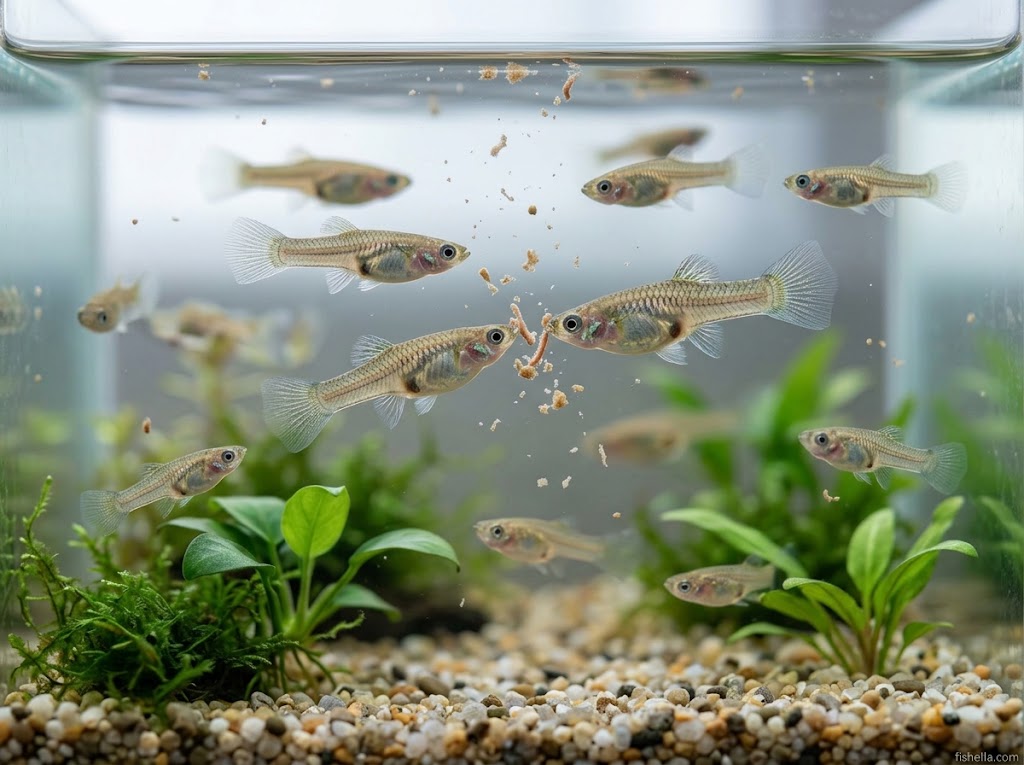
Good options include:
- Commercial fry food formulated for small livebearers.
- Finely crushed, complete tropical fish flakes.
- Baby brine shrimp of an appropriate size.
- Microworms from a clean, reliable culture.
Feed fry several small meals throughout the day. Start with tiny portions and adjust them according to how quickly the fry eat.
Avoid dumping large amounts of food into a nursery tank. Uneaten food can break down quickly and damage water quality.
For more advice on feeding, shelter, and growth, read our baby guppy care guide.
How Often Should You Feed Guppies?
Most adult guppies do well with one or two small meals per day. Fry and growing juveniles generally need more frequent feedings. Choosing the best food for guppies is only part of proper feeding; portion size and a consistent schedule matter too.
Use this table as a practical starting point.
| Guppy age | Feeding frequency | Suitable food |
|---|---|---|
| Adult guppies | 1–2 times daily | Complete flakes or micro pellets |
| Growing juveniles | 2–3 small meals daily | Small flakes, micro pellets, suitable frozen or live foods |
| Young fry | 3–5 small meals daily | Fine fry food and appropriately sized live foods |
These are starting points, not strict rules. Adjust feeding frequency and portions to your fish, food type, and tank conditions.
How Much Food Should You Give Guppies?
Start with a very small pinch of flakes or a few appropriately sized micro pellets. Watch your fish eat and adjust the portion for your group.
Aim for food to disappear within about one minute. Remove any leftovers that remain.
Avoid adding more food just because your guppies swim toward you. They may beg for food even when they have eaten enough.
For a more detailed routine, follow our guppy fish care guide.
Can Food Improve Guppy Color?
A balanced diet supports normal growth, body condition, and natural coloration. Some complete fish foods also contain carotenoids, such as astaxanthin, that can help support color development.
However, no food can guarantee brighter colors. Genetics, age, stress, and water quality also affect how your guppies look.
Choose a reputable complete food with suitable ingredients instead of relying on color-enhancing treats alone. Keep the aquarium clean and stable to help your fish thrive.
If you are choosing guppies for their appearance, our guide to different guppy types and varieties explains common differences in their colors and patterns.
What Foods Should You Avoid Feeding Guppies?
Some foods offer little nutritional value or can create problems when prepared or stored incorrectly.
Avoid these common mistakes:
- Bread and crackers: These are not suitable staple foods for guppies.
- Seasoned human food: Salt, oil, sauces, and spices are unnecessary.
- Large food pieces: Pieces that are too big can be difficult to swallow.
- Spoiled or expired food: Discard food that smells unusual, shows mold, or has been stored improperly.
- Excessive treats: Frozen and live foods should not displace a balanced staple diet.
- Unverified live food: Poorly sourced cultures can introduce unwanted organisms.
- Excessive feeding: Uneaten food breaks down and can worsen aquarium water quality.
Do not rely on homemade mixtures as your only food unless they have been carefully formulated to meet guppy nutritional needs. Improperly prepared mixtures may lack essential nutrients and spoil quickly.
How to Keep Guppy Food Fresh
Fish food can lose nutritional quality when exposed to moisture, heat, air, and light.
Follow these storage tips:
- Buy a container that you can use while the food remains fresh.
- Keep the lid tightly closed after each feeding.
- Store food in a cool, dry place away from direct sunlight.
- Use frozen food according to the package instructions.
- Discard food that has spoiled or become contaminated.
Avoid putting wet fingers or a wet spoon into a dry-food container. Moisture can damage the remaining food.
How Overfeeding Affects Guppies
Overfeeding is a common aquarium mistake. Excess food can decompose and increase the amount of waste in the water.
Watch for these warning signs:
- Uneaten food collecting on the bottom.
- Cloudy water or an unusual increase in debris.
- Rising ammonia or nitrite readings.
- Fish becoming less active or showing changes in appetite.
If you notice these problems, remove leftover food and test the water. Ammonia and nitrite should remain at zero in an established aquarium.
A properly maintained filter helps process fish waste. Learn how to choose suitable equipment in our guide to the best filter for guppies.
Do not assume every swollen belly or loss of appetite comes from overfeeding. Persistent symptoms may indicate illness, pregnancy, or another problem.
Frequently Asked Questions
Can guppies eat betta fish food?
Guppies can eat some betta foods occasionally if the pieces are small enough. However, choose a complete food suitable for guppies or small omnivorous tropical fish as their main diet.
Can guppies eat fish flakes every day?
Yes. A complete tropical fish flake food can serve as a daily staple. Adding suitable supplementary foods provides variety, but you do not need to offer a different food at every meal.
Are pellets or flakes better for guppies?
Neither is always better. Both can work well if they provide complete nutrition and fit your fish’s mouths. Choose based on ingredient quality, particle size, freshness, and how easily you can control portions.
Can guppies eat frozen food every day?
Frozen food can be part of a varied diet, but it should not replace a complete staple unless it is specifically formulated to meet all nutritional needs. Use frozen foods according to their purpose and feeding instructions.
Can guppies eat vegetables every day?
Small amounts of suitable vegetables can add variety, but daily vegetable feeding is not necessary for every aquarium. A complete staple food should provide the nutritional foundation.
How long can guppies go without food?
A healthy adult guppy can often tolerate a short period without food, but the safe duration depends on its condition, age, and environment. Fry need more regular feeding. Arrange suitable care for longer absences instead of relying on prolonged fasting.
Why do my guppies keep begging for food?
Guppies may gather near the glass when they see you because they associate your presence with feeding. This behavior does not necessarily mean they are hungry. Follow a consistent schedule and avoid increasing portions just because they beg.
Final Thoughts
The best food for guppies is a complete, high-quality flake or micro pellet that suits their size. Supplement it with suitable frozen or live foods and occasional plant-based options.
Feed small portions, remove leftovers, and keep your aquarium water clean. These simple habits support healthy growth, natural color, and long-term well-being.
Pingback: Baby Guppy Care: Feeding, Tank Setup & Fry Growth