
This article contains affiliate links. As an Amazon Associate, Fishella earns from qualifying purchases.
The best aquarium air pump for small tank setups depends on your tank size, noise needs, and equipment. The Tetra Whisper 10 is a practical starting point for tanks up to 10 gallons. The NICREW Nano Silent is another compact option to consider. For power outages, a battery-operated aquarium air pump provides temporary backup aeration.
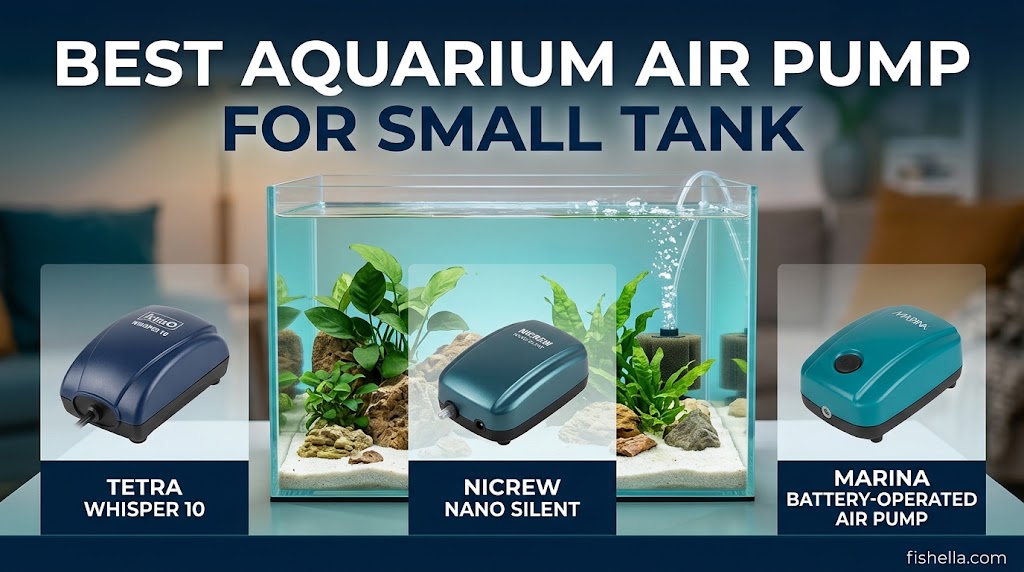
An air pump pushes air through tubing to an airstone, sponge filter, or air-powered decoration. The rising bubbles help move water and disturb the surface. However, you may not need a separate air pump if your filter already creates enough surface movement.
Below, we compare three options, explain how to choose the right size, and cover safe installation.
If you are building a small aquarium, read our guide to the best filter for a 5 gallon betta tank.
Best Aquarium Air Pump for Small Tank: Quick Comparison
| Product | Best use | Key details | Main limitation |
|---|---|---|---|
| Tetra Whisper 10 | Best overall starting point | Rated for up to 10 gallons; manufacturer lists 0.5 L/min airflow | One small pump may not suit multiple air-driven devices |
| NICREW Nano Silent | Compact nano setups | Designed for small aquarium setups; confirm current model specifications | Verify airflow, included accessories, and outlet details |
| Marina battery-operated air pump | Emergency backup | Battery-powered aeration option | Runtime and performance depend on the exact model and batteries |
Prices and availability change. Check the current product listing for specifications, included accessories, and warranty details.
How We Evaluated These Aquarium Air Pumps
We did not physically test these products. Our recommendations are based on available manufacturer information and product descriptions. We prioritize:
- Tank compatibility: The manufacturer’s stated tank-size rating.
- Airflow: Published output, where available.
- Noise control: Features designed to reduce vibration and operating noise.
- Intended use: Airstones, sponge filters, or emergency aeration.
- Practical limitations: Outlet count, missing specifications, and battery runtime.
We do not treat marketing terms such as “silent” as a guarantee of noise-free operation.
1. Tetra Whisper 10: Best Overall for Small Tanks
Best for: A small aquarium that needs one air-driven accessory.
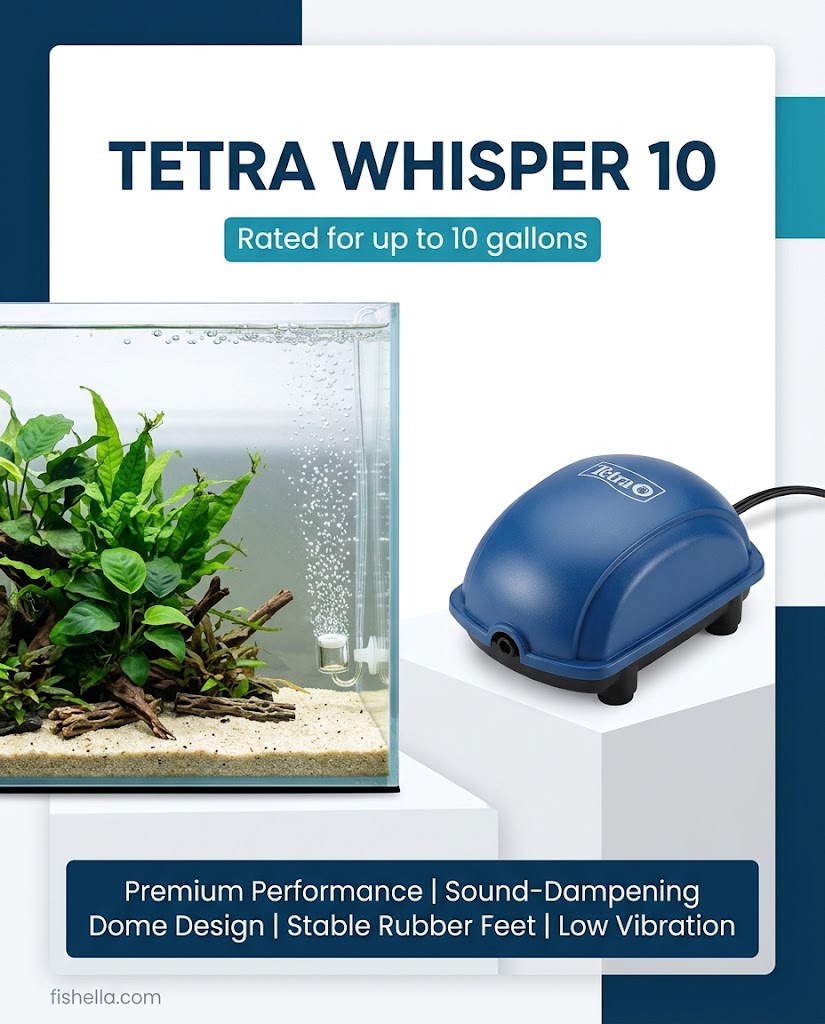
The Tetra Whisper 10 aquarium air pump is a sensible starting point for many 5- to 10-gallon tanks. According to the official Tetra Whisper product page, the Whisper 10 is rated for aquariums up to 10 gallons and produces a listed airflow of 0.5 liters per minute.
Tetra describes a dome-shaped housing, sound-dampening chambers, rubber feet, and a suspended motor. These features help reduce operating noise and vibration. They do not guarantee that every pump will be inaudible.
Pros
- Manufacturer rating covers tanks up to 10 gallons.
- Published airflow makes comparison easier.
- Noise-reduction features are documented.
- Suitable for a basic setup with one compatible air-driven device.
Cons
- May not provide enough airflow for every combination of accessories.
- Vibration can still occur on an unstable surface.
- Confirm the exact model and electrical certification before buying.
Verdict: Start here if you need a straightforward air pump for a small tank. Check the airflow requirements of your sponge filter or airstone before purchasing.
2. NICREW Nano Silent: Best Compact Option
Best for: Small desktop aquariums where a compact pump is important.
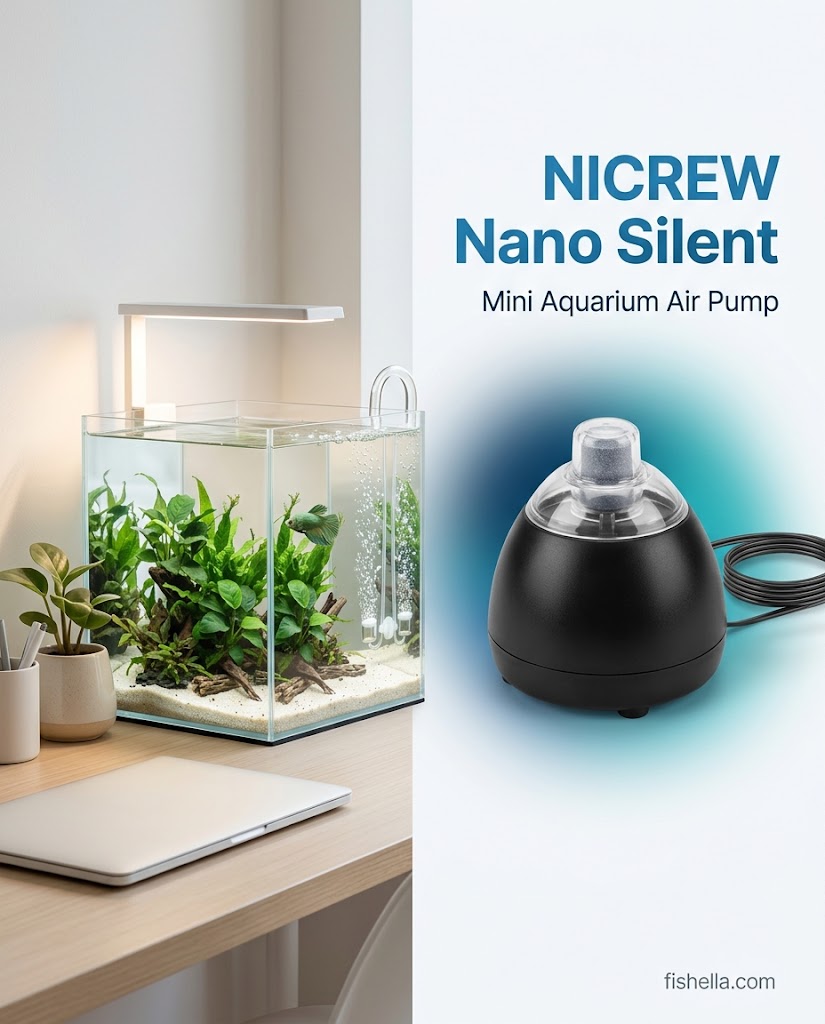
The NICREW Nano Silent aquarium air pump is worth considering if you want a small pump for a nano aquarium. NICREW lists a Nano Silent Mini Aquarium Air Pump in its support materials. However, specifications can differ between product versions and sellers. Check the exact listing before relying on a tank-size rating or airflow figure.
Confirm whether the package includes airline tubing, an airstone, and any required accessories. Also check the outlet configuration and whether the airflow can be adjusted.
Pros
- Compact format for small setups.
- Worth comparing with conventional diaphragm pumps.
- Potentially convenient for a desk or shelf aquarium.
Cons
- Exact specifications must be verified for the model being sold.
- The word “silent” does not guarantee silent operation.
- Included accessories can vary by listing.
Verdict: Consider this option when compact size matters. Choose it only after confirming the model’s airflow and compatibility with your equipment.
3. Marina Battery-Operated Air Pump: Best for Power Outages
Best for: Temporary aeration when normal electricity is unavailable.
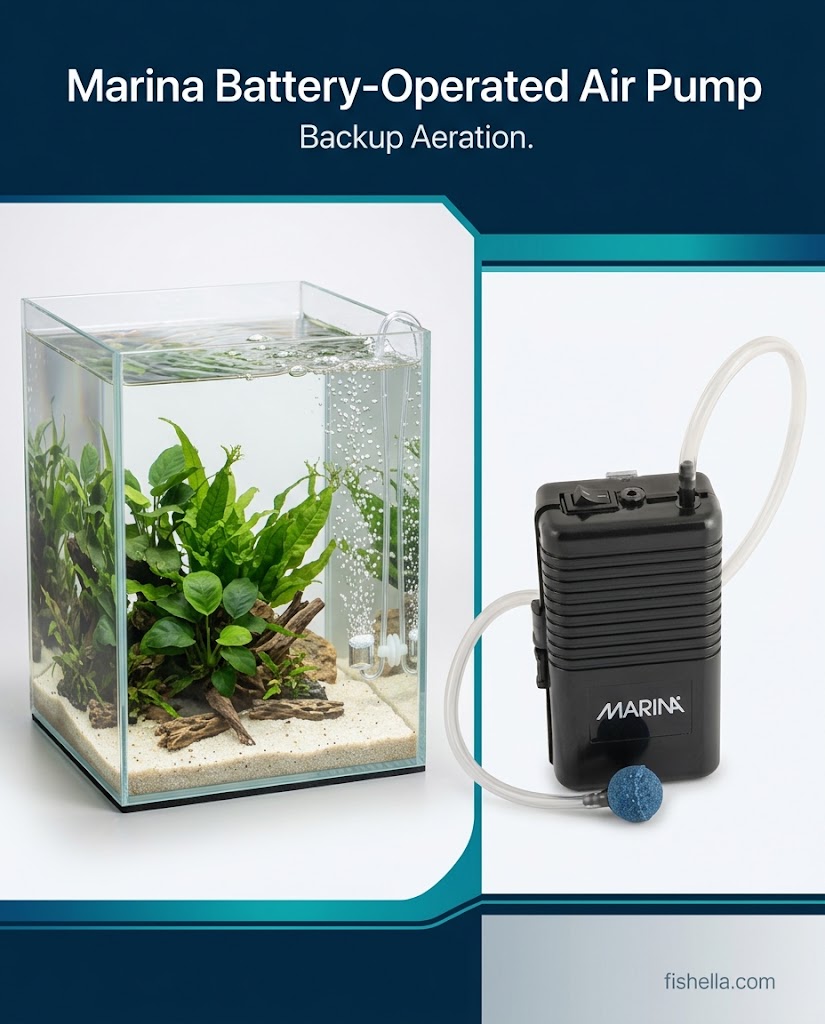
A Marina battery-operated aquarium air pump may be useful during a power outage. When the main filter stops, water movement and gas exchange can decrease. A battery-powered pump can help maintain surface movement or run a compatible air-driven device, depending on its output.
Before buying, confirm the exact model’s battery requirements, expected runtime, airflow, and included accessories. Do not assume that every battery pump supports continuous operation for the same length of time.
Keep fresh batteries available and test the unit before an emergency. A backup pump does not replace a plan for filtration, temperature control, or extended outages.
Pros
- Provides an alternative source of aeration during outages.
- Useful to keep with emergency aquarium supplies.
- Can support a compatible airstone or other air-driven device.
Cons
- Runtime depends on the model, batteries, and operating conditions.
- Output may be lower than your main pump.
- It does not restore normal filtration or heating.
Verdict: Choose a battery-powered model as an emergency backup, not automatically as your everyday air pump.
Do You Need an Air Pump in a Small Aquarium?
Not always. An air pump is useful when you need to operate an airstone, sponge filter, or other air-driven accessory. It can also improve surface movement when your existing setup does not provide enough.
A separate pump is not automatically necessary just because you own a small aquarium. A filter that already creates adequate surface movement may meet your aeration needs.
Remember that bubbles are not the only factor affecting oxygen exchange. Surface movement, temperature, stocking, and the aquarium’s overall condition also matter. Before adding an air pump, make sure you can monitor your aquarium’s water quality. Our API Master Test Kit vs. Test Strips comparison explains the differences between these two common testing options.
What About Betta Fish?
Bettas can benefit from a sponge filter, but they generally do better with gentle flow than with a powerful current.
Choose a suitable small pump and adjust the airflow if the bubbles create excessive movement. Watch your betta’s behavior and make sure it can swim and rest comfortably. If you are choosing a complete aquarium rather than buying equipment separately, see our best 5-gallon betta fish tank kit guide for small-tank options.
For filtration advice, see our guide to the best filter for a 5 gallon betta tank.
How to Choose an Air Pump for a Small Tank
1. Match the Pump to Your Equipment
A pump’s advertised tank-size rating is a starting point, not a guarantee that it will run every accessory effectively.
Check the airflow requirements of your sponge filter, airstone, or decoration. Water depth and resistance can affect the air delivered to the device.
For a simple setup, one appropriately sized outlet may be enough. Multiple devices may require additional airflow or a pump designed for multiple connections.
2. Consider Noise and Vibration
Look for documented noise-reduction features and check reviews for reports of buzzing or vibration.
Place the pump on a stable, dry surface. A suitable vibration-dampening pad can help reduce noise transferred to furniture.
Keep the pump away from water splashes and follow the manufacturer’s placement instructions. Temperature is another important part of a healthy aquarium setup. See our guide to the best digital aquarium thermometer to compare options for monitoring water temperature.
3. Check Outlet Count and Airflow Control
One outlet may suit a single sponge filter or airstone. If you want to run multiple accessories, check the pump’s output and whether its design supports splitting the airflow.
Splitting one outlet does not create more airflow. Each connected device receives only part of the available output, and resistance can differ between branches.
4. Use an Airline Check Valve When Needed
A check valve helps prevent water from siphoning backward through the airline if the pump stops.
If the pump sits below the aquarium’s waterline, use a suitable check valve and install it in the correct direction. Alternatively, place the pump above the water level when the manufacturer’s instructions allow it.
See Aquarium Co-Op’s guide to aquarium check valves for installation guidance.
How to Set Up a Small Aquarium Air Pump
- Place the pump on a stable, dry surface and follow its placement instructions.
- Connect compatible airline tubing to the pump.
- Install a check valve in the correct direction if needed.
- Connect the tubing to the airstone or sponge filter.
- Position the device securely inside the aquarium.
- Turn on the pump and check the airflow.
- Reduce the flow if it creates excessive current for your fish.
- Check the tubing and connections for leaks or loose fittings.
Keep electrical connections dry and arrange a drip loop in the power cord where appropriate. Never handle electrical equipment with wet hands. Good water quality also depends on proper conditioning during water changes. Compare Seachem Prime vs. API Stress Coat to learn about the differences between these water conditioners.
For more help with your aquarium setup, read our Betta fish care guide and best aquarium starter kit guide. Regular substrate cleaning helps keep your aquarium tidy. Our guide to the best gravel vacuum for a small aquarium compares tools for removing debris during maintenance.
Frequently Asked Questions
What size air pump do I need for a 5-gallon tank?
A pump rated for up to 10 gallons, such as the Tetra Whisper 10, is a reasonable starting point for a simple setup. Check the airflow requirements of the device you plan to run.
Are aquarium air pumps loud?
Some produce a noticeable hum or vibration. Features such as rubber feet and sound-dampening housing can help, but no model should be assumed completely silent.
Is an air pump good for betta fish?
It can be useful when paired with a sponge filter or airstone. Keep the current gentle so your betta can swim and rest comfortably.
Can an air pump replace an aquarium filter?
An air pump alone does not provide complete mechanical and biological filtration. However, an air pump can drive a sponge filter, which provides filtration when properly established and maintained.
Do I need a check valve for my air pump?
A check valve is recommended when the pump is below the aquarium’s waterline. It helps prevent water from flowing backward through the airline when the pump stops.
Can I use a battery-operated air pump every day?
That depends on the exact model’s specifications and intended use. Check its rated runtime, battery requirements, and continuous-operation guidance before using it as your primary pump.
Final Verdict: Which Small Aquarium Air Pump Should You Buy?
For most simple small-tank setups, the Tetra Whisper 10 is a practical first option because its tank-size rating and published airflow are available from the manufacturer.
The NICREW Nano Silent is worth comparing if compact size is your priority, but verify the exact model specifications. A battery-operated Marina pump is worth considering when you need backup aeration during a power outage.
The best aquarium air pump for small tank setups is the one that supplies enough airflow for your equipment without creating excessive current. Check the specifications, install it safely, and monitor your fish after setup.
Related Aquarium Guides
- Betta food: See our best freeze-dried bloodworms for betta fish guide for additional feeding information.
- Water testing: Compare the API Master Test Kit vs. Test Strips to choose a water-testing method.
- Water conditioners: Read our Seachem Prime vs. API Stress Coat comparison before choosing a conditioner.
- Betta tank kits: Explore the best 5-gallon betta fish tank kit for complete aquarium options.
- Temperature monitoring: Compare the best digital aquarium thermometers for checking water temperature.
- Substrate: Learn about sand vs. gravel for a betta fish tank.
- Aquarium cleaning: Find suitable equipment in our best gravel vacuum for a small aquarium guide.
- Compact aquarium reviews: Read our Fluval Spec V review and Fluval Flex 9 Gallon review.
- Betta tank options: Compare the options in our best 3-gallon fish tank for betta guide, keeping the fish’s space needs in mind.
- Resting accessories: Explore the best betta hammock and leaf perch.
Affiliate disclosure: Fishella may earn a commission from qualifying purchases made through the affiliate links in this article, at no additional cost to you.
Pingback: Best Aquarium Air Pump for Large Tank: 3 Picks (2026)