This article contains affiliate links. As an Amazon Associate, Fishella earns from qualifying purchases.
The best 3 gallon fish tank for a betta should have a secure lid, gentle filtration, and reliable heating. The Fluval Betta Premium Kit is our top pick among the small tanks reviewed here because it includes a heater and a gentle filtration system.
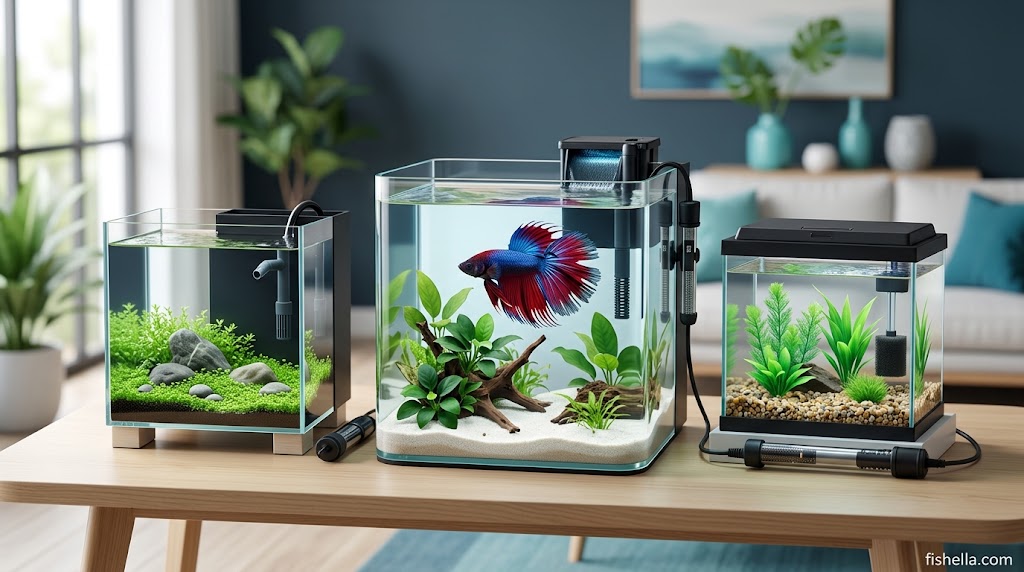
The best 3 gallon fish tank for betta should include gentle filtration, a secure lid, and reliable heating. Although a 5-gallon tank is generally a better choice, smaller kits may suit keepers with limited space. If you have room, consider our best 5-gallon betta fish tank kits for a more practical long-term setup.
Below, we compare three small aquarium kits, explain their advantages and drawbacks, and share essential care tips.
Best 3 Gallon Fish Tank for Betta: Quick Picks
We compared three options to help you find the best 3 gallon fish tank for betta care, including the Fluval Betta Premium Kit, Fluval Spec III, and Aqueon MiniBow.
| Aquarium kit | Capacity | Heater included? | Best for |
|---|---|---|---|
| Fluval Betta Premium Kit | 2.6 gallons | Yes, 10W preset heater | Beginners seeking an all-in-one kit |
| Fluval Spec III | 2.6 gallons | Not listed as included | Keepers who prefer a modern design |
| Aqueon LED MiniBow 2.5-Gallon Kit | 2.5 gallons | Verify current package | Budget-conscious shoppers |
Important: None of these kits holds exactly 3 gallons. Their actual capacities range from 2.5 to 2.6 gallons.
Prices and package contents can change. Check the current product listing before ordering.
How We Chose These Betta Tanks
When choosing the best 3 gallon fish tank for betta fish, we considered heating, filtration, lid security, construction, and overall value.
We considered five important features:
- Heating: Does the kit include a heater, or must you purchase one separately?
- Filtration: Does the system provide gentle water movement suitable for a betta?
- Lid: Does the aquarium have a secure cover to help prevent jumping?
- Construction: Does the tank use glass or another aquarium-safe material?
- Value: Does the kit provide useful equipment for its price?
We also considered how easy each setup would be for a beginner to maintain.
Betta Tank Reviews
1. Fluval Betta Premium Kit: Best Complete Small Setup
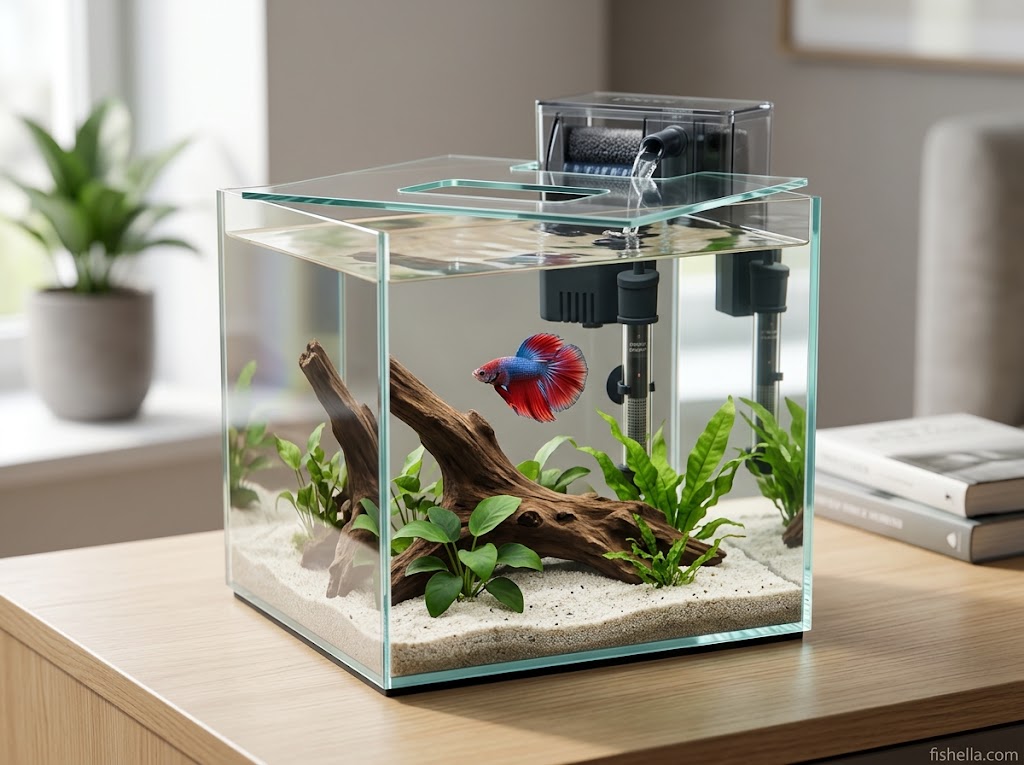
The Fluval Betta Premium Kit is a 2.6-gallon glass aquarium designed for bettas. It is our top pick for shoppers who want several essential components in one package.
According to Fluval’s official product page, the kit includes a preset 10-watt heater, filtration components, and an aquarium cover. Its heater is designed to maintain approximately 78°F.
The filtration system uses a diffusion chamber to help disperse water flow. This feature is useful because bettas generally do better with gentle currents.
Pros
- Includes a preset heater.
- Provides filtration designed for gentle flow.
- Includes a cover to help prevent jumping.
- Offers several essential components in one package.
Cons
- Holds only 2.6 gallons.
- The preset heater does not offer adjustable temperature settings.
- May cost more than basic aquarium kits.
- Provides less swimming space than a 5-gallon aquarium.
Best for: Buyers who want a compact, ready-to-assemble kit and understand its space limitations.
Our verdict: The included heater and filtration make this kit convenient. However, its small capacity makes it less forgiving than a larger aquarium.
2. Fluval Spec III: Best Stylish Small Aquarium
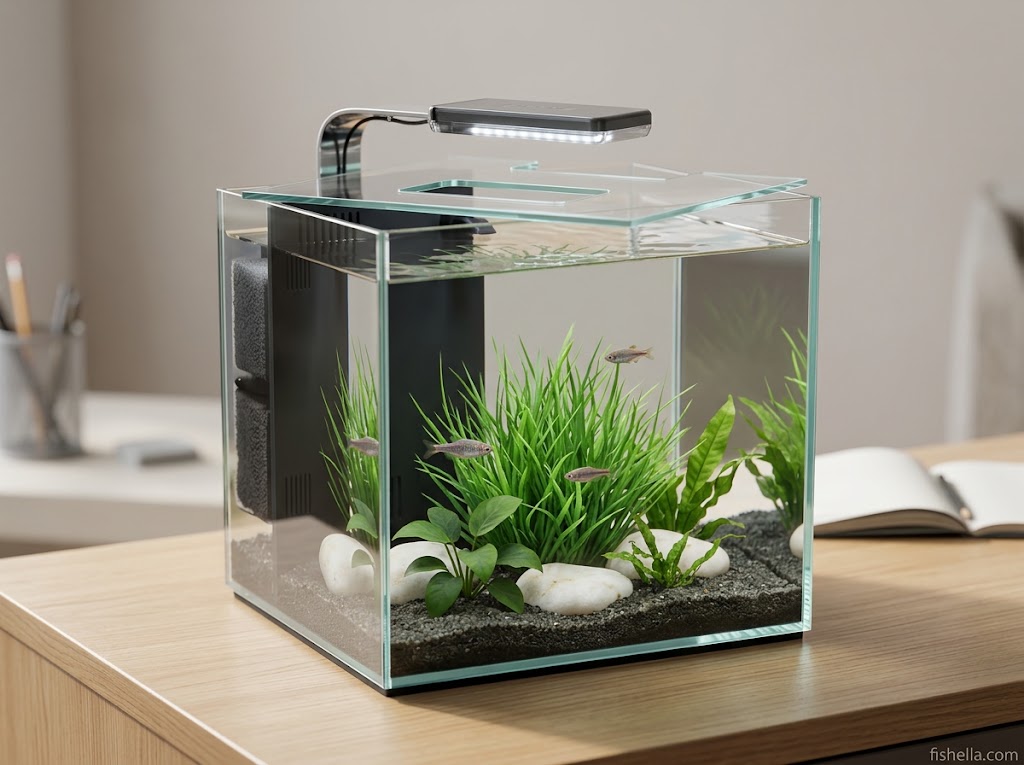
The Fluval Spec III is a 2.6-gallon glass aquarium with a modern design and a concealed filtration compartment.
Its compact appearance may appeal to keepers who want an aquarium that fits neatly on a desk or counter. The filtration system sits behind a separate compartment, helping keep equipment out of the main viewing area.
A heater is not listed as an included component in the product information reviewed for this article. Check the current package details before buying.
You will also need to make sure the filter produces gentle flow. If necessary, use an aquarium-safe method to reduce excessive current without blocking the filter.
Pros
- Modern, minimalist appearance.
- Concealed filtration compartment.
- Glass construction.
- Compact footprint.
Cons
- Heater may need to be purchased separately.
- Small water capacity.
- Filter flow may need adjustment for a betta.
- Requires careful monitoring of water quality.
Best for: Aquarium keepers who value appearance and are comfortable purchasing compatible equipment separately.
Our verdict: The Spec III looks attractive, but its small capacity remains a limitation. Compare it with our Fluval Spec V review if you want a larger aquarium with a similar design.
3. Aqueon LED MiniBow 2.5-Gallon Kit: Budget Pick
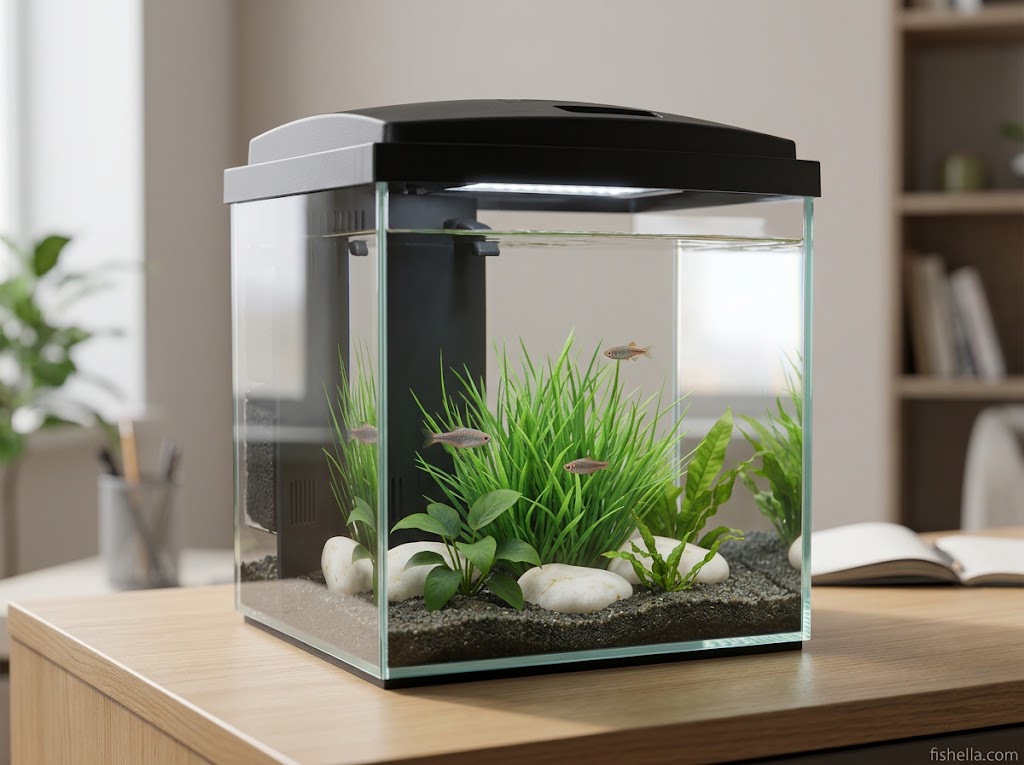
The Aqueon LED MiniBow is another compact aquarium option for shoppers with limited space.
Its small footprint can make it appealing for a simple desktop setup. However, you should verify the current package contents before buying. Do not assume that the kit includes a heater or that its filtration will provide suitable flow for your betta.
Compare the total cost of the aquarium, heater, filtration, and maintenance supplies before deciding whether it offers good value.
Pros
- Compact design.
- May suit shoppers with a limited budget.
- Suitable for small spaces.
Cons
- Only 2.5 gallons of capacity.
- Heater inclusion needs verification.
- Requires careful attention to water quality.
- Offers less room for swimming and enrichment.
Best for: Budget-conscious shoppers who verify the equipment and understand the limitations of a small aquarium.
Our verdict: Consider the complete setup cost rather than the aquarium’s initial price alone. If your budget allows, a 5-gallon aquarium is the better long-term choice.
Is a 3-Gallon Tank Enough for a Betta?
Before buying the best 3 gallon fish tank for betta, consider the available swimming space and the extra maintenance that a smaller aquarium requires. A betta may survive in a properly maintained 3-gallon aquarium, but that does not make it the best choice.
Small tanks have less water to dilute waste. Their temperature and water quality can also change quickly. These changes leave less room for mistakes.
For most beginners, a 5-gallon aquarium is a better starting point. It provides more swimming space and usually makes routine maintenance easier.
A 5-gallon setup should include:
- A reliable heater that maintains a suitable temperature.
- A gentle filter that does not create excessive current.
- A secure lid.
- Hiding places and smooth decorations.
- Regular water testing and partial water changes.
Read our best betta fish tank guide for 2026 to compare larger setups.
What to Look for in a Small Betta Tank
1. A Reliable Heater
Bettas are tropical fish and need consistently warm water. Aim for approximately 78°F, while keeping the temperature within a suitable range of 76–80°F.
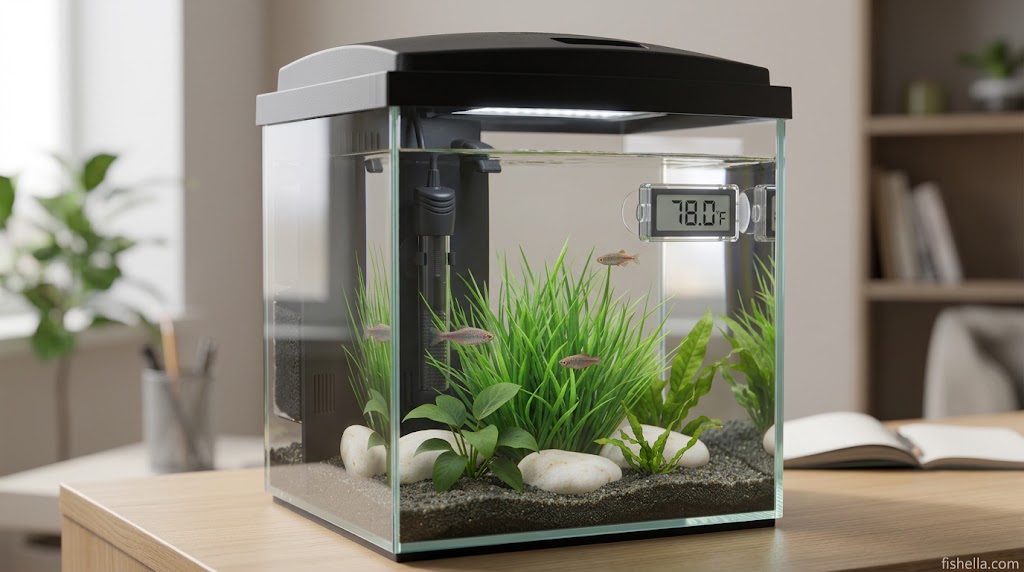
A small aquarium can lose heat quickly, especially in a cool room. Choose a heater designed for your tank size and follow its instructions.
An adjustable heater gives you more control than a preset model. Always use an aquarium thermometer to check the actual water temperature.
Compare suitable options in our guide to the best heater for a 5-gallon betta tank.
2. Gentle Filtration
A filter helps support beneficial bacteria that process fish waste. However, excessive water flow can make swimming difficult for bettas.
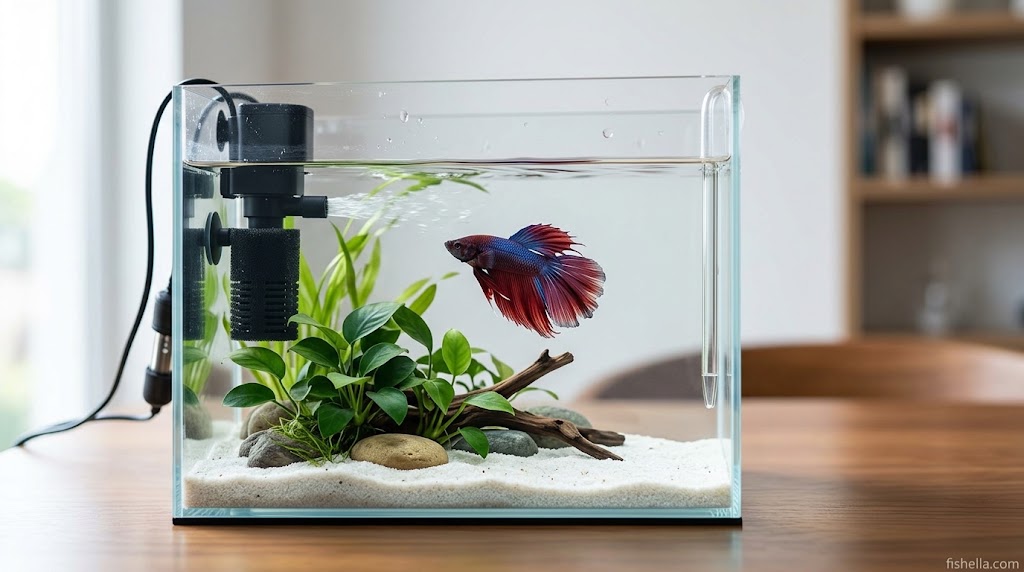
Look for a filter with adjustable output or a design that disperses the current. Check that the filter is appropriate for your aquarium’s actual water volume.
Our guide to the best filter for a 5-gallon betta tank explains which features to consider when choosing a filter.
3. A Secure Lid
Bettas can jump out of uncovered aquariums. A secure lid helps prevent accidental escapes.
Leave appropriate space for equipment and air exchange. Keep the water level and lid arrangement suitable for your aquarium.
4. Safe Substrate
Substrate provides a base for plants and can improve the aquarium’s appearance. Choose smooth sand or aquarium-safe gravel without sharp edges.
Avoid adding so much substrate that you lose valuable swimming space in a small tank.
Read our comparison of sand vs. gravel for betta fish tanks before choosing a substrate.
5. Plants and Hiding Places
Live plants provide cover and can help make an aquarium more engaging. Choose plants that suit your lighting and maintenance routine.
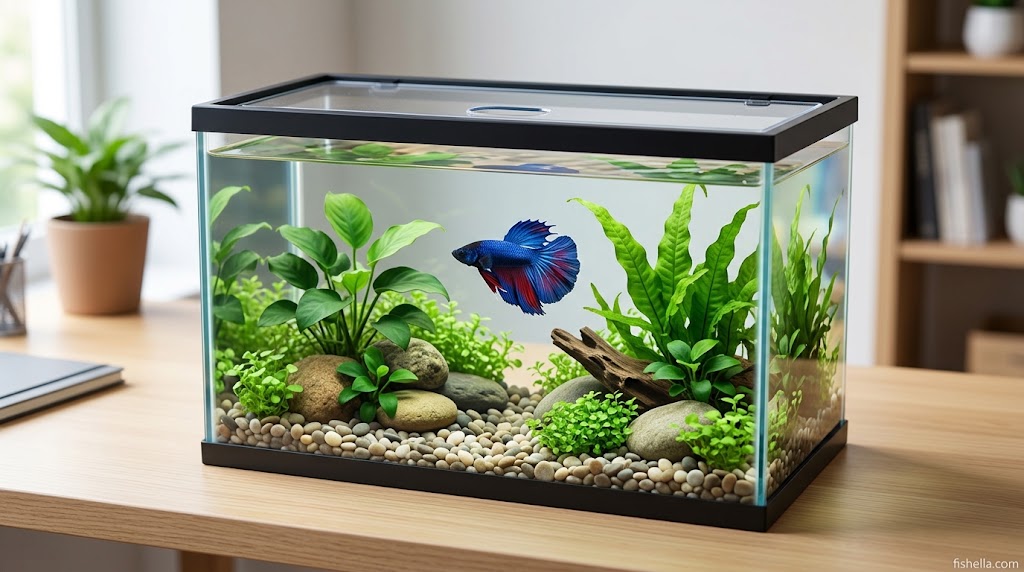
Leave enough open space for your betta to swim freely. Avoid sharp decorations that could damage its fins.
Explore our guide to the best live plants for betta tanks for beginner-friendly options.
How to Set Up and Maintain a Small Betta Tank
A small aquarium needs a careful setup because its water conditions can change quickly.
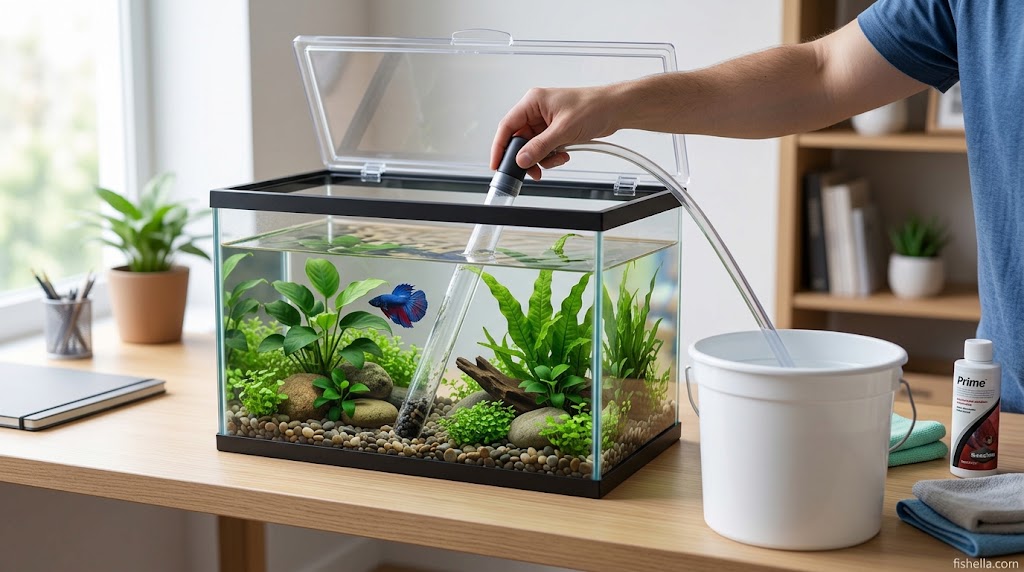
Step 1: Rinse the Aquarium and Decorations
Rinse the tank, substrate, and decorations with clean water before use. Never use household soap or cleaning chemicals inside the aquarium.
Place the tank on a level, sturdy surface that can support its filled weight.
Step 2: Add Treated Water
Fill the aquarium with water suitable for freshwater fish. Use an aquarium water conditioner to treat tap water according to its label.
Our guide to the best aquarium water conditioners can help you compare available options.
Step 3: Install the Heater and Filter
Follow the manufacturer’s instructions when installing both components. Make sure the filter runs properly and the heater is suitable for the tank’s water volume.
Use a reliable digital thermometer to check the temperature. See our recommendations for the best digital aquarium thermometer.
Step 4: Cycle the Aquarium Before Adding Fish
Complete the aquarium nitrogen cycle before introducing your betta. Beneficial bacteria need time to establish and process fish waste.
Use an aquarium test kit to check ammonia, nitrite, and nitrate. Ammonia and nitrite should remain at 0 ppm before you introduce your fish.
Our comparison of the API Master Test Kit vs. test strips explains the differences between these testing methods.
Step 5: Feed a Balanced Diet
Offer a quality betta-specific pellet as the main food. Feed small portions and remove uneaten food to limit waste.
You can occasionally offer suitable treats, such as freeze-dried bloodworms, as part of a varied diet. Follow safe preparation instructions and avoid overfeeding.
See our guides to the best betta pellets for color enhancement and best freeze-dried bloodworms for bettas.
Step 6: Perform Regular Maintenance
Check the temperature, filter operation, and fish behavior every day. Test the water regularly and perform partial water changes as needed.
Small aquariums may require more frequent maintenance than larger tanks. Never rely on a fixed weekly schedule alone if water tests show a problem.
Use an appropriately sized gravel vacuum for a small aquarium to remove waste from accessible areas of the substrate.
Common Mistakes to Avoid
Avoid these mistakes when keeping a betta in a small aquarium:
- Skipping the heater: Room temperature may not keep the water consistently warm.
- Ignoring the nitrogen cycle: An uncycled tank can expose fish to harmful ammonia and nitrite.
- Choosing a filter with strong flow: Excessive current can stress a betta.
- Overfeeding: Uneaten food increases waste and can harm water quality.
- Adding tank mates: A 2.5–3-gallon aquarium does not provide enough space for additional fish.
- Overdecorating: Too many decorations reduce swimming space.
- Ignoring unusual behavior: Persistent hiding, lethargy, or changes in appetite may indicate a problem. Frequent flaring can also be a sign that you should review the aquarium environment. Read our guide to betta fish flaring and how often is too much.
Frequently Asked Questions
Can a betta live in a 3-gallon tank?
A betta may live in a properly heated and filtered 3-gallon tank, but a larger aquarium is generally preferable. A 5-gallon tank offers more room and makes stable water conditions easier to maintain.
Do I need a heater for a 3-gallon betta tank?
Usually, yes. Bettas need consistently warm water. Choose a heater suitable for the tank size and monitor the water with a thermometer.
Can I keep other fish with a betta in a 3-gallon tank?
No. A 3-gallon aquarium is too small for additional fish. Keep the setup focused on your betta and provide suitable cover and swimming space.
Is a bowl better than a small aquarium?
No. A properly equipped aquarium with heating, filtration, and a secure lid is a better choice than an unheated, unfiltered bowl.
How often should I clean a 3-gallon betta tank?
Test the water regularly and perform partial water changes as needed. Small tanks can accumulate waste quickly, so you may need more frequent maintenance than you would with a larger aquarium.
Should I buy a 3-gallon or 5-gallon betta tank?
Choose a 5-gallon tank if you have enough space and budget. It offers more swimming room and is generally easier to maintain. A smaller tank requires closer attention to water quality and temperature.
Final Verdict: Which Small Betta Tank Should You Buy?
The Fluval Betta Premium Kit is our top pick among these three compact options because it includes a preset heater and a filtration system designed for gentle flow.
The Fluval Spec III is worth considering if you prefer a modern appearance and are prepared to buy any missing equipment. The Aqueon LED MiniBow may appeal to budget-conscious shoppers, provided its package contents meet their needs.
However, none of these options holds a full 3 gallons. Each has less water volume than a 5-gallon aquarium.
Our recommendation: Choose a properly equipped 5-gallon aquarium if you can. If you decide on a smaller tank, prioritize stable heating, gentle filtration, regular water testing, and careful maintenance. A suitable setup will help your betta stay healthier and give you a better aquarium-keeping experience.