
Disclosure: This article contains affiliate links. Fishella may earn a small commission if you purchase through our links, at no extra cost to you. As an Amazon Associate, Fishella earns from qualifying purchases.
Looking for the best aquarium driftwood for your freshwater tank? The right piece can turn an ordinary aquarium into a natural-looking aquascape. But not every type of wood suits every tank.
Mopani is a favorite for heavy centerpieces. Spiderwood creates detailed branching layouts, Malaysian driftwood offers a darker, rugged look, and manzanita is great for elegant, tree-style designs.

In this guide, we compare these four popular types, explain their pros and cons, and show you how to match the wood to your tank size, fish, and plants.
Key Takeaways
- Mopani: Best for a heavy centerpiece in a medium or large tank. Expect noticeable tannins.
- Spiderwood: Best for planted nano and small tanks. It often floats at first.
- Malaysian driftwood: Best for a dark, rugged, natural look. Tannins are moderate to high.
- Manzanita: Best for tree-style aquascapes. Smooth, elegant branches, usually lower tannins.
- Always buy wood sold for aquarium use, and prepare it before adding it to your tank.
Our Top Aquarium Driftwood Picks
Not sure which type to buy? This table compares the key differences. Actual results vary from piece to piece, so treat it as a general guide.
| Type | Sinks? | Tannins | Best Tank Size | Look |
|---|---|---|---|---|
| Mopani | Usually, after soaking | High | 20+ gallons | Two-tone, dense |
| Spiderwood | Often floats at first | Low to moderate | 5–40 gallons | Thin, twisting branches |
| Malaysian | Usually | Moderate to high | 20+ gallons | Dark, rugged |
| Manzanita | Often floats at first | Low | 10–55 gallons | Smooth, curved branches |
Quick recommendation: Choose mopani for a heavy centerpiece, spiderwood for a planted layout, Malaysian for a darker look, or manzanita for an artistic aquascape. Before choosing aquarium wood, learn about its preparation, tannins, and effects on aquarium water. See this aquarium driftwood guide from Aquarium Co-Op for additional information.
1. Mopani Driftwood – Best for a Heavy Aquarium Centerpiece
Mopani is known for its two-tone look. One side is often dark brown, while the other is a lighter tan. Its dense hardwood structure makes it a strong choice for a substantial centerpiece, and many pieces sink more readily than lightweight branching wood.
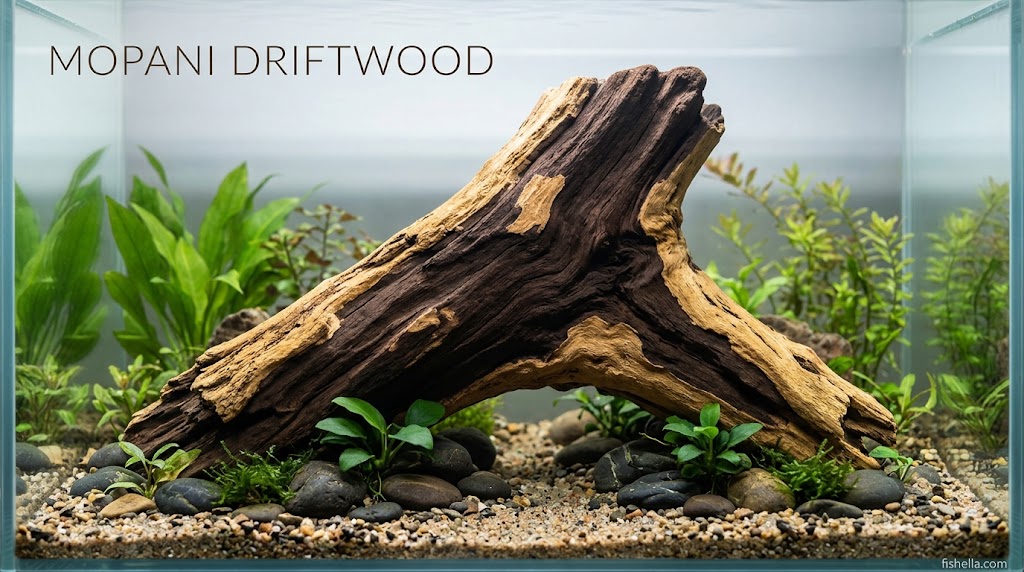
Why Choose Mopani Driftwood?
- Dense, durable hardwood.
- Attractive two-tone appearance.
- Pairs well with rocks and plants.
- Suits larger natural layouts.
- Sold in many sizes.
Pros and Cons
Pros:
- Heavy and long-lasting.
- Distinctive natural texture.
- Makes a bold centerpiece.
Cons:
- Can release a lot of tannins.
- Large pieces take up swimming space.
- Irregular shapes can be hard to position.
Best for: Medium and large freshwater aquariums (20 gallons and up).
What to check before buying: Look at the listed length and weight. Some sellers offer small 6-inch decorative pieces, while others sell branches over 18 inches long.
Keeper tip: Fresh mopani often tints the water light tea-colored for the first week or two. A long soak before it goes in the tank, plus a few water changes, keeps the color under control.
Buying recommendation: Choose mopani if you want dense wood with a contrasting finish, and don’t mind some tea-colored water at first.
2. Spiderwood – Best for Planted Aquascapes
Spiderwood has thin, twisting, root-like branches. You can arrange them into a miniature underwater forest, and they give you plenty of attachment points for plants like Java moss and Anubias.

Why Choose Spiderwood?
- Attractive branching structure.
- Great for nature-style aquascapes.
- Easy surfaces for attaching plants.
- Adds depth without a bulky look.
- Works well in small tanks.
Pros and Cons
Pros:
- Unique natural shapes.
- Excellent for planted tanks.
- Lower tannin release than many dense woods.
Cons:
- Lightweight pieces may float at first.
- Thin branches can snap in shipping.
- Delicate branches need careful placement.
Best for: Planted aquariums, nano tanks, and shrimp tanks.
What to check before buying: Look for a strong central base with several well-spaced branches, and read customer photos and reviews for damage reports.
Keeper tip: Spiderwood is light, so it usually floats at first. Soak it for a few days or tie it to a small rock until it waterlogs and stays down on its own.
Buying recommendation: Pick a piece with a balanced branching pattern that fits the footprint of your tank.
3. Malaysian Driftwood – Best for Dark Natural Layouts
Malaysian driftwood is a great option if you like dark, natural-looking decor. It typically has deep brown color, rugged surfaces, and irregular shapes. Many pieces are fairly dense, though weight and sinking behavior vary.
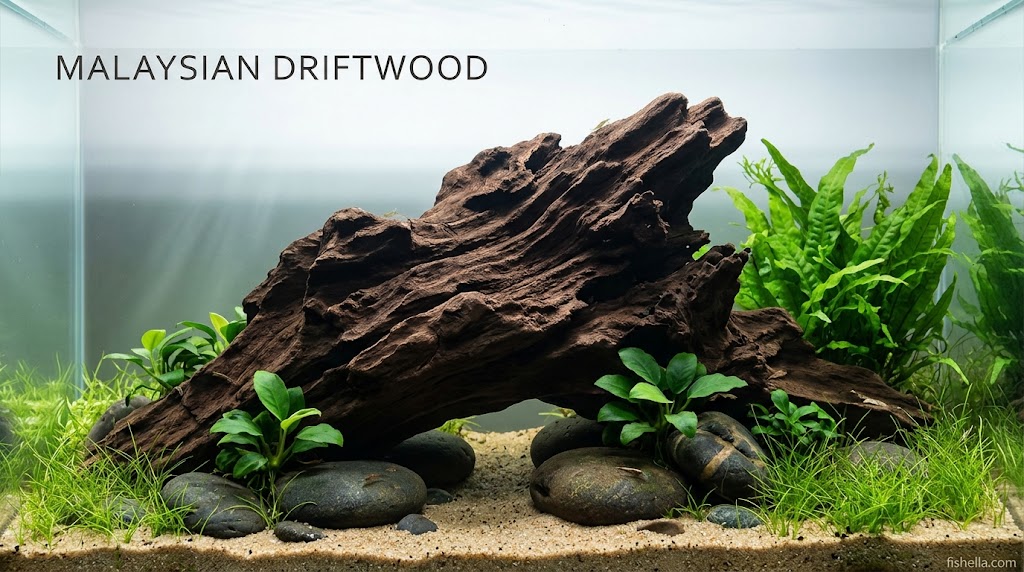
Why Choose Malaysian Driftwood?
- Dark, natural look.
- Rugged texture adds visual depth.
- Works well with rocks and sand.
- Good for larger centerpiece designs.
- Makes green plants stand out.
Pros and Cons
Pros:
- Rich dark color.
- Natural, rugged appearance.
- Many pieces are relatively heavy.
Cons:
- Can release tannins.
- Large pieces can overwhelm small tanks.
- Some pieces need soaking to stay submerged.
Best for: Freshwater tanks of 20 gallons or more with dark, natural layouts.
What to check before buying: Confirm the listing says the wood is aquarium-safe, and check whether it is sold as a single piece you can select or a random pick.
Keeper tip: Malaysian driftwood can leach quite a bit of color at first. Soak or boil it before use, and expect the water to clear up gradually over the first few weeks.
Buying recommendation: Choose Malaysian driftwood for a rugged centerpiece with a darker finish.
4. Manzanita Driftwood – Best for Tree-Style Aquascapes
Manzanita is popular for its smooth, curved branches that resemble small underwater trees. It works especially well when you want to combine wood, rocks, and plants in an open, artistic layout.
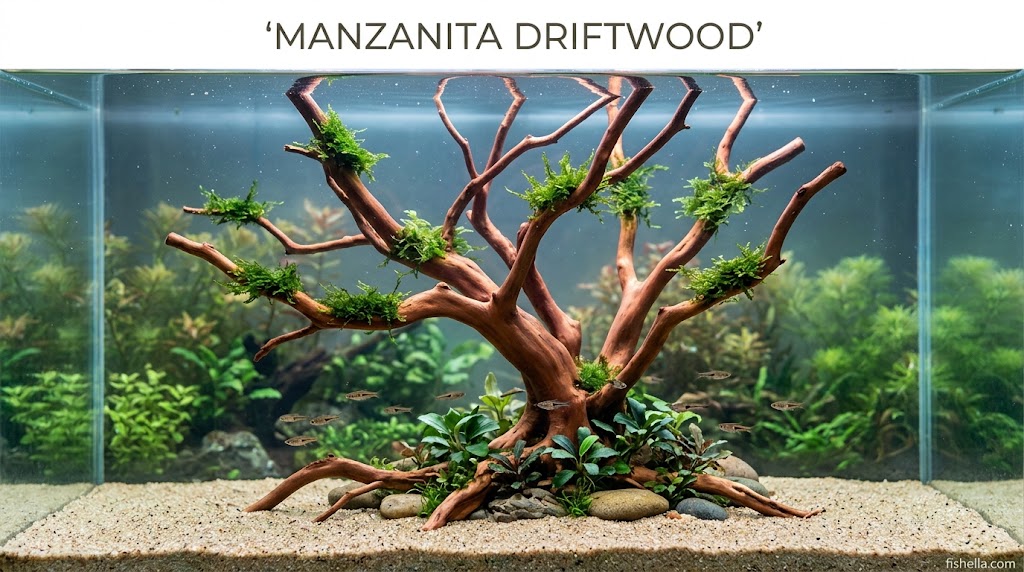
Why Choose Manzanita Driftwood?
- Elegant branching patterns.
- Smooth natural finish.
- Great for tree-inspired layouts.
- Surfaces for attaching plants.
- Creates an open, airy look.
Pros and Cons
Pros:
- Attractive natural shape.
- Great for creative aquascaping.
- Usually releases fewer tannins.
Cons:
- Often costs more.
- Dry pieces may float at first.
- Thin branches need careful handling.
Best for: Planted tanks and tree-style aquascapes from 10 to 55 gallons.
What to check before buying: Look at branch thickness. Very thin branches may not support the design you have in mind.
Keeper tip: Dry manzanita is buoyant, so plan on soaking it for a few days. Handle the thin branches gently while it is dry, since they can snap.
Buying recommendation: Choose manzanita if shape and style matter more than weight.
Which Aquarium Driftwood Should You Buy?
| Your Goal | Recommended Type |
|---|---|
| Heavy centerpiece | Mopani |
| Detailed planted layout | Spiderwood |
| Dark natural look | Malaysian |
| Tree-style aquascape | Manzanita |
| Open branching design | Spiderwood or manzanita |
| Lower tannins | Manzanita or spiderwood |
The most expensive piece isn’t automatically the best. Pick the one that fits your tank and leaves plenty of room for your fish.
Driftwood Size Guide by Tank Size
| Tank Size | Suggested Wood Size |
|---|---|
| 5–10 gallons | One small piece, about 4–8 inches |
| 20–29 gallons | One medium piece, about 8–14 inches |
| 40–55 gallons | One large piece, about 14–20 inches, or two medium pieces |
| 55+ gallons | Large centerpiece, 18 inches or more |
These are general guidelines. Keep wood from pressing against the glass, and leave open swimming space.
Typical Price Ranges
Prices change often, so click through to see current pricing. As a rough idea, small pieces usually cost less than large centerpieces, and manzanita tends to sit at the higher end for its size. Always compare cost per piece, not just the type of wood.
What to Look for Before Buying Aquarium Driftwood

1. Aquarium-Safe Material
Choose natural wood sold specifically for aquarium use by a reputable seller. Avoid unknown outdoor wood, painted decor, treated lumber, and anything with a chemical coating.
2. Size and Shape
Measure your tank first. Leave room for swimming, plants, and cleaning, and don’t let the wood press against the glass. A large piece that looks great in a photo can overwhelm a small tank.
3. Tannin Release
Driftwood releases tannins that can tint the water yellow or brown. Some keepers love this blackwater look, while others prefer clear water. Tannins may lower pH slightly, but the effect depends on your water’s buffering capacity, so don’t rely on wood to control pH.
4. Weight and Buoyancy
Some wood sinks quickly while lighter pieces float until waterlogged. You may need to soak the wood or anchor it.
5. Photos and Reviews
Listings often show representative pieces, not the exact one you’ll receive. Look for customer photos, recent reviews about size and condition, and reports of broken branches.
How to Reduce Tannins
If you want clearer water, try these steps:
- Boil the wood or soak it for several days to weeks, changing the water regularly.
- Do frequent partial water changes in the first few weeks.
- Run activated carbon in your filter to absorb tannins.
If you prefer a blackwater look, Indian almond leaves are another way to add a natural tea tint.
White Fuzz or Biofilm on New Driftwood
White or gray fuzz on new wood is common and harmless. It is a biofilm that usually fades within a few weeks. Shrimp, snails, and plecos often eat it. You can also brush it off or wait it out.
Best Driftwood for Shrimp, Plecos, and Cichlids
- Shrimp: Spiderwood and manzanita offer plenty of surface area for biofilm grazing and hiding spots.
- Plecos: Bristlenose plecos rasp on wood as part of their diet, so mopani or Malaysian driftwood works well in larger tanks.
- Cichlids: Choose heavy, stable wood like mopani or Malaysian, and secure it so it can’t tip over. Also check whether your cichlids prefer harder, higher-pH water, since tannins can slightly lower pH.
How to Attach Plants to Driftwood
Anubias, Java fern, and Java moss grow well on wood. To attach them:
- Rinse the plant and trim any damaged leaves.
- Place the roots or rhizome against the wood. Don’t bury the rhizome.
- Secure with a dab of aquarium-safe gel super glue or tie it down with cotton thread.
- The plant will attach itself over a few weeks.
Best Aquarium Driftwood for Small Tanks
Small tanks need careful decor choices. Spiderwood and small manzanita pieces work well because their branches create an open look. Choose compact pieces, avoid sharp or brittle branches, and leave room for cleaning.
For Betta tanks, choose smooth pieces with no sharp points that could tear delicate fins. See our guide to best live plants for Betta tanks.
Does Aquarium Driftwood Need Preparation?
Yes. Inspect and clean new driftwood before adding it to your tank. Some pieces float, release tannins, or grow temporary biofilm. Follow the seller’s instructions, and see our step-by-step guide on how to cure driftwood for an aquarium.
Never put unknown or untreated outdoor wood in a fish tank.
Frequently Asked Questions
What is the best aquarium driftwood for beginners?
Spiderwood and Malaysian driftwood are both good starting points. Spiderwood suits planted tanks, while Malaysian is great if you want heavier, darker wood. Choose aquarium-safe wood with clear size information.
Which aquarium driftwood releases the most tannins?
Tannin release varies by piece, but mopani and Malaysian driftwood are commonly associated with noticeable tannins. Preparation also affects how much leaches out.
Does aquarium driftwood lower pH?
It can lower pH slightly, depending on your water chemistry and buffering capacity. Test your water rather than relying on driftwood to control pH.
Is spiderwood safe for freshwater aquariums?
Spiderwood sold specifically for aquarium use is widely used in freshwater tanks. Choose clean pieces and prepare them as the seller advises.
Can I put driftwood in a Betta tank?
Yes. Aquarium-safe driftwood can provide shelter and a natural look. Choose smooth pieces without sharp points. For more habitat advice, read our complete Betta fish care guide.
How long does aquarium driftwood last?
Quality hardwood driftwood can last for years, depending on the wood type and water conditions. Replace pieces that become soft or start breaking apart.
Will driftwood make my aquarium water brown?
It can. Tannins often turn water yellow or brown. This is natural and generally harmless, and you can reduce it with soaking, water changes, and carbon.
Why is there white fuzz on my driftwood?
It is usually harmless biofilm. It typically fades within a few weeks, and shrimp, snails, and plecos often eat it.
Final Verdict: Which Aquarium Driftwood Is Worth Buying?
- Mopani: A heavy centerpiece with a two-tone look.
- Spiderwood: Detailed planted aquascapes and small tanks.
- Malaysian: Dark, rugged, natural-looking layouts.
- Manzanita: Elegant, tree-style designs.
Start with your tank measurements and preferred layout, then choose a piece that fits. Check the size, weight, condition, and aquarium-safety information before you buy. Natural wood varies, so the actual piece matters as much as the type.
A well-chosen piece of driftwood can anchor your freshwater aquarium for years.
Pingback: How to Cure Driftwood for Aquarium: Easy Step-by-Step Guide