
Affiliate Disclosure: Fishella.com participates in the Amazon Associates Program. We may earn a small commission from qualifying purchases made through our links, at no extra cost to you. This helps support our website.
Learning how to lower ammonia in a fish tank is essential when your aquarium test shows elevated ammonia. The safest first step is usually a properly prepared partial water change. You can also use an appropriate ammonia detoxifier, specialized filter media, and biological filtration to manage the problem.
However, these methods do different jobs. Some remove ammonia from the water, while others temporarily reduce its toxicity or support the nitrogen cycle. Understanding the difference helps you protect your fish and maintain stable water conditions.
If you have not identified why ammonia increased, first read our guide to what causes sudden ammonia spikes in an established freshwater tank.
Which Methods Help Lower Ammonia in a Fish Tank?
Several methods can help lower ammonia, but they do not work in the same way.
A water change dilutes ammonia by replacing part of the aquarium water. Biological filtration converts ammonia into nitrite and then nitrate. Specialized media can bind or capture ammonia, depending on the product.
Some water conditioners temporarily detoxify ammonia instead of physically removing it.
Here is a quick comparison:
| Method | How It Helps | Main Limitation |
|---|---|---|
| Partial water change | Dilutes and removes ammonia | Requires properly prepared replacement water |
| Ammonia detoxifier | Temporarily reduces ammonia toxicity | Does not replace biological filtration |
| Zeolite media | Captures ammonium ions | Has limited capacity and specific conditions |
| Biological filtration | Processes ammonia through beneficial bacteria | Requires time and functioning filter media |
| Live aquarium plants | Absorb some nitrogen compounds | Cannot guarantee rapid ammonia reduction |
For most aquariums, a properly prepared water change is the most direct way to reduce an elevated ammonia reading.
1. How to Lower Ammonia in Fish Tank With Water Changes
A partial water change is one of the most reliable ways to lower ammonia in a freshwater aquarium.
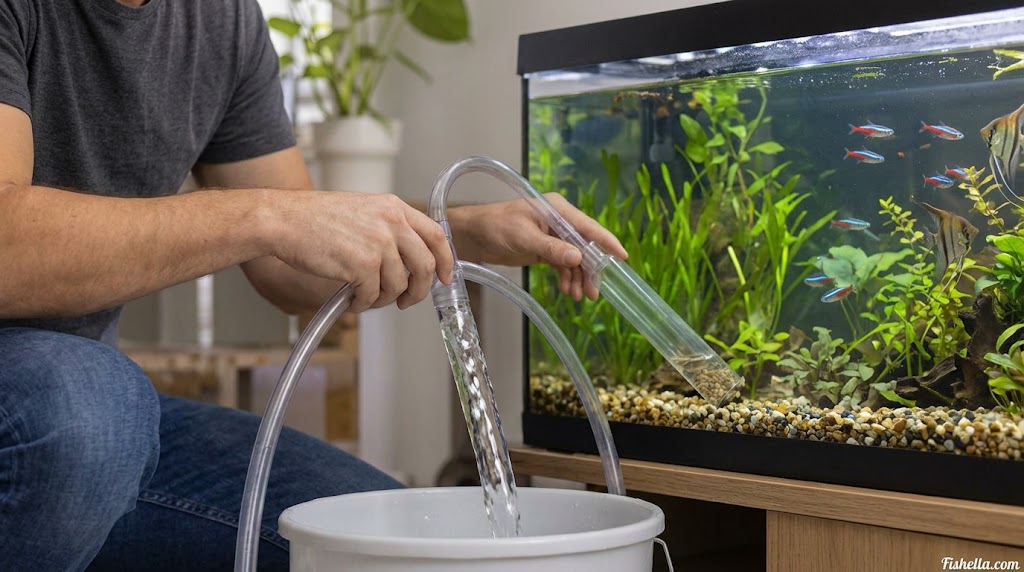
It removes some of the ammonia-containing water and replaces it with properly conditioned water. This immediately reduces the concentration when the replacement water contains less ammonia. Read about chloramine in drinking water.
How to Perform a Water Change
Follow these steps:
- Test your aquarium water to confirm the ammonia reading.
- Test your replacement tap water for ammonia if your source may contain it.
- Prepare replacement water with an appropriate aquarium dechlorinator.
- Match the replacement water temperature to the aquarium.
- Remove a suitable portion of aquarium water.
- Add the prepared replacement water slowly.
- Retest the aquarium water after the change.
A 25–50% water change is a common starting range for elevated ammonia, but the appropriate amount depends on the ammonia reading, fish condition, replacement-water quality, and temperature.
If ammonia is very high or fish show signs of distress, additional properly prepared water changes may be necessary. Seek experienced aquatic veterinary guidance if fish are severely affected.
Important: Never add untreated tap water directly to an aquarium. Chlorine and chloramine can harm fish and beneficial filter bacteria. Learn how to choose the best beneficial bacteria for your aquarium to support biological filtration.
How Much Ammonia Can a Water Change Remove?
The amount removed depends on the percentage of water replaced.
For example, assume your aquarium contains 1.0 ppm ammonia and your replacement water contains 0 ppm ammonia.
| Water Replaced | Approximate Ammonia After Change |
|---|---|
| 25% | 0.75 ppm |
| 30% | 0.70 ppm |
| 40% | 0.60 ppm |
| 50% | 0.50 ppm |
| 75% | 0.25 ppm |
These are theoretical estimates. They assume complete mixing, no new ammonia production, and ammonia-free replacement water.
If your tap water contains ammonia or chloramine, the actual result may be different.
2. Use an Ammonia Detoxifying Water Conditioner
An ammonia detoxifier can provide additional protection when aquarium ammonia is elevated.
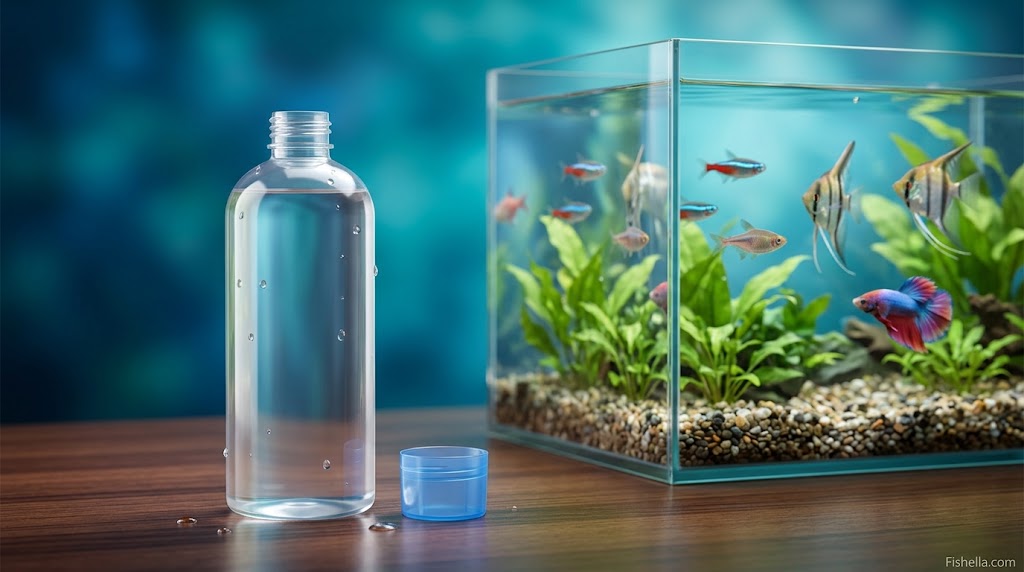
Some aquarium conditioners are designed to temporarily change the availability or toxicity of ammonia. Their effects depend on the active ingredients and the manufacturer’s instructions. Learn about ammonia toxicity in fish
These products can be useful while you work to restore normal biological filtration.
How Do Ammonia Detoxifiers Work?
Many ammonia-control products are designed to bind or temporarily detoxify ammonia.
However, detoxification is not the same as removing ammonia from aquarium water.
The nitrogen compounds may remain in the aquarium and still require processing by beneficial bacteria or removal through water changes.
Always check the product label for:
- Recommended dosage.
- Aquarium water volume.
- Treatment frequency.
- Compatibility with other products.
- Effects on ammonia test readings.
Some test methods may continue to show ammonia after a conditioner is used. Follow the manufacturer’s guidance for interpreting test results.
Does an Ammonia Detoxifier Remove Ammonia Permanently?
No. You should not treat an ammonia detoxifier as a permanent solution.
It does not repair a damaged biological filter or remove the underlying source of ammonia. Continue monitoring ammonia and nitrite.
You can also compare suitable products in our guide to the best aquarium water conditioners.
3. Use Ammonia-Removing Filter Media
Some specialized filter media can help capture ammonia or ammonium from freshwater aquarium water.
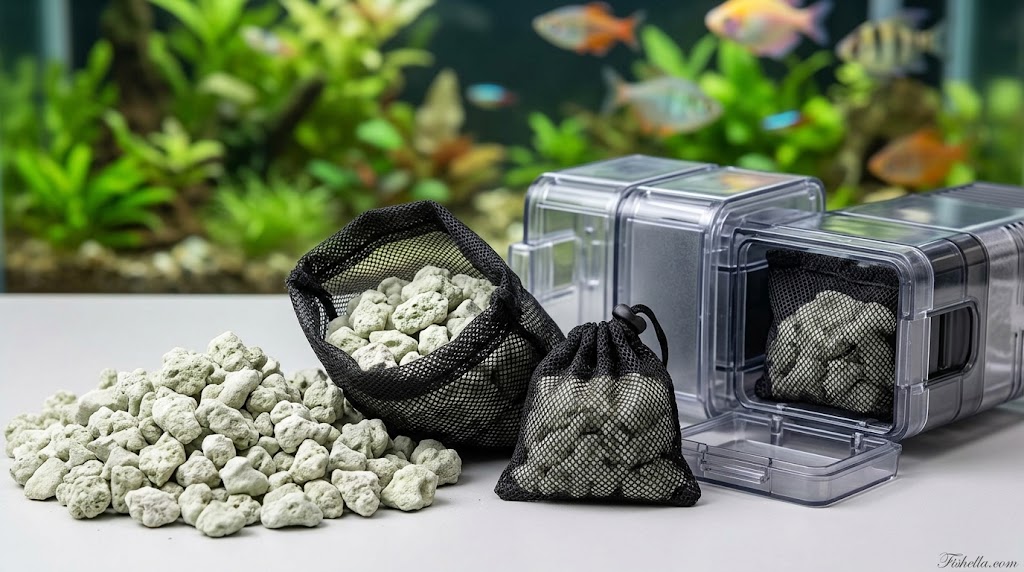
Zeolite is one example. It is a naturally occurring mineral used in some aquarium filtration products.
Other products use specialized resins or proprietary materials designed for ammonia control.
Can Zeolite Remove Ammonia From a Freshwater Fish Tank?
Yes. Certain zeolite products can capture ammonium ions through a process called ion exchange. This makes zeolite useful in some freshwater aquarium filtration setups.
However, it has limitations:
- Its capacity is limited.
- It needs replacement or recharging according to the manufacturer’s instructions.
- Its performance depends on water chemistry.
- It should not replace biological filtration.
- It may be unsuitable for some saltwater applications.
Before using zeolite, check whether it is compatible with your aquarium and filter.
How to Use Ammonia-Removing Media
Follow the manufacturer’s instructions.
- Choose media specifically designed for aquarium use.
- Check its compatibility with your filter.
- Rinse it if the manufacturer recommends rinsing.
- Place it in the appropriate filter compartment.
- Maintain normal water flow.
- Monitor ammonia and nitrite levels.
Do not remove established biological media just to make room for ammonia-removing media.
Protecting beneficial bacteria is important for long-term aquarium stability.
4. Support Biological Filtration
Biological filtration is essential for maintaining a healthy freshwater aquarium.
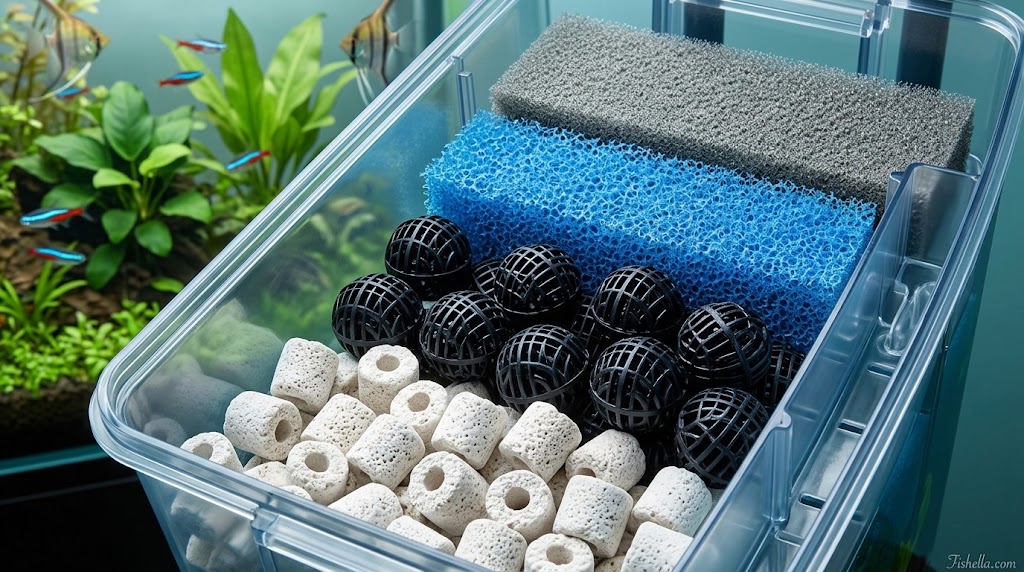
Beneficial microorganisms live on filter media, substrate, and other aquarium surfaces. They process nitrogen waste through the aquarium nitrogen cycle.
The basic process is:
Ammonia → Nitrite → Nitrate
Ammonia-oxidizing microorganisms convert ammonia into nitrite. Other microorganisms convert nitrite into nitrate.
A healthy biological filter helps prevent ammonia from accumulating.
How to Support Beneficial Bacteria
Use these practices:
- Keep established biological filter media in place.
- Avoid replacing all filter media at once.
- Maintain proper water flow through the filter.
- Use dechlorinated water when cleaning reusable filter media.
- Avoid unnecessary cleaning that removes beneficial bacteria.
- Follow the manufacturer’s instructions when using bacterial supplements.
Can Beneficial Bacteria Products Help Lower Ammonia?
Some aquarium products contain microorganisms intended to support biological filtration.
They may help establish or supplement the biological community, depending on the product, storage conditions, and aquarium environment.
However, they do not guarantee an immediate reduction in ammonia.
Always follow the label instructions and continue testing ammonia and nitrite.
If you want to understand the process in more detail, read our guide to fishless aquarium cycling.
5. Add Suitable Live Aquarium Plants
Live aquarium plants can absorb nitrogen compounds as they grow.
Some plants take up ammonium directly, while others use nitrate and other available nitrogen sources.
Fast-growing plants can contribute to nutrient uptake in freshwater aquariums.
Suitable options include:
- Hornwort
- Water sprite
- Amazon frogbit
- Anacharis
- Water wisteria
Choose plants that match your aquarium lighting, temperature, and fish requirements.
Do Live Plants Remove Ammonia Quickly?
Live plants can support aquarium water quality, but they are not a reliable emergency ammonia treatment.
Their ammonia uptake depends on several factors:
- Plant species.
- Growth rate.
- Lighting.
- Available nutrients.
- Plant health.
- Total plant biomass.
Do not rely on plants alone when your aquarium has elevated ammonia.
Continue using appropriate water changes and maintaining biological filtration.
6. Choose the Right Ammonia-Reduction Method
The best approach depends on your aquarium’s condition and the treatment you need.
Use this comparison to understand the role of each method.
| Method | Best Use | Important Consideration |
|---|---|---|
| Water changes | Direct ammonia dilution | Check replacement-water quality |
| Detoxifying conditioner | Temporary ammonia toxicity management | Follow dosing and testing instructions |
| Zeolite | Additional freshwater chemical filtration | Limited capacity |
| Biological filtration | Long-term ammonia processing | Requires a functioning bacterial community |
| Live plants | Supporting nutrient uptake | Not an emergency treatment |
These methods can sometimes work together.
For example, you can perform a properly prepared water change while maintaining your established biological filter. An appropriate ammonia-control product may provide additional temporary support.
The goal is not simply to obtain a lower test reading. You also need a functioning filtration system that can process fish waste continuously.
How to Confirm That Ammonia Levels Are Going Down
Testing is the only reliable way to check whether your ammonia-management efforts are working.
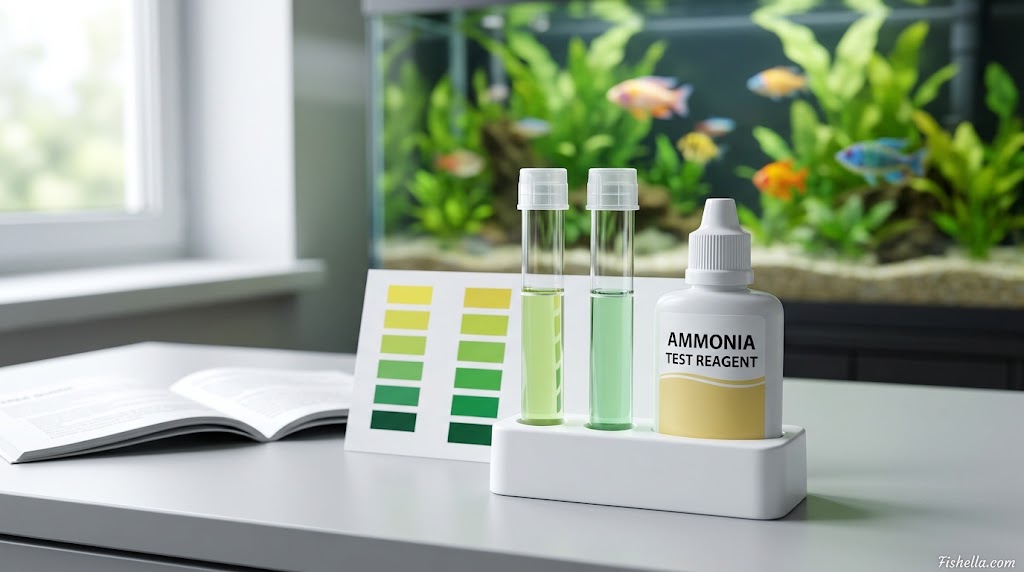
Use a suitable freshwater aquarium test kit and follow its instructions carefully.
Monitor these parameters:
| Water Parameter | Target in an Established Freshwater Aquarium |
|---|---|
| Ammonia | 0 ppm |
| Nitrite | 0 ppm |
| Nitrate | Preferably below 20 ppm |
These are practical aquarium targets, not a substitute for species-specific water requirements.
Understand Total Ammonia and Free Ammonia
Aquarium ammonia exists in two main forms:
- NH3: Un-ionized ammonia, which is more toxic to fish.
- NH4+: Ionized ammonium, which is less toxic.
The balance between these forms changes with pH and temperature.
Higher pH and temperature generally increase the proportion of more toxic un-ionized ammonia.
This is why an ammonia reading should not be interpreted without considering the aquarium’s water conditions.
Also, some ammonia detoxifiers can affect how certain test kits report ammonia. Check the compatibility of your test kit and conditioner before interpreting the results.
How Often Should You Test?
When ammonia is elevated:
- Test ammonia again after treatment according to your test kit instructions.
- Monitor nitrite as well.
- Repeat testing at least daily while the problem remains.
- Test more frequently if fish show distress or readings remain elevated.
Continue monitoring until ammonia and nitrite return to 0 ppm and remain stable.
Frequently Asked Questions
Does a Water Change Immediately Lower Ammonia?
Yes. A properly prepared water change can immediately dilute ammonia in aquarium water.
The amount reduced depends on the percentage of water replaced and the ammonia concentration in the replacement water.
Can Ammonia Be Removed Without Changing Aquarium Water?
Yes, certain specialized filter media can capture ammonia or ammonium. Biological filtration also processes ammonia through the nitrogen cycle.
However, water changes remain an important way to remove dissolved waste and maintain aquarium water quality.
Do Ammonia-Removing Filter Pads Work?
Some aquarium filter pads and specialized media are designed to capture or bind ammonia.
Their effectiveness depends on the material, water chemistry, and remaining media capacity.
Always follow the manufacturer’s replacement instructions.
Is Zeolite Safe for Freshwater Fish?
Aquarium-grade zeolite can be used in compatible freshwater filtration systems when installed correctly.
However, it has limited capacity and should not replace a functioning biological filter.
Do Live Plants Help Reduce Aquarium Ammonia?
Yes. Growing aquatic plants can absorb ammonium and other nitrogen compounds.
However, plant uptake varies with growth conditions. Plants should support, not replace, proper aquarium filtration and water changes.
Can Beneficial Bacteria Lower Ammonia?
Yes. Beneficial microorganisms in biological filtration convert ammonia into nitrite and then nitrate.
A healthy biological filter is essential for maintaining stable ammonia levels.
Why Does My Ammonia Test Still Show a Reading After Using a Conditioner?
Some ammonia conditioners temporarily detoxify ammonia without physically removing it.
Certain test kits may still detect ammonia-related compounds after treatment.
Check the conditioner manufacturer’s testing guidance and your test kit’s compatibility before deciding whether treatment has failed.
Final Thoughts
The most direct way to lower ammonia in a fish tank is usually a properly prepared partial water change. Ammonia detoxifiers and specialized filter media can provide additional support, while beneficial bacteria help process nitrogen waste over time.
Live plants can also contribute to nutrient uptake, but they cannot replace proper filtration.
For long-term aquarium health, maintain a functioning biological filter, monitor ammonia and nitrite, and use water changes when needed. A healthy freshwater aquarium should maintain 0 ppm ammonia.
Pingback: what causes sudden ammonia spikes in an established freshwater tank
Pingback: Fishless Cycling: Beginner's Step-by-Step Guide (2026)