By the Fishella team. This post contains Amazon affiliate links. If you buy through them, we may earn a commission at no extra cost to you.
Added CO₂ can transform a planted tank. Plants build their tissue from carbon, and in a tank with strong light and demanding species, carbon is often the first nutrient to run short. Supplying it can mean faster growth, denser carpets, richer colors and fewer algae problems. If you are hunting for the best aquarium CO2 kit, though, the right pick depends on your tank size, the plants you keep, your budget and how much maintenance you want to take on.
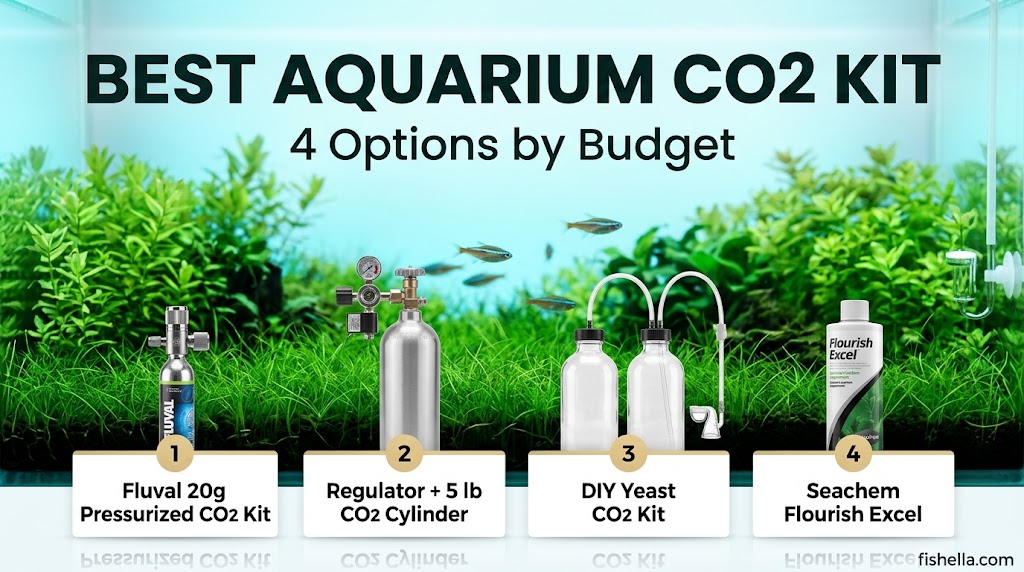
Here is the short answer. A pressurized CO₂ system is the best fit for long-term, CO₂-demanding planted tanks because it gives you stable, adjustable output. A DIY yeast kit is a cheaper way to get started, with less consistent results. And liquid carbon products such as Seachem Flourish Excel are not equivalent to injected CO₂, so we list one below only as an equipment-free alternative.
Before you buy any CO₂ gear, make sure the rest of your setup is ready. CO₂ only helps when light and nutrients are in balance, so read our guides to the best aquarium light for a planted tank .
Quick Picks: Best Aquarium CO2 Kits
| Product or system | Best for | Initial cost | Running cost | Ease of use |
|---|---|---|---|---|
| Fluval 20g Pressurized CO₂ Kit | Compact starter system for small tanks | Moderate | Moderate (cartridge replacements) | Easy |
| Regulator + refillable 5 lb cylinder | Long-term, larger or demanding tanks | Higher | Low (cylinder refills) | Moderate |
| DIY yeast CO₂ kit | Lowest-cost CO₂ injection | Low | Low (sugar, yeast, bottle changes) | Moderate to fiddly |
| Seachem Flourish Excel | Alternative without CO₂ equipment | Low | Ongoing (bottle purchases) | Very easy |
Important: Seachem Flourish Excel is a liquid carbon supplement, not a CO₂ kit. It is included here because many beginners compare it with CO₂ systems.
Best Aquarium CO2 Kits Reviewed
1. Fluval 20g Pressurized CO2 Kit: Best Starter Kit
Overview. The Fluval 20g Pressurized CO₂ Kit is a compact system built around a small disposable cartridge. It is designed for small to modest planted tanks, so check Fluval’s current specifications for the recommended tank volume before you buy.
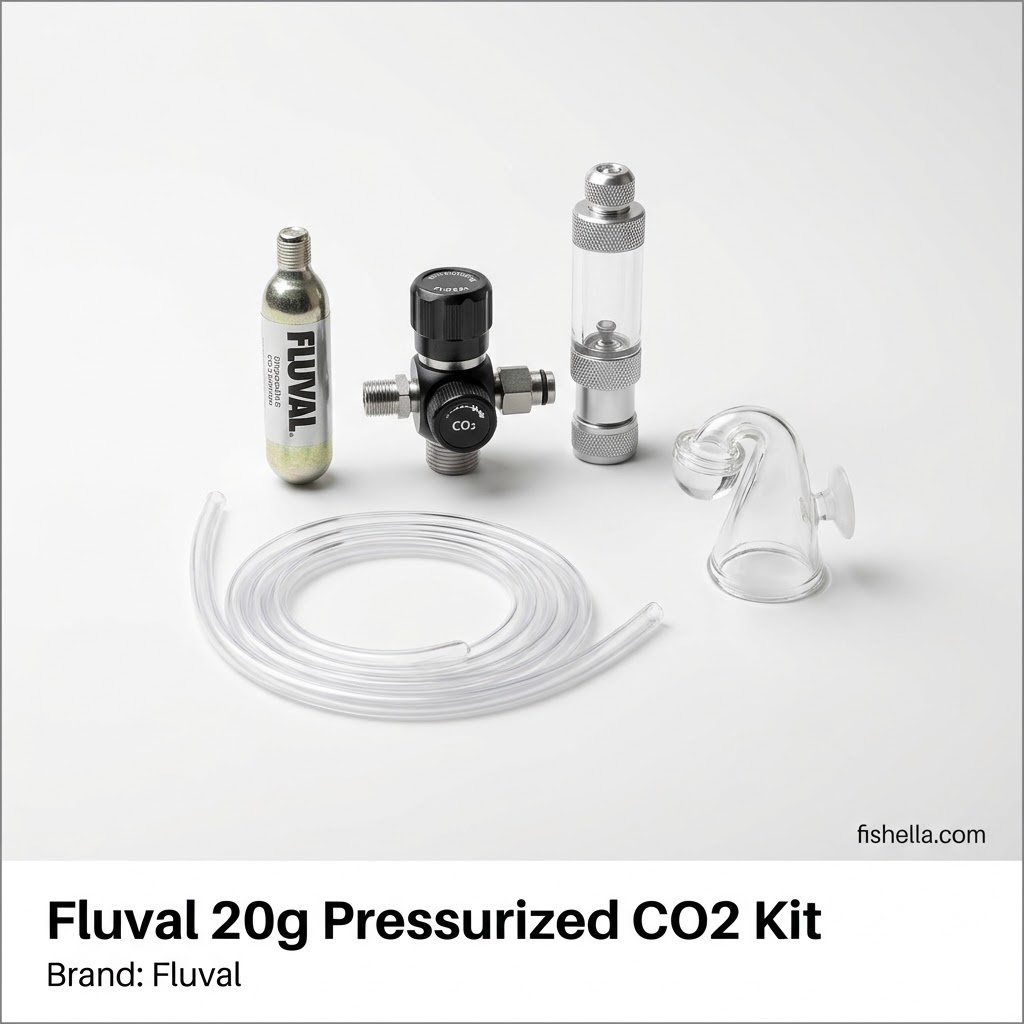
Key features and components. Kits like this typically include the cartridge-compatible regulator, tubing, a diffuser, a check valve and a bubble counter, so you can get going without sourcing parts separately. Exact contents vary by version, so confirm what is in the box on the listing.
Pros
- Beginner-friendly, with minimal assembly
- Compact and tidy, which suits desktop and small tanks
- Lower upfront cost than a full regulator and cylinder setup
Cons
- Disposable cartridges cost more per gram of CO₂ than a refillable cylinder
- Limited fine control compared with a quality needle valve and solenoid setup
- Less suited to large tanks or high-light, high-demand plantings
Cartridge replacement and running costs. Cartridge life depends on your bubble rate and tank size. Small tanks on modest injection rates can often go weeks between changes, but plan on recurring cartridge purchases, and check current prices rather than relying on old figures.
Who should buy it. Beginners with a small planted tank who want a plug-and-play entry into pressurized CO₂.
Who should skip it. Anyone with a large tank, a high-tech planted layout, or a plan to run CO₂ for years. The cartridge costs add up.
Verdict. The simplest route to stable injected CO₂ for a small tank, as long as you accept ongoing cartridge costs.
2. Regulator + 5 lb Cylinder System: Best Long-Term Value
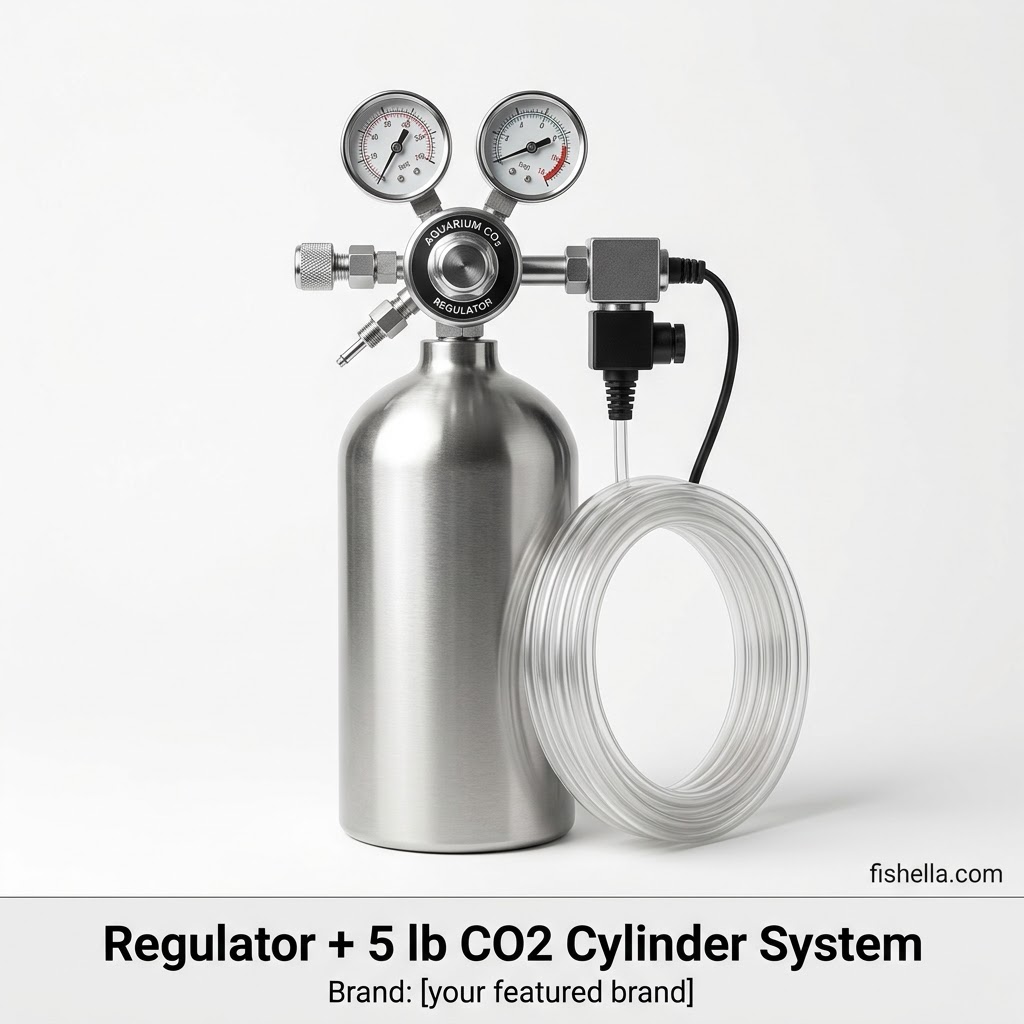
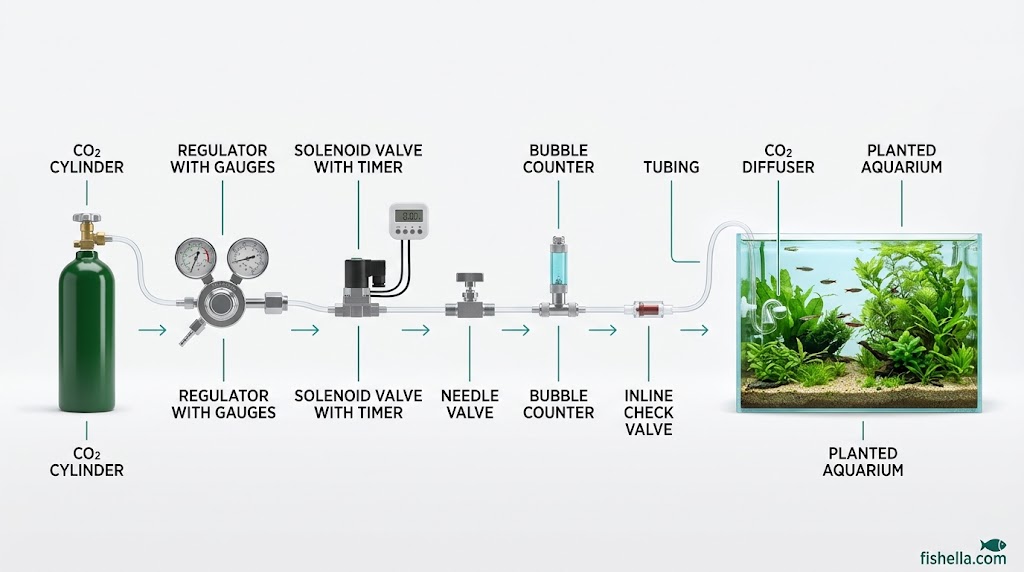
Overview. This setup pairs a CO₂ regulator with a refillable 5 lb cylinder. It is the standard choice among serious planted tank keepers because it offers precise control and the lowest cost per refill over time.
Important features to look for
- Needle valve: lets you fine-tune the bubble rate. A good one matters more than any other feature.
- Solenoid: an electric valve that turns CO₂ on and off on a schedule when paired with a timer.
- Pressure gauges: a working-pressure gauge helps you spot leaks and set output reliably.
- Diffuser compatibility: check that the regulator’s tubing and fittings work with your diffuser or inline atomizer.
Initial equipment costs versus refill costs. Expect a higher upfront spend, since you are buying a regulator, cylinder, diffuser, tubing and often a timer. Refills, however, are usually inexpensive relative to disposable cartridges, and a 5 lb cylinder often lasts many months depending on tank size and injection rate. Prices vary by region and supplier, so check your local refill options before buying.
Advantages for larger or demanding tanks. You get steady output, easier adjustment as plants grow in, and the capacity to supply medium to large tanks without constant cartridge swaps.
Setup complexity and maintenance. Setup takes more effort than a cartridge kit. You need to find a local refill source, assemble the parts, check for leaks and tune the bubble rate. After that, maintenance is light: clean the diffuser periodically and replace check valves as needed.
Who should buy it. Hobbyists with medium or large tanks, high-light plantings, or long-term plans in the hobby.
Verdict. The best long-term value and the most control, once you get past the setup learning curve.
3. DIY Yeast CO2 Kit: Best Budget CO2 Injection Option
How it works. Yeast ferments sugar in a sealed bottle and releases CO₂ as a by-product. Tubing carries that gas into the tank, where a diffuser or airstone dissolves it into the water.
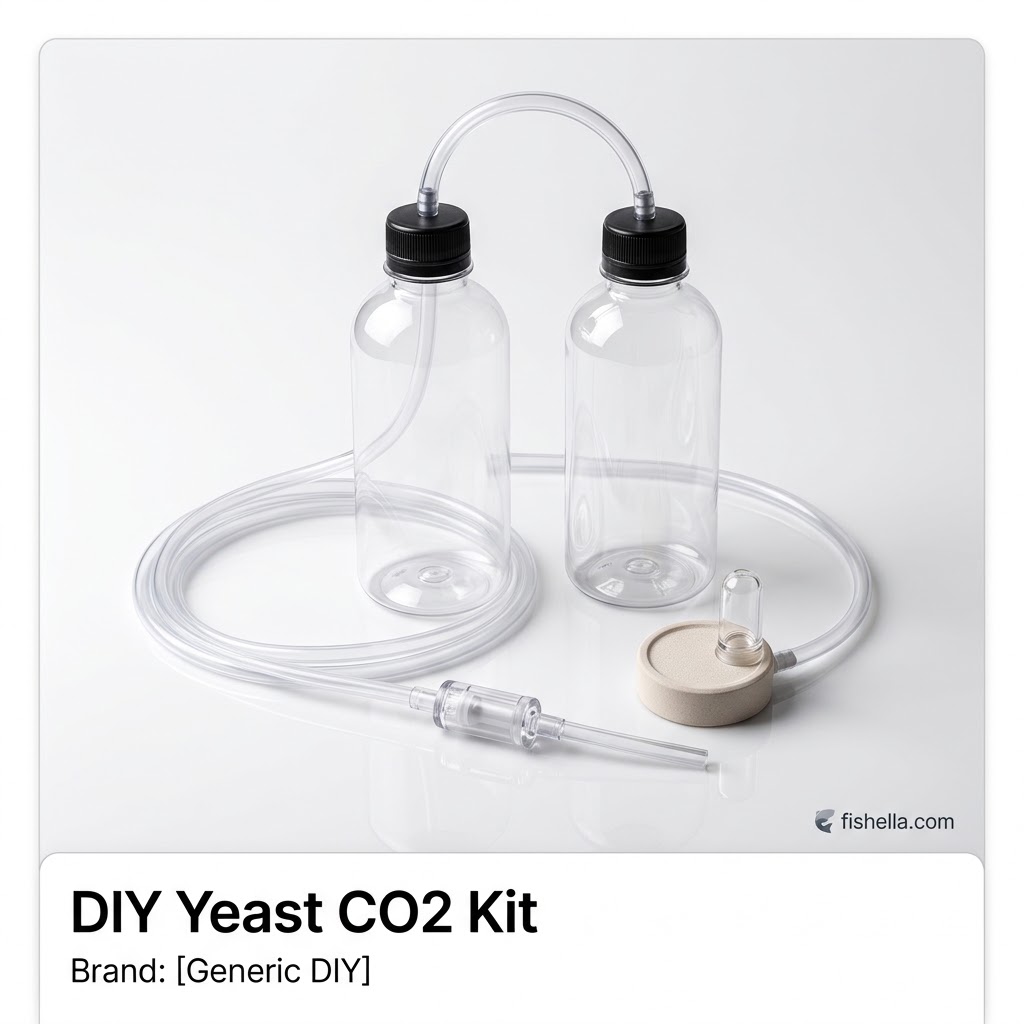
Typical components. A DIY kit commonly includes one or more reaction bottles, airline tubing, a check valve and a diffuser. You supply the sugar, yeast and often baking soda or similar additives, depending on the recipe.
Startup cost and recurring maintenance. Startup is the cheapest of the injection options. The trade-off is upkeep: you must mix fresh batches every couple of weeks, depending on your recipe and bottle size, and you may need multiple bottles for steadier output.
Advantages
- Lowest barrier to entry
- Good for experimenting before investing in pressurized gear
- Workable for nano tanks and low-demand plantings
Limitations
- Output rises and falls through the fermentation cycle, so CO₂ levels are inconsistent
- Hard to control precisely or shut off on a schedule
- Generally not strong enough for large or high-light tanks
Output consistency and pressure safety. Never seal a fermentation bottle without a clear outlet, and use a check valve to prevent water from siphoning back into the bottle. Use only the airline tubing and fittings designed for the job, and follow the kit’s instructions closely.
Who should buy it. Budget-conscious hobbyists with a small tank who are comfortable with regular batch mixing and imperfect consistency.
Verdict. A cheap way to get a taste of CO₂ injection, but not a long-term solution for demanding tanks.
4. Seachem Flourish Excel: Best Alternative Without CO2 Equipment
What it is. Seachem Flourish Excel is a liquid carbon supplement. It is a carbon source that plants can use, but it is not CO₂ gas, and it does not replicate what an injected CO₂ system does in the water column.
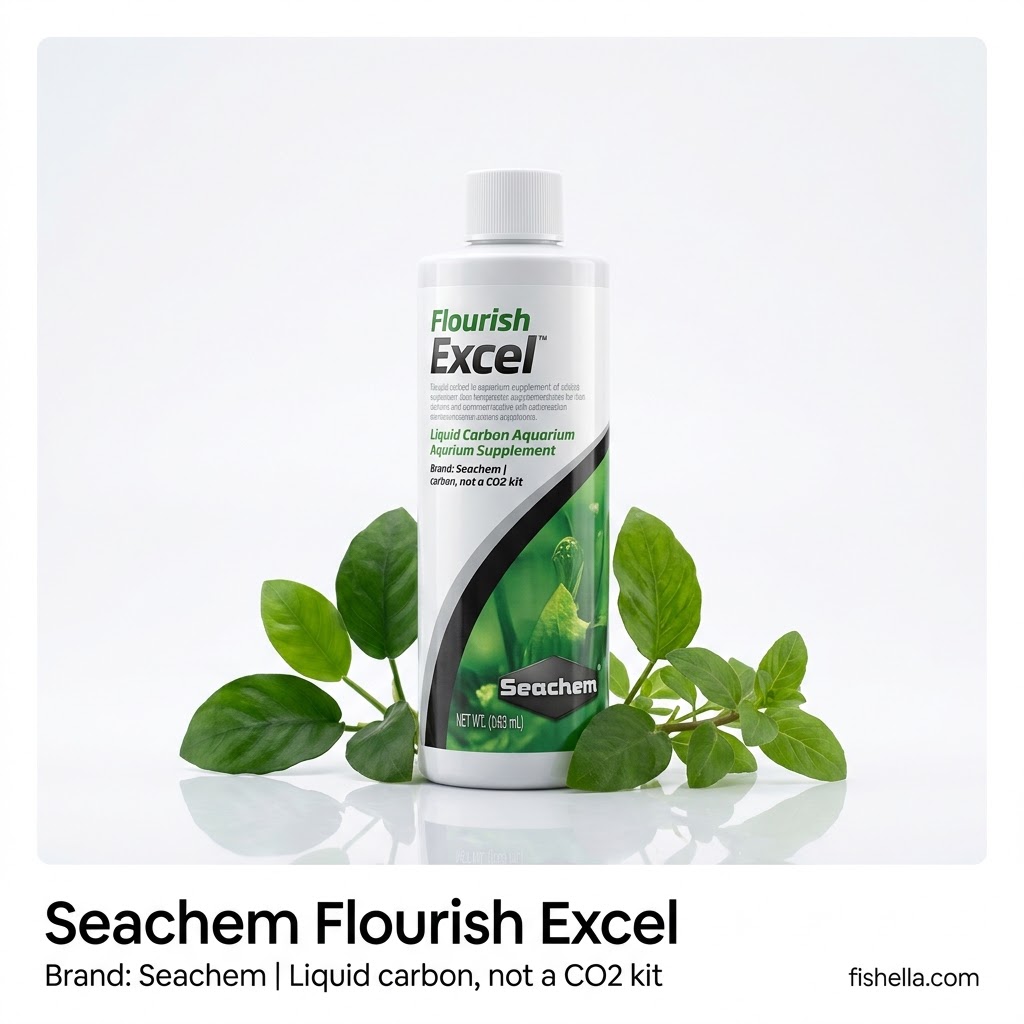
Dosing and ease of use. You add it by hand following the manufacturer’s directions on the label, usually daily or on a regular schedule. There is no equipment to buy, install or maintain, which makes it appealing for beginners.
Pros
- No equipment, tubing or cylinder needed
- Simple, low-commitment dosing
- Can support low- to moderate-tech tanks and help some plants
Cons
- Ongoing bottle purchases
- Limited effect compared with true CO₂ injection, especially in high-light tanks
- Daily or regular dosing is easy to forget
Plant sensitivity and overdosing. Some plants, such as certain Vallisneria and some mosses, can react badly to liquid carbon products. Start with a conservative dose, watch for melting or translucent leaves, and avoid overdosing. Always follow Seachem’s label directions.
Who may find it useful. Keepers of low-tech or lightly planted tanks who want a modest growth boost, or who are not ready to invest in CO₂ hardware.
Why it is not a CO₂ replacement. If you grow demanding carpeting plants or run strong lighting, a liquid carbon product will not deliver the same results as a pressurized system.
Verdict. A convenient, low-cost add-on for easy tanks, but not a substitute for injected CO₂.
How to Choose the Best Aquarium CO2 Kit
Tank volume and dimensions. Bigger tanks need more CO₂ and better distribution. Long or tall tanks may need more than one diffuser or stronger circulation.
Plant types and growth goals. Hardy species like Anubias, Java fern and cryptocorynes often do fine without CO₂. Stem plants, carpeting plants and many red species benefit most from it. If you want a lush, fast-growing scape, plan for pressurized CO₂.
Initial purchase price. Cartridge kits and DIY setups cost less upfront. Regulator and cylinder systems cost more but pay off over time.
Long-term refill costs. Cartridges are convenient but add up. A refillable cylinder is typically cheaper per gram of CO₂ in the long run.
Regulator precision and solenoid compatibility. Look for a regulator with a smooth needle valve and, ideally, a solenoid you can run on a timer.
Diffuser compatibility and CO₂ distribution. The best regulator in the world won’t help if the diffuser doesn’t dissolve CO₂ efficiently or the water flow doesn’t spread it around the tank.
Maintenance requirements. Be honest with yourself. A DIY kit needs frequent refreshes, a cartridge kit needs periodic swaps, and a cylinder system needs the occasional refill and check.
Fish and invertebrate safety. Too much CO₂ can stress or harm fish and shrimp. Whatever system you choose, build in the ability to adjust slowly, and monitor your livestock closely.
Which CO2 System Is Best for Your Tank Size?
- Nano tanks: compact cartridge systems or carefully managed DIY setups.
- Small planted tanks: compact pressurized systems with good output control.
- Medium and large tanks: regulator and refillable cylinder systems.
- Low-tech tanks: consider whether supplemental CO₂ is needed at all. Many low-light tanks thrive without it.
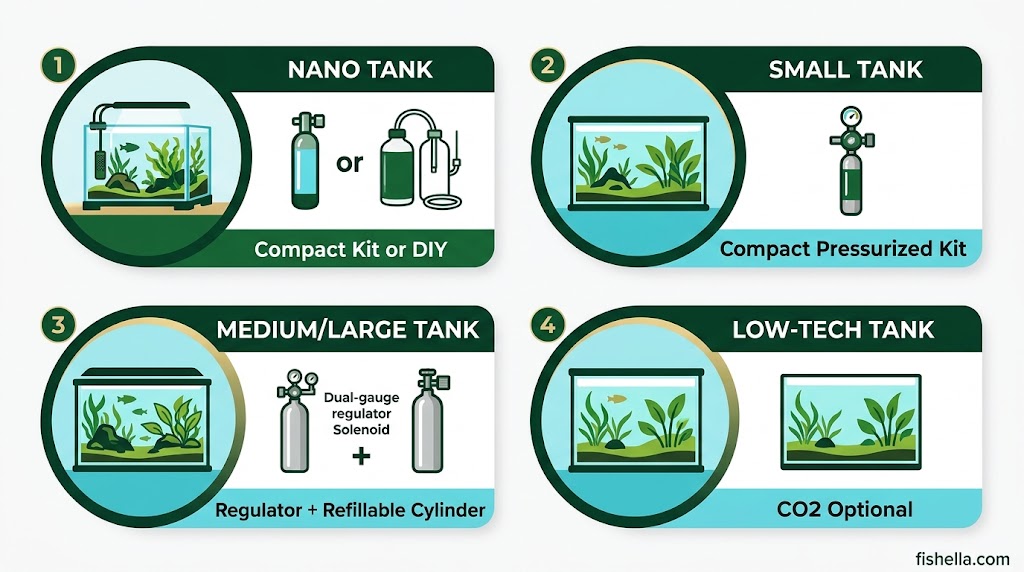
Tank size alone does not determine CO₂ needs. Lighting intensity, plant mass and your growth goals matter just as much. A small high-light carpet tank can demand more CO₂ control than a large, lightly planted one.
How Much Does an Aquarium CO2 System Cost?
Prices change often and vary by region, so check current listings before you decide. Here is how the cost categories compare:
- Initial equipment: DIY kits are cheapest, cartridge kits are in the middle, and a regulator with cylinder is the largest upfront spend.
- Replacement cartridges or cylinder refills: cartridges are an ongoing recurring cost, while refills for a 5 lb cylinder are typically occasional and cheaper over time.
- Diffuser and tubing replacements: diffusers clog and tubing ages, so budget for small replacements regardless of system.
- Regulator and solenoid costs: a quality regulator with a solenoid raises the upfront cost but gives better control and safety.
- DIY ingredients and maintenance: sugar and yeast are cheap, but you will mix batches regularly.
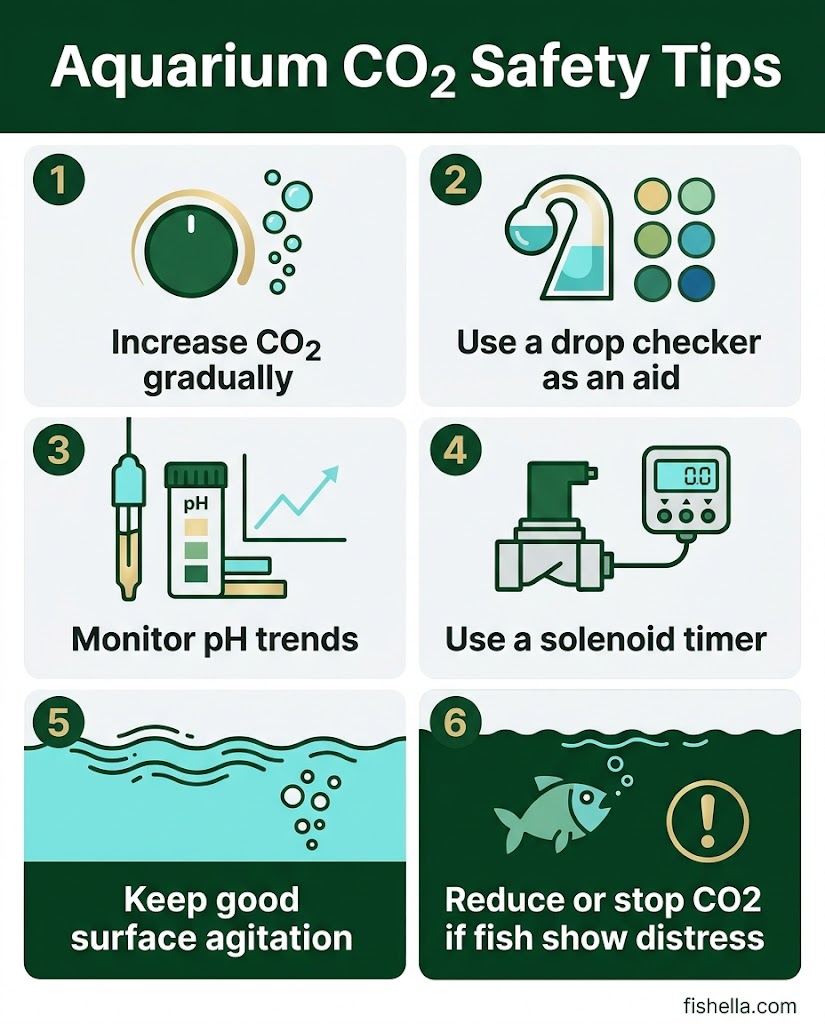
Aquarium CO2 Safety Tips
- Increase CO₂ gradually and watch fish behavior over several days.
- Use a drop checker as a monitoring aid, not your only safety measure. Its color change lags behind real conditions.
- Monitor pH trends and CO₂ levels using appropriate methods, and understand their limitations.
- Use a solenoid timer to stop injection before the lights go off, where applicable, so CO₂ doesn’t build up while plants aren’t photosynthesizing.
- Ensure good water movement and surface gas exchange so oxygen levels stay healthy.
- Reduce or stop CO₂ immediately if fish gasp at the surface, move sluggishly or show signs of distress, and increase aeration.
Frequently Asked Questions
What is the best aquarium CO2 kit for beginners?
For most beginners with a small tank, a compact pressurized kit like the Fluval 20g is the simplest option. It has few parts and little setup. If you prefer to avoid equipment entirely, liquid carbon is an easy first step, but it is not true CO₂.
Is a pressurized CO2 system better than a DIY kit?
For stability and control, yes. A pressurized system delivers steady, adjustable output, while a DIY yeast kit fluctuates over its cycle. DIY is better only when budget is the main concern and the tank is small.
Do all aquarium plants need added CO2?
No. Many hardy, low-light plants grow well without it. CO₂ matters most for demanding stem plants, carpets and high-light setups. You can read more about how aquatic plants use carbon in general terms.
Is liquid carbon the same as aquarium CO2?
No. Liquid carbon is a dissolved carbon supplement, while CO₂ injection adds carbon dioxide gas directly to the water. They are not interchangeable, and liquid carbon will not match the effect of a pressurized system.
How long does a small CO2 cartridge last?
It depends on cartridge size, bubble rate and tank volume. Smaller cartridges on small tanks can last from several weeks up, but check the manufacturer’s guidance and track your own usage.
Is aquarium CO2 safe for fish and shrimp?
It can be, when introduced gradually and monitored properly. Excess CO₂ can harm fish and shrimp, so increase slowly, maintain surface agitation and watch livestock behavior closely.
Should aquarium CO2 run at night?
Generally no. Plants do not photosynthesize in the dark, and CO₂ can build up while oxygen falls. Most keepers use a solenoid and timer to stop injection shortly before the lights turn off.
Is a 5 lb CO2 cylinder enough for a planted tank?
For most home planted tanks, yes. A 5 lb cylinder commonly lasts many months, depending on tank size, injection rate and daily runtime. Very large tanks or high injection rates will drain it faster.
Final Verdict: Which Aquarium CO2 Kit Should You Buy?
- Choose the Fluval 20g Pressurized CO₂ Kit if you want a simple, compact starter setup for a small tank and accept recurring cartridge costs.
- Choose a regulator and refillable 5 lb cylinder system for long-term use, larger tanks and the greatest control.
- Choose a DIY yeast kit if you are budget-conscious and willing to manage inconsistent output.
- Choose Seachem Flourish Excel only if you understand its limitations and do not expect it to replace injected CO₂.
Whichever you pick, start slowly, watch your fish and plants, and adjust gradually.