
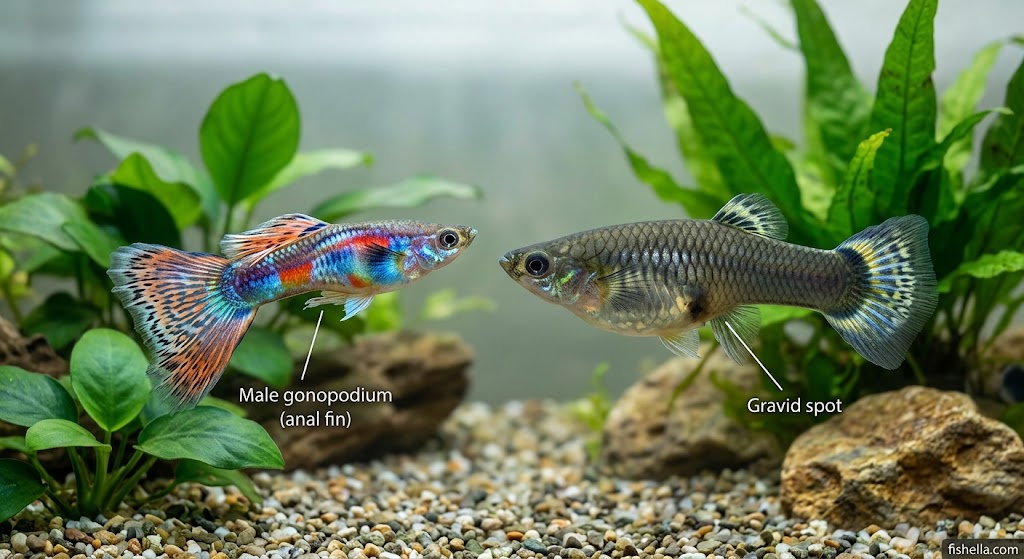
The easiest way to identify a male vs female guppy is to examine the anal fin, body size, and coloration. Male guppies usually have smaller bodies, brighter colors, and a narrow, rod-shaped anal fin. Female guppies typically grow larger, have rounder bodies, and develop a dark gravid spot near the belly. Learning these differences helps you choose healthy fish, prevent unwanted breeding, and maintain a peaceful aquarium. For complete care instructions, visit our Guppy Fish Care: Complete Beginner’s Guide.
6 Easy Ways to Tell Male vs Female Guppies Apart
You can identify most adult guppies by checking six physical characteristics. Look at several features together instead of relying on color alone. Some guppy varieties have unusual colors and fin shapes that make identification harder.
1. Check the Anal Fin Shape
The anal fin provides one of the most reliable ways to identify a guppy’s sex. This fin sits on the underside of the fish, just before the tail.
Male guppies: Males develop a narrow, elongated anal fin called a gonopodium. They use this modified fin to transfer sperm during mating.
Female guppies: Females have a shorter, wider, fan-shaped anal fin. They do not develop the male’s rod-shaped reproductive fin.
Examine the underside of the fish from the side. A pointed, rod-like fin usually indicates a male, while a fan-shaped fin usually indicates a female.
2. Compare Body Size
Body size offers another useful clue when you compare adult guppies of similar age and variety.
Male guppies: Adult males commonly reach about 1–1.5 inches long. Their bodies usually look smaller and slimmer.
Female guppies: Adult females commonly reach about 1.5–2.5 inches long. Their larger bodies provide room for developing embryos.
These measurements are approximate. Genetics, diet, water quality, and overall health can affect growth. Do not use size alone to identify young guppies.
3. Look at Body Color and Patterns
Color often makes male vs female guppies easy to distinguish.
Male guppies: Males usually display brighter colors, bold patterns, and colorful tails. Depending on their variety, they may show blue, red, orange, yellow, green, or black markings.
Female guppies: Females often have gray, silver, or olive-colored bodies. Some varieties also display colorful tails and attractive body patterns.
Selective breeding has produced many colorful female guppies. Therefore, a bright color does not always indicate a male.
4. Examine the Tail and Other Fins
Guppies come in many varieties, including fancy guppies with large, decorative fins.
Male guppies: Males often have larger, more colorful tails relative to their bodies. Their tails may feature fan, delta, sword, or other shapes.
Female guppies: Females generally have shorter, less elaborate fins. However, some females develop colorful tails or larger fins through selective breeding.
Use fin size as a supporting clue rather than your only method. The anal fin usually provides a more reliable sign.
5. Compare Body Shape and Belly Size
Body shape can help you identify adult guppies, especially when you observe them from the side.
Male guppies: Males usually have slender bodies and narrow bellies. Their shape often looks streamlined as they swim.
Female guppies: Females typically have deeper bodies and rounder abdomens. Their bellies may become noticeably larger during pregnancy.
A large belly does not automatically mean a female carries fry. Overfeeding, constipation, and illness can also cause swelling. Watch for other symptoms if the belly looks unusually enlarged.
6. Look for the Gravid Spot
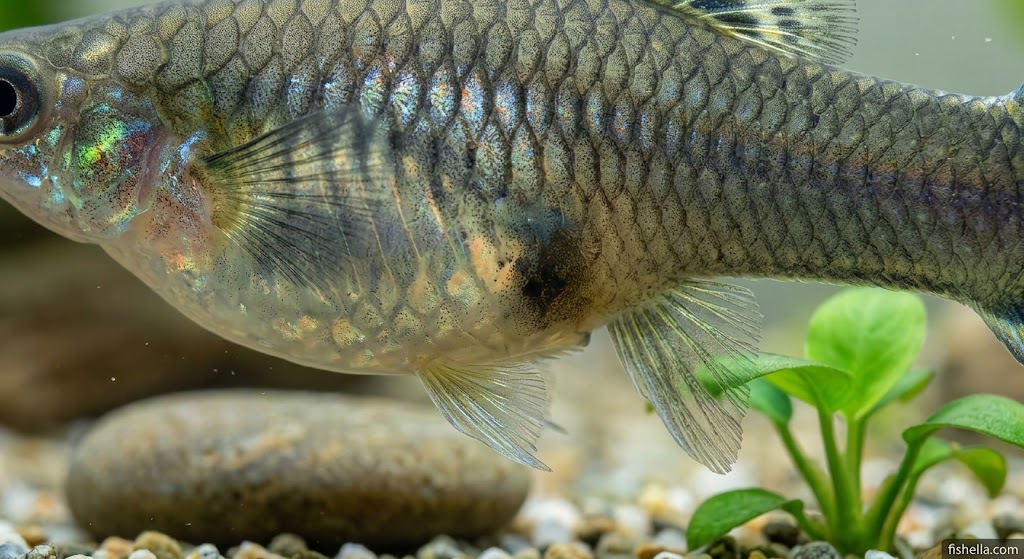
The gravid spot is a dark area near the female’s abdomen, close to the anal fin. It contains visible pigmentation in the area surrounding the developing embryos.
Female guppies: Females often develop a noticeable dark gravid spot as they mature. The spot may become larger or darker during pregnancy, although its appearance varies by color variety.
Male guppies: Males do not develop the typical female gravid spot associated with pregnancy.
A gravid spot can help you identify a female, but it does not confirm pregnancy by itself. Its visibility depends on the fish’s coloration, age, and individual characteristics.
Male vs Female Guppy: Quick Comparison Chart
Use this table to compare male vs female guppy the main differences at a glance.
| Feature | Male Guppy | Female Guppy |
|---|---|---|
| Anal fin | Narrow, rod-shaped gonopodium | Short, fan-shaped fin |
| Typical adult size | About 1–1.5 inches | About 1.5–2.5 inches |
| Body shape | Slim and streamlined | Larger and rounder |
| Body color | Often bright and patterned | Often muted, but varies |
| Tail and fins | Frequently larger relative to the body | Usually less elaborate |
| Gravid spot | No typical female gravid spot | Often visible near the abdomen |
| Reproductive role | Fertilizes eggs internally | Carries developing embryos |
| Typical behavior | May display and chase females | May avoid persistent male attention |
These are general patterns, not absolute rules. The gonopodium usually provides the clearest physical distinction in mature guppies.
At What Age Can You Tell Male and Female Guppies Apart?
You can often begin identifying guppy sex at around 4–6 weeks of age. However, some young fish need more time before their features become clear. Many beginners find identification easier between 6 and 10 weeks.
Watch the anal fin as the fish grows. Young males gradually develop a longer, narrower gonopodium. Females retain a fan-shaped anal fin.
Color and body size may provide early clues, but they can be misleading in juvenile fish. If you want to prevent accidental breeding, separate males and females as soon as you can identify them reliably.
Keep young guppies in suitable, heated, filtered aquariums. Maintain stable water conditions and provide enough space as they grow. If you’re raising newborn guppies, read our complete guide to baby guppy care to learn about fry feeding, safe tank setup, water changes, and healthy growth.
What Is the Best Male-to-Female Guppy Ratio?
For a mixed-sex guppy tank, a common starting point is one male for every two or three females. This ratio helps spread male courtship behavior across several females.
For example, you could keep one male with three females in a properly sized, established aquarium. However, tank size, filtration, plant cover, and individual behavior also matter.
Why Should You Keep More Females Than Males?
Male guppies may repeatedly chase females during courtship. If you keep too few females, one female may receive constant attention.
Persistent chasing can cause stress and reduce feeding time. Live plants and other cover give females places to rest and avoid unwanted attention.
A larger female group also means more potential offspring. Guppies reproduce quickly, so plan for additional fish before breeding begins.
Can You Keep Only Male Guppies?
Yes. An all-male guppy group can work well when the aquarium has enough space, filtration, and visual cover.
Male guppies often display their bright colors without producing fry in a correctly maintained, male-only tank. However, males may still chase or compete with one another.
Observe their behavior after introducing new fish. Provide plants and decorations that break up clear lines of sight. Separate any fish that experiences persistent harassment.
Can You Keep Only Female Guppies?
Yes, but there is one important detail: females can store sperm from previous matings.
A female may produce several broods after you separate her from males. Therefore, a female-only tank does not guarantee that you will avoid fry immediately.
Choose females from a reliable source if you want to reduce the chance of unexpected breeding.
How Do Male and Female Guppies Behave Differently?
Behavior can support physical identification, but it should not replace fin and body examination.
Male guppies often display their colorful tails, swim around females, and chase potential mates. Some males also show off their fins during interactions with other males.
Female guppies generally spend less time displaying to mates. They may rest among plants, forage for food, or avoid males that chase them repeatedly.
Individual fish can behave differently. Stress, crowding, poor water quality, and competition may change their behavior.
If you notice constant chasing, hiding, damaged fins, or reduced feeding, check the aquarium’s stocking level and water conditions.
Can You Keep Male and Female Guppies in the Same Tank?
Yes. Male and female guppies can live together in a suitable freshwater aquarium when you provide adequate space and stable water conditions.
However, mixed-sex groups usually reproduce. Female guppies can give birth to live young, and their fry may survive if the aquarium provides enough cover.
Before mixing the sexes, consider these points:
- Choose a tank with enough space for adult guppies and future fry.
- Use a reliable filter and maintain stable water parameters.
- Add live plants or other safe cover.
- Monitor females for persistent chasing and stress.
- Plan how you will house or rehome extra guppies.
- Avoid overcrowding as the population grows.
If you do not want to raise fry, consider a carefully sexed, single-sex group instead.
For a broader overview of tank setup, feeding, and daily care, read our complete guppy fish care guide.
Do Male or Female Guppies Live Longer?
Neither sex has a guaranteed lifespan advantage in every aquarium. Genetics, diet, water quality, stress, and disease prevention all influence how long a guppy lives.
Female guppies may experience additional physical demands from repeated pregnancies. Male guppies may experience stress from persistent courtship or competition.
Provide a balanced diet, stable water conditions, suitable tank mates, and regular maintenance to support both sexes.
Learn more in our guide to how long guppies live.
Frequently Asked Questions
Can a female guppy turn into a male?
No. A female guppy does not normally change into a male. Young males may initially resemble females before their gonopodium and other male characteristics develop.
Are male guppies more colorful than females?
Male guppies are usually more colorful, especially in fancy varieties. However, some female guppies also have bright colors, patterned bodies, and attractive tails.
How can I tell if my guppy is pregnant?
Look for a growing abdomen and a visible gravid spot. A pregnant female may also seek shelter or show changes in behavior. These signs vary, so observe the fish over time rather than relying on one symptom.
Can I keep two male guppies together?
Yes. Two males can live together, but their behavior depends on tank space, cover, and individual temperament. A larger group with suitable space may help spread attention, although it does not guarantee peaceful behavior.
How do I stop guppies from breeding?
Keep a correctly identified, single-sex group. Remember that females may retain sperm from previous matings and produce fry after separation.
Are male guppies smaller than female guppies?
Usually. Adult males commonly reach about 1–1.5 inches, while females often reach about 1.5–2.5 inches. Individual size varies by variety and care.
Which is better for beginners: male or female guppies?
Both can suit beginners. An all-male group can prevent unwanted fry when you identify every fish correctly. A mixed-sex group can also work if you have room and a plan for the offspring.
Final Thoughts
Identifying male and female guppies becomes easier when you examine several features together. Start with the anal fin, then compare body size, coloration, fin shape, body shape, and the gravid spot.
For most adult guppies, the gonopodium offers the clearest sign of a male. Females usually have larger bodies and a fan-shaped anal fin.
Choose a suitable group, provide enough swimming space, and monitor your fish for signs of stress. Most importantly, plan for breeding before keeping males and females together.
Start with our Guppy Fish Care Guide to learn how to create a healthy aquarium for your guppies.

Pingback: How Long Do Guppies Live? guppy Lifespan & 7 Key Factors