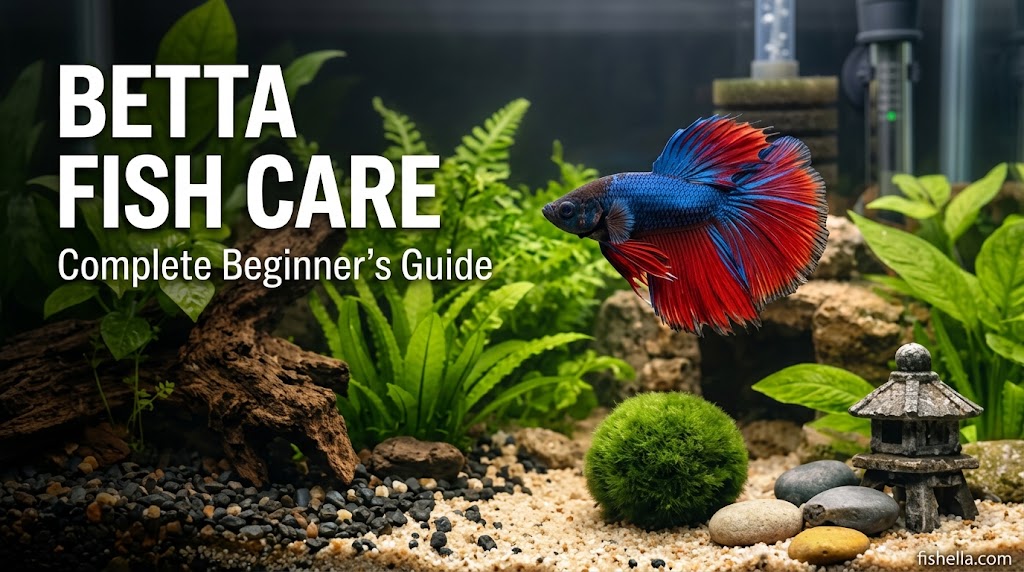
Betta fish food homemade can be a useful way to give your betta more variety. Simple homemade foods can provide protein and make feeding time more interesting, but they should not replace a complete betta diet every day.
Bettas naturally eat insects, insect larvae, and other small animal foods. In an aquarium, a quality betta pellet or other complete food should usually remain the main diet, while homemade foods can be used as occasional treats.
What Should Betta Fish Eat?
Betta fish are mainly carnivorous and need a diet with plenty of animal-based protein. Their natural diet includes small insects, larvae, and other tiny aquatic organisms.
A balanced aquarium diet can include quality betta pellets along with occasional frozen, freeze-dried, or live foods. Merck Veterinary Manual also recommends choosing foods that provide balanced nutrition and match the fish’s natural feeding habits.
For more information about general betta care, see our Betta Fish Care: Complete Beginner’s Guide.
Betta Fish Food Homemade: Is It Safe?
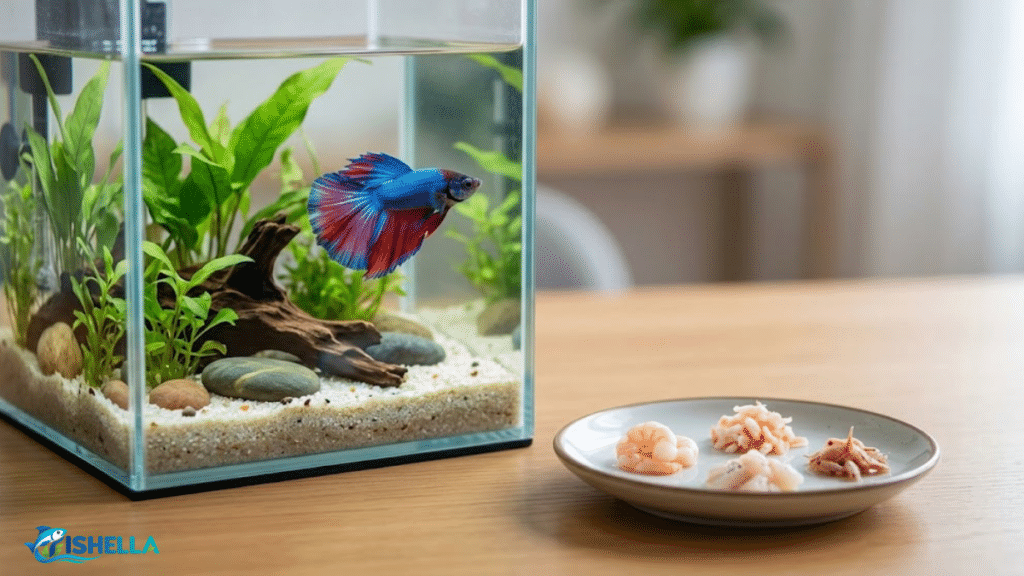
Betta fish food homemade can be safe when the ingredients are fresh, plain, and prepared correctly. However, homemade food is difficult to balance for all the vitamins and minerals a betta needs.
For this reason, homemade food is better used as a treat or occasional meal. A complete commercial betta food should remain part of the regular feeding routine.
Avoid salt, spices, sauces, butter, oil, garlic, onion, and other seasonings. These ingredients are not appropriate for a betta’s small digestive system.
Best Ingredients for Betta Fish Food Homemade
When making betta fish food homemade, focus on simple animal-based ingredients. The food should also be soft enough for a betta to bite and swallow easily.
Good options include:
- Plain cooked shrimp
- Plain cooked fish
- Frozen brine shrimp
- Frozen bloodworms
- Daphnia
- Small amounts of cooked egg yolk
- Unseasoned gelatin as a binder
Shrimp and other aquatic foods can provide useful animal protein. However, frozen or live foods should generally complement, rather than completely replace, a nutritionally complete diet.
Betta Fish Food Homemade Recipe With Shrimp
This is one of the simplest homemade options for an adult betta. It uses plain shrimp as the main ingredient and can be stored in small portions.
Ingredients
- 1 small plain cooked shrimp
- A small amount of unseasoned gelatin
- A little clean water
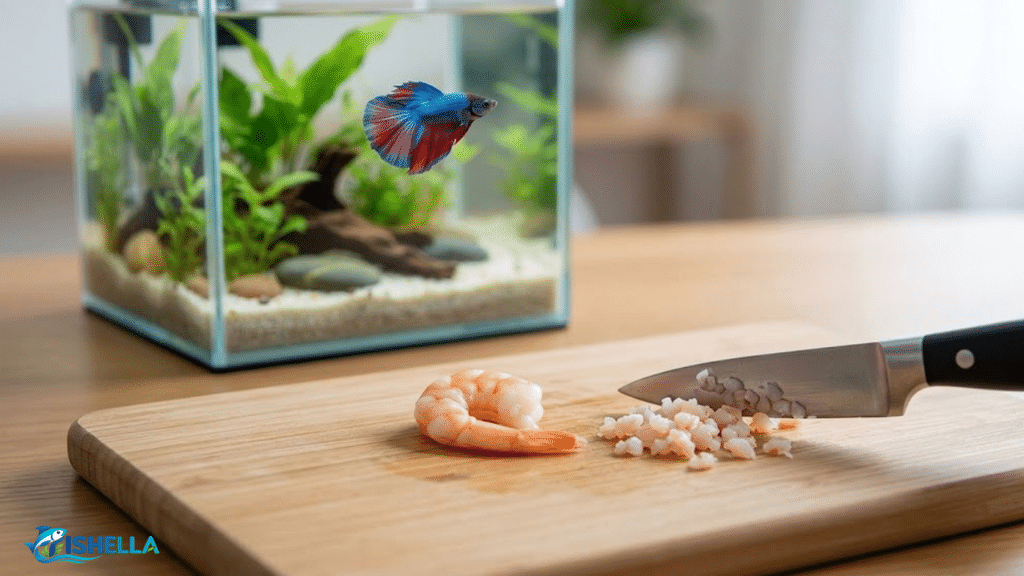
Do not use shrimp that has been cooked with salt, butter, oil, garlic, spices, or sauces. Remove the shell and chop the shrimp into very small pieces.
How to Make It
First, chop the cooked shrimp into a fine paste. Mix it with a small amount of prepared, unseasoned gelatin so the mixture holds together.
Spread the mixture into a very thin layer and allow it to cool. Cut or break it into tiny portions that your betta can eat easily.
Store unused portions in the freezer. Only take out a very small amount when you are ready to feed your fish.
Betta Fish Food Homemade Recipe With Fish
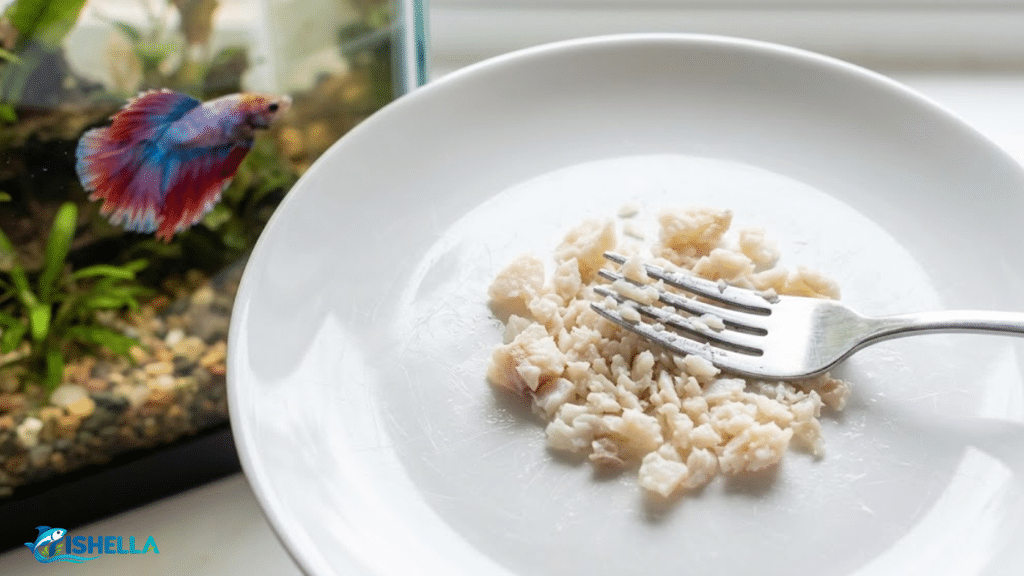
You can also make a simple homemade treat using plain cooked fish. Choose a mild, boneless fish and make sure it contains no seasoning. Cook the fish thoroughly, allow it to cool, and remove every visible bone. Mash a very small amount into tiny pieces before feeding.
You can mix the fish with a little unseasoned gelatin if you want to make small frozen portions. Do not add salt, oil, sauces, or spices. Because homemade fish mixtures are not nutritionally complete, use them occasionally rather than as your betta’s only food.
Can Bettas Eat Homemade Shrimp Food?
Yes, bettas can eat small amounts of plain shrimp. Shrimp provides animal protein and can be a useful occasional food.
The pieces must be extremely small because a betta has a small mouth and stomach. Remove any uneaten pieces from the aquarium so they do not break down and affect water quality.
For regular feeding, a complete betta food is still the safer choice for meeting nutritional needs.
Can Bettas Eat Homemade Egg Food?
A small amount of plain cooked egg can sometimes be offered as an occasional food. If using egg yolk, use only a tiny quantity because it can quickly make aquarium water cloudy.
Mash the cooked egg into a very fine particle size. Feed only a small amount and remove leftovers promptly.
Egg should be treated as an occasional food rather than a daily staple. A varied but balanced diet is more appropriate for long-term care.
Betta Fish Food Homemade With Bloodworms and Brine Shrimp
Bloodworms and brine shrimp are popular foods for bettas because they provide animal-based protein and can encourage feeding behavior.
However, these foods are better used as treats or supplements. Veterinary guidance recommends variety while keeping a nutritionally complete food as the foundation of the diet.
If using frozen food, thaw only the small portion you plan to feed. Never put a large frozen block directly into the aquarium.
You can also learn more about feeding problems in our article Why Is My Betta Fish Not Eating?.
How Much Homemade Food Should You Feed?
The biggest mistake with betta fish food homemade is giving too much. Bettas have small stomachs, and uneaten food can quickly become aquarium waste.
Start with a very small portion that your fish can finish within a couple of minutes. Remove any leftover food instead of allowing it to remain in the tank.
Aqueon recommends small meals and notes that a betta’s stomach is roughly the size of its eye. It also advises using small portions to help prevent overfeeding.
How Often Should You Give Homemade Betta Food?
Homemade food does not need to be given every day. For many healthy adult bettas, occasional homemade food can provide variety while a complete betta food remains the main diet.
You could offer a small homemade portion once or twice a week and use a complete betta food for regular meals. Adjust the amount based on your fish’s size, appetite, activity, and body condition.
If your betta has stopped eating, do not simply keep adding different foods. Check water quality, temperature, stress, and possible illness first.
Foods to Avoid in Homemade Betta Food
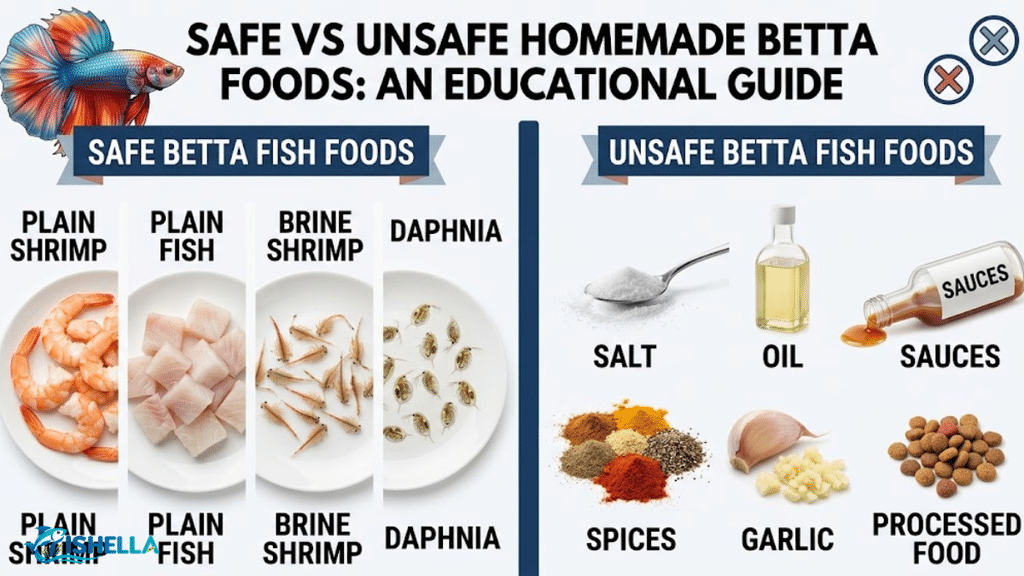
Not every food that humans eat is suitable for bettas. Avoid ingredients that contain salt, spices, sauces, oil, butter, sugar, or artificial seasonings.
Do not feed processed meats such as sausage or heavily seasoned cooked meat. Avoid foods that can quickly foul the water or contain ingredients that are difficult for a betta to digest.
You should also avoid collecting worms or insects from areas treated with pesticides. Contaminated insects can introduce harmful chemicals or other problems into the aquarium.
Homemade Betta Food and Water Quality
Food affects aquarium water quality. When homemade food is overfed, leftover pieces can decompose and contribute to ammonia and other water-quality problems.
This is especially important in small aquariums because a small amount of waste can have a noticeable effect. Feed tiny portions and remove leftovers as soon as you notice them.
For more help with aquarium maintenance, read our guide How to Clean a Fish Tank.
Is Homemade Food Better Than Betta Pellets?
Homemade food is not automatically better than quality betta pellets. The main advantage of homemade food is that it can add variety and provide recognizable animal-based ingredients.
A properly formulated betta food is designed to provide a more consistent nutritional profile. Merck Veterinary Manual notes that commercial dried foods are often formulated to provide the appropriate mix of nutrients when fed correctly.
The simplest approach is to use complete betta food as the main diet and homemade or frozen foods as occasional additions.
Simple Betta Feeding Schedule
A simple feeding routine can make betta fish food homemade easier to manage.
Most days: Feed a quality betta pellet or complete betta food in a small portion.
Once or twice a week: Offer a small amount of homemade shrimp, plain fish, brine shrimp, or another suitable protein food.
During every feeding: Watch your betta eat and remove obvious leftovers.
Remember that feeding needs can vary with age, body condition, temperature, activity, and health.
Final Thoughts on Betta Fish Food Homemade
Betta fish food homemade can be a simple way to add variety to your fish’s diet. Plain cooked shrimp, fish, and occasional animal-based foods can work as small treats when prepared safely.
The important point is balance. Homemade recipes should not replace a nutritionally complete betta food unless a qualified aquatic veterinarian has provided a specific diet.
Keep portions tiny, avoid seasonings, remove leftovers, and always pay attention to water quality. A varied and controlled feeding routine can help support a healthy betta.
FAQs About Betta Fish Food Homemade
Can I feed my betta homemade food every day?
It is better not to rely on homemade food as the only daily diet. Homemade recipes can be difficult to balance for all required nutrients, so use them as occasional food alongside a complete betta diet.
What is the easiest homemade food for betta fish?
Plain cooked shrimp is one of the easiest options. Remove the shell, chop it into tiny pieces, and feed only a very small amount without salt, oil, butter, or seasoning.
Can betta fish eat cooked shrimp?
Yes, a betta can eat a small amount of plain cooked shrimp. The shrimp should be unseasoned, fully cooked, finely chopped, and offered only in a small portion.
Can I make homemade betta food and freeze it?
Yes. A simple shrimp or fish mixture can be divided into very small portions and frozen. Thaw only the small amount needed for one feeding and do not refreeze food after it has thawed.
Can bettas eat vegetables in homemade food?
Bettas are primarily carnivorous, so vegetables should not form the main part of their diet. Protein-rich animal foods are more appropriate for their natural feeding pattern.
How much homemade food should I give my betta?
Start with a very small amount that your fish can finish quickly. Overfeeding can leave waste in the aquarium and contribute to poor water quality, so small portions are important.
What should I feed my betta if I run out of food?
As a short-term option, a tiny amount of plain cooked shrimp or another suitable unseasoned animal protein may be used. However, return to a complete betta food as soon as possible rather than relying on homemade food long term.
Does homemade food help a betta that is not eating?
It may make food more interesting, but loss of appetite can also indicate stress, poor water quality, unsuitable temperature, or illness. Check the aquarium conditions first instead of assuming the problem is simply the food.
Helpful Sources
For additional information about betta nutrition and fish feeding, see Merck Veterinary Manual and Aqueon’s Betta Care Guide.